

U.S. Manufacturing Activity Hit A Four-Year High in May, But There’s a Caveat


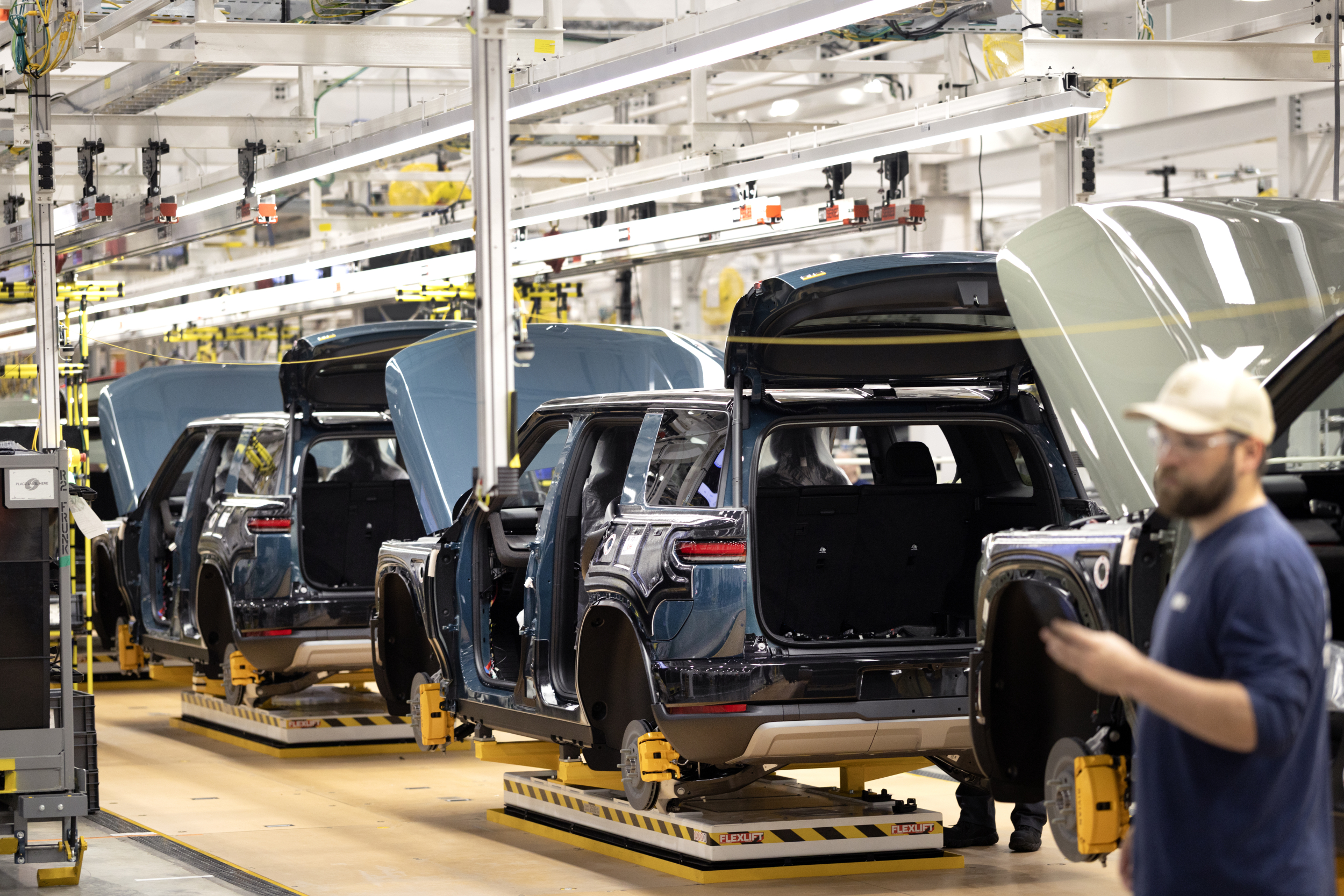
U.S. manufacturing activity rose to its highest level in four years in May amid rising costs, supply disruptions and uncertainty tied to the war with Iran, according to new data.

The S&P Global flash U.S. manufacturing purchasing managers’ index climbed to 55.3 in May from 54.5 in April, marking the strongest reading since May 2022. A reading above 50 indicates expansion.

The gain, however, was driven largely by manufacturers building inventories to protect against potential shortages and higher prices. S&P Global’s survey showed input inventories rose to an 11-month high, while supplier delivery times worsened, a pattern consistent with companies buying ahead of possible supply chain problems.

However, S&P Global said cost pressures intensified, with factory input costs reaching their highest level since June 2022. Companies also raised output prices, suggesting that some of those higher costs may eventually reach consumers.

The broader economy also looked softer than the headline manufacturing figure. S&P Global’s flash composite PMI, which tracks manufacturing and services, held at 51.7 in May. The services PMI slipped to 50.9 from 51.0, barely above contraction territory. Manufacturing employment rose modestly, but overall private-sector employment fell to its lowest level in 21 months, largely because of weaker services hiring.

Chris Williamson, chief business economist at S&P Global Market Intelligence, told Reuters that the reading indicated “that the economy will struggle to manage annualized GDP growth of much more ​than 1% in the second quarter.” He also cautioned that inventory accumulation tied to supply concerns is not a durable engine for expansion.

“On average, over the past three months order book growth has slowed to its weakest for two ⁠years, ​and a boost from precautionary stock building due to concerns over ​further price hikes and supply delays will not last forever,” said Williamson.

Manufacturing represents a smaller share of the U.S. economy than services, but remains closely watched because it is sensitive to global demand, shipping costs, commodity prices, and business confidence. The sector accounts for about 9.4% of the economy, according to the National Association of Manufacturers, so its strength alone may not be enough to offset weakness in services.

Free Training

Source link

Acquisition Of Solestial Strengthens U.S.-Based Space Solar Manufacturing Capabilities


York Space Systems announced it has entered into a definitive agreement to acquire Solestial, a provider of next-generation space solar technology, in a move designed to strengthen York’s supply chain and secure critical U.S.-based solar manufacturing capabilities for space applications.

Based in Tempe, Arizona, Solestial develops ultrathin, radiation-hardened silicon solar cells and modules specifically engineered for the space environment. The company is known for its self-healing silicon technology, which has already been proven on orbit and is designed to enable scalable, high-volume manufacturing.

York said the acquisition will help reduce reliance on Chinese-controlled materials and manufacturing while strengthening domestic production capabilities for mission-critical space systems. Following the transaction’s close, Solestial will operate as a wholly owned subsidiary of York while continuing to support customers across the commercial, civil, and national security markets.

The acquisition comes as demand for space-based power systems continues to increase across satellite constellations, national defense missions, and future lunar and deep-space initiatives. York noted that traditional III-V solar solutions remain expensive and constrained by long lead times, while terrestrial silicon alternatives are not optimized for radiation-heavy space environments.

York executives said integrating Solestial’s technology into its platform strategy will improve manufacturing reliability, scalability, and cost efficiency while enhancing control over critical subsystems.

Solestial has already established a growing U.S. manufacturing footprint, with approximately 95% of its supply chain currently based in the United States and plans to transition to fully domestic production. The company recently expanded its manufacturing capacity through the acquisition of advanced high-volume solar manufacturing equipment capable of supporting wafer-to-module production within the U.S.

The transaction is expected to close during the second quarter, subject to customary regulatory approvals and closing conditions.

York Space Systems is a U.S.-based defense and commercial space prime contractor that provides hardware and software solutions across the space mission lifecycle for government, national security, and commercial customers.

Solestial focuses on delivering scalable and affordable space solar technology through flexible, low-mass solar power modules engineered for long-duration use in space environments.

KEY QUOTES:

“York has consistently invested in U.S.-based manufacturing as a core part of how we deliver for our customers. This acquisition builds on that approach, strengthening our supply chain by investing in a proven U.S. company, supporting the domestic industrial base, and reducing reliance on foreign sources for critical materials and manufacturing.”

Dirk Wallinger, CEO, York Space Systems

“Solestial has proven a scalable, space-optimized solar technology that is designed to perform in ways legacy and terrestrial solutions cannot. That will give us the ability to build more capable platforms with better performance, lower cost, and greater design flexibility.”

Mike Lajczok, CTO, York Space Systems

“Solestial was founded to solve the space power bottleneck. Our customers need a solution that can scale, perform in space, and be manufactured reliably. Partnering with York allows us to accelerate all three; expanding production, deepening technical integration, and delivering a resilient, American-made capability to a broader set of missions.”

Margo de Naray, CEO, Solestial


Free Training

Source link