

Foodservice Packaging Supplier Detpak Opens U.S. Manufacturing Facility


SPARTANBURG, S.C. — Global packaging supplier Detpak has announced the opening of its new manufacturing facility in Spartanburg, South Carolina, strengthening its ability to support major Quick Service Restaurant (QSR) customers with locally produced, paper-based packaging solutions.

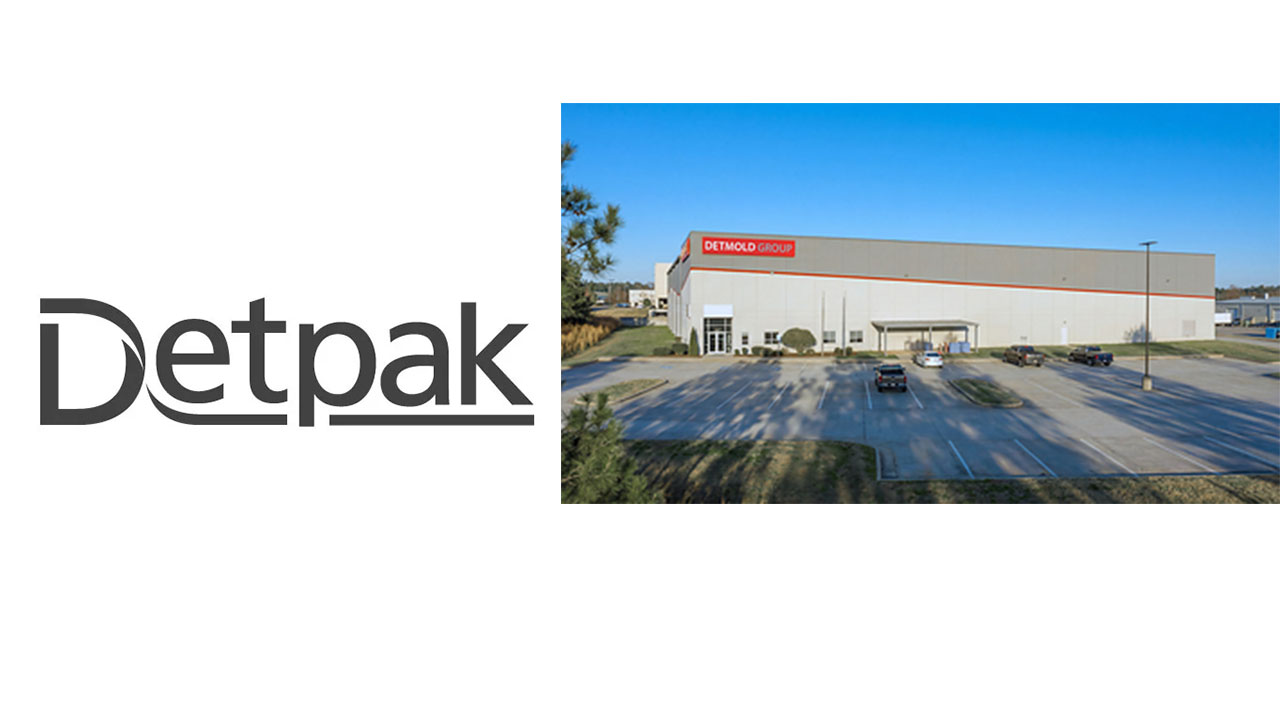
Detpak’s new U.S. manufacturing facility in Spartanburg, South Carolina, strengthens local manufacturing capabilities and expands support for Quick Service Restaurant (QSR), foodservice, Fast-Moving Consumer Goods (FMCG), and retail customers across North America.

Detpak, a Detmold Group company headquartered in Australia, is a trusted packaging partner to some of the world’s largest and most recognizable QSR, foodservice, FMCG and retail brands, with experience supplying global customers such as McDonald’s, KFC, Starbucks, and Wendy’s. The company has supported customers in the United States for more than two decades, operates in 45 countries, and owns manufacturing facilities in eight countries.

The new US manufacturing facility marks a significant step in Detpak’s global expansion and reinforces its long-term commitment to the North American market. By combining its global expertise with local manufacturing capability, Detpak will be better positioned to support US customers with improved supply chain reliability, reduced lead times and greater operational flexibility.

“As we continue to grow our global footprint, opening our own manufacturing facility in the United States is a key milestone for our business,” CEO Sascha Detmold Cox said.

“It allows us to better support our customers with locally manufactured products and reinforces our commitment to the U.S. market where we have been supplying customers from our international plants for over 20 years. We’re focused on building long-term partnerships and delivering the same level of service, innovation and reliability that our customers experience globally.”

“We’re proud to be investing in the Spartanburg community and creating new employment opportunities in South Carolina.” Ms. Detmold Cox said.

Initially employing more than 50 people from the local community, the multi-million-dollar facility, spanning 175,000 square feet, is currently undergoing equipment commissioning, with full production commencing in August.

About Detpak and the Detmold Group

Wholly owned by the Detmold Group, Detpak designs, manufactures and supplies the Quick Service Restaurant (QSR), Fast-Moving Consumer Goods (FMCG), grocery and food services industry with world-class sustainable paper and cardboard packaging solutions. Detpak delivers a level of service and care that exceeds standards, with the understanding and operational integrity of a family-owned business. Many of the paper and board packaging products used in the fast-food industry, including from Starbucks, Uber Eats, Burger King and Krispy Kreme are supplied by Detpak.

With headquarters in Australia, the Detmold Group is a 78-year-old, family-owned and operated business, supplying packaging to the world’s largest and most iconic food and retail brands. Detpak serves a range of markets, including fresh produce, QSR, foodservice, Fast-Moving Consumer Goods (FMCG) and grocery and convenience.


Free Training

Source link

AI boom lifts Mexico tech exports, complicating Trump trade goals


WASHINGTON – The United States’ frenzied rush to build out AI infrastructure has boosted exports of Mexican technology, complicating President Donald Trump’s hand heading into trade negotiations.

Trump, who campaigned on boosting US manufacturing, hopes to narrow the trade deficit with Mexico during talks to update the USMCA free trade agreement, which kick off Tuesday in Mexico City.

But the dizzying rise in computer equipment exports from Mexico — the largest US trading partner — is doing the opposite.

Between January and April, Mexico tripled its sales of computer equipment to the United States compared to the same period last year, with exports topping $50 billion versus just $2.2 billion in imports, according to AFP calculations.

The sector now makes up 30 percent of all Mexican products shipped to the United States, overtaking the automotive industry as the largest component of exports.

“It’s a milestone largely driven by demand for advanced AI electronics,” Diego Flores, head of electronic and digital industries at Mexico’s Economy Ministry, told AFP.

The sector, which includes processing units and data centre hardware, is not officially on the agenda for this round of negotiations.

– Explosive demand –

The most in-demand products are server racks that house AI processing cards — a key component for the data centres multiplying across the United States.

The main export hub is the Pacific state of Jalisco, dubbed the “Mexican Silicon Valley,” where an ecosystem of global industry giants and tech startups have set up shop, Flores said.

Taiwanese giant Foxconn assembles server racks in Jalisco, and serves as a strategic partner to US chip designer Nvidia.

In March, Foxconn announced $137 million in investments across two Mexican subsidiaries after estimating its production could double this year.

“The United States and Mexico will remain our primary production hubs,” Chief Executive Michael Chiang said, announcing the company would invest 30 percent more than in 2025 to expand its AI-related capacity.

Faced with booming demand, Flextronics, another tech manufacturer in Jalisco, even had to repurpose its parking lots to expand manufacturing capacity, Flores said. 

Yet the boom comes amid a volatile political climate.

The Trump administration rejected a 16-year extension of the USMCA, opting instead for annual reviews with Mexico and Canada.

Washington is also continuing to push for more goods to be manufactured domestically, even as US reliance on imports from Mexico, Taiwan, and China to fuel its AI boom grows.

– ‘In the line of fire’ –

Could the thriving sector become Trump’s next tariff target?

“Nobody can say for sure,” Flores admitted. However, he expressed confidence that the sector might escape protectionist policies due to its immense strategic value to the United States.

Washington is also seeking to limit the use of Asian technology within North America, according to William Jackson, a chief emerging markets economist at Capital Economics.

“The Trump administration has to weigh the demand for these technologies and the need to stay at the forefront of AI development,” he told AFP, noting that “tariffs could prove counterproductive to that goal.”

But balancing the preservation of a booming industry with protectionist rhetoric puts the sector “very easily in the line of fire,” he warned.

That risk is heightened by the fact that Mexican manufacturers use components sourced from China and Taiwan, which Trump could view as a “backdoor” or Trojan horse for Asian technology entering the United States.

Free Training

Source link