

What a Monopoly vendor learned when making things in America : NPR


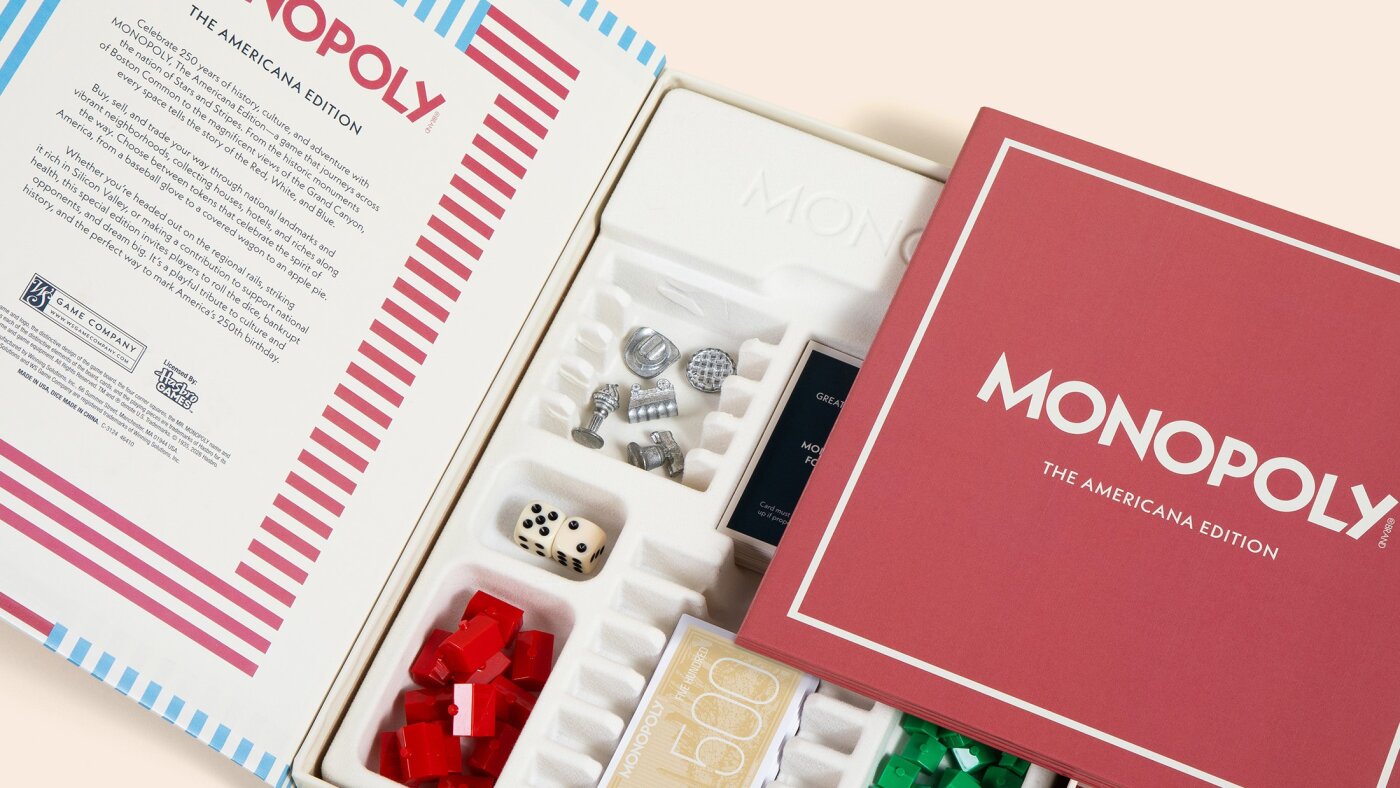
In an effort to sidestep President Trump's tariffs, the WS Game Company decided to build a special edition Monopoly game in the United States. But the experiment almost didn't pass go.

In an effort to sidestep President Trump’s tariffs, the WS Game Company decided to build a special edition Monopoly game in the United States. But the experiment almost didn’t pass go.

WS Game Company

hide caption

toggle caption

WS Game Company

The board game Monopoly has always taught some important economic lessons: The benefits of owning real estate. The profit potential of railroad mergers. The value of a get-out-of-jail-free card.

President Trump hopes to encourage more U.S. manufacturing with his import taxes on foreign goods. But an online experiment suggests most people aren't willing to pay a premium for a "Made in the USA" product.

Now a special edition of the board game is teaching a new lesson—about how hard it is to make things in the USA.

The game is being marketed by the WS Game Company, which produces most of its high-end board games in China, just like almost every other toy maker.

After getting hit with a seven-figure tariff bill last year, CEO Jonathan Silva decided to see if it was possible to produce a profitable board game in the United States.

He opted for a custom version of Monopoly, pegged to the country’s 250th birthday. But the experiment almost didn’t pass go. One big problem: No dice.

“We turned over every single leaf trying to find someone who would make 10,000 dice for us in the U.S.,” Silva says. “It requires special machinery. It requires investment. And that type of stuff just can’t happen on a random Tuesday and be ready in a couple of months.”

Silva ultimately had to settle for imported dice.

He was able to find the rest of what he needed domestically, but it wasn’t easy. A former Hasbro factory in Massachusetts prints the Monopoly board. A company called Pioneer Packaging makes the tray that holds he Monopoly money. And a small business in Indiana cranked out custom metal game tokens, in all-American shapes like a cowboy hat, a covered wagon and an apple pie.
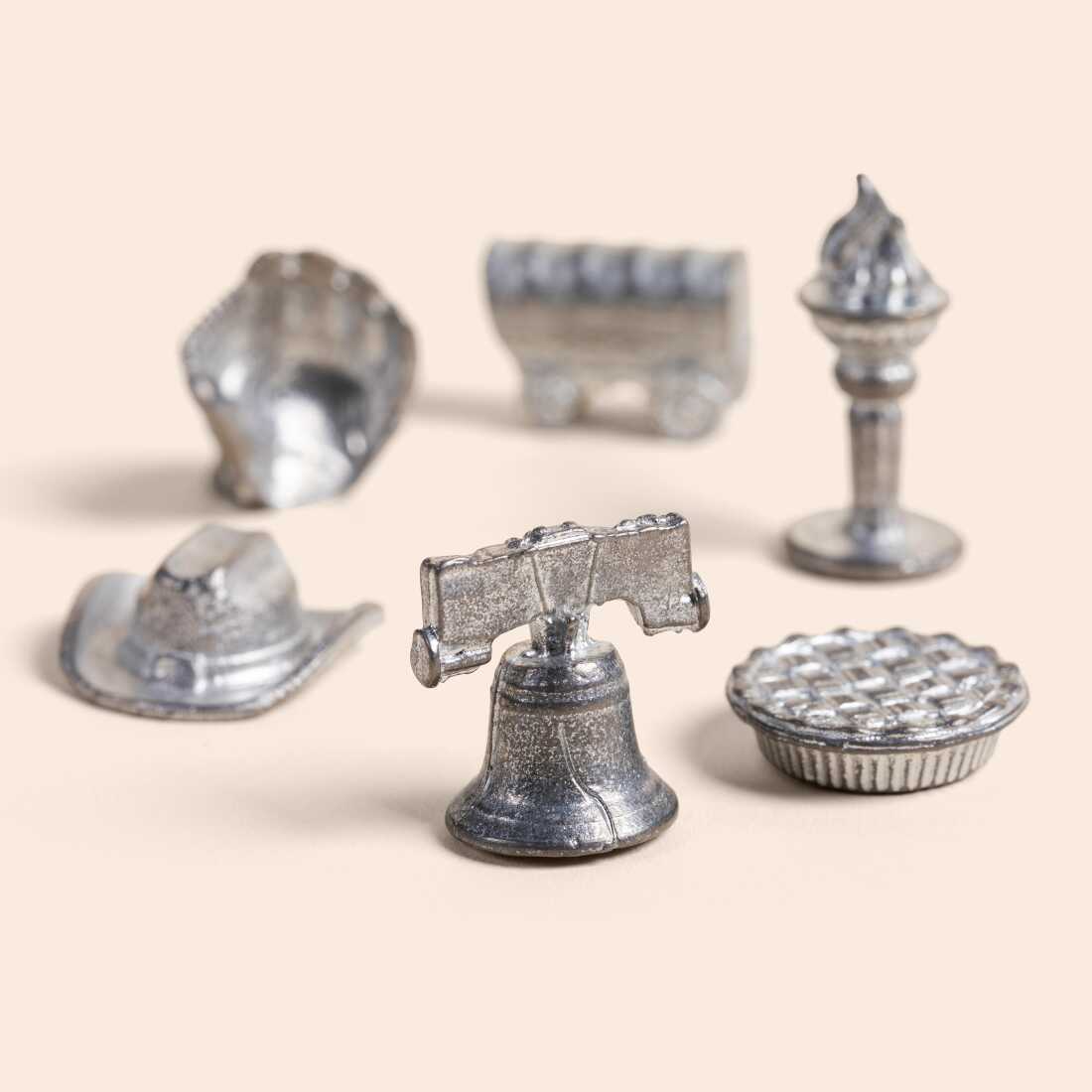
Stateline Industries in Liberty, Indiana fabricated the custom game pieces for the Monopoly Americana edition, with special shapes like a cowboy hat and an apple pie.

Stateline Industries in Liberty, Indiana fabricated the custom game pieces for the Monopoly Americana edition, with special shapes like a cowboy hat and an apple pie.

WS Game Company

hide caption

toggle caption

WS Game Company

Just assembling all those different players took more than a year, so Silva missed the first half of the 250th birthday selling season. And the cost to manufacture the games — which retail for $80 — was at least double what it would have been in China.

“When I place a purchase order in China, they have all those capabilities under one roof,” Silva says. “For one item, it took up way too much of our resources and time to bring it to market.”

Why so many things are made in China

There’s a reason nearly 80% of all toys and games sold in the U.S. are made in China. That country has spent decades building a factory ecosystem to supply not only finished products, but all the specialized parts that go into them.

“That’s why the re-shoring and the looking at bringing it back into the U.S. or even looking at other countries and moving it is not as easy as it sounds,” says Greg Ahearn, president and CEO of the The Toy Association, an industry trade group.

Richard Brown runs Proof Culture, a sneaker accessory company, out of his Ohio home. He is Black and has a beard. He is seated behind a computer monitor and there are sneakers in plastic display cases behind him.

President Trump shakes hands with China's President Xi Jinping as he leaves after a visit to Zhongnanhai Garden in Beijing on May 15.

Ahearn says it makes sense for the U.S. to manufacture some strategically important products, but probably not when it comes to most toys and games, which tend to carry both low prices and low profit margins.

“Even if you could, who in their right mind would take their capital and invest it into creating a toy manufacturing plant?” Ahearn says. “Of all the things you could pick, we’d probably be pretty low on that list.”

Instead, the toy industry is lobbying to get a carve-out from future tariffs. The new U.S.—China Board of Trade is considering allowing up to $30 billion worth of Chinese products to enter the U.S. tariff-free. But toys are competing for the tax break with shoes, apparel and many other products.

For now, Silva is busy marketing his Made in the U.S.A. Monopoly game. But he’s still making the rest of his company’s board games in China. And that’s not likely to change.

“We’re really good at a lot of great things here in America.” Silva says. “But we’re not really great at making certain items that are consumable goods. And that’s OK.”

He’s now awaiting a shipment from China of about $6 million worth of games for the upcoming holiday season. He has no idea what the tariff bill might be. But he’s prepared to roll the dice.

Free Training

Source link

Fulflex Acquires 300,000-Square-Foot Texas Medical Manufacturing Facility to Expand U.S. Healthcare Platform


Fulflex Acquires 300,000-Square-Foot, Fully Automated Medical Products Manufacturing Facility In Texas

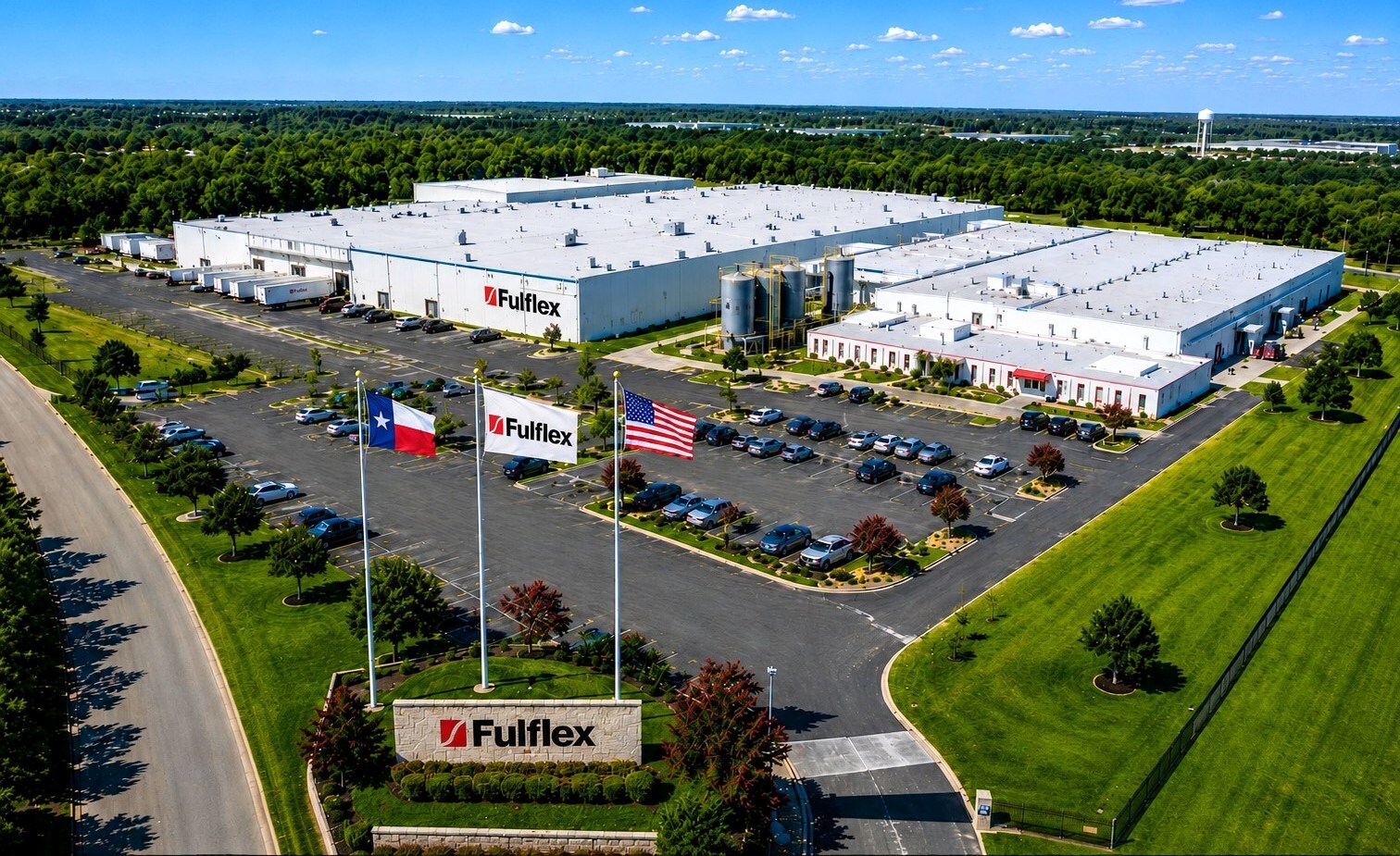
Fulflex has completed the acquisition of a 300,000-square-foot medical products manufacturing facility in Jacksonville, Texas, significantly expanding its North American production capacity and reinforcing its strategy to build a larger global healthcare manufacturing platform.

Located on a 30-acre campus, the facility becomes one of Fulflex’s largest and most advanced manufacturing sites worldwide. The acquisition also brings more than 250 employees into the company, strengthening its manufacturing workforce while establishing a larger operational presence in East Texas.

The Jacksonville facility produces a broad range of medical products used by healthcare providers and patients globally. Its manufacturing capabilities include plastics injection molding, blow molding, thermoforming, extrusion, automated assembly and other advanced production technologies, enabling Fulflex to increase output while supporting customers with scalable, high-quality manufacturing solutions.

“This is an exciting day for Fulflex and for the Jacksonville community,” said Diya Garware Ibanez, Chairperson of Fulflex. “We are delighted to officially welcome the Jacksonville team into the Fulflex family. This acquisition reflects our confidence in the exceptional people, the advanced manufacturing capabilities of this facility, and the long-term future of healthcare manufacturing in East Texas. We are committed to investing in this facility, creating new opportunities for our employees, supporting our customers with world-class manufacturing, and contributing positively to the Jacksonville community for many years to come.”

The acquisition expands Fulflex’s manufacturing footprint across North America while increasing capacity in polymer processing, medical device manufacturing and automated production. The additional facility also enhances supply chain resilience by providing greater geographic diversification and production flexibility for customers operating in global healthcare markets.

The investment aligns with Fulflex’s long-term strategy of expanding through advanced manufacturing assets that strengthen operational scale and support growing demand for medical products. The company said it plans to build on the Jacksonville facility’s existing capabilities through continued investments in manufacturing technology, quality systems, operational excellence and workforce development.

“Every acquisition begins and ends with people,” Garware Ibanez said. “The dedication, experience, and commitment of the Jacksonville employees are the foundation of this facility’s success. We are honored that so many talented people have chosen to continue this journey with us, and we look forward to building an organization where our employees can grow, our customers can succeed, and our community can thrive.”

The transition was formally marked with a community event attended by employees, customers, local officials and business leaders, underscoring the company’s commitment to maintaining the facility’s operations while investing in its long-term growth.

Following the acquisition, Fulflex operates 14 locations worldwide, including four manufacturing facilities in the United States, one manufacturing facility in the Dominican Republic, two manufacturing facilities in India, and seven sales offices and distribution centers across eight countries. The company’s global network serves customers in more than 85 countries, providing medical products and engineered polymer solutions for applications spanning medical devices, patient care, rehabilitation and personal protective equipment.

By expanding its U.S. manufacturing base with one of its largest production facilities, Fulflex is positioning itself to support increasing demand from healthcare customers while strengthening its role as a global contract manufacturing partner with enhanced capacity, operational flexibility and regional supply chain capabilities.

Free Training

Source link