

US manufacturing output unchanged in June, but accelerates in second quarter


U.S. factory production was unchanged in June, but grew at a robust pace in the second quarter, driven by an artificial intelligence build-up and businesses accumulating inventory in anticipation of shortages and higher prices due to the war in the Middle East.

The flat reading in manufacturing output last month reported by the Federal Reserve on Friday followed an ‌upwardly revised 0.1% ⁠gain in ⁠May. Economists polled by Reuters had forecast production edging up 0.1% after a previously reported unchanged reading in May. Output increased 1.1% year-on-year in June.
It grew at a 4.7% annualized rate in the second quarter, the fastest in five years, after expanding at a 1.4% pace in the January-March quarter.

Businesses are spending heavily on AI, keeping manufacturing, which accounts for about 9.4% of the economy, afloat. Motor ⁠vehicles and parts ‌production rose 0.7% over the month. Though output of computers and peripheral equipment fell 0.5%, it increased 9.2% year-on-year and rose at ⁠a 7.2% rate in the second quarter. Production of communications equipment increased 0.7% in June and grew at a 9.6% rate last quarter.

Output of semiconductors and related electronic components rose 0.5% last month and increased at a 10.2% pace in the second quarter. Production of long-lasting manufactured goods slipped 0.1% over the month, offseting a 0.2% gain in the output of non-durable goods.

ET logo

Live Events

Mining production rose 0.4% last month after increasing 1.1% in May. Energy ‌output increased 0.5%, with oil and gas well drilling rising 0.3%.
Utilities production rebounded 0.4% as higher temperatures boosted demand for air conditioning after dropping 0.7% in May. Overall industrial ⁠production edged up 0.1% last month after rising by the same margin in May. Industrial output increased 1.1% on a year-over-year basis in June. It grew at a 4.0% rate in the second quarter.

Capacity utilization for the industrial sector, a measure of how fully firms are using their resources, was unchanged at 76.1 in June. It is 3.3 percentage points below its 1972-2025 average. The operating rate for the manufacturing sector dipped to 75.7% from 75.8% in May. It is 2.5 percentage points below its long-run average.

Free Training

Source link

Stryten’s C&D Trojan Deal Expands U.S. Battery Manufacturing


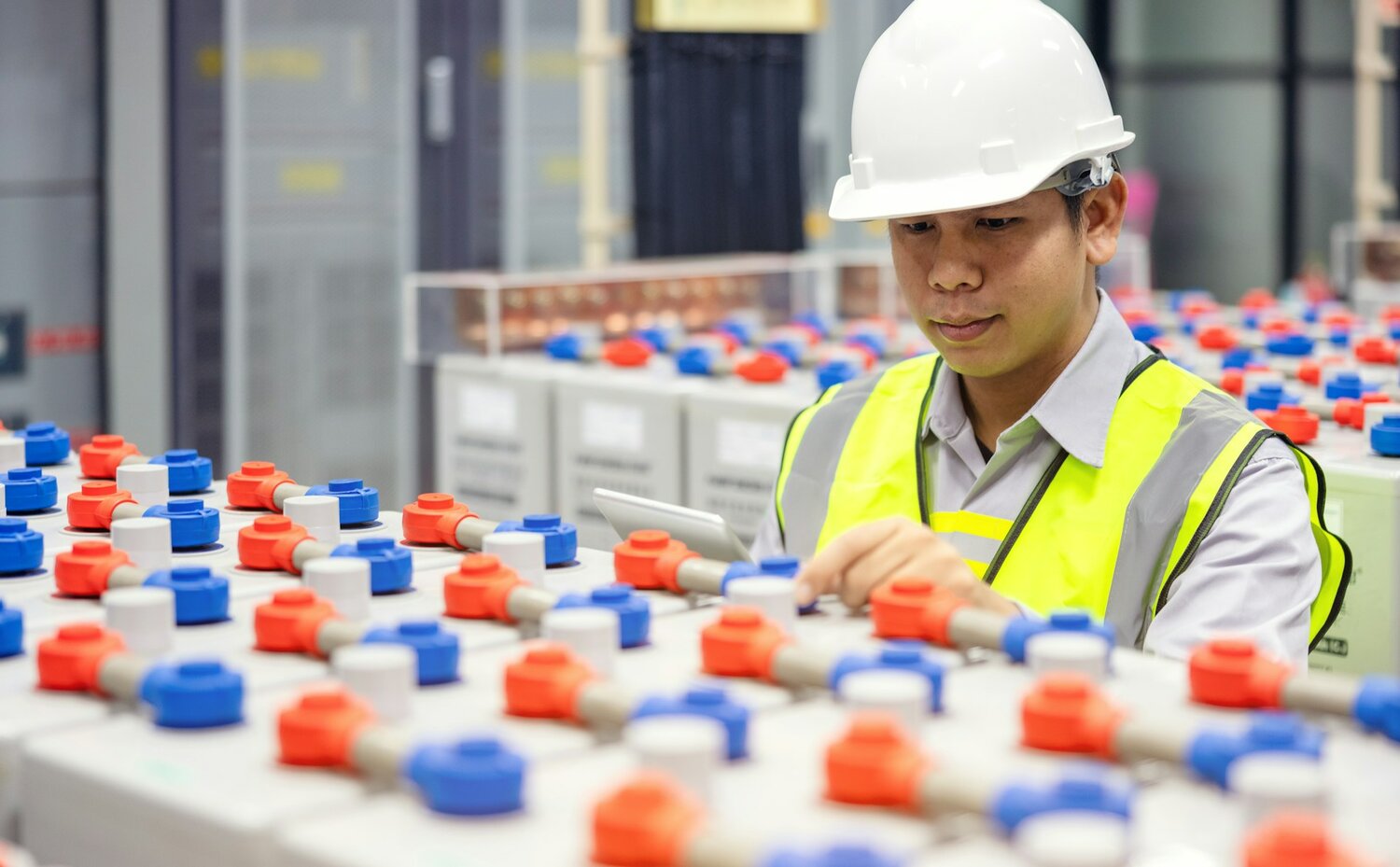
Stryten Energy has agreed to acquire C&D Technologies and Trojan Battery Company in a deal that would increase its U.S. manufacturing capacity and extend its reach across transportation, industrial and backup-power markets.

The companies announced the definitive agreement on July 13, 2026. Financial terms were not disclosed. The transaction is expected to close in the third quarter of 2026, subject to regulatory approvals and customary closing conditions.

Stryten President and CEO Mike Judd is expected to lead the combined business.

Deal Adds Manufacturing Capacity and New End Markets

Following the acquisition, Stryten expects to operate 15 battery and component manufacturing facilities in the United States, with a combined workforce of approximately 3,700 employees.

The larger production network could give the company more control over manufacturing, component sourcing and supply-chain planning. That may be particularly relevant as customers in infrastructure, defense and transportation place greater emphasis on domestic production and supply availability.

Stryten also plans to increase its capacity for absorbent glass mat batteries. AGM batteries are used in start-stop and hybrid vehicles, telecommunications equipment, data centers and other applications that require reliable backup power.

The transaction would also broaden Stryten’s customer base.

C&D Technologies supplies stationary battery systems for data centers, broadband networks, telecommunications providers, utilities and other critical infrastructure operators. Trojan Battery focuses on deep-cycle products used in golf carts, low-speed electric vehicles, aerial work platforms, floor-care equipment, recreational vehicles and marine applications.

Combining these operations would give Stryten exposure to a wider mix of transportation, motive-power and standby-power demand. Growth in data center construction, warehouse automation, hybrid vehicles and network infrastructure is creating additional demand for batteries, although purchasing decisions in these markets remain heavily influenced by reliability, cost and product availability.

Integration Will Determine the Deal’s Long-Term Impact

The acquisition would also expand Stryten’s international operations. C&D Trojan has manufacturing facilities in Mexico and China, research and development activities in the United States, and commercial offices across Europe and Asia.

That footprint could help the combined company support multinational customers and respond more directly to regional demand. It would also add operational complexity across manufacturing sites, product categories and distribution networks.

Stryten has presented the transaction as an opportunity to speed up product development and serve more applications with both advanced lead and lithium battery technologies. The practical results, however, will depend on how effectively the company integrates the acquired plants, supply chains, brands and sales operations.

Customers and competitors are likely to monitor any changes to product availability, pricing, distributor relationships and investment priorities after the deal closes.

The acquisition also increases Stryten’s exposure to military, government and mission-critical infrastructure customers. A larger domestic manufacturing base could support those markets, but regulatory approval, integration costs and execution risks remain important factors.

Free Training

Source link