

US Manufacturing Labor Productivity Growth Has Stagnated | Blogs | Jul 20, 2026


Manufacturing labor productivity growth is a key driver of the United States’ long-term economic performance and global competitiveness. Labor productivity measures how much output workers produce per hour. When it rises, firms can produce more goods with the same amount of labor, lowering unit labor costs and improving efficiency. This makes firms more competitive globally, supports higher wages over time, and strengthens the broader economy. Despite these benefits, data from the Bureau of Labor Statistics show that U.S. manufacturing productivity growth has slowed sharply since 2005. Congress should provide a 25 percent tax credit to firms adopting productivity-enhancing technologies, such as artificial intelligence systems and industrial robots. This would bolster overall manufacturing productivity growth and ensure that the United States remains competitive with its global rivals.

Labor productivity growth across industries drives a nation’s efficiency and competitiveness. When productivity growth is strong in all sectors, workers can produce more output per hour, allowing firms to scale production, reduce per-unit costs, and compete more effectively in global markets. Higher productivity also frees up resources for investment in research, capital equipment, and process innovation, reinforcing long-run technological leadership. Conversely, when productivity growth slows, unit labor costs rise relative to those of foreign competitors, weakening export competitiveness and limiting industrial expansion.

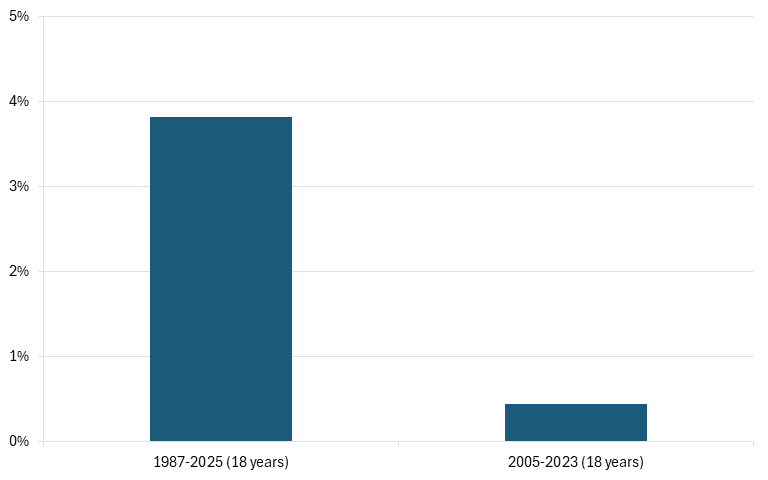
Despite its importance, U.S. manufacturing labor productivity growth has slowed dramatically in recent decades. From 1987 to 2005, manufacturing productivity grew at an average annual rate of 3.8 percent. However, from 2005 to 2023, its average annual growth rate fell to just 0.4 percent. (See figure 1.) This sustained decline points to a structural slowdown rather than merely a cyclical fluctuation, indicating a broad-based weakening in manufacturing productivity performance.

Figure 1:Manufacturing sector’s average annual growth rates
image

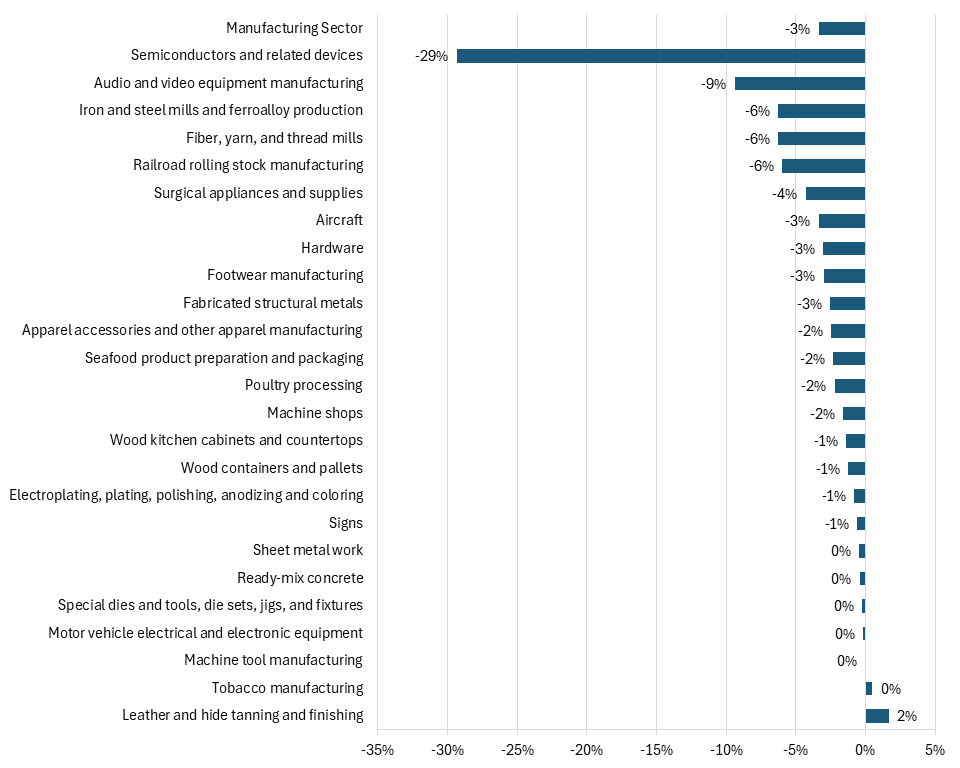
When disaggregated by industry, the data show that the slowdown remains widespread across the manufacturing sector. Of the 27 industries with available data, only 2 experienced higher productivity growth in the post-2005 period than from 1987 to 2005. Notably, both gains occurred in non-advanced industries: leather and hide tanning and finishing, where productivity growth rose by 1.7 percentage points, and tobacco manufacturing, where it increased by 0.5 percentage points.

In contrast, all advanced manufacturing industries for which data are available have experienced declines in productivity growth. For instance, annual productivity growth in computer and electronic product manufacturing fell from 1.9 percent from 1987 to 2005 to −1.2 percent from 2005 to 2023, a decline of roughly 3 percentage points. Aircraft manufacturing experienced a similar decline of about 3 percentage points during the same period. (See figure 2.)

Figure 2: Percentage point change in average annual growth rates from 1987-2005 period to 2005-2023 period, by manufacturing industries
image

This is particularly worrisome because China has significantly increased its production capacity in advanced industries and has already established leadership in many of them. As the latest edition of ITIF’s Hamilton Index highlights, China now dominates global production in advanced industries, accounting for nearly one-quarter of output across all 10 advanced industries combined and leading production in 7 of them. If U.S. productivity growth continues to stagnate in these sectors, the consequences will include not only slower economic growth but also a sustained loss of global market share in industries where leadership is difficult to regain once lost.

To reverse the slowdown in manufacturing productivity growth, Congress should establish a 25 percent tax credit for firms adopting productivity-enhancing technologies, including industrial robots, artificial intelligence systems, and advanced manufacturing software. By reducing the cost of technology adoption, the credit would encourage firms to modernize their production processes, increase output per worker, and strengthen their global competitiveness.

Free Training

Source link

DETPAK OPENS U.S. MANUFACTURING FACILITY IN SPARTANBURG, SOUTH CAROLINA


SPARTANBURG, S.C., July 20, 2026 /PRNewswire/ — Global packaging supplier Detpak today announced the opening of its new manufacturing facility in Spartanburg, South Carolina, strengthening its ability to support major Quick Service Restaurant (QSR) customers with locally produced, paper-based packaging solutions.

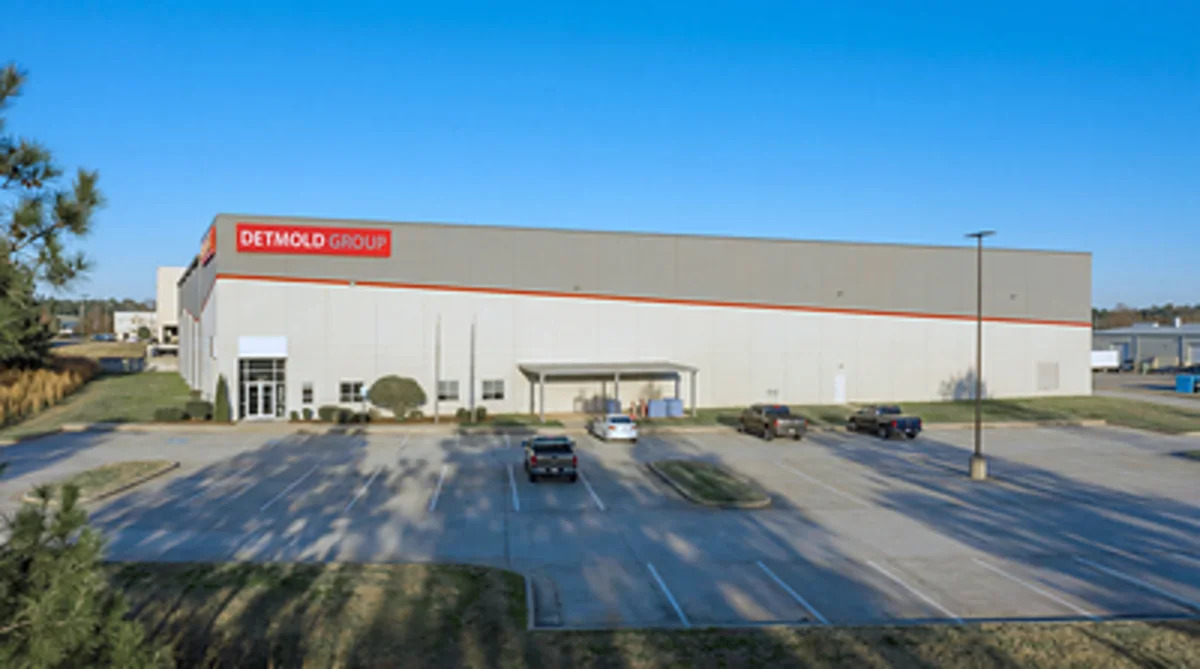
Detpak's new U.S. manufacturing facility in Spartanburg, South Carolina, strengthens local manufacturing capabilities and expands support for Quick Service Restaurant (QSR), foodservice, FMCG, and retail customers across North America. Learn more: https://www.detpak.com Detpak’s new U.S. manufacturing facility in Spartanburg, South Carolina, strengthens local manufacturing capabilities and expands support for Quick Service Restaurant (QSR), foodservice, FMCG, and retail customers across North America. Learn more: https://www.detpak.com

Detpak, a Detmold Group company headquartered in Australia, is a trusted packaging partner to some of the world’s largest and most recognizable QSR, foodservice, FMCG and retail brands, with experience supplying global customers such as McDonald’s, KFC, Starbucks, and Wendy’s. The company has supported customers in the United States for more than two decades, operates in 45 countries, and owns manufacturing facilities in eight countries.

The new US manufacturing facility marks a significant step in Detpak’s global expansion and reinforces its long-term commitment to the North American market. By combining its global expertise with local manufacturing capability, Detpak will be better positioned to support US customers with improved supply chain reliability, reduced lead times and greater operational flexibility.

“As we continue to grow our global footprint, opening our own manufacturing facility in the United States is a key milestone for our business,” CEO Sascha Detmold Cox said.

“It allows us to better support our customers with locally manufactured products and reinforces our commitment to the U.S. market where we have been supplying customers from our international plants for over 20 years. We’re focused on building long-term partnerships and delivering the same level of service, innovation and reliability that our customers experience globally.”

“We’re proud to be investing in the Spartanburg community and creating new employment opportunities in South Carolina.” Ms. Detmold Cox said.

Initially employing more than 50 people from the local community, the multi-million-dollar facility, spanning 175,000 square feet, is currently undergoing equipment commissioning, with full production commencing in August.

About Detpak and the Detmold Group

Wholly owned by the Detmold Group, Detpak designs, manufactures and supplies the Quick Service Restaurant (QSR), Fast-Moving Consumer Goods (FMCG), grocery and food services industry with world-class sustainable paper and cardboard packaging solutions. Detpak delivers a level of service and care that exceeds standards, with the understanding and operational integrity of a family-owned business. Many of the paper and board packaging products used in the fast-food industry, including from Starbucks, Uber Eats, Burger King and Krispy Kreme are supplied by Detpak.

Free Training

Source link

Samsung Biologics to acquire PolyPeptide for $1.8 bil.


The headquarters of Samsung Biologics in Songdo, Incheon / Courtesy of Samsung Biologics

The headquarters of Samsung Biologics in Songdo, Incheon / Courtesy of Samsung Biologics

Samsung Biologics said Monday it will acquire Swiss peptide drug manufacturer PolyPeptide Group through an all-cash public tender offer valued at approximately 1.46 billion Swiss francs ($1.8 billion), marking its largest overseas acquisition as it expands beyond antibody manufacturing into peptide therapeutics.

Samsung Biologics CEO John Rim

Samsung Biologics CEO John Rim

The Korean contract development and manufacturing organization (CDMO) will offer 44.31 Swiss francs per share for all outstanding shares of PolyPeptide, representing a 40 percent premium to the company’s unaffected closing price before acquisition rumors emerged in April.

The transaction, expected to close toward the end of 2026, is subject to shareholder approval, regulatory clearances and other customary conditions. Samsung Biologics must secure at least a two-thirds acceptance rate from shareholders. PolyPeptide’s largest shareholder, which owns about 55.7 percent of the company, has already agreed to tender its stake.

PolyPeptide’s board of directors unanimously recommended that shareholders accept the offer, saying the acquisition provides an attractive outcome for investors while positioning the company for its next stage of growth.

The acquisition significantly broadens Samsung Biologics’ manufacturing portfolio by adding peptide-based active pharmaceutical ingredients, a rapidly expanding market fueled by soaring demand for obesity and diabetes treatments, including GLP-1 therapies.

The company said combining its large-scale biologics manufacturing capabilities with PolyPeptide’s expertise will create an end-to-end multimodality CDMO platform spanning antibodies, antibody-drug conjugates (ADCs) and peptide therapeutics.

Founded more than 70 years ago, PolyPeptide is one of the world’s leading peptide CDMOs. The company has produced more than 1,000 therapeutic peptides and operates research, development and commercial manufacturing facilities in Sweden, Belgium, France, the United States and India, with its headquarters in Switzerland.

Samsung Biologics said the acquisition will also strengthen its global manufacturing footprint and enhance its ability to serve pharmaceutical customers across major markets.

“The acquisition reinforces our long-term growth strategy by broadening our service portfolio into peptides, including GLP-1 therapies, while further expanding our geographic reach across the United States, Europe and India,” Samsung Biologics CEO John Rim said.

He added that PolyPeptide’s technology, experienced workforce and global operations would complement Samsung Biologics’ existing capabilities and strengthen its position as a global multimodality CDMO.

PolyPeptide Chairman Peter Wilden described the deal as a transformational opportunity that would accelerate the Swiss company’s long-term growth while delivering immediate value to shareholders.

Samsung Biologics plans to launch the formal tender offer by the end of August, following procedures required under Swiss takeover law. After completing the acquisition, the company intends to buy out remaining minority shareholders and delist PolyPeptide from the SIX Swiss Exchange, making it a wholly owned subsidiary.

J.P. Morgan is serving as Samsung Biologics’ exclusive financial adviser on the transaction.

Free Training

Source link