


The Joy of Making Things: America’s Manufacturing Renaissance


Posted on Monday, July 6, 2026

|

by Kim Humphrey

|

0 Comments

|

Print

I still remember walking through the shipyard early in my career and looking up at a vessel that seemed to stretch endlessly. Thousands of people had contributed their skills, ideas, craftsmanship, and hard work to build something larger than any one person could accomplish alone.

There is a feeling that comes with that moment that is difficult to describe. Pride, purpose, and a sense of accomplishment. And perhaps most importantly, the realization that your work matters.

As someone who spent years in shipbuilding and manufacturing leadership, I have experienced that feeling many times. Standing beside a submarine, an aircraft carrier, a piece of equipment, or a product that will serve others for decades creates a connection between people and purpose that is hard to find anywhere else.

There is something deeply human about making things. Whether it is building ships, assembling aircraft, producing life-saving medical devices, designing semiconductors, manufacturing automobiles, creating advanced technologies, or producing products families use every day, manufacturing allows people to leave their fingerprints on the world around them.

You can point to something tangible and say, “I helped build that.” Few careers offer that opportunity.

For too long, we heard stories about manufacturing disappearing from America. Today, the story is changing. That is one of the reasons I love this industry so much.

Manufacturing people are builders by nature. They see a problem and ask, “How can we make this better?” They look at a process and wonder, “Is there a better way?” They collaborate, innovate, improve, and keep moving forward. That mindset built America.

And it continues to build America today.

Across the country, factories are expanding. Supply chains are returning home. New technologies are creating opportunities that did not exist just a few years ago. Communities are rediscovering the economic strength and stability that manufacturing brings.

We are witnessing an American manufacturing renaissance. And this renaissance will not be driven by machines alone. It will be driven by people.

One of the greatest misconceptions about manufacturing is that it is only for certain people or certain stages of life. The reality is exactly the opposite.

Manufacturing offers opportunities for recent high school graduates entering the workforce for the first time. It offers meaningful careers for veterans transitioning into civilian life. It provides opportunities for experienced professionals seeking a second career or a new challenge. There is room for builders, creators, coders, designers, mechanics, problem-solvers, innovators, and entrepreneurs.

If you enjoy learning, improving, creating, fixing, or working with others to accomplish something meaningful, there is a place for you in manufacturing. There always has been.

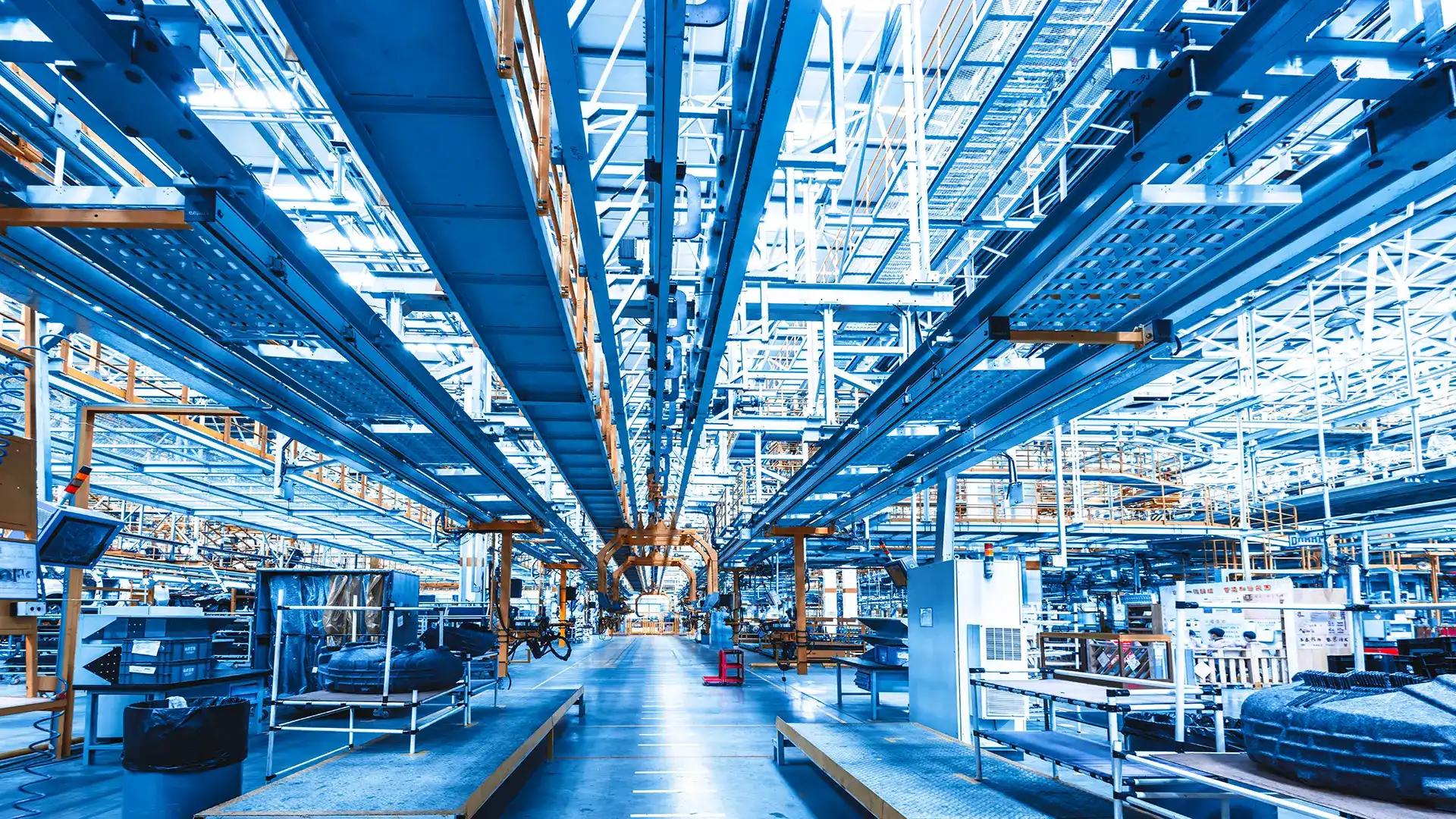
And today’s manufacturing facilities are not the factories many people remember from decades ago. They are clean, highly technical, innovative environments where advanced technologies and human ingenuity work side by side. Artificial intelligence, robotics, automation, and digital technologies are transforming how we work, but they are not replacing the need for people. Operational excellence begins and ends with people. People make the difference.

As someone who spent years in shipbuilding and automotive manufacturing leadership, I have seen firsthand the pride that comes from standing beside something you helped create and knowing it will serve communities, strengthen our economy, support our national security, or improve lives for years to come.

That feeling never gets old. There is joy in making things. There is dignity in building something that matters. There is pride in manufacturing.

America’s manufacturing renaissance needs all of us. America’s manufacturing story is still being written, and the next chapter may very well belong to someone who has not yet discovered the incredible possibilities this profession offers. Because there has never been a better time to make things in America.

And there has never been a better time to be part of America’s manufacturing story.

Kim Humphrey is the President/CEO Association for Manufacturing Excellence (AME.Org).

The opinions expressed by columnists are their own and do not necessarily represent the views of AMAC or AMAC Action.

Free Training

Source link

Survey Shows U.S. Manufacturing Expansion at Slower Pace


Reports related to this article:

Written by Danny Levin, Deputy Editor for IIR News Intelligence (Sugar Land, Texas)

Summary

Economic activity in U.S. manufacturing expanded for the sixth straight month, according to the ISM’s latest PMI survey, but at a slightly slower pace than in May.

U.S. Manufacturing Activity Rolls On

The Institute of Supply Management’s (ISM) Purchasing Managers Index showed economic activity in U.S. manufacturing expanded for the sixth straight month in June, but at a slightly slower pace month-over-month. Respondents to the accompanying survey continue to express concern around the Iran war and U.S. trade policy, although price pressures lessened.

The PMI, which tracks 18 manufacturing sectors in the U.S., registered 53.3% in June, down from 54% in May–indicating slightly slower growth month-over-month. But that figure still is up from 52.7% in both April and March. Any reading over 50% indicates expansion in the manufacturing economy.

According to Industrial Info Resources data, there is $655 billion worth of projects under construction in the U.S. Industrial Manufacturing Industry; more than half of the investment is attributed to data centers and semiconductors. The Global Market Intelligence (GMI) Project Database offers a full list of projects.

Any reading under 50% indicates contraction in the manufacturing economy.

Although “the ongoing war and price volatility” remain a worry, “the badness is better than last month,” Susan Spence, chair of ISM’s Manufacturing Business Survey Committee, said during a news media call on July 1.

Two of the four demand indicators–the New Orders and Backlog of Orders indexes–expanded in June, albeit at a slightly slower pace than in May. In terms of output, production also grew at a slower rate month-over-month, but the survey showed Supplier Deliveries (delivery times) are slowing–which is considered positive for future production.

In addition, the Employment and Inventories indexes improved, with the latter entering expansion territory.

Iran War’s Effect on Sentiment


“In June, 34% of the comments were positive and 66% negative, with a 1-to-1.9 ratio of positive to negative sentiment,” she said in the report summary of findings. “Among negative comments, the Iran war was mentioned in 31% and tariffs in 17%; 50% of the panelists mentioned pricing volatility as an issue for their companies.”

That is an improvement from May’s ratio of 1-to-2.7.

Although June’s Prices Index, an indicator of input and raw materials costs, continues to show elevated price pressures, the reading of 73% improved from May’s 82.1%.

The elevated index continues to be driven by increases in steel and aluminum prices impacting the entire value chain; tariffs applied to many imported goods; and increases in petroleum-based products as a result of the recent Middle East conflict.

“Prices are going in a really wonderful direction,” Spence said on the media call. Speaking to the survey comments, “it is all about pricing,” and she was “erring on the caution’s side” in forecasting the business environment for the second half of the year. But she also noted that “optimism is there and it’s creeping in.”

“The conflict in Iran has impacted pricing in every category of raw materials,” one respondent from Chemical Products said. “Especially, items that have a heavy concentration of oil in the components like our adhesives.”

Price instability is forcing a “more conservative approach to capital expenditures,” another respondent in the Computer & Electronic Products sector said.

The ISM considers semiconductors and data-center components to be part of the sector.

Data Center Construction, Semiconductors Drive Strong Manufacturing Capex


South Korea-based semiconductor company SK Hynix is building out its U.S. production capacity via a roughly $4 billion grassroot plant in West Lafayette, Indiana. The 430,000-square-foot packaging fabrication plant and research and development hub will support high bandwidth memory (HBM) chips used for artificial intelligence. Production is expected to begin in 2028.

High-dollar data center projects include the estimated $650 million construction of Building 11 at Google’s Moncks Corner Data Center in South Carolina. The 275,000-square-foot addition is designed to help support services such as Google Cloud and Gmail. The project is expected to wrap up next year.

Readers can view the two project reports.

Key Takeaways

  • The ISM’s PMI survey shows U.S. manufacturing activity expanded for the sixth straight month in June but at a slightly slower pace compared with May.
  • The Iran war is driving ongoing price pressures for manufacturers, although they indicated that is easing.
  • Data centers and semiconductors buoy U.S. manufacturing-related construction underway, according to Industrial Info Resources data.

About Industrial Info Resources
Industrial Info Resources (IIR) is the leading provider of industrial market intelligence. Since 1983, IIR has provided comprehensive research, news and analysis on the industrial process, manufacturing and energy related industries. IIR’s Global Market Intelligence (GMI) helps companies identify and pursue trends across multiple markets with access to real, qualified and validated plant and project opportunities. Across the world, Industrial Info Resources is tracking over 250,000 current and future projects worth $30.2 trillion (USD).

Free Training

Source link