
Contributor: Why Trump is manufacturing a new crisis in Cuba


With the United States’ attention fixed on Iran, Venezuela and other crises, the Trump administration’s increasing pressure campaign against Cuba has largely unfolded in the background. That may be why it has drawn less attention than other major foreign policy efforts. But the pieces add up to something larger than routine sanctions policy.

In January, President Trump declared Cuba an “unusual and extraordinary threat” to U.S. national security and foreign policy, accusing Havana of hosting adversary intelligence capabilities, aligning with Russia, China, Iran, Hamas and Hezbollah, supporting terrorism, destabilizing the hemisphere through migration and violence, and spreading communism throughout the region.

Since then, the administration has tightened sanctions, disrupted shipping, amplified warnings about drones and connections to Iran, expanded the U.S. naval presence in the region and recently indicted former Cuban president Raúl Castro. Trump sent CIA Director John Ratcliffe to Havana to warn Cuban officials against hostilities while urging political change as a path to relief from U.S. sanctions.

This all looks less like a response to a sudden crisis than the construction of one. Recent reporting that the Pentagon has positioned forces in the Caribbean capable of supporting strikes against Cuba reinforces the concern. No one on Trump’s team has answered the immediate question of what this pressure is meant to accomplish. The harder question is whether the administration is creating the very crisis it may later claim to be managing.

Maybe White House officials believe this pressure will force Havana to capitulate. But to what? Regime change? Democratization? Deterrence? Negotiation? No one has clearly said. And while Trump’s team searches for a theory of success, ordinary Cubans are the ones absorbing the cost.

Questioning these efforts is not a defense of the Cuban regime. Cuba remains authoritarian and economically mismanaged. Its leaders have denied their people political freedom and presided over decades of hardship. But a government can be repressive without posing an imminent threat to the United States. No one has made the case that Cuba does.

Reporting about Cuban drones illustrates the problem. According to Axios, U.S. officials said Cuba has acquired more than 300 military drones “of varying capabilities,” discussed possible attacks on Guantánamo Bay, U.S. vessels and possibly Key West, Fla. and studied how Iran resisted the United States militarily. But the same reporting explicitly notes that U.S. officials do not believe Cuba is an imminent threat or actively planning attacks.

Cuba’s efforts to harden itself against U.S. pressure are not proof of hostile intent. They are evidence that Havana can read the strategic environment. After watching Iran impose costs on the United States, any weak government facing sustained pressure would study how to survive U.S. coercion. The danger is that the Trump administration will weaponize predictable defensive preparation as evidence of Cuban aggression and use it to justify a confrontation it has not explained.

Trump has not earned the benefit of the doubt when it comes to strategy or justification. In Iran, his administration claimed an imminent threat even as officials with access to intelligence disputed that basis. In Venezuela, it described the capture of President Nicolás Maduro as an act of self-defense and law enforcement even as the operation blurred into military force and regime change in ways legal experts continue to contest. Cuba now shows similar warning signs: extraordinary pressure, expansive threat claims and no clear explanation of success.

This is not subtle pressure. Earlier this year, Foreign Policy reported that administration officials viewed energy as the regime’s “chokehold.” But fuel restrictions and disrupted shipping do not fall first on governments. They fall on families. For ordinary Cubans, the pressure shows up in darkened homes, stalled hospitals and empty store shelves. Reuters reported in March that nearly 100,000 Cubans were awaiting surgery, including 11,000 children, as shortages and blackouts strained the country’s health system.

Pressure is an instrument of state power. It is not a strategy by itself. Serious statecraft does not begin with pressure and hope the objective appears later. It defines a political end, chooses instruments suited to that end and considers who will bear the cost.

For more than 60 years, the United States has tried to pressure Cuba’s leadership into breaking or disappearing. It did not happen. The regime has endured. The people of Cuba absorbed the cost.

If the objective now is to help Cubans build a freer society, the administration should explain how cutting off fuel and deepening scarcity strengthens them. Hunger and blackouts do not build democratic institutions. Scarcity won’t facilitate the transfer of power from the regime to its people.

There is also a question of democratic accountability. This is not a Cuba policy debate in the abstract. American power is being used to deepen scarcity in a nearby country already facing severe hardship. If that is being done in the name of the American people, the public deserves more than vague warnings about drones and Iran. It deserves to know what humanitarian cost the administration is willing to impose, what political outcome is supposed to follow and who will answer if the pressure produces suffering without change.

If the goal of this effort is deterrence, what exactly are we deterring? If the goal is regime change, why should Americans believe another round of coercion will succeed where decades of pressure have failed? If the goal is democratization, how does making life harder for ordinary Cubans strengthen their political power?

Congress should not wait for a crisis to ask these questions. If sanctions, intelligence claims and criminal charges are being used to build toward military action or regime change, lawmakers should force that debate into the open now. If the policy is something short of that, the administration should be able to say what it is.

Before Americans accept another emergency narrative, this time about Cuba, the administration should have to explain why ordinary Cubans are being asked to suffer for a strategy it has not bothered to define.

Jon Duffy is a retired naval officer. He writes about leadership and democracy.

Free Training

Source link

The U.S. will have more than 950 clean energy manufacturing facilities by 2030: report


A report from the American Clean Power Association (ACP) examines the breadth and impact of the clean energy manufacturing sector in the United States.

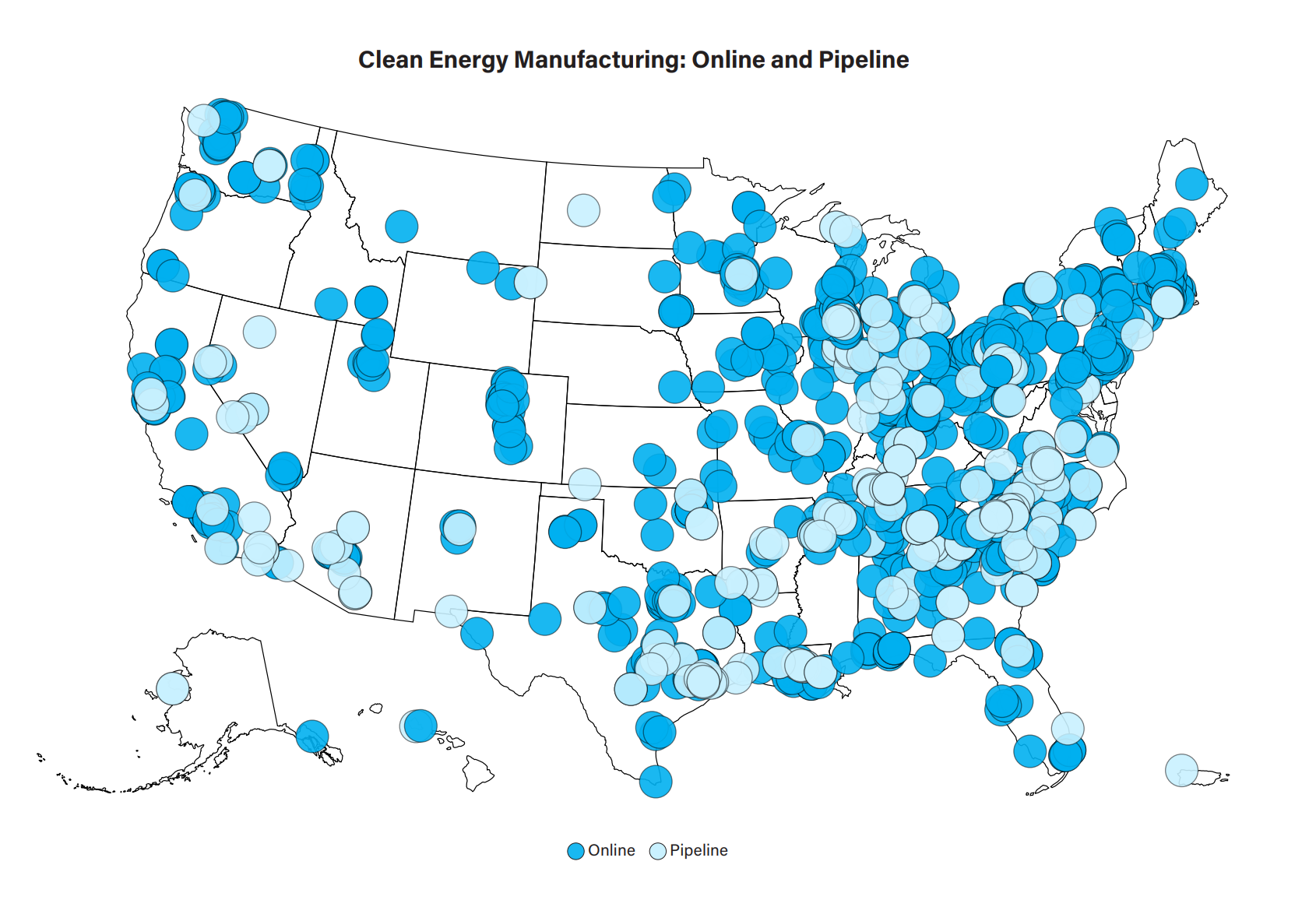
The report, called America Builds Power: The State of Clean Energy Manufacturing in 2026, covers 825 currently-active manufacturing facilities in all 50 states. The researchers identified 50,000 direct workers at the facilities, who make average salaries 35% greater than the national average. 

In addition to direct employment, the report states 50,000 jobs have been created to support upstream activities related to clean energy manufacturing activity, alongside nearly 107,000 jobs generated based on household spending by the original workers (induced jobs). 

Added together, the ACP says the total effective employment impact of clean energy manufacturing is 215,700 jobs, with 106,100 accounted for by solar manufacturing, 53,100 from energy storage manufacturing and 56,500 from wind.

In addition to employment related to operation and economic activity from the manufacturing facilities, the report outlines the impact of facility construction. The ACP finds that construction of new or expanded clean energy manufacturing facilities in 2025 supported 207,000 jobs and led to over $20 billion in increased GDP.

The top states by total GDP from clean energy component manufacturing include Texas, where much of the newest solar module capacity has been built, Michigan and Illinois, in which LFP battery cell manufacturing is king, Ohio, home of First Solar’s largest thin-film production facilities, and Georgia, where Qcells operates a vertically-integrated ingot-to-module manufacturing hub.

Looking toward the future

Chart showing existing and expected manufacturing capacity for solar modules and cells, battery modules and cells, and wind energy nacelles and towers.

By 2030, the ACP expects the number of jobs due to solar manufacturing to grow by more than 63,000, with annual solar module production capability ramping from 63 GW at the end of 2025 to over 85 GW by the end of the decade, with solar cell production capacity rising to about half that of modules.

The numbers for future energy storage manufacturing-related jobs are even higher, expected to grow by over 91,000 as battery module manufacturing capacity doubles from 75 to more than 150 GWh, and domestic LFP cell capacity jumps to over 130 GWh by 2030. Similarly huge increases are expected in the domestic production of anode and cathode materials and lithium processing.

Increases in the production capacity of and employment related to wind energy manufacturing are projected to increase by small amounts, with an estimated 2,400 new jobs expected through 2030. The relatively small predicted increases are due to current domestic production capacity already exceeding demand, with only slow growth expected in that demand.

Upcoming events

The topics covered in the ACP report echo those that will be explored in two upcoming events from pv magazine USA

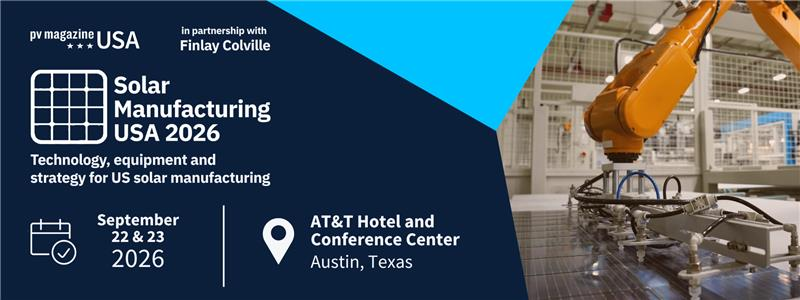
The first of these events is Solar Manufacturing USA 2026, a live conference co-organized with Finaly Colville of Terawatt PV Research, to be held at the AT&T Hotel and Conference Center in Austin, Texas on September 22 and 23, 2026. 

Solar Manufacturing USA event banner

Representatives from companies throughout the domestic solar and energy storage supply chains will gather for networking events and sessions related to technology, facility construction, operations, procurement and materials sourcing. 

Current partners include T1 Energy, SEG Solar and Talon PV. Attendees are expected to include CTOs, heads of R&D, manufacturing and operations leaders, procurement teams, commercial and strategy executives, and specialists involved in supply-chain, quality and market-entry decisions.

USA Week 2026 event banner

The second event is pv magazine USA Week 2026, a virtual event held on October 20, 21 and 22. 

The theme for day one of the event is U.S. Solar Manufacturing: From Announcement to Implementation. The day’s program will feature a keynote address from a leader in the U.S. solar manufacturing space, and a panel discussion moderated by pv magazine USA senior editor Ryan Kennedy. Further details and registration will be available at the end of the summer. Partnerships are available for booking now at the event page on our global website.

Free Training

Source link

Simplay3 Celebrates American Manufacturing with Limited Edition S


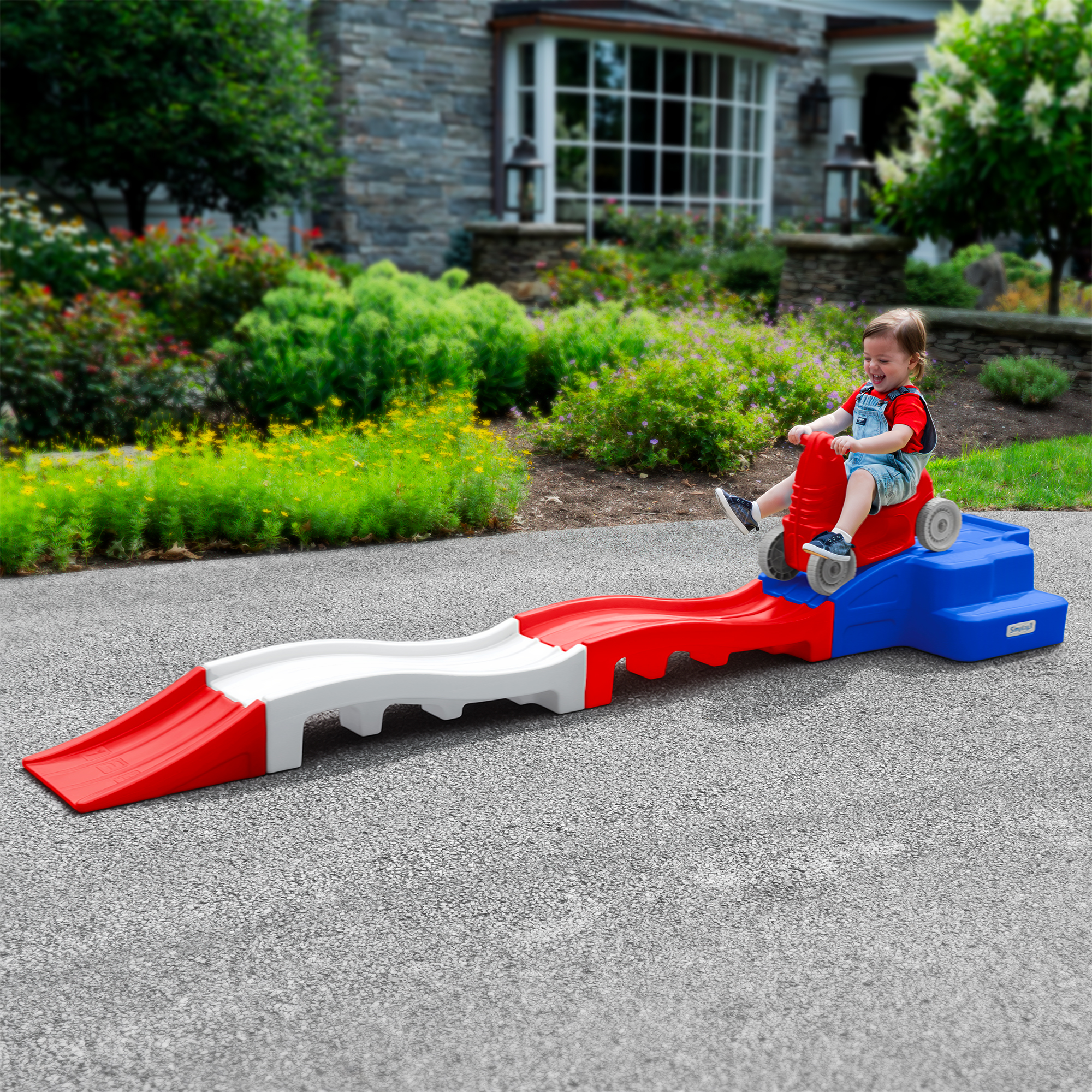
A young child playing on a red, white, and blue miniature rollercoaster.

Little ones can roll into fun with the Deluxe Expandable Kids Roller Coaster.

Two boys playing with a red, white, and blue racetrack. Two cars are sliding down.

The Fast Track Downhill Raceway is a great choice for kids who love cars and racing.

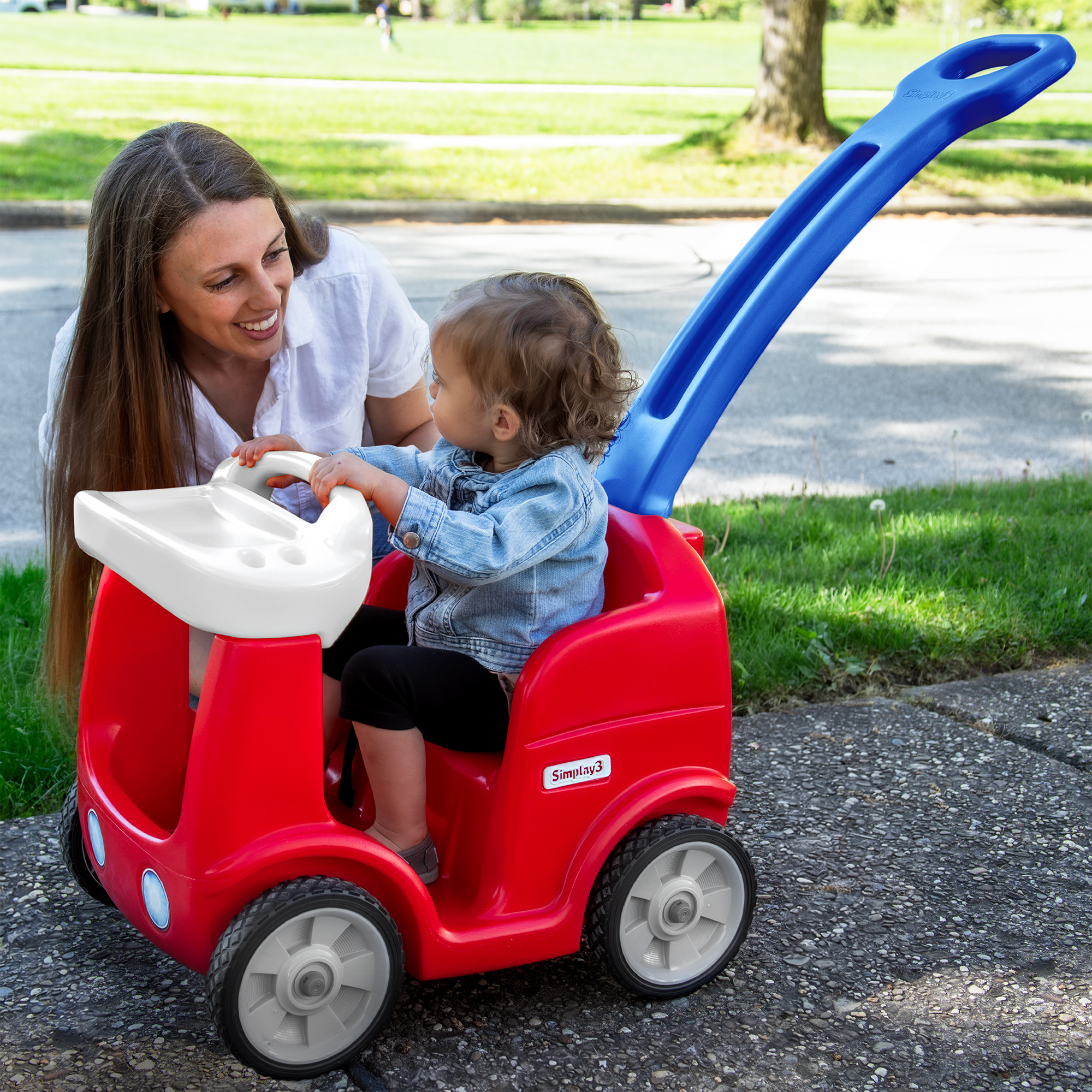
A mom kneeling next to her daughter as she sits in a red toy car.

With quiet ride wheels and an attached tray, the Roll & Stroll Quiet Ride Push Car helps bring everyone along for the fun!

To commemorate America’s Semiquincentennial, the small business is releasing a special line of some of their bestselling products.

STREETSBORO, OH, UNITED STATES, May 29, 2026 /EINPresswire.com/ — In celebration of America’s Semiquincentennial, Simplay3 has launched a line of limited edition red, white and blue products that can help families celebrate this momentous occasion. The veteran-owned company is excited to share this collection and be a part of the celebration that directly supports their mission and values.

All of the products in this new line give homage to the innovations and strides forward America has made in design, engineering, and manufacturing. With connections to multiple types of play, this line comprises some of Simplay3’s bestsellers. From viral ride-on toys like the Galaxy Glider, to one-piece racetracks and even pool accessories and mailboxes, this collection sees the significance of making products in the US and “doing it right”, as owner and veteran Tom Murdough has put into practice through his entire career. These products are designed for everyday use, and are built to last. From block parties to backyard barbecues, everything is made with durable resin that is UV resistant and ready for any occasion.

Since being founded in 2016, Simplay3 has been dedicated to spreading joy through simple play, and being a part of the spaces America calls home. Simplay3’s story is synonymous with America’s story, bringing people together and igniting innovation through their products. Founder Tom Murdough is a pioneer of American manufacturing and toy making, and that effort is reflected in all of Simplay3’s catalog being designed and manufactured in Northeast Ohio. The goal is to deliver durable, high-quality toys and home goods that offer more opportunities for simple play, and more green time over screen time for kids and adults alike, bringing families together in the nation’s greatest celebration – America’s 250th.

Sophia Sainato
The Simplay3 Company
+1 866-855-0100
email us here

Legal Disclaimer:

EIN Presswire provides this news content “as is” without warranty of any kind. We do not accept any responsibility or liability
for the accuracy, content, images, videos, licenses, completeness, legality, or reliability of the information contained in this
article. If you have any complaints or copyright issues related to this article, kindly contact the author above.

Free Training

Source link