


The U.S. will have more than 950 clean energy manufacturing facilities by 2030: report
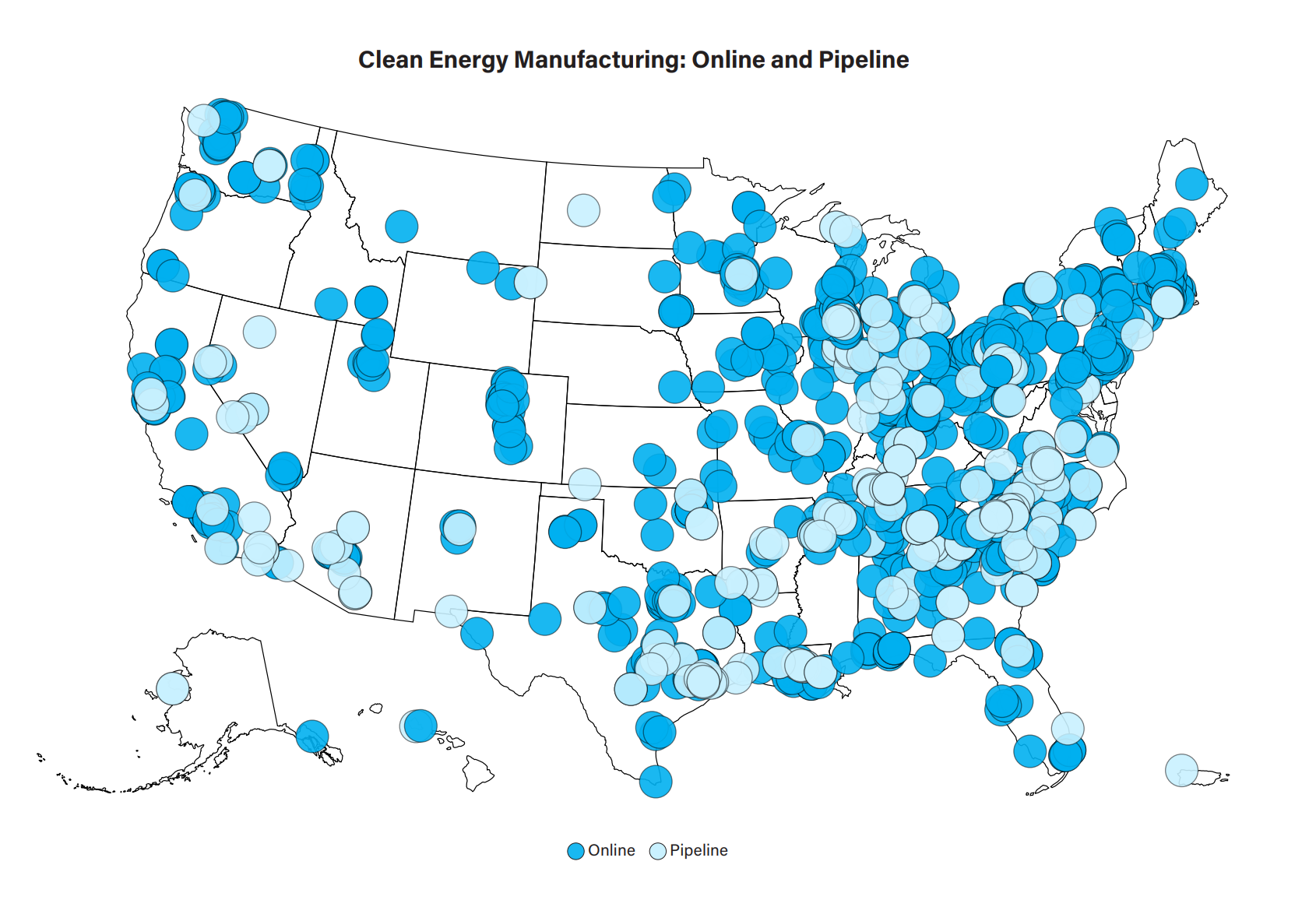
A report from the American Clean Power Association (ACP) examines the breadth and impact of the clean energy manufacturing sector in the United States.
The report, called America Builds Power: The State of Clean Energy Manufacturing in 2026, covers 825 currently-active manufacturing facilities in all 50 states. The researchers identified 50,000 direct workers at the facilities, who make average salaries 35% greater than the national average.
In addition to direct employment, the report states 50,000 jobs have been created to support upstream activities related to clean energy manufacturing activity, alongside nearly 107,000 jobs generated based on household spending by the original workers (induced jobs).
Added together, the ACP says the total effective employment impact of clean energy manufacturing is 215,700 jobs, with 106,100 accounted for by solar manufacturing, 53,100 from energy storage manufacturing and 56,500 from wind.
In addition to employment related to operation and economic activity from the manufacturing facilities, the report outlines the impact of facility construction. The ACP finds that construction of new or expanded clean energy manufacturing facilities in 2025 supported 207,000 jobs and led to over $20 billion in increased GDP.
The top states by total GDP from clean energy component manufacturing include Texas, where much of the newest solar module capacity has been built, Michigan and Illinois, in which LFP battery cell manufacturing is king, Ohio, home of First Solar’s largest thin-film production facilities, and Georgia, where Qcells operates a vertically-integrated ingot-to-module manufacturing hub.
Looking toward the future

By 2030, the ACP expects the number of jobs due to solar manufacturing to grow by more than 63,000, with annual solar module production capability ramping from 63 GW at the end of 2025 to over 85 GW by the end of the decade, with solar cell production capacity rising to about half that of modules.
The numbers for future energy storage manufacturing-related jobs are even higher, expected to grow by over 91,000 as battery module manufacturing capacity doubles from 75 to more than 150 GWh, and domestic LFP cell capacity jumps to over 130 GWh by 2030. Similarly huge increases are expected in the domestic production of anode and cathode materials and lithium processing.
Increases in the production capacity of and employment related to wind energy manufacturing are projected to increase by small amounts, with an estimated 2,400 new jobs expected through 2030. The relatively small predicted increases are due to current domestic production capacity already exceeding demand, with only slow growth expected in that demand.
Upcoming events
The topics covered in the ACP report echo those that will be explored in two upcoming events from pv magazine USA.
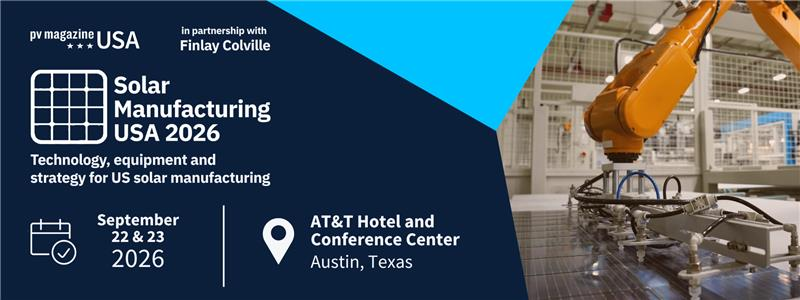
The first of these events is Solar Manufacturing USA 2026, a live conference co-organized with Finaly Colville of Terawatt PV Research, to be held at the AT&T Hotel and Conference Center in Austin, Texas on September 22 and 23, 2026.
Representatives from companies throughout the domestic solar and energy storage supply chains will gather for networking events and sessions related to technology, facility construction, operations, procurement and materials sourcing.
Current partners include T1 Energy, SEG Solar and Talon PV. Attendees are expected to include CTOs, heads of R&D, manufacturing and operations leaders, procurement teams, commercial and strategy executives, and specialists involved in supply-chain, quality and market-entry decisions.

The second event is pv magazine USA Week 2026, a virtual event held on October 20, 21 and 22.
The theme for day one of the event is U.S. Solar Manufacturing: From Announcement to Implementation. The day’s program will feature a keynote address from a leader in the U.S. solar manufacturing space, and a panel discussion moderated by pv magazine USA senior editor Ryan Kennedy. Further details and registration will be available at the end of the summer. Partnerships are available for booking now at the event page on our global website.
