


Apple to bring Mac mini production to Houston in major US manufacturing expansion
Apple has announced a significant expansion of its Houston manufacturing operations, confirming that production of the Mac mini will move to the United States for the first time as part of a broader investment in advanced manufacturing and AI infrastructure.
The move will also see Apple expand AI server production at the Texas site and open a new Advanced Manufacturing Center later this year, initiatives that together are expected to create thousands of jobs.
Bringing Mac mini production Stateside
Apple said Mac mini manufacturing will begin later in 2026 at a new factory within its Houston campus, effectively doubling the site’s footprint. The compact desktop computer has been a core part of Apple’s product lineup for more than two decades, and the decision marks a notable shift in the company’s global manufacturing strategy.
According to Apple CEO Tim Cook, the investment reflects the company’s growing commitment to U.S. manufacturing capacity: “Apple is deeply committed to the future of American manufacturing, and we’re proud to significantly expand our footprint in Houston with the production of Mac mini starting later this year.”
The move follows a wider trend among technology firms seeking to diversify supply chains and expand domestic production capacity, particularly in high-value electronics manufacturing.
Expansion of AI server manufacturing
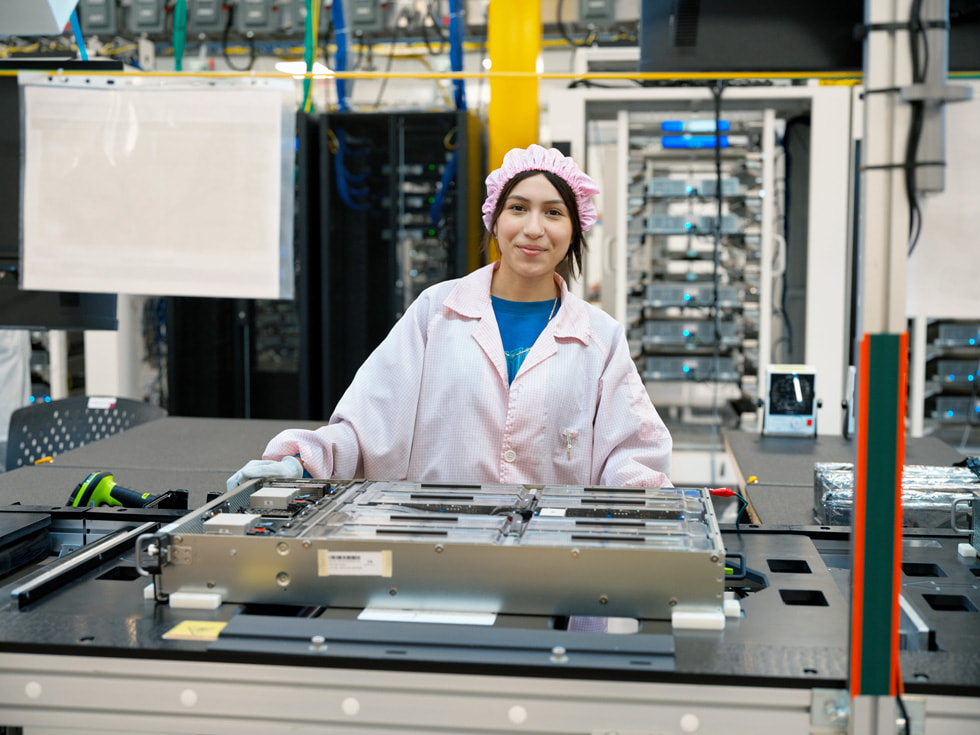
Alongside Mac mini production, Apple is ramping up output of advanced AI servers at the Houston site. The company began assembling servers there in 2025, with production already ahead of schedule.
Servers built in Houston—including logic boards produced onsite—are used in Apple data centres across the United States. The expansion reflects Apple’s growing investment in artificial intelligence infrastructure, an area that has become central to both consumer devices and cloud services.
Cook noted the accelerated rollout of AI server production as an early success for the site: “We began shipping advanced AI servers from Houston ahead of schedule, and we’re excited to accelerate that work even further.”
Investing in skills and workforce development
Beyond hardware production, Apple is also investing in workforce development with the launch of a 20,000-square-foot Advanced Manufacturing Center in Houston. The facility, currently under construction, will provide hands-on training in advanced manufacturing techniques.
The centre is expected to train students, supplier employees, and small- and medium-sized manufacturers in processes used in Apple’s own production lines. Apple engineers will lead training sessions designed to help U.S. manufacturers adopt new technologies and improve efficiency.
The company said the initiative aims to strengthen the domestic manufacturing ecosystem while building a pipeline of skilled workers.
Strategic implications for North American manufacturing
Apple’s expansion comes amid a broader push to localise manufacturing in North America, driven by supply-chain resilience concerns, geopolitical tensions, and government incentives.
Bringing Mac mini production to Houston signals that high-tech consumer electronics assembly—traditionally concentrated in Asia—may increasingly be split across multiple regions. Meanwhile, Apple’s investment in AI server production reflects surging demand for data-centre hardware as artificial intelligence applications expand.
For Houston, the project adds another high-profile technology manufacturing investment to the region’s growing industrial base.
A long-term commitment
Apple’s announcement highlights how technology companies are blending product manufacturing, infrastructure development, and workforce training into integrated investment strategies.
By combining Mac mini assembly, AI server production, and advanced manufacturing training, Apple is positioning Houston as a key node in its global supply chain—while signalling a deeper commitment to U.S. manufacturing capacity.
As reshoring momentum continues across North America, Apple’s move could encourage other electronics manufacturers to consider similar strategies, particularly for high-value or strategically important products.