

Byrna Technologies moves manufacturing to US amid tariff concerns
Byrna Technologies CEO Bryan Ganz discusses the company’s efforts to ramp up its U.S. manufacturing operations.
A company that makes self-defense products has spent the last few years moving much of its manufacturing to the U.S. and is finding the benefits extend beyond having the ability to put a “Made in America” label on their products.
Byrna Technologies, which makes non-lethal personal security devices that can launch plastic or chemical irritant rounds, moved its main manufacturing facility from South Africa to Indiana in 2021 and began finding qualified U.S. component suppliers to prevent supply chain disruptions like what transpired during the pandemic.
“There are over 100 components that go into our launchers, we wanted redundancy on all of them,” Byrna Technologies CEO Bryan Ganz told FOX Business. “Generally, the offshore manufacturers were a little bit less expensive, so they got the majority of the production.”
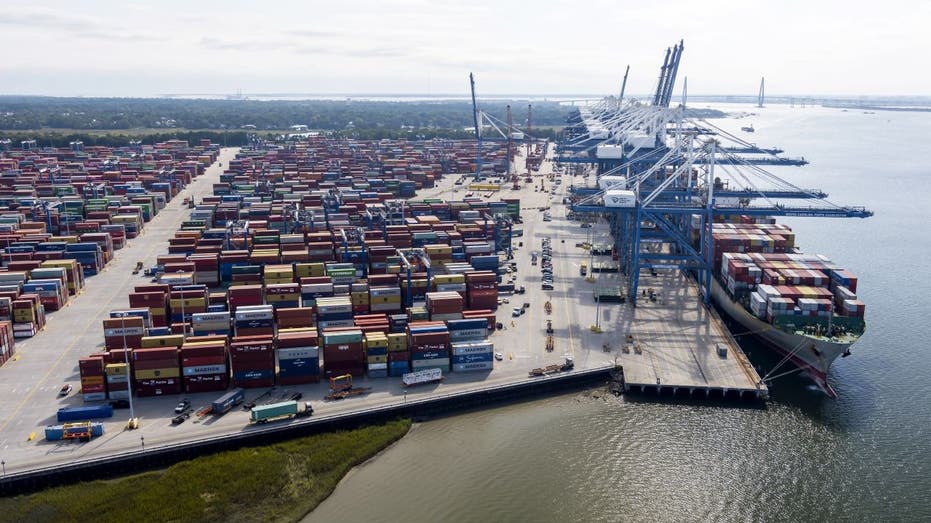
Byrna Technologies moved its main manufacturing facility from South Africa to Indiana in 2021. (Sam Wolfe/Bloomberg via Getty Images)
“But when it was evident that Donald Trump was going to be elected president, we said, ‘You know what, he’s been very, very vocal about tariffs, this is probably a good time for us to start the process of moving the supply chain back on-shore,'” Ganz said.
BYRNA TECHNOLOGIES CEO ‘PLEASED’ WITH TRUMP TARIFFS HITTING CHINESE RIVALS
“We started this even before the tariffs were announced. When the tariffs were announced, we were feeling pretty smart about ourselves that we had correctly surmised that we would be able to on-shore things,” he added.
Ganz said that while the process of onshoring more of Byrna’s supply chain before the Trump administration’s tariffs were implemented last year, the tariffs made domestic production more cost-effective and the onshoring process revealed other benefits.
“It was very interesting because not only was it much cheaper with the imposition of the tariffs to be producing in the U.S., but we also discovered all sorts of soft cost benefits,” he said.
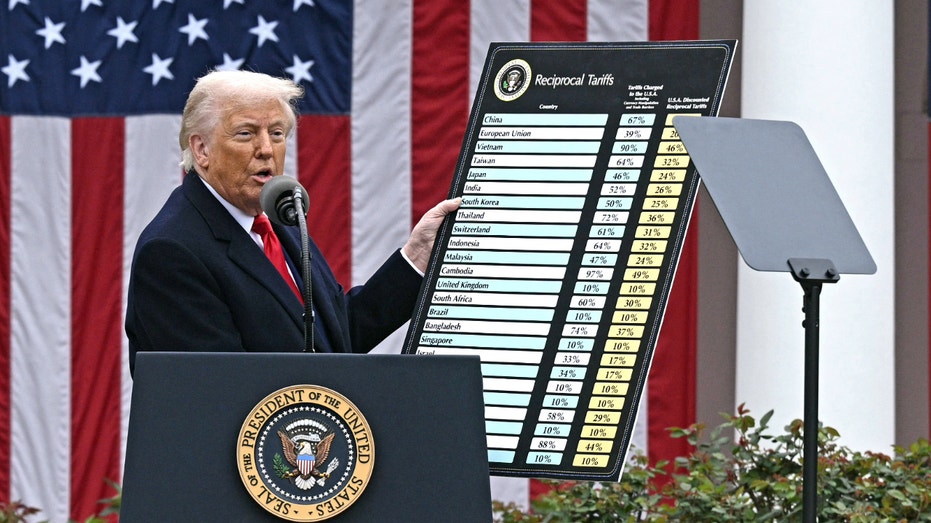
Byrna Technologies moved its manufacturing back to the U.S. before President Donald Trump implemented tariffs. (Brendan Smialowski/AFP via Getty Images)
“When you’re supplying componentry from offshore, you either have air freight costs, you have lengthy ocean voyages – when you’re supplying it from a hundred miles away by truck, you can be much more responsive to changes in consumer demand. If I need to visit the factory because there’s a quality problem, I can do it.”
HOW SHOULD BUSINESSES APPROACH TARIFF REFUNDS?
He added that while Byrna continues to buy some of its accessories from offshore suppliers, the company has focused its onshoring effort on the most critical aspects of its product, such as the launcher itself and its ammunition.
“We’re making self-defense products and I think the quality of the product, the dependability of the product, is really important to our consumers, so the Made in America moniker is very, very meaningful for our type of product,” he explained.
Ganz noted that Byrna closed its ammunition manufacturing facility in South Africa and moved it to a newly built facility in Fort Wayne that’s five miles away from the company’s facility where its launchers are produced.
FORMER INTEL CEO WARNS US CHIP COMEBACK STILL HAS A LONG WAY TO GO
The company’s latest launcher, the Byrna CL, was made of 34% U.S. components prior to the reshoring effort, but the launcher is now made with 92% U.S. components.
“It’s not without some cost. We’ve seen a couple percentage points increase in our cost as a result of bringing it back to the U.S., because of course, we would have been making it in the U.S. to begin with if it was the same price,” Ganz said. “But our margins have remained within two percentage points – last year we were 62% and this year we were 60.5-61% – so it was a de minimis impact on the cost.”
Ganz added that the tariffs were a determining factor in some of its reshoring decisions due to the higher cost of the import levies.
GET FOX BUSINESS ON THE GO BY CLICKING HERE
“When we ship something up, even though it may have been 10% less expensive than building it here, not so when you put a 30% tariff on. I’m a very patriotic guy, I like making stuff here in America. On the other hand, we’re a public company, we have shareholders – we have to look at what’s in the best interest of our shareholders,” he said. “With the tariffs, it was clear that it became less expensive to build in the U.S. than to build offshore.”
Ganz added that Byrna maintains some component manufacturing abroad to keep redundancy in the supply chain to guard against vulnerabilities that would arise if a domestic facility were to go offline unexpectedly, but the onshoring push has brought the company’s overall supply chain into the 80%-90% range for domestically-sourced components.