Apple to move part of Mac Mini production to US with Houston expansion


Apple Inc. will move part of its Mac Mini production to the United States, with assembly set to begin later this year at a Foxconn facility in north Houston, according to a Wall Street Journal report.

Apple Inc. will move part of its Mac Mini production to the United States, with assembly set to begin later this year at a Foxconn facility in north Houston, according to a Wall Street Journal report.

Apple will move some
production of its Mac Mini desktop computer ​to the U.S. from
Asia, with a new manufacturing ‌effort set to begin later this
year at ​a Foxconn facility in north Houston, ⁠The Wall Street
Journal reported on Monday.

The plan marks the iPhone maker’s most recent U.S.
investment, following its commitment announced ‌last August to
invest $600 billion in the U.S. over the next four years.

In May, ‌U.S. President Donald Trump had threatened Apple
with ‌a ⁠25% tariff on products manufactured overseas, a ⁠sharp
reversal from earlier policy when his administration had
exempted smartphones, computers and other electronics from
rounds of tariffs on Chinese imports.

The ​production for Mac ‌Mini will continue in Asia, its chief
operating officer Sabih Khan told WSJ, adding that the facility
will meet local demand as the U.S. assembly ‌line ramps up.

It was not immediately clear ​whether Apple plans to
scale down production in its Asia facilities. Apple did not
immediately ⁠respond to a Reuters request for comment.

The company feels more confident projecting long-term demand
for the Mac ‌Mini, which is more popular than the Mac Pro, Khan
added.

It is also expanding the Houston facility to include a new
training center for advanced manufacturing, according to the
report.

Apple has a mixed track record when it comes to following
through on ‌investment promises.

In 2019, for instance, Cook toured a Texas ​factory
with Trump that was promoted as a new manufacturing site.
However, the facility had ⁠been producing Apple computers since
2013 and Apple has since ⁠moved that production to Thailand.

Apple continues to manufacture most of its products,
including iPhones ‌and iPads, in Asia, primarily in China,
although it has shifted some production to Vietnam, Thailand ​and
India in recent years.

Published on February 24, 2026

Free Training

Source link

US Manufacturing Is Back in Expansion. Here’s What the US Stock Market Is Pricing Next


With ISM Manufacturing PMI back above 50 and New Orders jumping sharply, investors are watching what this could mean for earnings and cyclical leadership in the US stock market.
Here’s how to read the manufacturing data without overreacting to a single headline.

For years, US stocks have been shorthand for mega-cap tech, AI winners, and the Nasdaq story. Manufacturing, by comparison, rarely gets headline space unless it’s flashing recession warnings. But that’s exactly why it can matter when the data turns: manufacturing is often where the cycle becomes measurable before it becomes obvious.

In early February 2026, the ISM Manufacturing PMI for January came in at 52.6, returning to expansion territory after a long stretch below 50. More importantly, the New Orders component jumped to 57.1, turning firmly expansionary and signalling that demand is improving at the front end of the pipeline.

This doesn’t automatically mean a manufacturing boom. But it does create a cleaner question for markets to price: is the US moving from “stability” to “acceleration” in the parts of the economy that tend to show up quickly in profits?

Why manufacturing matters to the US stock market

The US economy is services-heavy, but corporate earnings are still highly sensitive to industrial activity. When orders improve, production stabilises, and inventories normalise, the impact can show up in operating leverage, margins, and guidance.

That’s why investors often treat manufacturing indicators less like an “economic scorecard” and more like an “earnings early warning system.” Markets don’t trade the headline narrative. They trade what becomes measurable in business results over the next few quarters.

The investable signal is New Orders, not the headline PMI

A PMI number above 50 is a useful milestone. But New Orders is typically the more forward-looking indicator because it shows whether demand is building, not just whether activity has stopped falling.

In January 2026, New Orders moved decisively higher, while Production also improved. That combination is what makes the manufacturing rebound relevant for US market watchers: it hints at a potential shift from “cost control” to “top-line support,” which is where earnings upgrades usually begin.

A positive spin, without pretending risks don’t exist

A constructive manufacturing setup doesn’t require mass hiring or euphoric sentiment. In fact, some of the most market-friendly environments are those in which demand improves while companies keep headcount tight and protect margins.

That nuance matters right now because employment within manufacturing is still soft. Firms can be cautious on hiring and still deliver better profitability if output holds up and pricing power doesn’t collapse. For US stocks, that can translate into a simple market logic: improving activity plus disciplined cost structures can be good for earnings, even if job growth lags.

At the same time, this is not a “set-and-forget” signal. One strong print can be distorted by reorder cycles, inventory moves, or businesses bringing forward purchases. The confirmation comes from follow-through over the next few releases.

What to watch next in the US market news, if you want the real manufacturing signal

If you’re tracking US stock market trends through a manufacturing lens, focus on indicators that connect to earnings, not just headlines.

  1. Follow-through in New Orders and Backlogs
    If New Orders stay expansionary and Backlog readings improve, the rebound becomes more than a bounce. That’s when markets start treating it as a cycle shift rather than a data quirk.
  2. Prices and margins
    If input costs keep rising faster than companies can pass them on, manufacturing strength can become margin pressure instead of margin expansion. Investors will watch whether price trends stabilise.
  3. Management language during earnings season
    The biggest market moves happen when companies shift from “uncertainty” to measurable visibility: stronger demand cues, improved utilisation, easing bottlenecks, and clearer capex plans.
  4. Which parts of the US stock market lead
    Manufacturing strength tends to show up more clearly in cyclical areas, industrials, materials, transport-linked businesses, and parts of the small-cap universe that are more economically sensitive. It doesn’t mean tech can’t lead, but it often broadens leadership beyond the same familiar names.

Why Indian investors should care about US manufacturing

For Indian investors, the value of tracking manufacturing is not to replace the AI narrative, but to add a second lens on US markets.

When US manufacturing improves, the effects can ripple through global supply chains, capital spending, logistics, and energy demand. That can create opportunities outside headline tech, especially for investors looking to diversify across sectors and build a portfolio that isn’t fully dependent on India’s domestic cycle.

And because US assets are dollar-linked, currency moves can also affect INR outcomes over time. So even “boring” data like manufacturing can matter more than it looks, because it can influence earnings tone, risk appetite, and sector leadership in the US stock market.

The bottom line

The headline “manufacturing is back” is not the trade. The trade is whether better orders and output translate into stronger earnings visibility over the next one to two quarters.

If the improvement holds, manufacturing becomes a quieter support for the next leg of the US market in 2026, potentially widening leadership beyond mega-cap tech. If it fades quickly, it was a bounce, not a cycle shift. Either way, the smarter approach is to follow what becomes measurable in margins and guidance, not what sounds loud in headlines.

FAQs

1) What does a Manufacturing PMI above 50 mean for US stocks?
It signals expansion in manufacturing activity, which markets track because it can improve earnings visibility for cyclical companies and support broader risk sentiment.

2) Why do investors focus on ISM New Orders?
New Orders is more forward-looking than the headline PMI. It’s an early read on demand momentum that can show up in production and earnings in the coming quarters.

3) Does one strong PMI print mean a manufacturing boom is coming?
Not necessarily. One month can reflect reorder cycles or inventory effects. Investors look for confirmation across multiple months and related components, such as backlogs and production.

4) Which US stocks tend to benefit most when manufacturing improves?
Cyclical areas often respond more clearly, such as industrials, materials, and economically sensitive parts of the market, because they are directly tied to orders, output, and capex cycles.

5) How should Indian investors use US manufacturing signals?
As a tactical lens, not a standalone timing tool. It can help track where earnings momentum may broaden beyond tech and support diversified exposure to US stocks.

If you want to track these shifts through the lens of live U.S. stock market moves and themes that matter to Indian investors, Appreciate can help you follow U.S. stocks, map the big narratives to company performance, and stay on top of what’s driving the U.S. market today.

Visit the new Mint x Appreciate US Markets page — where financial knowledge meets real opportunity.
To know more about investing in US stocks, ETFs, and Mutual Funds, click here.

Note to the reader: This article has been produced on behalf of the brand by HT Brand Studio and does not have journalistic/editorial involvement of Mint.

Free Training

Source link

Bowling manufacturer plans $9M expansion, 90 new jobs in Muskegon


Updated Feb. 6, 2026, 1:08 p.m. ET

A Michigan bowling equipment manufacturer is expanding its presence in the Muskegon area, investing nearly $9 million to renovate a facility, a move it says is expected to create 90 new jobs.

Motiv Bowling said in a news release on Feb. 4 that it plans to acquire a 96,000-square-foot facility in Roosevelt Park, which is just a few miles outside Muskegon. The facility will be renovated and used for bowling ball manufacturing and as an exporting logistics hub.

Free Training

Source link

Assessing Deere’s (DE) Valuation After US$20b US Manufacturing Expansion Plan


Expansion in Indiana and North Carolina puts Deere (DE) in focus

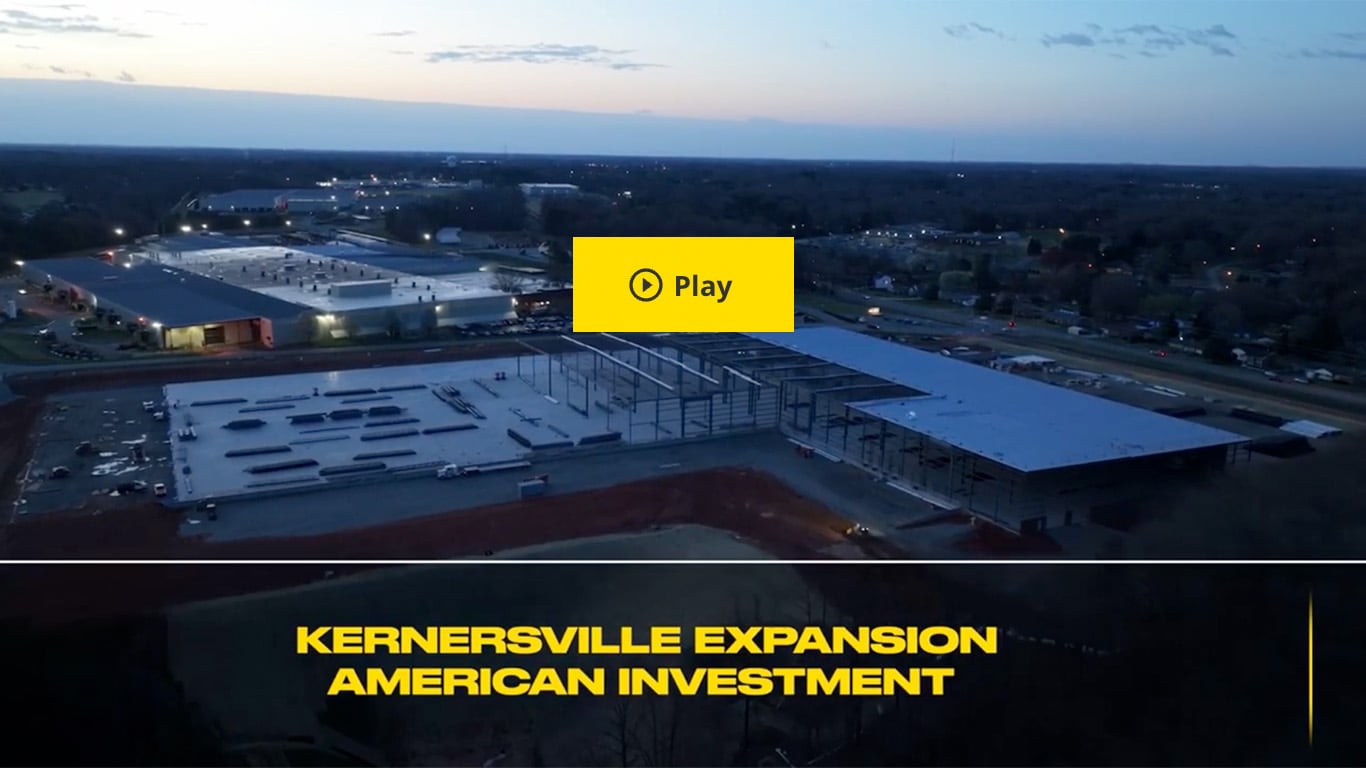
Deere (DE) is drawing fresh attention after outlining a $20b plan to expand U.S. manufacturing. The initiative includes a new parts distribution center in Hebron, Indiana, and an excavator factory in Kernersville, North Carolina.

See our latest analysis for Deere.

The expansion plan lands at a time when momentum in Deere’s shares has been picking up, with a 1 month share price return of 21.7% and a year to date share price return of 21.5%. Over longer periods, total shareholder returns of 23.0% over one year and 93.1% over five years indicate that recent gains build on an already strong track record, as investors digest both the new U.S. manufacturing investment and recent boardroom and governance developments ahead of the upcoming earnings call.

If you are weighing Deere’s latest moves against what else is happening in industrials, it could be worth scanning aerospace and defense stocks for other capital goods names that are drawing attention.

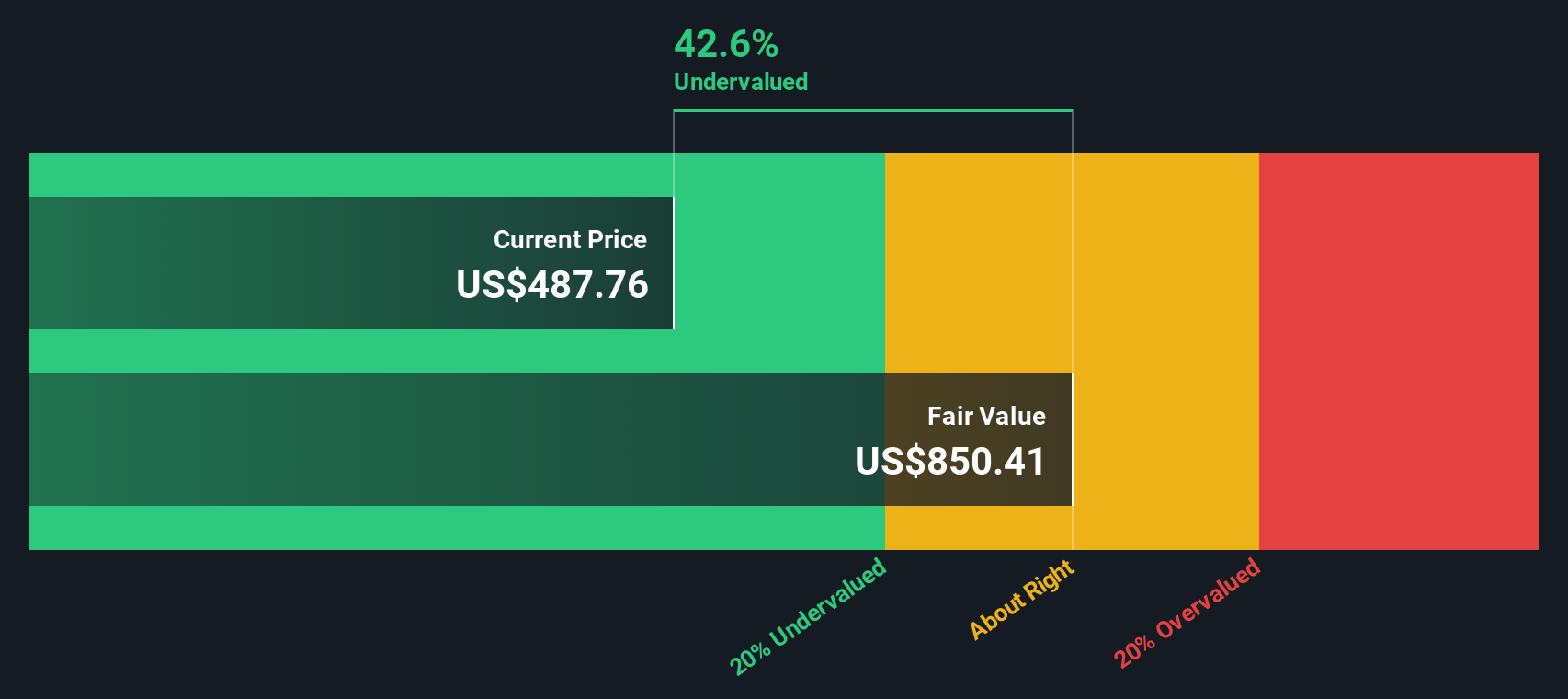
With Deere shares up around 22% over the past month and trading near US$567, the stock sits close to some analyst targets yet shows an estimated 12% intrinsic discount. This raises the question: is there still upside here, or is future growth already priced in?

Most Popular Narrative: 7.7% Overvalued

At $567.26, Deere sits above a widely followed fair value estimate of about $526.91, which is built around precision agriculture, margins, and a maturing cycle.

Rapid adoption of Deere’s precision agriculture and automation solutions (e.g., JDLink Boost, Precision Essentials bundles, See & Spray tech, and new automation features) is driving higher-value product sales and increased software engagement globally, positioning Deere to benefit from shifts toward high-efficiency, technology-enabled farming. This is expected to support both future revenue and net margins through higher-margin recurring software and data services.

Read the complete narrative.

Curious what kind of earnings power this assumes? The narrative leans heavily on margin expansion, recurring software revenue and a richer profit multiple. The exact numbers might surprise you.

Result: Fair Value of $526.91 (OVERVALUED)

Have a read of the narrative in full and understand what’s behind the forecasts.

However, there are clear pressure points, including higher tariff and input costs, as well as a softer North American large ag market, that could cap margins and challenge the upbeat Precision Ag story.

Find out about the key risks to this Deere narrative.

Another View: Cash Flows Point To Undervaluation

The narrative fair value of about $526.91 suggests Deere is 7.7% overvalued at $567.26, but our DCF model points in the opposite direction. On that view, the shares trade around 12% below an estimated future cash flow value of $644.77. Which picture do you think better reflects the risks and rewards?

Look into how the SWS DCF model arrives at its fair value.

DE Discounted Cash Flow as at Feb 2026DE Discounted Cash Flow as at Feb 2026

Simply Wall St performs a discounted cash flow (DCF) on every stock in the world every day (check out Deere for example). We show the entire calculation in full. You can track the result in your watchlist or portfolio and be alerted when this changes, or use our stock screener to discover 867 undervalued stocks based on their cash flows. If you save a screener we even alert you when new companies match – so you never miss a potential opportunity.

Build Your Own Deere Narrative

If you look at this and think the story should read differently, you can test the assumptions yourself in minutes with Do it your way.

A great starting point for your Deere research is our analysis highlighting 2 key rewards and 1 important warning sign that could impact your investment decision.

Looking for more investment ideas?

If Deere has sharpened your interest, do not stop here. Use the Simply Wall St screener to spot other stocks that might fit your style and goals.

This article by Simply Wall St is general in nature. We provide commentary based on historical data
and analyst forecasts only using an unbiased methodology and our articles are not intended to be financial advice.
It does not constitute a recommendation to buy or sell any stock, and does not take account of your objectives, or your
financial situation. We aim to bring you long-term focused analysis driven by fundamental data.
Note that our analysis may not factor in the latest price-sensitive company announcements or qualitative material.
Simply Wall St has no position in any stocks mentioned.

New: Manage All Your Stock Portfolios in One Place

We’ve created the ultimate portfolio companion for stock investors, and it’s free.

• Connect an unlimited number of Portfolios and see your total in one currency
• Be alerted to new Warning Signs or Risks via email or mobile
• Track the Fair Value of your stocks

Try a Demo Portfolio for Free

Have feedback on this article? Concerned about the content? Get in touch with us directly. Alternatively, email editorial-team@simplywallst.com

Free Training

Source link

John Deere Announces Major Expansion With Two New United States Facilities : CEG


In keeping with its tradition of building America, John Deere announced plans to open two new U.S.-based facilities: a distribution center near Hebron, Ind., and an excavator factory in Kernersville, N.C., both set to open in the next year.

“Our investment in these new facilities underscores John Deere’s dedication to strengthening the backbone of American industry and supporting local economies,” said John May, chairman and chief executive officer of John Deere. “We believe in building America, and these projects represent our intent to continue driving innovation and job creation in the United States.”

New Distribution Center in Ind.

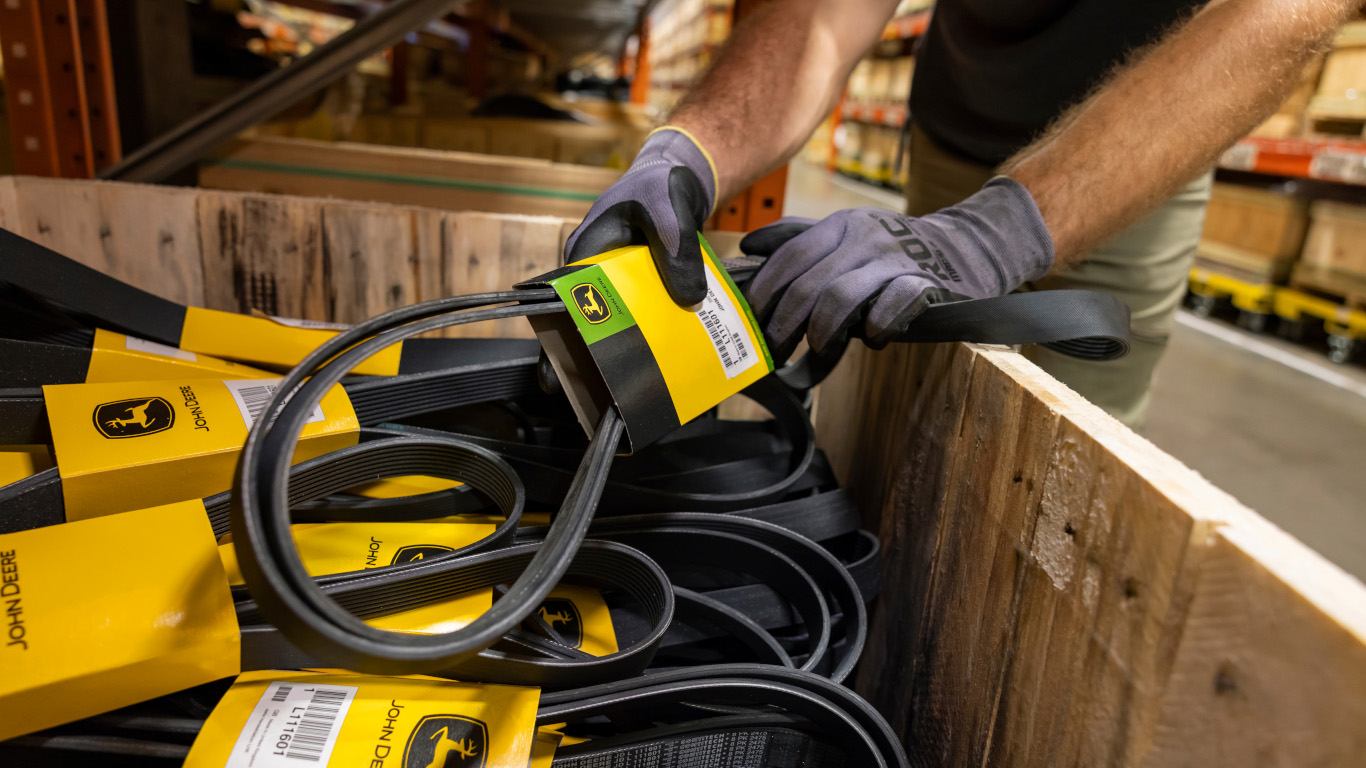
John Deere recently broke ground on a new distribution center near Hebron, Ind., located to enhance its supply chain capabilities nationwide, according to the company. This facility will be designed to streamline operations and ensure timely delivery of equipment and parts. The Indiana project is anticipated to generate employment opportunities with approximately 150 jobs, contributing to the state’s economic growth.

“This new facility is an investment in customer expectations around world class product support through parts availability for our US based ag, turf, construction, forestry, mining and turf customers,” said Denver Caldwell, vice president of aftermarket and customer support. “Indiana’s strong workforce and central location make it an ideal choice for expansion.”

John Deere will continue to maintain its primary North American parts distribution center in Milan, Ill., which has been in operation since 1973 and employs approximately 1,200 people.

Kernersville, N.C. Excavator Factory

The new $70 million factory in Kernersville, N.C., will bolster John Deere’s manufacturing capabilities, leveraging new technology to produce excavators for the construction market. The North Carolina factory will assume production of future generation excavators previously produced in Japan.

This facility will employ more than 150 people and will help meet equipment demand and strengthen the company’s commitment to manufacturing within the United States.

“We are excited to bring this new facility to our Kernersville campus and to be part of the region’s thriving manufacturing community,” said Ryan Campbell, president of worldwide construction, forestry and power systems. “Our focus will be on delivering excellence, creating jobs and advancing the legacy of John Deere in American manufacturing.”

Building America

With the opening of these two facilities, John Deere will create hundreds of new jobs in the United States, further supporting local communities and advancing our mission to build a stronger America.

“These investments further demonstrate our commitment to invest $20 billion in U.S. manufacturing over the next 10 years,” May said. “It is a testament to our confidence in the future of U.S. manufacturing and our unwavering commitment to innovation, quality and economic growth.”

For more information, visit deere.com/en/.

Free Training

Source link

John Deere Announces Major Expansion with Two New U.S. Facilities Coming


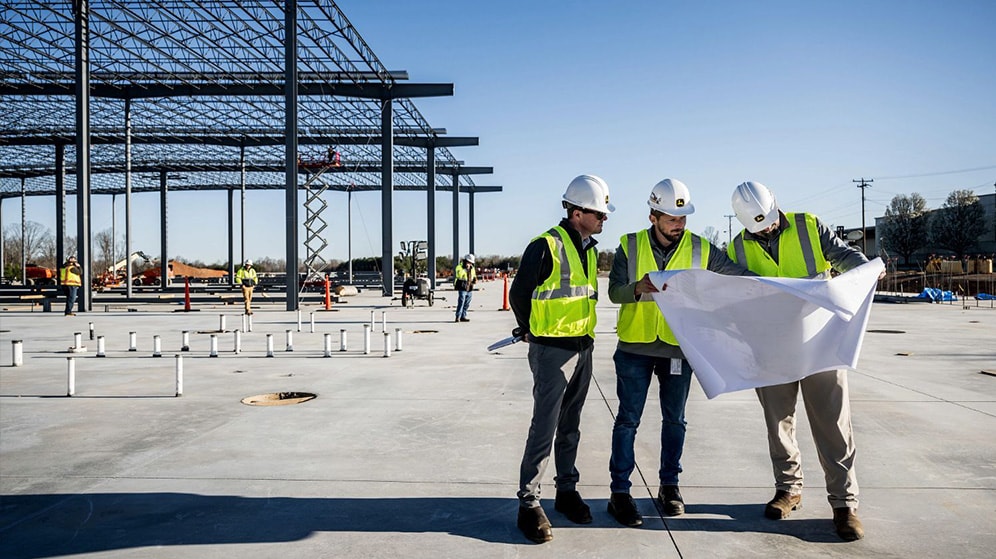
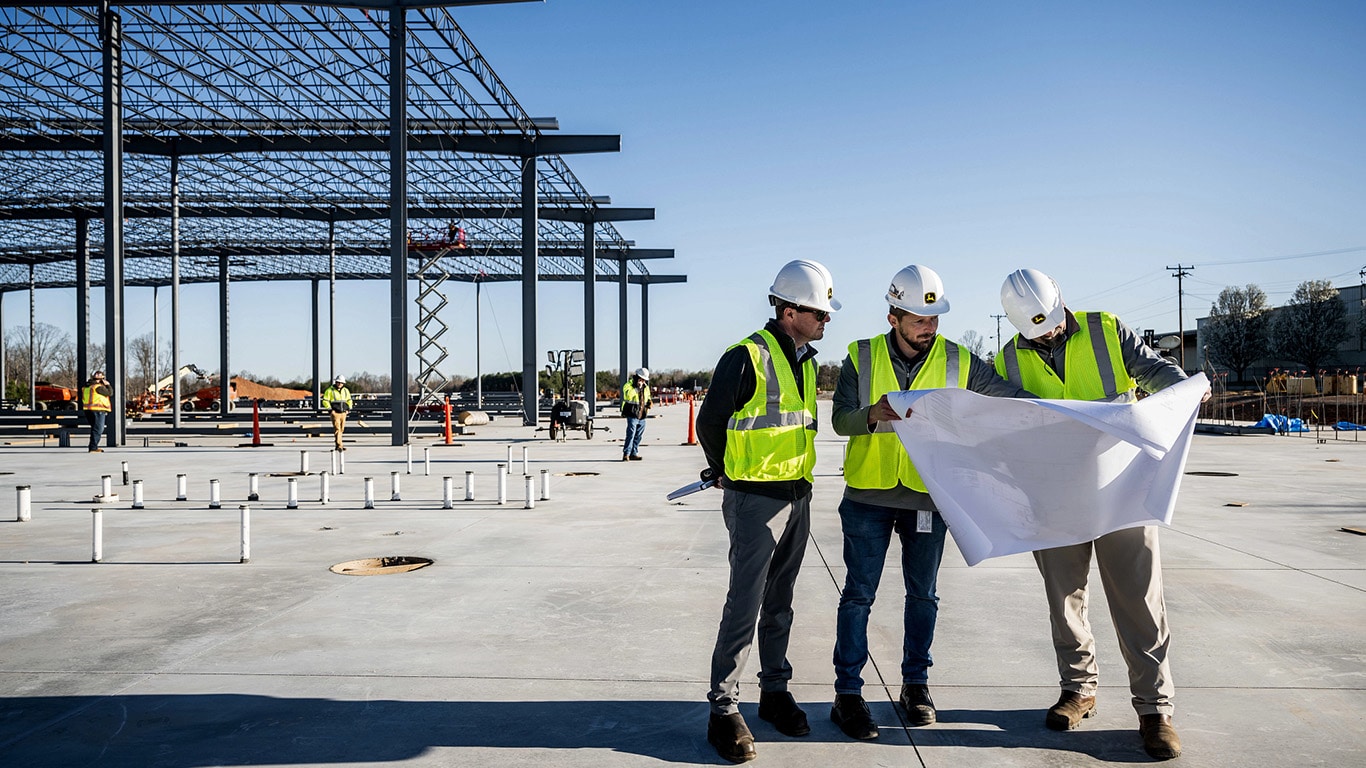
Construction teams look at blueprints for the expanded Kernersville, North Carolina excavator factory

Expansion builds on Deere’s and President Trump’s Commitment to U.S. Manufacturing

What it means:

  • NEW American Jobs
  • The Kernersville Campus moved Manufacturing / Production from Overseas (Japan) to America
  • The Kernersville campus will produce the ONLY excavator designed, developed, and manufactured in the U.S.

In keeping with our strong tradition of building America, we are excited to announce plans to open two new U.S.-based facilities: a state-of-the-art distribution center near Hebron, Indiana, and a cutting-edge excavator factory in Kernersville, North Carolina, both set to open in the next year.

“Our investment in these new facilities underscores John Deere’s dedication to strengthening the backbone of American industry and supporting local economies,” said John May, chairman and chief executive officer of John Deere. “We believe in building America, and these projects represent our intent to continue driving innovation and job creation in the United States.“

Expanding in Indiana: New Distribution Center

John Deere recently broke ground on a new distribution center near Hebron, Indiana, strategically located to enhance our supply chain capabilities nationwide. This facility will be designed to streamline operations and ensure timely delivery of equipment and parts. The Indiana project is anticipated to generate significant employment opportunities with approximately 150 jobs, contributing to the state’s economic growth.

“This new facility is an investment in customer expectations around world class product support through parts availability for our US based ag, turf, construction, forestry, mining and turf customers,” said Denver Caldwell, vice president, Aftermarket and Customer Support. “Indiana’s strong workforce and central location make it an ideal choice for expansion.”

John Deere will continue to maintain its primary North American Parts Distribution Center in Milan, Illinois, which has been in operation since 1973 and employs about 1,200 people.

Kernersville, North Carolina: New Excavator Factory

The new $70M factory in Kernersville, North Carolina, will bolster John Deere’s manufacturing capabilities, leveraging advanced technologies to produce industry leading excavators for the construction market. The North Carolina factory will assume production of future generation excavators previously produced in Japan.

This facility will employ over 150 people and will help meet equipment demand and strengthen our commitment to U.S. manufacturing innovation.

“We are excited to bring this new facility to our Kernersville campus and to be part of the region’s thriving manufacturing community,“ said Ryan Campbell, president Worldwide Construction and Forestry and Power Systems. “Our focus will be on delivering excellence, creating jobs, and advancing the legacy of John Deere in American manufacturing.”

Building America: Impact and Commitment

With the opening of these two facilities, John Deere will create hundreds of new U.S. jobs, further supporting local communities and advancing our mission to build a stronger America.

“These investments further demonstrate our commitment to invest $20B in U.S. manufacturing over the next 10 years,” May said. “It is a testament to our confidence in the future of U.S. manufacturing and our unwavering commitment to innovation, quality, and economic growth.”

About Deere & Company

It doesn’t matter if you’ve never driven a tractor, mowed a lawn, or operated a dozer. With John Deere’s role in helping produce food, fiber, fuel, and infrastructure, we work for every single person on the planet. It all started nearly 200 years ago with a steel plow. Today, John Deere drives innovation in agriculture, construction, forestry, turf, power systems, and more.

For more information on Deere & Company, visit us at www.deere.com/en/news/.

Media contact:

Jen Hartmann

publicrelations@johndeere.com

Free Training

Source link

EOS invests $3m in United States manufacturing and logistics expansion


EOS has invested 3 million USD into the expansion of its US manufacturing and logistics capacity.

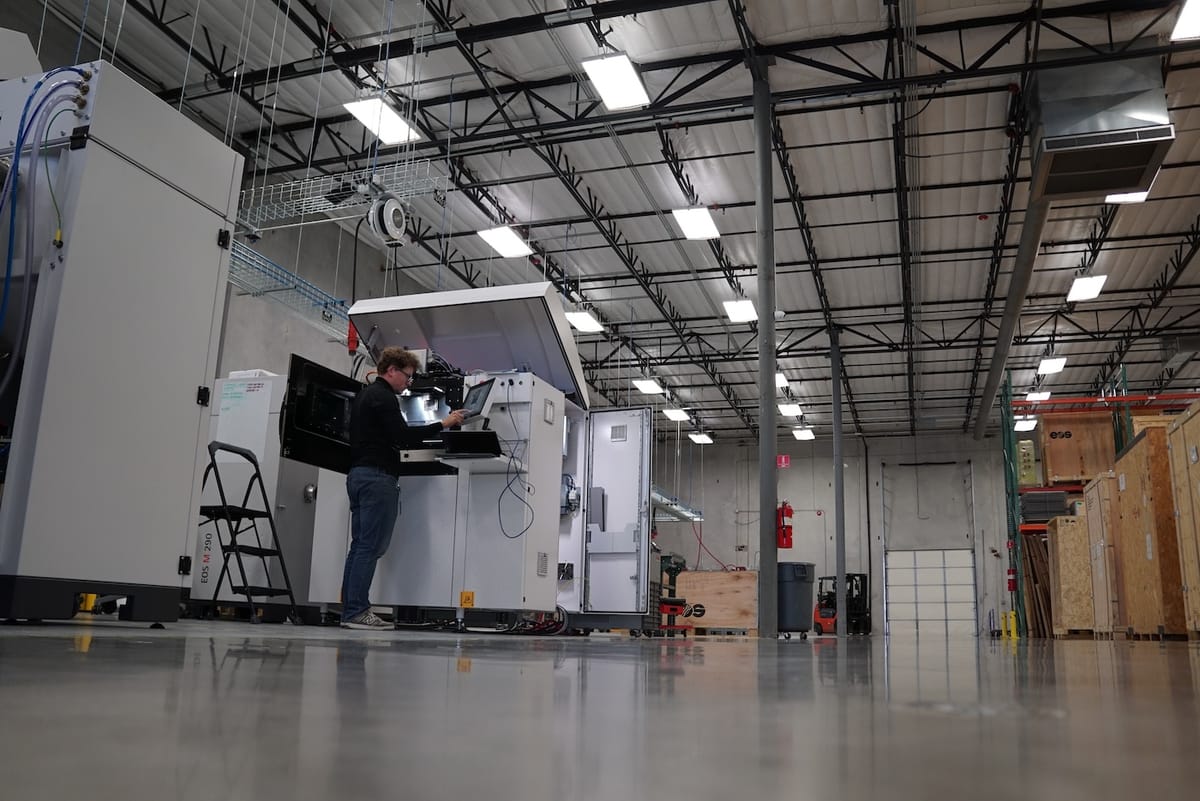
The company has consolidated its North American warehouse and logistics capability at its Pflugerville, Texas, campus into a new 40,000 square foot facility in Belton, Texas, which has enabled the manufacturing space in Pflugerville to be increased.

EOS says the reconfiguration of existing facilities and the opening of the new warehouse demonstrate its commitment to strengthening its U.S. manufacturing capacity. The assembly of its EOS M 290-1, EOS M 290-2, and EOS M 400-4 systems will receive a boost, while EOS has also created more space for a dedicated powder handling area and an in-house machine shop. It is expected that EOS will now be better equipped to meet increasing customer demand and reduce delivery times. The company has also created ten new jobs at the Pflugerville production site, including operations, quality assurance, engineering, and machine commissioning functions.

“Our Texas expansion enables us to scale North American metal AM assembly with both precision and consistency,” said Kent Firestone, SVP of Operations, EOS North America. “From optimising our production areas to onboarding new team members, every step has been carefully designed to accelerate turnaround times while maintaining the quality and reliability our customers expect from EOS.”   

“This expansion demonstrates our continued commitment to support the resurgence of American manufacturing,” added Glynn Fletcher, president of EOS North America. “This manufacturing facility is not just an investment in our own infrastructure; it is also about standing shoulder-to-shoulder with the U.S. manufacturing community to provide products and services for a superior customer experience. It demonstrates our dedication to the growing U.S. markets where our technology is in greatest demand. We fully understand the criticality that AM plays in the future of domestic manufacturing, and this expansion ensures EOS will continue to play a leading role for years to come.” 

Free Training

Source link