

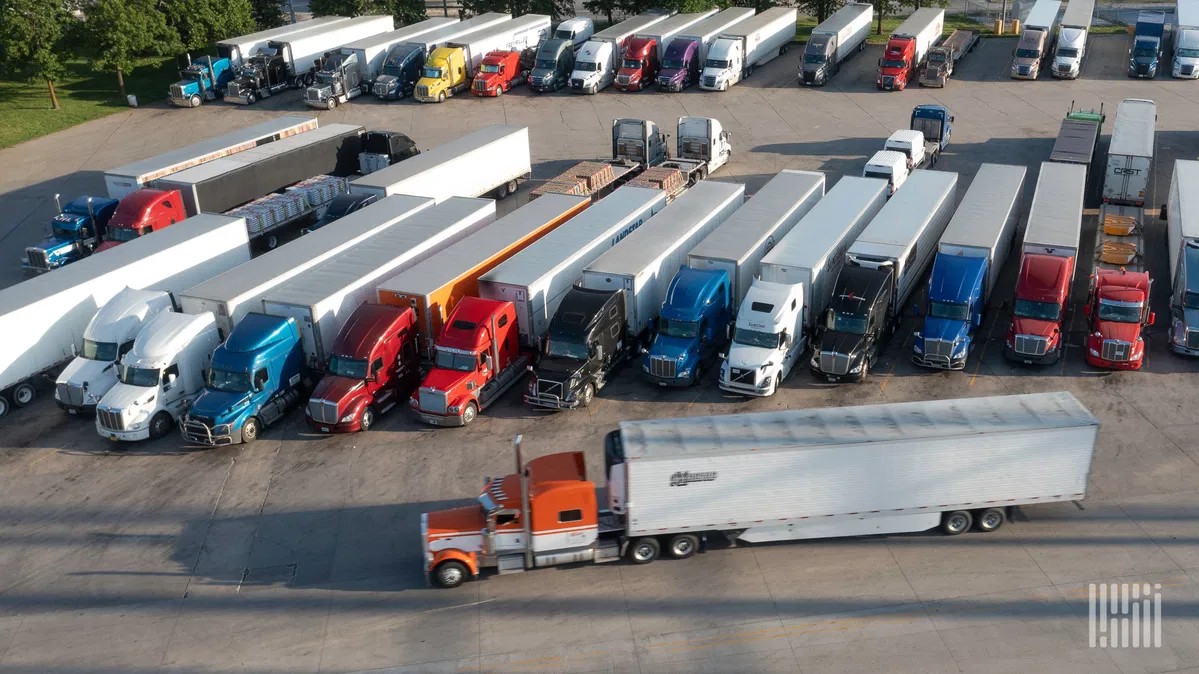
US manufacturing pipeline grows, firms plan $1B in new factories


A wave of new manufacturing projects announced in recent weeks underscores continued capital investment across the U.S., with companies in heavy equipment, advanced electronics, automation and industrial components committing around $1 billion combined in new facilities and expansions.

From North Carolina to Texas to Idaho and Wisconsin, manufacturers are breaking ground on large-scale plants expected to create thousands of jobs while reshoring or expanding domestic production capacity.

Deere & Co. announced plans to open two new facilities: a distribution center near Hebron, Indiana, and a $70 million excavator factory in Kernersville, North Carolina.

According to the company’s news release, the Indiana distribution center is expected to create about 150 jobs and strengthen parts logistics nationwide. The North Carolina plant will employ more than 150 people and will assume production of next-generation excavators previously manufactured in Japan, marking a shift of that production to the U.S.

The excavator factory is part of Deere’s broader commitment to invest $20 billion in U.S. manufacturing over the next decade, the company said.

Radar platform company Echodyne is investing $40 million in a new 86,350-square-foot manufacturing facility in Kirkland, Washington.

The new plant is designed to produce and ship more than 30,000 radars annually across product lines. The company said it expects to employ more than 200 workers when the facility reaches full capacity, with production scheduled to begin in summer 2026.

The expansion comes amid growing global demand for counter-drone, border security and defense-related radar technologies.

In Sugar Land, Texas, Applied Optoelectronics Inc. (AOI) broke ground on a 210,000-square-foot manufacturing facility that will support production of optical networking products for AI data centers and broadband networks.

AOI said it plans to increase its total investment in the project and headquarters campus from $150 million to potentially $300 million by the end of next year. The company has committed to creating 500 local jobs tied to automated production lines.

Executives positioned the expansion as part of Texas’ broader push to become a leader in artificial intelligence infrastructure manufacturing.

Sanko Texas Corp., a subsidiary of a Japanese plastics manufacturer, plans to build a nearly $40 million plant on a 43.7-acre site in San Antonio.

The facility — which will serve as Sanko’s first U.S. manufacturing plant and its U.S. headquarters — is expected to create up to 300 jobs once fully ramped, beginning with about 100 hires in early 2028, according to the San Antonio Express News.

Sanko produces plastic injection-molded pallets and containers commonly used in automotive assembly lines and industrial supply chains.

Preciball USA announced a $17.6 million investment to build a new factory in Sylvania, Screven County, Georgia, according to a news release.

The plant will manufacture precision balls used in bearings, pumps and valves, and is expected to create 65 jobs. The project expands the company’s footprint in Georgia, complementing its existing headquarters operations in Pooler.

Industrial automation giant Rockwell Automation selected New Berlin, Wisconsin, as the site of a new manufacturing campus described as a “factory of the future.”

The planned greenfield facility is expected to exceed 1 million square feet of factory and warehouse space and is part of a broader five-year, $2 billion domestic manufacturing investment strategy, according to Milwaukee Journal Sentinel.

While job figures have not yet been disclosed, company leadership characterized the project as potentially becoming Rockwell’s largest manufacturing campus globally.

Schweitzer Engineering Laboratories (SEL) has begun site preparation for a new 250,000-square-foot electronic device manufacturing facility in Moscow, Idaho.

The $50 million investment will expand production of devices used to monitor and protect electric power systems worldwide. Once fully operational, the plant is expected to employ approximately 1,000 people, with phased hiring beginning in 2027.

Fresh meal and technology provider Tovala recently announced a new 140,340 square-foot food processing facility in Winfield, Illinois to meet growing demand.

Chicago-based Brennan Investment Group will develop the state-of-the-art facility as a build-to-suit project, with construction scheduled to begin in March 2026 and completion expected in the second quarter of 2027. The project marks Brennan’s fourth build-to-suit development in the food service sector.

The post US manufacturing pipeline grows, firms plan $1B in new factories appeared first on FreightWaves.

Free Training

Source link

Trump said tariffs would bring factories ‘roaring back.’ So why are manufacturing jobs on the decline?


Just before President Trump announced his sweeping tariffs on “Liberation Day” last spring, the White House celebrated February’s gain of 10,000 manufacturing jobs, noting that more than 100,000 positions in the sector had been shed in the final year of the Biden administration.

“Manufacturing is Roaring Back,” the White House website declared.

But such gains were short-lived. Manufacturing jobs began to slide again in May and haven’t stopped declining. 72,000 manufacturing positions have been lost since April’s tariffs announcement, including 8,000 roles in December alone.

What gives?

“What we’re seeing is certainly a continuation of trends that began before the Trump administration,” Gordon Hanson, an economist and professor in urban policy at the Harvard Kennedy School, told Yahoo Finance. “But the tariffs haven’t helped.”

Indeed, millions of manufacturing jobs have disappeared from the US since 1979 amid a combination of “powerful” trends, Hanson said, including automation, “the continuing effects of the China trade, and the fact that the US has not done a lot of the things you need to do to restore manufacturing prowess.”

Tariffs are hardly the solution to those problems, Hanson said — though Trump insists otherwise. He vowed in April that jobs and factories would “come roaring back into our country” as levies on imports boosted locally produced goods.

While tariffs do reduce import competition, they can also increase the cost of key components for domestic manufacturers. Take US electric vehicle plants that rely on batteries made with rare earth elements imported from overseas, for instance. Some parts simply aren’t made in the United States.

Read more: What are rare earth minerals, and why are they important?

As for sectors that had already largely left the US, like apparel and textile manufacturing, “a lot of those industries are just substantially gone,” Hanson said, meaning there aren’t many existing factories where production could be ramped up and hires could be made.

Do you have a story about navigating the job market? Reach out to Emma Ockerman here.

Manufacturing is hardly the only industry to add few workers these days: Job growth remains paltry across the board, and what hiring does exist is largely being driven by the healthcare and social assistance sectors.

DEARBORN, MICHIGAN - JANUARY 13: U.S. President Donald Trump (2R) tours the assembly line at the Ford River Rouge Complex on January 13, 2026 in Dearborn, Michigan. Trump is visiting Michigan where he will participate in a tour of the Ford River Rouge complex and later give remarks to the Detroit Economic Club. (Photo by Anna Moneymaker/Getty Images) President Trump tours the assembly line at the Ford River Rouge Complex on Jan. 13 in Dearborn, Mich. (Photo by Anna Moneymaker/Getty Images) · Anna Moneymaker via Getty Images

Then there’s the uncertainty caused by the administration’s whipsawing tariff policies, which can lead employers to pull back on hiring as they await greater clarity.

“If Trump just picked a number — whatever it was, 10% or 15% to 20% — we might all say it’s bad, I’d say it’s bad, I think most economists would say it’s bad,” Dean Baker, senior economist at the Center for Economic and Policy Research, said. “But the worst thing is there’s no certainty about it.”

Story Continues

Trump’s tariff threats against several European nations as he sought control of Greenland, for example, appeared and abated within a matter of days, injecting some volatility into the stock market in the process.

Read more: How Trump’s tariffs affect your money

With rates “constantly changing, what becomes very difficult for businesses is to plan,” Baker added. “I think you’ve had a lot of businesses curtail investment plans because they just don’t know whether the plans will make sense.”

Manufacturing job losses could also be more severe than they appear in preliminary data. Fed Chair Jerome Powell said in December that federal statistics may have overstated job growth by “about 60,000” per month.

It’s “too early to say with any certainty” that these manufacturing jobs would be around if not for the tariffs, Baker noted, but there’s also “zero evidence” that they came charging back.

To be sure, the Biden administration also claimed a renaissance in manufacturing jobs, but that was after massive job destruction in 2020. Though employment in the sector eventually jumped above pre-pandemic levels, the growth was uneven regionally and lagged growth in other sectors, the Economic Innovation Group said in a 2024 analysis. Still, spending on manufacturing construction boomed following the 2021 bipartisan infrastructure bill, 2022 CHIPS Act, and 2022 inflation reduction bill.

That spending declined in 2025.

But, tariffs or no tariffs, a manufacturing employment boom would be difficult to construct.

As a country develops, manufacturing might first rise as a share of employment, but “in every single industrial economy” it declines steadily after a certain point, Robert Lawrence, senior fellow at the Peterson Institute for International Economics and professor of international trade and investment at the Harvard Kennedy School, said.

“It doesn’t matter if you have a trade deficit or a trade surplus,” Lawrence said.

Consumers use the money they save on cheaper goods and spend it on services, where there’s more employment growth. That’s what’s happened in the US, where payroll gains for 2025 were concentrated in services like healthcare, food services, and social assistance.

“I think this is deep,” Lawrence said. “We’ve tried industrial policy, we’ve tried trade protection — even before Trump’s initiatives and Liberation Day tariffs — and we haven’t seen much recovery at all. If anything, it continues to decline.”

Emma Ockerman is a reporter covering the economy and labor for Yahoo Finance. You can reach her at emma.ockerman@yahooinc.com.

Sign up for the Mind Your Money newsletter

Click here for the latest personal finance news to help you with investing, paying off debt, buying a home, retirement, and more

Read the latest financial and business news from Yahoo Finance

Free Training

Source link