AbbVie to invest $380 million to expand US manufacturing in Illinois


Feb 23 (Reuters) – AbbVie on Monday said it would invest $380 million to build two new active pharmaceutical ingredient manufacturing facilities at its Illinois campus, expanding its domestic production capacity for its neuroscience and obesity medicines.

The investment is part of AbbVie’s broader effort to scale up domestic manufacturing, as drugmakers are scrambling to shore up their U.S. manufacturing capacity and domestic inventory amid the Trump administration’s hefty tariffs on pharmaceutical imports into the country.

The U.S. government imposed a 100% tariff on branded drugs in October, but said it would only apply to producers who had not already broken ground on U.S. manufacturing plants.

AbbVie said the construction at the new facility in North Chicago, Illinois would begin in spring 2026, with both new facilities expected to be fully operational in 2029.

The new facilities will integrate advanced manufacturing technologies and artificial intelligence to support production of future pipeline medicines, the company said.

API production – the process of making a drug’s active chemical components – is one of the most complex steps in pharmaceutical manufacturing, the drugmaker said.

AbbVie said it plans to hire 300 people in North Chicago, including engineers, scientists, manufacturing operators and lab technicians.

In January, it committed $100 billion over the next decade to U.S.-based research and development, including an earlier $195 million expansion at the same North Chicago site to boost API production for immunology, oncology and neuroscience drugs.

AbbVie already has 11 manufacturing sites in the U.S. and is also in discussions with multiple U.S. states about potential projects and expects to announce further investments in 2026.

(Reporting by Siddhi Mahatole in Bengaluru; Editing by Maju Samuel)

Free Training

Source link

Siemens Energy to Invest $1 Billion in U.S. Manufacturing, Add 1,500 Jobs


Siemens Energy plans to invest $1 billion to expand U.S. manufacturing capacity for grid equipment and gas turbines, adding more than 1,500 jobs as power demand accelerates from data centers, AI infrastructure and electrification.

(P&GJ) — Siemens Energy has finalized plans to invest $1 billion to expand manufacturing operations across the United States, a move that will create more than 1,500 highly skilled jobs as electricity demand rises sharply due to data centers, artificial intelligence infrastructure and industrial electrification.

The investment builds on plans outlined at the company’s Capital Market Day in Charlotte, North Carolina, last November and includes a mix of brownfield expansions and one greenfield project. Siemens Energy said the program will increase domestic production of grid equipment, transformers and large gas turbines, while strengthening U.S.-based manufacturing capacity to meet growing demand.

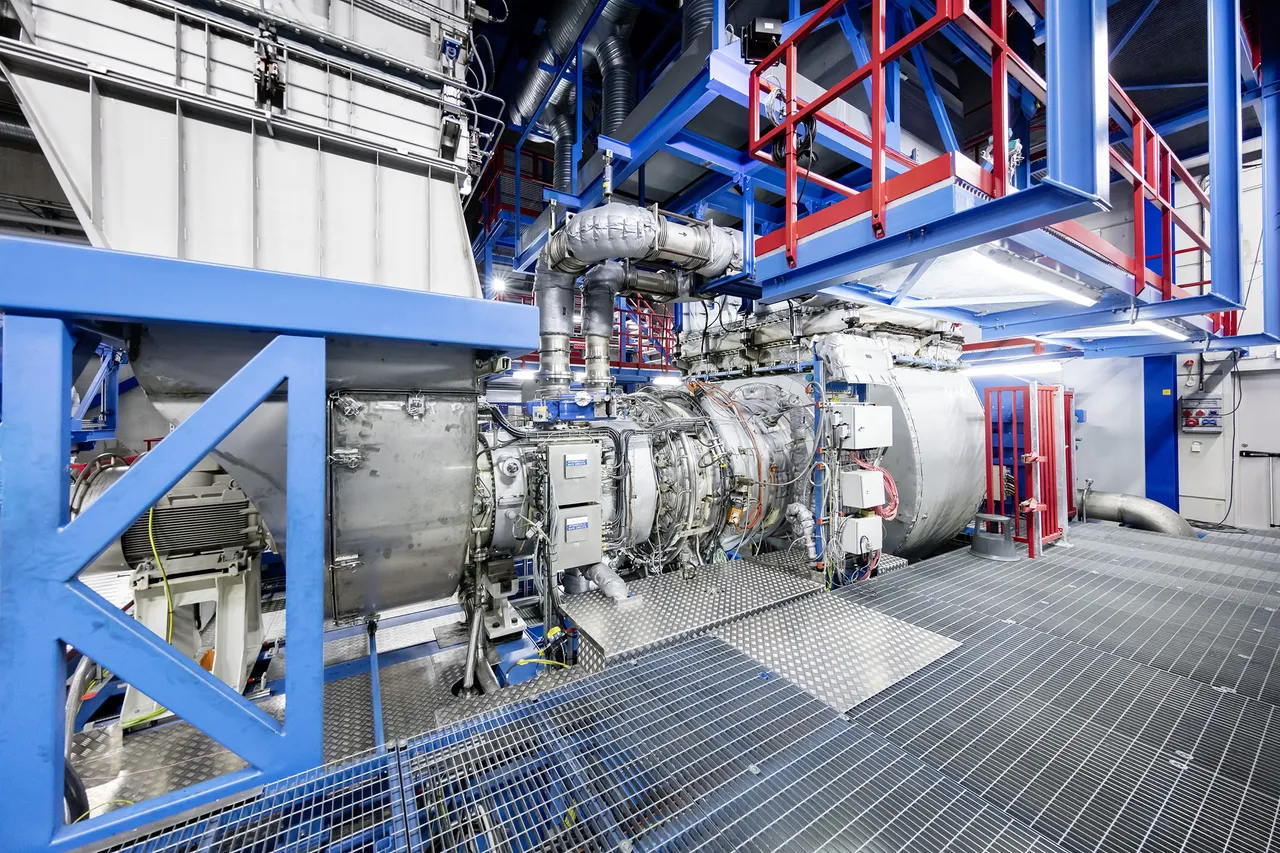
As part of the expansion, Siemens Energy will construct a new high-voltage switchgear manufacturing facility in Mississippi and expand transformer production, gas turbine manufacturing and grid technology operations in several states. The company said the approach allows it to use manufacturing capacity efficiently while supporting long-term market growth.

“Siemens Energy has been making things in the United States for more than a century and we are experiencing a once-in-a-generation growth opportunity due to the resurgence of U.S. manufacturing and the growth of artificial intelligence,” said Christian Bruch, CEO and President of Siemens Energy. “The current policy environment has contributed to this momentum. The Trump Administration has made energy security, a reliable and resilient grid, and growing U.S. manufacturing jobs a priority. This has supercharged the energy demand which is supporting new investments across the energy sector. We are excited to help write this next chapter of American energy expansion.”

The expansion is expected to add more than 1,500 roles across manufacturing, engineering and operations. Siemens Energy said it will also expand apprenticeship programs and training initiatives to support workforce development across the energy industry.

“This tremendous investment in a critical part of our power grid supply chain underscores President Trump’s success in expanding supply chain access and bringing major manufacturing back to America,” said U.S. Interior Secretary Doug Burgum. “We appreciate great partners like Siemens Energy, who proactively partner with the Trump administration for the benefit of the American people, prioritizing critical components to make the United States Energy Dominant!”

Planned Site Investments

Siemens Energy said the investment will be spread across multiple states:

  • Mississippi (Greater Richland area): Construction of a new high-voltage switchgear plant, including a training center, with plans to hire up to 300 employees.

  • North Carolina (Charlotte, Winston-Salem and Raleigh): Expanded transformer manufacturing and servicing, resumption of gas turbine manufacturing in Charlotte, turbine component production in Winston-Salem, and expanded grid technology, engineering and R&D operations in Raleigh. About 500 jobs are expected across the state.

  • Florida (Orlando and Tampa): Expansion of turbine blade and vane manufacturing in Tampa and upgrades to research and development capabilities in Orlando, including an artificial intelligence digital grid technologies laboratory with NVIDIA. The company will also relocate and modernize its regional headquarters in Orlando.

  • Alabama (Fort Payne): Expanded production of copper and insulation components for generators, creating about 120 jobs.

  • New York (Painted Post) and Texas (Houston): Facility upgrades supporting the manufacture and servicing of compression equipment used to transport gas and liquids through pipelines.

Siemens Energy said the U.S. remains a core market for the company, accounting for nearly 29% of global order volume last fiscal year. The company currently employs more than 12,000 people across 25 U.S. facilities and works with nearly 5,000 domestic suppliers.

Free Training

Source link

Siemens Energy to invest $421 million in NC 


This week Siemens Energy announced that it would be investing $421 million to expand its’ operations in North Carolina. The expansions will occur at multiple locations, involve the manufacturing of energy infrastructure equipment, and are expected to create 500 new jobs statewide.

“The equipment we produce in North Carolina is helping meet our nation’s unprecedented growth in energy,” Matt Neal, Siemens Energy’s President of North America said. “We are building on a strong, decades-long foundation in the state, supported by a dedicated workforce that consistently rises to meet new challenges and a pipeline of young and eager talent ready to build the machines that will power the United States into the next century.” 

The $421 million North Carolina investment is part of a larger, nationwide strategy by Siemens Energy to bolster domestic manufacturing of energy infrastructure equipment and strengthen the US power grid. The company has committed roughly $1 billion to expand its manufacturing footprint across the country, including in states such as Mississippi, Alabama, New York, Texas, and Florida, to meet growing grid demands and supply chain needs.

“This tremendous investment in a critical part of our power grid supply chain underscores President Trump’s success in expanding supply chain access and bringing major manufacturing back to America,” said US Interior Secretary Doug Burgum in a press release. “We appreciate great partners like Siemens Energy, who proactively partner with the Trump administration for the benefit of the American people, prioritizing critical components to make the United States Energy dominant!”

Expanding on the $150 million investment announced in 2024, this investment will stretch the power transformer manufacturing facility in Charlotte and increase service capacity to keep up with demand. Siemens Energy currently produced large gas turbines in Berlin, Germany, and part of the expansion plan would bring production to Charlotte, after a six-year pause.   

Gas turbine parts are to be produced in Winston-Salem and expanding grid technology project execution, research, and development will occur in Raleigh.  

Like much of the United States, North Carolina—with Charlotte at the helm, is seeing an uptick in proposed AI driven data centers. Facilities house machinery used to process large amounts of data and information, requiring massive storehouses of energy.  

“Siemens Energy has been making things in the United States for more than a century and we are experiencing a once-in-a-generation growth opportunity due to the resurgence of US manufacturing and the growth of artificial intelligence,” Christian Bruch, CEO and President of Siemens Energy, said in a press release. “The current policy environment has contributed to this momentum. The Trump Administration has made energy security, a reliable and resilient grid, and growing US manufacturing jobs a priority. This has supercharged the energy demand which is supporting new investments across the energy sector. We are excited to help write this next chapter of American energy expansion.” 

While this latest Siemens Energy investment in North Carolina’s economy is not backed by a Job Development Investment Grant (JDIG), previous investments have been JDIG-funded. This includes the Charlotte investment announced in February 2024.  

“State incentive records show Siemens Energy has received four JDIGs from North Carolina — approved in 2009, 2010, 2010, and 2024 — with both 2010 agreements later terminated, placing the company squarely within the program’s broader pattern of underperformance,” Joseph Harris, fiscal policy analyst for the John Locke Foundation, told the Carolina Journal. “According to state data, nearly half of all JDIG agreements approved from fiscal years 2003 to 2025, or 222 out of 449 deals, have been terminated or withdrawn before meeting their job-creation targets.” 

In 2024, The North Carolina Economic Investment Committee (NCEIC) approved a $6,979,500 reimbursement to Siemens Energy over the spam of 12 years with the hope of creating more jobs in the state. An additional $2,326,500 was allocated to the state’s Industrial Development Fund – Utility Account, bringing the total cost of the grant to $9.3 million.  

Even without JDIG support for the expansion announced this week, Siemens Energy has stated that the project will create a substantial number of jobs. Job creation benchmarks are a key requirement of the JDIG program, and some past recipients have failed to meet those benchmarks, resulting in terminated agreements.

JDIG grants are performance-based, discretionary incentives tied to a company’s ability to meet investment and employment commitments intended to support economic development. When projects do not meet those requirements, expected economic benefits—such as job creation and capital investment—may not materialize in the affected communities.

“Siemens Energy is a valued member of North Carolina’s advanced manufacturing community, and we welcome this meaningful expansion of the company’s operations in our state,” said Gov. Josh Stein. “From our state’s world-class transportation infrastructure to our skilled workforce, North Carolina offers manufacturers the best place to do business in the United States.”

Gas turbine manufacturing began in Charlotte in 2011 and then terminated in 2020 due to low demand. Starting back this year, Siemens Energy expects the first gas turbines to be shipped from Charlotte in the next 2-3 years.  

Siemens Energy is also investing in the Winston Technology Center in Rural Hall, North Carolina. The company currently manufactures and services parts for power generation equipment.   

Globally, Siemens Energy employees over 103,000 people in more than 90 countries. In the fiscal year 2025, they generated over $46 billion in revenue.  

Free Training

Source link

Siemens Energy to invest $1bn in the US


Siemens Energy has confirmed it will invest $1bn expanding its manufacturing facilities and workforce in the US.

The commitment, drawn up at its Capital Market Day in Charlotte in November, comes as the US is experiencing an unparalleled surge in electricity demand, driven by the growth in data centres and AI.

Meeting this growth requires the accelerated deployment of modern, resilient grid infrastructure and a substantial increase in power‑generation capacity.

The program will include several brownfield expansions, increasing transformer production and servicing plus strengthening the manufacturing of large gas turbines on American soil.

It also includes construction of a new factory in Mississippi that will build essential grid components. With that approach, Siemens Energy is pursuing a strategy of targeted expansion to ensure the efficient use of manufacturing capacity to meet market demand.

Siemens Energy expects to create more than 1,500 highly skilled roles in manufacturing, operations and engineering to help deliver more power to more people throughout the country.

Christian Bruch, CEO and President of Siemens Energy, said it has been present in the US for more than a century and experiencing a once-in-a-generation growth opportunity due to the resurgence of US manufacturing and the growth of artificial intelligence.

“The current policy environment has contributed to this momentum,” he said. “The Trump Administration has made energy security, a reliable and resilient grid, and growing US manufacturing jobs a priority. This has supercharged the energy demand which is supporting new investments across the energy sector.”

The company plans to resume gas turbine manufacturing in Charlotte, produce gas turbine parts in Winston-Salem, and expanding grid technology project execution, engineering and sales alongside research and development in Raleigh.

In New York (Painted Post) and Texas (Houston) it will upgrade facilities that manufacture and service compression equipment used to move gas and liquids through pipelines.

Free Training

Source link

Taiwan to invest $250B in US semiconductor manufacturing under new deal


Stock image. Image credit: IM Imagery/stock.adobe.com

The American Institute in Taiwan and the Taipei Economic and Cultural Representative Office have signed a trade agreement that will build new semiconductor factories in the United States.

The deal involves Taiwanese tech companies investing at least USD 250 billion (AUD 374 billion) in production facilities in the United States in exchange for a restructured U.S. tariff framework on Taiwanese industrial and pharmaceutical goods.

Under this agreement, tariff rates for Taiwanese goods are now capped at a maximum of 15% – down from 20%. These apply to Taiwanese exports, such as auto parts, timber, lumber and wood derivative products. A 0% “reciprocal tariff” will be applied to generic pharmaceuticals and their ingredients, aircraft components and some natural sources.

“The United States and Taiwan will establish world-class industrial parks in the United States to strengthen America’s industrial infrastructure and position the United States as the global centre for next-generation technology, advanced manufacturing, and innovation,” the U.S. Department of Commerce said in a statement last week.

Beyond tariff adjustments, the deal includes measures to increase market access and investment between the two regions.

Taiwan will facilitate expanded U.S. investment within its own domestic industries, specifically focusing on defence technology, telecommunications, biotechnology, semiconductors, and artificial intelligence. This is intended to deepen technological collaboration and strengthen the U.S. position in these critical emerging sectors.

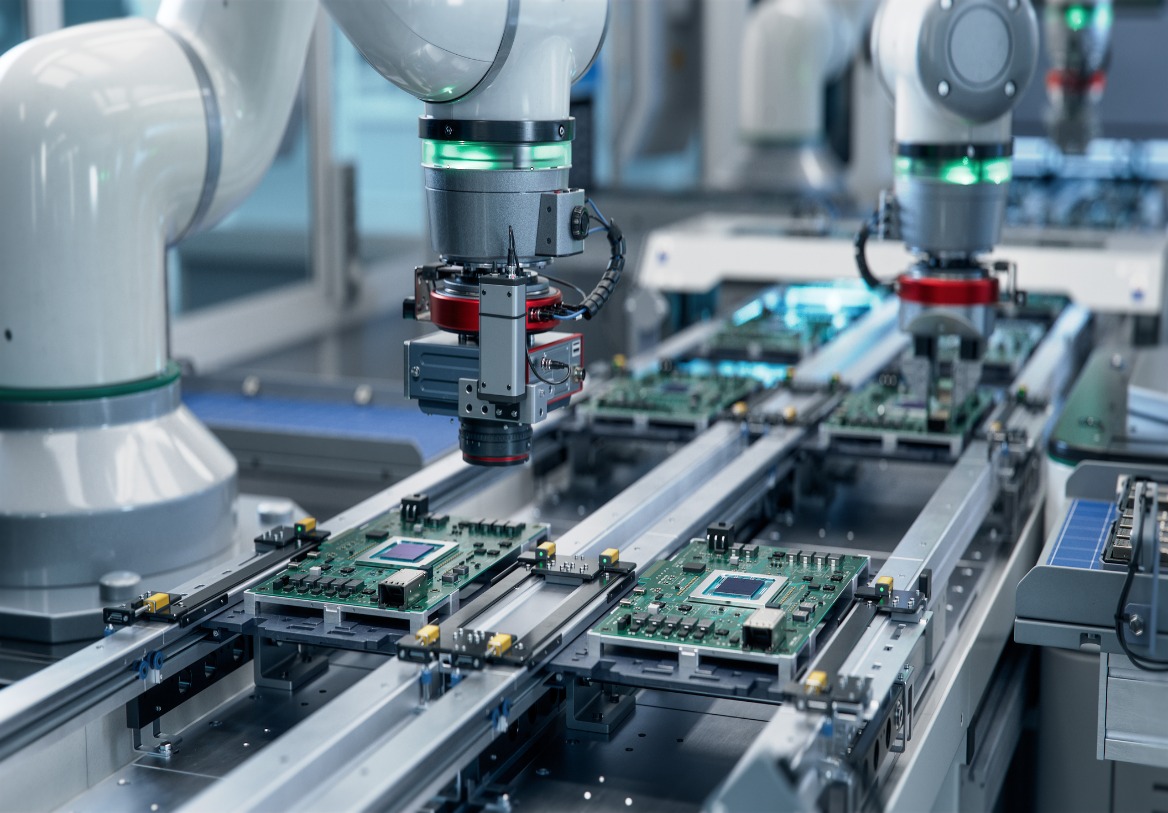
The trade deal also includes specific “reward” mechanisms for Taiwanese semiconductor companies that localise production in the United States. Companies building new U.S. capacity can import up to 2.5 times their planned capacity duty-free. Once a Taiwanese company finishes building its new factory in the United States, the U.S. government will allow that company to bring in extra chips from its overseas plants without charging them the standard “security” tax, according to the Commerce Department’s statement. 

Free Training

Source link

US warns South Korea and Taiwan of 100% tariffs if they refuse to invest in American manufacturing


Howard Lutnick. Photo: Bloomberg

U.S. Secretary of Commerce Howard Lutnick issued an ultimatum to leading global semiconductor manufacturers. During an event in New York State on Friday, January 16, 2026, he made it clear that access to the American market for Taiwanese and South Korean companies would depend on their willingness to build factories within the United States. This was reported by Bloomberg, writes UNN.

Details

The Trump administration plans to use tax pressure as the main incentive for relocating high-tech facilities. Lutnick emphasized that companies that ignore calls for investment will face a doubling of the cost of their products at the border.

Everyone who wants to create memory has two options: they can pay a 100% tariff or build in America. If they don’t build in America, the tariff will likely be 100%.

– stated Howard Lutnick.

Who is the pressure aimed at?

The warning primarily concerns the market leaders in memory chips and components for artificial intelligence:

  • Samsung Electronics and SK Hynix (South Korea);
  • TSMC and other leading Taiwanese firms.

This statement was made against the backdrop of the groundbreaking ceremony for a giant factory of the American company Micron Technology, which is already investing billions of dollars in the development of domestic production in New York.

New White House strategy

Although President Donald Trump has so far refrained from immediately imposing tariffs on semiconductors, the Department of Commerce is already conducting aggressive negotiations with partners. The administration’s goal is to radically reduce U.S. dependence on imports of critical technologies and restore the dominance of American industry. 

Free Training

Source link

Taiwan to invest $250 billion in US semiconductor manufacturing


The Trump administration signed a deal worth $250 billion with Taiwan, in a move designed to help the United States boost domestic semiconductor manufacturing. This deal was announced by the U.S. Department of Commerce on Thursday.

Under this deal, Taiwanese semiconductor and tech companies have agreed to make direct investments into the U.S. semiconductor industry. According to a press release, these investments will span across semiconductors, energy, and AI “production and innovation”. Currently, Taiwan produces more than half of the world’s semiconductors.

Taiwan will also supply an additional $250 billion in credit guarantees for additional investments from these semiconductors and tech enterprises, according to the commerce department. The timeline for the investments is unclear.

READ: Biden administration to intensify restrictions on China’s access to AI chips (January 14, 2025)

In return for the investment, the U.S. will invest in Taiwan’s semiconductor, defense, AI, telecommunications, and biotech industries. The amount for this investment was not specified.

This news comes the day after the Trump administration published a proclamation reiterating the country’s goal to bring more semiconductor manufacturing back to the United States.

“This dependence on foreign supply chains is a significant economic and national security risk,” the proclamation stated. “Given the foundational role that semiconductors play in the modern economy and national defense, a disruption of import-reliant supply chains could strain the United States’ industrial and military capabilities.”

The proclamation also announced 25% of tariffs on some advanced AI chips. It also stated that once trade talks with other countries–like this deal with Taiwan–are complete, there would be additional semiconductor tariffs.

In 2025, Trump has made semiconductor manufacturing a central focus of his economic agenda, aiming to reduce U.S. reliance on foreign chip production and bring manufacturing back to American soil.

His administration has proposed aggressive trade measures, including a potential 100% tariff on imported semiconductors. However, companies that commit to building manufacturing capacity in the U.S. could be exempt according to previous reports.

In March last year, Taiwan Semiconductor Manufacturing (TSMC) announced plans to invest $100 billion into bolstering chip manufacturing in the U.S.

READ: The perils of Trump’s proposed tariff trade war (February 6, 2025

Semiconductors are the foundational components of modern technology. They power computing systems in products ranging from smartphones and automobiles to telecommunications equipment and military weapons.

According to a press release from the U.S. Department of Commerce, the U.S. share of global wafer fabrication declined sharply from 37 percent in 1990 to less than 10 percent in 2024. Today, most semiconductors are fabricated in East Asia due to foreign industrial policies.

Free Training

Source link