AbbVie to create 300 new jobs with $380m Illinois manufacturing investment


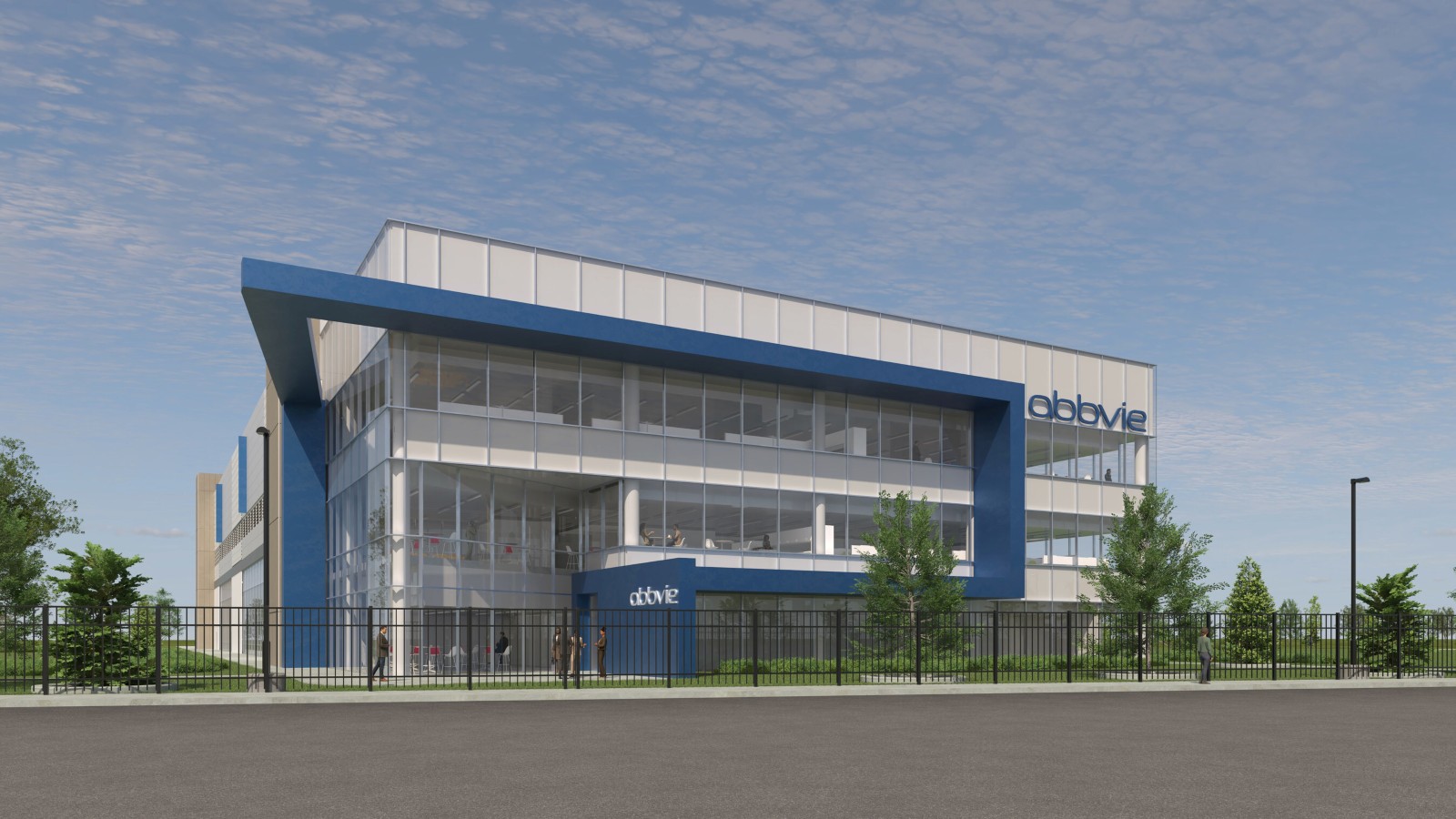
AbbVie has announced a $380m investment to build two new active pharmaceutical ingredient (API) manufacturing facilities at its North Chicago campus, expanding U.S. production capacity for next-generation medicines and creating around 300 new jobs.

The new facilities will support production of AbbVie’s future neuroscience and obesity treatments, integrating advanced manufacturing technologies and artificial intelligence into API production processes. Construction is scheduled to begin in spring 2026, with both plants expected to be operational by 2029.

AbbVie CEO Robert A. Michael said the project reflects the company’s long-term commitment to U.S. manufacturing.

“This milestone demonstrates further progress against our $100bn commitment to U.S. R&D and capital investments over the next decade,” he said. “By strengthening our U.S. manufacturing capabilities, we are well-positioned to support our investment in innovation and enhance our ability to deliver next-generation medicines to patients.”

API manufacturing involves producing the active components responsible for a drug’s therapeutic effects, a complex multi-step process often outsourced globally. AbbVie has spent the past six months outlining plans to expand API capacity in the United States.

In September 2025, the company broke ground on a chemical synthesis facility intended to bring production of selected neuroscience, immunology and oncology APIs back from Europe and Asia to the U.S.

The latest investment is expected to support approximately 300 new roles in North Chicago, including engineers, scientists, manufacturing operators and laboratory technicians.

AbbVie employs around 29,000 people across the United States, including more than 6,000 at its domestic manufacturing sites and over 11,500 in Illinois. The North Chicago expansion reinforces the company’s long-standing presence in the state, where it is headquartered.

The investment also forms part of a wider U.S. manufacturing push. AbbVie recently announced plans to acquire a device manufacturing facility in Arizona and expand operations in Massachusetts, and said it is in talks with several states about additional projects expected to be announced in 2026.

AbbVie’s move reflects a wider trend across North American pharmaceutical manufacturing, where companies are investing in domestic API production to improve supply-chain resilience, meet regulatory expectations, and take advantage of government incentives.

As demand rises for obesity and neuroscience treatments, increased U.S. API capacity could play a key role in ensuring reliable supply while accelerating the adoption of advanced manufacturing technologies.

Free Training

Source link

Manufacturing jobs in the United States declined in 2025


I would say the Trump tariffs are not helping. I mean, mostly because there’s no larger coherent plan attached to them. Like they’re very chaotic in terms of like what country faces what raid and maybe that changes and it differs across industry. And even the rationale, like sometimes the tariffs are invoked as we’re trying to bring back manufacturing jobs. Sometimes they’re somehow related to things like fentanyl, and what they’re doing in the meantime is they’re making imports or inputs into *** lot of manufacturing goods. And so when they get more expensive, all of *** sudden the output of manufacturing. Firms gets very expensive and not competitive in global markets and other countries retaliate and we’ve seen *** really big reduction in manufacturing exports as *** share of the total economy so I think all in all um there’s just no plan here and the tariffs have definitely done more damage than help.

Get the Facts: Are Trump’s tariffs bringing back manufacturing jobs? Here’s the data

KOCO logo

Updated: 4:40 PM CST Feb 11, 2026

Editorial Standards

When President Donald Trump announced “reciprocal” tariffs last April, he promised it would help revitalize America’s manufacturing industry. Since that announcement, employment in the manufacturing industry has been in decline, according to an analysis by the Get the Facts Data Team using data from the Bureau of Labor Statistics.The loss of manufacturing jobs coincides with the softening in the labor market, said Josh Bivens, chief economist at the Economic Policy Institute, a Washington, D.C.-based nonpartisan think tank. There were about 12.2 million manufacturing employees in the sector when former President Joe Biden began his term. By the end of December 2024, near the end of his administration, the U.S. had about 12.7 million manufacturing employees.A year later, that number dropped by 108,000, according to the latest BLS jobs report. The industry has seen job losses each month since January 2025, but added 5,000 last month. Manufacturing is a major sector of the U.S. economy and supports other industries. But over the past 25 years, it’s been battered by globalization and policy mistakes that have put pressure on the industry, said Bivens. During the 2008 financial crisis, the manufacturing sector had steep job losses. Job growth began stabilizing in the late 2010s and held steady through the end of 2019 under President Trump’s first term. However, employment declined again following COVID-19. Since 2000, the sector has lost approximately five million jobs.Another challenge the industry is facing right now: Trump’s tariffs. According to Bivens, tariffs are currently doing more damage than helping the sector. Tariffs make imports expensive, which also makes manufacturing outputs expensive, making it harder for firms to compete in global markets. Countries can also retaliate and add their own tariffs on their goods.But Bivens points out tariffs can be beneficial in some cases; however, what he’s seeing from this administration doesn’t show evidence of a larger plan, and tariff decisions tend to be erratic. Some U.S. states, particularly in the Midwest, have a higher share of manufacturing jobs and rely on the sector. But more than half of U.S. states had a decline in manufacturing employment over the past year. Alaska had the steepest percentage drop at 6%, a loss of 800 employees. Montana and Oregon followed, with declines of roughly 5% and 3%.California, Texas and Ohio have the highest total number of manufacturing employees, but only Ohio reported job growth, gaining 8,500 employees over the year. California lost 32,600 employees, a 2.3% loss. “Manufacturing is still a place where you have a lot of workers without a college degree,” said Bivens. “When they lose a manufacturing job, they’re a little less likely to find a job with equivalent pay and equivalent benefits.” PHNjcmlwdCB0eXBlPSJ0ZXh0L2phdmFzY3JpcHQiPiFmdW5jdGlvbigpeyJ1c2Ugc3RyaWN0Ijt3aW5kb3cuYWRkRXZlbnRMaXN0ZW5lcigibWVzc2FnZSIsKGZ1bmN0aW9uKGUpe2lmKHZvaWQgMCE9PWUuZGF0YVsiZGF0YXdyYXBwZXItaGVpZ2h0Il0pe3ZhciB0PWRvY3VtZW50LnF1ZXJ5U2VsZWN0b3JBbGwoImlmcmFtZSIpO2Zvcih2YXIgYSBpbiBlLmRhdGFbImRhdGF3cmFwcGVyLWhlaWdodCJdKWZvcih2YXIgcj0wO3I8dC5sZW5ndGg7cisrKXtpZih0W3JdLmNvbnRlbnRXaW5kb3c9PT1lLnNvdXJjZSl0W3JdLnN0eWxlLmhlaWdodD1lLmRhdGFbImRhdGF3cmFwcGVyLWhlaWdodCJdW2FdKyJweCJ9fX0pKX0oKTs8L3NjcmlwdD4=

When President Donald Trump announced “reciprocal” tariffs last April, he promised it would help revitalize America’s manufacturing industry.

Since that announcement, employment in the manufacturing industry has been in decline, according to an analysis by the Get the Facts Data Team using data from the Bureau of Labor Statistics.

The loss of manufacturing jobs coincides with the softening in the labor market, said Josh Bivens, chief economist at the Economic Policy Institute, a Washington, D.C.-based nonpartisan think tank.

There were about 12.2 million manufacturing employees in the sector when former President Joe Biden began his term. By the end of December 2024, near the end of his administration, the U.S. had about 12.7 million manufacturing employees.

A year later, that number dropped by 108,000, according to the latest BLS jobs report. The industry has seen job losses each month since January 2025, but added 5,000 last month.

Manufacturing is a major sector of the U.S. economy and supports other industries. But over the past 25 years, it’s been battered by globalization and policy mistakes that have put pressure on the industry, said Bivens.

During the 2008 financial crisis, the manufacturing sector had steep job losses. Job growth began stabilizing in the late 2010s and held steady through the end of 2019 under President Trump’s first term. However, employment declined again following COVID-19. Since 2000, the sector has lost approximately five million jobs.

Another challenge the industry is facing right now: Trump’s tariffs. According to Bivens, tariffs are currently doing more damage than helping the sector. Tariffs make imports expensive, which also makes manufacturing outputs expensive, making it harder for firms to compete in global markets. Countries can also retaliate and add their own tariffs on their goods.

But Bivens points out tariffs can be beneficial in some cases; however, what he’s seeing from this administration doesn’t show evidence of a larger plan, and tariff decisions tend to be erratic.

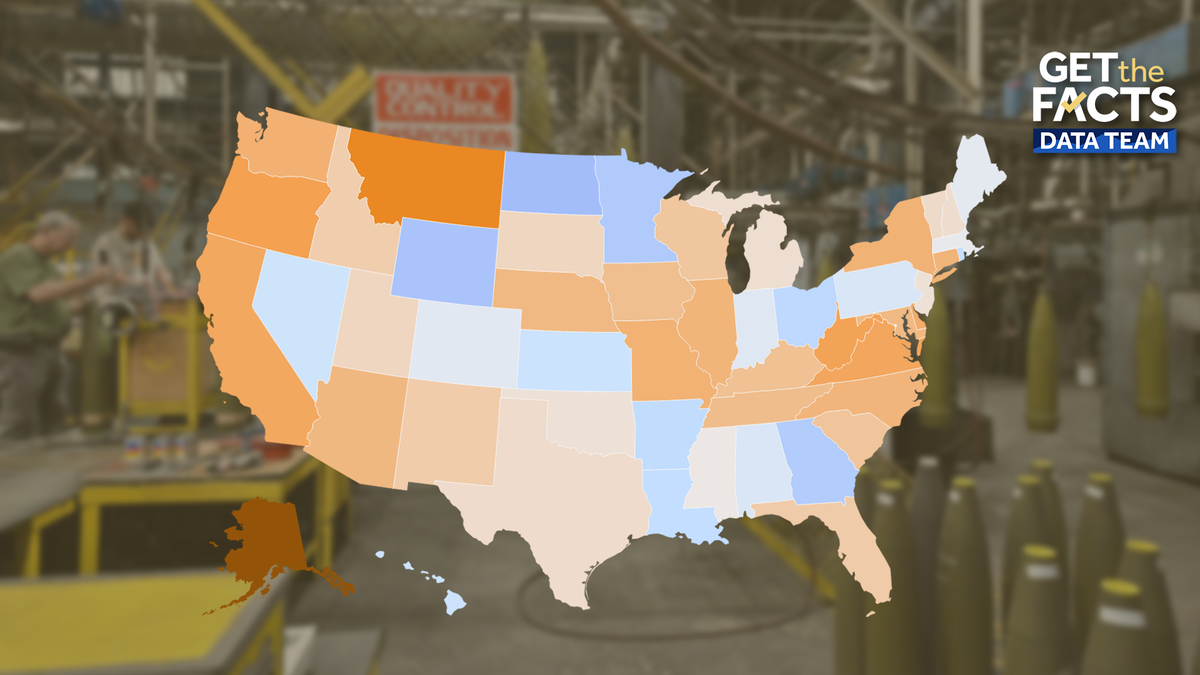
Some U.S. states, particularly in the Midwest, have a higher share of manufacturing jobs and rely on the sector.

But more than half of U.S. states had a decline in manufacturing employment over the past year. Alaska had the steepest percentage drop at 6%, a loss of 800 employees. Montana and Oregon followed, with declines of roughly 5% and 3%.

California, Texas and Ohio have the highest total number of manufacturing employees, but only Ohio reported job growth, gaining 8,500 employees over the year. California lost 32,600 employees, a 2.3% loss.

“Manufacturing is still a place where you have a lot of workers without a college degree,” said Bivens. “When they lose a manufacturing job, they’re a little less likely to find a job with equivalent pay and equivalent benefits.”

Free Training

Source link

Siemens Energy to Invest $1 Billion in U.S. Manufacturing, Add 1,500 Jobs


Siemens Energy plans to invest $1 billion to expand U.S. manufacturing capacity for grid equipment and gas turbines, adding more than 1,500 jobs as power demand accelerates from data centers, AI infrastructure and electrification.

(P&GJ) — Siemens Energy has finalized plans to invest $1 billion to expand manufacturing operations across the United States, a move that will create more than 1,500 highly skilled jobs as electricity demand rises sharply due to data centers, artificial intelligence infrastructure and industrial electrification.

The investment builds on plans outlined at the company’s Capital Market Day in Charlotte, North Carolina, last November and includes a mix of brownfield expansions and one greenfield project. Siemens Energy said the program will increase domestic production of grid equipment, transformers and large gas turbines, while strengthening U.S.-based manufacturing capacity to meet growing demand.

As part of the expansion, Siemens Energy will construct a new high-voltage switchgear manufacturing facility in Mississippi and expand transformer production, gas turbine manufacturing and grid technology operations in several states. The company said the approach allows it to use manufacturing capacity efficiently while supporting long-term market growth.

“Siemens Energy has been making things in the United States for more than a century and we are experiencing a once-in-a-generation growth opportunity due to the resurgence of U.S. manufacturing and the growth of artificial intelligence,” said Christian Bruch, CEO and President of Siemens Energy. “The current policy environment has contributed to this momentum. The Trump Administration has made energy security, a reliable and resilient grid, and growing U.S. manufacturing jobs a priority. This has supercharged the energy demand which is supporting new investments across the energy sector. We are excited to help write this next chapter of American energy expansion.”

The expansion is expected to add more than 1,500 roles across manufacturing, engineering and operations. Siemens Energy said it will also expand apprenticeship programs and training initiatives to support workforce development across the energy industry.

“This tremendous investment in a critical part of our power grid supply chain underscores President Trump’s success in expanding supply chain access and bringing major manufacturing back to America,” said U.S. Interior Secretary Doug Burgum. “We appreciate great partners like Siemens Energy, who proactively partner with the Trump administration for the benefit of the American people, prioritizing critical components to make the United States Energy Dominant!”

Planned Site Investments

Siemens Energy said the investment will be spread across multiple states:

  • Mississippi (Greater Richland area): Construction of a new high-voltage switchgear plant, including a training center, with plans to hire up to 300 employees.

  • North Carolina (Charlotte, Winston-Salem and Raleigh): Expanded transformer manufacturing and servicing, resumption of gas turbine manufacturing in Charlotte, turbine component production in Winston-Salem, and expanded grid technology, engineering and R&D operations in Raleigh. About 500 jobs are expected across the state.

  • Florida (Orlando and Tampa): Expansion of turbine blade and vane manufacturing in Tampa and upgrades to research and development capabilities in Orlando, including an artificial intelligence digital grid technologies laboratory with NVIDIA. The company will also relocate and modernize its regional headquarters in Orlando.

  • Alabama (Fort Payne): Expanded production of copper and insulation components for generators, creating about 120 jobs.

  • New York (Painted Post) and Texas (Houston): Facility upgrades supporting the manufacture and servicing of compression equipment used to transport gas and liquids through pipelines.

Siemens Energy said the U.S. remains a core market for the company, accounting for nearly 29% of global order volume last fiscal year. The company currently employs more than 12,000 people across 25 U.S. facilities and works with nearly 5,000 domestic suppliers.

Free Training

Source link

Siemens Energy to add 120 jobs in Fort Payne as part of $1 billion U.S. manufacturing investment


Siemens Energy plans to add 120 advanced manufacturing jobs at its Fort Payne facility as part of a more than $1 billion U.S. investment initiative, according to a joint announcement from the DeKalb County Economic Development Authority and the City of Fort Payne.

The expansion will increase production capacity at the longtime Northeast Alabama plant and is expected to strengthen the region’s role in energy-sector manufacturing.

The Fort Payne facility, which opened in 1988, currently employs about 250 workers. Officials said the added positions will support expanded production of copper and insulated electrical components used in power-generation equipment. The growth is expected to position Siemens Energy among DeKalb County’s five largest manufacturing employers based on current employment levels.

Siemens Energy President of North America Matt Neal said the company’s technology already plays a major role in U.S. power generation and demand is rising.

“Twenty-five percent of the power generated in the United States relies on Siemens Energy technology and that process starts here in Alabama. We need more electricity to fuel our daily lives and our growing economy and that has increased demand for our equipment. Throughout the country we are expanding manufacturing and hiring more workers and doing so in places like Fort Payne where we already have a great workforce, a robust pipeline of talent, and strong partnerships with the community,” Neal said.

Alabama Commerce Secretary Ellen McNair said the expansion reflects confidence in the state’s workforce and business climate.

“Siemens Energy’s expansion in Fort Payne is a tremendous vote of confidence in the highly skilled local workforce and underscores the strong community partnerships with business in our state,” McNair said. “We are excited to watch this new phase of growth unfold and stand ready to help the company achieve its future strategic goals and innovations.”

Brett Johnson, Executive Director of the DeKalb County Economic Development Authority, said the project strengthens the county’s industrial base.

“Existing industries like Siemens Energy are the backbone of DeKalb County’s growing economy,” Johnson said. “As a major employer, Siemens Energy’s continued reinvestment creates long-term stability, higher-wage jobs, and sustained economic growth for our communities. The work being done at the Siemens Energy manufacturing plant in Fort Payne is literally helping generate reliable power around the globe, and that is the kind of work we can all be proud to say is made right here in DeKalb County, Alabama.”

Fort Payne Mayor Brian Baine said the additional jobs will have a regional ripple effect.

“These are the kinds of high-quality, advanced manufacturing jobs that strengthen families and elevate our workforce,” Baine said. “This manufacturing investment will transform the trajectories of 120 families across our region and create a wider ripple effect throughout our local economy. Investments like these create new opportunities for small businesses, workforce development, and our entire community. We welcome this investment and stand ready to support Siemens Energy throughout the process.”

Bryan Wilkin, Siemens Energy’s Director of Operations in Fort Payne, said the company plans to grow both its workforce and its community involvement.

“Siemens Energy is buzzing with excitement as we announce significant growth and investment in our Fort Payne factory. This expansion not only marks a milestone in our company’s journey but also brings a wave of new job opportunities to the area. We are thrilled to share that we will be hiring a substantial number of new employees, which will undoubtedly have a positive impact on our local economy and provide stability for many families. Our current employees can also rest assured that their positions remain stable and secure as we recognize and appreciate their continued hard work and dedication. In addition to these exciting developments, we are proud of our ongoing involvement in community initiatives. Our factory remains dedicated to supporting local events, charities, and projects that benefit the well-being of our neighbors. As we move forward with these plans, we invite the community to join us in celebrating this new chapter together,” Wilkin said.

Siemens Energy became an independent energy technology company after being spun off from Siemens AG in 2020 and operates more than two dozen facilities across the United States, including multiple manufacturing sites.

With the planned hiring and production increase, local leaders say the Fort Payne expansion adds to growing momentum for advanced manufacturing across Northeast Alabama.

Sherri Blevins is a reporter for 256 Today.

Free Training

Source link

Bowling manufacturer plans $9M expansion, 90 new jobs in Muskegon


Updated Feb. 6, 2026, 1:08 p.m. ET

A Michigan bowling equipment manufacturer is expanding its presence in the Muskegon area, investing nearly $9 million to renovate a facility, a move it says is expected to create 90 new jobs.

Motiv Bowling said in a news release on Feb. 4 that it plans to acquire a 96,000-square-foot facility in Roosevelt Park, which is just a few miles outside Muskegon. The facility will be renovated and used for bowling ball manufacturing and as an exporting logistics hub.

Free Training

Source link

Trump said tariffs would bring factories ‘roaring back.’ So why are manufacturing jobs on the decline?


Just before President Trump announced his sweeping tariffs on “Liberation Day” last spring, the White House celebrated February’s gain of 10,000 manufacturing jobs, noting that more than 100,000 positions in the sector had been shed in the final year of the Biden administration.

“Manufacturing is Roaring Back,” the White House website declared.

But such gains were short-lived. Manufacturing jobs began to slide again in May and haven’t stopped declining. 72,000 manufacturing positions have been lost since April’s tariffs announcement, including 8,000 roles in December alone.

What gives?

“What we’re seeing is certainly a continuation of trends that began before the Trump administration,” Gordon Hanson, an economist and professor in urban policy at the Harvard Kennedy School, told Yahoo Finance. “But the tariffs haven’t helped.”

Indeed, millions of manufacturing jobs have disappeared from the US since 1979 amid a combination of “powerful” trends, Hanson said, including automation, “the continuing effects of the China trade, and the fact that the US has not done a lot of the things you need to do to restore manufacturing prowess.”

Tariffs are hardly the solution to those problems, Hanson said — though Trump insists otherwise. He vowed in April that jobs and factories would “come roaring back into our country” as levies on imports boosted locally produced goods.

While tariffs do reduce import competition, they can also increase the cost of key components for domestic manufacturers. Take US electric vehicle plants that rely on batteries made with rare earth elements imported from overseas, for instance. Some parts simply aren’t made in the United States.

Read more: What are rare earth minerals, and why are they important?

As for sectors that had already largely left the US, like apparel and textile manufacturing, “a lot of those industries are just substantially gone,” Hanson said, meaning there aren’t many existing factories where production could be ramped up and hires could be made.

Do you have a story about navigating the job market? Reach out to Emma Ockerman here.

Manufacturing is hardly the only industry to add few workers these days: Job growth remains paltry across the board, and what hiring does exist is largely being driven by the healthcare and social assistance sectors.

DEARBORN, MICHIGAN - JANUARY 13: U.S. President Donald Trump (2R) tours the assembly line at the Ford River Rouge Complex on January 13, 2026 in Dearborn, Michigan. Trump is visiting Michigan where he will participate in a tour of the Ford River Rouge complex and later give remarks to the Detroit Economic Club. (Photo by Anna Moneymaker/Getty Images) President Trump tours the assembly line at the Ford River Rouge Complex on Jan. 13 in Dearborn, Mich. (Photo by Anna Moneymaker/Getty Images) · Anna Moneymaker via Getty Images

Then there’s the uncertainty caused by the administration’s whipsawing tariff policies, which can lead employers to pull back on hiring as they await greater clarity.

“If Trump just picked a number — whatever it was, 10% or 15% to 20% — we might all say it’s bad, I’d say it’s bad, I think most economists would say it’s bad,” Dean Baker, senior economist at the Center for Economic and Policy Research, said. “But the worst thing is there’s no certainty about it.”

Story Continues

Trump’s tariff threats against several European nations as he sought control of Greenland, for example, appeared and abated within a matter of days, injecting some volatility into the stock market in the process.

Read more: How Trump’s tariffs affect your money

With rates “constantly changing, what becomes very difficult for businesses is to plan,” Baker added. “I think you’ve had a lot of businesses curtail investment plans because they just don’t know whether the plans will make sense.”

Manufacturing job losses could also be more severe than they appear in preliminary data. Fed Chair Jerome Powell said in December that federal statistics may have overstated job growth by “about 60,000” per month.

It’s “too early to say with any certainty” that these manufacturing jobs would be around if not for the tariffs, Baker noted, but there’s also “zero evidence” that they came charging back.

To be sure, the Biden administration also claimed a renaissance in manufacturing jobs, but that was after massive job destruction in 2020. Though employment in the sector eventually jumped above pre-pandemic levels, the growth was uneven regionally and lagged growth in other sectors, the Economic Innovation Group said in a 2024 analysis. Still, spending on manufacturing construction boomed following the 2021 bipartisan infrastructure bill, 2022 CHIPS Act, and 2022 inflation reduction bill.

That spending declined in 2025.

But, tariffs or no tariffs, a manufacturing employment boom would be difficult to construct.

As a country develops, manufacturing might first rise as a share of employment, but “in every single industrial economy” it declines steadily after a certain point, Robert Lawrence, senior fellow at the Peterson Institute for International Economics and professor of international trade and investment at the Harvard Kennedy School, said.

“It doesn’t matter if you have a trade deficit or a trade surplus,” Lawrence said.

Consumers use the money they save on cheaper goods and spend it on services, where there’s more employment growth. That’s what’s happened in the US, where payroll gains for 2025 were concentrated in services like healthcare, food services, and social assistance.

“I think this is deep,” Lawrence said. “We’ve tried industrial policy, we’ve tried trade protection — even before Trump’s initiatives and Liberation Day tariffs — and we haven’t seen much recovery at all. If anything, it continues to decline.”

Emma Ockerman is a reporter covering the economy and labor for Yahoo Finance. You can reach her at emma.ockerman@yahooinc.com.

Sign up for the Mind Your Money newsletter

Click here for the latest personal finance news to help you with investing, paying off debt, buying a home, retirement, and more

Read the latest financial and business news from Yahoo Finance

Free Training

Source link

US Factory Jobs Keep Falling Despite Trump’s Manufacturing Revival Push


Manufacturing sector

US manufacturing employment has continued to decline despite former President Donald Trump’s repeated claims of an industrial revival driven by tariffs and reshoring policies | Image:
Pexels

US manufacturing employment fell again in December, extending a steady decline that has now lasted most of 2025, underscoring the gap between political promises of an industrial resurgence and labour market realities.

According to government data, factory payrolls have dropped by more than 70,000 jobs since April, pushing total manufacturing employment to around 12.7 million, the lowest level in over three years. The sector has now recorded job losses in eight of the past nine months.

Tariffs Fail to Deliver Hiring Boost

President Donald Trump has repeatedly argued that tariffs and protectionist trade policies would revive domestic manufacturing and bring factory jobs back to the US. Tariff collections have surged, generating tens of billions of dollars in revenue annually, but manufacturers say higher input costs and supply-chain uncertainty have offset any benefit from reduced import competition.

Many firms have opted to invest in automation or overseas capacity rather than expand domestic headcount, limiting the employment impact of reshoring initiatives.

Also read: ₹1.7 Lakh Crore Raised Through IPOs in FY26: SEBI

Broader Jobs Growth Masks Factory Weakness

While overall US employment growth has remained positive, driven largely by healthcare and services, manufacturing has emerged as a weak link. Economists note that factory hiring tends to slow earlier in economic cycles as companies respond quickly to changes in demand and costs.

The unemployment rate edged lower in December, but analysts say this largely reflects slowing labour force participation rather than strong job creation in goods-producing sectors.

Structural Challenges Weigh on Outlook

Industry executives cite multiple headwinds facing US manufacturing, including higher borrowing costs, rising wages, energy price volatility, and slowing global demand. Even companies expanding production capacity are increasingly relying on technology rather than labour-intensive processes.

As a result, economists warn that a sustained rebound in factory employment is unlikely without broader investment incentives, stable trade policy, and stronger demand growth.

Despite aggressive rhetoric and rising tariff revenues, the long-promised revival in US factory jobs has yet to materialise. For now, manufacturing remains a drag on the labour market, highlighting the limits of trade policy as a tool for job creation.

-With inputs from Reuters

Also read: SC Rulings Loom as Trump’s Tariff Authority Faces Fresh Legal Scrutiny

Free Training

Source link

US manufacturing sector loses jobs despite Trump’s promises of a manufacturing boom


According to December results, the US manufacturing sector showed an eight-month decline in the number of jobs. This happened against the backdrop of President Donald Trump’s introduction of strict import tariffs, which were intended to revive American industry, but instead led to a reduction in hiring and an increase in business costs. This is reported by Reuters, writes UNN.

Details

According to data from the US Department of Labor published on Friday, the manufacturing industry lost another 8,000 jobs in December 2025. In total, the sector shed 75,000 employees last year. Trump noted that tariff revenues – about $30 billion monthly – indicate the success of the policy, but businesses are reacting differently: companies initially massively purchased goods abroad before the tariffs were introduced, and then sharply slowed down purchases and investments.

Currency exchange rate: dollar set a historical maximum, euro crossed the 50 UAH mark09.01.26, 08:00 • 3168 views

Richmond Fed President Tom Barkin confirmed to reporters that the labor market situation remains difficult.

It’s hard to find companies outside the AI or healthcare ecosystem that are talking about hiring

– he noted, explaining this by high uncertainty and increasing productivity, which replaces human labor.

Manufacturing on the verge of survival

Real business indicators demonstrate the depth of the crisis. For example, at the BCI Solutions Inc. steel plant in Indiana, the staff was reduced from 240 to 130 people – the lowest level since 1993. The company’s CEO, J.B. Brown, stated that capacity utilization fell to a record low of 52%.

Although the unemployment rate in December slightly decreased to 4.4% (from 4.5% in November), this is explained more by people leaving the workforce and strict immigration policies than by the creation of new jobs. The pace of employment growth in 2025 fell to 49,000 vacancies per month, which is three times less than the previous year’s figures (168,000 per month during Biden’s time). Economists state that the only cycle-resistant sector remains healthcare. 

Ukraine granted lithium mining rights to Trump’s friend – NYT09.01.26, 16:44 • 23020 views

Free Training

Source link