Orion taps expanded U.S. manufacturing to produce stretch wrapper for the U.S. market


Orion Packaging Systems, a ProMach brand and a leading manufacturer of pallet stretch wrapping solutions, has announced the launch of the Orion Flex Legion semi-automatic stretch wrapper. This fully U.S.-designed and highly engineered machine expands Orion’s Flex line and reinforces the company’s commitment to domestic manufacturing, supply chain reliability, and long-term customer value, the company said.

The new Flex Legion system replaces Orion’s imported entry-level stretch wrapper, providing manufacturers with a 100-percent U.S.-built solution designed to deliver greater consistency in quality, more predictable lead times, and improved control over total cost of ownership. 

“Flex Legion reflects our focus on building equipment that customers can rely on – not just today, but over the long term,” said Pat Pownell, Director of Sales, at Orion. “Manufacturing this system in the United States enables us to respond faster to customer needs, ensure consistent build quality, and deliver an entry-level machine that performs at a level typically associated with more advanced systems.”

Orion Stretch Wrappers operates out of its Alexandria, Minnesota production facility, encompassing more than 250,000 square feet of dedicated production space between Brenton and Orion product lines. Within this facility, they leverage cross trained talent across the Brenton and Orion teams to support both production and aftermarket functions. They also have a dedicated Orion sales and engineering team focused exclusively on the Orion product line, enabling tight alignment between market demand, product development, and manufacturing execution. This structure has allowed Orion to internalize the full ownership of design, build quality and customer support.

“Bringing the Flex Legion’s design and production to our U.S. floor is about doing what’s right for the customer,” said Kelly Hawkinson, Director of Operations for Brenton and Orion, brands of ProMach. “It gives us greater control over quality, improves responsiveness, and shortens lead times. Just as importantly, it reduces exposure to tariff volatility and global supply chain disruption, allowing us to deliver greater cost predictability and long-term confidence in the total cost of ownership for our customers.”

While Flex Legion serves as Orion’s entry point into semi‑automatic automation, it is engineered with the same design philosophy and quality found across the Flex line. The Flex Legion comes with Allen-Bradley HMI operation that is paired with intuitive manual adjustment knobs for turntable speed, carriage travel, and film tension. Flex Legion is also equipped with a powered ‘InstaThread’ carriage capable of delivering uniform 200% film pre‑stretch, helping manufacturers achieve consistent load containment while reducing film consumption compared to friction‑based or core‑break systems commonly used in entry‑level applications.

The system’s semi‑automatic operation and intuitive controls make it well-suited for manufacturers transitioning from hand wrapping to automation. 

Subscribe today!

Free Training

Source link

US Manufacturing Is Back in Expansion. Here’s What the US Stock Market Is Pricing Next


With ISM Manufacturing PMI back above 50 and New Orders jumping sharply, investors are watching what this could mean for earnings and cyclical leadership in the US stock market.
Here’s how to read the manufacturing data without overreacting to a single headline.

For years, US stocks have been shorthand for mega-cap tech, AI winners, and the Nasdaq story. Manufacturing, by comparison, rarely gets headline space unless it’s flashing recession warnings. But that’s exactly why it can matter when the data turns: manufacturing is often where the cycle becomes measurable before it becomes obvious.

In early February 2026, the ISM Manufacturing PMI for January came in at 52.6, returning to expansion territory after a long stretch below 50. More importantly, the New Orders component jumped to 57.1, turning firmly expansionary and signalling that demand is improving at the front end of the pipeline.

This doesn’t automatically mean a manufacturing boom. But it does create a cleaner question for markets to price: is the US moving from “stability” to “acceleration” in the parts of the economy that tend to show up quickly in profits?

Why manufacturing matters to the US stock market

The US economy is services-heavy, but corporate earnings are still highly sensitive to industrial activity. When orders improve, production stabilises, and inventories normalise, the impact can show up in operating leverage, margins, and guidance.

That’s why investors often treat manufacturing indicators less like an “economic scorecard” and more like an “earnings early warning system.” Markets don’t trade the headline narrative. They trade what becomes measurable in business results over the next few quarters.

The investable signal is New Orders, not the headline PMI

A PMI number above 50 is a useful milestone. But New Orders is typically the more forward-looking indicator because it shows whether demand is building, not just whether activity has stopped falling.

In January 2026, New Orders moved decisively higher, while Production also improved. That combination is what makes the manufacturing rebound relevant for US market watchers: it hints at a potential shift from “cost control” to “top-line support,” which is where earnings upgrades usually begin.

A positive spin, without pretending risks don’t exist

A constructive manufacturing setup doesn’t require mass hiring or euphoric sentiment. In fact, some of the most market-friendly environments are those in which demand improves while companies keep headcount tight and protect margins.

That nuance matters right now because employment within manufacturing is still soft. Firms can be cautious on hiring and still deliver better profitability if output holds up and pricing power doesn’t collapse. For US stocks, that can translate into a simple market logic: improving activity plus disciplined cost structures can be good for earnings, even if job growth lags.

At the same time, this is not a “set-and-forget” signal. One strong print can be distorted by reorder cycles, inventory moves, or businesses bringing forward purchases. The confirmation comes from follow-through over the next few releases.

What to watch next in the US market news, if you want the real manufacturing signal

If you’re tracking US stock market trends through a manufacturing lens, focus on indicators that connect to earnings, not just headlines.

  1. Follow-through in New Orders and Backlogs
    If New Orders stay expansionary and Backlog readings improve, the rebound becomes more than a bounce. That’s when markets start treating it as a cycle shift rather than a data quirk.
  2. Prices and margins
    If input costs keep rising faster than companies can pass them on, manufacturing strength can become margin pressure instead of margin expansion. Investors will watch whether price trends stabilise.
  3. Management language during earnings season
    The biggest market moves happen when companies shift from “uncertainty” to measurable visibility: stronger demand cues, improved utilisation, easing bottlenecks, and clearer capex plans.
  4. Which parts of the US stock market lead
    Manufacturing strength tends to show up more clearly in cyclical areas, industrials, materials, transport-linked businesses, and parts of the small-cap universe that are more economically sensitive. It doesn’t mean tech can’t lead, but it often broadens leadership beyond the same familiar names.

Why Indian investors should care about US manufacturing

For Indian investors, the value of tracking manufacturing is not to replace the AI narrative, but to add a second lens on US markets.

When US manufacturing improves, the effects can ripple through global supply chains, capital spending, logistics, and energy demand. That can create opportunities outside headline tech, especially for investors looking to diversify across sectors and build a portfolio that isn’t fully dependent on India’s domestic cycle.

And because US assets are dollar-linked, currency moves can also affect INR outcomes over time. So even “boring” data like manufacturing can matter more than it looks, because it can influence earnings tone, risk appetite, and sector leadership in the US stock market.

The bottom line

The headline “manufacturing is back” is not the trade. The trade is whether better orders and output translate into stronger earnings visibility over the next one to two quarters.

If the improvement holds, manufacturing becomes a quieter support for the next leg of the US market in 2026, potentially widening leadership beyond mega-cap tech. If it fades quickly, it was a bounce, not a cycle shift. Either way, the smarter approach is to follow what becomes measurable in margins and guidance, not what sounds loud in headlines.

FAQs

1) What does a Manufacturing PMI above 50 mean for US stocks?
It signals expansion in manufacturing activity, which markets track because it can improve earnings visibility for cyclical companies and support broader risk sentiment.

2) Why do investors focus on ISM New Orders?
New Orders is more forward-looking than the headline PMI. It’s an early read on demand momentum that can show up in production and earnings in the coming quarters.

3) Does one strong PMI print mean a manufacturing boom is coming?
Not necessarily. One month can reflect reorder cycles or inventory effects. Investors look for confirmation across multiple months and related components, such as backlogs and production.

4) Which US stocks tend to benefit most when manufacturing improves?
Cyclical areas often respond more clearly, such as industrials, materials, and economically sensitive parts of the market, because they are directly tied to orders, output, and capex cycles.

5) How should Indian investors use US manufacturing signals?
As a tactical lens, not a standalone timing tool. It can help track where earnings momentum may broaden beyond tech and support diversified exposure to US stocks.

If you want to track these shifts through the lens of live U.S. stock market moves and themes that matter to Indian investors, Appreciate can help you follow U.S. stocks, map the big narratives to company performance, and stay on top of what’s driving the U.S. market today.

Visit the new Mint x Appreciate US Markets page — where financial knowledge meets real opportunity.
To know more about investing in US stocks, ETFs, and Mutual Funds, click here.

Note to the reader: This article has been produced on behalf of the brand by HT Brand Studio and does not have journalistic/editorial involvement of Mint.

Free Training

Source link

US manufacturing access opens new Alpha-GPC format options as cognitive health market matures


According to market insights firms SPINS, U.S. cognitive health vitamin, mineral and supplement sales reached approximately $499 million over the latest 52-week period, with unit sales exceeding 19.5 million. While the category remains one of the industry’s largest condition-specific segments, dollar sales declined slightly year over year, underscoring the difficulty of sustaining growth in a mature market.

Within that landscape, CHEMI Nutra says expanded U.S. manufacturing access to its choline-rich Alpha-GPC ingredients is enabling shorter formulation timelines while preserving Italian pharma-level purity and stability. CHEMI Nutra, incorporated in 2001, manufacturers Alphasize at CHEMI S.p.A.’s pharmaceutical-grade facilities in Milan and Patrica, Italy.

Alpha-GPC (Alpha-glycerylphosphorylcholine) is used across a wide range of cognitive health products, particularly in blended formulations positioned for focus, memory and mental performance. Its use, however, has largely remained concentrated in powders and capsules.

Accessing the AlphaSizeLiquid-Science Platform

Mike Petteruti, president & general manager of CHEMI Nutra highlighted that delivery format innovation continues to shape future development strategies for choline ingredients.

“Future development will focus on delivery systems that improve bioavailability, format flexibility and consumer compliance, including liquids, softgels and hybrid systems,” he told NutraIngredients. “The biggest opportunity lies in integrating choline solutions into multi-benefit formulations without compromising stability or sensory experience.”

Efforts to expand Alpha-GPC into liquid and softgel formats have historically faced stability challenges, and the “main barriers were limited access to suitable liquid Alpha-GPC and a lack of confidence and know-how around softgel applications,” according to Petteruti.

“Alpha-GPC’s sensitivity to moisture and interaction with lipid systems made long-term stability difficult without system-level expertise,” he noted.

Those issues have limited how quickly brands could pursue alternative delivery formats, but Petteruti said those challenges can now be addressed via CHEMI Nutra’s AlphaSize Liquid-Science Platform.

Introduced in 2025, this platform allows for the use of “Liquid 85L” Alpha-GPC in applications such as shots, ready-to-drink (RTD) beverages, gummies, drops and softgels, while maintaining the stability and efficacy of the ingredient.

Moving forward, Petteruti added, regulatory clarity and scientific substantiation will continue to influence how quickly new formats reach the market.

Added value of U.S. manufacturing and regulatory clarity

As competition heats up, regulatory positioning is also playing a more substantial role in ingredient selection. Alphasize is the only New Dietary Ingredient (NDI)-cleared Alpha-GPC in the U.S. market.

“Expanded U.S. manufacturing access to an NDI-supported Alpha-GPC increases regulatory confidence and commercial clarity for brands,” Petteruti said. “NDI support provides a well-documented safety and quality foundation, while domestic production improves traceability, continuity and alignment with FDA expectations.”

He added that those factors shorten supply chains and allow brands to plan innovation cycles with greater certainty in cognitive health and brain-mood formulations.

US-based manufacturing is also becoming more closely tied to transparency and documentation expectations.

“The AlphaSize Liquid-Science platform combines U.S.-based manufacturing with the same transparency and quality standards applied across CHEMI Nutra’s global operations,” Petteruti said. “Domestic production enables clearer documentation, tighter quality oversight and closer collaboration around formulation, stability and delivery formats.”

On-shoring can also make technical or regulatory decision-making processes less complex, as it “provides more direct access to this know-how and more consistent answers around regulatory confidence and performance expectations,” he added.

Free Training

Source link

Ralph Lauren Invests in Domestic Fashion as U.S. Manufacturing Job Market Shrinks


Ralph Lauren and the Council of Fashion Designers of America is widening its financial commitment to domestic apparel production as new economic data underscore just how fragile American fashion manufacturing has become.

This week, the CFDA announced two new grant programs aimed at stabilizing and modernizing U.S.-based fashion manufacturing, extending its support well beyond New York City for the first time. The move comes as fresh analysis from Deloitte shows that apparel and textile manufacturing remain among the fastest-declining segments of the U.S. industrial economy, even as policymakers push to reshore production.

The first initiative, the CFDA x NY Forward Grant Fund, is a city-focused effort developed with funding from the New York State Department of State and Ralph Lauren Corp. It will provide partially matching grants to designers and manufacturers operating in New York City’s Garment District, an area that has steadily lost factories and skilled labor over the past two decades.

The second program, the U.S. Fashion Manufacturing Fund, represents a broader national expansion. Also created with Ralph Lauren as a founding partner, the new fund will operate from 2027 through 2029 and support manufacturers across key apparel-producing regions including California, New Jersey, North Carolina, South Carolina, Texas, and Florida. The program is structured to cover 80 percent of eligible investments, with recipients contributing the remaining 20 percent, and is designed to help manufacturers upgrade machinery, adopt advanced software, and invest in workforce training.

Rather than attempting to recreate the labor-intensive apparel sector that once defined American manufacturing, the CFDA is directing capital toward higher-value, technology-enabled production that can survive within a dramatically changed global economy.

Hands at a sewing machine.Tomáš Petz

“Strengthening American manufacturing to ensure designers have local partners has long been at the core of CFDA’s mission,” Steven Kolb, chief executive officer and president of the CFDA, said in a statement. “We are proud to extend our decade-plus work with Ralph Lauren Corp. and expand to a national level while also continuing our local NYC investments alongside our first-ever partnership with the New York State Department of State.”

Ralph Lauren Corp. has been a central financial backer of the CFDA’s manufacturing efforts since 2013, when the organization launched its Fashion Manufacturing Initiative in partnership with the New York City Economic Development Corp. and industry executive Andrew Rosen. To date, Ralph Lauren has contributed $2 million as the initiative’s premier underwriter, enabling grants to 54 factories and supporting more than 2,000 jobs.

“Our expanded partnership with the CFDA reflects Ralph Lauren’s enduring commitment to advancing innovation and supporting American fashion,” said Katie Ioanilli, chief global impact and communications officer at Ralph Lauren Corp. “This is not only an investment in our industry — it’s an investment in a vital part of American culture that we share with the world.”

The renewed focus on modernization and training arrives as long-term economic trends continue to weigh heavily on apparel production. According to Deloitte’s Economics Insider series, real gross value added in U.S. manufacturing has grown at an average annual rate of 1.5 percent since 2000, compared with 2.1 percent growth across the broader economy. Manufacturing’s share of U.S. economic output stood at 9.4 percent in the second quarter of 2025, down from 15.1 percent 25 years earlier.

Within that contraction, apparel and textiles have been hit particularly hard. Deloitte data show that output in textile mills and textile product manufacturing has declined by an average of 2.9 percent per year since 2000, while apparel, leather, and allied products have fallen by an average of 2.2 percent annually. Employment losses have been even steeper, with apparel payrolls shrinking at an average rate of 6.8 percent per year over the same period.

By contrast, capital-intensive manufacturing sectors such as computer and electronic products have posted strong output growth, reinforcing a reality that CFDA leaders appear to be acknowledging: future domestic fashion manufacturing will depend less on scale and more on specialization, automation, and advanced skills.

The structure of the new grant programs mirrors that shift. Both funds are explicitly designed to help companies modernize equipment, expand technical services, and train workers in advanced production methods rather than increase headcount alone. The CFDA x NY Forward Grant Fund will distribute two rounds of funding in 2026 and 2027, with one manufacturer in each round also receiving the Ralph Lauren Manufacturing Award, which covers the full grant amount in recognition of innovation.

Woman in long coat.Ralph Lauren

New York State remains a focal point. In 2024, the state’s fashion industry was responsible for approximately $25 billion in wages, with New York City accounting for roughly $20 billion annually. Statewide, fashion employs about 315,000 people, including 204,000 jobs based in the city.

Ralph Lauren has also continued to anchor portions of its own production domestically, particularly through its role as Official Outfitter of Team USA. The company manufactures parade ceremony uniforms in the United States, including the opening and closing ceremony looks for the 2026 Milano Cortina Winter Olympic Games, work that has supported multiple American factories.

When asked about the potential for expanding U.S. production further, the company said, “We continue to explore and build additional opportunities to manufacture our products in the U.S. We value the wide range of production solutions that U.S. manufacturers can offer, from heritage craftsmanship to high-tech manufacturing like 3D printing. However, increasing domestic manufacturing is a complex process that requires ongoing collaboration across our sector, from how we collectively source raw materials to increasing existing domestic factory capacity to talent availability.”

The company added, “Working with factories across the country, we produce hundreds of thousands of products across all of our brands in the U.S.”

Deloitte’s analysis suggests that this kind of selective, high-value domestic production is likely to define the sector’s future. While tariffs and trade policy have renewed political interest in reshoring, the firm notes that manufacturing growth now hinges more on skilled labor, automation, and productivity than on sheer employment. As of September 2025, U.S. manufacturing payrolls totaled 12.7 million workers, down from 17.2 million in 2000, even as productivity has risen sharply.

Related on Ethos:

Free Training

Source link

Digital Twin Technology in Manufacturing Market is expected


Digital Twin Technology in Manufacturing Market

Digital Twin Technology in Manufacturing Market

Market Size and Growth:

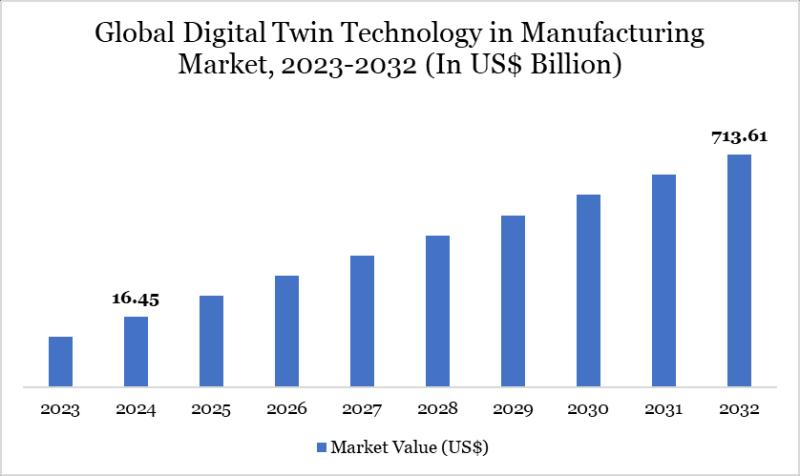
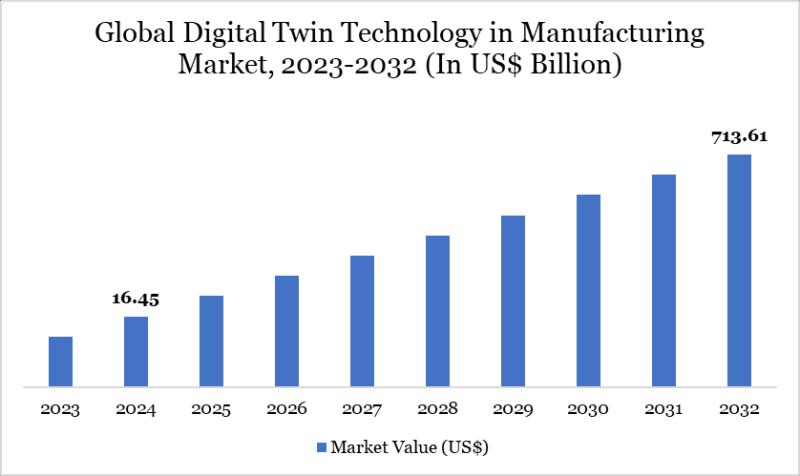
The Global Digital Twin Technology in Manufacturing Market size reached US$ 16.45 billion in 2024 and is expected to reach US$ 713.61 billion by 2032, growing with a CAGR of 60.20% during the forecast period 2025-2032.

The Digital Twin Technology in Manufacturing Market report, published by DataM Intelligence, provides in-depth insights and analysis on key market trends, growth opportunities, and emerging challenges. Committed to delivering actionable intelligence, DataM Intelligence empowers businesses to make informed decisions and stay ahead of the competition. Through a combination of qualitative and quantitative research methods, it offers comprehensive reports that help clients navigate complex market landscapes, drive strategic growth, and seize new opportunities in an ever-evolving global market.

Get a Free Sample PDF Of This Report (Get Higher Priority for Corporate Email ID): https://datamintelligence.com/download-sample/digital-twin-technology-in-manufacturing-market?sz

The Digital Twin Technology in Manufacturing Market refers to the use of virtual replicas of physical manufacturing assets, processes, and systems to simulate, monitor, and optimize real-time operations. It enables predictive maintenance, performance optimization, process efficiency, and data-driven decision-making by integrating IoT, AI, analytics, and advanced simulation across the manufacturing lifecycle.

Recent Key Developments of United States:

✅ December 2025: Siemens digital twin technology featured in the Washington Post for reimagining U.S. manufacturing by enabling virtual factory layouts, optimizing equipment placement, and shortening production timelines through real-time simulations.

✅ November 2025: North America digital twin market projected to grow significantly, driven by U.S. investments in AI, IoT, and manufacturing efficiency under Industry 4.0 initiatives.

✅ October 2025: NVIDIA expanded Omniverse Blueprint with U.S. manufacturing leaders, including Siemens, to build factory-scale digital twins for advanced robotics and production planning.

Recent Key Developments of Europe:

✅ December 2025: DestinE project advanced European digital twin capabilities on EuroHPC supercomputers, achieving high-resolution simulations for industrial applications including manufacturing processes.

✅ November 2025: Deutsche Telekom and NVIDIA launched one of Europe’s largest AI factories in Munich, featuring NVIDIA Omniverse for 3D digital twins in factory planning, simulation, and manufacturing optimization.

✅ November 2025: Siemens showcased AI-era manufacturing digital twins at NVIDIA GTC, demonstrating rapid design and optimization tools applicable to European smart factories.

List of the Key Players in the Digital Twin Technology in Manufacturing Market:

Dassault Systèmes SE

TIBCO Software Inc.

Siemens AG

Microsoft Corporation

Autodesk Inc.

Hexagon AB

Oracle Corporation

Altair Engineering Inc.

IBM Corp.

aPriori Technologies, Inc.

Speak to Our Analyst and Get Customization in the report as per your requirements: https://datamintelligence.com/customize/digital-twin-technology-in-manufacturing-market?sz

This Report Covers:

✔ Go-to-market Strategy.

✔ Neutral perspective on the market performance.

✔Development trends, competitive landscape analysis, supply side analysis, demand side analysis, year-on-year growth, competitive benchmarking, vendor identification, and other significant analysis, as well as development status.

✔Customized regional/country reports as per request and country level analysis.

✔ Potential & niche segments and regions exhibiting promising growth covered.

✔ Analysis of Market Size (historical and forecast), Total Addressable Market (TAM), Serviceable Available Market (SAM), Serviceable Obtainable Market (SOM), Market Growth, Technological Trends, Market Share, Market Dynamics, Competitive Landscape and Major Players (Innovators, Start-ups, Laggard, and Pioneer).

Segments Covered in the Digital Twin Technology in Manufacturing Market:

By Type: Product Digital Twin, Process Digital Twin, System Digital Twin.

By Enterprise Size: Small & Medium Enterprises (SMEs), Large Enterprises.

By Application: Predictive Maintenance, Performance Monitoring, Product Design & Development, Business Optimization, Others.

Regional Analysis:

⇥ North America (U.S., Canada, Mexico)

⇥ Europe (U.K., Italy, Germany, Russia, France, Spain, The Netherlands and Rest of Europe)

⇥ Asia-Pacific (India, Japan, China, South Korea, Australia, Indonesia Rest of Asia Pacific)

⇥ South America (Colombia, Brazil, Argentina, Rest of South America)

⇥ Middle East & Africa (Saudi Arabia, U.A.E., South Africa, Rest of Middle East & Africa)

Looking For Full Report? Get it Here: https://www.datamintelligence.com/buy-now-page?report=digital-twin-technology-in-manufacturing-market

Chapter Outline

⏩ Market Overview: It contains five chapters, as well as information about the research scope, major manufacturers covered, market segments, Digital Twin Technology in Manufacturing market segments, study objectives, and years considered.

⏩ Market Landscape: The competition in the Global Digital Twin Technology in Manufacturing Market is evaluated here in terms of value, turnover, revenues, and market share by organization, as well as market rate, competitive landscape, and recent developments, transaction, growth, sale, and market shares of top companies.

⏩ Companies Profiles: The Global Digital Twin Technology in Manufacturing market’s leading players are studied based on sales, main products, gross profit margin, revenue, price, and growth production.

⏩ Market Outlook by Region: The report goes through gross margin, sales, income, supply, market share, CAGR, and market size by region in this segment. North America, Europe, Asia Pacific, Middle East & Africa, and South America are among the regions and countries studied in depth in this study.

⏩ Market Segments: It contains the deep research study which interprets how different end-user/application/type segments contribute to the Digital Twin Technology in Manufacturing Market.

⏩ Market Forecast: Production Side: In this part of the report, the authors have focused on production and production value forecast, key producers forecast, and production and production value forecast by type.

⏩ Research Findings: This section of the report showcases the findings and analysis of the report.

⏩ Conclusion: This portion of the report is the last section of the report where the conclusion of the research study is provided.

Unlock 360° Market Intelligence with DataM Subscription Services: https://www.datamintelligence.com/reports-subscription

People Also Ask:

◆ How big is the Digital Twin Technology in Manufacturing Market in 2025?

◆ What is the projected growth rate of the Digital Twin Technology in Manufacturing Market through 2033?

◆ Who are the key players in the Digital Twin Technology in Manufacturing Market?

◆ Which region is expected to dominate the industry during the forecast period?

Contact Us –

Company Name: DataM Intelligence

Contact Person: Sai Kiran

Email: Sai.k@datamintelligence.com

Phone: +1 877 441 4866

Website: https://www.datamintelligence.com

About Us –

DataM Intelligence is a Market Research and Consulting firm that provides end-to-end business solutions to organizations from Research to Consulting. We, at DataM Intelligence, leverage our top trademark trends, insights and developments to emancipate swift and astute solutions to clients like you. We encompass a multitude of syndicate reports and customized reports with a robust methodology.

Our research database features countless statistics and in-depth analyses across a wide range of 6300+ reports in 40+ domains creating business solutions for more than 200+ companies across 50+ countries; catering to the key business research needs that influence the growth trajectory of our vast clientele.

This release was published on openPR.

Free Training

Source link