US factory output hits one-year high as manufacturing sector recovers


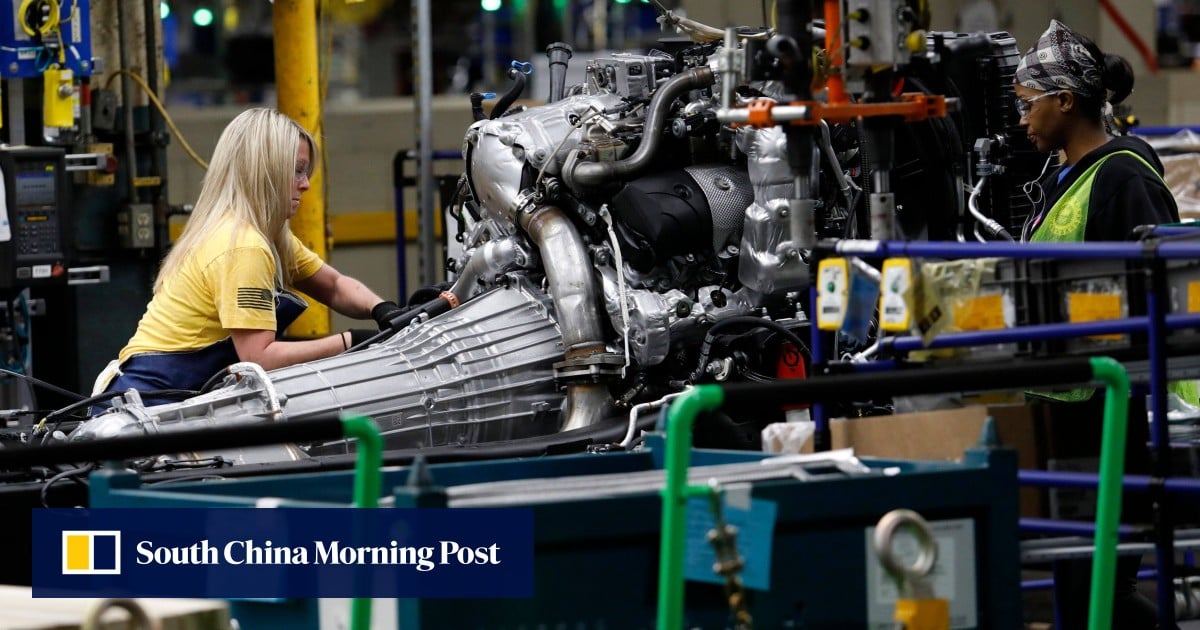
US factory production increased by the most in nearly a year in January, offering hope for a manufacturing sector that has been squeezed by import tariffs and high interest rates.

Manufacturing output rose 0.6 per cent last month, the largest gain since February 2025, after being unchanged in December, the Federal Reserve said on Wednesday.

Economists had earlier forecast production for the sector, which accounts for 10.1 per cent of the economy, would rise 0.4 per cent. Output in December was previously reported to have risen 0.2 per cent.

Production at factories advanced by 2.4 per cent on a year-over-year basis in January.

Manufacturing has been hobbled by President Donald Trump’s sweeping tariffs, which business leaders say have raised costs for factories and consumers.

Trump has defended his punitive import duties as necessary to restore a long-declining domestic industrial base. The manufacturing sector lost more than 80,000 jobs last year.

Free Training

Source link

Trump’s Attack on Green Energy Hits Manufacturing Sector Hard


United States President Donald Trump has repeatedly pledged to ramp up the country’s manufacturing capacity and create more American jobs across a wide range of industries. While Trump has supported the expansion of certain industries, he has hindered the operation of others. In recent months, Trump has attacked green energy, using executive orders and new policies to restrict renewable energy development and cleantech manufacturing. This has resulted in sectoral stagnation, as investors grow more uncertain about the future of the industry.

In 2024, during the presidential campaign, Trump stated that the new American industrialism “will create millions and millions of jobs, massively raise wages for American workers, and make the United States into a manufacturing powerhouse like it used to be many years ago.”

Upon entering office in January last year, Trump pledged to expand fossil fuel production and boost U.S. manufacturing. “The inflation crisis was caused by massive overspending and escalating energy prices, and that is why today I will also declare a national energy emergency. We will drill, baby, drill,” stated Trump.

Set OilPrice.com as a preferred source in Google here.

“America will be a manufacturing nation once again, and we have something that no other manufacturing nation will ever have – the largest amount of oil and gas of any country on Earth – and we are going to use it,” the president added. He later described “tariffs” as his favourite word, and said the introduction of tariffs on foreign imports was key to bringing manufacturing back to the U.S.

These pledges have not been achieved. Employment in the manufacturing sector remained relatively flat during the first few months of Trump’s presidency, before falling for eight months straight. In addition, wage growth for non-managerial factory workers slowed in 2025. While Trump supporters say it will take time to see the positive impact of his trade policies, critics suggest that investment in factory construction has also fallen in recent months, which makes mid-term growth unlikely.

While manufacturing in general has suffered in recent months, green manufacturing has fared even worse. Under former President Biden, the U.S. witnessed significant growth in cleantech manufacturing. Years of increased investment in battery, electric vehicle (EV), solar panel, and other cleantech manufacturing, supported by funding from the Inflation Reduction Act (IRA), led to rapid industry expansion in this sector.

The IRA drove an estimated $100 billion in cleantech manufacturing commitments through incentives for consumers and manufacturers. This led to the creation of thousands of jobs in the sector and a strong cleantech project pipeline, which encouraged investors to support long-term sectoral growth. This was reflected in the expansion of cleantech manufacturing in states across the political spectrum, including traditional oil and gas-producing regions. 

However, since becoming president, Trump has sought to stall IRA progress and shift the focus to fossil fuel expansion. He has done this by halting wind energy developments, encouraging consumers to continue investing in gas-guzzling cars instead of EVs, and introducing numerous, far-reaching executive orders targeting renewable energy. In 2025, Trump placed stipulations on incentives for manufacturing facilities and cut several of the tax credits that helped grow demand for U.S.-produced cleantech.

Companies spent a total of around $41.9 billion on cleantech manufacturing factories in 2025, marking a significant reduction from the $50.3 billion investment made in 2024, according to data from the Clean Investment Monitor. Further, fewer businesses are making plans to invest in cleantech, due to the growing investor uncertainty of the last year. Although companies in the U.S. announced $24.1 billion in new cleantech manufacturing projects, $22.7 billion worth of cleantech projects were cancelled.

For example, in 2025, the Singapore-based solar panel producer Bila Solar halted plans to double capacity at its Indianapolis facility. Canada’s Heliene announced it was assessing plans for its Minnesota solar cell plant. Norway’s solar wafer producer, NorSun, also halted development to assess whether to move forward with a planned facility in Tulsa, Oklahoma. And two offshore wind farms in the northeast of the country faced the risk of not being completed due to opposition from the Trump administration.

The factory cancellations have resulted in the loss of thousands of jobs. At least 10,000 green energy manufacturing jobs were lost last year, out of a total of 72,000 manufacturing jobs lost in 2025, according to U.S. government figures. The job cuts were industry-wide, from EV production to solar panel manufacturing, and everything in between.

This may be just the beginning of the downfall of U.S. green energy manufacturing, as the Trump administration continues to revise, restructure, and cancel billions of Biden-era funding commitments for U.S. renewable energy and cleantech projects, in favour of expanding fossil fuels. In January, the U.S. Department of Energy announced that the Office of Energy Dominance Financing is restructuring, revising, or eliminating over $83 billion in what it termed “Green New Scam” loans and conditional commitments from the Biden-era loan portfolio.  

By Felicity Bradstock for Oilprice.com

More Top Reads From Oilprice.com

Free Training

Source link

Tariffs are hurting U.S. manufacturing sector, economist warns


Chief Economist for the Conference Board of Canada Pedro Antunes reacts to the GDP being unchanged in November 2025.

Tariffs are a lose-lose situation for Canada’s and the United States’ manufacturing sector, says a chief economist.

His comments come after Statistics Canada released its November GDP data on Friday pointing to a soft fourth quarter, with the manufacturing sector dragging on the economy after posting a 1.3 per cent decline.

A global shortage of microchips stalled production at a major Canadian auto plant, by 6.4 per cent, creating a “bottleneck” for vehicle and parts output, the agency said.

While Canada’s manufacturing sector is already under pressure from ongoing trade tensions, the fallout is not confined to Canada alone.

“These tariffs are not going to allow for the U.S. to be any more competitive,” Pedro Antunes, chief economist at Signal49 Research, told BNN Bloomberg.

“In fact, they’re hurting our competitiveness North America wide when we think about our positioning on the global stage.”

Antunes said when the U.S. applies tariffs on Canadian steel, aluminum, or auto-related products, the impact extends beyond a single product or sector.

Those materials often cross the border multiple times and frequently return to Canada because of the intricate, intertwined supply chains the two countries have built over decades, he said.

“The problems extend just beyond those segments that are specifically hit by tariffs,” said Antunes.

Antunes added that uncertainty around the tariff dispute is already weighing on hiring, investment, and consumer confidence within Canada’s manufacturing sector.

“All of these things are just suggesting a very lethargic economy, no matter which industries you’re really focused on,” he said.

Trade deal an ‘absolute necessity’ for auto sector

Looking ahead, Antunes said the outlook for the manufacturing sector remains weak, with Statistics Canada signalling just a 0.1 per cent increase in GDP for December.

“What that tells us is, essentially, the economy is flat,” said Antunes.

He warned the auto sector will remain under pressure without a resolution to trade tensions with the U.S., noting that about 85 per cent of Canadian manufacturing is destined for the American market.

More than 1,000 workers were laid off at General Motors’ Oshawa plant. The union representing the workers stated that these layoffs resulted from the company shifting jobs to the U.S.

“If we don’t have free access, and if we have tariffs at 25 per cent on Canadian content, that is not going to alleviate the situation anytime soon,” Antunes said.

“In fact, it likely is going to continue to get worse.”

While Canada has secured smaller trade wins, including a recent agreement with China that benefits the agriculture sector, Antunes said those deals are not enough to offset restricted access to the U.S. market, which still accounts for roughly three-quarters of Canada’s total trade.

“The trade deal is an absolute necessity for the auto sector. We are hopeful that we’ll see some signs or some settlement of a trade deal, but we’re not seeing that pan out in terms of increases until next year,” said Antunes.

Free Training

Source link

US manufacturing sector loses jobs despite Trump’s promises of a manufacturing boom


According to December results, the US manufacturing sector showed an eight-month decline in the number of jobs. This happened against the backdrop of President Donald Trump’s introduction of strict import tariffs, which were intended to revive American industry, but instead led to a reduction in hiring and an increase in business costs. This is reported by Reuters, writes UNN.

Details

According to data from the US Department of Labor published on Friday, the manufacturing industry lost another 8,000 jobs in December 2025. In total, the sector shed 75,000 employees last year. Trump noted that tariff revenues – about $30 billion monthly – indicate the success of the policy, but businesses are reacting differently: companies initially massively purchased goods abroad before the tariffs were introduced, and then sharply slowed down purchases and investments.

Currency exchange rate: dollar set a historical maximum, euro crossed the 50 UAH mark09.01.26, 08:00 • 3168 views

Richmond Fed President Tom Barkin confirmed to reporters that the labor market situation remains difficult.

It’s hard to find companies outside the AI or healthcare ecosystem that are talking about hiring

– he noted, explaining this by high uncertainty and increasing productivity, which replaces human labor.

Manufacturing on the verge of survival

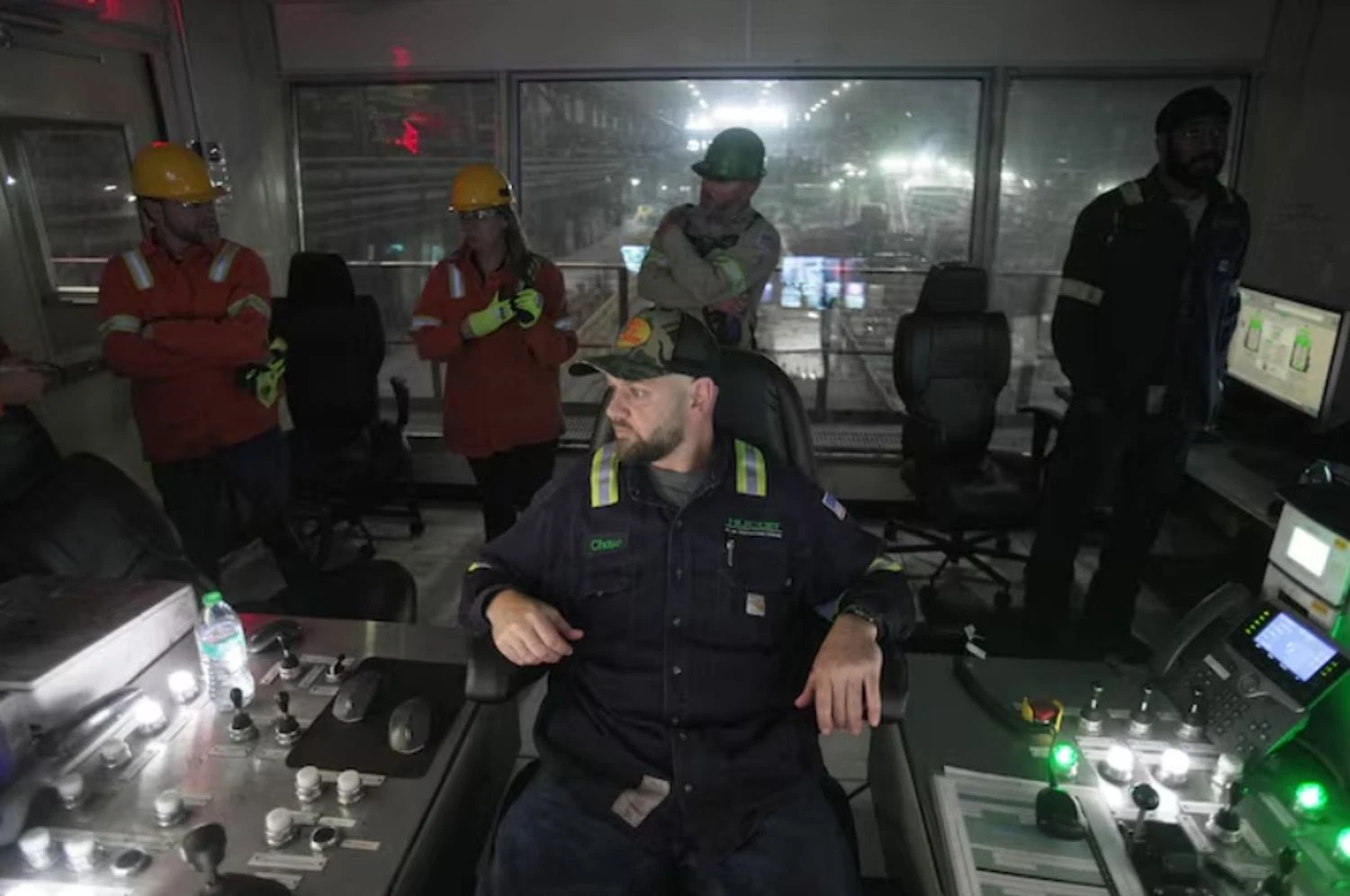
Real business indicators demonstrate the depth of the crisis. For example, at the BCI Solutions Inc. steel plant in Indiana, the staff was reduced from 240 to 130 people – the lowest level since 1993. The company’s CEO, J.B. Brown, stated that capacity utilization fell to a record low of 52%.

Although the unemployment rate in December slightly decreased to 4.4% (from 4.5% in November), this is explained more by people leaving the workforce and strict immigration policies than by the creation of new jobs. The pace of employment growth in 2025 fell to 49,000 vacancies per month, which is three times less than the previous year’s figures (168,000 per month during Biden’s time). Economists state that the only cycle-resistant sector remains healthcare. 

Ukraine granted lithium mining rights to Trump’s friend – NYT09.01.26, 16:44 • 23020 views

Free Training

Source link

US factory sector contracts for 10th straight month in December


By Dan Burns and Lucia Mutikani

WASHINGTON, Jan 5 (Reuters) – U.S. manufacturing activity slumped to a 14-month low in December, with new orders contracting further and input costs grinding higher as the sector continued to bear the imprint of President Donald Trump’s import tariffs.

The Institute for Supply Management survey on Monday suggested a recovery was unlikely in the near-term, but ​economists were hopeful of a turnaround this year as Trump’s tax cuts took effect.

Comments from survey respondents continued to single out tariffs as a problem, with some manufacturers of chemical products saying ‌they hoped “for some return to free trade, which is what consumers have ‘voted for’ with their spending.”

Trump has said the tariffs are bringing in hundreds of billions of dollars in new revenue to the U.S. Treasury and that they are improving U.S. economic security.

But ‌beyond the sectors lifted by an Artificial Intelligence investment boom, Trump’s sweeping import duties have undercut manufacturing, even as he touts them as necessary to shore up a long-declining domestic factory base.

Economists have argued it is impossible to restore the industry to its former glory because of structural issues, including worker shortages.

“While a less fluid trade environment and somewhat more favorable business tax environment are positives for activity, we remain cautious on the extent of recovery in traditional cap-ex categories this year,” said Shannon Grein, an economist at Wells Fargo.

The ISM said its manufacturing PMI dropped to 47.9 in the final month of 2025, the lowest level since October 2024, from 48.2 in November. ⁠A reading below 50 indicates contraction in manufacturing, which accounts for 10.1% of ‌the economy.

It was the 10th straight month that the PMI remained below the 50 threshold. Economists polled by Reuters had forecast the PMI would be little changed at 48.4. The PMI remained above 42.3, a level that ISM said over time was consistent with an expansion of the overall economy.

Last month’s drop reflected pullbacks in ‍the production and inventories sub-indexes after they improved in November.

“Their contraction this month continues the short-term ‘bubble’ of improvement indicative in the last several months of PMI data, and a hallmark of recent economic uncertainty in manufacturing,” said ISM Manufacturing Business Survey Committee chair Susan Spence.

Last month, 85% of the manufacturing economy’s gross domestic product contracted, a surge from 58% in November, and the percentage of manufacturing GDP in strong contraction increased to 43% from 39% in November, Spence said.

Story Continues

COMMENTS FROM RESPONDENTS ​ARE DOWNBEAT

Electrical equipment, appliances and components as well as computer and electronic products were the only two industries reporting growth. The remaining 15 industries, including chemical products, miscellaneous manufacturing, machinery and transportation equipment, reported a ‌contraction.

Some makers of fabricated metal products reported that “order levels have continued to decline.” They noted that December was “dismal,” adding “January and February don’t look too good, as bookings are down 25 percent compared to the first two months of 2025.”

Computer and electronic products manufacturers said “margins have deteriorated, as full pass- through of cost increases is not possible.” Transportation equipment makers said that while many customers were ordering for 2026, “those orders are 20 percent to 30 percent below their historical buying patterns,” adding “the general mood of the industry is that the first half of 2026 will be another bust.”

Some electrical equipment, appliances and components manufacturers said “things look a bit bleak overall.” Some makers of miscellaneous products reported that “2025 revenue was down 17 percent due to tariffs.”

The U.S. Supreme Court is set to rule on the legality of the premise Trump has employed for his tariffs sometime ⁠in early 2026. Yale Budget Lab estimated that Trump’s protectionist trade policy raised the average tariff on imported goods to ​nearly 17% from less than 3% last January.

The ISM survey’s forward-looking new orders sub-index was little changed at 47.7 in December ​from November’s 47.4, marking a fourth straight month of falling demand. This measure has contracted in 10 of the last 11 months with demand curbed by the rise in some goods prices because of the tariffs.

Its measure of manufacturing inventories dropped 3.7 percentage points to 45.2 last month. The production index eased to 51 from 51.4 in November.

Factory ‍input costs, which have contributed to the persistence of ⁠inflation that continues to run above the Federal Reserve’s 2% target, remain elevated. ISM’s prices paid index was unchanged at 58.5, higher than forecasts for 57.0.

Amid the soft demand environment, factory employment declined for an 11th straight month, the sector’s longest hiring slump by ISM’s measure in about five years.

The ISM noted that for every comment on hiring, there were three on reducing head counts, ⁠adding that companies continued to focus on accelerating staff reductions due to uncertain near- to mid-term demand.

“A number of tariff deals have been struck and many exemptions have been granted over the past two months, and I would expect more of that in ‌the new year,” said Stephen Stanley, chief U.S. economist at Santander U.S. Capital Markets.

“It remains to be seen whether that will be enough to pull the factory sector out of ‌its current malaise,” he added.

(Reporting By Dan Burns and Lucia Mutikani; Editing by Chizu Nomiyama and Alexander Smith)

Free Training

Source link