AbbVie to invest $380 million to expand US manufacturing in Illinois


Feb 23 (Reuters) – AbbVie on Monday said it would invest $380 million to build two new active pharmaceutical ingredient manufacturing facilities at its Illinois campus, expanding its domestic production capacity for its neuroscience and obesity medicines.

The investment is part of AbbVie’s broader effort to scale up domestic manufacturing, as drugmakers are scrambling to shore up their U.S. manufacturing capacity and domestic inventory amid the Trump administration’s hefty tariffs on pharmaceutical imports into the country.

The U.S. government imposed a 100% tariff on branded drugs in October, but said it would only apply to producers who had not already broken ground on U.S. manufacturing plants.

AbbVie said the construction at the new facility in North Chicago, Illinois would begin in spring 2026, with both new facilities expected to be fully operational in 2029.

The new facilities will integrate advanced manufacturing technologies and artificial intelligence to support production of future pipeline medicines, the company said.

API production – the process of making a drug’s active chemical components – is one of the most complex steps in pharmaceutical manufacturing, the drugmaker said.

AbbVie said it plans to hire 300 people in North Chicago, including engineers, scientists, manufacturing operators and lab technicians.

In January, it committed $100 billion over the next decade to U.S.-based research and development, including an earlier $195 million expansion at the same North Chicago site to boost API production for immunology, oncology and neuroscience drugs.

AbbVie already has 11 manufacturing sites in the U.S. and is also in discussions with multiple U.S. states about potential projects and expects to announce further investments in 2026.

(Reporting by Siddhi Mahatole in Bengaluru; Editing by Maju Samuel)

Free Training

Source link

Siemens Energy to invest $421 million in NC 


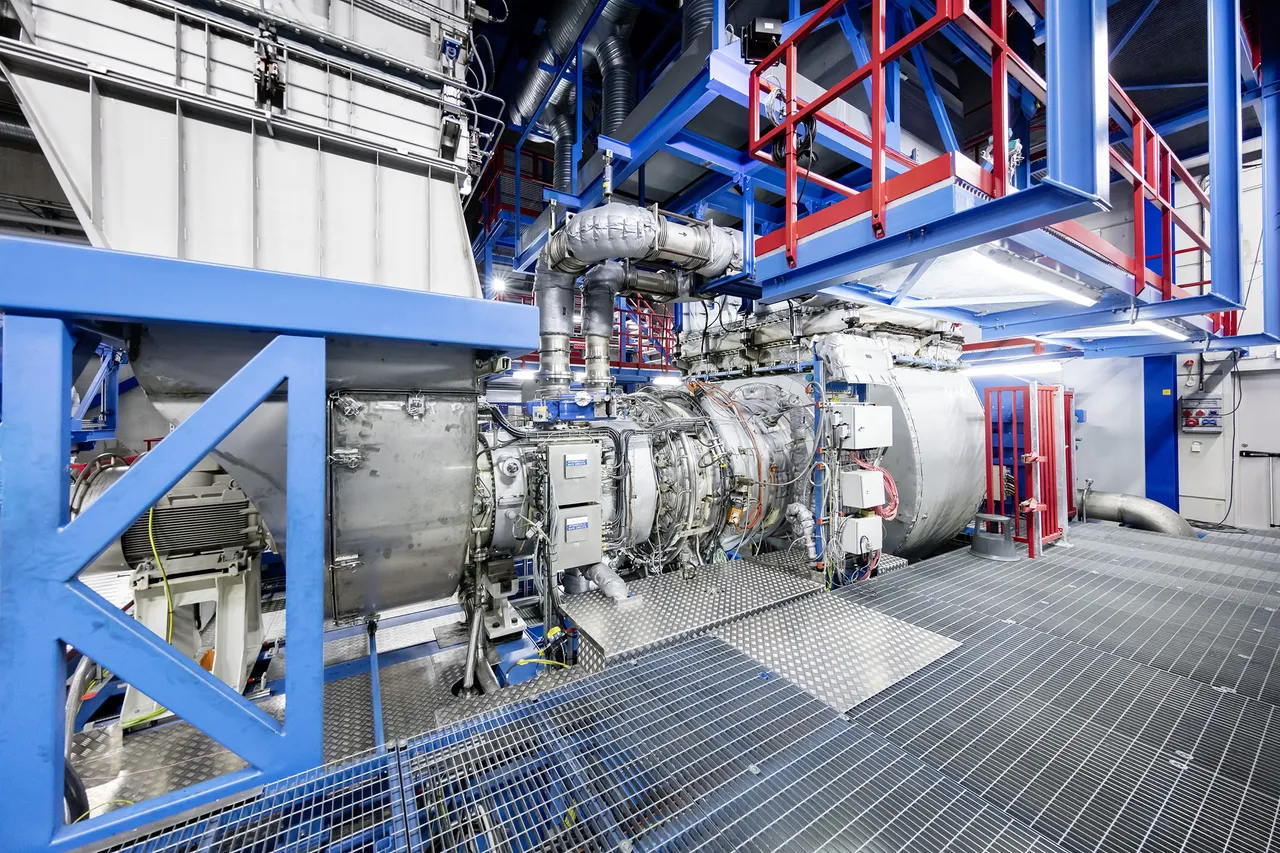
This week Siemens Energy announced that it would be investing $421 million to expand its’ operations in North Carolina. The expansions will occur at multiple locations, involve the manufacturing of energy infrastructure equipment, and are expected to create 500 new jobs statewide.

“The equipment we produce in North Carolina is helping meet our nation’s unprecedented growth in energy,” Matt Neal, Siemens Energy’s President of North America said. “We are building on a strong, decades-long foundation in the state, supported by a dedicated workforce that consistently rises to meet new challenges and a pipeline of young and eager talent ready to build the machines that will power the United States into the next century.” 

The $421 million North Carolina investment is part of a larger, nationwide strategy by Siemens Energy to bolster domestic manufacturing of energy infrastructure equipment and strengthen the US power grid. The company has committed roughly $1 billion to expand its manufacturing footprint across the country, including in states such as Mississippi, Alabama, New York, Texas, and Florida, to meet growing grid demands and supply chain needs.

“This tremendous investment in a critical part of our power grid supply chain underscores President Trump’s success in expanding supply chain access and bringing major manufacturing back to America,” said US Interior Secretary Doug Burgum in a press release. “We appreciate great partners like Siemens Energy, who proactively partner with the Trump administration for the benefit of the American people, prioritizing critical components to make the United States Energy dominant!”

Expanding on the $150 million investment announced in 2024, this investment will stretch the power transformer manufacturing facility in Charlotte and increase service capacity to keep up with demand. Siemens Energy currently produced large gas turbines in Berlin, Germany, and part of the expansion plan would bring production to Charlotte, after a six-year pause.   

Gas turbine parts are to be produced in Winston-Salem and expanding grid technology project execution, research, and development will occur in Raleigh.  

Like much of the United States, North Carolina—with Charlotte at the helm, is seeing an uptick in proposed AI driven data centers. Facilities house machinery used to process large amounts of data and information, requiring massive storehouses of energy.  

“Siemens Energy has been making things in the United States for more than a century and we are experiencing a once-in-a-generation growth opportunity due to the resurgence of US manufacturing and the growth of artificial intelligence,” Christian Bruch, CEO and President of Siemens Energy, said in a press release. “The current policy environment has contributed to this momentum. The Trump Administration has made energy security, a reliable and resilient grid, and growing US manufacturing jobs a priority. This has supercharged the energy demand which is supporting new investments across the energy sector. We are excited to help write this next chapter of American energy expansion.” 

While this latest Siemens Energy investment in North Carolina’s economy is not backed by a Job Development Investment Grant (JDIG), previous investments have been JDIG-funded. This includes the Charlotte investment announced in February 2024.  

“State incentive records show Siemens Energy has received four JDIGs from North Carolina — approved in 2009, 2010, 2010, and 2024 — with both 2010 agreements later terminated, placing the company squarely within the program’s broader pattern of underperformance,” Joseph Harris, fiscal policy analyst for the John Locke Foundation, told the Carolina Journal. “According to state data, nearly half of all JDIG agreements approved from fiscal years 2003 to 2025, or 222 out of 449 deals, have been terminated or withdrawn before meeting their job-creation targets.” 

In 2024, The North Carolina Economic Investment Committee (NCEIC) approved a $6,979,500 reimbursement to Siemens Energy over the spam of 12 years with the hope of creating more jobs in the state. An additional $2,326,500 was allocated to the state’s Industrial Development Fund – Utility Account, bringing the total cost of the grant to $9.3 million.  

Even without JDIG support for the expansion announced this week, Siemens Energy has stated that the project will create a substantial number of jobs. Job creation benchmarks are a key requirement of the JDIG program, and some past recipients have failed to meet those benchmarks, resulting in terminated agreements.

JDIG grants are performance-based, discretionary incentives tied to a company’s ability to meet investment and employment commitments intended to support economic development. When projects do not meet those requirements, expected economic benefits—such as job creation and capital investment—may not materialize in the affected communities.

“Siemens Energy is a valued member of North Carolina’s advanced manufacturing community, and we welcome this meaningful expansion of the company’s operations in our state,” said Gov. Josh Stein. “From our state’s world-class transportation infrastructure to our skilled workforce, North Carolina offers manufacturers the best place to do business in the United States.”

Gas turbine manufacturing began in Charlotte in 2011 and then terminated in 2020 due to low demand. Starting back this year, Siemens Energy expects the first gas turbines to be shipped from Charlotte in the next 2-3 years.  

Siemens Energy is also investing in the Winston Technology Center in Rural Hall, North Carolina. The company currently manufactures and services parts for power generation equipment.   

Globally, Siemens Energy employees over 103,000 people in more than 90 countries. In the fiscal year 2025, they generated over $46 billion in revenue.  

Free Training

Source link

EOS expands U.S. manufacturing and logistics with $3 million investment in Texas


EOS, a company that develops industrial metal and polymer 3D printing systems, has expanded its U.S. manufacturing and logistics operations through a $3 million investment in central Texas. The expansion includes changes to its manufacturing campus in Pflugerville, Texas, and the opening of a new warehouse facility in Belton, Texas. According to the company, the investment is intended to support regional assembly and delivery of metal additive manufacturing systems for North American customers.

The Pflugerville site has been reconfigured to support expanded assembly of several metal 3D printing platforms, including the EOS M 290-1, EOS M 290-2, and EOS M 400-4 systems.The facility now includes a dedicated powder handling area and an in-house machine shop. Ten new jobs were created at the Pflugerville production site, covering operations, quality assurance, engineering, and machine commissioning roles.

EOS Pflugerville metal 3D printing assembly line. Photo via EOS.EOS Pflugerville metal 3D printing assembly line. Photo via EOS.Technician operating an EOS M 290 metal 3D printing system. Photo via EOS.

Expanded manufacturing space in Pflugerville was made available following the consolidation of the manufacturer’s North American warehouse and logistics operations into a new facility in Belton, Texas. The Belton warehouse spans 40,000 square feet and is intended to support a larger inventory of spare parts, peripheral equipment, and products. The company said the facility will support its U.S. customer base by increasing the availability of components and equipment used alongside its additive manufacturing systems.

Company representatives linked the expansion to growing demand for metal additive manufacturing systems in North America and to domestic procurement requirements. Kent Firestone, senior vice president of operations at EOS North America, said the Texas expansion allows the company to scale metal system assembly in the region. “Our Texas expansion enables us to scale North American metal AM assembly with both precision and consistency,” Firestone said. “From optimizing our production areas to onboarding new team members, every step has been carefully designed to accelerate turnaround times while maintaining the quality and reliability our customers expect from EOS.”

EOS Pflugerville metal 3D printing assembly line. Photo via EOS.EOS Pflugerville metal 3D printing assembly line. Photo via EOS.EOS Pflugerville metal 3D printing assembly line. Photo via EOS.

The expansion builds on existing U.S. activities, including assembly of the EOS M 290 system announced in September 2024, production of the INTEGRA P 450 polymer additive manufacturing system in Texas, and polymer material development and manufacturing through Advanced Laser Materials in Temple, Texas. The company also cited nearly two decades of experience supporting additive manufacturing hardware, software, and materials in North America, operating under ISO 9001-certified processes.

Glynn Fletcher, president of EOS North America, described the expansion as part of the company’s long-term presence in the United States. “This expansion demonstrates our continued commitment to support the resurgence of American manufacturing,” Fletcher said. “This manufacturing facility is not just an investment in our own infrastructure; it is also about standing shoulder-to-shoulder with the U.S. manufacturing community to provide products and services for a superior customer experience.” Fletcher added that EOS views additive manufacturing as an important component of future domestic manufacturing activity and said the Texas facilities position the company to continue supporting U.S. markets where demand for its technology is growing.

EOS certifications and installed base highlight manufacturing constraints

EASA Part-21/G qualification put EOS metal 3D printing into a certified aviation production workflow through the Aviation AM Centre (AAMC), an EASA-approved aviation production organization. AAMC became the first independent additive manufacturing company to qualify EOS metal technology under its EASA Part-21/G approval, enabling certified aircraft components produced via powder bed fusion. The approval allows issuance of EASA Form 1 airworthiness certification for parts made from aluminum, titanium, stainless steel, and copper, with certified spares delivered directly to maintenance providers instead of routing certification through OEMs. 

5,000th industrial 3D printer installation marked a separate scale milestone when EOS reported deployment of its 5,000th industrial system, an EOS M 400-4 installed at Keselowski Advanced Manufacturing in Statesville, North Carolina. Keselowski Advanced Manufacturing, founded by race car driver and entrepreneur Brad Keselowski, said it applies advanced engineering solutions and 3D printing technologies to industrial applications. The installation brought the site’s total EOS machine count to 18, reflecting expanded metal additive manufacturing capacity within a single U.S. production operation.

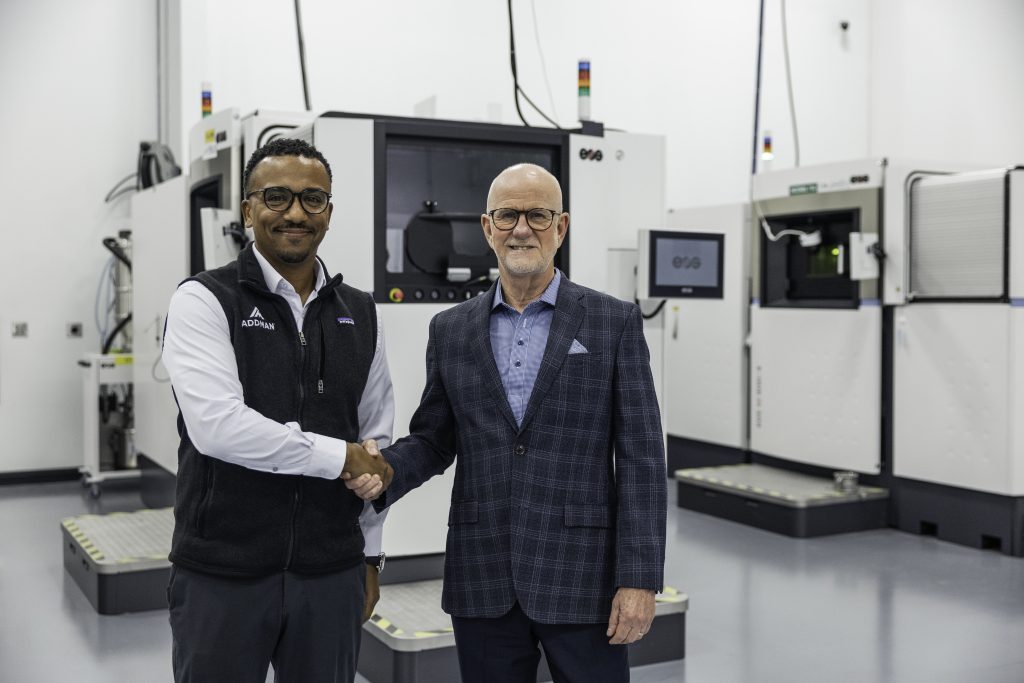
Joe Calmese, CEO of ADDMAN, and Glynn Fletcher, president of EOS North America, mark the installation of EOS’s 5,000th industrial 3D printer. Photo via ADDMAN.Joe Calmese, CEO of ADDMAN, and Glynn Fletcher, president of EOS North America, mark the installation of EOS’s 5,000th industrial 3D printer. Photo via ADDMAN.Joe Calmese, CEO of ADDMAN, and Glynn Fletcher, president of EOS North America, mark the installation of EOS’s 5,000th industrial 3D printer. Photo via ADDMAN.

The 3D Printing Industry Awards are back. Make your nominations now.

Are you building the next big thing in 3D printing? Join the 3D Printing Industry Start-up of the Year competition and expand your reach.

Subscribe to the 3D Printing Industry newsletter to stay updated with the latest news and insights.

Featured photo shows Technician operating an EOS M 290 metal 3D printing system. Photo via EOS.

Free Training

Source link

CPKC investing US$800 million in American manufacturing with Tier 4 locomotives


CALGARY, AB, Jan. 21, 2026 /CNW/ – Canadian Pacific Kansas City (TSX: CP) (NYSE: CP) (CPKC) this year is continuing the renewal of its locomotive fleet with the world’s two leading locomotive manufactures as part of an ongoing multi-year US$800 million investment in American industry.

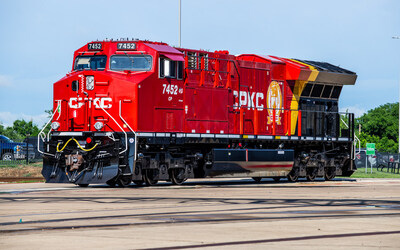
Tier 4 locomotive (CNW Group/CPKC) Tier 4 locomotive (CNW Group/CPKC)

Having completed the purchase of 100 Wabtec Tier 4 locomotives built in Texas in 2025, today CPKC said it will add 30 additional Tier 4 locomotives from Progress Rail in 2026 to be built in Indiana. This year, CPKC also expects delivery of 70 more Texas-built Tier 4 units from Wabtec.

“Our purchase of additional new Tier 4 locomotives, proudly made in the USA, continues CPKC’s commitment to renew our locomotive fleet through a more than US$800 million investment in American manufacturing capacity,” said Mark Redd, CPKC Executive Vice President and Chief Operating Officer. “We are investing in our road locomotive fleet for growth and to maintain our industry-leading service for our customers and the North American economy, powered by a fleet with improved reliability and fuel efficiency.”

In January, CPKC expects to receive the first two of 70 Wabtec Evolution Series ET44AC Tier 4 locomotives being built this year for CPKC at the company’s manufacturing facility in Dallas, Texas.

In the second half of 2026, CPKC expects to take delivery of 30 new EMD® SD70ACe-T4 Tier 4 freight locomotives to be manufactured at Progress Rail’s facility in Muncie, Indiana. These locomotives are part of an order for 65 new Tier 4 locomotives to be built by Progress Rail.

These locomotive investments continue CPKC’s locomotive renewal program and are part of CPKC’s previously announced multi-year capital plan.

About CPKC

With its global headquarters in Calgary, Alta., Canada, CPKC is the first and only single-line transnational railway linking Canada, the United States and México, with unrivaled access to major ports from Vancouver to Atlantic Canada to the Gulf Coast to Lázaro Cárdenas, México. Stretching approximately 20,000 route miles and employing 20,000 railroaders, CPKC provides North American customers unparalleled rail service and network reach to key markets across the continent. CPKC is growing with its customers, offering a suite of freight transportation services, logistics solutions and supply chain expertise. Visit cpkcr.com to learn more about the rail advantages of CPKC. CP-IR

CPKC Logo (CNW Group/CPKC) CPKC Logo (CNW Group/CPKC) Cision Cision

View original content to download multimedia:https://www.prnewswire.com/news-releases/cpkc-investing-us800-million-in-american-manufacturing-with-tier-4-locomotives-302667204.html

Free Training

Source link

NOVEON MAGNETICS COMPLETES $215 MILLION SERIES C TO EXPAND U.S. RARE EARTH MAGNET MANUFACTURING CAPACITY


Financing Round Led by One Investment Management Supports Expansion of Domestic Rare Earth Magnet Production and Facilitates Secondary Share Sale

SAN MARCOS, Texas, Jan. 19, 2026 /PRNewswire/ — Noveon Magnetics, Inc. (Noveon), a leading U.S. manufacturer of sintered rare earth permanent magnets, today announced the close of a $215 million Series C financing led by a $200 million investment from One Investment Management (OneIM). The capital will fuel significant growth of Noveon’s domestic rare earth magnet manufacturing capacity as demand accelerates across key sectors — including automotive, defense, AI, energy, and advanced manufacturing — and as the need to reshore critical U.S. supply chains becomes increasingly important. In addition, today’s Series C financing facilitates secondary sales by certain existing shareholders.

As part of the transaction, OneIM will appoint two new Series C board members.

“This financing marks a pivotal step in scaling Noveon’s production capabilities to meet rapidly growing customer demand,” said Scott Dunn, CEO of Noveon. “With the support of OneIM, we are accelerating deliveries of high-performance rare earth magnets produced entirely in the United States — scaling capacity, capability, and strengthening supply chain resiliency for our customers.”

Noveon was the first company to reshore full-scale production of sintered rare earth magnets to the United States. This investment positions Noveon to accelerate its growth trajectory by expanding capacity beyond 2,000 tons per year, enabling the company to support existing commercial partners and capture growing demand from critical industries requiring high-performance, high-quality magnetic materials.

Rare earth permanent magnets are essential to automotive systems, defense platforms, AI and data storage technologies, robotics, and advanced manufacturing applications. Noveon’s American manufacturing platform directly addresses long-standing supply chain vulnerabilities, delivering reliable, high-performance magnet solutions.

“Noveon is uniquely positioned to lead the reshoring of the rare earth magnet industry at a time when supply chain security and domestic manufacturing capacity are national priorities,” said Rajeev Misra, CEO and Co-Founder of OneIM. “The company has assembled exceptional talent and built the technical skills, operational expertise, and execution discipline required to scale U.S. rare earth magnet manufacturing. We are proud to support Noveon’s next phase of growth and I look forward to supporting the company as it builds capacity that can truly meet the moment.”

Over the last 12 months, Noveon has achieved several significant milestones, including entering into multi-year supply agreements with General Motors and ABB, forming strategic partnerships with Lynas and Solvay to help create a more resilient supply chain, and entering into a closed-loop magnet recycling initiative with LG Electronics and Kangwon Energy. These milestones have strengthened Noveon’s position as a leader in sintered NdFeB magnets and have laid the groundwork for offering a fully domestic, vertically integrated solution for rare earth magnets.

“I am incredibly proud of what our team has accomplished over the past year,” added Scott Dunn. “We look forward to building upon our strong momentum with support from our new and existing partners to deliver on our mission to reshore critical magnet production to the United States.”

Goldman Sachs & Co. LLC served as exclusive financial advisor to Noveon. 

About Noveon
Noveon is the only operational manufacturer of sintered NdFeB rare earth magnets in the United States and the first to reshore them in over 20 years. Through its proprietary EcoFlux™ technology, Noveon delivers a fully domestic, closed-loop magnet manufacturing capability that maximizes resource efficiency, allows for the beneficial use of recycled materials, and produces superior high-performance finished magnets that meet the full range of commercial and industrial demand. Noveon’s products provide a secure and resilient supply chain solution for critical applications including electric vehicles, wind turbines, robotics, motors, pumps, data storage, consumer electronics, and defense systems. Learn more at https://noveon.co/.

About OneIM
OneIM is a global alternative investment manager that invests across the capital structure, in a range of asset classes, industries and geographies. The firm applies a flexible investment approach and focuses on creating long-term value by working with exceptional partners and management teams. OneIM is sector agnostic and focuses on situations where it can leverage its cross-asset class expertise and capital base to achieve differentiated risk-adjusted returns. The firm was founded in 2022 and currently manages approximately $10 billion in assets. The team operates from offices in Abu Dhabi, London, Tokyo and New York.

Free Training

Source link