

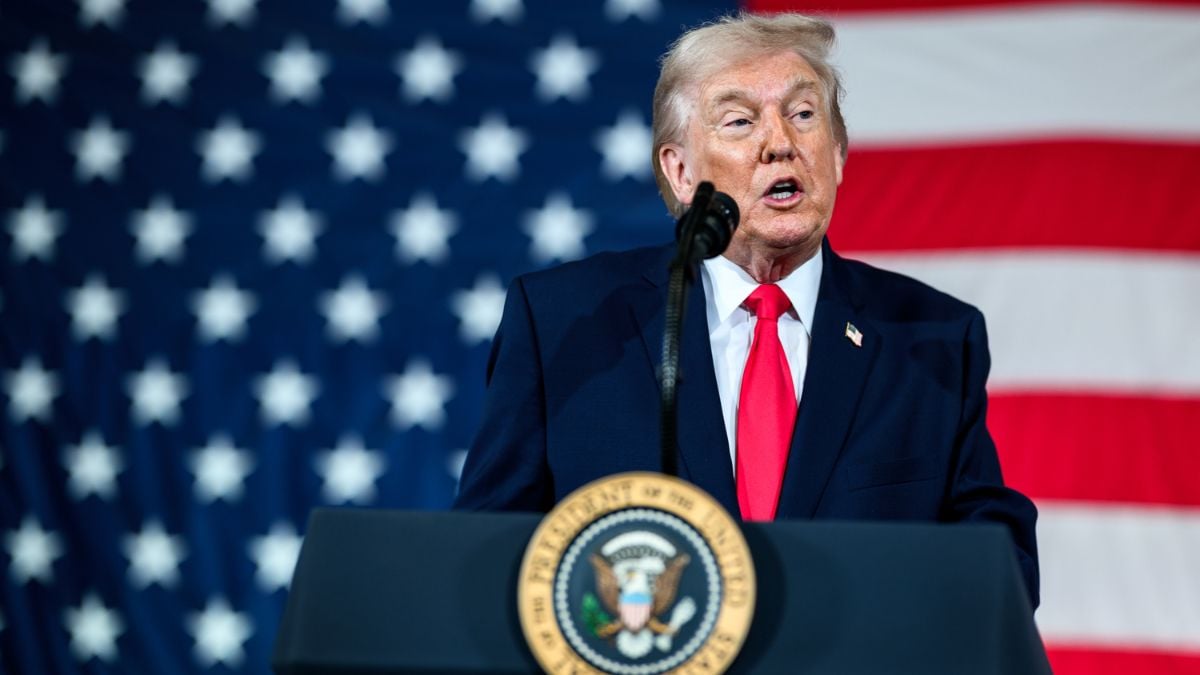

the impact of higher prices for imported inputs in the United States
 CORTESÍA: THE WHITE HOUSE
96% of the cost of the tariffs imposed in 2025 by President Donald Trump was absorbed by U.S. buyers, not by exporting countries such as China. This is revealed in the report “America’s Own Goal: Who Pays the Tariffs?”, prepared by the Kiel Institute (January 2026). While the political narrative of Donald Trump argues that tariffs would be paid by trading partners, the evidence shows that the burden has fallen on importers, manufacturers, and consumers within the United States itself. For U.S. manufacturing, this means direct pressure on costs, margins, and competitiveness.
READ ALSO. When Can I Watch Scream 7 on Paramount+? It will be available for streaming this month in 2026
How Do Tariffs Affect Manufacturing in the United States?
Modern manufacturing depends on global supply chains. Even products assembled in the United States incorporate parts, components, or raw materials from China, India, Brazil, and other markets.
The Kiel Institute study, based on more than 25 million shipments worth nearly $4 trillion, shows that when tariffs increase, import prices rise almost proportionally. In other words, foreign exporters barely reduce their prices, so the additional cost is passed on to the U.S. buyer.
For manufacturers, this translates into:
- ⇒ Higher costs for intermediate inputs.
- ⇒ Increased total production costs.
- ⇒ Pressure to raise final prices or reduce margins.
Does China Pay the Tariffs, or Does the Cost Stay in the United States?
One of the report’s most relevant findings is that China did not absorb the financial impact of the tariffs, even when rates at times exceeded 100%. Instead of lowering prices, exporters maintained their price levels and reduced shipment volumes.
The estimated coefficient in the study indicates that only about 4% of the tariff was absorbed by exporters, while 96% was passed on to U.S. importers. This undermines the narrative that tariffs represent a direct transfer of wealth from China to the United States.
In practice, it means that U.S. manufacturing pays more for the same inputs.
Why Don’t Exporters Lower Their Prices in Response to Tariffs?
The document identifies several structural reasons:
- ⇒ Alternative markets: Chinese or Indian exporters can redirect production to Europe or other regions.
- ⇒ Magnitude of the tariff: 25% or 50% tariffs are difficult to offset through discounts without severely affecting margins.
- ⇒ Supply chain rigidity: Many U.S. manufacturers cannot immediately replace suppliers.
As a result, the adjustment occurs in quantities (less trade), not in prices.
What Impact Do Tariffs Have on Production Costs?
For U.S. manufacturing, rising prices of imported inputs create a domino effect:
- Higher unit costs.
- Need to pass increases on to distributors or consumers.
- Reduced competitiveness compared to foreign producers that do not face the same input cost increases.
Moreover, the report highlights that in 2025, U.S. customs revenue increased by approximately $200 billion — a figure that, rather than coming from China, was paid by American companies and consumers.
This phenomenon effectively turns tariffs into an indirect tax on domestic production and consumption.
What Happens to Investment and Industrial Competitiveness?
Higher input costs directly affect manufacturers’ financial planning. Faced with rising expenses, companies may:
- ⇒ Reduce investment in expansion or innovation.
- ⇒ Adjust employment or production levels.
- ⇒ Reconfigure supply chains at high transition costs.
Although the political intent behind tariffs has been to strengthen domestic industry, the study suggests the effect may be the opposite: greater pressure on local manufacturers that depend on international trade.
Is This a Repeat of Donald Trump’s Trade War Scenario?
The Policy Brief notes that the outcomes observed in 2025 replicate what happened during the 2018–2019 trade war under President Donald Trump: tariffs raise domestic prices, reduce trade volumes, and create economic distortions, with no evidence that foreign exporters assume a significant share of the cost.
The difference is that in 2025 the scope was broader, amplifying the impact on sectors such as manufacturing.
Who Ultimately Bears the Cost of Tariffs?
The process unfolds step by step:
- ⇒ The importer pays the tariff at the border.
- ⇒ The manufacturer faces more expensive inputs.
- ⇒ The distributor adjusts prices.
- ⇒ The final consumer absorbs the increase.
According to the study, tariffs function in practice as a selective tax on consumption and production in the United States, with additional effects such as reduced product variety and market distortions.
