

Siemens Energy to invest $421 million in NC 


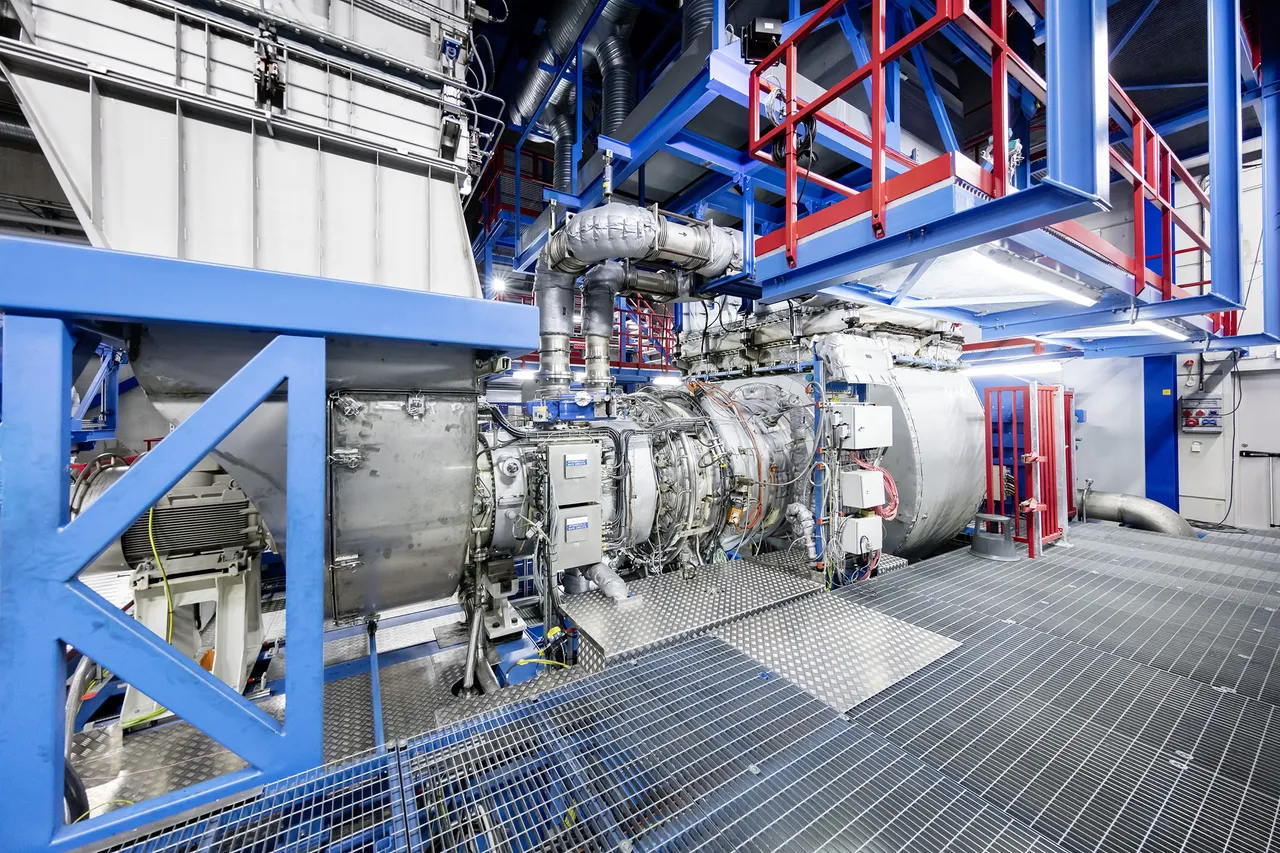
This week Siemens Energy announced that it would be investing $421 million to expand its’ operations in North Carolina. The expansions will occur at multiple locations, involve the manufacturing of energy infrastructure equipment, and are expected to create 500 new jobs statewide.

“The equipment we produce in North Carolina is helping meet our nation’s unprecedented growth in energy,” Matt Neal, Siemens Energy’s President of North America said. “We are building on a strong, decades-long foundation in the state, supported by a dedicated workforce that consistently rises to meet new challenges and a pipeline of young and eager talent ready to build the machines that will power the United States into the next century.” 

The $421 million North Carolina investment is part of a larger, nationwide strategy by Siemens Energy to bolster domestic manufacturing of energy infrastructure equipment and strengthen the US power grid. The company has committed roughly $1 billion to expand its manufacturing footprint across the country, including in states such as Mississippi, Alabama, New York, Texas, and Florida, to meet growing grid demands and supply chain needs.

“This tremendous investment in a critical part of our power grid supply chain underscores President Trump’s success in expanding supply chain access and bringing major manufacturing back to America,” said US Interior Secretary Doug Burgum in a press release. “We appreciate great partners like Siemens Energy, who proactively partner with the Trump administration for the benefit of the American people, prioritizing critical components to make the United States Energy dominant!”

Expanding on the $150 million investment announced in 2024, this investment will stretch the power transformer manufacturing facility in Charlotte and increase service capacity to keep up with demand. Siemens Energy currently produced large gas turbines in Berlin, Germany, and part of the expansion plan would bring production to Charlotte, after a six-year pause.   

Gas turbine parts are to be produced in Winston-Salem and expanding grid technology project execution, research, and development will occur in Raleigh.  

Like much of the United States, North Carolina—with Charlotte at the helm, is seeing an uptick in proposed AI driven data centers. Facilities house machinery used to process large amounts of data and information, requiring massive storehouses of energy.  

“Siemens Energy has been making things in the United States for more than a century and we are experiencing a once-in-a-generation growth opportunity due to the resurgence of US manufacturing and the growth of artificial intelligence,” Christian Bruch, CEO and President of Siemens Energy, said in a press release. “The current policy environment has contributed to this momentum. The Trump Administration has made energy security, a reliable and resilient grid, and growing US manufacturing jobs a priority. This has supercharged the energy demand which is supporting new investments across the energy sector. We are excited to help write this next chapter of American energy expansion.” 

While this latest Siemens Energy investment in North Carolina’s economy is not backed by a Job Development Investment Grant (JDIG), previous investments have been JDIG-funded. This includes the Charlotte investment announced in February 2024.  

“State incentive records show Siemens Energy has received four JDIGs from North Carolina — approved in 2009, 2010, 2010, and 2024 — with both 2010 agreements later terminated, placing the company squarely within the program’s broader pattern of underperformance,” Joseph Harris, fiscal policy analyst for the John Locke Foundation, told the Carolina Journal. “According to state data, nearly half of all JDIG agreements approved from fiscal years 2003 to 2025, or 222 out of 449 deals, have been terminated or withdrawn before meeting their job-creation targets.” 

In 2024, The North Carolina Economic Investment Committee (NCEIC) approved a $6,979,500 reimbursement to Siemens Energy over the spam of 12 years with the hope of creating more jobs in the state. An additional $2,326,500 was allocated to the state’s Industrial Development Fund – Utility Account, bringing the total cost of the grant to $9.3 million.  

Even without JDIG support for the expansion announced this week, Siemens Energy has stated that the project will create a substantial number of jobs. Job creation benchmarks are a key requirement of the JDIG program, and some past recipients have failed to meet those benchmarks, resulting in terminated agreements.

JDIG grants are performance-based, discretionary incentives tied to a company’s ability to meet investment and employment commitments intended to support economic development. When projects do not meet those requirements, expected economic benefits—such as job creation and capital investment—may not materialize in the affected communities.

“Siemens Energy is a valued member of North Carolina’s advanced manufacturing community, and we welcome this meaningful expansion of the company’s operations in our state,” said Gov. Josh Stein. “From our state’s world-class transportation infrastructure to our skilled workforce, North Carolina offers manufacturers the best place to do business in the United States.”

Gas turbine manufacturing began in Charlotte in 2011 and then terminated in 2020 due to low demand. Starting back this year, Siemens Energy expects the first gas turbines to be shipped from Charlotte in the next 2-3 years.  

Siemens Energy is also investing in the Winston Technology Center in Rural Hall, North Carolina. The company currently manufactures and services parts for power generation equipment.   

Globally, Siemens Energy employees over 103,000 people in more than 90 countries. In the fiscal year 2025, they generated over $46 billion in revenue.  

Free Training

Source link

Has Trump’s tariff policy backfired, leading to a contraction in U.S. manufacturing?


The manufacturing boom promised by Trump has failed to materialize. Months after the implementation of his hallmark tariff policies, manufacturing jobs continue to decline, and industry activity has remained in prolonged contraction.

Trump once promised a ‘golden age’ for American manufacturing, but this prosperity is now receding. After years of economic intervention under both the Trump and Biden administrations, the number of manufacturing jobs in the United States has dropped to its lowest point since the end of the pandemic.

Federal data shows that in the eight months following Trump’s announcement of the ‘Liberation Day’ tariff, manufacturing jobs declined month by month, continuing a contraction trend that has seen over 200,000 jobs disappear since 2023. The index of factory activity tracked by the Institute for Supply Management remained in contraction territory for 26 consecutive months through December of last year, although a surprise rebound in new orders and production indexes in January caught analysts off guard. Manufacturing construction spending, which had surged under Biden-era funding for chips and renewable energy, fell month by month during Trump’s first nine months in office, according to estimates from the U.S. Census Bureau.

This gradual slowdown is, to some extent, a continuation of decades-long trends that shifted factory jobs overseas and accelerated the decline of Midwestern cities. In an industry where capital planning and construction cycles often span several years, reversing these trends will not happen overnight.


In November last year, the Federal Reserve significantly revised downward its estimates of total U.S. output since the pandemic when it conducted its annual revision of industrial production indicators.

“We never fully recovered from the pandemic,” said Josh Lehner, a U.S. economist at SGH Macro Advisors. Although automakers and chip manufacturers cut tens of thousands of jobs over the past year, the steady pace of layoffs across the industry suggests that job losses have been gradual.

Lehner and other economists also pointed out signs that output has stabilized and even grown slightly, though increased efficiency may limit the number of new jobs created. A White House spokesperson highlighted a modest rise in manufacturing productivity in recent quarters and noted that wage growth for workers exceeded inflation over the past year.

U.S. manufacturing jobs

U.S. manufacturing job additions

In the long run, tariffs may achieve their intended effect of enhancing the competitiveness of some manufacturers relative to overseas producers. Economists believe that lowering interest rates and deregulation could also provide support. However, in the short term, tariffs have raised costs for many companies importing raw materials and components, forcing businesses reliant on foreign parts to raise product prices or hurriedly seek alternative supplies.

The intermittent policymaking from the White House—Trump threatened new tariffs on Europe, Canada, and South Korea in recent weeks—has also led many business executives to view the past year as a ‘lost year for investment.’ The possibility that the Supreme Court might overturn some import taxes has added further uncertainty.

Meanwhile, despite the tariffs, some countries continue to expand their exports, driving down prices in the global market and making it difficult for U.S. manufacturers to compete.

“In our product portfolio, there are hardly any products that have benefited from tariffs,” said the CEO of Insteel Industries, headquartered in North Carolina.$Insteel Industries (IIIN.US)$H.O. Woltz III. With foreign steel tariffs doubling to 50% this year, Insteel has found it increasingly difficult to obtain steel from its U.S. suppliers for producing concrete infrastructure reinforcements, such as those required for the upcoming Gordie Howe Bridge connecting Detroit and Canada.$TRADELINK (00536.HK)$On the contrary, when domestic supply in the U.S. is insufficient, Insteel sometimes has no choice but to turn to importing tariffed steel from places like Algeria and India.

“Our growth today could be undermined by a lack of available (domestic) raw materials,” Woltz said.

In the trucking industry, a multi-year slump following the pandemic hit metal component manufacturers such as NN. The company, headquartered in Charlotte, North Carolina, and operating 23 plants across six countries, has cut its U.S. workforce in recent years to compete with low-cost factories overseas while addressing slowing demand for electric vehicles. CEO Harold Bevis believes tariffs will ultimately benefit NN by curbing competition from rivals in precision components like steering systems and audiovisual controls. However, import duties have driven up costs for steel and aluminum, while surging market prices for gold and silver—used in some of NN’s products—have added further pressure.

This squeezes the company’s ability to invest in new potentially profitable areas such as data centers and electrical equipment. “So you get hit,” Bevis said. NN is attempting to offset the costs by raising prices in subsequent orders. Bevis noted that NN’s business has accelerated amid Ford and General Motors’ push for localized sourcing, following multibillion-dollar asset write-downs on their EV businesses. However, when evaluating locations for expanding production for the auto sector, Bevis cautioned that places like Michigan and Massachusetts remain less attractive compared to Mexico, where many products can still enter the U.S. duty-free under trade agreements.

Trump has also taken other measures to try to revitalize manufacturing. He pressured trading partners like Japan and South Korea into agreements promising to invest tens of billions of dollars in the U.S.$Apple (AAPL.US)$$Taiwan Semiconductor (TSM.US)$and$AstraZeneca (AZN.US)$Companies have announced large-scale projects that could create thousands of manufacturing jobs. Government officials stated that the long-term vision is achieving industrial self-sufficiency. However, these investments often span several years, leaving the short-term outlook for manufacturing uncertain. “I don’t know when all this money will start to pay off,” Trump told The Wall Street Journal in December last year.

Analysts pointed out that new investments might focus on areas that fascinate Wall Street, such as robotic tools and artificial intelligence components, meaning the likelihood of a surge in permanent factory jobs is low. After years of inflation and high borrowing costs, some sectors of the economy remain lagging, impacting certain types of manufacturing.$Qualcomm (QCOM.US)$After experiencing years of inflation and high borrowing costs, certain segments of the economy continue to lag behind, affecting specific types of manufacturing.

“If people aren’t buying homes, they won’t buy furniture,” said Meganne Wecker, CEO of Skyline Furniture Manufacturing, a family-owned business founded in 1946 located outside Chicago. Skyline ventured early into e-commerce and began sourcing metal materials domestically in 2018. However, tariffs have impacted hardwood imports from Vietnam and textiles from India and China, leading to price increases.

Wecker is more concerned about the impact of tariffs not directly on Skyline but on suppliers and retailers. “The entire industry feels somewhat fragile,” she said of the furniture sector, adding that tariff uncertainties have dampened prospects for new domestic capacity investment. “I don’t know anyone who feels confident enough to make an investment that might only last a few years.”

Some investors believe that interest rate cuts and stimulative fiscal policies should help accelerate economic growth this year. “The biggest overall factor determining how well manufacturing performs is how well our economy performs. There’s no escaping that,” said Scott Paul, president of the Alliance for American Manufacturing, which supports tariffs on steel and many products. “It’s too early to tell what the new normal will be because we’ve just come out of that roller-coaster period.”

Editor/Doris

Free Training

Source link

Copper Mountain Technologies Advances Global Production Strategy with Expanded Manufacturing Operations in Cyprus


INDIANAPOLIS, Feb. 03, 2026 (GLOBE NEWSWIRE) — Copper Mountain Technologies (CMT) enters 2026 after a year of significant advances in manufacturing capability, security compliance, and product development. Throughout 2025, the company invested in strengthening its infrastructure and delivering VNA solutions to better support RF engineers and test and measurement professionals worldwide.

To support rising global demand, CMT expanded its production capabilities through strategic investment in operations and resources. In addition to its established manufacturing site in the United States, the company has extended its footprint in the European Union.

While the Cyprus office was originally established in 2022, this February, the company has moved into a new, larger manufacturing facility. The new facility brings design engineering, production, software development, and service under one roof — enhancing agility, scalability, customer support, reliable supply and faster delivery worldwide.

Together with US manufacturing operations, this European Union expansion strengthens CMT’s ability to meet increasing demand across Europe and the EMEA region.

About Copper Mountain Technologies

Copper Mountain Technologies develops innovative RF test and measurement solutions for engineers around the world. Headquartered in Indianapolis, Indiana (USA), CMT maintains manufacturing, R&D, applications engineering and service operations in both the United States and Paphos, Cyprus (EU), with additional regional offices in Singapore, London, and Miami. They offer a broad range of USB vector network analyzers, calibration kits, and accessories for 50 Ohm and 75 Ohm impedances to 330 GHz. Their VNAs use software for Windows® and Linux® operating systems on an external computer, PC, or tablet. Every CMT VNA includes robust application and automation support, backed by years of RF engineering expertise dedicated to customer success.

A photo accompanying this announcement is available at https://www.globenewswire.com/NewsRoom/AttachmentNg/ea94e617-829d-47a7-ab62-3a20b453193f

Primary Logo

Free Training

Source link