
The Trump Administration Failed the U.S. Auto Industry, and the Canada-China Deal Proves It


On January 16, 2026, Canadian Prime Minister Mark Carney announced a landmark trade deal with China that will open its market to Chinese electric vehicles (EVs) in exchange for lower tariffs on Canadian-produced canola oil. It’s a major change that could lead to the Canadian market welcoming Chinese-made passenger vehicles at a significantly higher scale and throws into stark relief the consequences of the Trump administration’s reckless trade policy and its large-scale disinvestment in EVs.

The Trump administration’s wrecking-ball approach to traditional forms of international cooperation; its willingness to attack long-time partners and allies with ever more outrageous tariff threats; and its destruction of the U.S. EV supply chain has forced Canada to change its strategy for modernizing and growing its domestic auto industry. Canada has historically been the largest importer of U.S. passenger vehicles. Now, as a direct result of the Trump administration’s actions, Canada’s pivot toward Mexico, China, and elsewhere stands to further isolate the U.S. market as the rest of the world moves decidedly toward a cleaner future. Indeed, if U.S. automakers were already behind Chinese and other international EV producers in terms of technology, production, and price, then the Trump administration’s antics on the world stage will only widen the gap and jeopardize a lucrative export market, to the detriment of American workers and consumers alike.

Stay informed

on Energy and Environment

What’s in the deal?

Canada and China recently agreed to lower tariffs on Canadian canola oil—from 84 percent to approximately 15 percent by March 1, 2026—in exchange for Canada lowering the tariff rate on Chinese EVs from 100 percent to 6.1 percent on the first 49,000 vehicles, eventually growing to 70,000 over five years. Perhaps more importantly, China will invest in EV production capacity in Canada. While this is more of an understanding than an official agreement at this point, it may turn out to be the most significant component of the deal. Legacy North American automakers lag behind their Chinese counterparts in the maturity of their EV production processes. Landing direct investment in domestic production capacity will allow Canadian participants in the supply chain a significant opportunity to learn from Chinese EV and battery makers and produce affordable cars for Canadian citizens. The new Chinese electric vehicles, whether imported or produced in Canada, are likely to be less expensive than other vehicles produced in North America, which will force North American automakers to innovate and learn in order to remain competitive—preferably not to the detriment of autoworker jobs.

Which parts of the manufacturing process ultimately end up onshored in Canada will matter significantly. China has surged ahead of the rest of the world the further upstream one goes in the supply chain. Localizing battery active material production—cathodes and anodes—would bring more economic value and direct jobs than just final battery pack assembly.

It remains to be seen whether this deal will deliver positive benefits to Canada—although ensuring that any factory that supplies EVs either made in Canada or exported into Canada meets the highest standards for workers’ rights and sustainability would be a good start. But what is clear is that this deal would not have occurred without the Trump administration’s ongoing hostility toward EVs and the U.S.-Canada relationship more broadly.

Why make the deal?

The deal is, no doubt, a calculated risk by the Canadian government, based on two key factors. First, the Trump administration has undermined innovation in the domestic auto industry, gutting investments in EVs and causing domestic automakers to cancel billions of dollars of investment in advanced manufacturing. Second, it has deeply exacerbated trade and diplomatic tensions between Washington and Ottawa. As a result, Canada finds itself with a need to reduce its dependency on and integration with the United States to reclaim control over its economy and industrial future. It is a message that Mark Carney, Canada’s prime minister, delivered to his country via video message a few days after signing the agreement with China.

On the future of the auto sector in the United States, it is hard to question the Canadian government’s assessment. One of the first actions taken by the Trump administration, starting with a day-one executive order, was to launch an all-out attack on American EV manufacturing, directing the government to “eliminate the ‘electric vehicle (EV) mandate’,” despite no such mandate existing. Less than a month later, the administration unilaterally and unlawfully froze billions of dollars of funding for everything from EV charger installation to critical mineral processing for batteries, including funds for which the government had already signed contracts with American companies. Finally, in July, the president signed the One Big Beautiful Bill Act and delivered the coup de grâce for the future auto industry, repealing tax credits for EVs made in North America and hamstringing government support for American battery manufacturing. High-quality EVs have an average cost of $25,000 in China, but instead of helping American automakers offer a similarly affordable vehicle, the administration has held them back. NPR captured it succinctly in December:

California’s ability to require the sale of EVs: gone. Federal rules about emissions and fuel economy — being rewritten. Federal penalties for car companies that sell too many gas guzzlers: zeroed out. The $7,500 federal tax credit? Kaput.

These actions have already caused damage. Ford took a $19.5 billion write-down scaling back its plans for EV production, while GM took a $6 billion hit. As of the end of the third quarter of 2025, EV supply chain investment was down 30 percent from that point a year earlier. These cancellations won’t just hurt the United States and American workers but also Canada. The auto industry is not an American industry; it’s a North American industry, with the region that includes Michigan, Ohio, Indiana, and Ontario often referred to as the “Great Lakes supercluster.” As described in a recent report to Congress, “Across the region, hundreds of suppliers provide thousands of parts for vehicles, some of which cross the border seven or eight times as they are assembled into larger products.” The industry is deeply intertwined, so major changes in the United States will significantly affect both Canada and Mexico. Without a strong automotive industry—along with all the supplier industries that serve the auto industry—Canada’s industrial future would be far weaker and far less resilient to the vagaries of policy choices in the United States and elsewhere.

Without a strong automotive industry, Canada’s industrial future would be far weaker and far less resilient to the vagaries of policy choices in the United States and elsewhere.

Canada and the United States have had a remarkably close relationship, consistently sharing economic and foreign policy goals over generations. In 2023, more than $2.5 billion in goods and services crossed the U.S.-Canada border each day. In all likelihood, Ottawa would like to maintain this close relationship and economic integration as much as possible, but as Carney noted in his recent speech to the World Economic Forum in Davos, Switzerland, Canada must react to the world as it is—not the world it wishes existed. And the current world is defined by the brazen tariff threats and toxic nationalism of the Trump administration.

In just its first year in office, the Trump administration has ushered in a trade war unprecedented in its size and scale, imposing new tariffs on nearly every nation and on roughly half the goods entering the United States. In addition to tariffs, the Trump administration has done its best to antagonize Canada, from referring to Canada as the “51st state” and Prime Minister Carney as “Governor Carney” to reportedly meeting with Albertan separatists. As a result, Canada has come to view the United States not as a partner or ally but as a belligerent nation that no longer shares its interests and values—at least not as long as the Trump administration is in the White House.

What about U.S. manufacturing?

Allowing Chinese EVs into the Canadian market, albeit in limited numbers at first, will place massive pressure on American automakers to catch up technologically—which would be the best-case outcome. There are some positive signs that this is happening, such as GM’s investment in new battery technologies. However, if U.S. automakers choose instead to cede the market entirely, then that loss will be felt directly in the U.S. labor market. As the United States has deprioritized affordable EVs—and affordable vehicles in general—China has kept up its massive push to build and adopt EVs. More than half of new cars sold in China are now EVs, accounting for roughly 70 percent of global EV production. This global EV adoption is helping change the trajectory of global oil demand to peak in five years. And it’s not just China, with countries like India electrifying even faster.

There is no turning away from an electrified future for passenger vehicles unless the goal is to condemn people to a future of more expensive cars and fewer jobs.

This means that Canada is a canary in the coal mine for U.S. automakers. If they cannot build and sell EVs to compete with those manufactured by their competitors in a market physically next door—and one that was previously accustomed to buying U.S.-made vehicles—then there is little hope of them competing in a broader world that is rapidly electrifying. One in 4 vehicles sold in 2025 was electric; making a cost-competitive EV is not optional for automakers who want to retain significant market share. Should American automakers fail to do so, autoworkers and U.S. industry more broadly would likely be the first to suffer the consequences.

On the campaign trail, President Trump wildly claimed that “all the electric cars are going to be made in China.” This isn’t likely to become true with other parts of the world such as Europe shifting toward EV production, but what may be true is that significant numbers won’t be made in the United States, which will be a problem when the rest of the world ultimately decides EVs are the way to go. Investors want to invest in industries of the future, and workers need training in those industries now. But instead of recognizing this future—one that Canada clearly does—President Trump appears focused on keeping American auto manufacturing stuck in the past. If he is successful, those investors won’t invest in the U.S. auto industry, and there will be fewer workers in it as a result.

Conclusion

In only a year, the Trump administration’s reckless policies forced a dilemma upon Canada: Continue to be tied to a historic trading partner whose current leadership has decided to hold its own—and, by extension, Canada’s—industry back from producing innovative EVs, or make a deal with China, a competitor leading in the EV industry.

Canada has made a choice to welcome Chinese EVs today, and that should be a wake-up call: There is no turning away from an electrified future for passenger vehicles unless the goal is to condemn people to a future of more expensive cars and fewer jobs. The rest of the world is moving on to cheaper, cleaner vehicles. If the United States wants to produce the vehicles the world wants, as it should, then the country must return to investing in electric vehicle production and an associated supply chain. Nearly 1 million direct jobs are at stake. The Trump administration, and U.S. automakers, should stop seeing the world they wish to see and start seeing the world as it is. Otherwise, U.S. autoworkers and consumers are going to pay the price. A continuation of the Trump administration’s toxicity on the world stage and its backward auto and energy policy would only mean more deals like the one Canada and China agreed to a few weeks ago.

The authors would like to thank Kalina Gibson, Allison McManus, Steve Bonitatibus, and Mona Alsaidi for their feedback, guidance, and support on this column.

Free Training

Source link

The U.S. needs leading-edge chips. Can Intel deliver? Will it even try?


Semiconductor manufacturers are spending tens of billions of dollars to build advanced factories in Arizona and Texas. They’re being cheered on by the federal government, which has chipped in billions of taxpayer dollars to ensure the U.S. doesn’t become completely reliant on technology from overseas.

But these new factories, which the industry calls foundries, rely entirely on manufacturing technology developed in Asia.

A geopolitical or natural disaster could leave those new factories stranded, with all that new American manufacturing muscle cut off from the brains in Asia that make them go. There would be no one in the U.S. to develop new manufacturing technologies.

“You’d be stuck in time,” according to veteran chip industry researcher Patrick Moorhead. Cut off from engineers in Taiwan, he said, “the foundry would not advance on anything.”

The U.S. has a solution. Maybe.

It’s Intel, which was the world’s largest and most advanced chipmaker until a series of factory and leadership missteps derailed its business a decade ago. Intel still has thousands of scientists working in its Hillsboro research factories, where the company develops the recipes to manufacture new generations of computer chips.

Those Oregon engineers have made great strides over the past five years in recovering what Intel lost in the 2010s. The company is the only one based in the U.S. doing this kind of leading-edge work and its brand-new technology, which it calls 18A, offers major advances in chip architecture, performance and efficiency.

Still, it may not be enough.

Taiwan Semiconductor Manufacturing Co. continues to lead the industry, making chips for Apple, Nvidia and many other huge technology companies. Intel has been working for five years to win a share of their business but has yet to announce any large customers for its factories. Intel even outsources some of its own leading-edge designs to rival TSMC.

Intel still makes most of its own chips. But the company has cut 6,000 Oregon jobs over the past two years, and many of its top researchers have left. Intel startled the tech industry last summer when it warned that it would abandon its next generation of production technology, called 14A, unless it wins some big outside customers.

That would leave the U.S. without any chipmaker developing advanced technology domestically. The nation’s defense and tech sectors would be reliant on innovations from overseas.

The stakes are just as high for Oregon. Intel is the state’s largest corporate employer and Oregon’s economy is hugely reliant on the billions the company spends building, equipping and maintaining leading-edge factories.

Intel CEO Lip-Bu Tan delivers a speech  in front of a backdrop that reads "Build the Best Products"Intel CEO Lip-Bu Tan says customers are telling him they’re pleased with Intel’s direction: “I’m hearing a clear, consistent message. They see the progress we are making. They want Intel at the table as they navigate their own transformations.”AP Photo/Chiang Ying-ying

Intel repeated its warnings about abandoning 14A in regulatory filings and conversations with analysts as recently as last month. But its executives insist that 14A, being developed by Oregon engineers, is on track and that Intel is charging ahead on future generations of technology that will put the company — and the country — back on the leading edge.

“There should be no ambiguity that we are all-in on 14A,” said Chris Auth, an Intel vice president in Hillsboro who leads manufacturing development. He said that’s the central mission of Intel’s operations in Oregon, and that focus and commitment haven’t changed.

“There’s thousands of people here,” Auth said, “and they are innovating and developing 14A and beyond, just like they were before.”

Historic cuts hit innovation, manufacturing

Intel’s technology may again be near the leading edge, but its business model is a dinosaur. The company is the last major player that both designs and manufactures its computer chips.

All the other big players have chosen to specialize in one or the other. Nvidia, for example, dominates the market for artificial intelligence by designing a class of chip called a GPU — a booming sector Intel missed out on. But Nvidia doesn’t make any of those GPUs itself. It sends its designs off to TSMC.

For decades, Intel maintained that integrating design and manufacturing gave it an advantage. It could work more quickly to adapt its factories for new designs, and vice versa, so advances in one part of its business benefitted the other. Intel made all its own chips and none for anyone else.

Integration is no longer an accelerant for Intel. It’s become an albatross.

A leading-edge factory costs $10 billion to build, plus several billion more every year just to keep up with advances in manufacturing technology. Intel says it can’t afford to keep spending that way if its only customer is Intel itself — especially because the market for its own chips, which primarily power personal computers and servers, is also in decline.

That presents a conundrum, for Intel and for the United States, because the country wants advanced manufacturing and domestic companies that can keep those factories on the leading edge.

“It’s very important for national security to have both,” Moorhead said.

Chris AuthIntel Vice President Chris Auth has worked at the chipmaker for nearly three decades. He leads manufacturing development and customer engineering at Intel’s factories in Hillsboro, and says the company’s commitment to Oregon is solid: “This is still the main R&D site for Intel and there’s no indication that that’s going to change in the future.”Sean Meagher/The Oregonian

For now, Intel is trying to hold on financially until it has proven itself technologically and won some outside customers who can help subsidize continued investment in its manufacturing process.

It’s a tough needle to thread. Desperate to save money, Intel has cut 30,000 jobs globally over the past 18 months. That included the 6,000 lost jobs in Oregon. While Washington County remains the company’s largest site anywhere, layoffs and buyouts have reduced its local workforce to its lowest point in 14 years.

CEO Lip-Bu Tan says the cuts reduced layers of bureaucracy that were impeding innovation. But buyouts, layoffs and retirements have cost Intel some of its best-known researchers. And a round of November layoffs eliminated 600 frontline factory technicians, engineers and scientists in Hillsboro.

Many more are leaving on their own. The company has cut stock benefits and sabbatical time and says nearly 8% of its employees quit last year. That’s the biggest voluntary exodus in nearly two decades — what Intel calls “undesired turnover” — and a steep increase from 2024.

After a surge in spending at the beginning of the decade, Intel slashed its research budget by 16% last year. That’s an enormous cut unmatched any time this century.

Intel has shelved plans for a fourth phase of its D1X research factory in Hillsboro, a multibillion-dollar project that would have provided a massive boost to the state’s economy and Intel’s innovation capacity. At one time, Intel had planned to start construction in 2025.

If those cuts diminished Intel technologically, its financial picture has improved — and only partly because it is spending less. The Trump administration negotiated an $8.9 billion investment in Intel last summer, followed by billions from Nvidia and the Japanese technology investment firm SoftBank.

That money is more than just a financial lifeline. The ties to the government and wealthy backers buy Intel clout in the industry and could open doors to potential customers.

And in the long run, Apple, Nvidia and other big tech companies don’t want to be wholly dependent on TSMC as their only source of leading-edge chips. They would presumably enjoy having Intel as a second option.

But since none of them have signed up to use Intel’s factories, they’re evidently not convinced that it can deliver. At least not yet.

‘They’re not even willing to catch up’

Neither is Christof Teuscher, an engineering professor at Portland State University. He’s spent nearly two decades teaching Ph.D. students who went on to careers at Intel. Now, he says, Intel isn’t hiring anyone and students don’t want to go.

“The excitement is not at Intel anymore,” Teuscher said. “It’s just not there.”

While the Trump administration has invested billions in Intel, and awarded billions to other chipmakers to build factories, Teuscher said the administration’s immigration policies are deterring promising students and researchers.

“That was almost entirely an international pipeline,” he said. “You can be sure they’re going to do their own stuff somewhere else, and not in the U.S.”

Among the students who are here, Teuscher said they are more interested in young Oregon chip companies like Ampere and AheadComputing or in Nvidia, which employs more than 300 at an engineering office in Washington County. He questions Intel’s commitment to its own future.

“Intel had the talent,” Teuscher said, “but they lost that game and it seems like they’re not even willing to catch up.”

Intel’s own messaging is confusing and contradictory on that point. Tan, the CEO, declared at the beginning of this year that “We are going big time into 14A,” the new manufacturing node due sometime in 2028.

But less than two weeks later, Chief Financial Officer David Zinsner reiterated that Intel will restrain research and manufacturing spending on the new technology “until we have customers secured.” The company said it expects potential clients will begin making decisions about using Intel’s 14A technology late this year or early in 2027.

“Once visibility improves there,” Zinsner said, “we’ll start to unlock the spend on 14A.”

Baking the cake

For now, Wall Street appears to be willing to give Intel time to make up its mind. The company’s share price has doubled in the last six months. There is a growing consensus among analysts that Intel is close to a deal to manufacture Apple’s chips for the iPad and some Mac computers.

Many, though, continue to doubt Intel’s technological prowess.

Bank of America’s Vivek Arya told clients last month that he believes that Intel’s brand-new generation of chips, the ones called 18A, are ramping up slowly because so many have defects that require the company to discard them. That’s typical with new generations of chip technology, but Arya said Intel is moving too slowly to improve yields, making its manufacturing process too expensive and unpredictable.

“We appreciate the scarcity value of leading-edge manufacturing,” he said. But if Intel cannot deliver high yields on its 18A technology, Arya said that’s an ill omen for the next generation of 14A chips. That leaves him skeptical Intel can thrive as a contract manufacturer — a market where Intel “has no scale or history of execution.”

It’s true that Intel has no track record as a contract manufacturer, but its history as an innovator stretches back generations. Moore’s Law, the industry maxim that the ability to miniaturize and pack denser circuitry on computer chips would produce exponential growth in computing power while simultaneously driving down the cost to manufacture them, was coined by and named for Intel’s co-founder.

Jamel Tayeb spent 25 years at Intel as an engineer and chip architect before retiring and becoming a professor in Portland State’s engineering department last fall. Intel is again listening to its technologists, Tayeb said, and that’s why he believes it can overcome its technological struggles.

“Do I believe that Intel can do it?” he asked. “I would say that yes, I really deeply feel that they can pull it off.”

To succeed as a leading-edge manufacturer, Intel must demonstrate that it is both capable of making advanced chips and committed to continue doing so.

Even Intel employees expressed confusion last summer when the company appeared to be hedging on its commitment to leading-edge manufacturing. But Auth, the manufacturing vice president in Hillsboro, insists the company never slowed the pace of research.

“The commitment to 14A is unwavering,” Auth said. “We have key milestones that Lip-Bu wants us to hit, and we’ve been hitting those milestones.”

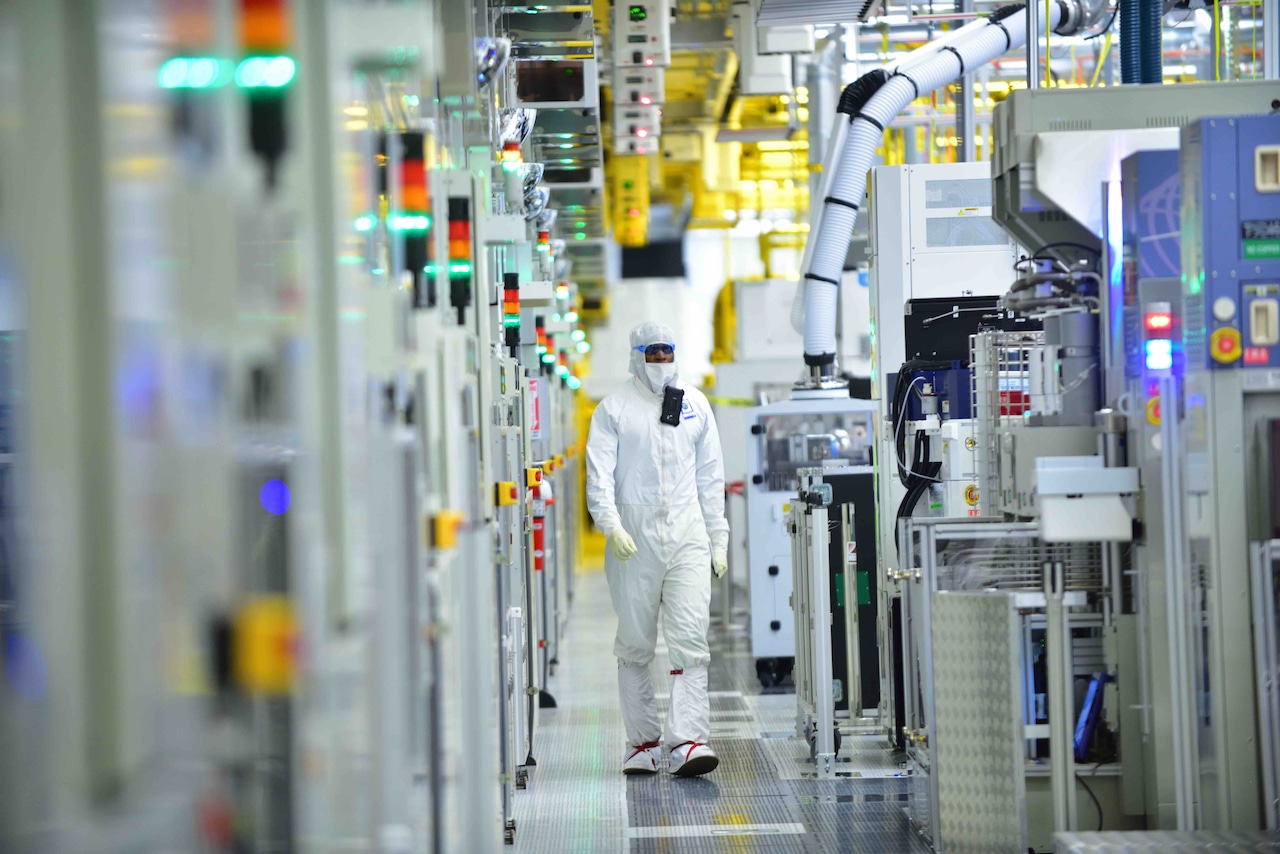
He likens Intel scientists to bakers. The engineers, technicians and researchers working in cleanroom bunny suits are making cakes that need millions of ingredients and thousands of steps.

“Those are the type of things that we do to, at the end of the day, make the best cake we can,” he said, “which is what our customers see.”

Intel has addressed its technological struggles, according to Auth, by focusing on a single cake rather than dabbling in many different ideas. He said Intel has a hard-earned understanding of how to focus on a single concept — manufacturing chips that clients want — and he said the company is convinced it can deliver.

External customers care most of all that chip designs arrive on a predictable schedule, Auth said, and he said a commitment to meeting those expectations is fueling a technological renaissance inside Intel.

“It’s paramount,” Auth said. “And so that has been something that we’ve really embraced.”

Free Training

Source link

Trump’s Attack on Green Energy Hits Manufacturing Sector Hard


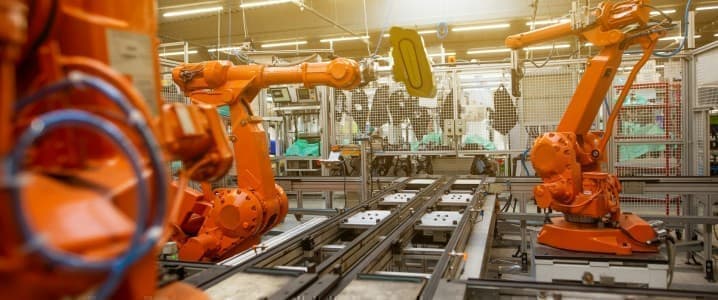
United States President Donald Trump has repeatedly pledged to ramp up the country’s manufacturing capacity and create more American jobs across a wide range of industries. While Trump has supported the expansion of certain industries, he has hindered the operation of others. In recent months, Trump has attacked green energy, using executive orders and new policies to restrict renewable energy development and cleantech manufacturing. This has resulted in sectoral stagnation, as investors grow more uncertain about the future of the industry.

In 2024, during the presidential campaign, Trump stated that the new American industrialism “will create millions and millions of jobs, massively raise wages for American workers, and make the United States into a manufacturing powerhouse like it used to be many years ago.”

Upon entering office in January last year, Trump pledged to expand fossil fuel production and boost U.S. manufacturing. “The inflation crisis was caused by massive overspending and escalating energy prices, and that is why today I will also declare a national energy emergency. We will drill, baby, drill,” stated Trump.

Set OilPrice.com as a preferred source in Google here.

“America will be a manufacturing nation once again, and we have something that no other manufacturing nation will ever have – the largest amount of oil and gas of any country on Earth – and we are going to use it,” the president added. He later described “tariffs” as his favourite word, and said the introduction of tariffs on foreign imports was key to bringing manufacturing back to the U.S.

These pledges have not been achieved. Employment in the manufacturing sector remained relatively flat during the first few months of Trump’s presidency, before falling for eight months straight. In addition, wage growth for non-managerial factory workers slowed in 2025. While Trump supporters say it will take time to see the positive impact of his trade policies, critics suggest that investment in factory construction has also fallen in recent months, which makes mid-term growth unlikely.

While manufacturing in general has suffered in recent months, green manufacturing has fared even worse. Under former President Biden, the U.S. witnessed significant growth in cleantech manufacturing. Years of increased investment in battery, electric vehicle (EV), solar panel, and other cleantech manufacturing, supported by funding from the Inflation Reduction Act (IRA), led to rapid industry expansion in this sector.

The IRA drove an estimated $100 billion in cleantech manufacturing commitments through incentives for consumers and manufacturers. This led to the creation of thousands of jobs in the sector and a strong cleantech project pipeline, which encouraged investors to support long-term sectoral growth. This was reflected in the expansion of cleantech manufacturing in states across the political spectrum, including traditional oil and gas-producing regions. 

However, since becoming president, Trump has sought to stall IRA progress and shift the focus to fossil fuel expansion. He has done this by halting wind energy developments, encouraging consumers to continue investing in gas-guzzling cars instead of EVs, and introducing numerous, far-reaching executive orders targeting renewable energy. In 2025, Trump placed stipulations on incentives for manufacturing facilities and cut several of the tax credits that helped grow demand for U.S.-produced cleantech.

Companies spent a total of around $41.9 billion on cleantech manufacturing factories in 2025, marking a significant reduction from the $50.3 billion investment made in 2024, according to data from the Clean Investment Monitor. Further, fewer businesses are making plans to invest in cleantech, due to the growing investor uncertainty of the last year. Although companies in the U.S. announced $24.1 billion in new cleantech manufacturing projects, $22.7 billion worth of cleantech projects were cancelled.

For example, in 2025, the Singapore-based solar panel producer Bila Solar halted plans to double capacity at its Indianapolis facility. Canada’s Heliene announced it was assessing plans for its Minnesota solar cell plant. Norway’s solar wafer producer, NorSun, also halted development to assess whether to move forward with a planned facility in Tulsa, Oklahoma. And two offshore wind farms in the northeast of the country faced the risk of not being completed due to opposition from the Trump administration.

The factory cancellations have resulted in the loss of thousands of jobs. At least 10,000 green energy manufacturing jobs were lost last year, out of a total of 72,000 manufacturing jobs lost in 2025, according to U.S. government figures. The job cuts were industry-wide, from EV production to solar panel manufacturing, and everything in between.

This may be just the beginning of the downfall of U.S. green energy manufacturing, as the Trump administration continues to revise, restructure, and cancel billions of Biden-era funding commitments for U.S. renewable energy and cleantech projects, in favour of expanding fossil fuels. In January, the U.S. Department of Energy announced that the Office of Energy Dominance Financing is restructuring, revising, or eliminating over $83 billion in what it termed “Green New Scam” loans and conditional commitments from the Biden-era loan portfolio.  

By Felicity Bradstock for Oilprice.com

More Top Reads From Oilprice.com

Free Training

Source link