

Eli Lilly and Company (LLY) Expands U.S. Manufacturing and Advances Breakthrough Therapies


Artificial intelligence is the greatest investment opportunity of our lifetime. The time to invest in groundbreaking AI is now, and this stock is a steal!

AI is eating the world—and the machines behind it are ravenous.

Each ChatGPT query, each model update, each robotic breakthrough consumes massive amounts of energy. In fact, AI is already pushing global power grids to the brink.

Wall Street is pouring hundreds of billions into artificial intelligence—training smarter chatbots, automating industries, and building the digital future. But there’s one urgent question few are asking:

Where will all of that energy come from?

AI is the most electricity-hungry technology ever invented. Each data center powering large language models like ChatGPT consumes as much energy as a small city. And it’s about to get worse.

Even Sam Altman, the founder of OpenAI, issued a stark warning:

“The future of AI depends on an energy breakthrough.”

Elon Musk was even more blunt:

“AI will run out of electricity by next year.”

As the world chases faster, smarter machines, a hidden crisis is emerging behind the scenes. Power grids are strained. Electricity prices are rising. Utilities are scrambling to expand capacity.

And that’s where the real opportunity lies…

One little-known company—almost entirely overlooked by most AI investors—could be the ultimate backdoor play. It’s not a chipmaker. It’s not a cloud platform. But it might be the most important AI stock in the US owns critical energy infrastructure assets positioned to feed the coming AI energy spike.

As demand from AI data centers explodes, this company is gearing up to profit from the most valuable commodity in the digital age: electricity.

The “Toll Booth” Operator of the AI Energy Boom

  • It owns critical nuclear energy infrastructure assets, positioning it at the heart of America’s next-generation power strategy.
  • It’s one of the only global companies capable of executing large-scale, complex EPC (engineering, procurement, and construction) projects across oil, gas, renewable fuels, and industrial infrastructure.
  • It plays a pivotal role in U.S. LNG exportation—a sector about to explode under President Trump’s renewed “America First” energy doctrine.

Trump has made it clear: Europe and U.S. allies must buy American LNG.

And our company sits in the toll booth—collecting fees on every drop exported.

But that’s not all…

As Trump’s proposed tariffs push American manufacturers to bring their operations back home, this company will be first in line to rebuild, retrofit, and reengineer those facilities.

AI. Energy. Tariffs. Onshoring. This One Company Ties It All Together.

While the world is distracted by flashy AI tickers, a few smart investors are quietly scooping up shares of the one company powering it all from behind the scenes.

AI needs energy. Energy needs infrastructure.

And infrastructure needs a builder with experience, scale, and execution.

This company has its finger in every pie—and Wall Street is just starting to notice.

Wall Street is noticing this company also because it is quietly riding all of these tailwinds—without the sky-high valuation.

While most energy and utility firms are buried under mountains of debt and coughing up hefty interest payments just to appease bondholders…

This company is completely debt-free.

In fact, it’s sitting on a war chest of cash—equal to nearly one-third of its entire market cap.

It also owns a huge equity stake in another red-hot AI play, giving investors indirect exposure to multiple AI growth engines without paying a premium.

And here’s what the smart money has started whispering…

The Hedge Fund Secret That’s Starting to Leak Out

This stock is so off-the-radar, so absurdly undervalued, that some of the most secretive hedge fund managers in the world have begun pitching it at closed-door investment summits.

They’re sharing it quietly, away from the cameras, to rooms full of ultra-wealthy clients.

Why? Because excluding cash and investments, this company is trading at less than 7 times earnings.

And that’s for a business tied to:

  • The AI infrastructure supercycle
  • The onshoring boom driven by Trump-era tariffs
  • A surge in U.S. LNG exports
  • And a unique footprint in nuclear energy—the future of clean, reliable power

You simply won’t find another AI and energy stock this cheap… with this much upside.

This isn’t a hype stock. It’s not riding on hope.

It’s delivering real cash flows, owns critical infrastructure, and holds stakes in other major growth stories.

This is your chance to get in before the rockets take off!

Disruption is the New Name of the Game: Let’s face it, complacency breeds stagnation.

AI is the ultimate disruptor, and it’s shaking the foundations of traditional industries.

The companies that embrace AI will thrive, while the dinosaurs clinging to outdated methods will be left in the dust.

As an investor, you want to be on the side of the winners, and AI is the winning ticket.

The Talent Pool is Overflowing: The world’s brightest minds are flocking to AI.

From computer scientists to mathematicians, the next generation of innovators is pouring its energy into this field.

This influx of talent guarantees a constant stream of groundbreaking ideas and rapid advancements.

By investing in AI, you’re essentially backing the future.

The future is powered by artificial intelligence, and the time to invest is NOW.

Don’t be a spectator in this technological revolution.

Dive into the AI gold rush and watch your portfolio soar alongside the brightest minds of our generation.

This isn’t just about making money – it’s about being part of the future.

So, buckle up and get ready for the ride of your investment life!

Act Now and Unlock a Potential 100+% Return within 12 to 24 months.

We’re now offering month-to-month subscriptions with no commitments.

For a ridiculously low price of just $9.99 per month, you can unlock our in-depth investment research and exclusive insights – that’s less than a single fast food meal!

Here’s why this is a deal you can’t afford to pass up:

  • Access to our Detailed Report on our AI, Tariffs, and Nuclear Energy Stock with 100+% potential upside within 12 to 24 months
  • BONUS REPORT on our #1 AI-Robotics Stock with 10000% upside potential: Our in-depth report dives deep into our #1 AI/robotics stock’s groundbreaking technology and massive growth potential.
  • One New Issue of Our Premium Readership Newsletter: You will also receive one new issue per month and at least one new stock pick per month from our monthly newsletter’s portfolio over the next 12 months. These stocks are handpicked by our research director, Dr. Inan Dogan.
  • One free upcoming issue of our 70+ page Quarterly Newsletter: A value of $149
  • Bonus Content: Premium access to members-only fund manager video interviews
  • Ad-Free Browsing: Enjoy a month of investment research free from distracting banner and pop-up ads, allowing you to focus on uncovering the next big opportunity.
  • Lifetime Price Guarantee: Your renewal rate will always remain the same as long as your subscription is active.
  • 30-Day Money-Back Guarantee: If you’re not absolutely satisfied with our service, we’ll provide a full refund within 30 days, no questions asked.

Space is Limited! Only 1000 spots are available for this exclusive offer. Don’t let this chance slip away – subscribe to our Premium Readership Newsletter today and unlock the potential for a life-changing investment.

Here’s what to do next:

1. Head over to our website and subscribe to our Premium Readership Newsletter for just $9.99.

2. Enjoy a month of ad-free browsing, exclusive access to our in-depth report on the Trump tariff and nuclear energy company as well as the revolutionary AI-robotics company, and the upcoming issues of our Premium Readership Newsletter.

3. Sit back, relax, and know that you’re backed by our ironclad 30-day money-back guarantee.

Don’t miss out on this incredible opportunity! Subscribe now and take control of your AI investment future!

Free Training

Source link

Tariffs are hurting U.S. manufacturing sector, economist warns


Chief Economist for the Conference Board of Canada Pedro Antunes reacts to the GDP being unchanged in November 2025.

Tariffs are a lose-lose situation for Canada’s and the United States’ manufacturing sector, says a chief economist.

His comments come after Statistics Canada released its November GDP data on Friday pointing to a soft fourth quarter, with the manufacturing sector dragging on the economy after posting a 1.3 per cent decline.

A global shortage of microchips stalled production at a major Canadian auto plant, by 6.4 per cent, creating a “bottleneck” for vehicle and parts output, the agency said.

While Canada’s manufacturing sector is already under pressure from ongoing trade tensions, the fallout is not confined to Canada alone.

“These tariffs are not going to allow for the U.S. to be any more competitive,” Pedro Antunes, chief economist at Signal49 Research, told BNN Bloomberg.

“In fact, they’re hurting our competitiveness North America wide when we think about our positioning on the global stage.”

Antunes said when the U.S. applies tariffs on Canadian steel, aluminum, or auto-related products, the impact extends beyond a single product or sector.

Those materials often cross the border multiple times and frequently return to Canada because of the intricate, intertwined supply chains the two countries have built over decades, he said.

“The problems extend just beyond those segments that are specifically hit by tariffs,” said Antunes.

Antunes added that uncertainty around the tariff dispute is already weighing on hiring, investment, and consumer confidence within Canada’s manufacturing sector.

“All of these things are just suggesting a very lethargic economy, no matter which industries you’re really focused on,” he said.

Trade deal an ‘absolute necessity’ for auto sector

Looking ahead, Antunes said the outlook for the manufacturing sector remains weak, with Statistics Canada signalling just a 0.1 per cent increase in GDP for December.

“What that tells us is, essentially, the economy is flat,” said Antunes.

He warned the auto sector will remain under pressure without a resolution to trade tensions with the U.S., noting that about 85 per cent of Canadian manufacturing is destined for the American market.

More than 1,000 workers were laid off at General Motors’ Oshawa plant. The union representing the workers stated that these layoffs resulted from the company shifting jobs to the U.S.

“If we don’t have free access, and if we have tariffs at 25 per cent on Canadian content, that is not going to alleviate the situation anytime soon,” Antunes said.

“In fact, it likely is going to continue to get worse.”

While Canada has secured smaller trade wins, including a recent agreement with China that benefits the agriculture sector, Antunes said those deals are not enough to offset restricted access to the U.S. market, which still accounts for roughly three-quarters of Canada’s total trade.

“The trade deal is an absolute necessity for the auto sector. We are hopeful that we’ll see some signs or some settlement of a trade deal, but we’re not seeing that pan out in terms of increases until next year,” said Antunes.

Free Training

Source link

CEO Note: Degooberizing American manufacturing


By Glenn Hurowitz, Founder & CEO

American industry facing enormous challenge. Despite the current administration’s efforts to revive domestic production, U.S. manufacturers are struggling to keep up with global competitors. U.S. government data shows that the U.S. economy shed 55,000 manufacturing jobs between January and November 2025. A key part of that struggle isn’t about tariffs, red tape, or labor costs—it’s about failing to invest in the sort of cleaner production that future-oriented customers are demanding.

In steel manufacturing, that failure is especially evident: U.S. companies are abandoning decarbonization plans even as foreign competitors invest heavily in cleaner production. Sure, part of the reason is the gutting of clean energy incentives and a reluctance to even mention climate change in our reactionary political environment. But there’s also a deeper cultural failure in legacy American businesses, one I see in nearly every conversation with auto and industrial companies, that actively inhibits our ability to compete—a deeply ingrained but foolish belief that “this is how it’s always been done” is reason enough.

But while these American behemoths struggle to adapt (or worse, actively choose not to), steel producers in Asia are decarbonizing to maintain their market access as demand for greener steel continues to grow. India, the world’s second-largest steel producer, exports a significant share of its steel to the European Union. The EU’s Carbon Border Adjustment Mechanism, which took effect earlier this month, imposes additional costs on imports based on the pollution generated during production, forcing Indian companies to shift their operations. China, meanwhile, has long invested in greener steel production and is already seeing the benefits play out in European markets. For any producer reliant on EU buyers, continuing to make carbon-intensive steel is no longer an option.

In contrast, while the U.S. is seeing investments from top auto and steel companies to expand domestic production, most of it still relies on coal-based steel. And the consequences are already visible: American steel producers haven’t been able to keep up with Asian steel producers, helping to explain why the United States makes 40% less steel than it did 50 years ago. Indeed, Mighty Earth’s new report finds that the biggest potential for green steel scale-up in the United States is coming from a Korean company: Hyundai’s $6 billion low-carbon steel works in Louisiana. While Hyundai presses forward, major American steel manufacturers—including U.S. Steel and Cleveland-Cliffs—are abandoning green steel plans and even investing new money in coal-intensive production.

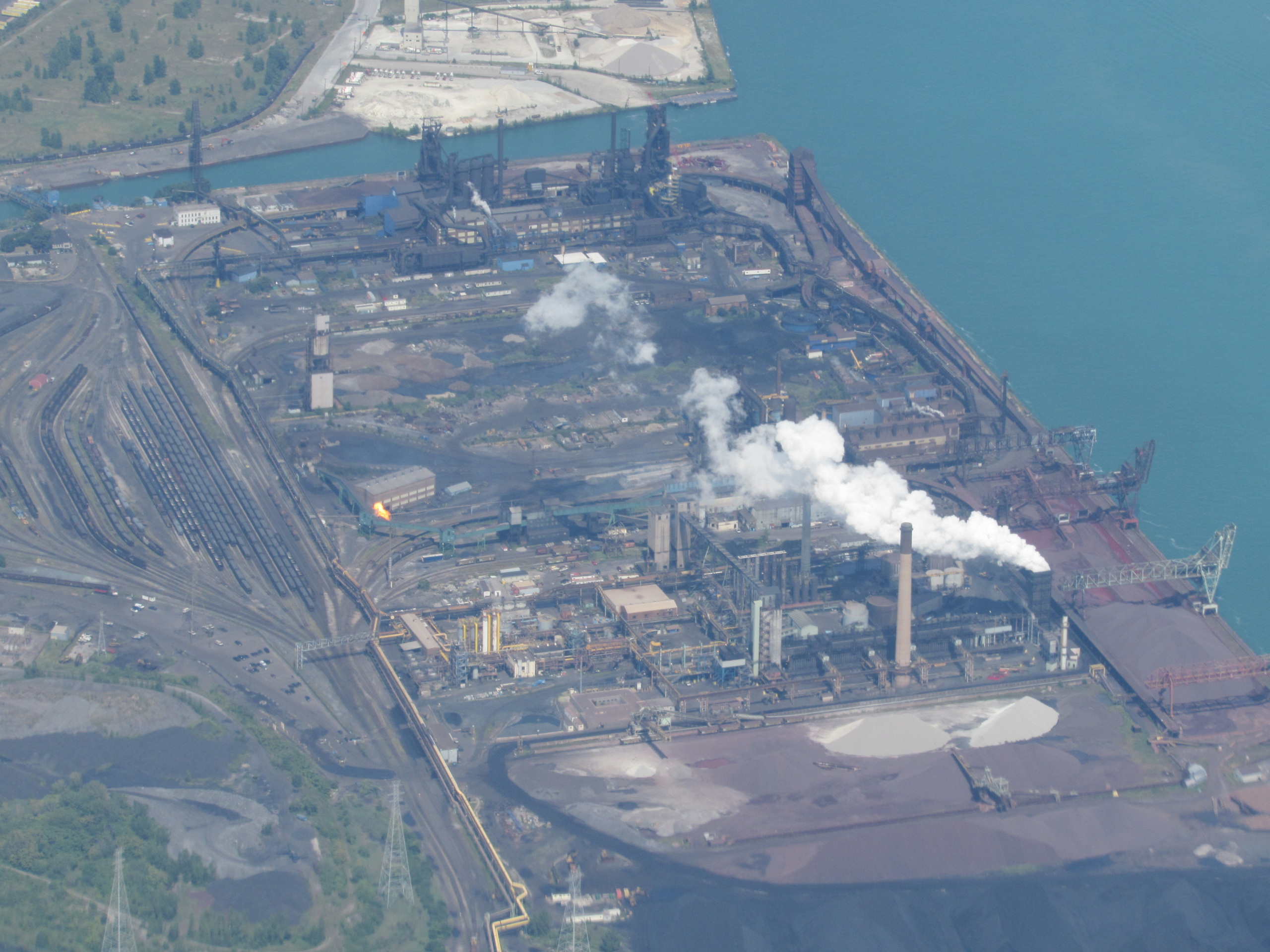
Cleveland-Cliffs Burns Harbor steel plant (pictured) has repeatedly violated U.S. environmental laws, including a 2019 Clean Water Act violation for discharging untreated cyanide and ammonia nitrogen into nearby waterways around Lake Michigan for days, killing fish; and a 2024 Clean Air Act violation for excessive particulate and hazardous air pollutants from its basic oxygen furnace shop used to create steel.
Domestically, the tradeoff is minimal. Transitioning to green steel would raise the cost of an average vehicle by just 0.66 percent, while avoiding releasing gigatons of carbon pollution into the atmosphere. In other words, no one will notice the price difference, and it’s dwarfed by the labor and other material costs. As our analysis shows, automakers, which purchase roughly 60 percent of primary U.S. steel, have enormous leverage to drive decarbonization. Yet Ford, GM, Toyota, Hyundai, Honda, and Stellantis continue to rely on highly polluting steel that undermines their own climate commitments while polluting air and water in frontline communities.

Indeed, the economic costs go far beyond lost market access. Coal-based steel pollution is estimated to cause between $6.9 and $13.2 billion in annual health damages in the United States, alongside roughly $137 million in broader economic losses each year. Without a rapid shift away from coal-based production, U.S. steelmakers risk becoming liabilities as global markets turn toward green steel.

In 2022 alone, Cleveland-Cliffs’ Dearborn Works blast furnace (pictured) emitted more than 1 million metric tons of CO₂-equivalent emissions and ranked sixth statewide in particulate matter PM2.5 emissions among major polluters. By 2023, Cleveland-Cliffs had committed 19 additional air quality violations and later entered into an agreement with the U.S. Environmental Protection Agency requiring $100 million in pollution-control upgrades.


We need U.S. industry to shake off its indolence. In other words, as much as we need to decarbonize American industry, we also need to degooberize it.

We’re not just saving the climate; we’re saving our fundamental ability to make stuff.

© 2026. The text of this article is openly licensed under Creative Commons (CC BY-ND 4.0); you are free to copy and redistribute or republish the article in its entirety with attribution and credit.

Free Training

Source link

North America Manufacturing News Digest – the industry stories you should be aware of


Welcome to our weekly roundup of North America manufacturing news, designed to inform you of all the industry stories you should know about.

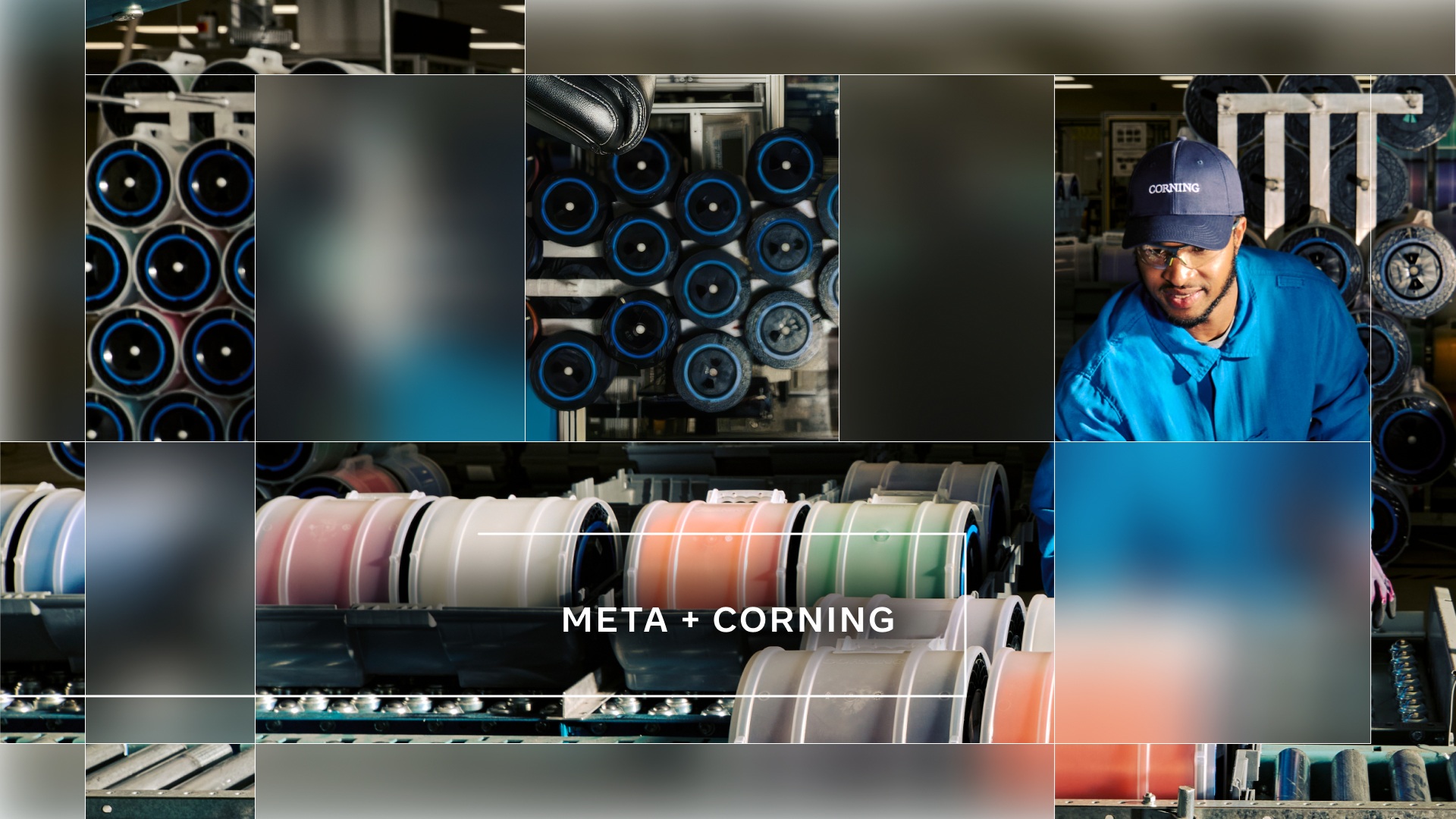
Meta signs up to $6bn fibre supply deal with Corning for US data centres

Meta has signed a multi-year agreement worth up to $6bn with Corning to supply fibre optic cables for its expanding US data centre network, in a move aimed at strengthening domestic manufacturing and supporting the company’s AI infrastructure ambitions. Read more via The Manufacturer

Volkswagen warns US Audi factory plans at risk without tariff relief

Volkswagen Group could abandon plans to build an Audi factory in the United States unless President Donald Trump lowers tariffs on the automotive industry, the company’s chief executive has indicated. Read more via The Manufacturer

CPKC extends US$800m US manufacturing investment with new locomotive orders

Canadian Pacific Kansas City (CPKC) is this year is continuing the renewal of its locomotive fleet with the world’s two leading locomotive manufacturers as part of an ongoing multi-year $800m investment in American industry. Read more via The Manufacturer

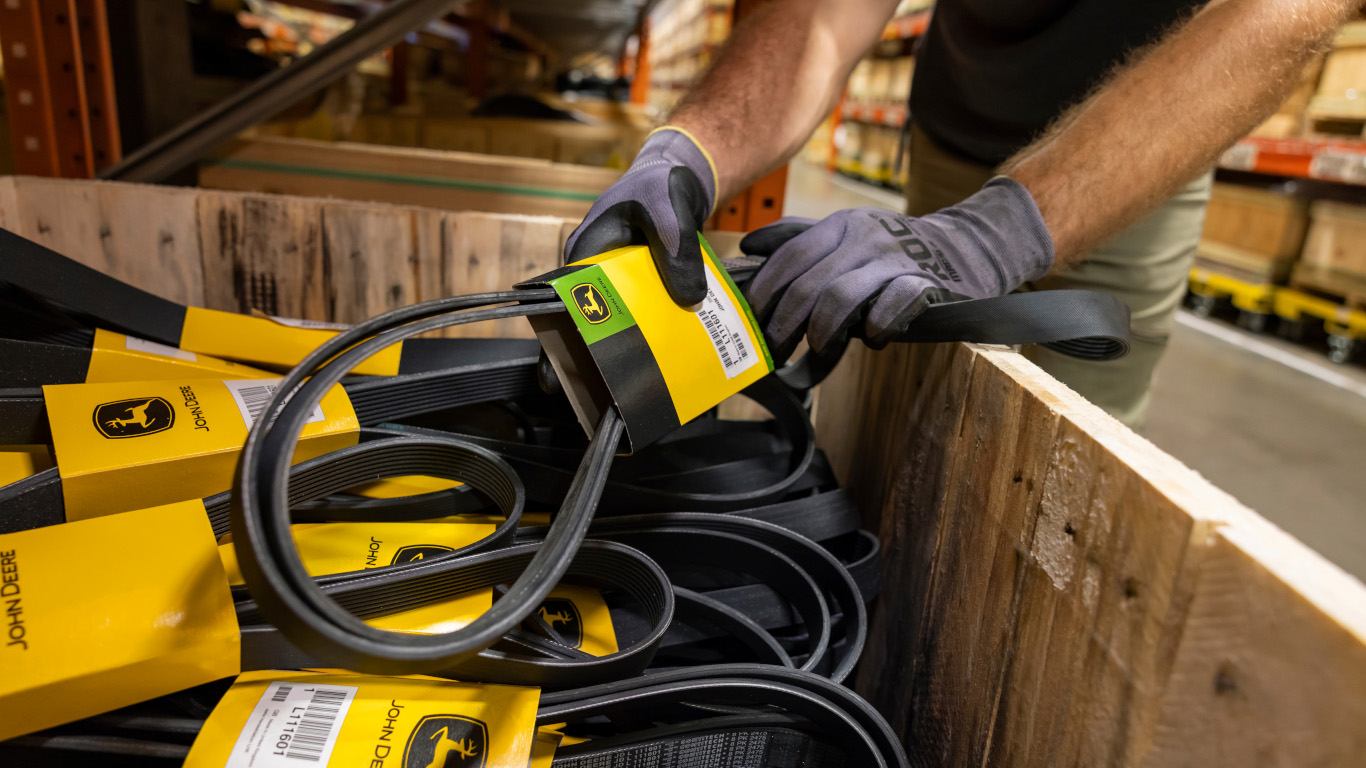
John Deere to open new US distribution and excavator manufacturing facilities

John Deere has announced plans to open two new US-based facilities, expanding its domestic manufacturing and supply chain operations as part of a broader commitment to American industry. Read more via The Manufacturer

NAM welcomes new leaders to Council of Manufacturing Associations

The National Association of Manufacturers (NAM) has announced new leadership for its Council of Manufacturing Associations following the CMA 2026 Winter Leadership Conference. Read more via The Manufacturer

Free Training

Source link

Boh Bah Inc. Bets Big on USA Manufacturing


Classified in: Science and technology, Business
Subjects: PDT, CXP

Expands USA Boba Manufacturing with New State-of-the-Art Missouri Facility

MOUNT VERNON, Mo., Jan. 29, 2026 /PRNewswire/ — ANNOUNCEMENT


Boh Bah Inc

Boh Bah Inc., the company behind the popular BobaVida? brand, is kicking off 2026 by dramatically expanding its U.S. manufacturing footprint. Starting Jan 5, 2026, the company is pleased to announce the grand opening of its new 50,000 sq ft FDA registered, production facility in Mount Vernon, Missouri. This new Class A facility, more than 5 times the size of the company’s previous location, marks a major milestone in the company’s continued investment into domestic manufacturing, brand growth and meeting rising demand.

MARKET POSITION

Since its release in 2023, BobaVida has risen quickly to become the leader in the U.S. popping boba market due to four key factors:

KEY FACTORS

  • Addressing the need for a cultural shift with this historically Asian-made product
  • Understanding the logistical advantages of manufacturing in the USA
  • Introducing high quality ingredients and American flavors
  • Developing key licensing deals with other well established flavor brands

EXECUTIVE QUOTE

“The entire market was ripe for a change,” said Scott Van Rixel, Founder and CEO. “I saw how much my daughter and her friends loved boba, but as a parent, I also recognized the need for a higher-quality USA-made version?one elevated from traditional lower-quality ingredients and with a more Americanized palate in mind.”

COMPANY STRATEGY

This strategic expansion reflects Boh Bah Inc’s long-standing conviction that manufacturing in the United States enables better quality, faster innovation, and stronger connections to the consumers it serves. At a time when much of the boba category remains dependent on overseas production, Boh Bah Inc. has doubled down on its Made-in-the-USA philosophy?an approach that has helped propel its BobaVida brand to become the number one consumer popping boba brand in the United States.

MANUFACTURING LEADERSHIP

The move leverages the experience of Managing Director, Benjamin Masters, PhD, who has led manufacturing companies in both USA and China for over 25 years.

MANAGEMENT COMMENTARY

“With tariffs and international logistics costs changing the game, the atmosphere is perfect to transition more manufacturing to the USA”
“We are excited to grow our presence in the heartland of America and look forward to continuing to add equipment and jobs to our new Missouri facility”

AVAILABILITY & CONSUMER INFORMATION

To explore the diverse range of popping boba products and discover how BobaVida is reimagining this popular beverage, consumers are invited to visit the company’s official website at  www.bobavida.com . Products are also available through major retailers and various stores nationwide.

Boh Bah Inc. is a U.S.-based food manufacturing company and the creator of the BobaVida brand, a leading consumer popping boba product line in the United States. The company focuses on quality ingredients, innovative flavor development, and domestic manufacturing to deliver premium boba experiences across beverage, dessert, and specialty food applications.

SOURCE Boba Vida

These press releases may also interest you

at 21:20

Smart Analytics Global (SAG) today released its Q4 2025 and 2025 Global Smartphone Vendor Shipment and Market Share report and ranking, showing that global smartphone shipments reached 1.26 billion units in 2025, growing 2.6% year over year….

at 21:06

Bybit, the world’s second-largest crypto exchange by trading volume, today announced its 2026 transformation into “The New Financial Platform,” a global financial ecosystem designed to expand access to modern banking, investment, and payments…

at 21:03

remedi, a fully permitted regulated medical waste processor, announced the expansion of its waste tracking and reporting capabilities to help hospital systems better measure landfill diversion, compliance outcomes, and operational performance as…

at 21:00

As artificial intelligence continues to develop rapidly, AI Computing Center (AIDC) have become the foundation of next-generation computing. At the same time, their power demand and reliability requirements are increasing sharply. As a crucial part…

at 20:30

Any Video Converter V9.1.6 has officially arrived, debuting AI Image Generator and AI Video Generator, powered by advanced multimodal models. This major release introduces a seamless creative workflow: from Text-to-Image and Image-to-Image generation…

at 19:55

Bodor Laser, a global manufacturer of laser cutting solutions, has announced the launch of its SK Series High-Speed Tube Laser Cutting Machine, alongside the introduction of its new “Extreme Speed” concept for tube processing. The concept focuses on…

News published on 29 january 2026 at 16:50 and distributed by:


Free Training

Source link

A Trade Policy to Boost U.S. Manufacturing


The new tariffs imposed last year have thrown a wrench in the gears of U.S. manufacturing (as discussed in Parts 1, 2, 3, and 4). More than half of all imported goods are raw materials, parts and components, and capital equipment used by U.S. manufacturers to produce “Made in America” goods, so it’s no surprise these new taxes have hurt U.S. manufacturers—including in the following ways:

  • Higher Costs for Business: Goldman Sachs estimates that manufacturers and other businesses were “eating” 64% of tariff costs in June, but the share being passed on to consumers has now risen to more than 50%. In any event, these new costs mean reduced resources for manufacturers to raise wages or invest in new equipment and R&D.
  • Reduced Competitiveness for Exporters: The burden of tariffs means that U.S. manufacturers—whose exports topped $1.6 trillion last year—will find their higher cost structure makes it harder for their products to compete in foreign markets.
  • Negative Productivity Shock: Minneapolis Fed economists write that tariffs and trade wars act like an interest rate hike, lowering demand for capital investment. This bodes ill because, in the long term, productivity is the key to industrial competitiveness.
  • Small Businesses Suffer: In an October Wall Street Journal/Vistage survey, 51% of small businesses (including many manufacturers) reported that tariffs are decreasing their profitability while just 5% say tariffs benefit them.

It’s plain that tariffs have not been helping most U.S. manufacturers, and 2025 saw declining manufacturing construction, which bodes ill for near-term expansion of the sector. The administration’s laudable pro-manufacturing tax and regulatory reforms will be undermined by ongoing tariffs that make inputs more expensive, exports less competitive, and productivity more elusive.

To correct course, the Chamber has urged the administration to grant exclusions for small businesses, for products not readily available from domestic sources, and in instances where tariffs threaten American jobs. Additional common-sense steps the administration could pursue include:

  • Restore the country exceptions and tariff-rate quotas for imports of steel and aluminum such as those established for Canada and Mexico in 2019;

  • Restore the product exemptions for steel and aluminum established in the Trump administration’s first term—and create an improved process for firms to seek new ones;

  • End the flawed “inclusion” process, where new products become subject to high tariffs with little visibility or effort to assess the potential harm to U.S. industry or consumers;

  • Terminate the novel tariffs imposed on Canada, Mexico, and other U.S. free-trade agreement partners;
  • Pursue new market-opening trade agreements—on the basis of zero-for-zero tariff reciprocity—so that U.S. manufacturers can sell their products more readily around the globe.

The U.S. Chamber of Commerce has long fought to make the United States the best place in the world to invest, build, hire, innovate, grow, and manufacture. The right trade policies will help American manufacturers and make the United States more prosperous—let’s get to work.

DIG DEEPER: More on tariffs

PART 1: How Tariffs Risk Hollowing Out American Manufacturing

PART 2: How Tariffs Risk Hollowing Out American Manufacturing

PART 3: How Tariffs Risk Hollowing Out American Manufacturing

PART 4: How Tariffs Risk Hollowing Out American Manufacturing

About the author

John G. Murphy

John G. Murphy

John Murphy directs the U.S. Chamber’s advocacy relating to international trade and investment policy and regularly represents the Chamber before Congress, the administration, foreign governments, and the World Trade Organization.

Read more

Free Training

Source link

John Deere to open new US distribution and excavator manufacturing facilities


John Deere has announced plans to open two new US-based facilities, expanding its domestic manufacturing and supply chain operations as part of a broader commitment to American industry.

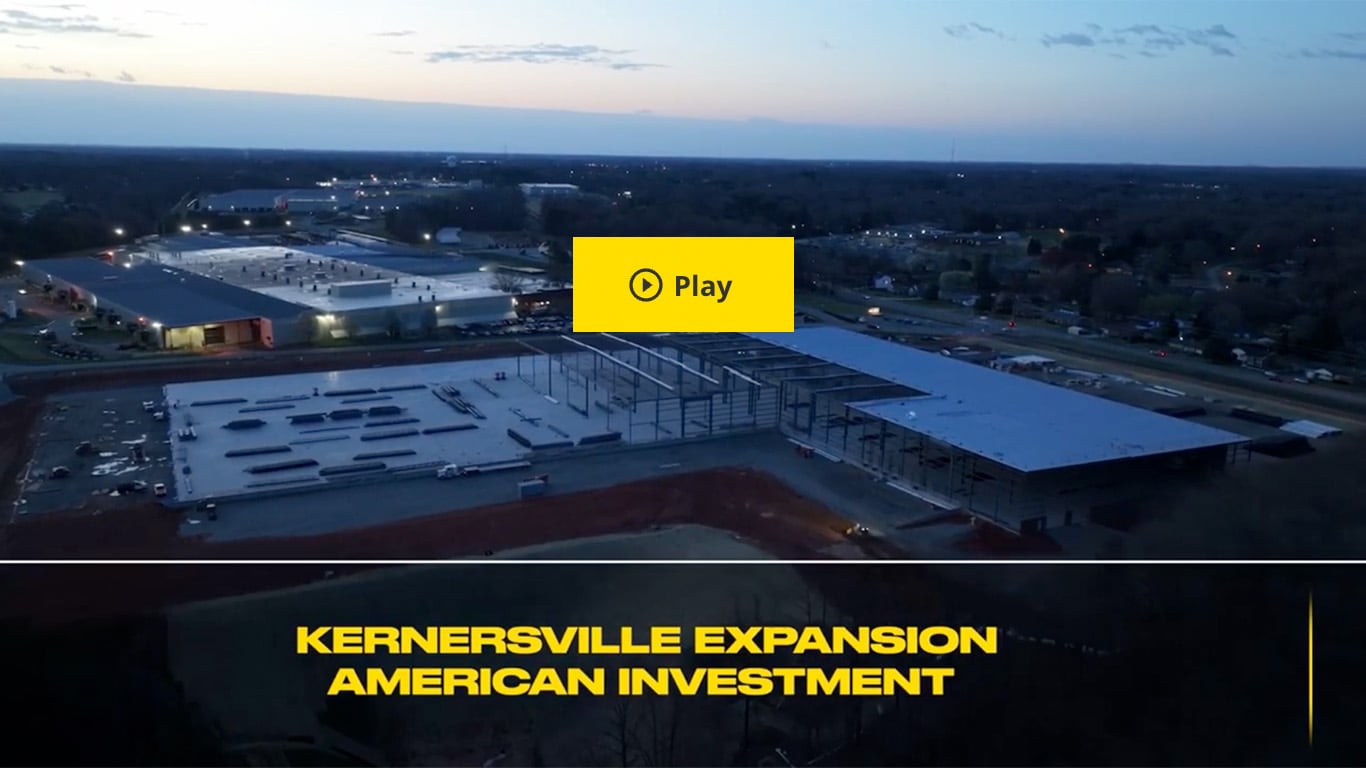
The company will build a new distribution centre near Hebron, Indiana, and a $70m excavator manufacturing facility in Kernersville, North Carolina, with both sites expected to open within the next year. Together, the projects are set to create more than 300 jobs.

The Indiana distribution centre will support parts and equipment delivery across John Deere’s US operations and is expected to employ around 150 people. The company said the site was selected for its central location and access to a skilled workforce, complementing its long-established North American Parts Distribution Center in Milan, Illinois, which employs approximately 1,200 people.

In North Carolina, John Deere will open a new excavator factory at its Kernersville campus, bringing production previously based in Japan to the US. The facility will produce what the company says will be the only excavator designed, developed, and manufactured entirely in the United States, employing more than 150 people.

John May, chairman and chief executive officer of John Deere, said the investments reflect the company’s long-term confidence in US manufacturing and form part of a wider $20bn commitment to domestic manufacturing investment over the next decade.

The expansions are intended to strengthen John Deere’s manufacturing capabilities, improve customer support, and support growing demand across its construction, agriculture, forestry, and mining markets.

Free Training

Source link

John Deere Announces Major Expansion With Two New United States Facilities : CEG


In keeping with its tradition of building America, John Deere announced plans to open two new U.S.-based facilities: a distribution center near Hebron, Ind., and an excavator factory in Kernersville, N.C., both set to open in the next year.

“Our investment in these new facilities underscores John Deere’s dedication to strengthening the backbone of American industry and supporting local economies,” said John May, chairman and chief executive officer of John Deere. “We believe in building America, and these projects represent our intent to continue driving innovation and job creation in the United States.”

New Distribution Center in Ind.

John Deere recently broke ground on a new distribution center near Hebron, Ind., located to enhance its supply chain capabilities nationwide, according to the company. This facility will be designed to streamline operations and ensure timely delivery of equipment and parts. The Indiana project is anticipated to generate employment opportunities with approximately 150 jobs, contributing to the state’s economic growth.

“This new facility is an investment in customer expectations around world class product support through parts availability for our US based ag, turf, construction, forestry, mining and turf customers,” said Denver Caldwell, vice president of aftermarket and customer support. “Indiana’s strong workforce and central location make it an ideal choice for expansion.”

John Deere will continue to maintain its primary North American parts distribution center in Milan, Ill., which has been in operation since 1973 and employs approximately 1,200 people.

Kernersville, N.C. Excavator Factory

The new $70 million factory in Kernersville, N.C., will bolster John Deere’s manufacturing capabilities, leveraging new technology to produce excavators for the construction market. The North Carolina factory will assume production of future generation excavators previously produced in Japan.

This facility will employ more than 150 people and will help meet equipment demand and strengthen the company’s commitment to manufacturing within the United States.

“We are excited to bring this new facility to our Kernersville campus and to be part of the region’s thriving manufacturing community,” said Ryan Campbell, president of worldwide construction, forestry and power systems. “Our focus will be on delivering excellence, creating jobs and advancing the legacy of John Deere in American manufacturing.”

Building America

With the opening of these two facilities, John Deere will create hundreds of new jobs in the United States, further supporting local communities and advancing our mission to build a stronger America.

“These investments further demonstrate our commitment to invest $20 billion in U.S. manufacturing over the next 10 years,” May said. “It is a testament to our confidence in the future of U.S. manufacturing and our unwavering commitment to innovation, quality and economic growth.”

For more information, visit deere.com/en/.

Free Training

Source link

Cramer’s PROVE IT Act Focuses On American Manufacturing Emissions


The Senate passed three appropriations bills Jan. 15, and President Trump later signed them into law, including a provision with potential consequences for U.S. manufacturers.

The bills direct the Department of Energy, in consultation with the National Energy Technology Laboratory, to conduct a comprehensive study comparing the emissions intensity of certain goods produced in the United States with those same products made overseas, an effort aimed at documenting America’s environmental performance in global trade.

The directive builds on bipartisan legislation introduced last Congress by U.S. Sens. Kevin Cramer, R-N.D., and Chris Coons, D-Del. Their proposal, the Providing Reliable Objective Verifiable Emissions Intensity and Transparency (PROVE IT) Act, passed the Senate Environment and Public Works Committee in January 2024.

Cramer has described the bill as “low-hanging fruit” for promoting American manufacturing standards and countering foreign trade policies.

“We’ve known for a long time that manufacturers here in the United States make some of the cleanest products in the world,” Cramer said. “We can actually prove it, and we should. We should use that excellence as an advantage to ensure that our producers aren’t discriminated against by our trade partners or worse, undercut by polluting countries like China.”

The study will cover products affected by the European Union’s Carbon Border Adjustment Mechanism, which took effect Jan. 1.

The policy places tariffs on imports such as steel, cement, aluminum, fertilizers and electricity if they are deemed more carbon-intensive than European products, with possible expansion to additional manufactured goods.

Super Talk 1270 logo

Cramer said the report will help establish emissions transparency as a core component of U.S. trade policy. “It’s really an America First approach,” he said, adding that he looks forward to working with the administration “to make it a tradition, and make it a part of our trade policy going forward.”

Free Training

Source link

John Deere Announces Major Expansion with Two New U.S. Facilities Coming


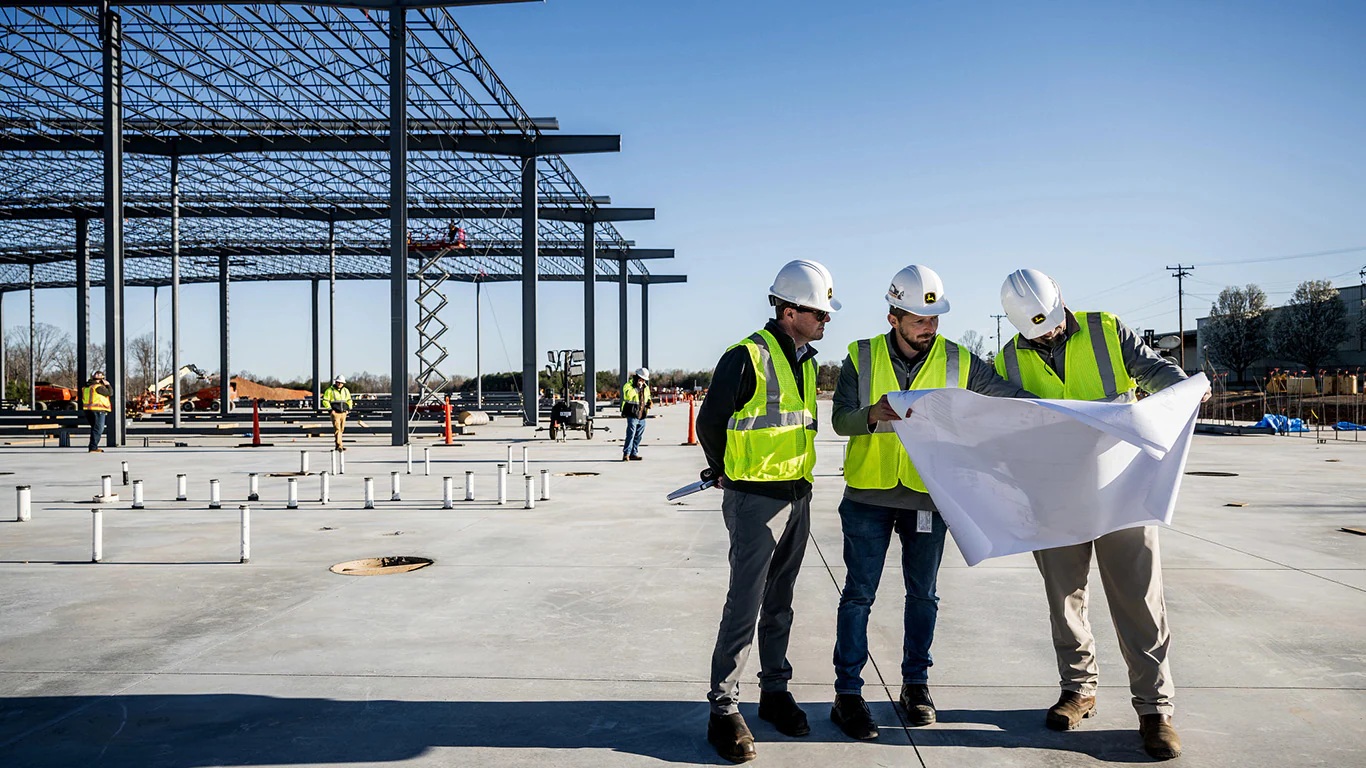
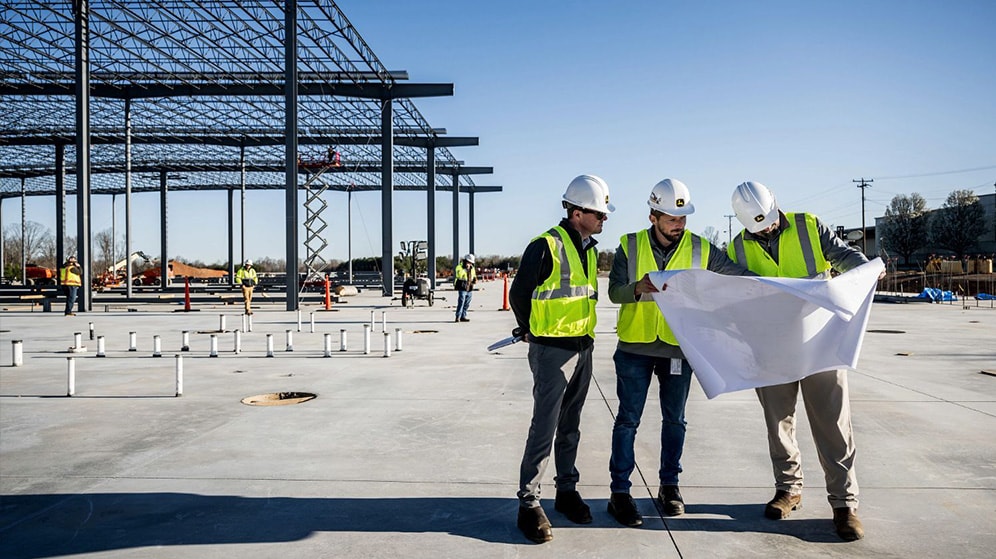
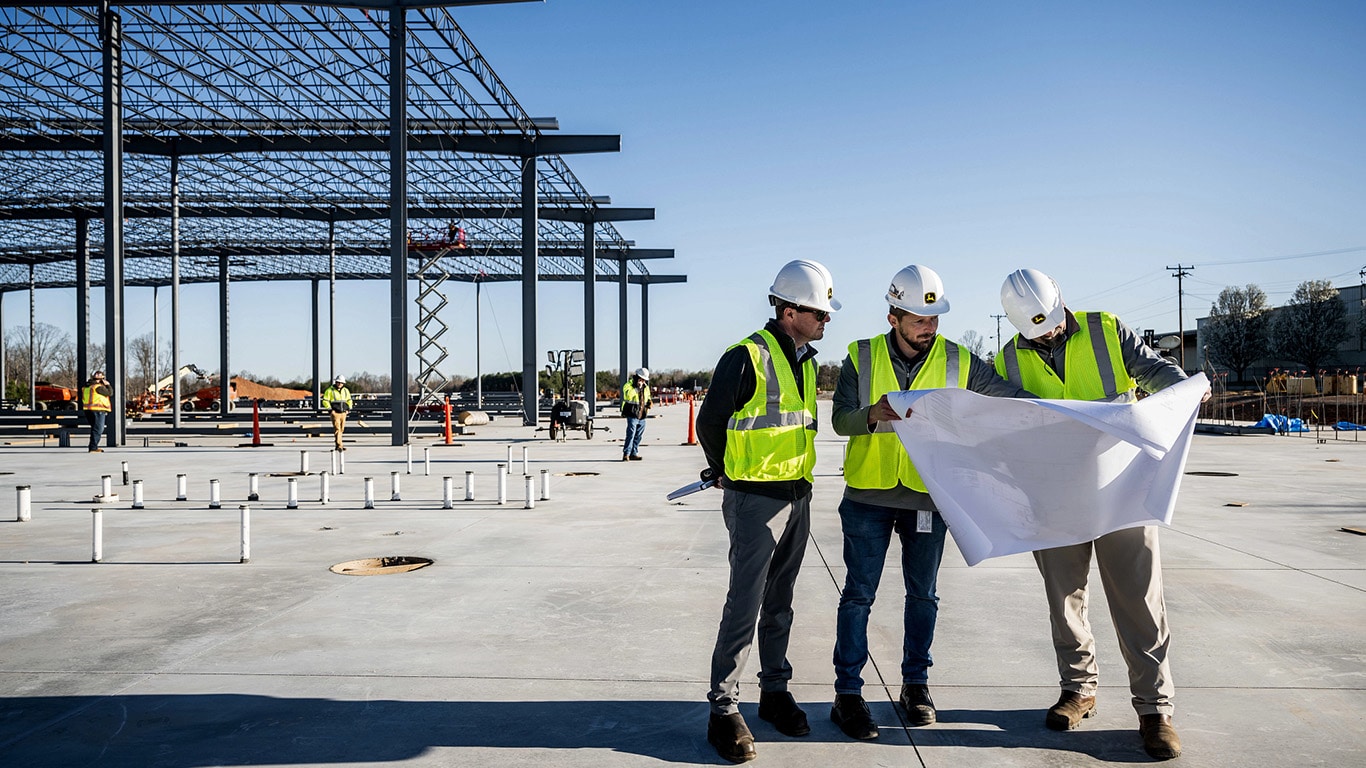
Construction teams look at blueprints for the expanded Kernersville, North Carolina excavator factory

Expansion builds on Deere’s and President Trump’s Commitment to U.S. Manufacturing

What it means:

  • NEW American Jobs
  • The Kernersville Campus moved Manufacturing / Production from Overseas (Japan) to America
  • The Kernersville campus will produce the ONLY excavator designed, developed, and manufactured in the U.S.

In keeping with our strong tradition of building America, we are excited to announce plans to open two new U.S.-based facilities: a state-of-the-art distribution center near Hebron, Indiana, and a cutting-edge excavator factory in Kernersville, North Carolina, both set to open in the next year.

“Our investment in these new facilities underscores John Deere’s dedication to strengthening the backbone of American industry and supporting local economies,” said John May, chairman and chief executive officer of John Deere. “We believe in building America, and these projects represent our intent to continue driving innovation and job creation in the United States.“

Expanding in Indiana: New Distribution Center

John Deere recently broke ground on a new distribution center near Hebron, Indiana, strategically located to enhance our supply chain capabilities nationwide. This facility will be designed to streamline operations and ensure timely delivery of equipment and parts. The Indiana project is anticipated to generate significant employment opportunities with approximately 150 jobs, contributing to the state’s economic growth.

“This new facility is an investment in customer expectations around world class product support through parts availability for our US based ag, turf, construction, forestry, mining and turf customers,” said Denver Caldwell, vice president, Aftermarket and Customer Support. “Indiana’s strong workforce and central location make it an ideal choice for expansion.”

John Deere will continue to maintain its primary North American Parts Distribution Center in Milan, Illinois, which has been in operation since 1973 and employs about 1,200 people.

Kernersville, North Carolina: New Excavator Factory

The new $70M factory in Kernersville, North Carolina, will bolster John Deere’s manufacturing capabilities, leveraging advanced technologies to produce industry leading excavators for the construction market. The North Carolina factory will assume production of future generation excavators previously produced in Japan.

This facility will employ over 150 people and will help meet equipment demand and strengthen our commitment to U.S. manufacturing innovation.

“We are excited to bring this new facility to our Kernersville campus and to be part of the region’s thriving manufacturing community,“ said Ryan Campbell, president Worldwide Construction and Forestry and Power Systems. “Our focus will be on delivering excellence, creating jobs, and advancing the legacy of John Deere in American manufacturing.”

Building America: Impact and Commitment

With the opening of these two facilities, John Deere will create hundreds of new U.S. jobs, further supporting local communities and advancing our mission to build a stronger America.

“These investments further demonstrate our commitment to invest $20B in U.S. manufacturing over the next 10 years,” May said. “It is a testament to our confidence in the future of U.S. manufacturing and our unwavering commitment to innovation, quality, and economic growth.”

About Deere & Company

It doesn’t matter if you’ve never driven a tractor, mowed a lawn, or operated a dozer. With John Deere’s role in helping produce food, fiber, fuel, and infrastructure, we work for every single person on the planet. It all started nearly 200 years ago with a steel plow. Today, John Deere drives innovation in agriculture, construction, forestry, turf, power systems, and more.

For more information on Deere & Company, visit us at www.deere.com/en/news/.

Media contact:

Jen Hartmann

publicrelations@johndeere.com

Free Training

Source link