
AHF Products to highlight U.S. Manufacturing at TISE 2026


Las Vegas—AHF Products will return to TISE 2026 with a redesigned booth that highlights its U.S. manufacturing platform, flooring brands and product innovation aimed at supporting retailers and distributors.

The exhibit will feature brand-specific zones for Bruce, Hartco, Robbins, Crossville and Armstrong Flooring, with each space tailored to its core audience and product focus.

Bruce will spotlight hands-on demonstrations and interactive displays for installers and younger professionals. Hartco will feature a gallery-style presentation aimed at distributors. Robbins will emphasize craftsmanship and lifestyle storytelling through retail displays. Crossville will present an upscale, bar-inspired setting with premium finishes. Armstrong Flooring will offer a store-within-a-store concept designed to encourage engagement and social sharing.

The booth layout will guide visitors through hardwood, tile, resilient sheet, LVT and rigid core categories. AHF Products said the space supports hands-on exploration and discussion through real product installations, a central bar and meeting area and a private conference room.

“Surfaces gives us the opportunity to connect directly with our customers and show how we are investing in the future of flooring,” said Brent Emore, CEO of AHF Products. “From domestic manufacturing and faster lead times to innovation across multiple categories, our focus remains on supporting growth for our retail and distribution partners.”

U.S. manufacturing focus

AHF Products will emphasize its U.S. manufacturing footprint, which includes two wood plants, four resilient facilities, two porcelain plants and two sawmills across the United States. The company also operates a wholly owned engineered wood plant in Cambodia.

A key highlight is AHF’s rigid core manufacturing facility in Cartersville, Ga., which brings SPC production under company control.

“Our Cartersville facility allows us to deliver rigid core flooring in as little as 40 to 45 days,” said Jennifer Zimmerman, chief commercial officer. “That speed reduces inventory risk while helping customers avoid port delays, tariffs and freight volatility. We will display 60 new SKUs from this plant at Surfaces.”

The facility can produce more than 200 million square feet of HDPC capacity annually. It will support Armstrong Flooring–branded and private-label programs.

The rigid core products feature AHF’s HDPC technology, offering waterproof performance, enhanced dent and impact resistance, dimensional stability, embossed-in-register visuals and flexible installation options.

Product highlights

AHF Products will also showcase select wood and tile introductions aligned with current design and installation trends.

Bruce Natural Choice 5/16-inch solid hardwood offers a low-profile, glue-down option designed for remodels and concrete subfloors. The product is made in the USA.

“Natural Choice makes solid hardwood more accessible,” said Milton Goodwin, vice president of product management, wood. “It delivers authentic visuals with a faster and more flexible installation method.”

Robbins Coastside engineered hardwood will feature wide-plank European white oak visuals inspired by the California coast. The product offers installation flexibility and refinishable performance.

Crossville will highlight U.S.-made porcelain tile collections, including Cleve, a quartzite-inspired tile designed for residential and commercial use. The collection features layered veining, high variation and Crossville’s FeatherSoft finish.

Portland Cliff porcelain tile will also be featured. Inspired by historic Portland stone, the product offers Visual Touch Technology, neutral color options and carbon-neutral production with recycled content.

AHF Products said its Surfaces presence reinforces its commitment to domestic production, private-label capabilities and long-term partnership support.


Free Training

Source link

US sets Additive Manufacturing security and sourcing rules for DoD


The National Defense Authorization Act establishes statutory requirements around security, software control, data sovereignty, qualification and scale in relation to the use of Additive Manufacturing by the US Department of Defense (Courtesy US House of Representatives) The National Defense Authorization Act establishes statutory requirements around security, software control, data sovereignty, qualification and scale in relation to the use of Additive Manufacturing by the US Department of Defense (Courtesy US House of Representatives)

On December 18, 2025, the National Defense Authorization Act (NDAA) was signed into law in the United States. The act establishes clear statutory requirements around security, software control, data sovereignty, qualification and scale in relation to the use of Additive Manufacturing by the US Department of Defense (DoD).

TRUSTED BY THE BIGGEST NAMES IN AM
Discover how we help leading brands shape the industry conversation

Foremost, the NDAA prohibits the operation or procurement of Additive Manufacturing machines that are manufactured in, networked through, or integrated with software originating from China, Russia, Iran or North Korea without a national-interest waiver.

In order to further accelerate the adoption of Additive Manufacturing across the DoD, the NDAA aims to:

  • Direct qualification and approval of up to one million additively manufactured parts
  • Shift toward performance-based qualification and shared validation data across military branches
  • Establish dual-use advanced manufacturing hubs with secure infrastructure and digital data repositories
  • Prioritising on-demand additively manufactured parts to improve readiness and reduce sustainment delays, including for Navy surface ship maintenance

The complete bill is available here; the sections relevant to Additive Manufacturing are 220 (A and B), 322 and 880.

congress.gov


Free Training

Source link

US factory sector contracts for 10th straight month in December


By Dan Burns and Lucia Mutikani

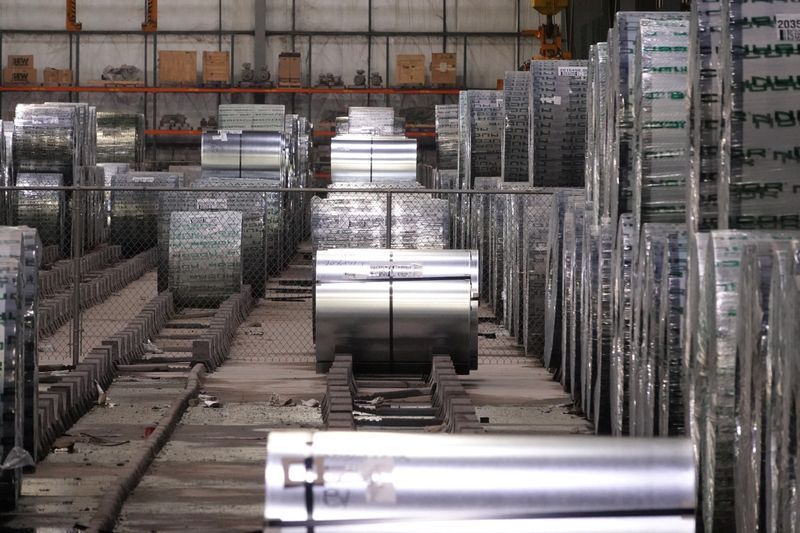
WASHINGTON, Jan 5 (Reuters) – U.S. manufacturing activity slumped to a 14-month low in December, with new orders contracting further and input costs grinding higher as the sector continued to bear the imprint of President Donald Trump’s import tariffs.

The Institute for Supply Management survey on Monday suggested a recovery was unlikely in the near-term, but ​economists were hopeful of a turnaround this year as Trump’s tax cuts took effect.

Comments from survey respondents continued to single out tariffs as a problem, with some manufacturers of chemical products saying ‌they hoped “for some return to free trade, which is what consumers have ‘voted for’ with their spending.”

Trump has said the tariffs are bringing in hundreds of billions of dollars in new revenue to the U.S. Treasury and that they are improving U.S. economic security.

But ‌beyond the sectors lifted by an Artificial Intelligence investment boom, Trump’s sweeping import duties have undercut manufacturing, even as he touts them as necessary to shore up a long-declining domestic factory base.

Economists have argued it is impossible to restore the industry to its former glory because of structural issues, including worker shortages.

“While a less fluid trade environment and somewhat more favorable business tax environment are positives for activity, we remain cautious on the extent of recovery in traditional cap-ex categories this year,” said Shannon Grein, an economist at Wells Fargo.

The ISM said its manufacturing PMI dropped to 47.9 in the final month of 2025, the lowest level since October 2024, from 48.2 in November. ⁠A reading below 50 indicates contraction in manufacturing, which accounts for 10.1% of ‌the economy.

It was the 10th straight month that the PMI remained below the 50 threshold. Economists polled by Reuters had forecast the PMI would be little changed at 48.4. The PMI remained above 42.3, a level that ISM said over time was consistent with an expansion of the overall economy.

Last month’s drop reflected pullbacks in ‍the production and inventories sub-indexes after they improved in November.

“Their contraction this month continues the short-term ‘bubble’ of improvement indicative in the last several months of PMI data, and a hallmark of recent economic uncertainty in manufacturing,” said ISM Manufacturing Business Survey Committee chair Susan Spence.

Last month, 85% of the manufacturing economy’s gross domestic product contracted, a surge from 58% in November, and the percentage of manufacturing GDP in strong contraction increased to 43% from 39% in November, Spence said.

Story Continues

COMMENTS FROM RESPONDENTS ​ARE DOWNBEAT

Electrical equipment, appliances and components as well as computer and electronic products were the only two industries reporting growth. The remaining 15 industries, including chemical products, miscellaneous manufacturing, machinery and transportation equipment, reported a ‌contraction.

Some makers of fabricated metal products reported that “order levels have continued to decline.” They noted that December was “dismal,” adding “January and February don’t look too good, as bookings are down 25 percent compared to the first two months of 2025.”

Computer and electronic products manufacturers said “margins have deteriorated, as full pass- through of cost increases is not possible.” Transportation equipment makers said that while many customers were ordering for 2026, “those orders are 20 percent to 30 percent below their historical buying patterns,” adding “the general mood of the industry is that the first half of 2026 will be another bust.”

Some electrical equipment, appliances and components manufacturers said “things look a bit bleak overall.” Some makers of miscellaneous products reported that “2025 revenue was down 17 percent due to tariffs.”

The U.S. Supreme Court is set to rule on the legality of the premise Trump has employed for his tariffs sometime ⁠in early 2026. Yale Budget Lab estimated that Trump’s protectionist trade policy raised the average tariff on imported goods to ​nearly 17% from less than 3% last January.

The ISM survey’s forward-looking new orders sub-index was little changed at 47.7 in December ​from November’s 47.4, marking a fourth straight month of falling demand. This measure has contracted in 10 of the last 11 months with demand curbed by the rise in some goods prices because of the tariffs.

Its measure of manufacturing inventories dropped 3.7 percentage points to 45.2 last month. The production index eased to 51 from 51.4 in November.

Factory ‍input costs, which have contributed to the persistence of ⁠inflation that continues to run above the Federal Reserve’s 2% target, remain elevated. ISM’s prices paid index was unchanged at 58.5, higher than forecasts for 57.0.

Amid the soft demand environment, factory employment declined for an 11th straight month, the sector’s longest hiring slump by ISM’s measure in about five years.

The ISM noted that for every comment on hiring, there were three on reducing head counts, ⁠adding that companies continued to focus on accelerating staff reductions due to uncertain near- to mid-term demand.

“A number of tariff deals have been struck and many exemptions have been granted over the past two months, and I would expect more of that in ‌the new year,” said Stephen Stanley, chief U.S. economist at Santander U.S. Capital Markets.

“It remains to be seen whether that will be enough to pull the factory sector out of ‌its current malaise,” he added.

(Reporting By Dan Burns and Lucia Mutikani; Editing by Chizu Nomiyama and Alexander Smith)

Free Training

Source link