

Trump Administration Slaps 25% Tariffs on High-End NVIDIA and AMD AI Chips to Force US Manufacturing


In a move that marks the most aggressive shift in global technology trade policy in decades, President Trump signed a national security proclamation yesterday, January 14, 2026, imposing a 25% tariff on the world’s most advanced artificial intelligence semiconductors. The order specifically targets NVIDIA (NASDAQ: NVDA) and AMD (NASDAQ: AMD), hitting their flagship H200 and Instinct MI325X chips. This “Silicon Surcharge” is designed to act as a financial hammer, forcing these semiconductor giants to move their highly sensitive advanced packaging and fabrication processes from Taiwan to the United States.

The immediate significance of this order cannot be overstated. By targeting the H200 and MI325X—the literal engines of the generative AI revolution—the administration is signaling that “AI Sovereignty” now takes precedence over corporate margins. While the administration has framed the move as a necessary step to mitigate the national security risks of offshore fabrication, the tech industry is bracing for a massive recalibration of supply chains. Analysts suggest that the tariffs could add as much as $12,000 to the cost of a single high-end AI GPU, fundamentally altering the economics of data center builds and AI model training overnight.

The Technical Battleground: H200, MI325X, and the Packaging Bottleneck

The specific targeting of NVIDIA’s H200 and AMD’s MI325X is a calculated strike at the “gold standard” of AI hardware. The NVIDIA H200, built on the Hopper architecture, features 141GB of HBM3e memory and is the primary workhorse for large language model (LLM) inference. Its rival, the AMD Instinct MI325X, boasts an even larger 256GB of usable HBM3e memory, making it a critical asset for researchers handling massive datasets. Until now, both chips have relied almost exclusively on Taiwan Semiconductor Manufacturing Company (NYSE: TSM) for fabrication using 4nm and 5nm process nodes, and perhaps more importantly, for “CoWoS” (Chip-on-Wafer-on-Substrate) advanced packaging.

This order differs from previous trade restrictions by moving away from the “blanket bans” of the early 2020s toward a “revenue-capture” model. By allowing the sale of these chips but taxing them at 25%, the administration is effectively creating a state-sanctioned toll road for advanced silicon. Initial reactions from the AI research community have been a mixture of shock and pragmatism. While some researchers at labs like OpenAI and Anthropic worry about the rising cost of compute, others acknowledge that the policy provides a clearer, albeit more expensive, path to acquiring hardware that was previously caught in a web of export-control uncertainty.

Winners, Losers, and the “China Pivot”

The implications for industry titans are profound. NVIDIA (NASDAQ: NVDA) and AMD (NASDAQ: AMD) now face a complex choice: pass the 25% tariff costs onto customers or accelerate their multi-billion dollar transitions to domestic facilities. Intel (NASDAQ: INTC) stands to benefit significantly from this shift; as the primary domestic alternative with established fabrication and growing packaging capabilities in Ohio and Arizona, Intel may see a surge in interest for its Gaudi-line of accelerators if it can close the performance gap with NVIDIA.

For cloud giants like Amazon (NASDAQ: AMZN), Google (NASDAQ: GOOGL), and Microsoft (NASDAQ: MSFT), the tariffs represent a massive increase in capital expenditure for their international data centers. However, a crucial “Domestic Exemption” in the order ensures that chips imported specifically for use in U.S.-based data centers may be eligible for rebates, further incentivizing the concentration of AI power within American borders. Perhaps the most controversial aspect of the order is the “China Pivot”—a policy reversal that allows NVIDIA and AMD to sell H200-class chips to Chinese firms, provided the 25% tariff is paid directly to the U.S. Treasury and domestic U.S. demand is fully satisfied first.

A New Era of Geopolitical AI Fragmentation

This development fits into a broader trend of “technological decoupling” and the rise of a two-tier global AI market. By leveraging tariffs, the U.S. is effectively subsidizing its own domestic manufacturing through the fees collected from international sales. This marks a departure from the “CHIPS Act” era of direct subsidies, moving instead toward a more protectionist stance where access to the American AI ecosystem is the ultimate leverage. The 25% tariff essentially creates a “Trusted Tier” of hardware for the U.S. and its allies, and a “Taxed Tier” for the rest of the world.

Comparisons are already being drawn to the 1980s semiconductor wars with Japan, but the stakes today are vastly higher. Critics argue that these tariffs could slow the global pace of AI innovation by making the necessary hardware prohibitively expensive for startups in Europe and the Global South. Furthermore, there are concerns that this move could provoke retaliatory measures from China, such as restricting the export of rare earth elements or the HBM (High Bandwidth Memory) components produced by firms like SK Hynix that are essential for these very chips.

The Road to Reshoring: What Comes Next?

In the near term, the industry is looking toward the completion of advanced packaging facilities on U.S. soil. Amkor Technology (NASDAQ: AMKR) and TSMC (NYSE: TSM) are both racing to finish high-end packaging plants in Arizona by late 2026. Once these facilities are operational, NVIDIA and AMD will likely be able to bypass the 25% tariff by certifying their chips as “U.S. Manufactured,” a transition the administration hopes will create thousands of high-tech jobs and secure the AI supply chain against a potential conflict in the Taiwan Strait.

Experts predict that we will see a surge in “AI hardware arbitrage,” where secondary markets attempt to shuffle chips between jurisdictions to avoid the Silicon Surcharge. In response, the U.S. Department of Commerce is expected to roll out a “Silicon Passport” system—a blockchain-based tracking mechanism to ensure every H200 and MI325X chip can be traced from the fab to the server rack. The next six months will be a period of intense lobbying and strategic realignment as tech companies seek to define what exactly constitutes “U.S. Manufacturing” under the new rules.

Summary and Final Assessment

The Trump Administration’s 25% tariff on NVIDIA and AMD chips represents a watershed moment in the history of the digital age. By weaponizing the supply chain of the most advanced silicon on earth, the U.S. is attempting to forcefully repatriate an industry that has been offshore for decades. The key takeaways are clear: the cost of global AI compute is going up, the “China Ban” is being replaced by a “China Tax,” and the pressure on semiconductor companies to build domestic capacity has reached a fever pitch.

In the long term, this move may be remembered as the birth of true “Sovereign AI,” where a nation’s power is measured not just by its algorithms, but by the physical silicon it can forge within its own borders. Watch for the upcoming quarterly earnings calls from NVIDIA and AMD in the weeks ahead; their guidance on “tariff-adjusted pricing” will provide the first real data on how the market intends to absorb this seismic policy shift.

This content is intended for informational purposes only and represents analysis of current AI developments.

TokenRing AI delivers enterprise-grade solutions for multi-agent AI workflow orchestration, AI-powered development tools, and seamless remote collaboration platforms.
For more information, visit https://www.tokenring.ai/.


Free Training

Source link

BD announces $110m U.S. manufacturing investment


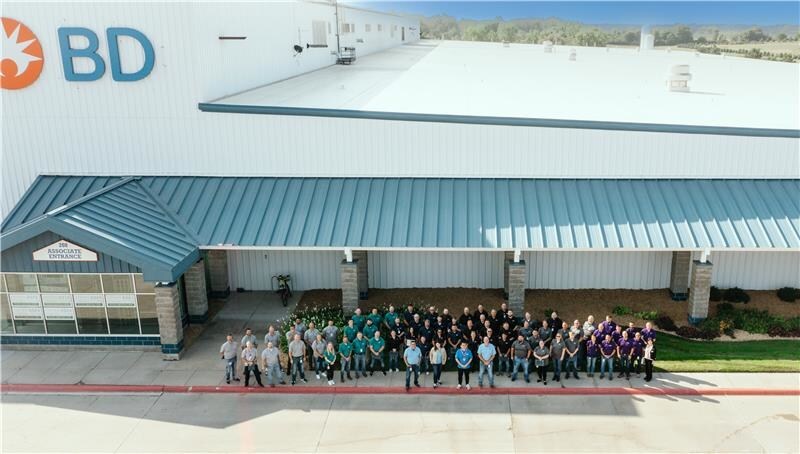
BD (Becton, Dickinson and Company), a leading global medical technology company, has announced a $110m investment to expand its production of prefillable syringes, helping accelerate biologic and GLP-1 drug delivery and supporting pharmaceutical reshoring in the U.S.

This investment will bring BD Neopak™ Glass Prefillable Syringe production to Columbus, Nebraska, creating approximately 120 new jobs and reinforcing the company’s supply resilience within its Pharmaceutical Systems portfolio.

“This is good news for Nebraska,” said Sen. Ricketts. “It has the potential to bring over 100 new jobs to our state. This investment further underscores BD’s ongoing commitment to keep critical manufacturing in states like Nebraska. I appreciate BD’s long-standing partnership with the Cornhusker State.”

The BD Neopak™ Glass Prefillable Syringe platform is purpose-built to meet the complex and evolving needs of biologics and combination products development. Available in 1 mL and 2.25 mL formats, the BD Neopak™ Glass Prefillable Syringe supports a wide range of formulation requirements, including high viscosity, drug-container compatibility, and integration with delivery devices. It is designed for seamless integration with autoinjectors, enabling flexible, patient-centric drug delivery in both clinical and at-home settings.

“As demand for biologics and GLP-1s accelerates, BD is strengthening its American manufacturing footprint to support U.S.-based drug delivery innovation and supply chain resiliency,” said Patrick Jeukenne, worldwide president of BD Pharmaceutical Systems. “This investment in Nebraska, advances our long-term growth strategy and reflects our commitment to partnering with biopharmaceutical innovators as they bring advanced therapies to patients who require next-generation drug delivery solutions.”

Strategic Investments in Columbus, Nebraska

BD is investing $100m to establish BD Neopak™ Glass Prefillable Syringe production at its Columbus site, with supply expected to begin in mid-2026. This investment will also support additional line upgrades and capacity improvements across the site, ensuring BD can meet growing global demand for advanced injectable solutions. In addition, BD is investing $10m to enhance cannula manufacturing capabilities at the site, and together these investments will add approximately 120 new jobs.

This announcement builds on BD’s recent investment of more than $35m to expand prefilled flush syringe manufacturing in Columbus, which will add approximately 50 new jobs and strengthen the supply of critical medical devices to health care providers across the U.S. BD Columbus has been a strategic site within BD’s global manufacturing network for more than 75 years and is home to part of the company’s vertically integrated cannula manufacturing operations, including design and production. As the largest medical device manufacturer in the United States, these investments are part of BD’s commitment to invest more than $2.5bn in U.S. manufacturing capabilities over the next five years.

Strengthening U.S. Supply Chain Resilience

This expansion underscores the company’s commitment to building a more resilient and responsive pharmaceutical supply chain in the United States. By localizing production of the BD Neopak™ Glass Prefillable Syringe platform, BD is helping to ensure continuity, scalability, and speed to market for life-changing injectable therapies – especially as demand rises for biologics and combination products used to treat chronic and high-burden diseases.

As the global leader in biologics drug delivery, BD continues to invest in innovation and infrastructure to meet current needs and ensure that patients everywhere can benefit from the therapies of tomorrow.

Free Training

Source link

KULR Technology Group Awarded 5-year Preferred Battery Supply Agreement from Caban Energy; Expands U.S. Manufacturing Footprint


HOUSTON, Jan. 14, 2026 (GLOBE NEWSWIRE) — KULR Technology Group, Inc. (NYSE American: KULR) (the “Company” or “KULR”), an energy-systems platform company that enables the safe, certifiable deployment of ultra-high-power lithium battery systems for space and defense programs, hyperscale AI data centers, and telecom infrastructure OEMs, today announced it was awarded a five‑year preferred battery supply agreement from Caban Energy (“Caban”), a Miami-based renewable energy services and technology company delivering flexible solutions for critical infrastructure. The agreement, generating an estimated $30 million in total revenue to KULR starting 2026, further reinforces KULR’s strategy to deliver mission‑critical energy‑storage technologies across digital infrastructure, communications, aerospace, and defense markets, while expanding U.S.‑based manufacturing capacity to support growing customer demand.

No Image

KULR’s expansion into lithium-based battery solutions for digital infrastructure and telecommunications underscores the increasingly central role of advanced energy storage in ensuring continuous, mission-critical network operations. In telecom environments, batteries serve as the primary line of defense against grid interruptions – preserving network availability, minimizing service outages, and sustaining communications during emergency conditions as expectations for uptime and resilience continue to rise. By integrating telecom-focused battery solutions into its portfolio, KULR is aligning its technology platform with the evolving requirements of digital infrastructure operators who require reliable, high-performance backup power to support 5G rollouts and long-term network scalability.

As part of the agreement, the Company took over Caban’s Plano, Texas‑based manufacturing assets, strengthening KULR’s domestic production footprint and accelerating its expansion into communications, fiber, and data‑center energy‑storage markets across the United States.

Get the latest news


delivered to your inbox

Sign up for The Manila Times newsletters

By signing up with an email address, I acknowledge that I have read and agree to the Terms of Service and Privacy Policy.

“This supplier award and the addition of manufacturing assets are timely and important steps as we continue to scale into fast‑growing global markets,” said Michael Mo, Chief Executive Officer of KULR Technology Group. “By centralizing and integrating these capabilities into our U.S. manufacturing operations, we expect to increase development and production throughput and deliver high‑reliability energy systems at the scale required by our customers.”

Caban focuses on decarbonizing energy for critical infrastructure, including telecommunications networks and other mission‑critical facilities. A core component of Caban’s commercial model is Energy‑as‑a‑Service (EaaS), through which the company installs, operates, and owns renewable energy infrastructure while customers pay a predictable monthly fee without upfront capital expenditure. Caban’s EaaS offerings are designed to lower operating costs, reduce carbon footprint, eliminate risk exposure, and improve the reliability and predictability of energy supply. The company has experienced strong momentum in recent years, forging key partnerships and securing long-term contracts with some of the largest telecommunications companies in the world, including a new project with Digicel announced earlier this year. Its solutions have been successfully deployed across 12 countries, enabling businesses to enhance their energy resilience while meeting ambitious sustainability goals.

About KULR Technology Group, Inc.

KULR Technology Group, Inc. (NYSE American: KULR) is an energy-management and reliability platform company delivering certifiable battery safety, vibration-mitigation, and thermal control solutions that enable ultra-high-power lithium-ion systems and sensitive electronics to operate reliably across space and defense missions, hyperscale AI data centers, telecom infrastructure and mobility applications.

About Caban

Caban, founded in 2018, set out to tackle the challenge of decarbonizing one of the most fossil fuel-dependent industries. Initially focused on providing alternative energy solutions for the telecommunications industry in the Americas, the company has demonstrated success in supplying energy to several of the world’s largest telecom operators. Building on this momentum, Caban has scaled globally and expanded its reach to support clean energy needs across critical infrastructure sectors worldwide. Caban uniquely combines service, hardware, software, and finance tools to deliver reliable, clean power and boosts your bottom line. This turnkey approach allows clients to work directly with one trusted partner to achieve reliability and decarbonization across their operations.

For more information, visit www.cabanenergy.com.

Find KULR: Website | X | Telegram | LinkedIn | Instagram | TikTok | Facebook

Safe Harbor Statement

This release contains certain forward-looking statements based on our current expectations, forecasts and assumptions that involve risks and uncertainties. Forward-looking statements in this release are based on information available to us as of the date hereof. Our actual results may differ materially from those stated or implied in such forward-looking statements, due to risks and uncertainties associated with our business, which include the risk factors disclosed in our Form 10-K filed with the Securities and Exchange Commission on March 31, 2025, as may be amended or supplemented by other reports we file with the Securities and Exchange Commission from time to time. Forward-looking statements include statements regarding our expectations, beliefs, intentions, or strategies regarding the future and can be identified by forward-looking words such as “anticipate,” “believe,” “could,” “estimate,” “expect,” “intend,” “may,” “should,” and “would” or similar words. All forecasts are provided by management in this release are based on information available at this time and management expects that internal projections and expectations may change over time. In addition, the forecasts are entirely based on management’s best estimate of our future financial performance given our current contracts, current backlog of opportunities and conversations with new and existing customers about our products and services. We assume no obligation to update the information included in this press release, whether as a result of new information, future events or otherwise.

Investor Relations:

KULR Technology Group, Inc.

Phone: 858-866-8478 x 847

Email: [email protected]

KULR Media Relations:

M Group Strategic Communications (on behalf of KULR)

Email: [email protected]

A photo accompanying this announcement is available at: https://www.globenewswire.com/NewsRoom/AttachmentNg/0b2da4ec-b5ec-46a6-8af2-19f9fac9a770

Free Training

Source link