
CEO Note: Degooberizing American manufacturing


By Glenn Hurowitz, Founder & CEO

American industry facing enormous challenge. Despite the current administration’s efforts to revive domestic production, U.S. manufacturers are struggling to keep up with global competitors. U.S. government data shows that the U.S. economy shed 55,000 manufacturing jobs between January and November 2025. A key part of that struggle isn’t about tariffs, red tape, or labor costs—it’s about failing to invest in the sort of cleaner production that future-oriented customers are demanding.

In steel manufacturing, that failure is especially evident: U.S. companies are abandoning decarbonization plans even as foreign competitors invest heavily in cleaner production. Sure, part of the reason is the gutting of clean energy incentives and a reluctance to even mention climate change in our reactionary political environment. But there’s also a deeper cultural failure in legacy American businesses, one I see in nearly every conversation with auto and industrial companies, that actively inhibits our ability to compete—a deeply ingrained but foolish belief that “this is how it’s always been done” is reason enough.

But while these American behemoths struggle to adapt (or worse, actively choose not to), steel producers in Asia are decarbonizing to maintain their market access as demand for greener steel continues to grow. India, the world’s second-largest steel producer, exports a significant share of its steel to the European Union. The EU’s Carbon Border Adjustment Mechanism, which took effect earlier this month, imposes additional costs on imports based on the pollution generated during production, forcing Indian companies to shift their operations. China, meanwhile, has long invested in greener steel production and is already seeing the benefits play out in European markets. For any producer reliant on EU buyers, continuing to make carbon-intensive steel is no longer an option.

In contrast, while the U.S. is seeing investments from top auto and steel companies to expand domestic production, most of it still relies on coal-based steel. And the consequences are already visible: American steel producers haven’t been able to keep up with Asian steel producers, helping to explain why the United States makes 40% less steel than it did 50 years ago. Indeed, Mighty Earth’s new report finds that the biggest potential for green steel scale-up in the United States is coming from a Korean company: Hyundai’s $6 billion low-carbon steel works in Louisiana. While Hyundai presses forward, major American steel manufacturers—including U.S. Steel and Cleveland-Cliffs—are abandoning green steel plans and even investing new money in coal-intensive production.

Cleveland-Cliffs Burns Harbor steel plant (pictured) has repeatedly violated U.S. environmental laws, including a 2019 Clean Water Act violation for discharging untreated cyanide and ammonia nitrogen into nearby waterways around Lake Michigan for days, killing fish; and a 2024 Clean Air Act violation for excessive particulate and hazardous air pollutants from its basic oxygen furnace shop used to create steel.

Domestically, the tradeoff is minimal. Transitioning to green steel would raise the cost of an average vehicle by just 0.66 percent, while avoiding releasing gigatons of carbon pollution into the atmosphere. In other words, no one will notice the price difference, and it’s dwarfed by the labor and other material costs. As our analysis shows, automakers, which purchase roughly 60 percent of primary U.S. steel, have enormous leverage to drive decarbonization. Yet Ford, GM, Toyota, Hyundai, Honda, and Stellantis continue to rely on highly polluting steel that undermines their own climate commitments while polluting air and water in frontline communities.

Indeed, the economic costs go far beyond lost market access. Coal-based steel pollution is estimated to cause between $6.9 and $13.2 billion in annual health damages in the United States, alongside roughly $137 million in broader economic losses each year. Without a rapid shift away from coal-based production, U.S. steelmakers risk becoming liabilities as global markets turn toward green steel.
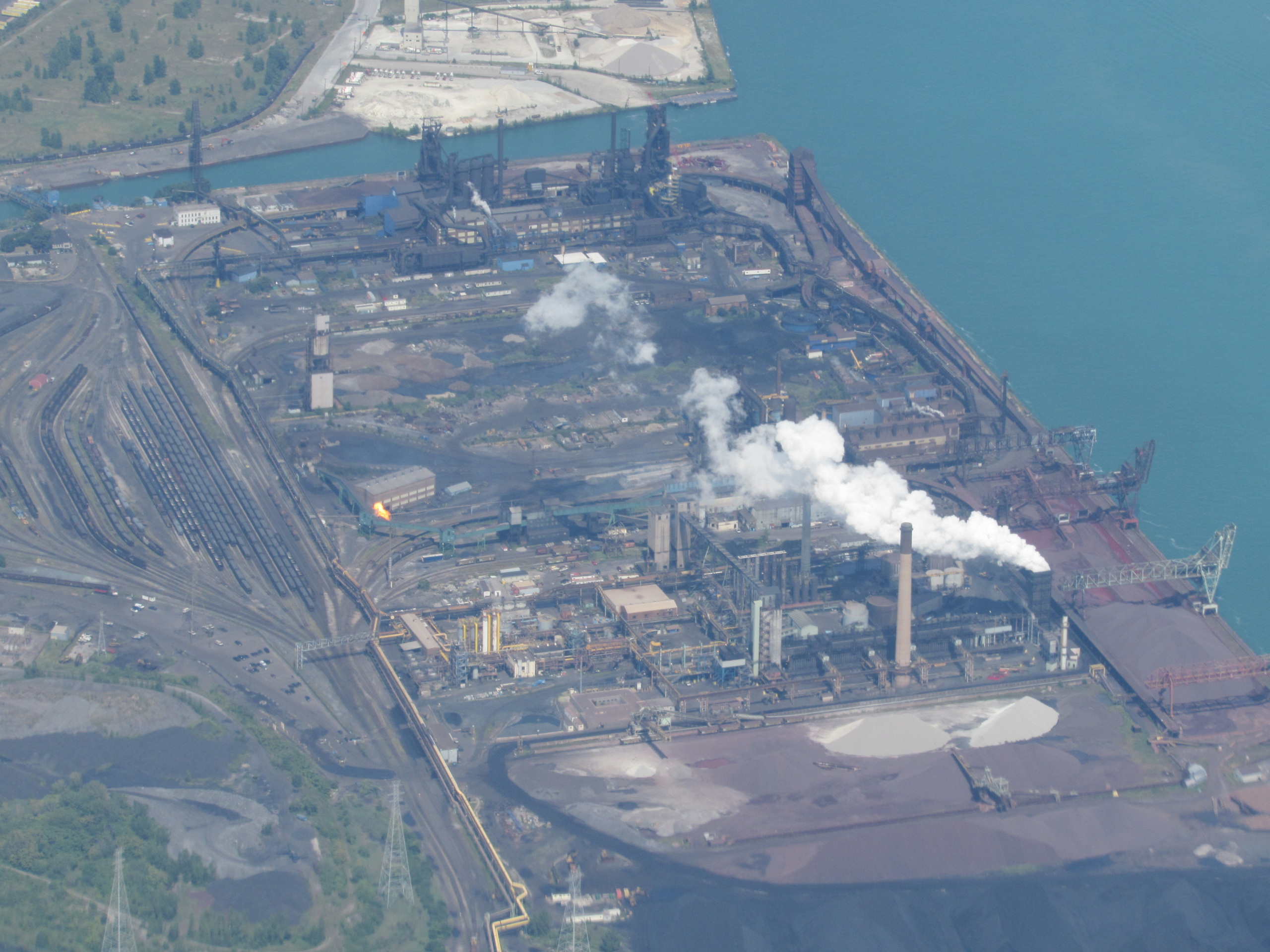
In 2022 alone, Cleveland-Cliffs’ Dearborn Works blast furnace (pictured) emitted more than 1 million metric tons of CO₂-equivalent emissions and ranked sixth statewide in particulate matter PM2.5 emissions among major polluters. By 2023, Cleveland-Cliffs had committed 19 additional air quality violations and later entered into an agreement with the U.S. Environmental Protection Agency requiring $100 million in pollution-control upgrades.

We need U.S. industry to shake off its indolence. In other words, as much as we need to decarbonize American industry, we also need to degooberize it.

We’re not just saving the climate; we’re saving our fundamental ability to make stuff.

© 2026. The text of this article is openly licensed under Creative Commons (CC BY-ND 4.0); you are free to copy and redistribute or republish the article in its entirety with attribution and credit.

Free Training

Source link

North America Manufacturing News Digest – the industry stories you should be aware of


Welcome to our weekly roundup of North America manufacturing news, designed to inform you of all the industry stories you should know about.

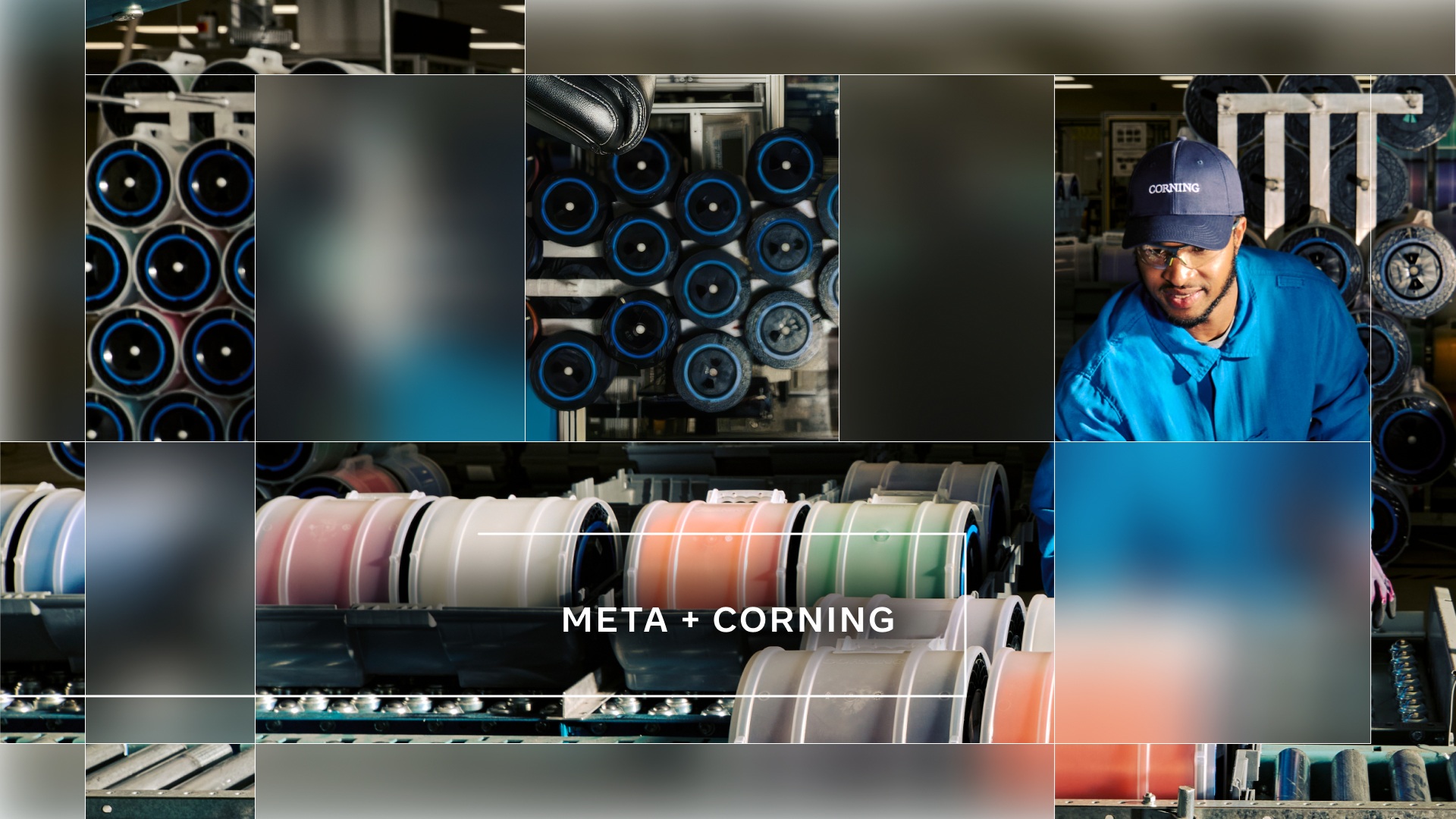
Meta signs up to $6bn fibre supply deal with Corning for US data centres

Meta has signed a multi-year agreement worth up to $6bn with Corning to supply fibre optic cables for its expanding US data centre network, in a move aimed at strengthening domestic manufacturing and supporting the company’s AI infrastructure ambitions. Read more via The Manufacturer

Volkswagen warns US Audi factory plans at risk without tariff relief

Volkswagen Group could abandon plans to build an Audi factory in the United States unless President Donald Trump lowers tariffs on the automotive industry, the company’s chief executive has indicated. Read more via The Manufacturer

CPKC extends US$800m US manufacturing investment with new locomotive orders

Canadian Pacific Kansas City (CPKC) is this year is continuing the renewal of its locomotive fleet with the world’s two leading locomotive manufacturers as part of an ongoing multi-year $800m investment in American industry. Read more via The Manufacturer

John Deere to open new US distribution and excavator manufacturing facilities

John Deere has announced plans to open two new US-based facilities, expanding its domestic manufacturing and supply chain operations as part of a broader commitment to American industry. Read more via The Manufacturer

NAM welcomes new leaders to Council of Manufacturing Associations

The National Association of Manufacturers (NAM) has announced new leadership for its Council of Manufacturing Associations following the CMA 2026 Winter Leadership Conference. Read more via The Manufacturer

Free Training

Source link

Boh Bah Inc. Bets Big on USA Manufacturing


Classified in: Science and technology, Business
Subjects: PDT, CXP

Expands USA Boba Manufacturing with New State-of-the-Art Missouri Facility

MOUNT VERNON, Mo., Jan. 29, 2026 /PRNewswire/ — ANNOUNCEMENT


Boh Bah Inc

Boh Bah Inc., the company behind the popular BobaVida? brand, is kicking off 2026 by dramatically expanding its U.S. manufacturing footprint. Starting Jan 5, 2026, the company is pleased to announce the grand opening of its new 50,000 sq ft FDA registered, production facility in Mount Vernon, Missouri. This new Class A facility, more than 5 times the size of the company’s previous location, marks a major milestone in the company’s continued investment into domestic manufacturing, brand growth and meeting rising demand.

MARKET POSITION

Since its release in 2023, BobaVida has risen quickly to become the leader in the U.S. popping boba market due to four key factors:

KEY FACTORS

  • Addressing the need for a cultural shift with this historically Asian-made product
  • Understanding the logistical advantages of manufacturing in the USA
  • Introducing high quality ingredients and American flavors
  • Developing key licensing deals with other well established flavor brands

EXECUTIVE QUOTE

“The entire market was ripe for a change,” said Scott Van Rixel, Founder and CEO. “I saw how much my daughter and her friends loved boba, but as a parent, I also recognized the need for a higher-quality USA-made version?one elevated from traditional lower-quality ingredients and with a more Americanized palate in mind.”

COMPANY STRATEGY

This strategic expansion reflects Boh Bah Inc’s long-standing conviction that manufacturing in the United States enables better quality, faster innovation, and stronger connections to the consumers it serves. At a time when much of the boba category remains dependent on overseas production, Boh Bah Inc. has doubled down on its Made-in-the-USA philosophy?an approach that has helped propel its BobaVida brand to become the number one consumer popping boba brand in the United States.

MANUFACTURING LEADERSHIP

The move leverages the experience of Managing Director, Benjamin Masters, PhD, who has led manufacturing companies in both USA and China for over 25 years.

MANAGEMENT COMMENTARY

“With tariffs and international logistics costs changing the game, the atmosphere is perfect to transition more manufacturing to the USA”
“We are excited to grow our presence in the heartland of America and look forward to continuing to add equipment and jobs to our new Missouri facility”

AVAILABILITY & CONSUMER INFORMATION

To explore the diverse range of popping boba products and discover how BobaVida is reimagining this popular beverage, consumers are invited to visit the company’s official website at  www.bobavida.com . Products are also available through major retailers and various stores nationwide.

Boh Bah Inc. is a U.S.-based food manufacturing company and the creator of the BobaVida brand, a leading consumer popping boba product line in the United States. The company focuses on quality ingredients, innovative flavor development, and domestic manufacturing to deliver premium boba experiences across beverage, dessert, and specialty food applications.

SOURCE Boba Vida

These press releases may also interest you

at 21:20

Smart Analytics Global (SAG) today released its Q4 2025 and 2025 Global Smartphone Vendor Shipment and Market Share report and ranking, showing that global smartphone shipments reached 1.26 billion units in 2025, growing 2.6% year over year….

at 21:06

Bybit, the world’s second-largest crypto exchange by trading volume, today announced its 2026 transformation into “The New Financial Platform,” a global financial ecosystem designed to expand access to modern banking, investment, and payments…

at 21:03

remedi, a fully permitted regulated medical waste processor, announced the expansion of its waste tracking and reporting capabilities to help hospital systems better measure landfill diversion, compliance outcomes, and operational performance as…

at 21:00

As artificial intelligence continues to develop rapidly, AI Computing Center (AIDC) have become the foundation of next-generation computing. At the same time, their power demand and reliability requirements are increasing sharply. As a crucial part…

at 20:30

Any Video Converter V9.1.6 has officially arrived, debuting AI Image Generator and AI Video Generator, powered by advanced multimodal models. This major release introduces a seamless creative workflow: from Text-to-Image and Image-to-Image generation…

at 19:55

Bodor Laser, a global manufacturer of laser cutting solutions, has announced the launch of its SK Series High-Speed Tube Laser Cutting Machine, alongside the introduction of its new “Extreme Speed” concept for tube processing. The concept focuses on…

News published on 29 january 2026 at 16:50 and distributed by:


Free Training

Source link