

Tariff threats prompted pharma production boom last year: report


While the threat of U.S. import tariffs prompted a surge in drug production last year, that output is slated to slow across multiple geographies in 2026. And, even as the biopharma industry enters the new year with greater certainty around the U.S.’ trade policy, the risk of another “tariff flare-up” looms large.

That’s the macro situation according to financial services firm Atradius, which noted in a new industry trend report (PDF) that global pharmaceutical production leapt 9.1% in 2025, mainly on the back of “front-loading activity in anticipation of US tariffs.” 

In 2026, however, output growth is expected to slow to 1.6% as a move toward “retrenchment” results in a slowdown of production growth in the first half of the year, the report predicts.

Nevertheless, a rebound could be not too far behind, with Atradius reckoning that global drug production will eke out 3.7% growth in 2027. That general trend holds true when looking at Atradius’ predictions for the growth of pharmaceutical sales and investments around the world in 2027, too.

As for 2025, the financial services company logged 9.7% growth in global pharmaceutical sales and 5.2% growth in overall industry investment. Atradius expects momentum in those areas will slow to 1.6% and 2.7% in 2026, respectively. 

The Trump administration’s persistent threat of pharmaceutical import tariffs was the driving force behind last year’s manufacturing surge, the experts say.

Still, the overall impact of U.S. trade duties has been “limited,” according to Atradius, which pointed to the exemptions Big Pharma companies have won through White House drug pricing deals as well as country- and region-specific agreements capping U.S. import tariff rates. Furthermore, generic drugs have largely been excluded from President Donald Trump’s trade negotiations, sparing the medicines that make up the bulk of the American public’s prescriptions from supply and price disruptions.

The industry isn’t out of the woods yet, with the report cautioning that “the downside risk of another tariff flare-up remains.”

Earlier this week, following an intensification of Trump’s rhetoric around a potential U.S. acquisition of Greenland, concerns were raised that the threat of new 10% taxes on select European countries that showed military support for the autonomous Danish territory might scupper the U.S.-EU trade deal reached last summer. Under that accord, which still needs to be ratified by European lawmakers, most European exports, including pharmaceuticals, will have tariffs capped at 15%.

Trump ultimately backed down on the threat after reaching the “framework of a future deal” on his Greenland ambitions during the World Economic Forum in Davos, Switzerland, this week. Still, the uncertainty his comments cast on previously secured agreements lends credence to Atradius’ “tariff flare-up” warning.

Overall, Atradius suggested industrial policy will play an increasingly large role across the pharmaceutical industry in the coming years, buoyed by government efforts around the globe to reduce reliance on imports and incentivize strategic stockpiling and domestic manufacturing.

“Supply networks of pharmaceuticals and medical devices will become more fragmented due to geopolitical tensions,” the firm predicted.
 

Mapping 2025’s production output
 

In the U.S., pharmaceutical manufacturing output is expected to “decelerate” to 0.9% this year—a marked departure from the 5.2% increase charted in 2025, according to Atradius’ report. The outlook forecasts a 2.5% rebound in U.S. pharmaceutical output growth in 2027.

The report again pointed to industry-won tariff exemptions as a relief for drugmakers in the near term, while caveating that “uncertainty remains, as Washington has repeatedly announced its intention to target medicine imports.”

Aside from the most-favored-nation drug pricing deals that have won many large pharma companies exemptions from tariffs, efforts by the FDA to ease the build-out of new production facilities in the U.S. could also bolster the country’s pharmaceutical output, Atradius said.

At the same time, “high production costs could still make it more cost-effective for pharmaceuticals to be manufactured elsewhere,” the report reads.

Perhaps most striking in Atradius’ report was the 21.6% growth in pharmaceutical output that the U.K. and the EU charted in 2025, again attributed to “front-loading triggered by massive U.S. tariff threats.” In Ireland—a country with a wealth of large pharma manufacturing outposts—production output surged a whopping 41.3% in 2025, according to Atradius. The country is predicted to experience a sharp turn in the other direction this year, with Atradius forecasting a 6.4% output decline.

This year, the U.K. and the EU’s combined output is tipped to “contract temporarily” by 3.7%, by Atradius’ reckoning.

While the EU has presently secured a 15% tariff rate cap, the U.K. has dodged U.S. import duties altogether in part by agreeing to raise the net prices its National Health Service pays for innovative medicines by 25%.

While those agreements blunt the impact of tariffs in Europe, Atradius acknowledged that shifting manufacturing to the U.S.—a key part of Trump’s trade agenda—is both expensive and complex, posing challenges for smaller companies with fewer resources.

Unlike Europe and the U.S., China’s pharmaceutical output is expected to continue growing in 2026. Atradius estimates that the country’s drug production will increase 6.6% this year versus 3.6% growth in 2025. 

China’s exposure to U.S. tariffs is “limited,” and, while the country accounts for some 40% of the world’s active pharmaceutical ingredient output, those drug building blocks aren’t targeted by U.S. tariffs, Atradius noted. 

Free Training

Source link

US Administration Plans Cuts to Key Industrial Grants Impacting Rust Belt Manufacturing | Ukraine news


The central thrust of the United States’ economic policy under the “America First” banner is to revitalize domestic manufacturing. However, the Trump administration plans to cut one of the key programs that funds the largest industries, including a city at the heart of the Rust Belt – the hometown of Vice President JD Vance.

A $500 million grant from the Biden administration was designated for the Cleveland-Cliffs steel company in Middletown, Ohio, to modernize aging blast furnaces; another $75 million was allocated for a similar project in Pennsylvania.

New furnaces powered by hydrogen, natural gas, and electricity – rather than coal – were meant to extend the plant’s life and secure the company’s future.

But these grants, which were to create more than 100 permanent jobs and 1,200 construction jobs just in Middletown, according to internal administration documents obtained by CNN, are slated to be canceled.

Representatives from the Department of Government Efficiency participated in deciding which programs to keep and which to cut, according to two people familiar with the situation.

“An unelected billionaire who made his fortune on government contracts should not be able to unilaterally stop these programs.”

– Marcy Kaptur

Energy Department spokesperson Ben Ditterich stated that “no final decisions have yet been made” regarding funding, and that “several plans are being considered.”

The Energy Department froze billions of dollars in grant programs during the Biden administration for months, reviewing them and determining which to cut. The $6.3 billion program that financed equipment modernization for Cleveland-Cliffs and other large companies could be cut by nearly half according to internal CNN documents.

Experts warn that such cuts could have a chilling effect on American industry amid a tariff war led by Trump that is undermining markets and supply chains.

“The entire point of OCED and the $6.3 billion grant programs is to invest in companies and industries that have not received funding for decades – steel and cement.”

– a former DOE employee

Samira Fazili, Deputy Director of the National Economic Council under the Biden administration, notes that reductions could deal a serious blow to the United States’ core industries, especially given the economic uncertainty caused by tariffs.

She emphasizes that instead of cutting public investments, strategic investments should be undertaken to preserve manufacturing and strengthen the country’s competitiveness.

Ultimately, experts call for a measured approach: carefully chosen government investments can preserve jobs and the United States’ industrial capacity, particularly in regions tied to essential industries.

Free Training

Source link

Meyer Burger equipment purchase enables Solestial US manufacturing shift


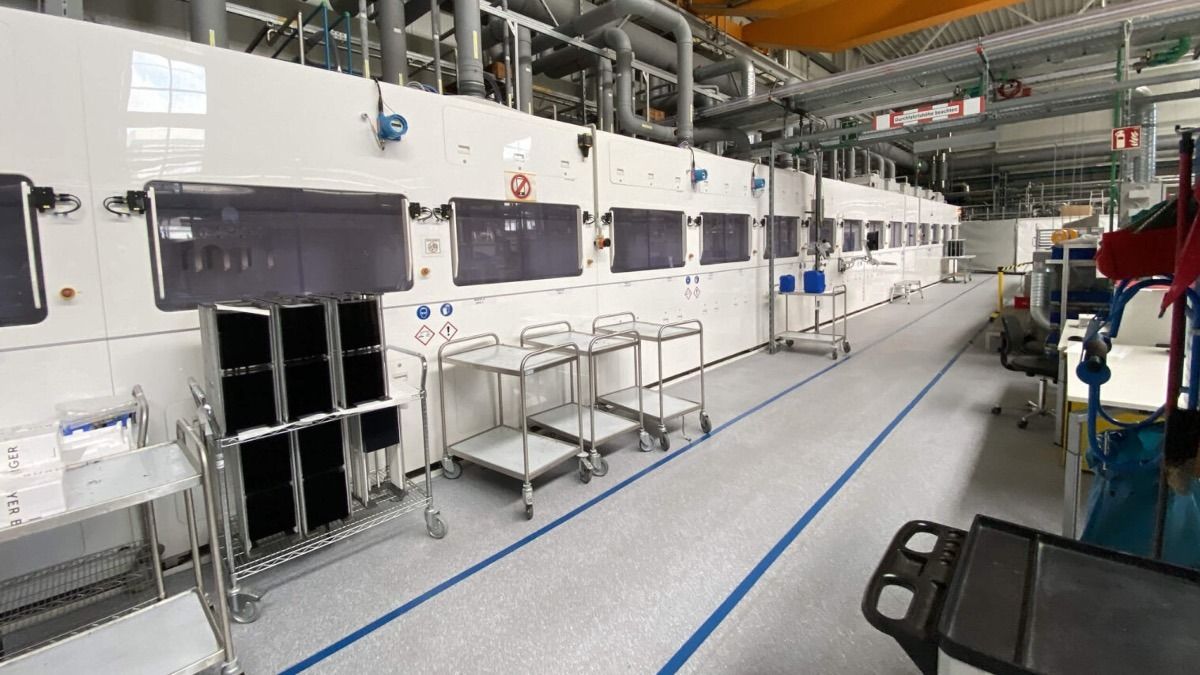
Solestial, a US-based space solar manufacturer, has acquired solar manufacturing equipment from Meyer Burger to strengthen domestic manufacturing operations in the US. The acquisition enables Solestial to process its silicon solar technology from wafer to cell in house. Equipment was acquired from Meyer Burger’s Hohenstein-Ernstthal facility in Germany, where Solestial’s wafers had previously been processed. Solestial has stated that it plans to shift limited solar cell manufacturing activities from Germany to the US. The Solestial has confirmed that its 30,000 square foot US facility is operational and commissioned for production. The move follows the disruption of a prior manufacturing partnership after Meyer Burger’s German subsidiaries filed for insolvency in May 2025. Recently, Solestial has partnered with NASA Glenn Research Center to advance ultrathin silicon solar array performance through technical testing.

Free Training

Source link

CPKC investing US$800 million in American manufacturing with Tier 4 locomotives


CALGARY, AB, Jan. 21, 2026 /CNW/ – Canadian Pacific Kansas City (TSX: CP) (NYSE: CP) (CPKC) this year is continuing the renewal of its locomotive fleet with the world’s two leading locomotive manufactures as part of an ongoing multi-year US$800 million investment in American industry.

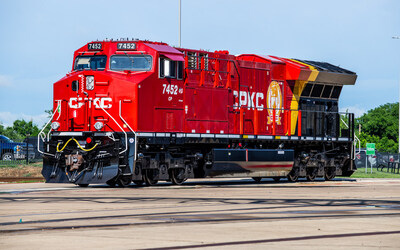
Tier 4 locomotive (CNW Group/CPKC) Tier 4 locomotive (CNW Group/CPKC)

Having completed the purchase of 100 Wabtec Tier 4 locomotives built in Texas in 2025, today CPKC said it will add 30 additional Tier 4 locomotives from Progress Rail in 2026 to be built in Indiana. This year, CPKC also expects delivery of 70 more Texas-built Tier 4 units from Wabtec.

“Our purchase of additional new Tier 4 locomotives, proudly made in the USA, continues CPKC’s commitment to renew our locomotive fleet through a more than US$800 million investment in American manufacturing capacity,” said Mark Redd, CPKC Executive Vice President and Chief Operating Officer. “We are investing in our road locomotive fleet for growth and to maintain our industry-leading service for our customers and the North American economy, powered by a fleet with improved reliability and fuel efficiency.”

In January, CPKC expects to receive the first two of 70 Wabtec Evolution Series ET44AC Tier 4 locomotives being built this year for CPKC at the company’s manufacturing facility in Dallas, Texas.

In the second half of 2026, CPKC expects to take delivery of 30 new EMD® SD70ACe-T4 Tier 4 freight locomotives to be manufactured at Progress Rail’s facility in Muncie, Indiana. These locomotives are part of an order for 65 new Tier 4 locomotives to be built by Progress Rail.

These locomotive investments continue CPKC’s locomotive renewal program and are part of CPKC’s previously announced multi-year capital plan.

About CPKC

With its global headquarters in Calgary, Alta., Canada, CPKC is the first and only single-line transnational railway linking Canada, the United States and México, with unrivaled access to major ports from Vancouver to Atlantic Canada to the Gulf Coast to Lázaro Cárdenas, México. Stretching approximately 20,000 route miles and employing 20,000 railroaders, CPKC provides North American customers unparalleled rail service and network reach to key markets across the continent. CPKC is growing with its customers, offering a suite of freight transportation services, logistics solutions and supply chain expertise. Visit cpkcr.com to learn more about the rail advantages of CPKC. CP-IR

CPKC Logo (CNW Group/CPKC) CPKC Logo (CNW Group/CPKC) Cision Cision

View original content to download multimedia:https://www.prnewswire.com/news-releases/cpkc-investing-us800-million-in-american-manufacturing-with-tier-4-locomotives-302667204.html

Free Training

Source link

EOS invests $3m in United States manufacturing and logistics expansion


EOS has invested 3 million USD into the expansion of its US manufacturing and logistics capacity.

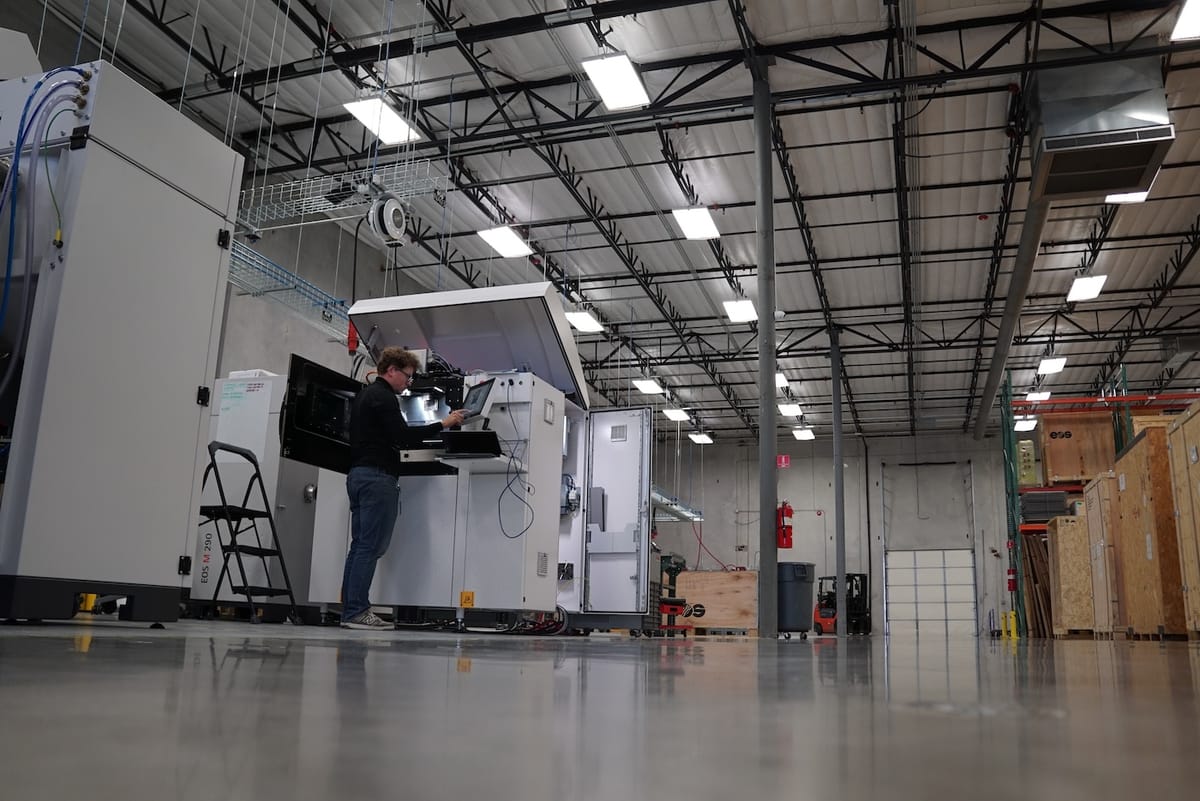
The company has consolidated its North American warehouse and logistics capability at its Pflugerville, Texas, campus into a new 40,000 square foot facility in Belton, Texas, which has enabled the manufacturing space in Pflugerville to be increased.

EOS says the reconfiguration of existing facilities and the opening of the new warehouse demonstrate its commitment to strengthening its U.S. manufacturing capacity. The assembly of its EOS M 290-1, EOS M 290-2, and EOS M 400-4 systems will receive a boost, while EOS has also created more space for a dedicated powder handling area and an in-house machine shop. It is expected that EOS will now be better equipped to meet increasing customer demand and reduce delivery times. The company has also created ten new jobs at the Pflugerville production site, including operations, quality assurance, engineering, and machine commissioning functions.

“Our Texas expansion enables us to scale North American metal AM assembly with both precision and consistency,” said Kent Firestone, SVP of Operations, EOS North America. “From optimising our production areas to onboarding new team members, every step has been carefully designed to accelerate turnaround times while maintaining the quality and reliability our customers expect from EOS.”   

“This expansion demonstrates our continued commitment to support the resurgence of American manufacturing,” added Glynn Fletcher, president of EOS North America. “This manufacturing facility is not just an investment in our own infrastructure; it is also about standing shoulder-to-shoulder with the U.S. manufacturing community to provide products and services for a superior customer experience. It demonstrates our dedication to the growing U.S. markets where our technology is in greatest demand. We fully understand the criticality that AM plays in the future of domestic manufacturing, and this expansion ensures EOS will continue to play a leading role for years to come.” 

Free Training

Source link

Vaccines Show the Way Forward for U.S. Manufacturing


By Phyllis Arthur

The push to bring manufacturing back to America sits at the top of President Donald Trump’s agenda. He has vowed to revitalize U.S. industry.

It’s the right goal, but the government must realize it already has a proven model to follow: vaccines. These lifesaving medical tools represent our clearest example of advanced manufacturing, on American soil, done right.

In the early 2000s, as pandemic risks like H1N1 and SARS became apparent, U.S. policymakers pressed for an “always-on” vaccine capability – infrastructure ready to scale at a moment’s notice. That has paid off decisively. We’ve since seen more than 20 years of vaccine manufacturer investment in our workforce, regulatory science and a stable market.

And yet, the Department of Health and Human Services is now moving in the opposite direction. Instead of holding vaccine manufacturing up as the blueprint for industrial renewal, HHS’ recent decisions to curtail mRNA vaccine development and cancel funding have shaken confidence in the industry – and risk undermining the president’s agenda.

Without even being asked, vaccine makers are delivering on the administration’s goals of ensuring that the U.S. leads the world in manufacturing. Moderna manufactures vaccines at its in-house production facility in Norwood, Massachusetts. CSL Seqirus operates a large manufacturing site in Holly Springs, North Carolina – one of the largest producers of cell-based flu vaccines and a cornerstone of national pandemic preparedness.

Meanwhile, Merck cut the ribbon on a $1 billion, state-of-the-art plant in Durham, North Carolina – designed to accelerate U.S. vaccine manufacturing. Sanofi has pledged $20 billion in U.S. investments through 2030, which includes bolstering research and domestic production, on top of their existing expansive manufacturing facility in Swiftwater, Pennsylvania. And in late 2024, GSK announced an $800 million investment in its vaccines manufacturing facility in Marietta, Pennsylvania.

These investments aren’t just numbers on a balance sheet – they translate directly into stronger safeguards for Americans’ well-being.

Vaccines don’t just save lives – they strengthen the economy. Every dollar invested in adult vaccination programs can generate as much as $19 in returns.

And the stakes are strategic: A robust domestic vaccine industry ensures a steady supply of lifesaving medicines in times of crisis. By keeping production rooted in the United States, we can better withstand future pandemics, prevent global supply chain disruptions and reduce our dependence on foreign governments. In today’s world, where health threats and geopolitics are increasingly intertwined, vaccines are a strategic necessity.

Put plainly: Vaccine manufacturing is the model of what a revitalized U.S. industrial base should look like. Yet recent actions are eroding confidence in this proven foundation. HHS recently canceled more than 20 federally funded research projects – pulling $500 million out of work that was underway to shore up defenses against respiratory viruses like COVID-19 and the flu. Withdrawing support for this cutting-edge medical technology will choke off future breakthroughs and undercut America’s public health readiness.

HHS also dismissed every member of the government’s long-standing vaccine advisory panel, replacing them midstream with handpicked candidates – some with open histories of vaccine skepticism. And the agency has muddled federal guidance, with officials insisting certain vaccines will be widely available this winter – yet approval is restricted to only certain groups, leaving states scrambling and families confused.

This is the opposite of what American manufacturing needs right now.

Getting back on track will require restoring the canceled vaccine projects, ensuring a science-based advisory process and establishing consistent national guidance that provides companies with the certainty they need to continue investing in U.S. capacity.

Phyllis Arthur is the executive vice president & head of healthcare policy and programs at the Biotechnology Innovation Organization (BIO). This article originally appeared in the U.S. News & World Report.

Free Training

Source link

Genentech More than Doubles Investment in Holly Springs, North Carolina Manufacturing Facility


  • Genentech will more than double the initial investment in a state-of-the-art biomanufacturing facility in Holly Springs to approximately $2 billion, bolstering Roche and Genentech’s $50 billion investment in U.S. manufacturing and R&D
  • The expansion will increase production volume and scale manufacturing capacity within the facility, where construction began in August 2025
  • The Holly Springs investment is expected to support more than 2,000 jobs, including 500+ high-wage manufacturing and 1,500+ construction jobs

SOUTH SAN FRANCISCO, Calif.–(BUSINESS WIRE)–Genentech, a member of the Roche Group (SIX: RO, ROG; OTCQX: RHHBY), today announced an expansion of its initial investment in a new Holly Springs, North Carolina manufacturing facility. The increased investment will more than double the total commitment for the company’s first-ever East Coast manufacturing facility to approximately $2 billion. The expansion builds on the company’s May 2025 investment announcement, as well as the project’s August 2025 groundbreaking, and reflects Genentech’s continued confidence in the region’s community, workforce, and long-term growth potential.


The expanded investment allows Genentech to build out additional production capacity and significantly increase the facility’s output. Set to be operational by 2029, the state-of-the-art facility will produce next-generation treatments for metabolic conditions, such as obesity. By leveraging advanced biomanufacturing, automation, and digital tools, the investment will boost efficiency and sustainability while significantly expanding Genentech’s U.S.-based supply chain.

The expanded investment is expected to add an additional 100 new jobs to the North Carolina economy, with the project supporting more than 500 high-wage manufacturing jobs and 1,500 construction jobs, reinforcing Genentech’s role as a significant economic driver.

The company decided to increase its investment in Holly Springs, a growing hub for biopharmaceutical innovation, because of its highly skilled local workforce, strong academic institutions, and proximity to other leading life science companies in the Raleigh-Durham area.

This expansion supports Roche and Genentech’s broader $50 billion commitment to U.S. manufacturing, and reflects Genentech’s shared goal with the U.S. administration to strengthen domestic production and innovation. Roche and Genentech’s current U.S. footprint includes 13 manufacturing and 15 R&D sites across the company’s Pharmaceutical and Diagnostics Divisions and 25,000 employees in 24 sites across eight U.S. states.

Genentech CEO Ashley Magargee:

“We are excited to further expand our investment in our state-of-the-art manufacturing facility in Holly Springs, North Carolina. This expansion reflects our long-term commitment to the United States and communities like Holly Springs that offer the kind of world-class biotech talent, top research institutions, and strong infrastructure that make innovation possible. This additional investment will create more high-quality jobs, strengthen local partnerships, and ensure a resilient supply of medicines for years to come, allowing us to bring life-changing medicines to patients faster and more reliably.”

“This investment also aligns with our plan to expand pharmaceutical manufacturing in the U.S., and we appreciate the support of federal, state and local leaders to make this a reality. We are especially grateful for the partnership and support of North Carolina Governor Josh Stein and Holly Springs Mayor Mike Kondratick, alongside the Holly Springs Town Council, whose collaboration has been essential to advancing this project.”

Josh Stein, Governor of North Carolina:

“Genentech’s increased investment in Holly Springs creates durable jobs and strengthens our life sciences sector,” said North Carolina Governor Josh Stein. “This expansion reinforces North Carolina’s role in supporting innovation, workforce development, and long-term economic opportunity.”

Lee Lilley, North Carolina Secretary of Commerce:

“North Carolina is the best state for business and a global life sciences trailblazer,” said North Carolina Commerce Secretary Lee Lilley. “Genentech’s expansion underscores the strength of the partnerships, both statewide and locally, and our nationally recognized workforce and research institutions that propel our thriving biotechnology hub forward.”

Mike Kondratick, Mayor of Holly Springs:

“Genentech’s continued investment is one of the most significant initiatives we have advanced since I took office, and it speaks to Holly Springs’ strength as a place where leading companies choose to grow. This expansion underscores Genentech’s long-term commitment here and the importance of close collaboration with our Town, from local services and infrastructure planning to partnering on workforce and education initiatives. I look forward to continuing our partnership with Genentech to strengthen our thriving community’s future.”

About Genentech

Founded 50 years ago, Genentech is a leading biotechnology company that discovers, develops, manufactures and commercializes medicines to treat patients with serious and life-threatening medical conditions. The company, a member of the Roche Group, has headquarters in South San Francisco, California. For additional information about the company, please visit http://www.gene.com.

Contacts

Genentech US Media Relations

Dean Mastrojohn
Phone: +1 650 467 6800

e-mail: [email protected]

Madaline Donnelly
Phone: +1 650 467 6800

e-mail: [email protected]

Free Training

Source link

Morph Systems, a defense industry and U.S. manufacturing data integration platform developer, announ..


Defense & U.S. Manufacturing Data Platform
Palantir Foundry Technology Utilization

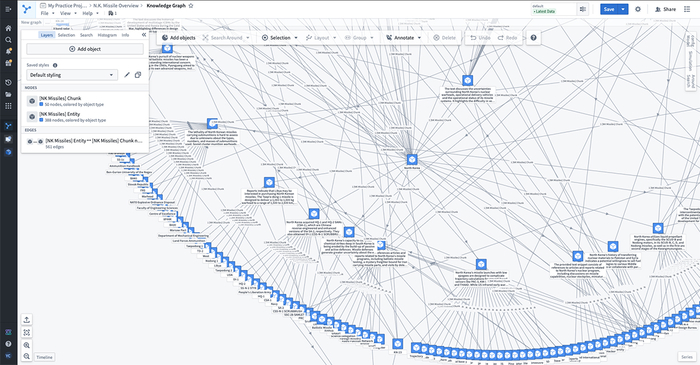
A case of Morph Systems' ontology construction that can identify relationships between unstructured data [Morph Systems] 사진 확대 A case of Morph Systems’ ontology construction that can identify relationships between unstructured data [Morph Systems]

Morph Systems, a defense industry and U.S. manufacturing data integration platform developer, announced on the 20th that it has attracted pre-seed investment from Mashup Ventures and 500 Global.

Morph Systems is an enterprise AI company that designs supply chain data and workflow for defense and U.S. manufacturing companies that are pushing for utilization advancement after the introduction of Palantir. Establish an ontology model that systematically defines data relationships according to the customer’s work context, and design data flows so that ERP (company resource management), logistics, settlement, and operation data can lead to actual decision-making and execution.

In addition, for organizations in the early stages of Palantir introduction, data and work structure design is also being carried out considering future expansion. Customers can have a data processing structure and a high-performance computing environment that can operate stably even if the supply chain expands. The technological excellence of these morph systems is advantageous not only at the manufacturing site, but also in the military and defense industry environment that requires large-scale material movement and strict traceability.

CEO Park Min-gyu, a graduate of Seoul National University’s Department of Aerospace Engineering, has published a number of international academic papers in the field of reinforcement learning, served as an AI researcher at the Korea Military Academy, and conducted defense and public AI projects. While working on a Palantir Foundry-based consulting project, he discovered the demand for data integration in the manufacturing and defense industries and decided to start a business. Co-founder Koo Ha-rim is a graduate of the Department of Mechanical Engineering at the National University of Singapore and has two startup experiences and is in charge of data integration and AI system implementation directly in the field.

Morph Systems expects 40% of its sales to come from U.S. customers since its first year, and to expand to more than 80% this year. Recently, in recognition of the excellence of data integration technology that can handle large-scale supply chains stably, it was selected for the TIPS program organized by the Ministry of SMEs and Startups and secured up to 500 million won in R&D funds. The selection of this tip was made on the recommendation of Mashup Ventures.

“After attracting this investment, we plan to implement a large-scale ontology-based computational and decision-making operation system centered on the U.S. market,” said Park Min-gyu, CEO of Morph Systems. “The ultimate goal is to expand to Neo-Cloud infrastructure and software layers optimized for specific industries and workloads based on our experience in operating field-oriented AI systems.”

Lee Seung-guk, a Mashup Ventures partner who led the investment, said, “The demand for data integration and decision-making automation is increasing rapidly in the process of re-industrialization and supply chain reorganization in the United States. Morph Systems is a team that solves core problems in the manufacturing and defense industry based on Palantir Foundry-based data integration technology and field-oriented experience, and it is expected to grow quickly in the U.S. market.”

Free Training

Source link

FBR secures conditional order for Mantis welding robot to support US manufacturing


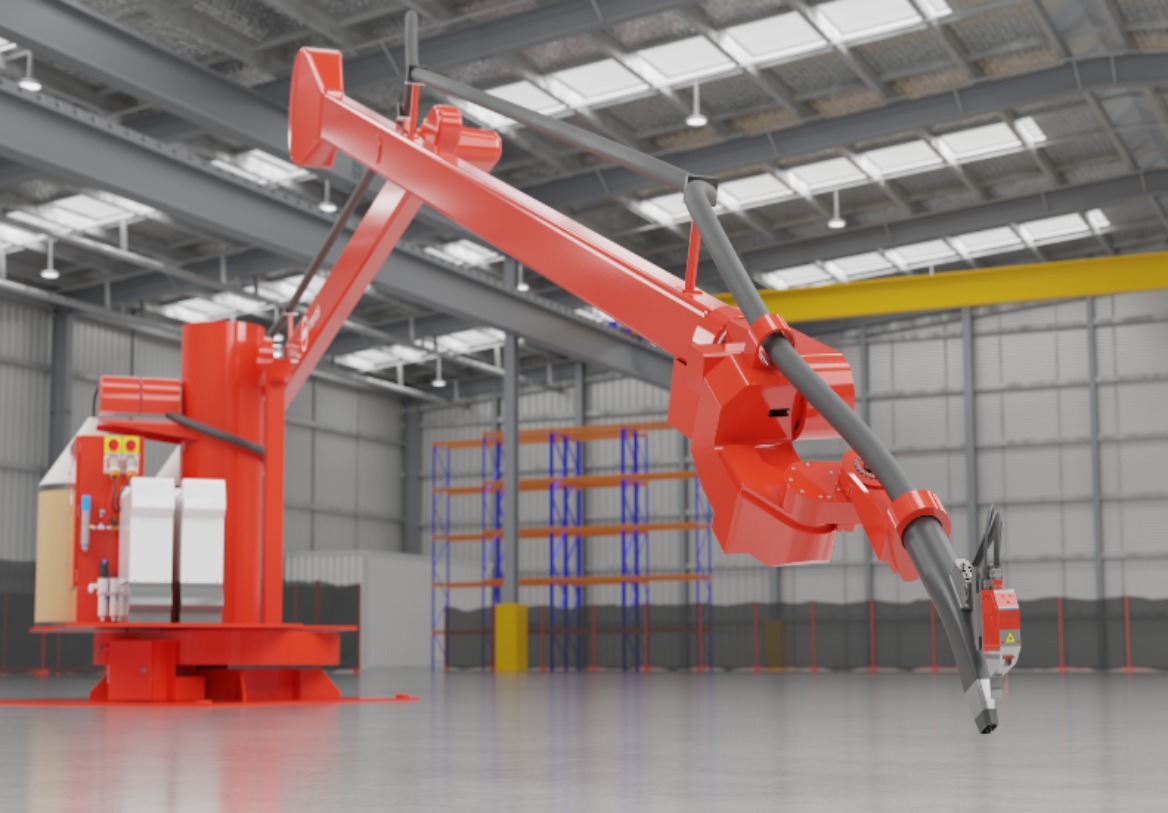
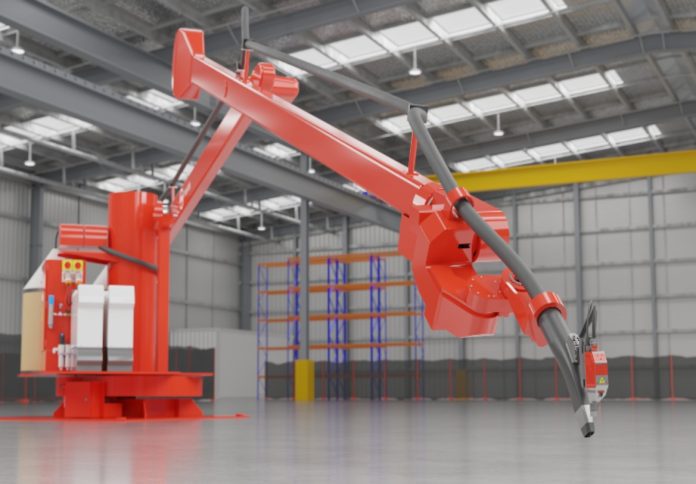
FBR’s Mantis™. Image credit: FBR

Robotic technology company FBR Limited has received a binding conditional purchase order valued at AUD 990,000 for its Mantis welding robot, in a deal aimed at supporting manufacturing operations in the United States.

In a news release, the company said the order has been placed by State Machinery & Equipment Sales, a Louisiana-based dealer for heavy equipment brands, which intends to use the Mantis robot in the manufacture of barges at its facility on the Mississippi River. 

FBR stated delivery is anticipated in the second half of calendar year 2026.

According to FBR, the purchase order is conditional on the successful completion of a Factory Acceptance Test to be conducted at the company’s Western Australian facility. 

The test will involve Mantis welding a sub-assembly of a hopper barge, with welding speed and quality independently assessed through non-destructive testing in line with AWS D1.1 standards.

Once the Factory Acceptance Test is completed to specification, AUD 450,000 of the contract value will become payable, with a further AUD 450,000 due on delivery and the remaining AUD 90,000 payable three months after delivery. 

The contract also includes installation and training services to be provided by FBR in Louisiana.

FBR chief executive officer Mark Pivac said the order reflects early interest in the technology despite it still being in the prototyping phase. “We are very pleased to have secured a binding conditional purchase order for Mantis while we’re still in the prototyping phase, which is indicative of the strong demand we’ve had for the product already,” he said. 

He added that the company looks forward to demonstrating the system’s welding performance during the acceptance testing process.

State Machinery president Ed Renton said the company sees the technology as an opportunity to enhance its manufacturing capability. “As the foremost dealer of heavy equipment in Louisiana, State Machinery has a lot of experience in manufacturing and construction equipment, and we are very excited to get our hands on the first Mantis® in the world,” he said.

“We are pleased to be working with the team to bring their robotic welding technology to the United States to boost our manufacturing capability.”

The content of this article is based on information supplied by FBR Limited. For more information, please refer to the official company announcement and communications from FBR. Please consult a licensed and/or registered professional in this area before making any decisions based on the content of this article.

Free Training

Source link

NOVEON MAGNETICS COMPLETES $215 MILLION SERIES C TO EXPAND U.S. RARE EARTH MAGNET MANUFACTURING CAPACITY


Financing Round Led by One Investment Management Supports Expansion of Domestic Rare Earth Magnet Production and Facilitates Secondary Share Sale

SAN MARCOS, Texas, Jan. 19, 2026 /PRNewswire/ — Noveon Magnetics, Inc. (Noveon), a leading U.S. manufacturer of sintered rare earth permanent magnets, today announced the close of a $215 million Series C financing led by a $200 million investment from One Investment Management (OneIM). The capital will fuel significant growth of Noveon’s domestic rare earth magnet manufacturing capacity as demand accelerates across key sectors — including automotive, defense, AI, energy, and advanced manufacturing — and as the need to reshore critical U.S. supply chains becomes increasingly important. In addition, today’s Series C financing facilitates secondary sales by certain existing shareholders.

As part of the transaction, OneIM will appoint two new Series C board members.

“This financing marks a pivotal step in scaling Noveon’s production capabilities to meet rapidly growing customer demand,” said Scott Dunn, CEO of Noveon. “With the support of OneIM, we are accelerating deliveries of high-performance rare earth magnets produced entirely in the United States — scaling capacity, capability, and strengthening supply chain resiliency for our customers.”

Noveon was the first company to reshore full-scale production of sintered rare earth magnets to the United States. This investment positions Noveon to accelerate its growth trajectory by expanding capacity beyond 2,000 tons per year, enabling the company to support existing commercial partners and capture growing demand from critical industries requiring high-performance, high-quality magnetic materials.

Rare earth permanent magnets are essential to automotive systems, defense platforms, AI and data storage technologies, robotics, and advanced manufacturing applications. Noveon’s American manufacturing platform directly addresses long-standing supply chain vulnerabilities, delivering reliable, high-performance magnet solutions.

“Noveon is uniquely positioned to lead the reshoring of the rare earth magnet industry at a time when supply chain security and domestic manufacturing capacity are national priorities,” said Rajeev Misra, CEO and Co-Founder of OneIM. “The company has assembled exceptional talent and built the technical skills, operational expertise, and execution discipline required to scale U.S. rare earth magnet manufacturing. We are proud to support Noveon’s next phase of growth and I look forward to supporting the company as it builds capacity that can truly meet the moment.”

Over the last 12 months, Noveon has achieved several significant milestones, including entering into multi-year supply agreements with General Motors and ABB, forming strategic partnerships with Lynas and Solvay to help create a more resilient supply chain, and entering into a closed-loop magnet recycling initiative with LG Electronics and Kangwon Energy. These milestones have strengthened Noveon’s position as a leader in sintered NdFeB magnets and have laid the groundwork for offering a fully domestic, vertically integrated solution for rare earth magnets.

“I am incredibly proud of what our team has accomplished over the past year,” added Scott Dunn. “We look forward to building upon our strong momentum with support from our new and existing partners to deliver on our mission to reshore critical magnet production to the United States.”

Goldman Sachs & Co. LLC served as exclusive financial advisor to Noveon. 

About Noveon
Noveon is the only operational manufacturer of sintered NdFeB rare earth magnets in the United States and the first to reshore them in over 20 years. Through its proprietary EcoFlux™ technology, Noveon delivers a fully domestic, closed-loop magnet manufacturing capability that maximizes resource efficiency, allows for the beneficial use of recycled materials, and produces superior high-performance finished magnets that meet the full range of commercial and industrial demand. Noveon’s products provide a secure and resilient supply chain solution for critical applications including electric vehicles, wind turbines, robotics, motors, pumps, data storage, consumer electronics, and defense systems. Learn more at https://noveon.co/.

About OneIM
OneIM is a global alternative investment manager that invests across the capital structure, in a range of asset classes, industries and geographies. The firm applies a flexible investment approach and focuses on creating long-term value by working with exceptional partners and management teams. OneIM is sector agnostic and focuses on situations where it can leverage its cross-asset class expertise and capital base to achieve differentiated risk-adjusted returns. The firm was founded in 2022 and currently manages approximately $10 billion in assets. The team operates from offices in Abu Dhabi, London, Tokyo and New York.

Free Training

Source link