

Apple’s Houston Expansion Puts U.S. Manufacturing And AI At Center Stage


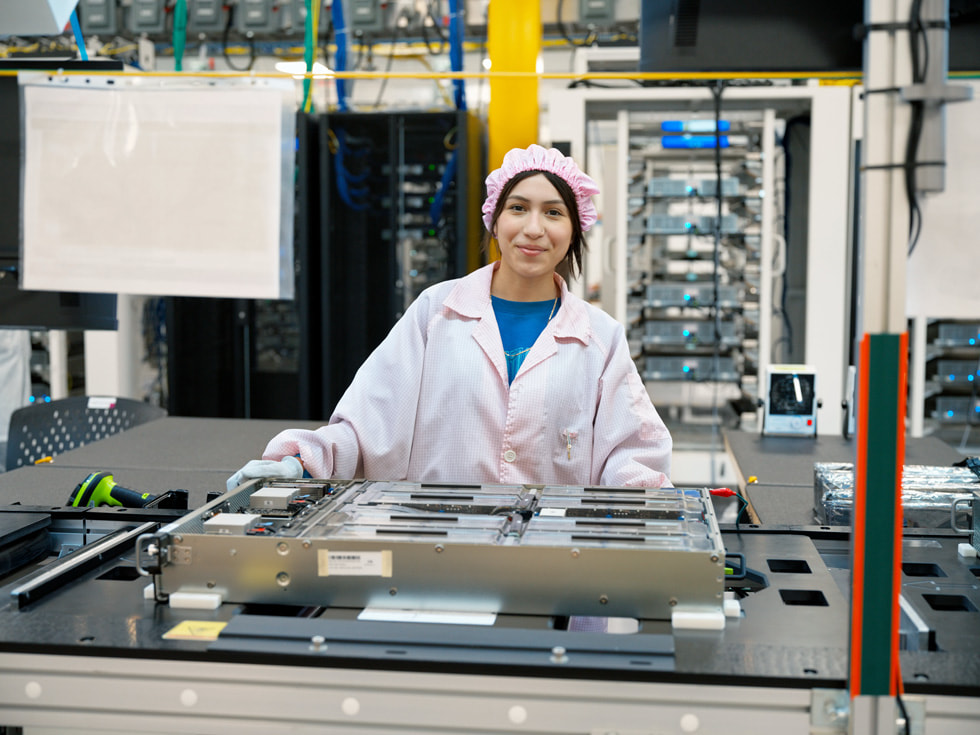
  • Apple announced plans to expand its U.S. manufacturing footprint with a new campus in Houston focused on Mac mini production and AI server hardware, targeting a start date later in 2026.
  • The company outlined large investments in American manufacturing facilities, workforce training, and domestic sourcing of chips and components.
  • These moves are aimed at diversifying Apple’s supply chain in response to global geopolitical risks and concentrating more high value hardware production in the U.S.

For investors watching NasdaqGS:AAPL, this move ties directly into how the company builds and supports its core hardware and AI infrastructure. Apple’s shares recently closed at $272.95, with returns of 3.2% over the past week, 6.4% over the past month, and 13.4% over the past year. Over a longer stretch, the stock has delivered 83.3% over three years and 130.8% over five years.

This new Houston build out and broader U.S. supply chain push indicate that Apple is committing more capital and attention to where and how its devices and AI systems are produced. For investors, the key questions are how these manufacturing and training investments affect Apple’s cost structure, product reliability, and its role in U.S. chip and AI hardware ecosystems over time.

Stay updated on the most important news stories for Apple by adding it to your watchlist or portfolio. Alternatively, explore our Community to discover new perspectives on Apple.

NasdaqGS:AAPL Earnings & Revenue Growth as at Feb 2026NasdaqGS:AAPL Earnings & Revenue Growth as at Feb 2026

📰 Beyond the headline: 0 risks and 2 things going right for Apple that every investor should see.

For Apple, the Houston expansion is as much about control and resilience as it is about capacity. Shifting Mac mini and AI-server assembly into the U.S., while tying that into a $600b domestic supply-chain commitment, gives Apple more direct oversight of high value hardware tied to Apple Intelligence and its broader services ecosystem. It also tangibly responds to the geopolitical concerns around Taiwan and China that investors have been hearing about since at least 2023, without Apple needing to match the very heavy AI data-center spending seen at Microsoft, Alphabet, or Amazon. At the same time, more U.S. manufacturing can mean higher labor and compliance costs, so the key question is whether Apple’s scale and process discipline can offset that through efficiency and pricing.

How This Fits Into The Apple Narrative

  • The U.S. manufacturing push supports the narrative’s focus on supply-chain optimization, which aims to reduce tariff and geopolitical risk and support margin stability over time.
  • Bringing AI servers and Mac mini production onshore adds execution risk around cost control and yields, which could challenge assumptions that hardware and AI features will easily translate into higher margins.
  • The dedicated Advanced Manufacturing Center and wider supplier investments deepen Apple’s U.S. industrial footprint, an element not fully captured in the narrative’s emphasis on services and on-device AI as drivers of the story.

Knowing what a company is worth starts with understanding its story.
Check out one of the top narratives in the Simply Wall St Community for Apple to help decide what it’s worth to you.

The Risks and Rewards Investors Should Consider

  • ⚠️ Higher-cost U.S. production and complex AI-server builds could pressure hardware margins if Apple cannot offset expenses through pricing, mix, or efficiency gains.
  • ⚠️ Even with diversification, Apple remains exposed to China and Taiwan, so investors still face geopolitical and regulatory risk alongside the large U.S. commitments.
  • 🎁 A broader U.S. chip and manufacturing base, including suppliers like TSMC and Texas Instruments, may help Apple reduce single-region dependence and improve component security.
  • 🎁 Housing AI-server production closer to its data centers could support more reliable Apple Intelligence services, strengthening differentiation versus peers such as Samsung and Google hardware.

What To Watch Going Forward

From here, you will want to watch how quickly the Houston site ramps Mac mini and AI-server output, and whether Apple comments on any margin impact in future earnings calls. Progress on sourcing chips from U.S. facilities, along with utilization of the Advanced Manufacturing Center, will help show whether this shift is improving resilience rather than simply adding cost. It is also worth tracking how Apple positions these U.S. investments alongside its AI partnerships and on-device features as competition from Microsoft, Alphabet, and Samsung continues to evolve.

To ensure you’re always in the loop on how the latest news impacts the investment narrative for Apple, head to the
community page for Apple to never miss an update on the top community narratives.

This article by Simply Wall St is general in nature. We provide commentary based on historical data
and analyst forecasts only using an unbiased methodology and our articles are not intended to be financial advice.
It does not constitute a recommendation to buy or sell any stock, and does not take account of your objectives, or your
financial situation. We aim to bring you long-term focused analysis driven by fundamental data.
Note that our analysis may not factor in the latest price-sensitive company announcements or qualitative material.
Simply Wall St has no position in any stocks mentioned.

New: Manage All Your Stock Portfolios in One Place

We’ve created the ultimate portfolio companion for stock investors, and it’s free.

• Connect an unlimited number of Portfolios and see your total in one currency
• Be alerted to new Warning Signs or Risks via email or mobile
• Track the Fair Value of your stocks

Try a Demo Portfolio for Free

Have feedback on this article? Concerned about the content? Get in touch with us directly. Alternatively, email editorial-team@simplywallst.com

Free Training

Source link

North America Manufacturing News Digest – the industry stories you should be aware of


Welcome to our weekly roundup of North America manufacturing news, designed to inform you of all the industry stories you should know about.

Apple to bring Mac mini production to Houston in major US manufacturing expansion

Apple has announced a significant expansion of its Houston manufacturing operations, confirming that production of the Mac mini will move to the United States for the first time as part of a broader investment in advanced manufacturing and AI infrastructure. Read more via The Manufacturer

AbbVie to create 300 new jobs with $380m Illinois manufacturing investment

AbbVie has announced a $380m investment to build two new active pharmaceutical ingredient (API) manufacturing facilities at its North Chicago campus, expanding U.S. production capacity for next-generation medicines and creating around 300 new jobs. Read more via The Manufacturer

Alfa Laval to double capacity at Richmond, VA facility by 2028

In response to accelerating demand driven by the rapid expansion of data centers across North America, Alfa Laval announced a major expansion of its Richmond, Virginia manufacturing facility. Read more via The Manufacturer

NAM report warns against policy changes that could disrupt U.S. food manufacturing

The National Association of Manufacturers (NAM) has released a new report highlighting the economic and social importance of the U.S. food and beverage supply chain, while cautioning policymakers against reforms that could undermine what it describes as a science-based system delivering safe, affordable and accessible food. Read more via The Manufacturer

EU Motors opens U.S. manufacturing facility in Florida

EU Motors Sp. z o.o., one of the largest producers of electric drone motors outside of China, today announced the opening of its new production facility, EU Motors USA, in Hallandale Beach, Florida. Read more via The Manufacturer

Free Training

Source link

the impact of higher prices for imported inputs in the United States


donald trump estados unidos_2026 (5)CORTESÍA: THE WHITE HOUSE

96% of the cost of the tariffs imposed in 2025 by President Donald Trump was absorbed by U.S. buyers, not by exporting countries such as China. This is revealed in the report “America’s Own Goal: Who Pays the Tariffs?”, prepared by the Kiel Institute (January 2026). While the political narrative of Donald Trump argues that tariffs would be paid by trading partners, the evidence shows that the burden has fallen on importers, manufacturers, and consumers within the United States itself. For U.S. manufacturing, this means direct pressure on costs, margins, and competitiveness.

READ ALSO. When Can I Watch Scream 7 on Paramount+? It will be available for streaming this month in 2026

How Do Tariffs Affect Manufacturing in the United States?

Modern manufacturing depends on global supply chains. Even products assembled in the United States incorporate parts, components, or raw materials from China, India, Brazil, and other markets.

The Kiel Institute study, based on more than 25 million shipments worth nearly $4 trillion, shows that when tariffs increase, import prices rise almost proportionally. In other words, foreign exporters barely reduce their prices, so the additional cost is passed on to the U.S. buyer.

For manufacturers, this translates into:

  • ⇒ Higher costs for intermediate inputs.
  • ⇒ Increased total production costs.
  • ⇒ Pressure to raise final prices or reduce margins.

Does China Pay the Tariffs, or Does the Cost Stay in the United States?

One of the report’s most relevant findings is that China did not absorb the financial impact of the tariffs, even when rates at times exceeded 100%. Instead of lowering prices, exporters maintained their price levels and reduced shipment volumes.

The estimated coefficient in the study indicates that only about 4% of the tariff was absorbed by exporters, while 96% was passed on to U.S. importers. This undermines the narrative that tariffs represent a direct transfer of wealth from China to the United States.

In practice, it means that U.S. manufacturing pays more for the same inputs.

Why Don’t Exporters Lower Their Prices in Response to Tariffs?

The document identifies several structural reasons:

  1. ⇒ Alternative markets: Chinese or Indian exporters can redirect production to Europe or other regions.
  2. ⇒ Magnitude of the tariff: 25% or 50% tariffs are difficult to offset through discounts without severely affecting margins.
  3. ⇒ Supply chain rigidity: Many U.S. manufacturers cannot immediately replace suppliers.

As a result, the adjustment occurs in quantities (less trade), not in prices.

What Impact Do Tariffs Have on Production Costs?

For U.S. manufacturing, rising prices of imported inputs create a domino effect:

  • Higher unit costs.
  • Need to pass increases on to distributors or consumers.
  • Reduced competitiveness compared to foreign producers that do not face the same input cost increases.

Moreover, the report highlights that in 2025, U.S. customs revenue increased by approximately $200 billion — a figure that, rather than coming from China, was paid by American companies and consumers.

This phenomenon effectively turns tariffs into an indirect tax on domestic production and consumption.

What Happens to Investment and Industrial Competitiveness?

Higher input costs directly affect manufacturers’ financial planning. Faced with rising expenses, companies may:

  • ⇒ Reduce investment in expansion or innovation.
  • ⇒ Adjust employment or production levels.
  • ⇒ Reconfigure supply chains at high transition costs.

Although the political intent behind tariffs has been to strengthen domestic industry, the study suggests the effect may be the opposite: greater pressure on local manufacturers that depend on international trade.

Is This a Repeat of Donald Trump’s Trade War Scenario?

The Policy Brief notes that the outcomes observed in 2025 replicate what happened during the 2018–2019 trade war under President Donald Trump: tariffs raise domestic prices, reduce trade volumes, and create economic distortions, with no evidence that foreign exporters assume a significant share of the cost.

The difference is that in 2025 the scope was broader, amplifying the impact on sectors such as manufacturing.

Who Ultimately Bears the Cost of Tariffs?

The process unfolds step by step:

  1. ⇒ The importer pays the tariff at the border.
  2. ⇒ The manufacturer faces more expensive inputs.
  3. ⇒ The distributor adjusts prices.
  4. ⇒ The final consumer absorbs the increase.

According to the study, tariffs function in practice as a selective tax on consumption and production in the United States, with additional effects such as reduced product variety and market distortions.

Free Training

Source link