
Why American manufacturing matters now more than ever – Feb 2026


Made in America: Why American manufacturing matters now more than ever – Feb 2026
By Meg Scarbrough

As the United States marks its 250th anniversary, the flooring industry’s relationship with domestic manufacturing is being tested-and, in many cases, clarified. “Made in America” still carries symbolic weight, but in today’s market, it increasingly reflects a series of operational decisions shaped by supply-chain volatility, trade policy uncertainty, workforce dynamics and the need for tighter control over production.

Over the past year, those pressures have forced manufacturers to examine not just where products are made, but why. For some, that has meant doubling down on longstanding U.S. operations. For others, it has involved targeted investments, portfolio segmentation or a more precise strategy around what domestic manufacturing is best suited to deliver. 

TARIFFS, UNCERTAINTY AND THE SEARCH FOR CERTAINTY

Tariff policy-both enacted and anticipated-has played a central role in reopening conversations around domestic production. Even when outcomes remain fluid, the uncertainty itself has altered behavior across the supply chain, pushing manufacturers and customers alike to prioritize predictability.

For companies with an established North American footprint, that uncertainty has often reinforced existing strategies rather than forcing abrupt change. Dal-Tile’s broad domestic presence has provided flexibility without requiring a fundamental reset. “We have the flexibility to bring product in or out depending on what’s going on in the economic world,” says Scott Maslowski, executive vice president of sales and operations, adding that the company has not made “any sort of significant overhaul as we’re pretty well balanced in North America, where most of our products are produced.” 

Others described tariffs less as a turning point than as a stress test-validating strategies already in place. That was the case at Novalis Innovative Flooring, where recent trade disruption confirmed the value of diversification. “Trade policy volatility and global supply chain disruptions didn’t fundamentally change our strategy-they reinforced it,” says Kimberly Hill, vice president of product and marketing. “Rather than making abrupt moves in response to tariffs or geopolitical changes, we’ve focused on resilience, optionality and disciplined planning.”

Across interviews, the impact of tariffs surfaced most clearly in how customers assess risk. Bentley Mills has seen increased attention to origin not as a branding preference but as a project safeguard. “Customers are more aware of where products are made than ever before,” says Catherine Prossen, vice president of business development. “Due to the critical nature of construction schedules, the reliability of specifying products that are made in the USA helps ensure projects stay on schedule.”

That emphasis on reliability-and the consequences of missing it-came up repeatedly, underscoring how manufacturing decisions now intersect directly with execution risk.

ANCHORING PRODUCTION CLOSER TO THE MARKET

Rather than framing the conversation strictly around reshoring, many manufacturers described a broader effort to anchor production closer to demand-particularly for products where lead times, customization and replenishment speed matter most. In that context, tariffs and global disruption have often served less as a catalyst for change than as confirmation of direction.

For Interface, proximity has long been a guiding principle. “If anything, these ongoing challenges have reinforced our strategy to produce products as close to the customer as possible,” says Bill Blackorby, vice president and chief supply chain officer. “By building localized supply chains around our manufacturing sites-whether in the U.S. or Europe-we’ve been able to minimize risk and respond quickly to disruptions.”

That logic extends beyond risk mitigation to how portfolios are structured. Atlas Concorde USA describes domestic manufacturing as a way to de-risk schedules without sacrificing design breadth. “After multiple years of geopolitical shocks, freight volatility and shifting tariff policy, buyers are prioritizing reliable dates and fewer surprises over marginal savings,” says CEO Federico Pifferi. “In short, certainty has become a deciding attribute, and domestic production is one way the market tries to de-risk schedules without narrowing design choice.”

Similar segmentation has taken shape elsewhere, with domestic and imported products playing distinct roles. “U.S.-made products anchor the mid to high end of the assortment, where customers value consistent quality, faster lead times and advanced performance,” says Alan Smith, MSI’s director of business development, “while imported products allow us to serve opening and value-driven segments at scale.” 

That emphasis on proximity and agility also surfaced at Shaw, where domestic production supports both speed and resilience across categories. “U.S.-based production enables greater market agility, allowing us to navigate uncertainty, maintain reliability for our customers and strengthen long-term supply chain stability,” says Herb Upton, senior vice president of manufacturing. “Being closer to our end-markets also strengthens collaboration between product development and manufacturing, allowing us to respond rapidly to evolving trends.”

SPEED TO MARKET-AND SPEED TO TREND

Beyond supply reliability, manufacturers consistently pointed to speed to market as one of the most tangible advantages of domestic production. In some cases, that speed is measured not just in logistics but also in design responsiveness.

Producing closer to end markets eliminates transportation lag and allows faster response to demand shifts. Dal-Tile’s Maslowski notes that domestic production “takes all the transportation time out of product getting into the marketplace,” while also enabling “quick turnaround in regards to product demand or product outages.”

Several executives emphasized a more nuanced benefit: the ability to react to changing trends without carrying excess inventory. At AHF Products, chief commercial officer Jennifer Zimmerman describes how domestic manufacturing gives customers room to adjust. “One of our customers came to us a week or so ago and added a new twist on why Made in America was so important for them,” she says. It centered on the ability to respond quickly to changing trends without being overcommitted to inventory tied to styles or SKUs that fail to gain traction.

That flexibility extends directly to color and design cycles. “It gives people the ability to react faster on color trends, because you can get something to market so much faster, and you don’t have to have an overabundance of inventory that you’re liquidating,” Zimmerman adds. 

In a market where retailers remain cautious about working capital, that discipline carries weight. “Customers want a lot more certainty in their product,” she says. “It not only helps them with the working capital…they don’t buy six months of supply.” 

That desire for control also surfaced in discussions around vertical integration. At Mohawk Industries, domestic manufacturing is closely tied to innovation strategy. “We are incredibly vertically integrated, which means we have control over every step of the process, from production to distribution,” said David Moore, vice president of product management. “By controlling all these aspects internally, we can drive real, customer-valued innovation that effectively solves their problems.” 

AUTOMATION AND ADVANCED MANUFACTURING NARROW THE GAP

Labor availability and cost remain persistent challenges, but many manufacturers pointed to automation and advanced manufacturing as key enablers of domestic competitiveness-particularly in higher-value categories.

Interface described recent investments as transformational rather than incremental. “We’ve just completed a major investment cycle in automation and robotics at our Georgia facility,” Blackorby says. “It’s about more than efficiency-it’s about smarter scheduling, better use of raw materials and faster response to customer orders.”

Similar gains were cited in tile manufacturing. Panariagroup USA highlighted the role of advanced technology in strengthening domestic output. “Thanks to recent investments in polishing lines, DryFix systems and large-format capabilities, we can meet sophisticated customer demands with greater speed, consistency and flexibility,” says CEO Leonardo Pesce. “The majority of our business now comes from U.S. production.”

CFL echoed that sentiment, noting that advanced equipment is essential to moving U.S. manufacturing beyond entry-level offerings. “That’s why CFL has focused on investing in onshoring our most innovative production by bringing in higher-grade manufacturing equipment, such as digital print and embossing machinery,” the company said, “and other methods for producing our top-of-the-pyramid products.”

WHERE DOMESTIC MANUFACTURING STILL STRAINS

Despite renewed momentum, executives were candid about the limits of U.S. manufacturing.

Labor remains a significant constraint. “As our aging workforce begins to retire, we do not have enough new skilled labor to fill the gaps,” Prossen says. 

Interface notes that “regulatory complexity is also increasing, especially as states adopt their own requirements,” while leaders at Mannington Mills observe that “labor, raw materials and regulations are market dependent but can definitely be a barrier to entry.”

Several manufacturers stressed that domestic production is not universally competitive across all price points. MSI’s Smith acknowledges that “domestic production can be more challenging to compete at the lowest opening price points,” while Mannington notes that in a soft market, “the U.S. consumer seems to be more focused on value in the product ahead of whether it is produced stateside.”

DEMAND FOR MADE IN AMERICA-EVOLVING, NOT ABSOLUTE

Interest in U.S.-made products has grown, but manufacturers were careful to distinguish preference from priority.

Sajal Patel, chief marketing officer at Nox, describes demand as pragmatic rather than ideological. “We’re seeing continued interest in U.S.-manufactured flooring…largely driven by the value of more predictable supply, shorter lead times and greater schedule certainty,” he says, adding that domestic products “continue to complement imported offerings by providing added flexibility based on project requirements, rather than serving as a replacement.”

Design professionals, in particular, are asking more targeted questions. Bentley Mills’ Prossen notes that “designers are often asking about domestic production when working on federally funded projects since that is a project requirement,” while Pifferi says that inquiries, now center on “lead-time reliability, back-order risk, and what happens if lanes tighten again.” In that context, made in America has become less about symbolism and more about execution. As Pifferi summarizes, “The ask is simple: certainty.”

A STRATEGY, NOT A SLOGAN

Taken together, the conversations point to domestic manufacturing as a strategic lever rather than a blanket solution. Companies are using U.S. production selectively-to anchor fast-moving SKUs, support customization, reduce inventory exposure and provide confidence in volatile conditions-while continuing to rely on global sourcing where it delivers scale, specialization or cost efficiency.

As the industry moves into 2026, made in America is no longer a binary designation. It is a set of choices-about risk, responsiveness and control-being recalibrated in real time. 

THE MANUFACTURERS

AHF PRODUCTS

U.S. manufacturing footprint: AHF Products operates facilities across Tennessee, Pennsylvania, Illinois, West Virginia, Missouri and Arkansas, producing ceramic tile, solid and engineered hardwood, vinyl sheet, VCT, and vinyl plank and tile.  

Summary: For AHF, domestic manufacturing is not a response to recent market disruption-it is foundational to how the company operates. Leadership consistently points to customer demand for certainty as the driving force behind its U.S.-first approach: certainty around pricing, lead times, inventory exposure and the ability to react quickly to changing design trends. Retailers and distributors, AHF says, are increasingly unwilling to carry excess inventory tied to long overseas lead times, making proximity a competitive advantage. That responsiveness extends beyond logistics. AHF executives note that domestic manufacturing allows it-and its customers-to adapt faster to shifts in color, finish and product mix, reducing the risk of being overcommitted to a trend that fades. While imports remain part of the portfolio where they make sense, AHF views U.S. production as a stabilizing force-particularly in periods of tariff uncertainty and supply-chain volatility.

What’s next: AHF plans to continue investing in U.S. manufacturing, automation and workforce development, positioning domestic production as a long-term growth lever across hard surface categories.

ATLAS CONCORDE USA

U.S. manufacturing footprint: Atlas Concorde USA manufactures porcelain tile just south of Nashville, Tennessee, producing indoor tile, decorative elements, bricks and 2cm outdoor pavers.

Summary: Atlas Concorde’s domestic manufacturing strategy has been shaped less by short-term trade policy and more by a long-standing effort to reduce global risk. Leadership says recent years of freight volatility, geopolitical disruption and shifting tariff policy have reinforced what customers now value most. Across retail, builder and design channels, buyers are prioritizing dependable lead times and predictable delivery over marginal cost savings. The company treats U.S. and imported manufacturing as complementary tools rather than substitutes. Domestic production anchors fast-moving SKUs and schedule-sensitive projects, while imports support distinct aesthetics and technologies where longer planning horizons are built into the specification process. That balance allows Atlas Concorde to protect schedules without narrowing design choice.

What’s next: Looking ahead, Atlas Concorde plans to maintain its U.S. footprint while targeting selective upgrades that improve consistency, logistics efficiency and on-time performance.

BENTLEY MILLS

U.S. manufacturing footprint: Bentley Mills manufactures commercial carpet tile and broadloom in City of Industry, California. 

Summary: For Bentley Mills, domestic manufacturing is closely tied to reliability on commercial projects where schedules are non-negotiable. Designers and specifiers, particularly on federally funded work, are increasingly attentive to where products are made-not as a preference, but as a requirement tied to compliance and delivery certainty. While U.S. production supports responsiveness and supply predictability, Bentley acknowledges the challenges that come with it. Labor availability remains a concern as the workforce ages, and rising energy costs continue to affect manufacturing economics. Even so, Bentley views domestic sourcing as critical to maintaining control over quality, innovation and customer service.

What’s next: Bentley expects to maintain a portfolio that remains overwhelmingly domestic while continuing to evaluate options for its resilient flooring offering.

CFL

U.S. manufacturing footprint: CFL produces rigid LVT, including SPC, at its facility in Adairsville, Georgia.

Summary: Since beginning U.S. production in 2020, the company has steadily expanded domestic capabilities, including advanced digitally printed and embossed rigid core flooring. In 2025, CFL completed Phase 4 of its U.S. plant, doubling rigid core capacity and reinforcing its long-term commitment to onshoring innovation-driven production. CFL’s U.S. plant is designed to support customization and flexibility, including lower minimum order quantities and closer collaboration with customers through on-site product reviews and plant visits. The company has invested in higher-grade manufacturing equipment-such as direct digital printing and embossing technologies-to move domestic rigid core production beyond entry-level offerings and into higher-value segments, including ultra-matte visuals and acoustic products. U.S.-made products occupy the service- and stability-driven portion of CFL’s portfolio, while imported products continue to support categories that are still in the process of being onshored, such as certain LVT glue-down offerings. This tiered approach allows CFL to balance innovation, cost and availability across the product pyramid.

What’s next: CFL will continue expanding domestic capacity and R&D with the goal of increasing the share of high-performance, U.S.-made products in its portfolio.

DAL-TILE 

U.S. manufacturing footprint: Dal-Tile manufactures tile, mosaics, quarry tile, exterior pavers and quartz slabs across facilities in Pennsylvania, Alabama, Tennessee, Oklahoma and Texas.

Summary: Domestic manufacturing has long been central to Dal-Tile’s business model rather than a reaction to recent trade disruption. With most of its portfolio produced in North America, the company has maintained flexibility without the need for major structural shifts tied to tariff policy or global supply chain volatility. Producing close to the market allows Dal-Tile to remove transportation time from the equation, respond quickly to product demand or outages, and gather faster customer feedback during product development. That proximity supports quicker decision-making around which products move forward and how assortments evolve-an advantage that has become more visible as customers prioritize reliability and pricing confidence. Automation and digital manufacturing have further strengthened domestic operations, enabling more advanced visuals and surface effects while maintaining consistency at scale. While labor availability can vary by geography, Dal-Tile reports that raw material sourcing and regulatory requirements remain manageable across its U.S. facilities.

What’s next: Dal-Tile expects to maintain its current manufacturing balance while remaining agile as economic and market conditions evolve.

INTERFACE

U.S. manufacturing footprint: Interface manufactures carpet tile at its facility in LaGrange, Georgia.

Summary: Interface’s U.S. manufacturing strategy is rooted in integration. By keeping design, manufacturing and supply-chain teams in close proximity, the company is able to compress lead times, respond quickly to customer needs and reduce transportation emissions. That proximity also supports customization and innovation that would be more difficult in a fragmented global model. Recent investments in automation and robotics at the LaGrange facility have further strengthened U.S. operations, improving productivity, material efficiency and order responsiveness. While labor availability and regulatory complexity remain ongoing challenges, Interface reports that advanced manufacturing capabilities have helped offset those pressures.

What’s next: Interface plans to apply lessons learned from its U.S. automation investments across its global manufacturing network.

MANNINGTON MILLS

U.S. manufacturing footprint: Mannington manufactures broadloom, carpet tile, LVT, vinyl sheet and rubber in facilities in New Jersey, Georgia, North Carolina and Florida. 

Summary: Mannington takes a pragmatic, category-by-category approach to domestic manufacturing. Rather than viewing U.S. production as an ideological choice, the company evaluates where it delivers the most value-whether through customization, speed to market or supply flexibility. The company has structured its portfolio to allow movement between sourced and produced models with minimal disruption, preserving redundancy as market dynamics shift. In a price-sensitive environment, Mannington notes that consumers often prioritize value first, even as domestic production remains part of its identity.

What’s next: Mannington expects to continue reassessing its U.S. footprint, expanding or contracting as customer demand dictates.

MOHAWK 

U.S. manufacturing footprint: Mohawk manufactures broadloom, carpet tile, laminate and resilient, with operations in North Carolina, Virginia, Georgia, Alabama, Texas, Washington, Ohio and Connecticut.

Summary: Domestic manufacturing is a core competency for Mohawk, supporting supply-chain control, product quality and innovation. The company’s vertically integrated model allows it to manage production from raw material sourcing through manufacturing and distribution, reducing exposure to global disruption and enabling faster response to customer needs. While Mohawk acknowledges higher labor and regulatory costs associated with U.S. production, those challenges are offset by logistics efficiencies, supply stability and greater control over innovation and product development. Demand for U.S.-manufactured flooring continues to grow among builders and customers seeking reliability, consistency and insulation from tariff-related volatility. It’s worth noting that Mohawk owns Dal-Tile.

What’s next: Mohawk plans to maintain and selectively expand its domestic manufacturing footprint, continuing to invest in scalable, technology-driven U.S. facilities to support innovation, sustainability and long-term supply reliability.

MSI

U.S. manufacturing footprint: MSI manufactures rigid core LVT through a U.S. production partnership in Georgia.

Summary: MSI views domestic manufacturing as a strategic anchor for mid- to high-end LVT products where thicker constructions, tighter quality control and faster replenishment matter most. Shorter supply chains allow the company to respond more quickly to design trends while maintaining consistency and performance. Imports remain essential for serving opening price points at scale, creating a balanced portfolio that allows MSI to meet a wide range of customer needs without overcommitting to a single sourcing model.

What’s next: MSI plans to continue refining its mix of domestic and imported production to support innovation and availability.

NOVALIS INNOVATIVE FLOORING

U.S. manufacturing footprint: Novalis manufactures select resilient flooring products in Dalton, Georgia.

Summary: Novalis has taken a measured approach to U.S. manufacturing, emphasizing resilience and optionality over rapid expansion. Trade volatility and supply-chain disruption reinforced a strategy the company already had in place: a diversified global footprint with targeted domestic production where proximity delivers clear value. Domestic manufacturing supports collaboration, faster iteration and customization for specific programs, while global operations provide scale and material efficiency.

What’s next: Novalis plans to maintain and thoughtfully evolve its U.S. manufacturing role in alignment with long-term portfolio goals.

NOX

U.S. manufacturing footprint: Nox manufactures LVT products at its facility in Fostoria, Ohio, including dryback, looselay and click formats.

Summary: Nox’s U.S. manufacturing operation plays a key role within a broader global network. Domestic production supports speed to market, private-label programs and predictable supply, while global facilities provide additional capacity and flexibility. Customers increasingly value U.S.-made products for reliability and documentation rather than origin alone. Rather than replacing imports, Nox positions domestic manufacturing as a complement that allows customers to tailor sourcing based on regulatory, segment or project-specific needs.

What’s next: Nox expects to maintain and selectively expand its U.S. footprint as demand for resilient flooring grows.

PANARIAGROUP USA

U.S. manufacturing footprint: Panariagroup USA, through Florida Tile, manufactures porcelain floor and wall tile at its facility in Lawrenceburg, Kentucky. 

Summary: U.S.-made porcelain is a core component of Panariagroup USA’s portfolio, supported by ongoing investment in advanced manufacturing technologies. Recent upgrades-including polishing lines, DryFix systems and expanded large-format capabilities-have strengthened the company’s ability to deliver sophisticated design, consistent quality and faster response to customer demand. The company is part of Italy’s Panariagroup. While imports continue to complement the assortment, particularly for specialized slab products from Italy, the majority of its tile portfolio is now produced domestically. Advances in U.S. manufacturing technology have significantly narrowed the gap in design, performance and technical capability compared to European production, reinforcing the competitiveness of American-made porcelain. 

What’s next: Panariagroup USA plans to continue expanding its U.S. manufacturing footprint, with additional investment in advanced technology and production capacity. Domestic manufacturing remains central to the company’s strategy, supporting speed to market, customization and long-term supply reliability as demand for U.S.-made porcelain continues to grow.

SHAW

U.S. manufacturing footprint: Shaw manufactures broadloom, carpet tile, engineered hardwood, resilient flooring and synthetic turf across a number of facilities in the Southeast U.S., including operations in Georgia, South Carolina, Alabama and Tennessee.

Summary: Shaw operates an intentional “make and source” model, balancing domestic manufacturing with global sourcing to support speed, scale and flexibility across categories. Over the past five years, the company has accelerated investment in U.S. manufacturing while maintaining a diversified sourcing strategy designed to manage risk and support long-term competitiveness. Domestic production plays a key role in agility and responsiveness. Shaw has invested heavily in automation and advanced manufacturing across its U.S. operations, supporting faster design iteration, smaller and more customized runs, and improved efficiency. Modernized equipment in carpet, resilient and hardwood facilities enhances speed, precision and consistency while reducing waste and supporting future-ready manufacturing.

What’s next: Shaw plans to continue expanding and strengthening its U.S. manufacturing footprint while maintaining a balanced sourcing approach. Domestic production remains a foundational element of the company’s strategy, supporting speed, innovation and reliability as market conditions continue to evolve.

Free Training

Source link

Apple to Expand American Manufacturing Programme by US$400m


“We are very proud to be working with Apple to accelerate US manufacturing. We share their commitment to do more in the US, and our teams are working side-by-side with theirs in the US.”

TDK’s US facility will supply TMR sensors in devices shipped all over the world, and will increase the volume of chips that Apple will source from US silicon supply chains.

Expanded with other partners

As part of this new investment in Apple’s AMP, Cirrus Logic and GlobalFoundries will establish new semiconductor process technologies at GlobalFoundries’ facility in New York that will enable Apple to develop mixed-signal solutions for a number of applications, including advanced ICs to power Face ID systems.

Tim Cook, Apple’s CEO, says: “At Apple, we believe in the power of American innovation and manufacturing, and we’re proud to partner with even more companies to produce critical components and cutting-edge materials for our products right here in the US.

“Today, we’re joining with world-class partners like Bosch, Cirrus Logic, TDK, and Qnity Electronics to further expand Apple’s US supply chain through our American Manufacturing Program. This is another powerful example of what is possible when we invest in American ingenuity, and we’re excited to build the future together.”

Free Training

Source link

How Demand Forecasting became Critical to American Manufacturing


State

AlabamaAlaskaArizonaArkansasCaliforniaColoradoConnecticutDelawareFloridaGeorgiaHawaiiIdahoIllinoisIndianaIowaKansasKentuckyLouisianaMaineMarylandMassachusettsMichiganMinnesotaMississippiMissouriMontanaNebraskaNevadaNew HampshireNew JerseyNew MexicoNew YorkNorth CarolinaNorth DakotaOhioOklahomaOregonPennsylvaniaRhode IslandSouth CarolinaSouth DakotaTennesseeTexasUtahVermontVirginiaWashingtonWashington D.C.West VirginiaWisconsinWyomingPuerto RicoUS Virgin IslandsArmed Forces AmericasArmed Forces PacificArmed Forces EuropeNorthern Mariana IslandsMarshall IslandsAmerican SamoaFederated States of MicronesiaGuamPalauAlberta, CanadaBritish Columbia, CanadaManitoba, CanadaNew Brunswick, CanadaNewfoundland, CanadaNova Scotia, CanadaNorthwest Territories, CanadaNunavut, CanadaOntario, CanadaPrince Edward Island, CanadaQuebec, CanadaSaskatchewan, CanadaYukon Territory, Canada

Zip Code

Country

United States of AmericaUS Virgin IslandsUnited States Minor Outlying IslandsCanadaMexico, United Mexican StatesBahamas, Commonwealth of theCuba, Republic ofDominican RepublicHaiti, Republic ofJamaicaAfghanistanAlbania, People’s Socialist Republic ofAlgeria, People’s Democratic Republic ofAmerican SamoaAndorra, Principality ofAngola, Republic ofAnguillaAntarctica (the territory South of 60 deg S)Antigua and BarbudaArgentina, Argentine RepublicArmeniaArubaAustralia, Commonwealth ofAustria, Republic ofAzerbaijan, Republic ofBahrain, Kingdom ofBangladesh, People’s Republic ofBarbadosBelarusBelgium, Kingdom ofBelizeBenin, People’s Republic ofBermudaBhutan, Kingdom ofBolivia, Republic ofBosnia and HerzegovinaBotswana, Republic ofBouvet Island (Bouvetoya)Brazil, Federative Republic ofBritish Indian Ocean Territory (Chagos Archipelago)British Virgin IslandsBrunei DarussalamBulgaria, People’s Republic ofBurkina FasoBurundi, Republic ofCambodia, Kingdom ofCameroon, United Republic ofCape Verde, Republic ofCayman IslandsCentral African RepublicChad, Republic ofChile, Republic ofChina, People’s Republic ofChristmas IslandCocos (Keeling) IslandsColombia, Republic ofComoros, Union of theCongo, Democratic Republic ofCongo, People’s Republic ofCook IslandsCosta Rica, Republic ofCote D’Ivoire, Ivory Coast, Republic of theCyprus, Republic ofCzech RepublicDenmark, Kingdom ofDjibouti, Republic ofDominica, Commonwealth ofEcuador, Republic ofEgypt, Arab Republic ofEl Salvador, Republic ofEquatorial Guinea, Republic ofEritreaEstoniaEthiopiaFaeroe IslandsFalkland Islands (Malvinas)Fiji, Republic of the Fiji IslandsFinland, Republic ofFrance, French RepublicFrench GuianaFrench PolynesiaFrench Southern TerritoriesGabon, Gabonese RepublicGambia, Republic of theGeorgiaGermanyGhana, Republic ofGibraltarGreece, Hellenic RepublicGreenlandGrenadaGuadaloupeGuamGuatemala, Republic ofGuinea, Revolutionary
People’s Rep’c ofGuinea-Bissau, Republic ofGuyana, Republic ofHeard and McDonald IslandsHoly See (Vatican City State)Honduras, Republic ofHong Kong, Special Administrative Region of ChinaHrvatska (Croatia)Hungary, Hungarian People’s RepublicIceland, Republic ofIndia, Republic ofIndonesia, Republic ofIran, Islamic Republic ofIraq, Republic ofIrelandIsrael, State ofItaly, Italian RepublicJapanJordan, Hashemite Kingdom ofKazakhstan, Republic ofKenya, Republic ofKiribati, Republic ofKorea, Democratic People’s Republic ofKorea, Republic ofKuwait, State ofKyrgyz RepublicLao People’s Democratic RepublicLatviaLebanon, Lebanese RepublicLesotho, Kingdom ofLiberia, Republic ofLibyan Arab JamahiriyaLiechtenstein, Principality ofLithuaniaLuxembourg, Grand Duchy ofMacao, Special Administrative Region of ChinaMacedonia, the former Yugoslav Republic ofMadagascar, Republic ofMalawi, Republic ofMalaysiaMaldives, Republic ofMali, Republic ofMalta, Republic ofMarshall IslandsMartiniqueMauritania, Islamic Republic ofMauritiusMayotteMicronesia, Federated States ofMoldova, Republic ofMonaco, Principality ofMongolia, Mongolian People’s RepublicMontserratMorocco, Kingdom ofMozambique, People’s Republic ofMyanmarNamibiaNauru, Republic ofNepal, Kingdom ofNetherlands AntillesNetherlands, Kingdom of theNew CaledoniaNew ZealandNicaragua, Republic ofNiger, Republic of theNigeria, Federal Republic ofNiue, Republic ofNorfolk IslandNorthern Mariana IslandsNorway, Kingdom ofOman, Sultanate ofPakistan, Islamic Republic ofPalauPalestinian Territory, OccupiedPanama, Republic ofPapua New GuineaParaguay, Republic ofPeru, Republic ofPhilippines, Republic of thePitcairn IslandPoland, Polish People’s RepublicPortugal, Portuguese RepublicPuerto RicoQatar, State ofReunionRomania, Socialist Republic ofRussian FederationRwanda, Rwandese RepublicSamoa, Independent State ofSan Marino, Republic ofSao Tome and Principe, Democratic Republic ofSaudi Arabia, Kingdom ofSenegal, Republic ofSerbia and MontenegroSeychelles, Republic ofSierra Leone, Republic ofSingapore, Republic ofSlovakia (Slovak Republic)SloveniaSolomon IslandsSomalia, Somali RepublicSouth Africa, Republic ofSouth Georgia and the South Sandwich IslandsSpain, Spanish StateSri Lanka, Democratic Socialist Republic ofSt. HelenaSt. Kitts and NevisSt. LuciaSt. Pierre and MiquelonSt. Vincent and the GrenadinesSudan, Democratic Republic of theSuriname, Republic ofSvalbard & Jan Mayen IslandsSwaziland, Kingdom ofSweden, Kingdom ofSwitzerland, Swiss ConfederationSyrian Arab RepublicTaiwan, Province of ChinaTajikistanTanzania, United Republic ofThailand, Kingdom ofTimor-Leste, Democratic Republic ofTogo, Togolese RepublicTokelau (Tokelau Islands)Tonga, Kingdom ofTrinidad and Tobago, Republic ofTunisia, Republic ofTurkey, Republic ofTurkmenistanTurks and Caicos IslandsTuvaluUganda, Republic ofUkraineUnited Arab EmiratesUnited Kingdom of Great Britain & N. IrelandUruguay, Eastern Republic ofUzbekistanVanuatuVenezuela, Bolivarian Republic ofViet Nam, Socialist Republic ofWallis and Futuna IslandsWestern SaharaYemenZambia, Republic ofZimbabwe

Free Training

Source link

Apple adds new partners to its American Manufacturing Programme


Apple adds new partners to its American Manufacturing Programme

New Delhi, March 26 (SocialNews.XYZ) Apple on Thursday announced new members of its American Manufacturing Programme (AMP), expanding the company’s long-standing commitment to bring even more advanced manufacturing and critical component production to the United States.

Apple is working with Bosch, Cirrus Logic, TDK, and Qnity Electronics to manufacture essential materials and components in the U.S. for Apple products sold around the world, creating jobs and strengthening America’s manufacturing capabilities. Apple is planning to spend $400 million for these new programs through 2030.

“At Apple, we believe in the power of American innovation and manufacturing, and we’re proud to partner with even more companies to produce critical components and cutting-edge materials for our products right here in the U.S.,” said Tim Cook, Apple’s CEO.

“Today, we’re joining with world-class partners like Bosch, Cirrus Logic, TDK, and Qnity Electronics to further expand Apple’s U.S. supply chain through our American Manufacturing Program. This is another powerful example of what is possible when we invest in American ingenuity, and we’re excited to build the future together,” Cook added.

Today’s expansion accelerates the momentum of AMP, a key part of Apple’s $600 billion, four-year commitment to US manufacturing and innovation.

The programme’s initial partners, including Amkor, Applied Materials, Broadcom, Coherent, Corning, GlobalFoundries, GlobalWafers America, MP Materials, Samsung, and Texas Instruments, are already achieving major milestones to expand advanced manufacturing in America and strengthen Apple’s domestic supply chain.

Longtime Apple supplier TDK will manufacture sensors for Apple in the U.S. for the very first time.

The two companies have collaborated for over 30 years on various technologies, including advanced tunnel magnetoresistance (TMR) sensors that support key iPhone features like camera stabilisation.

TDK’s US facility will supply TMR sensors in devices shipped all over the world, and will increase the volume of chips that Apple will source from U.S. silicon supply chains.

Apple, Bosch, and TSMC will work together to produce integrated circuits (ICs) for Bosch’s new sensing hardware at TSMC Washington in Camas, Washington. These ICs are essential for features like Crash Detection, Activity tracking, and elevation in Apple products.

Apple is also working with Cirrus Logic and GlobalFoundries to establish new semiconductor process technologies at GlobalFoundries’ facility in Malta, New York. GlobalFoundries’ newest silicon process will be available in the U.S. for the first time to enable key technologies for Apple products. This collaboration enables Cirrus Logic to develop mixed-signal solutions for a number of Apple applications, including advanced ICs to power Face ID systems.

Qnity Electronics and HD MicroSystems will provide cutting-edge materials and technologies essential for semiconductor manufacturing and advanced electronics. This collaboration will pioneer innovations for high-performance computing and AI, bolstering the domestic production of critical components and strengthening America’s leadership in advanced technology.

Apple’s commitment to supporting American jobs and manufacturing includes the Apple Manufacturing Academy, launched last fall in Detroit to provide small- and medium-sized manufacturers hands-on training in AI, automation, and smart manufacturing. The academy has already supported nearly 150 businesses through dozens of free in-person training sessions and virtual programming.

Source: IANS

Apple adds new partners to its American Manufacturing Programme

About Gopi

Gopi Adusumilli is a Programmer. He is the editor of SocialNews.XYZ and President of AGK Fire Inc.

He enjoys designing websites, developing mobile applications and publishing news articles on current events from various authenticated news sources.

When it comes to writing he likes to write about current world politics and Indian Movies. His future plans include developing SocialNews.XYZ into a News website that has no bias or judgment towards any.

He can be reached at gopi@socialnews.xyz

Like this:

Like Loading…

Free Training

Source link

Palantir CTO says artificial intelligence is key to reshoring American manufacturing


Could artificial intelligence be the key to reshoring American manufacturing?

That’s what Palantir’s chief technology officer, Shyam Sankar, believes. His new book, “Mobilize,” asserts that America can prevent World War III by rebuilding its industrial base with AI-powered workers who can outcompete China’s automated factories.

“If you can make the American worker 50 times more productive than any other worker, you can change the math equation and underwrite the business case to re-industrializing at scale,” Sankar told me.

Palantir CTO Shyam Sankar believes, “If you can make the American worker 50 times more productive than any other worker, you can change the math equation and underwrite the business case to re-industrializing at scale.” Bloomberg via Getty Images

“Mobilize” is a remarkably optimistic book that counters the narrative that AI is going to destroy all our jobs (and maybe humanity as a whole). Instead, it argues AI will bring production back to the US, restoring our manufacturing capabilities and that sector’s jobs, while making our nation more secure.

“AI is leading to more jobs — and I’m not talking about ephemeral jobs building data centers,” Sankar said, refuting the prevailing doom-and-gloom narrative around artificial intelligence. “I’m talking about persistent jobs … on the factory floor.”

Sankar applauds what he calls the “heretics” who built our country — innovators like Hyman Rickover, the “Father of the Nuclear Navy,” whom higher-ups initially dismissed, placing his office in a converted bathroom until he proved himself. He’s a big believer in rule-breakers who eschew bureaucracy, and that’s exactly why he thinks America will win.

The 44-year-old is uniquely positioned to make this argument. He’s one of a handful of voices in Silicon Valley with both deep technical expertise when it comes to government systems — he’s spent over a decade ironing out deals with the Pentagon — and a strong sense of patriotism.

Czinger Vehicles uses AI-optimized design software and advanced 3D metal printing to create ultra-lightweight, high-performance supercars with components that can’t be manufactured through traditional methods. Carlin Stiehl for NY Post

The book’s publication comes at a fortuitous moment. War is on everyone’s mind with the conflict in Iran (not to mention the recent intervention in Venezuela and Cuba possibly next). Reshoring has become bipartisan policy, with the CHIPS Act pouring $39 billion into domestic manufacturing, and AI anxiety dominates headlines.

“For a long time I feel like I’ve been screaming into the wind — I’m glad to see that there’s momentum around this,” Sankar said. “It’s a book about our national interest … we’ve survived for 250 years. How will we continue to thrive for the next 250 years? 

He believes the AI race has given America an edge to dominate what could have been a Chinese century, given the Asian superpower’s vast resources and manufacturing capabilities. It’s the kind of game-changing advantage that will help America reshore in record time — and he wants America to grab it by the horns.

He’s already seen Palantir customers adopting the technology. One submarine parts manufacturer used AI to cut planning time from two weeks to ten minutes and hired a third shift as a result.

Alex Karp co-founded and runs Palantir, which builds data analysis and AI systems for military and intelligence agencies. Getty Images

“That’s AI in the hands of the American worker,” Sankar enhused.

These aren’t isolated anecdotes. Defense companies like Anduril, Hadrian, and Divergent are scaling their manufacturing operations in the US, betting on AI-enhanced American workers over overseas alternatives. Firms like Andreessen Horowitz have launched funds like American Dynamism exclusively focused on American innovation.

This story is part of NYNext, an indispensable insider insight into the innovations, moonshots and political chess moves that matter most to NYC’s power players (and those who aspire to be).

Palantir works extensively with both the Pentagon, building data analysis and AI systems for intelligence agencies, and the Department of Homeland Security. While critics see this as the tech industry cozying up to the military-industrial complex, Sankar wants to see more companies embrace helping the military.

In fact, he points to some of the primes — huge defense contractors such as Boeing and Lockheed Martin — as part of the problem

“Consolidation bred conformity … it was more financial engineering than real engineering,” he said. “Competition, not coziness, drives progress.”

“For a long time I feel like I’ve been screaming into the wind,” Sankar said of the need for reshoring manufacturing. “I’m glad to see that there’s momentum around this.”

But Sankar’s larger point is that production and innovation are inseparable — cede one, and you’ll eventually lose the other.

“The central lie of globalization is, ‘Hey, we’ll do the innovation over there, they’ll do the production,’” he explained. “Well, guess what? If you do the production for long enough, that’s all the stimulus you need to figure out how to innovate … We cannot cede production.”

A key component of Sankar’s plan is returning to the World War II model: companies that can pivot from manufacturing consumer goods to weapons when needed. When General Motors and Ford famously retooled for war production, they succeeded because they already had mass manufacturing capabilities in place, so they could rapidly switch what they were building.

That adaptability, not simply stockpiles of weapons, is what actually deters conflicts, Sankar argues.

Hadrian builds AI-powered automated factories that manufacture precision aerospace and defense components. Hadrian

“The lesson of Ukraine that I just can’t unsee is that the stockpile is not the deterrent. That has been our core strategy since the end of the Cold War,” he said. “[In Ukraine], we went through ten years of production in ten weeks of fighting. That should have been a five alarm fire where we fired up the forges started rebuilding the arsenal of freedom.”

His vision demands a complete reimagining of American manufacturing capacity. “I want more than ten times more of the equipment that we have,” he said. “That’s going to force you to reimagine all your constraints.”

The stakes couldn’t be higher, and it’s not just about the defense sector.

“Eighty percent of our generic drugs come from China,” Sankar noted. “In a [potential war] with China, where the average American has to choose between their five-year-old dying of an ear infection because we no longer have generic antibiotics … and having the national will to fight, what do you think is going to happen?”

It’s this dependency crisis that drives Sankar’s sense of urgency. America faces a stark choice. He said, “We can fade away to irrelevance and subjugation, or we can actually mobilize.”

Free Training

Source link

Trump’s tariffs are causing harm to American manufacturers instead of benefiting them


WASHINGTON (AP) — Jay Allen is a fan of President Donald Trump, and voted for him on the belief that the Republican would cut taxes and trim regulations, helping his manufacturing business in northeast Arkansas.

READ MORE: Trump administration starts new process to try to replace tariffs struck down by Supreme Court

But the tariffs at the core of Trump’s economic agenda have wreaked havoc on his company, Allen Engineering Corp., which makes industrial equipment used to install, finish and pave concrete. The import taxes have raised the costs of engines, steel, gearboxes and clutches made abroad that Allen needs to build power trowels that can sell for up to $100,000 each.

Allen’s experience embodies a growing body of evidence that the tariffs that Trump said would help American factories are, in fact, squashing many of them. The problem could get worse as the administration scrambles to craft new tariffs to replace the emergency import taxes that the Supreme Court ruled illegal in February.

WATCH: Trump says tariffs could replace income tax

Allen said he ran his company at a loss in 2025 because of tariffs. His payroll has fallen to 140 workers from a peak of 205. To get by this year, he has hiked prices by 8% to 10%, even though that might mean fewer sales.

“What’s really sad is the unintended consequences of his tariffs are hurting manufacturing in our country,” said Allen. “Unfortunately, the working-class people are getting squeezed.”

Manufacturing jobs have declined during Trump’s first year back

Trump’s core rationale for tariffs has been that they would force more factories to open in the U.S. and would generate enough revenue to close federal budget deficits. But that hasn’t materialized.

Factories continue to shed workers, with 98,000 manufacturing jobs lost during Trump’s first full 12 months back in the White House. American companies that foot the bill for tariffs are now suing the Trump administration for more than $130 billion in tariff refunds. Meanwhile, the federal deficit is projected to climb over the next decade.

READ MORE: U.S. employers added just 73,000 jobs last month as labor market weakens in face of Trump trade wars

The White House maintains that construction spending is high, more workers are being hired to build factories, new investments are being made and labor productivity in manufacturing is increasing — which could eventually fuel a factory revival.

“It takes time to get production online, and therefore it will be some more time before we fully materialize the benefits of the president’s policies,” Pierre Yared, the acting chairman of the White House Council of Economic Advisers, said in an email.

Construction is up — but that’s due to Biden’s bill

Some of the bright spots in construction cited by the White House appear to be the result of programs launched by then-President Joe Biden, a Democrat.

Factory construction spending began to accelerate in 2022 with the anticipation of government support from Biden’s CHIPS and Science Act, which included big subsidies for computer chip plants. The law was a primary contributor to a historic surge in the annualized rate of construction spending on manufacturing facilities, said Skanda Amarnath, executive director of the economic policy group Employ America.

READ MORE: Trump’s tariffs could squeeze U.S. factories and raise costs by up to 4.5%, a new analysis finds

Construction spending on factories has slipped during Trump’s presidency, but the pace remains relatively high largely because of continuing work on Biden-era projects in Arizona, Texas and Idaho, Amarnath said.

Amarnath has also gone through the interviews regional Federal Reserve banks have held with businesses. Those comments show some companies might expand by taking advantage of Trump’s tax breaks on investments in equipment and new buildings.

But while the pharmaceutical drug sector might be expanding, the comments show no overall uptick in manufacturing because of Trump’s tariffs.

“You don’t get the sense that there is this new manufacturing renaissance underway,” Amarnath said.

Uncertainty in tariffs has deterred investments

Based on orders, proclamations and other statements, Trump has taken more than 50 actions on tariffs so far — and that tally doesn’t include the tariff threats he regularly makes on social media or in conversations with reporters but hasn’t formally put in place.

The flurry of announcements, reversals, exemptions and legal challenges — as well as Trump’s decision to bypass Congress to impose tariffs — has made it difficult for smaller manufacturing companies to plan.

For example, Allen Engineering imports its 75-horsepower diesel engines from Germany. Building them in the United States would require a $20 million investment — a huge risk if the status of the tariffs is unclear.

WATCH: Business owner who challenged Trump’s tariffs reacts to Supreme Court decision

Are engine-makers “going to spend that kind of money to move production from Germany to the U.S. when they don’t know what the landscape is going to be in three years?” Allen said. “I don’t know who is going to be in the White House, and what the stance is going to be on these tariffs.”

Joseph Steinberg, an economist at the University of Toronto, said research shows that under the best-case scenario “it would take a decade for manufacturing employment to rise above where it was before tariffs were enacted.”

But Steinberg said “the current situation is nothing like the ‘best case,'” since U.S. trade policy is unsettled and that leaves companies reluctant to expand.

Equipment makers have been hit hard by rising steel costs

About 98% of U.S. manufacturing establishments have fewer than 200 workers, according to Census Bureau data, and don’t have the kind of name-brand recognition or lobbying heft to minimize the damage from tariffs that big players like Apple, General Motors and Ford possess.

The Association of Equipment Manufacturers in February reported that America’s share of global manufacturing severely lags China’s. The group has urged tax credits to offset the expense of tariffs, and specifically called for tariff relief on raw materials, parts and components that cannot be acquired domestically at scale.

Steel tariffs have been a particular concern. Trump imposed them last March and hiked them to 50% in June. They were not affected by the Supreme Court decision.

READ MORE: Trump’s 50% tariffs on steel and aluminum go into effect. Here’s what to know

Trump has credited the tariffs with restoring profits at American steel mills. But they have hurt companies that use that steel, like Calder Brothers in South Carolina, which makes equipment to pave asphalt.

“The steel tariffs were the first thing that got my attention,” said Glen Calder, the company’s president. “My steel pricing jumped 25% two weeks before the tariffs went into effect for domestic steel. The market price just jumped. It has stayed elevated.”

Meanwhile, China’s trade surplus has grown

Part of Trump’s push to expand manufacturing was to help American companies compete against China — a country he plans to visit this spring for talks with its leader, Xi Jinping.

But the U.S. manufacturing trade imbalance rose last year under Trump instead of narrowing. Meanwhile, China’s trade surplus with the world climbed to a record $1.2 trillion.

WATCH: How China is responding to pressure from Trump as trade war brews

This trend exposes one of the big problems with Trump’s tariff strategy, said Lori Wallach, director of the Rethink Trade program at American Economic Liberties Project. She noted that he largely bypassed Congress and failed to address gaps in the World Trade Organization’s rules for the trade frameworks that he negotiated with other countries.

Instead of working with partners to ensure there were penalties for foreign manufacturers with abusive labor practices and unfair subsidies, Trump chose against rallying partners to counter China as a unified group. American manufacturers are at a disadvantage, Wallach argued, because there is not a coalition of nations that can impose penalties for currency manipulation, subsidies and schemes to evade tariffs.

“The general revulsion of this administration to international cooperation means they’re trying to do it alone,” Wallach said.

A free press is a cornerstone of a healthy democracy.

Support trusted journalism and civil dialogue.


Donate now

Free Training

Source link

President Trump Secures Trillions in New U.S. Investments as Companies Expand American Manufacturing


Supporters of President Donald J. Trump say his America First economic policies are driving a massive wave of private investment back into the United States. Since the start of his second term, companies from around the world have announced major plans to expand U.S. manufacturing, artificial intelligence infrastructure, energy production, and advanced technology development.

Advocates of the administration say the investments demonstrate renewed confidence in the U.S. economy and a shift toward onshoring production, strengthening domestic supply chains, and creating American jobs. The announced investments collectively total trillions of dollars, with projects spread across dozens of states.

Below is a non-comprehensive list of companies and projects announcing new U.S.-based investments during President Trump’s second term.

  • Apple – $600 billion investment in U.S. manufacturing and workforce training while expanding domestic supply chains.
  • Meta – $600 billion investment by 2028 to expand artificial intelligence technology, infrastructure, and workforce development in the U.S.
  • Project Stargate (SoftBank, OpenAI, Oracle) – $500 billion private investment in U.S. artificial intelligence infrastructure.
  • NVIDIA – $500 billion investment in U.S. AI infrastructure over four years, while manufacturing AI supercomputers in the United States for the first time.
  • Amazon – $340 billion invested in the U.S. last year, plus $20 billion for cloud infrastructure in Pennsylvania, $10 billion in North Carolina data centers, and $4 billion across small towns nationwide.
  • Micron Technology – $200 billion investment in U.S. semiconductor manufacturing, including facilities in Boise, Idaho, and Manassas, Virginia.
  • IBM – $150 billion investment over five years in U.S. manufacturing and technology growth.
  • Taiwan Semiconductor Manufacturing Company (TSMC) – $100 billion investment in U.S. chip manufacturing facilities.
  • Johnson & Johnson – $55 billion investment in manufacturing, research, and technology, including a major facility in North Carolina.
  • AstraZeneca – $50 billion investment in medicines manufacturing and research in the U.S.
  • Anthropic – $50 billion investment in AI infrastructure, including new data centers in Texas and New York.
  • Roche – $50 billion investment in U.S. research and manufacturing expected to create more than 1,000 permanent jobs and 12,000 construction jobs.
  • Bristol Myers Squibb – $40 billion investment in U.S. manufacturing, technology, and research operations.
  • GSK – $30 billion investment in U.S. research, development, and manufacturing facilities.
  • Eli Lilly – $27 billion investment to more than double U.S. drug manufacturing capacity.
  • Hyundai – $26 billion investment, including a $5.8 billion steel plant in Louisiana, creating roughly 1,500 jobs.
  • Vantage Data Centers – $25 billion project to build a 1.4-gigawatt data center campus in Texas employing more than 5,000 workers.
  • ADQ and Energy Capital Partners – $25 billion investment in U.S. energy and data center infrastructure.
  • Google – $25 billion investment in AI and data center infrastructure.
  • Blackstone – $25 billion investment in digital and energy infrastructure in Pennsylvania.
  • Novartis – $23 billion investment to build or expand ten U.S. manufacturing facilities and create 4,000 jobs.
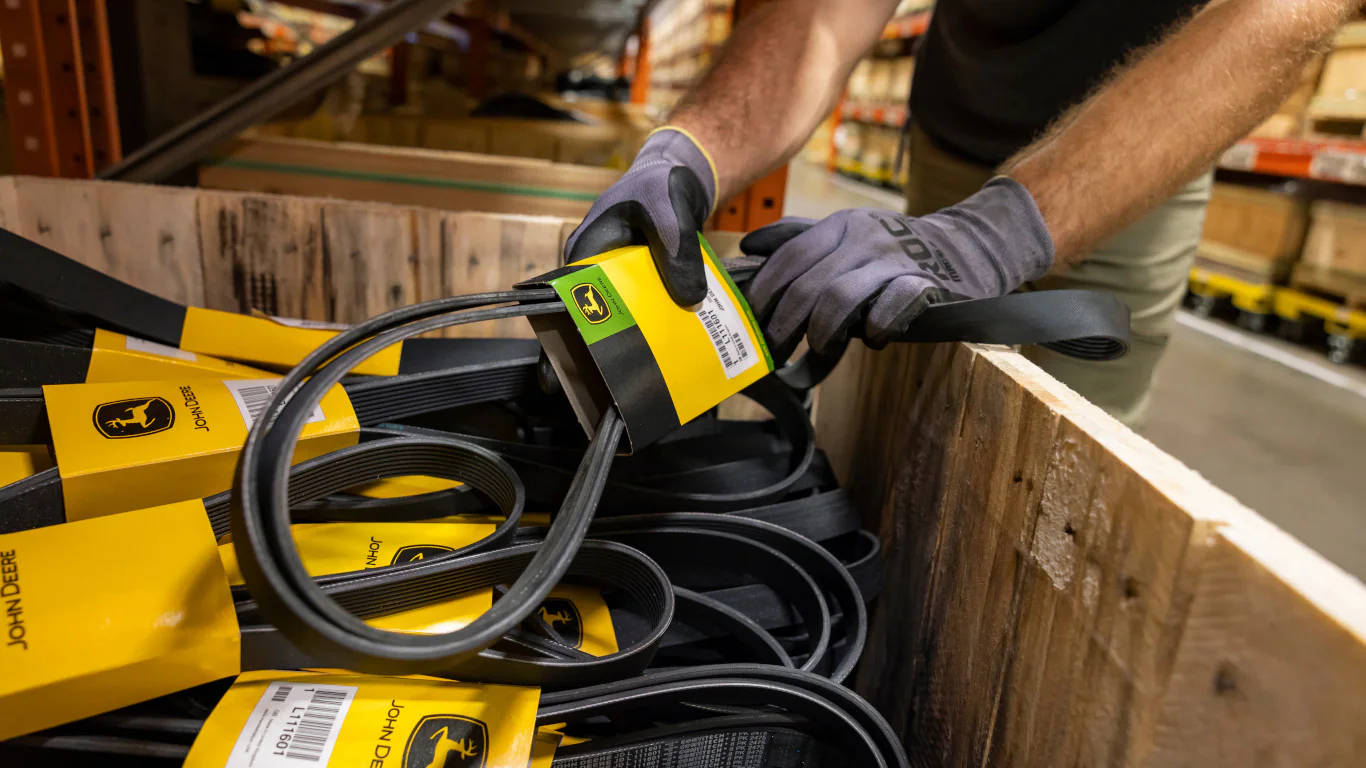
  • John Deere – $20 billion investment over the next decade in American manufacturing expansion.
  • DAMAC Properties – $20 billion investment in U.S. data centers.
  • CMA CGM – $20 billion investment in shipping and logistics expected to create 10,000 jobs.
  • Sanofi – $20 billion investment in research and manufacturing in the U.S.
  • Venture Global LNG – $18 billion investment in a Louisiana liquefied natural gas facility.
  • Woodside Energy Group – $17.5 billion investment in a new LNG facility in Louisiana.
  • GlobalFoundries – $16 billion investment expanding chip manufacturing plants in New York and Vermont.
  • FirstEnergy Corp. – $15 billion investment in energy infrastructure improvements.
  • Nippon Steel – $14 billion investment in U.S. Steel operations, including a new steel mill.
  • Stellantis – $13 billion investment to expand U.S. vehicle production by more than 50 percent.
  • Gilead Sciences – $11 billion expansion of U.S. manufacturing investment.
  • AbbVie – $10 billion investment over ten years, adding four new manufacturing plants.
  • JPMorganChase – $10 billion investment supporting U.S. manufacturing growth.
  • Merck & Co. – $9 billion investment in U.S. pharmaceutical manufacturing, including new facilities in Delaware and North Carolina.
  • PPL – $6.8 billion investment expanding power grid capacity.
  • CoreWeave – $6 billion investment in data center expansion.
  • Westinghouse – $6 billion investment to build ten nuclear reactors in the United States.
  • Clarios – $6 billion expansion of domestic manufacturing operations.
  • UCB – $5 billion investment for a new U.S. pharmaceutical manufacturing plant.
  • Ford – $5 billion investment in Kentucky and Michigan manufacturing facilities.
  • Pratt Industries – $5 billion investment creating 5,000 manufacturing jobs across four states.
  • Hanwha Group – $5 billion investment expanding shipbuilding operations in Philadelphia.
  • GlobalWafers – $4 billion investment expanding U.S. semiconductor production.
  • General Motors – $4 billion investment shifting vehicle production from Mexico and China to U.S. plants.
  • Mitsubishi – $3.9 billion investment in American energy projects.
  • Shintech – $3.4 billion expansion of a Louisiana chemical manufacturing facility.
  • Regeneron and Fujifilm Diosynth Biotechnologies – $3 billion agreement to expand pharmaceutical manufacturing in North Carolina.
  • Kraft Heinz – $3 billion investment upgrading U.S. food manufacturing plants.
  • GE Appliances – $3 billion investment expanding manufacturing across five states.
  • NorthMark Strategies – $2.8 billion supercomputing facility in South Carolina.
  • Thermo Fisher Scientific – $2 billion investment expanding manufacturing operations.
  • Amkor Technology – $2 billion semiconductor facility in Arizona, creating 2,000 jobs.
  • Biogen – $2 billion investment in North Carolina manufacturing.
  • Mars, Inc. – $2 billion expansion of U.S. manufacturing operations.
  • GE Aerospace – $2 billion combined investment creating 10,000 jobs nationwide.
  • Kimberly-Clark – $2 billion investment expanding manufacturing facilities, including a major plant in Ohio.
  • Chobani – $1.7 billion investment, including a new dairy processing plant in New York.
  • Oklo – $1.68 billion fuel recycling facility in Tennessee.
  • Corning – $1.5 billion expansion of Michigan manufacturing, creating 1,500 jobs.
  • Smithfield Foods – $1.3 billion pork processing facility in South Dakota.
  • MP Materials – $1.25 billion rare earth magnet facility in Texas.
  • First Solar – $1.1 billion solar manufacturing plant in Louisiana.
  • Carrier – $1 billion investment creating 4,000 jobs.
  • Cencora – $1 billion investment strengthening U.S. distribution networks.
  • Siemens Energy – $1 billion expansion of grid and turbine manufacturing.
  • Hikma Pharmaceuticals – $1 billion investment expanding research and manufacturing.
  • Vaxcyte – $1 billion U.S. vaccine manufacturing investment.
  • Anduril Industries – $1 billion autonomous defense systems facility in Ohio.
  • Live Nation Entertainment – $1 billion investment building 18 new music venues nationwide.
  • Hitachi – $1 billion investment in American energy infrastructure, including a transformer plant in Virginia.
  • Williams International – $1 billion aviation engine manufacturing facility in Florida.

Numerous additional companies—including Toyota, Lego, Samsung Biologics, Siemens, Abbott Laboratories, Anheuser-Busch, Whirlpool, Rolls-Royce, Philips, ABB, JBS USA, Pratt & Whitney, and many others—have also announced new manufacturing plants, technology facilities, or infrastructure investments across the country.

Supporters say the scale of the announcements reflects a broader trend of reindustrialization and renewed domestic manufacturing capacity, with hundreds of thousands of jobs expected to be created.

Economic analysts note that many large corporate investment decisions span several years and multiple administrations, but the administration’s backers argue the surge signals strong confidence in the American economy and workforce.

More investment announcements are expected as companies continue expanding U.S. operations.

Free Training

Source link

US President Donald Trump holds meeting with the largest American defence manufacturing companies


US President Donald Trump held a meeting with the largest American defence manufacturing companies yesterday and said that they have agreed to quadruple the production of exquisite class weaponry. 


Sharing the details in a social media post, President Trump highlighted that the US has a large supply of medium- and Upper Medium Grade Munitions, which he said have been used not only in Iran but also in Venezuela. 


The US President also mentioned in his post that the companies represented were the CEOs of BAE Systems, Boeing, Honeywell Aerospace, L3Harris Missile Solutions, Lockheed Martin, Northrop Grumman, and Raytheon. 


He said the meeting concluded with another meeting scheduled in two months and added that states all over the United States are bidding for these new Plants.


The meeting with the defence company CEOs comes as the United States continues with its Operation Epic Fury in West Asia.


Free Training

Source link

Hyundai’s Nuclear Engineer CEO Wages $26 Billion Gamble on American Manufacturing and Robot Revolution


GOYANG, South Korea—The trajectory of José Muñoz’s career defies conventional automotive industry wisdom. A nuclear engineer by training who once missed trains in Madrid because he didn’t own a car, Muñoz now helms one of the world’s largest automakers during perhaps the most turbulent period in modern trade history. As Hyundai Motor’s first non-Korean chief executive, the 60-year-old Spanish-American dual national is orchestrating a $26 billion American manufacturing expansion while simultaneously pivoting the 55-year-old South Korean conglomerate toward robotics, artificial intelligence, and flying vehicles.

The stakes couldn’t be higher. According to The Wall Street Journal, Hyundai reported a 22% decline in net income for 2025, battered by President Trump’s tariffs on imported vehicles including Korean-made Hyundais. Yet the company achieved record global revenue, selling more than four million vehicles worldwide—including roughly one million in the United States, representing a 39% increase since Muñoz joined the company in 2019. The dichotomy illustrates the paradox facing global automakers: unprecedented sales volumes undermined by geopolitical uncertainty and protectionist trade policies.

Muñoz’s response to this volatility reveals a management philosophy forged through decades navigating corporate tumult. Rather than retreating, he’s accelerating. “We’re focusing on accelerating,” Muñoz told the Journal regarding Hyundai’s massive U.S. investment plan. “The sooner the better, so we can enjoy our investments.” This aggressive timeline aims to insulate Hyundai from tariff exposure by localizing production, transforming the company from an importer of Korean-manufactured vehicles into a major American manufacturer. By 2030, Muñoz targets 80% of U.S.-sold Hyundais to be American-made, nearly double the current proportion.

The Tariff Tightrope and Trump’s Unpredictable Trade Policy

President Trump’s mercurial approach to international trade has created unprecedented planning challenges for multinational corporations. Just three months after the United States and South Korea negotiated to lower tariffs from 25% to 15%, Trump threatened on a Monday in early 2025 to restore the higher rate, according to reporting from The Wall Street Journal. For Hyundai, which has met with Trump on multiple occasions, these policy reversals represent both existential threat and strategic opportunity.

Muñoz maintains that Trump understands Hyundai’s commitment to American manufacturing, a belief grounded in the company’s substantial capital deployment. The $26 billion investment encompasses multiple manufacturing facilities, including the “Metaplant” complex in Georgia where Hyundai plans to deploy its Atlas humanoid robots beginning in 2028. This facility represents more than traditional automotive manufacturing—it’s a testbed for integrating advanced robotics, artificial intelligence, and next-generation production methodologies that could redefine vehicle assembly.

The September 2024 immigration raid at a battery-production plant jointly operated by Hyundai and LG Energy Solution underscored the operational complexities of this American expansion. U.S. immigration authorities detained more than 300 South Koreans at the Georgia construction site, many possessing specialized technical expertise critical to the facility’s completion. Although none were direct Hyundai employees, their detention threatened project timelines. Muñoz confirmed in his interview that the “vast majority” of detained workers obtained new visas and returned to Georgia, with the plant scheduled to open in the first half of 2025.

From Nuclear Reactors to Robot Dogs: An Unconventional Path to the C-Suite

Muñoz’s journey to Hyundai’s executive suite began in 1980s Spain, where he earned a Ph.D. in nuclear engineering and worked in the country’s nuclear energy sector. His entry into the automotive industry was accidental and romantic—literally. After repeatedly missing the final train home in Madrid due to his lack of personal transportation, a friend urged him to buy a car and introduced him to a saleswoman. “This dealer became my wife,” Muñoz recalled in the Journal interview. Her recommendation that he consider a career in automotive sales proved prescient.

His automotive career progressed through roles at Daewoo Motors, the now-defunct Korean carmaker, and Nissan, where he served as a top lieutenant to Carlos Ghosn during that executive’s tenure transforming the Japanese automaker. When Muñoz joined Hyundai in 2019 as global chief operating officer overseeing U.S. sales, the company was already experiencing momentum with popular models like the Tucson sport-utility vehicle. Together with sister brand Kia, Hyundai controlled approximately 10% of the American market, trailing only General Motors, Toyota, and Ford. Globally, the Hyundai-Kia partnership held third place behind Toyota and Volkswagen.

Muñoz’s elevation to CEO represents a watershed moment not just for Hyundai but for South Korean corporate culture. According to Park Ju-gun, CEO of Leaders Index, a Seoul-based corporate research firm, Muñoz is the only foreigner ever to serve as chief executive of a company among South Korea’s top 30 business groups. This appointment by Euisun Chung—Hyundai Motor Group’s executive chair and grandson of the company’s founder—signals recognition that navigating global markets, particularly the critical U.S. market, requires leadership attuned to Western business practices and cultural expectations.

Cultural Revolution: Breaking Hierarchies in Korea’s Rigid Corporate Structure

South Korean corporate culture, known for its rigid hierarchies and deference to seniority, has historically insulated executives from uncomfortable truths and stifled bottom-up innovation. Muñoz recognized this structural impediment as potentially fatal in an era demanding rapid adaptation. His solution: regular unscripted town halls, an unusual practice in South Korean business. When he addressed roughly 1,000 local sales employees early in 2025 in Goyang, a Seoul suburb, aides had prepared Korean translations of his English-language speech for display on large screens. Muñoz scrapped the prepared remarks, grabbed a microphone, invited an interpreter on stage, and delivered an impromptu address emphasizing that 2026 couldn’t be “just another year of business as usual.”

Initially, these town halls met silence when question time arrived—a predictable response in a culture where challenging superiors risks career consequences. Muñoz implemented a simple incentive: the first person to ask a question sometimes receives a day off work. This gamification of participation gradually eroded reticence, creating forums for genuine dialogue between management and employees across organizational levels.

Despite not speaking fluent Korean, Muñoz has created internal terminology blending Korean expressions with management philosophy. He coined “PM squared,” combining “pali, pali” (quickly) and “miri, miri” (in advance)—two common Korean phrases. This linguistic bridge demonstrates cultural adaptation while maintaining urgency around execution speed and proactive planning. The phrase has entered Hyundai’s internal vocabulary, representing Muñoz’s imprint on corporate culture.

The Robotics Pivot: From Boston Dynamics to Humanoid Workers

Hyundai’s 2021 acquisition of a controlling stake in Boston Dynamics, the robotics company famous for viral videos of its agile robot dogs, signaled ambitions extending far beyond traditional automotive manufacturing. The company has deepened this commitment under Muñoz’s leadership, positioning robotics as central to its identity transformation. “Hyundai should become ‘a tech company, mobility company’ that ‘happens to sell cars,’” Muñoz declared while speaking at a Hyundai studio in a Seoul suburb, where one of the company’s yellow robot dogs—named “Spot” and designed primarily for industrial work sites—roamed a showroom floor alongside luxury vehicles.

The Atlas humanoid robot, unveiled at a Las Vegas trade show in January 2025, represents the culmination of this robotics investment. According to The Wall Street Journal, Atlas can twist its head, torso, and joints 360 degrees and autonomously replace its own batteries at charging stations. These industrial robots are scheduled for deployment in Hyundai’s Georgia Metaplant facilities beginning in 2028, where they’ll work alongside human employees in vehicle assembly and manufacturing processes.

The stock market’s response to Hyundai’s robotics push validates Muñoz’s strategic bet. When the company showcased Atlas in January, Hyundai’s stock price skyrocketed, gaining 80% in just one month. This market enthusiasm suggests investors view Hyundai’s diversification beyond traditional automotive manufacturing as value-creating rather than distracting—a critical endorsement as the company allocates substantial capital to these moonshot projects.

The Nvidia Partnership: AI-Powered Manufacturing and Autonomous Vehicles

Hyundai’s partnership with artificial intelligence leader Nvidia represents another pillar of Muñoz’s technology-first strategy. The collaboration involves deploying 50,000 Blackwell chips—Nvidia’s latest AI accelerator architecture—to make Hyundai’s manufacturing processes smarter and bring real-time AI functions to both vehicles and robots. This massive chip deployment positions Hyundai among the largest industrial users of cutting-edge AI hardware, comparable to major technology companies rather than traditional automakers.

The Nvidia partnership extends beyond factory automation. Real-time AI functions in vehicles promise enhanced autonomous driving capabilities, predictive maintenance, personalized user experiences, and over-the-air updates that continuously improve vehicle performance. For Hyundai’s robots, AI enables adaptive learning, allowing machines to optimize movements, anticipate maintenance needs, and collaborate more effectively with human workers. This integration of AI across manufacturing and products represents the convergence Muñoz envisions—where Hyundai’s identity as a “tech company” becomes indistinguishable from its automotive heritage.

The strategic logic is compelling: as vehicles become increasingly software-defined and autonomous, the technical capabilities required to manufacture them converge with those needed to develop advanced robotics. Hyundai’s simultaneous push into both domains creates potential synergies in AI development, sensor technology, battery systems, and manufacturing processes. Whether these synergies materialize sufficiently to justify the capital investment remains an open question, but Muñoz’s bet is that future mobility companies must master these technologies or risk obsolescence.

Dual-Track Strategy: Hybrids for America, EVs for China

Muñoz’s product strategy reflects sophisticated market segmentation, acknowledging that different regions require fundamentally different approaches. In the United States, where consumer resistance to fully electric vehicles persists and charging infrastructure remains incomplete, Hyundai plans to double its hybrid model offerings to more than 18 by 2030 while slowing the transition to pure EVs. This pragmatic approach contrasts sharply with competitors who’ve committed to aggressive EV timelines only to scale back amid weak demand.

China presents an entirely different competitive environment. The world’s largest automotive market has embraced electric vehicles with government support, extensive charging infrastructure, and fierce domestic competition from companies like BYD, NIO, and XPeng. Muñoz recently traveled to China, where Hyundai plans to introduce some 20 new EV models. His assessment of these visits reveals humility uncommon among Western executives: “While in the past I was going to China to teach them about competition,” Muñoz acknowledged, “now I go to learn.”

This admission recognizes China’s emergence as the global leader in EV technology, battery production, and digital vehicle features. Chinese automakers have pioneered innovations in battery chemistry, autonomous driving software, and integrated digital ecosystems that Western manufacturers are now scrambling to match. For Hyundai, succeeding in China requires not just localized production but genuine technological innovation competitive with domestic leaders who benefit from massive scale, government support, and rapid iteration cycles.

The American Manufacturing Imperative: Localizing to Survive

Muñoz’s push to manufacture 80% of U.S.-sold Hyundais domestically by 2030 represents more than tariff mitigation—it’s an irreversible strategic commitment. “Once you make a commitment to make a factory, and then you have the factory up and running, there is no way back,” he told the Journal. This permanence creates both opportunity and risk. If U.S. demand remains strong, domestic production provides cost advantages, supply chain resilience, and political goodwill. If demand falters or trade policies shift favorably toward imports, Hyundai’s fixed investments in American manufacturing could become stranded assets.

The Georgia Metaplant complex exemplifies this commitment’s scale. Beyond traditional assembly lines, the facility will integrate robotics, AI-powered quality control, and advanced battery production through the LG Energy Solution partnership. The plant’s design as a “Metaplant” suggests modular, flexible manufacturing capable of adapting to different vehicle platforms and powertrains—critical flexibility as consumer preferences shift between hybrids, EVs, and traditional internal combustion engines.

Hyundai’s American expansion also carries symbolic weight. As a South Korean company investing heavily in U.S. manufacturing while Japanese and German competitors maintain more globally distributed production, Hyundai positions itself as aligned with American industrial policy priorities. This political capital could prove valuable in future trade negotiations, regulatory discussions, or government procurement opportunities. Muñoz’s multiple meetings with President Trump suggest active cultivation of this relationship, though the president’s unpredictability means no amount of investment guarantees favorable treatment.

Flying Cars and Mobility’s Uncertain Future

Among Muñoz’s more speculative bets are flying cars—urban air mobility vehicles that promise to revolutionize transportation in congested metropolitan areas. While the Journal article mentions this ambition, the practical timeline and investment scale remain unclear. Multiple companies, including established aerospace manufacturers and startups, are pursuing electric vertical takeoff and landing (eVTOL) aircraft, but regulatory approval, infrastructure requirements, and public acceptance present formidable barriers.

Hyundai’s advantage in this emerging sector stems from its expertise in electric powertrains, battery systems, and mass manufacturing—capabilities that translate more directly to eVTOL production than traditional aerospace experience. The company could leverage its automotive supply chain, quality control processes, and global distribution network to manufacture flying vehicles at scales and price points unachievable by smaller competitors. However, the sector remains pre-commercial, with no clear path to profitability or regulatory certification for most designs.

This diversification into speculative mobility concepts reflects Muñoz’s conviction that Hyundai must explore multiple futures simultaneously. In an industry facing disruption from electrification, autonomy, shared mobility, and potentially aerial transportation, placing bets across multiple technologies hedges against uncertainty. Whether flying cars prove viable or join the long list of overhyped transportation innovations remains unknowable, but Hyundai’s resources allow experimentation that smaller competitors cannot afford.

Stock Market Enthusiasm and Investor Skepticism

The 80% stock price surge following the Atlas robot demonstration illustrates investor enthusiasm for Hyundai’s technology pivot, but sustainability of this valuation remains questionable. Technology companies command higher multiples than traditional automakers because investors expect faster growth, higher margins, and network effects that create competitive moats. Whether Hyundai can achieve similar characteristics through robotics and AI, or whether the stock appreciation represents temporary excitement, will become clear as the company reports financial results from these new divisions.

The 22% net income decline in 2025, despite record revenue, demonstrates the financial pressure Hyundai faces. Tariffs directly impact profitability on imported vehicles, while massive capital investments in American manufacturing, robotics development, and AI partnerships depress near-term earnings. Investors betting on Hyundai’s transformation must accept years of depressed profitability as the company builds capabilities in new domains while maintaining competitiveness in traditional automotive markets.

Muñoz’s challenge involves managing this transition without alienating investors who expect automotive-level returns or disappointing those anticipating technology-company growth. The dual identity he articulates—”a tech company, mobility company that happens to sell cars”—must eventually translate into financial performance that justifies technology valuations. If robotics and AI remain small divisions subsidized by profitable automotive operations, the transformation narrative collapses and the stock reprices accordingly.

Competitive Pressures and Industry Transformation

Hyundai’s transformation occurs amid industry-wide upheaval as traditional automakers, technology companies, and Chinese manufacturers compete across multiple dimensions simultaneously. Tesla demonstrated that automotive companies could command technology valuations, but its recent struggles illustrate the difficulty sustaining that positioning. Traditional competitors like General Motors, Ford, and Volkswagen are pursuing similar strategies, investing in EVs, autonomous driving, and software capabilities while managing legacy operations.

Chinese manufacturers pose perhaps the greatest competitive threat. Companies like BYD have achieved massive scale in EV production with vertically integrated battery manufacturing, enabling cost structures Western competitors struggle to match. Chinese automakers are also advancing rapidly in autonomous driving software, digital vehicle features, and AI integration—precisely the domains where Hyundai seeks differentiation. If Chinese manufacturers successfully expand beyond their domestic market, they could pressure Hyundai globally on both cost and technology.

Hyundai’s advantages include established global distribution, brand recognition in key markets, and financial resources to invest in multiple technologies simultaneously. The company’s partnership with Kia provides scale benefits while maintaining brand differentiation. However, these advantages matter only if Hyundai successfully executes its technology transformation while maintaining automotive competitiveness—a dual mandate that has proven difficult for most traditional manufacturers attempting similar pivots.

The Leadership Test: Can an Outsider Transform Korean Corporate Culture?

Muñoz’s tenure ultimately tests whether an outsider can fundamentally transform a major South Korean conglomerate’s culture and strategy. His appointment by Euisun Chung signals recognition that change requires external perspective, but implementation depends on thousands of employees embracing new approaches that challenge traditional hierarchies and risk-averse decision-making. The town halls, “PM squared” philosophy, and unscripted communications represent cultural interventions, but their depth remains uncertain.

South Korean business history offers few precedents for successful foreign leadership of major conglomerates. The country’s corporate culture evolved through rapid industrialization under founder-led chaebols, creating deeply embedded practices resistant to change. Muñoz’s nuclear engineering background, automotive industry experience across multiple companies and cultures, and personal story as an accidental entrant to the industry provide unconventional credentials that may enable fresh thinking unencumbered by automotive orthodoxy.

The coming years will reveal whether Muñoz’s aggressive timeline for American manufacturing, robotics deployment, and technology transformation proves prescient or overambitious. His bet that acceleration—getting factories operational and investments productive sooner—provides the best defense against tariff uncertainty and competitive pressure reflects urgency appropriate to the industry’s disruption. Whether Hyundai emerges as a technology-enabled mobility leader or remains a successful but traditional automaker depends substantially on execution of the vision Muñoz articulates with conviction but must deliver amid unprecedented uncertainty.

Manufacturing Renaissance or Stranded Assets?

The $26 billion American investment represents Hyundai’s largest geographic bet, concentrating resources in a market characterized by political volatility, mature demand, and intense competition. The irreversibility Muñoz acknowledges—”there is no way back” once factories are operational—creates path dependency that could prove advantageous or constraining depending on how trade policy, consumer preferences, and competitive dynamics evolve. If American manufacturing costs remain competitive and tariffs persist, the investment appears prudent. If trade liberalization resumes or automation eliminates labor cost advantages, the fixed investments could underperform.

The integration of robotics into these facilities attempts to address this uncertainty by creating manufacturing flexibility and efficiency that justifies domestic production regardless of trade policy. If Atlas robots and AI-powered systems substantially reduce labor costs while improving quality and flexibility, Hyundai’s American plants could achieve cost structures competitive with any global location. This technological solution to a political problem represents the convergence of Muñoz’s dual strategy—using robotics and AI investments to enable geographic diversification that mitigates trade risk.

However, robotics deployment at scale in automotive manufacturing remains largely unproven. While robots have assembled vehicles for decades, humanoid robots performing diverse tasks alongside human workers represent a significant technological leap. The 2028 deployment timeline for Atlas robots in the Georgia Metaplant provides limited time to develop, test, and refine these systems before commercial production begins. Delays or performance shortfalls could undermine the facility’s economic viability, turning Muñoz’s moonshot into a cautionary tale about overambitious technology bets.

The Tariff Gambit: Political Risk as Strategic Catalyst

President Trump’s tariff threats, while creating near-term financial pressure, may ultimately accelerate transformations that benefit Hyundai long-term. Without tariff pressure, the company might have maintained more globally distributed production, preserving optionality but limiting scale in any single market. Forced localization in the crucial American market creates committed presence that could yield political influence, supply chain advantages, and customer perception benefits beyond pure economics.

The immigration raid on the Georgia battery plant, while disruptive, revealed vulnerabilities in Hyundai’s execution that could be addressed before more critical project phases. The resolution—obtaining proper visas for specialized workers—established processes for future skilled labor importation while demonstrating the company’s ability to navigate U.S. immigration bureaucracy. These operational lessons learned during construction could prevent more costly disruptions during production ramp-up.

Muñoz’s confidence that Trump “understood Hyundai’s commitment to the U.S.” reflects either genuine insight from their meetings or strategic optimism necessary to maintain employee and investor confidence. The president’s Monday threat to restore 25% tariffs just months after negotiating lower rates suggests that understanding may not translate to predictable policy. Hyundai’s strategy must therefore succeed regardless of Trump’s decisions—a difficult design criterion that forces resilience into planning assumptions and investment decisions.

The Nuclear Engineer’s Calculated Reaction

Muñoz’s nuclear engineering background may provide unexpected advantages navigating the current environment. Nuclear engineering requires managing extreme complexity, planning for low-probability catastrophic scenarios, and maintaining safety margins amid uncertainty—skills directly applicable to leading a global automaker during trade wars and technological disruption. His career transition from nuclear reactors to automotive sales to corporate leadership demonstrates adaptability and willingness to embrace radical change, qualities essential for the transformation he’s orchestrating.

The personal narrative—from engineer who didn’t own a car, to meeting his wife through a vehicle purchase, to leading a major automaker—provides authentic storytelling that humanizes corporate strategy. In an era where CEO communication increasingly matters for employee engagement and public perception, Muñoz’s unconventional background and willingness to share personal details create connection that traditional automotive executives often lack. This communication skill may prove as valuable as strategic vision in mobilizing Hyundai’s global workforce behind ambitious transformation.

As Hyundai navigates the collision of trade protectionism, technological disruption, and cultural transformation, Muñoz’s leadership faces tests that will define both his tenure and the company’s trajectory for decades. The $26 billion American bet, robotics pivot, and cultural evolution represent synchronized gambles that must succeed together—partial victories in one domain cannot compensate for failures in others. Whether this nuclear engineer turned automotive executive can orchestrate such comprehensive transformation while maintaining profitability and competitiveness will determine if Hyundai emerges as a mobility technology leader or remains a successful but traditional automaker navigating an industry in flux. The answer will shape not just one company’s future, but provide a case study in whether traditional manufacturers can successfully reinvent themselves for an uncertain technological and geopolitical era.

Free Training

Source link

John Deere Announces Two New U.S. Facilities, Expands American Manufacturing


MOLINE, Ill. — John Deere announced plans to expand its U.S. manufacturing footprint with the opening of two new domestic facilities, reinforcing the company’s long-standing commitment to American industry, innovation, and job creation. The expansion includes a new distribution center near Hebron, Indiana, and a state-of-the-art excavator factory in Kernersville, North Carolina, both expected to open within the next year.

The investment reflects John Deere’s broader strategy to strengthen its U.S.-based supply chain while relocating key manufacturing operations from overseas to domestic campuses. Notably, the Kernersville facility will produce the only excavator designed, developed, and manufactured entirely in the United States.

Courtesy: Photo by John Deere“Our investment in these new facilities underscores John Deere’s dedication to strengthening the backbone of American industry and supporting local economies,” said John May, chairman and chief executive officer of John Deere. “We believe in building America, and these projects represent our intent to continue driving innovation and job creation in the United States.“

Indiana Expansion Strengthens Supply Chain

John Deere recently broke ground on its new distribution center near Hebron, Indiana, a location chosen for its central position and strong workforce. The facility is designed to enhance nationwide supply chain operations, ensuring faster and more reliable delivery of equipment and parts across multiple customer segments.

The Indiana project is expected to create approximately 150 jobs and support John Deere customers across agriculture, turf, construction, forestry, and mining markets.

“This new facility is an investment in customer expectations around world class product support through parts availability for our US based ag, turf, construction, forestry, mining and turf customers,” said Denver Caldwell, vice president, Aftermarket and Customer Support. “Indiana’s strong workforce and central location make it an ideal choice for expansion.”

John Deere will continue operating its primary North American Parts Distribution Center in Milan, Illinois, which has been in service since 1973 and employs approximately 1,200 workers.

Courtesy: Photo by John Kakuk on Unsplash

Kernersville Factory Brings Excavator Production Home

In North Carolina, John Deere will invest $70 million to construct a new excavator factory at its Kernersville campus. The facility will leverage advanced manufacturing technologies to produce next-generation excavators for the construction market and will take over production previously based in Japan.

The new factory is expected to employ more than 150 people and play a key role in meeting growing equipment demand while reinforcing domestic manufacturing capabilities.

“We are excited to bring this new facility to our Kernersville campus and to be part of the region’s thriving manufacturing community,“ said Ryan Campbell, president Worldwide Construction and Forestry and Power Systems. “Our focus will be on delivering excellence, creating jobs, and advancing the legacy of John Deere in American manufacturing.”

Long-Term Commitment to U.S. Manufacturing

Company leadership emphasized that the two new facilities are part of a broader, long-term investment strategy aimed at strengthening U.S. manufacturing capacity and economic growth.

“These investments further demonstrate our commitment to invest $20B in U.S. manufacturing over the next 10 years,” May said. “It is a testament to our confidence in the future of U.S. manufacturing and our unwavering commitment to innovation, quality, and economic growth.”

With these projects, John Deere is expected to create hundreds of new American jobs while expanding its ability to serve customers and support local economies across the Midwest and Southeast.

Originally reported by Deere.Com

Free Training

Source link