
US are planning for an industrial hub in the Philippines. What does this mean?


– The US and the Philippines’ planned 1,620ha industrial hub to shore up supply chains for critical industries marks Manila’s most concrete step in alignment with Washington’s efforts to rewire global production networks.

The proposed site, on the main island of Luzon, will support manufacturing in sectors such as semiconductors, electronics and critical minerals, the US Department of State said in a statement on April 16.

The Wall Street Journal (WSJ) reported that the deal is expected to offer US companies access to essential inputs such as critical minerals that bypass Beijing’s control. It said the hub will have diplomatic immunity and operate under US common law, the first such arrangement in the world.

Undersecretary of State for Economic Affairs Jacob Helberg told WSJ that the US would use the land rent-free for two years and administer it as a special economic zone.

Analysts broadly welcomed the move as a long-overdue economic dimension to an alliance historically dominated by defence, but cautioned that the hub’s unusual legal status and the Philippines’ traditional role as a raw materials supplier could limit its upside.

The project will be designated as an economic security zone within the Luzon Economic Corridor, a US-backed initiative linking industrial hubs north of Manila such as Clark and Subic to the capital’s ports and markets.

Details about the economic zone have yet to be publicised, including which US companies will participate and whether the area would be exclusive to US companies.

The Straits Times has contacted the office of President Ferdinand Marcos Jr for comment.

The US State Department said the Luzon hub would serve as a pilot for a wider network of industrial zones across partner countries, aimed at fast-tracking investments and using AI to better coordinate production and supply chains.

“The zone can leverage the Philippines’ geographic centrality in the Indo-Pacific, its young and technically skilled workforce, and its deepening alliance with the United States,” it added.

The announcement came as the Philippines became the 13th signatory to formally join Pax Silica, a US-led initiative that seeks to secure the full technology supply chain, from raw materials to advanced manufacturing and data infrastructure.

The State Department said the initiative is a key pillar of the US’ economic statecraft strategy, aimed at reducing dependence on rival economies and deepening industrial cooperation among allies.

“This is a good development… It adds on to the very hard security-dominant cooperation between the US and the Philippines,” said Dr Aries Arugay, a political scientist at the ISEAS – Yusof Ishak Institute in Singapore, noting that economic resilience is increasingly being treated as a national security concern.

He said that by anchoring investments, manufacturing and jobs in the Philippines, the initiative could help “lock in” long-term commitment on both sides, reducing the risk of fluctuating political priorities that have at times complicated bilateral ties.

“What’s good here is that we’re going to be part of the supply chain. This increases our relevance (to the US). We won’t be accused by the Trump administration of benefiting more than contributing to our alliance,” said Dr Arugay.

Still, he said the hub having diplomatic immunity under US common law could potentially be challenged before the Philippine Supreme Court over constitutionality concerns. “The Philippines should negotiate well and not compromise national interests because this is exactly the criticism with the US alliance,” he said.

Geopolitical analyst Dindo Manhit, who is president of Manila-based think-tank Stratbase Institute, said the hub would still have to operate within the Philippines’ existing legal framework for investment zones.

“At most, this can be structured as a special economic zone under the PEZA law,” he said, referring to the Philippine Economic Zone Authority, which governs eco-zones and allows fiscal incentives and streamlined regulations but keeps them under Philippine jurisdiction.

The economic upside could be significant. The Philippines has long sought to revive its manufacturing base and move up global value chains, but has struggled to compete with regional peers such as Vietnam and Thailand.

The development reflects a broader shift towards what Mr Manhit described as “geo-economics”, where economic partnerships increasingly reinforce strategic alignments.

“This is very important… We’re seeing defence cooperation now crossing into the economic side,” he said, pointing to the involvement of major economies and traditional security partners in Pax Silica.

He added that the hub could bring job-generating investments and help drive growth anchored on manufacturing – an area where the Philippines has historically lagged behind but which remains critical for long-term development.

Assistant Professor J.C. Punongbayan of the University of the Philippines-Diliman School of Economics said the project could generate jobs, particularly if it succeeds in attracting electronics and advanced manufacturing firms with strong linkages to the local economy.

“But the benefits will depend on execution. It will not automatically translate into broad-based employment,” he said.

Dr Punongbayan said that while the Philippines has a “decent base” in engineering, IT and manufacturing, gaps remain in more specialised areas such as AI and advanced production.

“Some foreign talent may be needed at first, but that can still be positive if it helps train Filipino workers and build local capability,” he said, adding that the key question is whether the hub becomes “a genuine driver of industrial upgrading or just a self-contained enclave”.

At the same time, the project sits squarely within intensifying US-China competition over access to critical minerals and advanced technologies.

China currently dominates several critical industries, such as rare earth processing and battery supply chains, leaving the US and its partners seeking to diversify sourcing and production.

The Philippines, with its reserves of nickel, copper and cobalt, has emerged as a natural candidate for such efforts, the US State Department said.

Mr Manhit downplayed the risk of potential pushback from Beijing, arguing that the Philippines’ economic fundamentals remain anchored in its ties with Western and like-minded economies.

“There’s no risk here,” he said, noting that key drivers of the Philippine economy such as remittances, business process outsourcing and manufacturing are largely tied to partners within the Pax Silica network.

Still, Dr Arugay cautioned that the benefits for the Philippines would depend on how far it can move beyond its traditional role as a supplier of raw materials. He stressed the need for policies that attract higher-value activities such as processing and manufacturing.

He noted there will also be environmental considerations for the Philippines, with the extraction and processing of critical minerals known to be resource-intensive and potentially polluting.

“If the role remains extractive, then we stay at the lower end of the supply chain,” he said.

Free Training

Source link

Is its manufacturing diversification strong enough to unloc


As Patrick Industries expands across key U.S. manufacturing sectors, you need to know if its strategy delivers reliable growth for investors in the United States and English-speaking markets worldwide. Here’s what drives the business and what to watch. ISIN: US7033951036

You rely on companies like Patrick Industries when building portfolios focused on resilient U.S. manufacturing. This stock offers exposure to recreational vehicles, marine, and housing markets through a diversified supplier model. Understanding its business model helps you assess if it’s positioned for steady gains amid economic shifts.

Updated: 17.04.2026

By Elena Vargas, Senior Markets Editor – Exploring how diversified manufacturers like Patrick Industries shape investor strategies in volatile sectors.

Patrick Industries’ Core Business Model

Patrick Industries operates as a leading supplier of components and materials to specialized markets in the United States. The company provides doors, furniture, axles, and other essentials primarily to the RV, marine, manufactured housing, and industrial sectors. This focus on niche, value-added distribution sets it apart from broad commodity producers.

You benefit from this model because it emphasizes consolidation in fragmented industries. Patrick acquires smaller distributors to expand its footprint, creating efficiencies that support margin growth. Over time, this strategy has built a network serving major OEMs like Winnebago and Thor Industries.

The approach reduces reliance on any single customer or product line. For investors in the United States, this means exposure to consumer-driven sectors without the full cyclical risks of pure-play manufacturers. The model’s strength lies in its ability to pass through pricing power during demand upswings.

Distribution centers across key regions ensure quick delivery and inventory management. This logistics edge helps Patrick maintain relationships with builders facing tight timelines. As you evaluate the stock, consider how this operational backbone supports performance in varied economic conditions.

Official source

All current information about Patrick Industries from the company’s official website.

Visit official website

Key Products and End Markets

Patrick Industries supplies a wide range of products tailored to its core markets. In the RV sector, it offers cabinetry, countertops, and chassis components that go into travel trailers and motorhomes. Marine products include docks, railings, and seating for boats and pontoons.

For manufactured housing, the company provides siding, roofing, and interior fixtures. Industrial offerings cover lawn and garden equipment plus powersports vehicles. This diversification across leisure and housing segments provides balance against sector-specific downturns.

You see value here because consumer spending on RVs and boats often rebounds strongly post-recession. Patrick captures this through its position as a one-stop supplier. The marine market, in particular, benefits from steady demand in coastal U.S. regions.

Housing components tie into broader affordability trends. As builders seek cost efficiencies, Patrick’s scale delivers competitive pricing. This product-market fit makes the stock relevant for you tracking U.S. consumer and construction cycles.

Market mood and reactions

Industry Drivers and Competitive Position

Several drivers shape Patrick Industries’ operating environment. RV shipments fluctuate with fuel prices and interest rates, but long-term camping trends support growth. Marine demand ties to disposable income and weather patterns in key states like Florida and Michigan.

Manufactured housing benefits from housing shortages in the United States. With traditional homebuilding slowed by labor and material costs, modular options gain traction. Patrick holds a strong competitive position through its acquisition-driven scale.

Smaller rivals lack the buying power and distribution network Patrick has built. This moat allows better negotiating with suppliers and customers. For you as an investor, this positioning means potential outperformance during industry recoveries.

Broader trends like outdoor recreation post-pandemic continue to lift demand. Patrick’s focus on these markets positions it ahead of general industrial suppliers. Watch how consolidation in OEMs further entrenches its role.

Why Patrick Industries Matters for U.S. Investors

For readers in the United States and across English-speaking markets worldwide, Patrick Industries provides targeted exposure to domestic manufacturing revival. Its markets align with American consumer preferences for RVs and boating. This makes the stock a play on leisure spending without international currency risks.

You can use it to diversify beyond tech-heavy portfolios. The company’s U.S.-centric operations shield it from global trade tensions. English-speaking markets benefit similarly through shared economic cycles in recreation.

Interest rate sensitivity affects housing and RV financing, but Patrick’s supplier role offers leverage to volume upticks. As U.S. housing affordability pressures persist, manufactured homes represent an accessible alternative. This relevance extends to investors seeking mid-cap stability.

The stock’s performance often tracks consumer confidence indicators. You gain insight into retail trends through its results. This domestic focus enhances its appeal for portfolios emphasizing U.S. growth stories.

Read more

More developments, headlines, and context on the stock can be explored quickly through the linked overview pages.

Current Analyst Views

Analysts from reputable firms view Patrick Industries as a solid pick in the specialty manufacturing space, citing its acquisition strategy and market positioning. Coverage emphasizes the company’s ability to navigate cyclical sectors through diversification. Recent assessments highlight resilience in RV and marine demand.

Firms like those tracking consumer goods note Patrick’s margin expansion potential. They point to operational efficiencies from integrations as key positives. For you, these views suggest watching earnings for acquisition updates.

Consensus leans toward holding or accumulating during dips, based on historical recovery patterns. Analysts stress the importance of housing market trends. This perspective helps you balance optimism with sector risks.

Risks and Open Questions

Key risks for Patrick Industries include economic slowdowns hitting discretionary spending. High interest rates could curb RV and boat purchases, pressuring volumes. Supply chain disruptions remain a concern in components sourcing.

Over-reliance on acquisitions poses integration risks if deals underperform. Customer concentration in top OEMs adds vulnerability to their decisions. You should monitor debt levels as leverage supports growth but amplifies downturns.

Open questions center on housing policy changes affecting manufactured homes. Will RV innovation drive premium products? Execution on new market entries will test management’s track record.

Competition from in-house OEM production could erode shares. Watch commodity price swings impacting costs. These factors make risk management central to your investment thesis.

Disclaimer: Not investment advice. Stocks are volatile financial instruments.

Free Training

Source link

US & Philippines to Create 4,000 Acre Manufacturing Zone


The manufacturing zone

The US State Department said in a statement that the hub is expected to serve as a purpose-built platform for allied manufacturing.

The currently conceptual site will serve as an “investment acceleration hub” where the specific industrial activities taking place will be shaped by market demand, host-country comparative advantages and the “evolving needs of the allied network”.

Situated within the Luzon Economic Corridor, the State Department said the Zone can leverage the Philippines’ geographic centrality in the Indo-Pacific as well as “its young and technically skilled workforce”.

This site, the first of its kind, is being designated by the Philippines as an Economic Security Zone, a new model for AI-native investment acceleration hubs being developed under the Pax Silica Initiative.

The Wall Street Journal reports that the administration will ask companies to put forward proposals to compete for a spot in building out the hub, giving priority to bids that will move critical minerals processing and manufacturing away from Chinese suppliers.

China and supply chains

Pax Silica is the Department of State’s effort on AI and supply chain security which spans advanced manufacturing and AI infrastructure with a goal to “reduce coercive dependencies”.

As the US ramps up manufacturing and production of these facilities in line with new technological developments, concerns have been raised about how dependent US supply chains and manufacturing is on China. 

Undersecretary of State for Economic Affairs Jacob Helberg told the Wall Street Journal: “The current geography of the global supply chain is completely unsustainable.” 

Free Training

Source link

Missouri S&T – News and Events – S&T opens Missouri Protoplex for advanced manufacturing


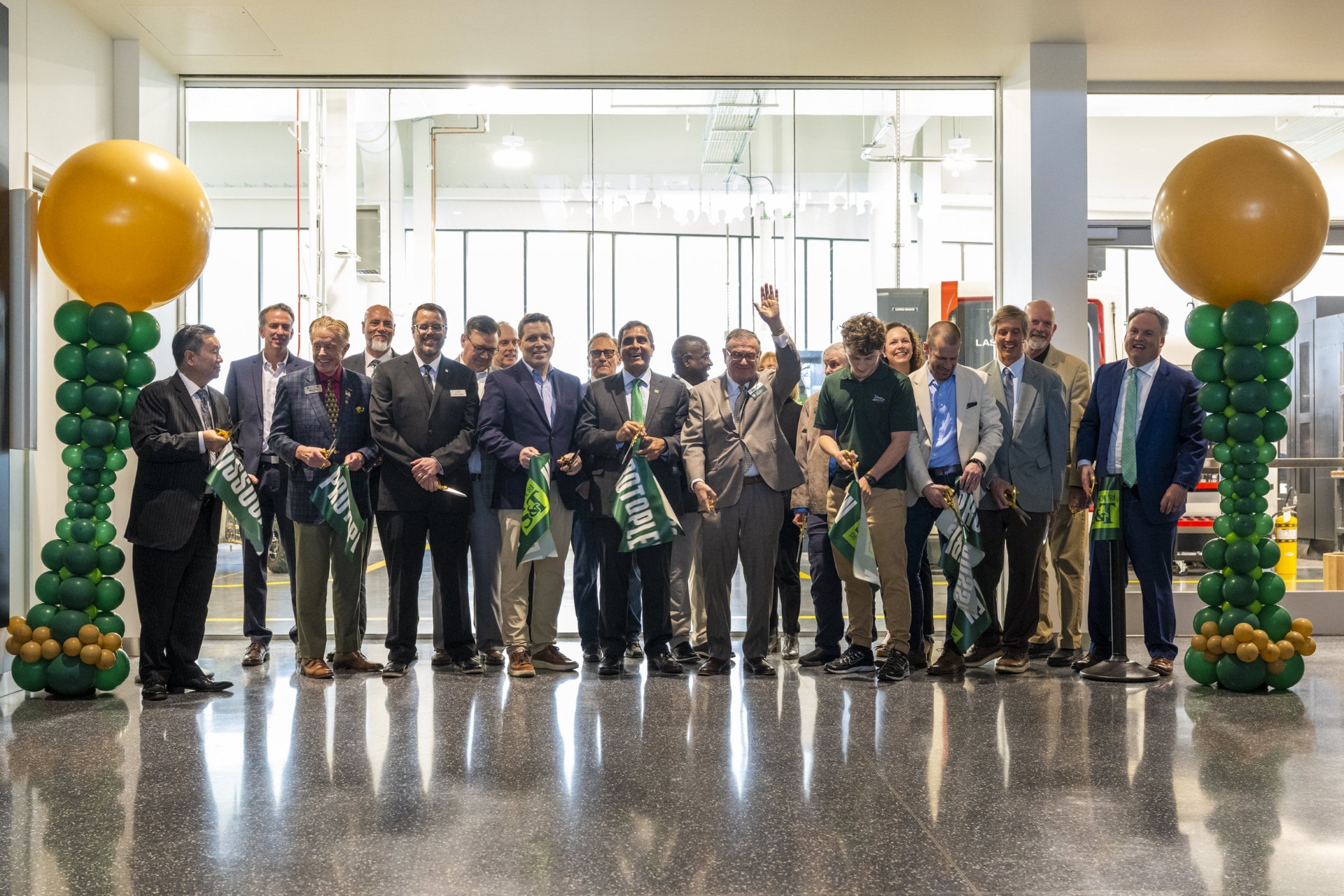
Nearly 500 people celebrated the opening of the Missouri Protoplex on April 15 at the new facility, located at 1700 White Columns Drive in Rolla. The 117,000-square-foot advanced manufacturing facility is the first building in Missouri S&T’s Manufacturing Technology and Innovation Campus.

Group of leaders after ribbon is cutLeaders celebrate after cutting the ribbon to mark the opening of the Missouri Protoplex on April 15. Photo by Michael Pierce/ Missouri S&T
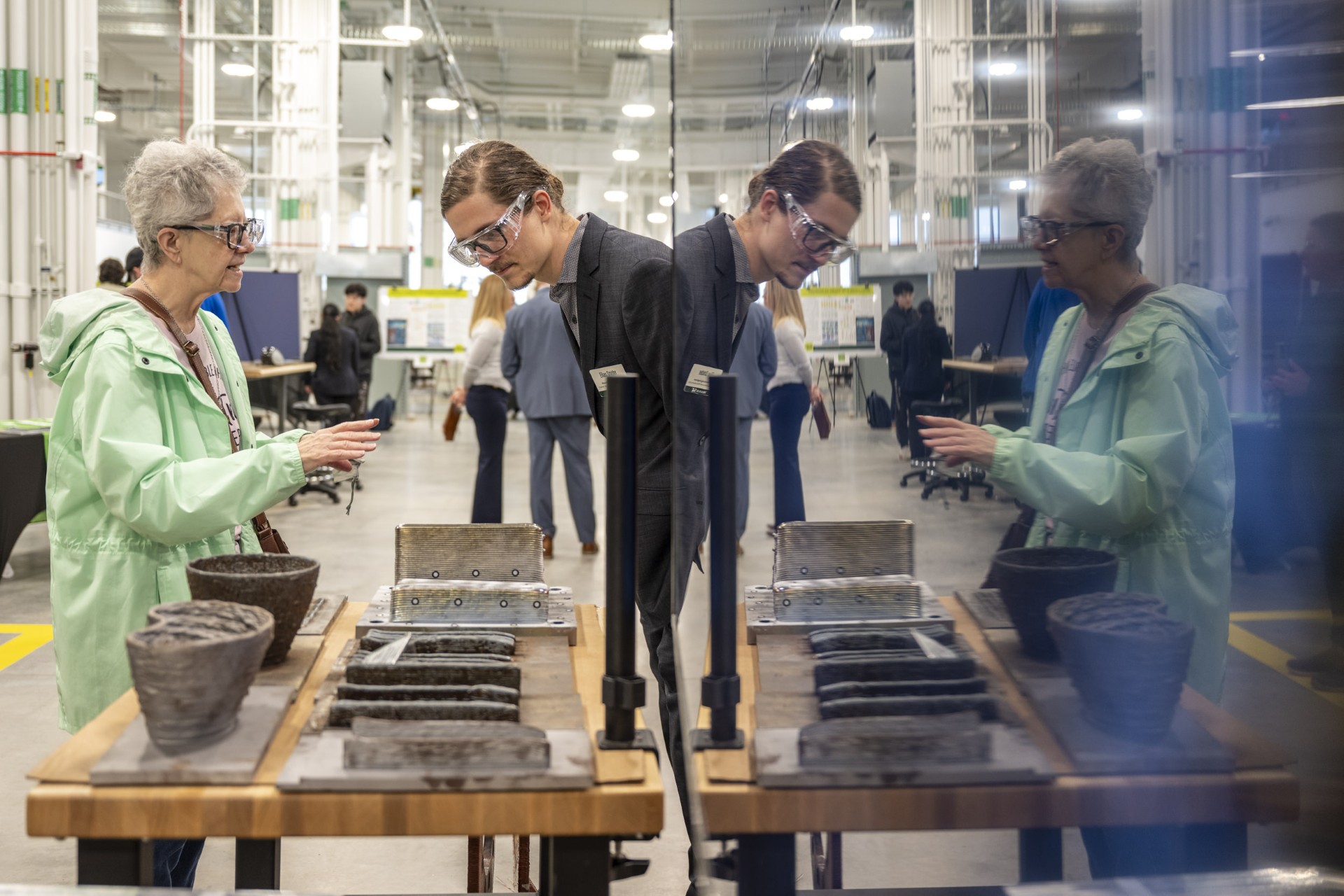
“On behalf of the Board of Curators, I’m excited today to join in the dedication of the Missouri Protoplex, one of the most comprehensive university-based manufacturing facilities in the nation,” said Todd Graves, chair of the University of Missouri Board of Curators. “With the Protoplex, Missouri S&T is taking the lead to ensure our state’s manufacturing innovators and industry partners have access to the latest research technology and equipment, along with enhanced space to design and test their new products and processes.”

Engineer shows guest manufacturing equipment. Students and engineers gave demonstrations and answered questions during the April 15 Protoplex open house. Photo by Michael Pierce/Missouri S&T
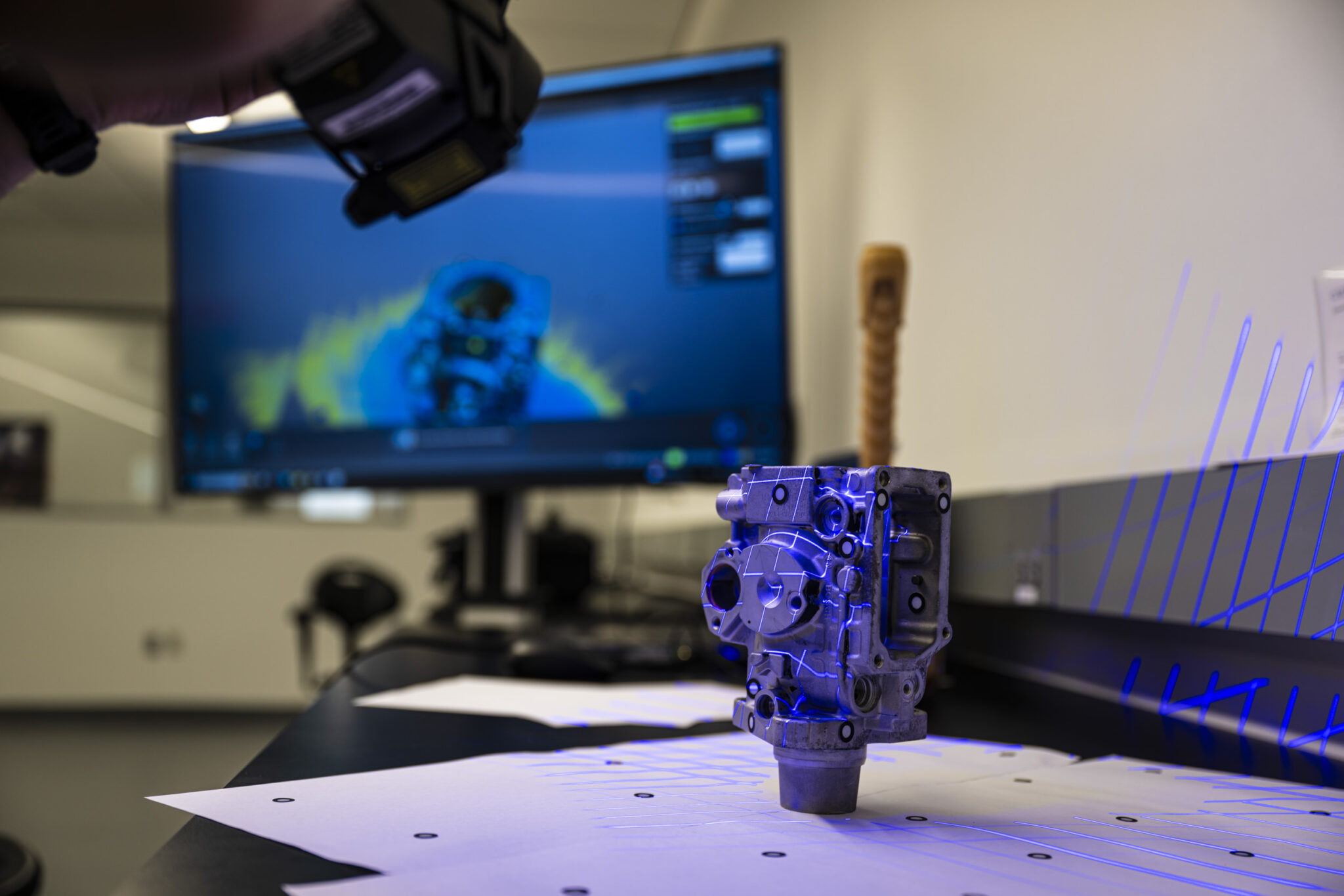
The facility includes 40,000 square feet of high-bay manufacturing space and more than 60 industrial-scale pieces of equipment and manufacturing systems. S&T has already secured more than $22 million to support collaborations with its industry and research partners.

“Our previous governor, Mike Parson, our current governor, Mike Kehoe, and elected leaders have made it a strategic point to invest in higher education, infrastructure and workforce development, and this is another testament to that investment that’s happening here,” said Dr. Mun Choi, president of the University of Missouri.

Gov. Kehoe was unable to attend but shared his congratulations in a video message played during the ceremony.

A 3D scanning system projects patterned blue light onto a metal part to capture precise measurements. A 3D scanning system projects patterned blue light onto a metal part to capture precise measurements. Photo by Michael Pierce/Missouri S&T

“When we broke ground for the Missouri Protoplex three years ago, I spoke about the need for such a facility to support our engineering education and technological workforce needs,” said Dr. Mo Dehghani, chancellor of Missouri S&T. “Now, more than ever, this facility is needed to strengthen U.S. manufacturing, drive economic development and build the talent pipeline for tomorrow’s workforce. The Missouri Protoplex will support a broad range of manufacturers, from established companies to startups to entrepreneurs. As the United States aspires to onshore manufacturing, technological universities like Missouri S&T can help.”

Dr. Richard Billo, director of the Protoplex and Distinguished Professor of mechanical and aerospace engineering, spoke about the current state of U.S. manufacturing.

Busy lobby area during eventGuests check out the new Protoplex facility on April 15. Photo by Michael Pierce/Missouri S&T

“There are few domains in the United States where the impact of technology has been more acutely felt than manufacturing,” Billo said. “The Missouri Protoplex is where the innovations in manufacturing supported by the research we conduct and the technical assistance we provide will be put in the hands of manufacturers. Our goal is to support them in their endeavors and to adopt the advanced manufacturing methods that will help them become and remain as competitive as possible in an increasingly complex marketplace. The work undertaken at the Protoplex will help keep our manufacturers where they belong — at the forefront of American innovation.”

A reception and open house followed the remarks and ribbon-cutting ceremony. Guests toured the Protoplex and visited with students and engineers on hand to demonstrate equipment, discuss their research and answer questions.

Free Training

Source link

US manufacturing output dips in March


Manufacturing output dipped 0.1% last month after an upwardly revised 0.4% increase in February

Published Thu, Apr 16, 2026 · 10:11 PM

[WASHINGTON] US factory production unexpectedly fell in March after two straight months of solid gains, weighed down by decreases in the output of motor vehicles and a range of other goods.

Manufacturing output dipped 0.1 per cent last month after an upwardly revised 0.4 per cent increase in February, the Federal Reserve said on Thursday (Apr 16). Economists polled by Reuters had forecast production at factories would gain 0.1 per cent after a previously reported 0.2 per cent rise in February.

Production at factories advanced 0.5 per cent on a year-over-year basis in March. It grew at a 3.0 per cent annualised rate in the first quarter, rebounding from the fourth quarter’s 3.2 per cent pace of decline.

Manufacturing, which accounts for 10.1 per cent of the economy, showed signs of recovery after being hammered by President Donald Trump’s import tariffs. But the US-Israeli war with Iran has sent oil prices surging by more than 35 per cent, which could stifle the recovery.

The Fed’s “Beige Book” report noted that the conflict “was cited as a major source of uncertainty that complicated decision-making around hiring, pricing and capital investment, with many firms adopting a wait-and-see posture.”

Motor vehicle production dropped 3.7 per cent after increasing 2.6 per cent in February. There were decreases in the output of primary metals, machinery as well as furniture and related products.

Navigate Asia in
a new global order

Get the insights delivered to your inbox.

The production of durable goods fell 0.2 per cent. Output of nondurable manufactured goods edged down 0.1 per cent, though production of petroleum and coal as well as plastics and rubber products rose.

Mining output declined 1.2 per cent after rebounding 2.1 per cent in February. Energy production fell 1.6 per cent, with oil and gas well drilling decreasing 2.4 per cent.

The Beige Book noted that though activity in the energy sector rose slightly in early April, “many producers remained cautious about increasing drilling due to uncertainty about the persistence of higher prices.”

SEE ALSO

While layoffs remain low, the oil price shock from the US-Israel war with Iran could be hindering hiring.The latest spending figures are consistent with a consumer who has grown more cautious over the last six months amid cost-of-living concerns and a sluggish job market.

Utilities production dropped 2.3 per cent as demand for heating declined. Utilities production increased 1.8 per cent in February. Overall industrial production dropped 0.5 per cent after an upwardly revised 0.7 per cent increase in February. Industrial output was previously reported to have gained 0.2 per cent.

It rose 0.7 per cent on a year-over-year basis in March and grew at a 2.4 per cent rate in the first quarter. Capacity utilisation for the industrial sector, a measure of how fully firms are using their resources, eased to 75.7 per cent from 76.1 per cent in February.

It is 3.7 percentage points below its 1972–2025 average. The operating rate for the manufacturing sector fell 0.2 percentage point to 75.3 per cent. It is 2.9 percentage points below its long-run average. REUTERS

Decoding Asia newsletter: your guide to navigating Asia in a new global order. Sign up here to get Decoding Asia newsletter. Delivered to your inbox. Free.

Free Training

Source link

Astellas manufacturing chief talks strategy 1 year into role


For Astellas’ chief manufacturing officer, Rao Mantri, Ph.D.—who entered the position a little over a year ago—production is not just about a reliable supply of a pharmaceutical product. Manufacturing serves as a crucial bridge that helps link promising research to patients in the real world, too. 

“Astellas manufacturing has tremendous strengths in multiple modalities as well as a strong focus on service to patients,” Mantri said during a recent meeting with Fierce at the American Biomanufacturing Summit in San Francisco. “So, when I started, it was about—how do we actually make the manufacturing organization as a strategic enabler to connect research innovation to access to patients even more.”

He described that ambition under his leadership as Astellas’ manufacturing “north star,” alongside always ensuring a reliable supply of its medicines.

When Mantri entered the role of manufacturing chief at the Tokyo-headquartered pharma last April, he came in with the goal of helping streamline new modalities for manufacturing and commercial supply and of embedding digital and artificial intelligence tools into Astellas’ network, he explained. 

Over the past few years, the company has made several strategic moves to help broaden its production base in advanced treatment fields such as cell therapy and antibody-drug conjugates.

On the balance between Astellas’ internal and external capacity, Mantri noted that it’s critical to weigh multiple factors, including speed to patients, modality complexity, development stage, regulatory readiness and cost competitiveness when drawing up a supply plan.

“But what’s most important is really about our ability to deliver the reliable supply,” he explained, adding that the company benefits from working with CDMOs and other partners whose capabilities may fall outside of Astellas’ core wheelhouse. 

“We also have platform approaches that we are ready to partner with the right strategic groups,” Mantri added, citing a recent pact with Yaskawa Electric Corporation.  

In the case of that Yaskawa joint venture, Astellas is wedding its regenerative medicine expertise and manufacturing base with its partner’s robotics and AI capabilities.

The purpose of the team-up is to develop a robotic automation platform that other companies can also use to produce medicines faster with superior quality and reliability, while also accelerating technical development, according to Mantri. 

Separately, Astellas last Halloween tied up with Ajinomoto to use the latter’s bespoke antibody-drug conjugate (ADC) development and manufacturing platform, AJICAP, which Mantri noted will help Astellas “design the next generation” of ADCs. 

“It’s really based on where do we want to go and what are the capabilities that we can leverage that are not internal to us,” Mantri said. “We are ready to partner, but if you have the maturity in our platforms that others can use, we are open to having those strategic collaborations as well.” 

With regard to internal capacity, one of Astellas’ most prominent expansions has taken the form of a new plant in Tralee, County Kerry, Ireland, which the company first unveiled designs for in 2023. 

External construction on the fill and finish facility—which will use advanced manufacturing and testing to deliver parenteral biologics—has wrapped up, with the site now expected to open in “early 2027,” per Mantri. 

Mantri also addressed geopolitical tensions—primarily in the form of U.S. import tariffs—that have complicated production decision-making in recent months. 

Astellas, in his estimation, is relatively well positioned given the company’s “geographically balanced global production network.” 

He also pointed to the company’s established manufacturing base in the U.S., where Astellas boasts a gene therapy production site in North Carolina and a unit for cell therapy manufacturing in Massachusetts, the latter of which has “strong capabilities for future regenerative medicines.” 

Looking at the role of Astellas’ manufacturing network, and the position production holds in the biopharma landscape more broadly, Mantri described the manufacturer’s charge as twofold: Production teams must both work to help streamline innovation coming out of research and “embrace and take into consideration uncertainties and complexities to serve patients” and provide reliable access to medicines. 

Free Training

Source link

Why Injection Molding Partnerships Are Becoming a Competitive Advantage in U.S. Manufacturing


The conversation around American manufacturing competitiveness has largely focused on automation, workforce development, and trade policy.

Less attention has been paid to a more granular but equally consequential factor: the quality and strategic alignment of the supplier relationships that underpin production. For companies whose products depend on custom plastic components, the choice of plastic injection molding partner has moved from a procurement decision to a strategic one, with direct implications for product quality, time to market, and supply chain resilience.

The Structural Shift in How Manufacturers Evaluate Suppliers

For much of the past two decades, cost minimization drove supplier selection in custom plastic manufacturing. The combination of offshore tooling costs, cheap ocean freight, and favorable currency differentials made it straightforward to justify moving production to low-cost regions. The total cost of that model, once accounting for lead times, quality escapes, engineering change delays, and the strategic exposure of depending on distant supply chains, was rarely calculated with full rigor.

That calculus has changed. The convergence of tariff volatility, extended lead times during global disruptions, rising logistics costs, and a growing regulatory emphasis on supply chain transparency has prompted a systematic reappraisal. Companies across energy, life sciences, electronics, and consumer products are restructuring their plastic component supply chains around domestic partners capable of delivering not just lower-cost parts, but the responsiveness, engineering depth, and quality consistency that offshore models struggle to provide.

Three Dimensions of Strategic Supplier Value

Engineering Integration as a Product Development Lever

The injection molding suppliers that create durable competitive advantage for their customers are those who engage at the product development stage, not just at the production stage. Design for manufacturability review, material selection guidance, mold flow analysis, and tooling optimization are capabilities that, when applied early, reduce the number of design iterations, shorten validation cycles, and lower the total cost of bringing a product to market.

For companies launching new products or adapting existing designs to changing performance requirements, a molding partner with qualified plastics engineers who participate actively in the development process is a product development resource as much as a manufacturing one. The downstream value of this upstream engagement compounds across every product generation.

Process Control as Quality Infrastructure

Manufacturing executives are accustomed to evaluating suppliers on quality certifications. ISO 9001:2015 is the standard baseline for injection molders serving industrial customers, establishing documented process control, traceability, and corrective action capability. What distinguishes excellent from adequate is how deeply those systems are embedded in daily production management.

A supplier with genuine process control infrastructure, including statistical process control at critical parameters, rigorous material lot traceability, and a culture of proactive deviation management, delivers something qualitatively different from one that maintains documentation for audit purposes alone. For manufacturers whose products enter regulated industries or whose customers conduct supplier audits, the depth of a molding partner’s quality infrastructure is a direct input to their own compliance posture.

Capacity Range and Material Expertise as Strategic Flexibility

The ability to consolidate plastic component supply within a single trusted partner has operational and strategic value that extends beyond transaction cost. A molder operating a broad range of press tonnages, from small precision machines to large-format equipment above 1,000 tons, can accommodate the full scope of a product company’s plastic component requirements as its portfolio evolves. This flexibility reduces the fragmentation of the supply base and the coordination overhead that comes with managing multiple specialized molding relationships.

Material expertise adds another dimension. Engineering-grade resins, including glass-filled nylons, polycarbonates, high-performance thermoplastics such as PEEK and PPS, and specialty compounds, serve applications where material selection directly determines product performance and reliability. A molding partner with deep resin processing experience and established relationships across leading material suppliers provides access to material solutions and technical guidance that commodity molders cannot offer.

The Geographic Dimension: Regional Proximity as Operational Advantage

For manufacturers operating in the south-central United States, geographic proximity to a quality injection molder provides compounding operational benefits that distant or offshore suppliers cannot replicate structurally. Faster response to engineering change requests, shorter first article inspection cycles, lower logistics costs, and the ability to build a collaborative working relationship through regular face-to-face engagement all reduce the friction costs embedded in managing a supply chain over distance.

The Houston-Austin industrial corridor in Texas represents one of the most concentrated clusters of OEM manufacturing activity in the U.S., spanning energy technology, life sciences, electronics assembly, and consumer products. For companies in this ecosystem, proximity to a supplier who combines ISO-certified quality, engineering-grade resin expertise, a broad machine fleet, and a culture built around genuine customer partnership is not an incremental convenience. It is a supply chain architecture that supports competitive differentiation over time.

The Leadership Imperative

Supply chain decisions of this magnitude rarely rest with procurement alone. The choice of injection molding partner affects product development timelines, quality outcomes, regulatory compliance, and operational resilience in ways that are consequential at the executive level. Leaders who treat supplier qualification as a strategic investment rather than an administrative cost center, and who build the vendor relationships that compound in value across product generations, are the ones who build the manufacturing capability that sustains competitive advantage over the long term.

Free Training

Source link

Editorial: Battle Creek, a Rust Belt icon, battles back as American manufacturing jobs decline | Entertainment


For generations, the Kellogg food company and Battle Creek, Michigan, went together like corn flakes and milk. Then came 2023.

After decades as an independent public company, Kellogg split in two, later selling its storied cereal business to Italy’s Ferrero Group and its valuable snack business to Mars Inc., which has extensive operations in Chicago.

When Illinois Gov. JB Pritzker bragged in March about hundreds of jobs being transferred to the Windy City in the wake of the deals, that sounded like a tough blow in the offing for Michigan’s “Cereal City.”

As it turned out, not so much.

Many of those jobs being consolidated in Chicago come from Mars’ operations elsewhere. And while Kellogg was indeed busted up and sold off, it remains one of the biggest employers in its old hometown, maintaining a global research and development facility and a local headquarters at One Kellogg Square.

The Kellogg Foundation still supports education, housing and revitalization in Battle Creek. A local student can still attend Ann J. Kellogg Elementary, Kellogg Prep High School and Kellogg Community College. The Kellogg Arena, Kellogg Community Credit Union and Kellogg Bird Sanctuary just outside town are still notable landmarks.

Like many other small industrial cities across the Midwest, Battle Creek is diversifying beyond its roots. A community built on blue-collar union jobs and paternalistic corporate leadership has had to evolve as those one-time pillars of prosperity weakened.

Battle Creek today is much different than it was, but it is not circling the drain. Its resilience in the face of change shows that, under pressure, the Rust Belt’s factory towns can carve out a future based on their long-time strengths.

American manufacturing shed an estimated 100,000 jobs last year amid tariff chaos and persistent inflation. Sustained downward pressure could herald an even worse performance this year.

Battle Creek would be in big trouble had it depended only on Kellogg as its economic engine. Instead, over the years, the city’s economic development brain trust got creative.

Back in the 1980s, Battle Creek courted Japanese companies, overcoming skepticism and occasional hostility from some locals. Today, Denso Manufacturing is considered the area’s No. 1 employer. Other Japanese companies took note as Denso grew and prospered in this unlikely spot midway between Chicago and Detroit.

The Fort Custer Industrial Park, launched in the 1970s at a time when such ventures were hit-or-miss propositions, now hosts dozens of companies. Some of the big ones are Japanese manufacturers turning out auto parts, Denso included.

Like so much of Battle Creek, the industrial park was something else before its current incarnation. The sprawling Fort Custer helped train generations of soldiers throughout the 20th century, and part of it still serves the Michigan National Guard.

The Milton is another example of a white elephant that became a unicorn. At 19 stories, the former Heritage Tower is one of the city’s tallest buildings. Built in 1931 for a long-gone bank, it fell into disrepair until the Michigan Economic Development Corp. undertook a high-stakes renovation, supported by local patrons.

The result is an office, retail and residential property anchoring downtown, its art deco mezzanine beautifully restored. On a recent visit, the leasing office reported that just two of its 85 apartments were available.

Battle Creek’s people needed to reinvent themselves, too. Consider Michael “Mac” McCullough, former editor of the Battle Creek Enquirer, a once-robust local newspaper that operates today with a stretched-thin staff. McCullough is now a librarian and archivist at the public library downtown, and a walking encyclopedia of local knowledge.

McCullough is clear-eyed about the ongoing challenges — the empty buildings, silent churches and all-too-conspicuous poverty that followed the loss of good-paying union jobs. Battle Creek long benefited from talented executives serving on civic boards, organizing charity drives and coaching youth sports. They’re scarce these days, and much of Battle Creek’s workforce commutes to the city while living outside it. “There was more of a mindset that their jobs were to be stewards of the community,” he recalled.

As he spoke, not far from the library’s Japanese-language section, McCullough was setting up a local-history archive with 7,000 historical books and other items. “Tales of Battle Creek” tells of the connection with the Seventh-day Adventist Church, established in the city more than a century ago and instrumental in promoting healthier corn flakes over the pork-heavy diet of the era. “Small Town: Giant Corporation” describes the origins of Denso’s ongoing, transformative investment in Battle Creek.

McCullough misses the city that moved to the rhythm of a three-shift workday when he arrived to join the newspaper in 1998. But he says he’s not going anywhere. “Battle Creek is a town you can fight for, care for,” he said. “I love it here.”

____

Free Training

Source link

Central States CEO Jim Sliker to transition from role, Kurt Weaver named successor


Jim Sliker, CEO of Tontitown-based manufacturing company Central States Inc., will transition to company chairman, and Kurt Weaver will become its CEO, effective June 1. Central States said Tuesday (April 14) that the appointment comes after a nationwide search.

Sliker has served as CEO since 2013, joining the company after a 20-year career in the automotive industry. Weaver has more than 30 years of experience in the automotive and flooring sectors. In his most recent role as president of Mohawk Industries’ Resilient Flooring division, he grew the business to more than $1 billion in annual revenue by focusing on product development, market expansion and operational efficiency.

The 100% employee-owned company has more than 1,300 employees and 13 manufacturing plants across the United States.

Sliker will work with Weaver throughout 2026 to ensure a smooth transition. Weaver, who will work at the company’s headquarters, will serve as CEO of the enterprise business, including Central States Manufacturing, Central States Building Works, and Elevate Structures. More than two years ago, Sliker was elected chairman of the board for Central States, and Weaver’s appointment as CEO will allow Sliker to transition into his position leading the board of directors.

“Following a comprehensive and rigorous search process, the board is confident that Kurt is the right leader to guide Central States into its next phase of growth,” said Christopher Harrison, lead director on the Central States board. “His track record of scaling businesses, operational depth, and alignment with our values make him a strong fit for our employee-owned culture.”

In his previous roles at Toyoda Gosei, a multibillion-dollar subsidiary of Toyota Motor Corp., Weaver served in leadership positions in sales, engineering and administration before being named president of Toyoda’s truck business. Under his leadership, the business grew revenue and earnings, and Weaver focused on quality and innovation. He has also served in sales and engineering roles for Ruecker Engineering and American Sunroof.

According to a news release, Weaver is known for his ability to “rally his teams around a shared vision and consistently seeking opportunities to fix and enhance processes. He has earned the reputation in business of leading with humility, teamwork and genuine care for people, while fostering a high-energy environment that actively pursues continuous improvement.”

Weaver earned a bachelor’s degree from Ferris State University and a master’s degree in business administration from Michigan State University.

“I am excited to join the team at Central States — recognizing the alignment of the company culture with my team-based leadership style made the decision to join the company easy,” Weaver said. “That decision was further supported by meeting a very knowledgeable and enthusiastic team. I’m also looking forward to moving to the area and enjoying all the outdoor activities Arkansas has to offer. I would like to thank Jim and the Central States board of directors for making the rigorous recruitment process valuable for everyone.”

Under Sliker’s leadership as CEO, Central States entered a period of unprecedented growth, including the opening of new manufacturing plants in South Dakota, Kentucky, Texas, Pennsylvania, Missouri, South Carolina and Utah. Central States also expanded its Pre-Engineered Metal Building offering with the opening of a new metal frame plant in Springdale, and added construction capabilities and the patented Alpha Framing System through the acquisition of longtime customer Storage Structures, which was later rebranded to Elevate Structures.

As chairman, Sliker will continue to provide leadership to the seven-member board to ensure effective governance, strategic oversight, and accountability of the executive leadership, in collaboration with the third-party trustee, who represents the interests of the company’s employees. Sliker will continue to reside in Northwest Arkansas.

“Serving as CEO has been a blessing and the highlight of my career,” Sliker said. “I am proud of what the collective Central States team has built together over the years. As I move more fully into this next chapter, I have full confidence in Kurt as our new CEO. He brings a deep background and a strong alignment with our purpose, values and culture. I look forward to supporting him and the leadership team as we continue to innovate to better serve our customers.”

Free Training

Source link

These U.S. companies think Trump’s tariffs are great. Here’s why


It’s hard to imagine that any CEO in the United States likes the tariffs imposed by U.S. President Donald Trump more than Marc Bitzer does.

Bitzer is the chief executive of Whirlpool Corp., the only major appliance company that makes the bulk of its products in the U.S.

At one of the company’s factories — a giant plant in Clyde, Ohio, that has the capacity to produce 22,000 washing machines per day — Bitzer announced Whirlpool’s plans for a new $60-million US facility in nearby Perrysburg, which would create 150 jobs.

He told the audience that Whirlpool used to feel it did not have a fair chance against its chiefly Asia-based competitors because of their ability to manufacture using cheap, subsidized steel and other components.

“It felt occasionally, being the last U.S.-based appliance manufacturer, like being in a boxing fight with three other guys in the ring, and you have one arm tied behind your back,” he said.

Then along came the Trump administration and its sweeping global tariff regime, which Bitzer says has given the country an opportunity to start a renaissance in U.S. manufacturing. It’s a sentiment you rarely hear from the many Americans struggling with rising costs triggered in part by Trump’s trade policies.

Marc Bitzer standing inside a factory that makes washing machines.  Marc Bitzer is the chief executive of Whirlpool Corp., the only major home appliance company that manufacturers the bulk of its products in the U.S. (Mike Crawley/CBC)

“Tariffs do create a level playing field, and that’s a big deal,” Bitzer said, a line that triggered applause from the audience, a mix of plant workers and elected officials.

The White House is on a push to showcase the success stories of U.S. manufacturers who are benefitting from tariffs. The push saw U.S. Trade Representative Jamieson Greer, a member of Trump’s cabinet, setting out last week on a two-day tour of factories in Ohio and Michigan, including the Whirlpool plant.

‘Tariffs on all that crap from China’

CBC News followed Greer on his itinerary, which also included stops at a company near Detroit that builds drones and at the biggest U.S. manufacturer of solar energy systems, near Toledo, Ohio.

“Under other presidents, the job of the U.S. trade representative was usually to do trade deals to try to import as much crap as possible from China,” Greer told the audience at Whirlpool.

“Under President Trump, the job is to put tariffs on all that crap from China,” he said.

Jamieson Greer stands with his arms crossed in front of a backdrop of a large U.S. flag, beside a podium with a sign saying "America First in Action'Jamieson Greer, the U.S. trade representative in the Trump administration, attends an event in Warren, Mich., on Thursday as part of a push by the White House to showcase success stories of U.S. manufacturers who are benefitting from tariffs. (Mike Crawley/CBC)

After Whirlpool’s CEO praised the Trump administration for its tariff policies, Greer praised the company for its long-standing commitment to making its washing machines, dryers, refrigerators and more in the U.S.

It revealed something of a common theme to Greer’s tour: the companies he visited were already doing “Made in America” manufacturing before Trump returned to the White House in 2025 and launched his tariff-powered global trade war.

Ultimate goal is more U.S. manufacturing

At each stop on the tour, Greer laid out his pitch for the administration’s tariff regime. And in contrast to Trump, who has imposed or threatened tariffs for at times wildly divergent reasons, Greer puts forward a consistent rationale.

“The ultimate goal is we want to make sure that we have more manufacturing in the United States,” Greer told reporters at one of the Michigan stops, the plant where automaker Stellantis assembles the Jeep Wagoneer.

“The more you make here, the more the tariffs benefit you,” he said later that day at the Auburn Hills, Mich., location of Firefly Drone Systems and Swarm Defense Technologies.

A man holds drone parts while standing in front of a work surface covered with more parts and partially built drones.  An employee of Firefly Drone Systems works at the company’s factory in Auburn Hills, Mich. (Mike Crawley/CBC)

Like Whirlpool, the two drone companies were making their products in the U.S. before Trump’s tariffs were imposed.

“It’s been very important to us from the beginning that we manufacture close to home,” Kyle Dorosz, CEO of Swarm and Firefly, said in an interview.

Companies want ‘level playing field’

So while tariffs did not drive the companies’ initial moves to make their products in the U.S., Trump’s trade war means the decision is paying off.

“It’s actually created a competitive advantage for us compared to some of our other competitors, especially on the commercial side, who were manufacturing overseas and their entire system was now subject to tariffs,” Dorosz said.

There’s a similar take on tariffs at First Solar, which manufactures large-scale solar power systems at U.S. factories like the one Greer visited near Toledo.

With its rivals either based in China or using largely Chinese-made components, First Solar committed seven years ago to sourcing its materials domestically and making its products in U.S. factories, says CEO Mark Widmar.

Mark Widmar and Jamieson Greer stand in front of a backdrop depicting solar energy projects. Greer, left, speaks with Mark Widmar, CEO of First Solar, the largest solar power manufacturer that makes its products in the U.S. (Mike Crawley/CBC)

“China has chosen to compete in a way that it would almost make it unmanageable for any company, regardless of your industry,” Widmar told reporters as he stood beside Greer after their factory tour.

“I don’t need to be protected. I just need a level playing field,” he said. “Give me a level playing field, we’ll out-innovate and we’ll thrive.”

Manufacturing jobs declined since Trump inauguration

While Greer’s tour highlighted companies that have been making their products in the U.S. for years, it’s more difficult for the administration to showcase manufacturers that have set up shop in the U.S. or added jobs specifically as a result of the tariffs.

Since Trump’s return to the White House, U.S. manufacturing job numbers have continued to decline. According to Federal Reserve Bank statistics, there were 12,673,000 manufacturing jobs at Trump’s inauguration in January of last year, a figure that has since dipped to 12,591,000.

One win for the tariff regime that Greer pointed to: the announcement in October by Stellantis that it would shift production of the Jeep Compass from Brampton, Ont., to a previously shuttered plant in Belvidere, Ill.

Greer says the administration isn’t singling out Canada with its tariff policy, but has made a strategic decision to bring as much auto manufacturing to the U.S. as possible.

An audience seated in chairs is seen from the rear, including a person standing wearing a t-shirt that says 'Here Comes Whirlpool - U.S. Mfg Muscle.'Dozens of Whirlpool employees at the washing machine plant in Clyde, Ohio, were in the audience for the company’s announcement of investing $60 million US to build a new manufacturing plant producing appliance components in nearby Perrysburg. (Mike Crawley/CBC)

“It’s not really about Canada per se. Our action on autos is global in nature,” Greer told CBC News.

Asked if the administration sees Canada as a partner or competitor, Greer refused to bite.

“I don’t think it’s really binary, right? There are some things we import from Canada that we need,” he said.

It’s a statement that contrasts notably with Trump’s oft-repeated yet factually incorrect line that the U.S. doesn’t need anything from Canada.

Greer will be a key negotiator in the upcoming talks on the future of the Canada-U.S.-Mexico Agreement (CUSMA), the trade deal that currently exempts the vast bulk of Canada’s export from tariffs.

Each country has until July 1 to announce whether it intends to renew the agreement, and Greer told CBC News in February that tariffs will be a part of any Trump administration trade deal with Canada.

Back at the Whirlpool plant, he told the audience that he’s in the Oval Office on a near-daily basis.

“Almost every day, President Trump says, ‘Do you think the tariffs should be higher, Jamieson?'” Greer said. His response: “We’re working on it, sir. We’re working on it.”

Free Training

Source link