
Trump’s promised ‘manufacturing boom’ couldn’t save these Whirlpool jobs


New York
 — 

The US has lost thousands of manufacturing jobs over the last year. Beverly Dawson’s family was among them.

Dawson was laid off this month at Whirlpool’s refrigerator factory in Amana, a small town in eastern Iowa. Her son’s offer to work full-time at the plant when he graduates from college in a few semesters was also pulled. Her husband was the only one to survive the latest round of layoffs.

At the Amana plant, the hope of a stable future building appliances in the town that introduced America’s first side-by-side refrigerator is dimming. The factory’s workforce has been cut by more than half over the last few years as Whirlpool expands production in Mexico.

“You have generations working at the Amana plant. People’s parents and grandparents,” Dawson, 48, said. “It’s a central part of the community and was a good, solid place to work.”

Dawson is one of more than 100,000 American manufacturing workers who have lost their jobs since President Donald Trump entered office last year. Trump as a candidate promised a “manufacturing boom” and once in office launched broad global tariffs as the way to revitalize factory production in the United States.

Exterior of the Whirlpool Amana factory. More than 100,000 American manufacturing workers have lost their jobs since President Donald Trump entered office last year.

A 'Save Our Jobs at Whirlpool' rally, on March 6 in Amana. IAM Union said Whirlpool has shifted production to Mexico in recent years.

The Whirlpool factory in Amana. Whirlpool has said Trump's trade policies level the playing field for Whirlpool and other US manufacturers.

Despite the administration’s push, the decades-long decline in manufacturing has marched on. The US economy has shed more than 7.5 million manufacturing jobs since a peak in 1979, driven by global competition, automation and exchange rates.

Whirlpool has invested hundreds of millions of dollars in Mexico to manufacture refrigerators at two factories in recent years, said the International Association of Machinists and Aerospace (IAM), which represents workers at the Amana plant.

IAM opposes Trump’s broad tariffs, fearing they would disrupt US production and cause layoffs.

“Whirlpool advertised quite often that they’re the only American manufacturer of refrigerators and tariffs will only be beneficial,” Dawson said. “I don’t understand how that reconciles with opening up more in Mexico.”

Whirlpool, which also owns the KitchenAid, Maytag and Amana brands, supports Trump’s tariffs.

The Michigan-based company has said the import taxes give it an advantage. That’s because most of the appliances it sells in the United States are produced domestically at 10 US plants, in contrast to its rivals in Asia like LG and Samsung.

The administration’s “trade policies are critical to closing trade loopholes and leveling the playing field for Whirlpool and other US manufacturers,” Whirlpool spokesperson Chad Parks said in a statement to CNN.

Whirlpool said it’s making “difficult but necessary changes” to the plant in Amana “all with the goal of keeping Amana competitive and a viable manufacturing presence in the community for the long term.”

Whirlpool said it’s committed to American manufacturing, pointing to a recent $300 million investment in Ohio to build washing machines.

But the pull to produce in lower-cost countries like China and Mexico remains strong for all US manufacturers. The power of tariffs has not been enough to make US manufacturing competitive with these countries. Trump’s snap decisions on tariff rates have also chilled companies’ long-term investment and hiring plans. (The White House did not respond to CNN’s request for comment.)

A Whirlpool refrigerator on display at Lowe's.

Meanwhile, tariffs have hiked costs. For example, Trump’s 50% tariffs on imported steel and aluminum increased Whirlpool’s costs by $300 million last year. The company also paid more for appliance components that are only made overseas.

“Supply chains are integrated across countries. They can’t be changed overnight,” said Susan Houseman, an economist at the Upjohn Institute for Employment Research. “To think companies can turn on a dime and rearrange supply chains or make massive investments in this country is unrealistic.”

Big-ticket refrigerators and dishwashers are also going untouched at stores as fewer people move or buy new homes. Whirlpool’s sales dropped 6.5% last year and its stock declined around 35%.

Tariffs have “done little to benefit” the home appliance sector, said Jason Miller, a professor of supply chain management at Michigan State University.

Since Trump took office last year, the tariff rate on major home appliances has increased from 5% to 16.4% in December. That rate isn’t high enough for domestic manufactures to benefit, especially when steel and aluminum prices have spiked, Miller said.

“Production didn’t increase in 2025 and payrolls fell,” he said.

But Whirlpool’s pledge to keep jobs in Amana rings hollow to laid off workers like Dawson. When she goes into a nearby Lowe’s, she’s frustrated to see Whirlpool refrigerators made in Mexico and China.

There is a long history of building home appliances in Amana, one of seven villages outside Cedar Rapids that were German communal societies until the Great Depression.

A general store in Amana, Iowa, selling bakery goods and Hotpoint appliances in 1961.

In 1934, Amana entrepreneur George Foerstner began making beer coolers. The business grew into the Amana household appliances’ brand — the first side-by-side fridge in the United States was introduced there in 1949 and the first bottom-freezer fridge came in 1957. Hollywood stars like Gary Cooper and Groucho Marx advertised Amana’s appliances in magazines and on the radio.

Raytheon, the inventor of the microwave oven, bought Amana a decade later as it pushed to bring microwaves to households around the country.

Whirlpool eventually acquired the plant in 2006, which is still an economic engine for the area and processes wastewater for the local community. Roughly 950 people work there.

The factory has had a “wide-reaching benefit for people around Amana,” said Sandy Freytag, who has worked there for more than 30 years. She worries that the layoffs will have a spillover effect on local businesses and the economy.

An Amana chrome Radarange microwave oven sits on a kitchen countertop in the 1970s.

“People don’t trust that the factory will stay open,” she said. “I hope I am very wrong.”

Dawson had hoped to work there for the rest of her career, but the 48-year-old mother of four is now sending out job applications to dozens of employers.

She’s currently competing in a tough labor market with a weaker safety net. Iowa in 2022 cut its unemployment insurance from 26 weeks to 16, and a federal program for workers who lost their jobs due to foreign trade has expired.

Her husband has taken on a second job and is now working seven days a week to help the family make ends meet. If she can’t find a new job soon, she plans to tap into her retirement savings.

“I’ve worked hard. I’ve been loyal. I’ve made things better, and that still isn’t enough for me to be successful,” she said.

Correction: A previous version of this article incorrectly stated the number of factories Whirlpool has in Mexico. Whirlpool has two refrigerator plants in Mexico and recently expanded its investments at them.

Free Training

Source link

Hadrian opens ‘Factory of the Future’ in Alabama


Hadrian has opened a new advanced manufacturing facility in Cherokee, Alabama to support U.S. Navy Columbia- and Virginia-class submarine programs. The site, known as Factory 4, is designed to mass-produce critical components and help accelerate submarine construction.


The 2.2 million square foot facility will operate as a highly automated “factory of the future,” producing parts, assemblies and finished products identified as key drivers of submarine production timelines. Increased output is expected to reduce bottlenecks and enable faster delivery of submarines.

The project is funded through a public-private partnership combining $900 million in U.S. Navy investment with more than $1.5 billion in private capital. The total investment of over $2.4 billion reflects efforts to strengthen the maritime industrial base and expand production capacity.

The facility is also expected to create up to 1,000 high-paying jobs, supporting regional economic growth while addressing workforce shortages in the defence sector. Hadrian said its automated manufacturing platform will enable faster workforce training and improve production efficiency.


The opening comes as the Navy seeks to address long-standing capacity constraints in submarine construction. By shifting component manufacturing to dedicated facilities, shipyards can focus more resources on assembling submarine modules.

“Both chambers of Congress delivered the generational investment required to rebuild our shipbuilding capacity, bring those jobs back to Alabama and put American skilled laborers back at the center of American strength,” said Secretary of the Navy John C. Phelan. “I look forward to building on this progress together in the months ahead, because we are just getting started. This factory is the first of three facilities designed to address the most critical bottlenecks in the maritime industrial base.”

Officials described the approach as part of a broader strategy to increase production rates through distributed manufacturing. “We call this distributed shipbuilding, and it’s a key tenet of our plan to achieve required shipbuilding production rates,” said Jason Potter, performing the duties of Assistant Secretary of the Navy for Research, Development and Acquisition.

“These factories of the future might be several states away from the yards where the ships are ultimately built, but by taking on this work they reduce bottlenecks, having a profound effect on the speed of delivery,” he added.


Hadrian said the facility will reach full production capacity within 18 to 24 months, following qualification processes and initial production phases. By the third year, the site is expected to sustain operations through regular delivery of submarine components.

Company leadership said the project reflects a coordinated effort between government and industry to expand manufacturing capacity. “The Administration has set the strategy, Congress has cleared a path, the Navy has set the requirement, and Secretary Phelan has been unambiguous that private-sector partnership is foundational, not optional, to deter threats to national security. Industry has to answer that call with real execution, and the window to do it is now. We are proud to be part of the coalition building that capacity, and this factory is Hadrian’s commitment to meeting this moment,” said Chris Power, founder and CEO of Hadrian.

Lawmakers attending the opening highlighted the strategic and economic impact of the investment. “This investment marks a major step forward in strengthening our nation’s defense industrial base while bringing high-quality jobs and economic growth to Northwest Alabama,” said Representative Robert Aderholt.

Officials said the facility is part of a wider effort to modernise U.S. manufacturing and strengthen long-term defence readiness. The project is expected to play a key role in increasing submarine production capacity and supporting national security objectives.


Free Training

Source link

U.S. and allies move to build missiles and drones closer to Asia’s flashpoints


A U.S.-led defense manufacturing partnership agreed ⁠to launch a new missile motor production program with Japan, push forward a drone cooperation effort across Asia and explore building a new ammunition production line in the Philippines, the Pentagon ​said on Friday.

The Partnership for Indo-Pacific Industrial Resilience, known ‌as PIPIR, ‌is a group of nations working ​together to build up their weapons and defense manufacturing capacity in the Asia-Pacific region. The United States set it ⁠up in May 2024 to reduce supply chain risks and help ⁠allies produce and maintain military equipment closer to where it might be needed.

The Pentagon published a ​joint statement following ⁠a virtual meeting on Wednesday, where the group welcomed two new members — Thailand and the ⁠United Kingdom — bringing ​its total membership to 16 countries spanning ​both the Indo-Pacific and Europe.

The group said ​it had ‌agreed to set up a new program to produce solid rocket motors — the propulsion systems used in many guided weapons — with Japan taking the lead. The ‌move is seen as a way to boost production capacity outside the United States for a key weapons component.

On drones, members agreed on a series of steps to develop common ​standards ​and shared supply chains for small military drones ​across the region, including work on batteries and small motors ⁠that power them. The group also agreed to explore building drones together across a range of military uses.

On ammunition, members said they would look into ​the Philippines hosting a new facility to load, assemble, and package 30mm cannon rounds — a type of ammunition widely used by military aircraft and ground vehicles.

Free Training

Source link

Let Everybody Know Where You’re From with American-made State Keepsakes


Totes! from Maptote. | Courtesy Maptote

Lots of state-themed gift shop accoutrements are imported. Not these options.

Pop in any nearby gift store and you’re sure to find a host of merch flaunting the state you’re in. State pride is serious business, and it can be fun to buy a memento of a state you’ve lived in or visited. But too often these products aren’t even made in the United States! If you want to support American manufacturers with your purchase of a state-themed keepsake, you’ve come to the right place. Whether you’re looking for something to represent a trip you’ve taken or just want to flaunt some pride for your home state, here are seven Made in USA companies with state-themed options.

Maptote

Want to get in on the tote bag craze? Then you’ll love Maptote. The company is run by a husband-and-wife duo. Michael Berick has a background in cartography, while Rachel Rheingold has a degree in fashion design. The combination of their passions has resulted in Maptote, which sells tote bags with highly detailed maps of different places. Each bag is sewn in Brooklyn, New York from U.S.-sourced cotton. You’ll find bags representing places across the country, from Cape Cod and Nashville to Colorado and Seattle and beyond. You’ll even find options for international cities. These bags are a fun and functional way to show off a favorite place.

Be sure to check out our podcast episode featuring Maptote coming out on Monday, March 23! (And keep in mind that Maptote sells other accessories on its website that may not be USA-made; always check labels!)

Found Image Press

If you’ve ever seen a fun vintage design on a magnet or a postcard, you’ve probably seen a Found Image Press product. This is a gift shop staple. Founded by a husband-and-wife duo in San Diego, Found Image prints all its products in the United States. Although wholesale is the company’s specialty, you can also shop at Found Image’s website directly. It’s got a large catalog with many themes, with a huge collection of regional images. Each design is available as a postcard, magnet, greeting card or art print. A great way to adorn your home with state pride or share it with someone else!

Courtesy True South Puzzle Company

True South Puzzle Co and White Mountain Puzzles

This is a two-in-one, since both True South Puzzle Company and White Mountain Puzzles offer a variety of puzzles themed around U.S. states. What’s different is their style. True South works with independent artists to create their designs. Each puzzle is generally centered around one image and is usually 500 pieces. White Mountain, on the other hand, is known for their collages of many different images. You’ll find options featuring many eclectic signs, license plates and more. Each White Mountain puzzle is usually 1000 pieces. What both companies have in common is that they’re 100% USA-made. True South is based in Nashville and manufactures in Indiana, while White Mountain is based in New Hampshire and manufactures in Massachusetts and Indiana.

 For more info on True South Puzzle Company, be sure to check out our blog featuring True South’s founder, Susan Taylor!

Sandlot Goods

Calling all sports fans! If you want a hat with your state or city on it that also subtly shows off your love for your favorite sports team, you have to check out Sandlot Goods. Its large collection of hats is simple but includes many options with various team colors. You will also officially find a licensed one, especially if you’re a fan of a university that’s near Sandlot’s home base in Kansas City, Missouri. Sandlot is committed to making each hat here in the United States — read more about its story in these blog posts! (Only Sandlot Goods’ hats are USA-made. Always check labels!)

Courtesy Oxford Pennant

Oxford Pennant

Want a more unique decor choice? A pennant flag is a cool choice. It’s a classic decoration that gives any space a preppy Americana feel. Oxford Pennant is reviving pennant manufacturing in the United States from Buffalo, New York. There are many different designs of pennants, flags and banners to choose from, including pop culture collaborations with Hamilton, Fall Out Boy and more. But today we’re focusing on state-themed gear, and Oxford Pennant sells a flag for each state with a special design. Pick out one from your state or collect one for each state you’ve been to! Check out our podcast episodes featuring Oxford Pennant here! (Oxford Pennant also sells state patches that may not be USA-made; check labels!)

North Drinkware

This last choice is far more unique. You won’t find anything with a state’s name on it from North Drinkware. Instead, you’ll find glasses with accurate 3D models of mountains molded into the base. You can browse the website by state or by mountain — options range from California’s Mt. Shasta to New Hampshire’s Mt. Washington. Each North Drinkware glass is handblown in Oregon, and each part is 100% USA-made. For anyone who loves the outdoors or just wants to highlight the natural beauty of their home state, North Drinkware might be the perfect choice.

The Alliance for American Manufacturing does not receive a commission from purchases made through the above links, nor was the organization or author paid for favorable coverage.

Labeling Note: This story is intended to highlight companies that support American jobs and that make great products in the United States. We rely on the companies listed to provide accurate information regarding their domestic operations and their products. Each company featured is individually responsible for labeling and advertising their products according to applicable standards, such as the Federal Trade Commission’s “Made in USA” standard or California’s “Made in USA” labeling law. We do not review individual products for compliance or claim that because a company is listed in the guide that their products comply with specific labeling or advertising standards. Our focus is on supporting companies that create American jobs.

For more on the Federal Trade Commission’s standards for “Made in USA” claims and California’s “Made in USA” labeling law, please also read this guest post by Dustin Painter and Kristi Wolff of Kelly Drye & Warren, LLP.

Free Training

Source link

Trump promised a manufacturing boom, but factory jobs continue to decline


William Brangham:

The U.S. job market has been cooling recently, and government data shows it’s only getting harder for Americans to find a job.

One sector that has proved tougher than most is manufacturing. President Trump has promised a manufacturing boom in both his terms, but while he’s been able to get pledges for more factory investment, the actual jobs inside those factories tell a different story thus far.

Economics correspondent Paul Solman has this report.

Paul Solman:

The Ohio State marching band and its featured instrument, the brassy sousaphone, emblem of school spirit and state pride, made just outside Cleveland.

Rob Hines, Sousaphone Buffer, Conn Selmer:

We handcraft everything. We have perfected the process for it and it’s been working for 58 years in our facility. And that’s what I think you get when you get that American craftsmanship.

Paul Solman:

Rob Hines, an American craftsman, sousaphone buffer at the Conn Selmer plant, where he’s worked for nine years.

Rob Hines:

It’s not an easy job. It’s a grueling job. But we do it because we love what we do.

Paul Solman:

And what they lovingly produce, which is why he and co-workers were stunned when the company suddenly said it will shutter the factory in June and relocate to China, shunting 150 people to the street.

Rob Hines:

It’s a lot of fear right now. A lot of people are afraid.

Wyatt Georskey, Sousaphone Buffer, Conn Selmer:

We’re talking about some of the best brass instrument craftsmen in the world going into job interviews and being told, well, that’s good and all, but you don’t actually have any skills.

Paul Solman:

Wyatt Georskey, another buffer. His future?

Wyatt Georskey:

I don’t know what I’m going to do. We’re all left in a limbo right now.

Paul Solman:

Of course, some of you have seen it as long as I have, manufacturing jobs on the wane ever since 1979.

President Donald Trump:

Jobs and factories will come roaring back into our country, and you see happening already.

Paul Solman:

It’s a trend President Trump has famously vowed to reverse with tariffs and domestic investment. Foreign leaders and business executives have frequently visited the White House grounds pledging to spend in the U.S. of A.

DONALD TRUMP:

In 12 months, I secured commitments for more than $18 trillion pouring in from all over the globe.

Paul Solman:

This number is widely thought to be implausible and almost assuredly includes commitments that were made before Trump’s second term. But there’s no contesting the fact that, since President Trump took office, the U.S. has lost nearly 100,000 manufacturing jobs.

The administration and its allies, however, tout their dedication to a turnaround.

John Paulson, Founder, Paulson & Co.: We need to protect American jobs and protect American manufacturing. We can’t have Americans, American producers closing American factories and offshoring.

Paul Solman:

And yet it’s this same famed investor, John Paulson, who owns the brass instrument factory. Paulson hosted a $50 million fund-raiser for President Trump during the 2024 campaign.

Rob Hines:

A lot of our members support Trump and believed in the administration.

Paul Solman:

Or did, claims Conn Selmer union Rob Hines.

And how are people feeling about it now?

Rob Hines:

Some people feel slighted. Some people are even questioning if Trump actually knows about the moves his allies are making in the dark. Some people still believe in administration. Some people feel let down.

Paul Solman:

In recent years, the company had already been moving parts to China, cheaper production, to buff the bottom line, but at a hidden cost, says Hines.

Rob Hines:

We have seen over the last year the quality deteriorate just from trying to integrate those foreign parts.

Paul Solman:

Wait, the myopic maximizing of shareholder value we have heard so much about? Or do the workers here just see what they want to see?

Rob Hines:

I don’t think it would be just because it’s in our interest. As somebody who works with these parts day in and day out, six days a week, we see the quality, and the employees have complained about the quality. And it’s fallen on deaf ears.

Paul Solman:

Meanwhile, the job attrition in Wyatt Georskey’s part of the plant.

Wyatt Georskey:

At times, it’s been over 100, and now we’re down to this group of 16 of us who are sending out the last American-made French horns and sousaphones and tubas.

Paul Solman:

Plus, there’s another cost often ignored when a plant goes under, the loss of internal community.

Rob Hines:

That’s just as big a weight as losing your job financially. I mean, it might sound kind of bizarre to say, but a lot of people are devastated, because we have people 40, 50 years have been working together.

Wyatt Georskey:

It’s been a tragedy, right, not only for community, but for bar buddies and friends everywhere.

Paul Solman:

But that too has been happening for eons. In fact, the destruction of all those jobs down on the farm is what helped create the manufacturing boom of the last century. But is there no way to protect American jobs from foreign competition?

The push now is, let’s get manufacturers from here and especially abroad to bring their manufacturing to the United States, which is then supposedly going to create more jobs than at least are here now.

Robert Lawrence, Harvard University:

The question is, how significant would those jobs be relative to the whole economy?

Paul Solman:

Trade economist Robert Lawrence.

Robert Lawrence:

We had a $1.2 trillion trade deficit in manufacturing last year. Suppose all the money that is going abroad would be used to buy American goods.

Paul Solman:

Even under such a fantasy, how much would actual factory floor jobs increase? Professor Lawrence estimates less than 1 percent. And, of course, American-made products would then cost more. In addition, he says:

Robert Lawrence:

If we were self-sufficient, what would it do to the opportunities for the typical worker in the United States who doesn’t have a college education? Would it create large numbers of employment opportunities? That’s basically what’s been driving our policies. And the answer is very little.

But, in addition, those jobs are increasingly likely to be displaced as a result of increased automation.

Paul Solman:

And perhaps increasingly likely to be overpromised, like two Ohio Intel plants.

Tim Bubb, Licking County, Ohio, Commissioner:

Intel promised 5,000 jobs into construction. We’re seeing less than half that, and 3,000 permanent jobs to man those two plants and manufacture silicon chips. Frankly, I think that’s overpromised and underdelivered, as they say.

Paul Solman:

Licking County Commissioner Tim Bubb, where the Intel project is located.

Is it an unrealistic expectation that we’re going to have lots more manufacturing jobs in this country than we used to?

Tim Bubb:

Well, I’m not going to go as far as unrealistic, but you don’t want to be overly optimistic. We’re still an expensive labor market. We have competitors around the world. It’s a world market now in Asia and other places that have been pretty darn competitive in manufacturing and shipping to this country.

Paul Solman:

More over, ads Bubb:

Tim Bubb:

One of the problems we have in this country is trained work force. You can move manufacturing plants back here, but who’s going to work in them?

Paul Solman:

But at the Alliance for American Manufacturing, the watchword is patience.

Scott Paul, President, Alliance for American Manufacturing: Just as it took a couple of decades for us to deindustrialize, I don’t think that we’re going to see immediate results in manufacturing.

Paul Solman:

Scott Paul runs the Alliance.

Scott Paul:

I’m optimistic that over time, we will see manufacturing job growth come out of both the massive amount of construction that’s going on right now, the trade deficit coming down a little bit, and a reshoring trend that was already under way before Trump became president.

Paul Solman:

So he says manufacturing jobs won’t be stuck forever at today’s lower level, and new corporate investment promised by Trump will be part of the renaissance. The U.S., he says, added a million manufacturing jobs between 2010 and 2019, when many thought that simply wouldn’t happen.

Scott Paul:

It’s not impossible to regrow the sector if we have the right policies. There might be a ceiling on the manufacturing job growth that we can see because of automation and productivity, but that doesn’t mean that we can’t grow the sector again over time.

Paul Solman:

Patience is a luxury for the likes of Wyatt Georskey, though.

Wyatt Georskey:

I’m not even thinking day to day. I’m thinking second to second. All I’m thinking is, can I get enough sousaphones out, can I get enough tubas out that they won’t close this plant at a whim because they see productivity dip?

All I can think about are the people around me and my duty to them and to our legacy to keep the place open just a little longer so we can get a few paychecks.

Paul Solman:

As of last week, the plant was still open, the paychecks still being issued. But the deadline seems to be the end of June.

For the “PBS News Hour,” Paul Solman.

Free Training

Source link

Telix Advances Radiopharma Platform With Key Trials And US Manufacturing Shift


Track your investments for FREE with Simply Wall St, the portfolio command center trusted by over 7 million individual investors worldwide.

  • Telix Pharmaceuticals (ASX:TLX) has resubmitted its NDA for TLX101-Px, a PET imaging agent for brain cancer.

  • The company reported that Part 1 of the global Phase 3 ProstACT study for TLX591-Tx in prostate cancer met primary safety and tolerability objectives.

  • Telix expanded its U.S. manufacturing footprint with new cyclotron installations to support in-house radioisotope production and supply resilience.

At a share price of A$12.75, Telix Pharmaceuticals (ASX:TLX) sits against a mixed recent track record, with the stock up 12.9% over the past week and 43.6% over the past month, but showing a 54.4% decline over the past year. Over a longer period, the share price return sits at 87.2% over three years and 183.3% over five years. This provides context to the current interest around the company’s pipeline and manufacturing updates.

For investors watching Telix, the NDA resubmission for TLX101-Px, the Phase 3 safety readout for TLX591-Tx and the new U.S. cyclotron capacity are central elements of the current story. The way these clinical and operational milestones progress, and whether they lead to regulatory outcomes and commercial activity, is likely to influence sentiment on ASX:TLX.

Stay updated on the most important news stories for Telix Pharmaceuticals by adding it to your watchlist or portfolio. Alternatively, explore our Community to discover new perspectives on Telix Pharmaceuticals.

ASX:TLX Earnings & Revenue Growth as at Mar 2026 ASX:TLX Earnings & Revenue Growth as at Mar 2026

3 things going right for Telix Pharmaceuticals that this headline doesn’t cover.

The NDA resubmission for TLX101-Px, the positive Part 1 readout from the ProstACT Phase 3 trial for TLX591-Tx, and the U.S. cyclotron rollout all point to Telix working on three parts of its model at once: diagnostics, therapeutics and infrastructure. TLX101-Px targets recurrent or progressive glioma, an area where the FDA currently has no approved targeted amino acid PET agent, so regulatory progress here would speak directly to Telix’s neuro-oncology focus and its companion diagnostic strategy alongside TLX101-Tx. On the prostate cancer side, acceptable safety and tolerability for TLX591-Tx in combination with standard therapies gives Telix more footing in a space where companies such as Novartis and Bayer are active with radioligand and oncology treatments. The cyclotron agreement in the U.S. moves Telix further into vertically integrated production, which can reduce dependence on external isotope suppliers compared with peers that lean more on contract manufacturers. For investors, the thread tying these updates together is execution risk: more assets and infrastructure can deepen the opportunity, but they also raise the bar on Telix’s ability to manage capital, regulatory interactions and complex supply chains over time.

  • The NDA resubmission for TLX101-Px and progress in ProstACT Global align with the narrative of building a multiproduct, multi-region radiopharmaceutical platform across urologic and neuro-oncology indications.

  • The extra data and statistical work needed for TLX101-Px, and the ongoing regulatory interactions for TLX591-Tx, highlight that clinical and regulatory pathways can be slower or more resource intensive than simple catalyst timelines might imply.

  • The cyclotron rollout into RLS and TMS sites was anticipated in the narrative, but contract specific details such as the IBA agreement and ARTMS technology may not be fully captured in earlier assumptions about manufacturing integration and supply reliability.

Knowing what a company is worth starts with understanding its story. Check out one of the top narratives in the Simply Wall St Community for Telix Pharmaceuticals to help decide what it’s worth to you.

  • ⚠️ Heavier investment into clinical programs like ProstACT Global and into cyclotron infrastructure could keep reported earnings and margins under pressure if revenue does not keep pace.

  • ⚠️ Regulatory processes for TLX101-Px and TLX591-Tx, together with existing regulatory scrutiny around prostate cancer disclosures, add uncertainty around timing and ultimate outcomes.

  • 🎁 Progress across both diagnostic and therapeutic candidates, along with manufacturing integration, supports the idea of Telix evolving into a broader radiopharmaceutical platform rather than a single product story.

  • 🎁 U.S. cyclotron capacity and in-house radioisotope production can improve supply chain resilience and may support more consistent availability of products versus competitors that rely mainly on third party isotope suppliers.

Investors should watch for the FDA’s response to the TLX101-Px NDA resubmission, including any further data requests, and updates on the transition of ProstACT Global into its larger Part 2 expansion and U.S. IND amendment. Progress on installing and qualifying the new U.S. cyclotrons, and how quickly they begin supplying Telix products at scale, will be key to understanding execution on the vertical integration plan. It is also worth tracking how Telix positions its prostate and brain cancer offerings in relation to radiopharma peers, and whether management provides clearer guidance on capital spend, margins and timelines as these programs and assets move through their next stages.

To ensure you’re always in the loop on how the latest news impacts the investment narrative for Telix Pharmaceuticals, head to the community page for Telix Pharmaceuticals to never miss an update on the top community narratives.

This article by Simply Wall St is general in nature. We provide commentary based on historical data and analyst forecasts only using an unbiased methodology and our articles are not intended to be financial advice. It does not constitute a recommendation to buy or sell any stock, and does not take account of your objectives, or your financial situation. We aim to bring you long-term focused analysis driven by fundamental data. Note that our analysis may not factor in the latest price-sensitive company announcements or qualitative material. Simply Wall St has no position in any stocks mentioned.

Companies discussed in this article include TLX.AX.

Have feedback on this article? Concerned about the content? Get in touch with us directly. Alternatively, email editorial-team@simplywallst.com

Free Training

Source link

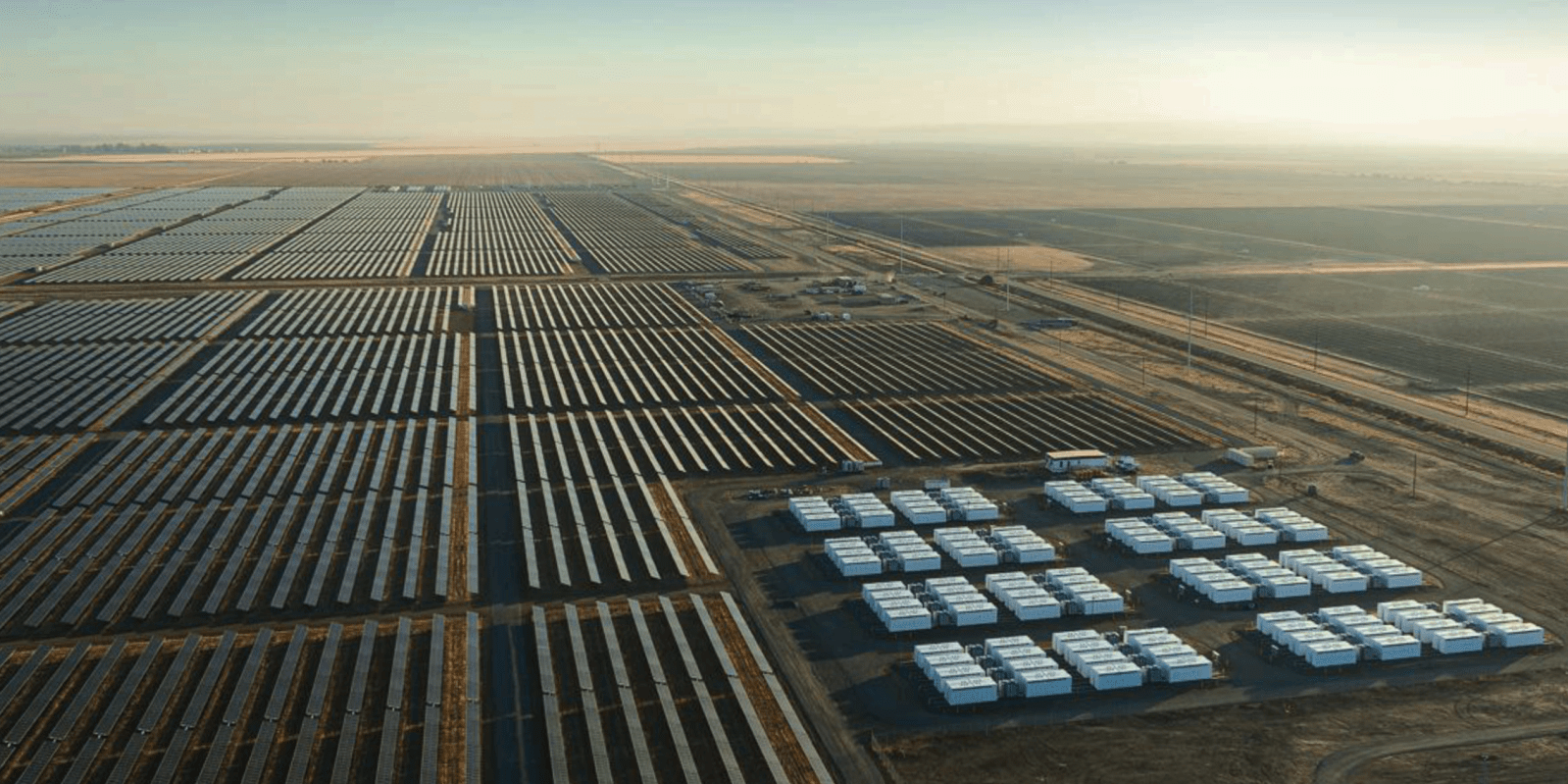
Tesla (TSLA) reportedly in talks to buy $2.9B in Chinese solar equipment for 100 GW US push


FERC July 2025
Image: Tesla

Elon Musk’s plan to build 100 GW of solar manufacturing capacity in the United States just got its first major price tag: $2.9 billion in equipment from Chinese suppliers, according to a Reuters exclusive.

If the deal closes, it marks the biggest concrete investment yet in Musk’s solar ambitions, and a stunning reversal for a company that effectively abandoned its solar business just two years ago.

The deal

Reuters reports that the equipment is valued at roughly 20 billion yuan ($2.9 billion) and that Tesla is in discussions with multiple Chinese suppliers. The frontrunner is Suzhou Maxwell Technologies, a Shenzhen-listed company that dominates the global market for solar cell screen-printing production lines.

Other potential suppliers include Shenzhen S.C New Energy Technology and Laplace Renewable Energy Technology.

Advertisement – scroll for more content

The Chinese companies have been told to deliver the equipment before this autumn, with at least two sources indicating it would be shipped to Texas. That aligns with Tesla’s expanding Texas manufacturing footprint, which already includes its Austin Gigafactory and a new Houston Megafactory under construction for Megapack production.

One significant hurdle remains: Suzhou Maxwell needs export approval from China’s commerce ministry, and it’s unclear how quickly that clearance will come. Beijing has been tightening its grip on solar technology exports over the past two years, and China’s commerce ministry recently made export controls a top priority for 2026.

On the US side, the equipment faces a more favorable regulatory path. Solar manufacturing equipment was excluded from Section 301 tariffs in 2024 at the urging of American solar panel makers, and that exemption has been extended by the Trump administration through November 2026.

The 100 GW ambition

The $2.9 billion equipment purchase is tied directly to a goal Musk laid out at the World Economic Forum in Davos in January 2026. There, he announced that both Tesla and SpaceX are independently working to build 100 GW per year of solar manufacturing capacity in the US — covering the entire supply chain from raw materials to finished panels.

The company’s own job listings reinforce the scale of the ambition, explicitly referencing a target of 100 GW of “solar manufacturing from raw materials on American soil before the end of 2028.”

For context, total US solar installations in 2023 reached about 32 GW. Tesla wants to manufacture more than three times that, every single year, on its own.

The driving force behind the urgency isn’t climate policy, it’s AI. Data center construction and the broader electrification of transportation pushed US power consumption to a second consecutive record in 2025, and the projections keep rising. Musk has argued that no other energy source can scale fast enough or cheaply enough to meet those demands.

Tesla’s troubled solar history

The irony is thick. Tesla acquired SolarCity for $2.6 billion in 2016 and promised to revolutionize the residential solar market with its Solar Roof tiles. Musk set a target of 1,000 new solar roofs per week by the end of 2019. Tesla never came close. By Q2 2022, the company was deploying approximately 23 roofs per week — roughly 2% of the target.

Today, Tesla never talks about its solar roof; it’s essentially a dead product.

Tesla’s solar deployment declined steadily after the SolarCity acquisition. Panasonic, which had partnered with Tesla at the Buffalo Gigafactory to manufacture solar cells, exited the facility in 2020. By late 2024, Tesla stopped reporting solar deployment altogether, and the word “solar” didn’t appear once during the company’s Q3 2024 earnings call.

There were signs of a revival in early 2026 when Tesla launched a new US-made solar panel (the TSP-420) assembled at the Buffalo factory, featuring a proprietary 18-zone power optimization system. But the scale was modest — initial capacity at the Buffalo facility was just over 300 MW per year, a rounding error compared to the 100 GW target.

Energy storage is a different story

While Tesla’s solar business withered, its energy storage division exploded. Tesla deployed a record 46.7 GWh of energy storage in 2025, a 48% increase year-over-year, generating $12.8 billion in revenue with a 29.8% gross margin — nearly double what Tesla earns selling cars.

Energy storage now accounts for 13% of Tesla’s total revenue and 23% of its gross profit. The Lathrop Megafactory in California produces Megapacks at its full planned capacity of 40 GWh per year, and the new Houston facility targets 50 GWh of annual output by end of 2026.

The solar manufacturing push would complement this storage infrastructure — Tesla could theoretically pair its own solar panels with Megapacks and Powerwalls for integrated energy solutions, and potentially use the output to power its own operations and even SpaceX satellites.

Electrek’s Take

We’ve been tracking Tesla’s solar journey since the SolarCity acquisition, and the trajectory has been one of consistent underdelivery. The Solar Roof never materialized at scale. Solar deployments cratered. The entire solar business segment became an afterthought as energy storage consumed all of Tesla’s energy division attention.

So when Musk announced a 100 GW solar manufacturing target at Davos, our first instinct was skepticism — and it still is. Going from roughly 300 MW of annual solar panel capacity at the Buffalo factory to 100 GW is a staggering 300x increase, on a timeline of less than three years.

That said, the $2.9 billion equipment purchase suggests this isn’t just talk. That’s real capital being deployed (or at least negotiated), and the autumn delivery deadline for equipment in Texas suggests Tesla intends to move fast. The company also has genuine tailwinds: the tariff exemption on solar manufacturing equipment, surging electricity demand from AI data centers, and a proven energy division that can integrate solar with its storage products.

The biggest risks are execution, Tesla’s solar track record is dismal, and the Chinese export approval, which Beijing could use as leverage in the ongoing trade tensions. We’ll believe the 100 GW target when we see equipment on the ground and production lines running.


Add Electrek as a preferred source on Google

FTC: We use income earning auto affiliate links. More.

Free Training

Source link

Palantir CTO says artificial intelligence is key to reshoring American manufacturing


Could artificial intelligence be the key to reshoring American manufacturing?

That’s what Palantir’s chief technology officer, Shyam Sankar, believes. His new book, “Mobilize,” asserts that America can prevent World War III by rebuilding its industrial base with AI-powered workers who can outcompete China’s automated factories.

“If you can make the American worker 50 times more productive than any other worker, you can change the math equation and underwrite the business case to re-industrializing at scale,” Sankar told me.

Palantir CTO Shyam Sankar believes, “If you can make the American worker 50 times more productive than any other worker, you can change the math equation and underwrite the business case to re-industrializing at scale.” Bloomberg via Getty Images

“Mobilize” is a remarkably optimistic book that counters the narrative that AI is going to destroy all our jobs (and maybe humanity as a whole). Instead, it argues AI will bring production back to the US, restoring our manufacturing capabilities and that sector’s jobs, while making our nation more secure.

“AI is leading to more jobs — and I’m not talking about ephemeral jobs building data centers,” Sankar said, refuting the prevailing doom-and-gloom narrative around artificial intelligence. “I’m talking about persistent jobs … on the factory floor.”

Sankar applauds what he calls the “heretics” who built our country — innovators like Hyman Rickover, the “Father of the Nuclear Navy,” whom higher-ups initially dismissed, placing his office in a converted bathroom until he proved himself. He’s a big believer in rule-breakers who eschew bureaucracy, and that’s exactly why he thinks America will win.

The 44-year-old is uniquely positioned to make this argument. He’s one of a handful of voices in Silicon Valley with both deep technical expertise when it comes to government systems — he’s spent over a decade ironing out deals with the Pentagon — and a strong sense of patriotism.

Czinger Vehicles uses AI-optimized design software and advanced 3D metal printing to create ultra-lightweight, high-performance supercars with components that can’t be manufactured through traditional methods. Carlin Stiehl for NY Post

The book’s publication comes at a fortuitous moment. War is on everyone’s mind with the conflict in Iran (not to mention the recent intervention in Venezuela and Cuba possibly next). Reshoring has become bipartisan policy, with the CHIPS Act pouring $39 billion into domestic manufacturing, and AI anxiety dominates headlines.

“For a long time I feel like I’ve been screaming into the wind — I’m glad to see that there’s momentum around this,” Sankar said. “It’s a book about our national interest … we’ve survived for 250 years. How will we continue to thrive for the next 250 years? 

He believes the AI race has given America an edge to dominate what could have been a Chinese century, given the Asian superpower’s vast resources and manufacturing capabilities. It’s the kind of game-changing advantage that will help America reshore in record time — and he wants America to grab it by the horns.

He’s already seen Palantir customers adopting the technology. One submarine parts manufacturer used AI to cut planning time from two weeks to ten minutes and hired a third shift as a result.

Alex Karp co-founded and runs Palantir, which builds data analysis and AI systems for military and intelligence agencies. Getty Images

“That’s AI in the hands of the American worker,” Sankar enhused.

These aren’t isolated anecdotes. Defense companies like Anduril, Hadrian, and Divergent are scaling their manufacturing operations in the US, betting on AI-enhanced American workers over overseas alternatives. Firms like Andreessen Horowitz have launched funds like American Dynamism exclusively focused on American innovation.

This story is part of NYNext, an indispensable insider insight into the innovations, moonshots and political chess moves that matter most to NYC’s power players (and those who aspire to be).

Palantir works extensively with both the Pentagon, building data analysis and AI systems for intelligence agencies, and the Department of Homeland Security. While critics see this as the tech industry cozying up to the military-industrial complex, Sankar wants to see more companies embrace helping the military.

In fact, he points to some of the primes — huge defense contractors such as Boeing and Lockheed Martin — as part of the problem

“Consolidation bred conformity … it was more financial engineering than real engineering,” he said. “Competition, not coziness, drives progress.”

“For a long time I feel like I’ve been screaming into the wind,” Sankar said of the need for reshoring manufacturing. “I’m glad to see that there’s momentum around this.”

But Sankar’s larger point is that production and innovation are inseparable — cede one, and you’ll eventually lose the other.

“The central lie of globalization is, ‘Hey, we’ll do the innovation over there, they’ll do the production,’” he explained. “Well, guess what? If you do the production for long enough, that’s all the stimulus you need to figure out how to innovate … We cannot cede production.”

A key component of Sankar’s plan is returning to the World War II model: companies that can pivot from manufacturing consumer goods to weapons when needed. When General Motors and Ford famously retooled for war production, they succeeded because they already had mass manufacturing capabilities in place, so they could rapidly switch what they were building.

That adaptability, not simply stockpiles of weapons, is what actually deters conflicts, Sankar argues.

Hadrian builds AI-powered automated factories that manufacture precision aerospace and defense components. Hadrian

“The lesson of Ukraine that I just can’t unsee is that the stockpile is not the deterrent. That has been our core strategy since the end of the Cold War,” he said. “[In Ukraine], we went through ten years of production in ten weeks of fighting. That should have been a five alarm fire where we fired up the forges started rebuilding the arsenal of freedom.”

His vision demands a complete reimagining of American manufacturing capacity. “I want more than ten times more of the equipment that we have,” he said. “That’s going to force you to reimagine all your constraints.”

The stakes couldn’t be higher, and it’s not just about the defense sector.

“Eighty percent of our generic drugs come from China,” Sankar noted. “In a [potential war] with China, where the average American has to choose between their five-year-old dying of an ear infection because we no longer have generic antibiotics … and having the national will to fight, what do you think is going to happen?”

It’s this dependency crisis that drives Sankar’s sense of urgency. America faces a stark choice. He said, “We can fade away to irrelevance and subjugation, or we can actually mobilize.”

Free Training

Source link

Is CSL’s US$3 Billion US Manufacturing Push Altering The Investment Case For CSL (ASX:CSL)?


  • Earlier this month, CSL broke ground on a major expansion of its Kankakee, Illinois manufacturing facility, aiming to boost plasma-derived therapy and albumin output using its patented Horizon 2 process while adding at least 300 new pharmaceutical roles and about 800 construction jobs.
  • This multiyear U.S. build-out, part of more than US$3.00 billion invested in American operations since 2018, signals CSL’s intention to deepen its U.S. manufacturing base and improve plasma efficiency to support longer-term therapy supply.
  • We’ll now examine how this large-scale U.S. manufacturing expansion, built around CSL’s Horizon 2 technology, could influence the company’s investment narrative.

The future of work is here. Discover the 32 top robotics and automation stocks leading the charge in AI-driven automation and industrial transformation.

CSL Investment Narrative Recap

To own CSL, you need to believe its plasma and specialty therapies portfolio can translate operational improvements into healthier margins after a tough stretch of lower profitability and share price underperformance. The Kankakee Horizon 2 expansion supports the longer term efficiency story, but it does not materially change the near term focus on cost control, execution on new product launches, and the risk that rising collection and manufacturing costs keep pressuring margins.

The recent Kankakee expansion update ties most closely to CSL’s broader manufacturing and cost transformation efforts, including the multiyear US$0.5 billion savings program targeting better plasma collection and processing efficiency. Together with initiatives like Horizon 2, these moves sit at the heart of the main positive catalyst for the stock: whether CSL can convert process improvements into sustainably higher gross margins while managing risks from price competition, regulatory shifts and the planned Seqirus demerger.

Yet investors should be aware that rising plasma costs and lower recent profit margins could still weigh on CSL if…

Read the full narrative on CSL (it’s free!)

CSL’s narrative projects $18.1 billion revenue and $4.2 billion earnings by 2028.

Uncover how CSL’s forecasts yield a A$205.16 fair value, a 52% upside to its current price.

Exploring Other Perspectives

ASX:CSL 1-Year Stock Price ChartASX:CSL 1-Year Stock Price Chart

Some of the lowest ranked analysts were assuming only about 2.9 percent annual revenue growth to roughly US$16.9 billion and earnings around US$3.7 billion, which is far more cautious than the consensus and could be challenged or reinforced by how effectively CSL’s Kankakee build and wider efficiency plans actually improve margins over time.

Explore 18 other fair value estimates on CSL – why the stock might be worth over 2x more than the current price!

The Verdict Is Yours

Don’t just follow the ticker – dig into the data and build a conviction that’s truly your own.

Ready For A Different Approach?

Our top stock finds are flying under the radar-for now. Get in early:

This article by Simply Wall St is general in nature. We provide commentary based on historical data
and analyst forecasts only using an unbiased methodology and our articles are not intended to be financial advice.
It does not constitute a recommendation to buy or sell any stock, and does not take account of your objectives, or your
financial situation. We aim to bring you long-term focused analysis driven by fundamental data.
Note that our analysis may not factor in the latest price-sensitive company announcements or qualitative material.
Simply Wall St has no position in any stocks mentioned.

New: AI Stock Screener & Alerts

Our new AI Stock Screener scans the market every day to uncover opportunities.

• Dividend Powerhouses (3%+ Yield)
• Undervalued Small Caps with Insider Buying
• High growth Tech and AI Companies

Or build your own from over 50 metrics.

Explore Now for Free

Have feedback on this article? Concerned about the content? Get in touch with us directly. Alternatively, email editorial-team@simplywallst.com

Free Training

Source link

LGM Pharma Expands U.S. Manufacturing, Bringing Total Investment to $15M Across Texas and Colorado Sites


— $9M Second Phase of CDMO Investment Builds on 2025 $6M Expansion, Funding Facility Upgrades and Increased Capacity for Suppository, Semi-Solid, and Oral Solid Dose Capacity —

— Enhancements Strengthen Domestic Supply Chains for Finished Dose Manufacturing, Complementing Extensive API Sourcing and Analytical Testing Services —

BOCA RATON, Fla.–(BUSINESS WIRE)–#505b2–LGM Pharma, a leading provider of tailored API sourcing, contract analytical testing, and CDMO services for the full drug product lifecycle, today announced the second phase of its CDMO growth strategy, committing an additional $9 million to its facilities in Rosenberg, Texas, and Colorado Springs, Colorado. The investment follows the company’s previously announced $6 million expansion in Rosenberg in 2025 and is designed to increase commercial capacity, expand R&D capabilities, and support continued demand for U.S.-based drug product manufacturing.


The Texas facility enhancements include a $4 million investment to expand commercial-scale manufacturing suites for suppositories in response to increasing customer and market demand, including growth in women’s health products. The upgrades also expand R&D capabilities to support formulation and scale-up for suppositories, solutions, suspensions, and semi-solids. The Rosenberg site will remain fully operational throughout construction, with upgrades already underway.

In Colorado Springs, LGM Pharma will invest $5 million to expand commercial manufacturing capacity for niche, high-value oral solid dose (OSD) products, including orally disintegrating tablets (ODTs). The facility has served as the company’s center of excellence for OSD development. The expansion, planned for completion this year, will support growing demand for domestic manufacturing. In 2024, the global OSD CDMO market was valued at $43.65 billion, with North America accounting for approximately 40.5% of global OSD pharmaceutical manufacturing activity.1,2

“These multi-site investments totaling $15 million reflect our continued commitment to strengthening pharmaceutical supply chains in the United States,” said Prasad Raje, Chief Executive Officer of LGM Pharma. “Today’s pharma companies need partners that are both resilient and integrated across the full product lifecycle. By reinforcing domestic drug product manufacturing at the downstream end of the supply chain, closer to end markets, and leveraging our global API sourcing capabilities upstream, we create a balanced end-to-end model. This gives customers greater control and visibility as they move products from development to commercialization.”

Earlier in the supply chain, at the drug substance stage, LGM Pharma supports 505(b)(2), NDA, and ANDA programs through a global network of more than 220 pre-qualified API manufacturers. By combining global drug substance sourcing with expanded U.S. finished dose development and manufacturing, the company provides integrated support across the full drug product lifecycle.

Hamilton Lenox, Chief Commercial Officer of LGM Pharma, said the company’s prior Rosenberg upgrades from Phase I of the expansion, including implementation of enhanced track-and-trace serialization systems and increased production volumes, are now complete. “We are executing this next phase of expansion while keeping both facilities fully operational,” Lenox said. “Our teams are experienced in managing complex upgrades without sacrificing quality or disrupting customer supply, which remain our top operational priorities. Rather than overextending in a single phase, we are executing these enhancements incrementally to expand capabilities and capacity while ensuring operational continuity. This approach allows us to strengthen infrastructure, support customer growth, and scale in response to market demand.”

Companies developing 505(b)(2), NDA, or ANDA products, as well as those with commercial branded or generic portfolios, are encouraged to explore LGM Pharma’s API sourcing and expanded drug product manufacturing capabilities by visiting LGMPharma.com or meeting with company executives at DCAT Week, March 23-26, 2026, in New York City.

References:

  1. Grand View Research, “Oral Solid Dosage CDMO Market Size, Share & Trends Analysis Report,” [March 2024].
  2. Persistence Market Research, “Oral Solid Dosage Contract Manufacturing Market,” [May 2023].

About LGM Pharma

LGM Pharma is a leading contract development and manufacturing organization (CDMO) providing comprehensive Active Pharmaceutical Ingredient (API) sourcing, drug product CDMO services, and contract analytical testing services to the pharmaceutical, biotechnology, and compounding pharmacy industries. LGM Pharma assists clients in managing all phases of the drug product development process, from API sourcing through to drug product commercialization. LGM Pharma’s extensive global network of qualified API partners enables clients to optimize supply chain management and distribution. Services include API sourcing and procurement, formulation development, drug product manufacturing, analytical method development, method and process validation, ANDA/NDA submission, stability studies, and raw material and finished product testing and packaging. LGM Pharma is committed to quality and has a long-established positive regulatory track record, providing expert regulatory and market intelligence services to its clients. The company is focused on customer service and customized solutions, providing clients with a comprehensive U.S.-based manufacturing solution that reduces risk, increases efficiency, and accelerates the path to commercialization. For more information, visit LGMPharma.com.

Contacts

Media Contact:

Charya Wickremasinghe, Ph.D.

Brandwidth Solutions LLC

cwickremasinghe@brandwidthsolutions.com


Free Training

Source link