Acquisition Of U.S. Pharmaceutical Manufacturer Noble Pharma Expands Manufacturing Capabilities


Parnell, a veterinary pharmaceutical company, announced that it has acquired Noble Pharma, a U.S.-based pharmaceutical manufacturer, under a Securities Purchase Agreement dated November 26, 2025.

The acquisition adds an FDA- and DEA-accredited manufacturing facility to Parnell’s operations, strengthening its presence in the United States and supporting its long-term strategy to deliver high-quality products and reliable supply to customers and distribution partners. Noble Pharma’s capabilities enhance Parnell’s manufacturing footprint, improve supply continuity, and enable growth across its expanding product portfolio.

Noble Pharma, located in Menomonie, Wisconsin, produces a wide range of pharmaceutical formats, including suspensions, liquids, tablets, boluses, powders, gels, pastes, creams, and ointments.

Parnell said the transaction positions the company to scale production, accelerate innovation, and better serve its growing customer base across the U.S. market and internationally. The company currently develops, manufactures, and commercializes animal health solutions for companion and production animals in 10 countries.

KEY QUOTE:

“Completing this acquisition marks an important milestone for Parnell. Noble Pharma’s operational excellence and established U.S. manufacturing footprint perfectly complement our mission to provide consistent supply, superior quality, and exceptional service to our partners and customers.”

Brad McCarthy, Chief Executive Officer of Parnell

Free Training

Source link

Wood manufacturers call lumber dispute with U.S. broken


NORTH VANCOUVER — British Columbia’s wood manufacturing sector is again sounding the alarm about Canada’s softwood lumber dispute with the United States, calling it a “broken process.”

The response by the Independent Wood Processors Association comes after the U.S. Department of Commerce posted its preliminary tariff determination for the sector, estimated at just short of 25 per cent, lower than the current duty rate of more than 35 per cent.

The association says while it appears tariffs may be lowered, it cautions that there is still uncertainty on whether the finalized rate — expected in August — will actually represent a reduction of the current duty rate.

Executive director Brian Menzies also says that wood manufacturers are being unfairly punished, since companies do not hold timber tenures, harvest Crown timber or receive subsidies — and should not be included in the dispute.

The association also says an existing dispute-resolution process included in the Canada-United States-Mexico Agreement, also known as CUSMA, has not yielded “meaningful progress.”

It says the Canadian and U.S. governments need to “prioritize direct negotiations” instead of repeating the “cycle of endless litigation,” noting that consumers as well as workers and businesses on both sides of the border are being penalized with uncertainty and higher prices.

“After nearly a decade, it is obvious the current dispute mechanisms are not working,” Menzies said in a statement. “If legal channels cannot solve this, then political leaders need to step in and negotiate a real solution.”

“If the U.S. industry has real concerns, then let’s hear them … Enough hiding behind paperwork, bureaucracy, and endless administrative rulings.”

This report by The Canadian Press was first published April 10, 2026.

Free Training

Source link

Siemens is opening a railcar manufacturing plant in North Carolina


Siemens Mobility has officially inaugurated a railcar manufacturing plant in North Carolina, representing an investment of USD 220 million.

Government officials and leaders from the rail industry gathered today at Siemens Mobility’s rail manufacturing and service center in Lexington to mark a significant milestone in U.S. rail manufacturing. Construction of the facility is complete, production is underway, and the first locally built passenger railcars are scheduled for delivery in the summer of 2026.

The Lexington railcar factory is Siemens Mobility’s newest production facility in the United States and will play a key role in meeting the growing demand for passenger rail transportation nationwide. First announced in March 2023, the new Lexington site includes ten buildings on a 200-acre site.

The facility is dedicated to the production of Siemens Venture passenger railcars—among the most modern and innovative on the North American market—and will serve as a rail service hub on the East Coast, providing maintenance and major repair support for bogies, locomotives, and railcars, with the potential to service light rail vehicles in the future.

Once fully operational, this state-of-the-art facility will be the first in North America to offer both railcar and locomotive refurbishment and will utilize advanced digital technologies, including artificial intelligence, robotics, real-time analytics, and augmented reality, to streamline operations, improve decision-making, and set a new global standard for automated manufacturing.

Marking the beginning of a new generation of American rail transport, the facility was strategically designed with a dedicated rail bridge connected directly to the main line, enabling the efficient shipment of completed trains to customers on the East Coast and in other regions.

“Siemens Mobility’s investment in North Carolina manufacturing underscores the importance of rebuilding America’s transportation infrastructure right here at home. The impact of this facility will be felt for decades, supporting passenger rail services such as Amtrak on the Northeast Corridor and helping to deliver modern, reliable trains for travelers across the country,” said Steven Bradbury, Deputy Secretary of the U.S. Department of Transportation.

Hundreds of Employees at the North Carolina Railcar Plant

With over 375 employees already on board, the facility is on track to meet its goal of creating 500 new jobs by 2028, strengthening North Carolina’s economy and helping transform rail transportation across the country

Located in Davidson County, in the heart of the Piedmont Triad region, the city of Lexington offers access to a strong workforce and essential transportation networks. Partially supported by a Job Development Investment Grant from the state of North Carolina, estimated to add USD 1.6 billion to the state’s economy over 12 years, the Lexington site reinforces Siemens’ broader commitment to the U.S. industry.

Across all business sectors, Siemens employs approximately 45,000 people in the United States, works with 12,000 suppliers, and operates 24 manufacturing facilities nationwide, investing USD 700 million in U.S. manufacturing and over USD 20 billion in its technology infrastructure since 2007 to support the next era of digital and data-driven transformation.

Share on:
Facebooktwitterlinkedinmail

Free Training

Source link

Skyrover wants to replace DJI drones in America: Here’s its plan


skyrover drone us manufacturing warranty legit fcc

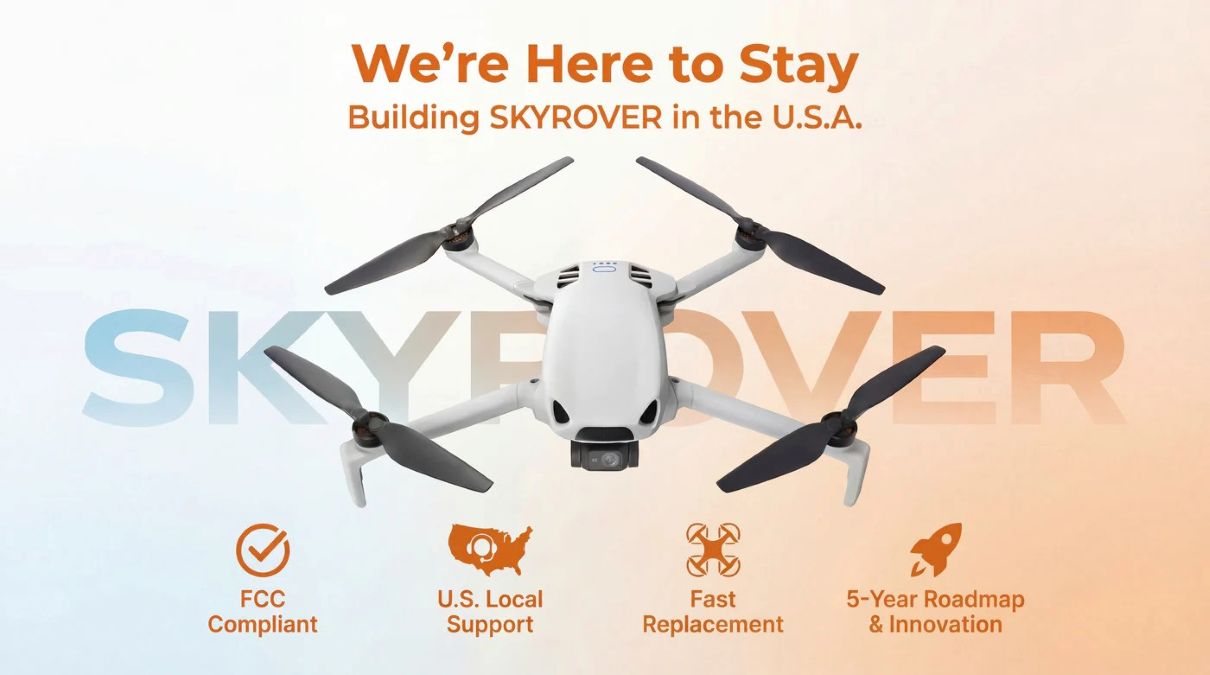
Skyrover, a relatively new but increasingly visible drone brand, is stepping into a tense and uncertain US market, and it’s doing so with a very clear message: we’re here to stay. Here’s what that means for American drone buyers right now.

A growing presence in the US drone market

Over the past year, Skyrover has quietly expanded its footprint in the United States, largely through mainstream retail channels like Best Buy and Amazon. That alone is notable since most emerging drone brands struggle to break into big-box distribution.

On the product side, Skyrover has been targeting entry-level and mid-range consumers, especially those who want to shoot vertical videos and social media content. Drone enthusiasts have pointed out similarities between Skyrover’s flight systems and technology used within the broader DJI ecosystem, suggesting the drone may benefit from engineering concepts derived from the tech giant’s platforms. But at the end of the day, Skyrover wants to distinguish itself by offering DJI-style capabilities without DJI-style prices.

The $289 Skyrover S1, for instance, features a 1/2-inch Sony sensor capable of capturing 48-megapixel photos and 4K video at 60 frames per second. Another standout feature is forward obstacle avoidance, something rarely seen in drones under $300. Skyrover X1, on the other hand, promises a 1/1.32-inch CMOS sensor, 360° obstacle avoidance, true vertical shooting, AI tracking, and extended transmission range for only $499.

Advertisement – scroll for more content

The elephant in the room: Regulation

Skyrover’s recent public statement directly addresses a growing concern among US drone buyers: Will foreign-made drones remain viable in the long term?

That concern isn’t unfounded. Policymakers and regulators, including the Federal Communications Commission, have been tightening scrutiny on foreign technology, particularly devices that rely on radio communications and data transmission. The FCC plays a key role here because any drone sold in the US must comply with its equipment authorization rules. These regulations ensure that devices:

  • Use approved radio frequencies
  • Avoid harmful interference
  • Meet safety and communication standards

More recently, the FCC has also been exploring restrictions tied to national security concerns. The FCC has already added foreign-made drones and key components to its “Covered List” following national security determinations. While some devices were later removed, most foreign-produced UAS and critical components still face restrictions when it comes to entering the US market.

Skyrover’s response: Reassurance and a roadmap

Skyrover is tackling those concerns head-on. In its statement to US customers, the company emphasizes that all its drones sold domestically are fully FCC-compliant and designed to meet current regulatory standards. That’s the baseline, but the more interesting part is what comes next. The company has laid out a five-year roadmap that reads as both a commitment and a strategic signal.

Short term (within one year):

  • Maintain FCC compliance across all products
  • Expand retail availability and local inventory
  • Improve US-based customer support, including replacement-first service

That last point stands out. Instead of traditional repair workflows, Skyrover is leaning into replacement-based support, which could significantly reduce downtime for users.

Mid-term (2-3 years):

  • Build a stronger US team
  • Deepen partnerships with retailers and service providers
  • Improve after-sales infrastructure

Long-term (up to five years):

  • Explore US-based manufacturing
  • Localize parts of its supply chain
  • Continue adapting to evolving regulations

For American consumers, the biggest fear isn’t just buying a drone, it’s buying one that might lose support, updates, or legality down the line. Skyrover is clearly trying to get ahead of that narrative. By emphasizing regulatory compliance, local support infrastructure, and potential US manufacturing, the company is positioning itself as a stable, long-term player rather than a short-lived import brand.

Of course, execution will matter more than promises. Building a US supply chain and maintaining regulatory alignment, especially in a fast-changing policy environment, is no small task. But Skyrover’s message reflects a broader shift happening across the drone industry. As geopolitical tensions and regulatory scrutiny increase, foreign drone makers are being forced to localize operations, increase transparency, and invest in long-term US strategies.

For now, Skyrover’s approach is simple: reassure customers, stay compliant, and build trust over time.

More: GoPro’s new camera might be its biggest comeback move


Add DroneDJ as a preferred source on Google

FTC: We use income earning auto affiliate links. More.

Free Training

Source link

Shionogi sets sights on US antibiotic plant with $119M from BARDA


Japan’s Shionogi is joining the spate of drugmakers to announce manufacturing commitments in the U.S. since last year, albeit under slightly different circumstances than many of its peers.

The Osaka-headquartered company on Wednesday unveiled a new contract through the U.S.’ Biomedical Advanced Research and Development Authority (BARDA) to bolster the domestic supply of Fetroja (cefiderocol) and potentially expand the antibiotic’s purview to tackle “high biothreat pathogens” like plague and melioidosis. 

Fetroja won its first U.S. green light back in 2019 as a treatment for complicated urinary tract infections, following that up a year later with a second FDA nod in hospital-acquired bacterial pneumonia and ventilator-associated bacterial pneumonia (HABP and VABP). 

In its April 8 announcement, Shionogi noted that the deal positions Fetroja as a “critical countermeasure” against those difficult-to-treat infections, plus other biological threats to U.S. national health security. 

BARDA, part of HHS’ Administration for Strategic Preparedness and Response (ASPR), has funded the contract with an initial $119 million, although “multiyear options” could ultimately net Shionogi up to $482 million if exercised, the company said. 

With that cash, Shionogi says it will establish a dedicated U.S. manufacturing site for Fetroja, with the funding also expected to help support the med’s procurement. The company did not elaborate on expected capacity or a potential location for the upcoming production plant. 

At the same time, the drugmaker will hunker down to advance development of Fetroja to treat infections caused by “high priority biothreat pathogens” like melioidosis (Burkholderia pseudomallei) and plague (Yersinia pestis), plus Shionogi will seek an FDA expansion to treat HABP and VABP in pediatric patients. 

“Shionogi is proud of our ongoing commitment to combating antimicrobial resistance, as shown by the continued investment in Fetroja since its introduction in 2020, expanding our portfolio with the acquisition of Qpex Biopharma, Inc. in 2023, and further investing in Qpex to establish a new research facility dedicated to advancing antimicrobial research and development in 2025,” Nathan McCutcheon, president and CEO of Shionogi Inc., Shionogi’s U.S. subsidiary, said in a statement. 

“This contract complements our existing work with the U.S. government and enables us to advance our ongoing expansion efforts in the U.S. at greater pace and scale,” McCutcheon added.

Shionogi notes that it has discovered and brought six novel antibiotics to market over a 70-year span. 

The Fetroja contract falls under BARDA’s Project BioShield, which aims to accelerate R&D, procurement and availability of medical countermeasures meant to tackle chemical, biological, radiological and nuclear agents. 

Apart from the antibiotic focus on display in its Shionogi tie-up, BARDA has laid out several major prophylactic supply pacts in recent years. 

Beyond deals for U.S. supplies of COVID-19 vaccines—plus therapeutics and diagnostics—during the pandemic, BARDA has helped shore up American stockpiles of vaccines for smallpox and mpox through Bavarian Nordic, and the agency has engaged with GSK, Sanofi and CSL to shore up inventories of bird flu shots, too. 

More recently, Cidara Therapeutics snagged a BARDA award worth up to $339 million in October to support domestic manufacturing for its experimental non-vaccine flu preventive, CD388, and help establish an “initial commercial supply chain” for the asset. Since then, the biotech has been bought out by Merck for $9.2 billion.

Free Training

Source link

Reshoring: The Domestic Manufacturing Shift


Reshoring(Photo: Adobe Stock / Chopang Studio)

By Howard Riell
From the March/April 2026 Issue

The trend among so many American companies of reshoring—bringing manufacturing and more back to the United States—is proving to be seismic. Under President Donald Trump, many major companies have announced large investments in U.S. production expansions during 2025 and now in 2026, signaling a shift back toward domestic production in strategic sectors.  

GlobalFoundries, for one, has said it is investing $16 billion to reshore chip manufacturing. Stellantis, the owner of Jeep, Ram, Dodge, unveiled a $13 billion U.S. manufacturing investment. And Johnson & Johnson plans to spend $55 billion to build facilities in the United States, partly responding to trade and supply chain pressures.  

Federal announcements in 2025 point to more than $200 billion in multi-year U.S. investment commitments, led by major life sciences companies. In addition to Johnson & Johnson, other significant announcements came from AstraZeneca ($50 billion), Bristol Myers Squibb ($40 billion), GSK ($30 billion), and Eli Lilly and Company ($27 billion). While not always labeled as reshoring, these projects represent significant domestic capacity expansion aligned with federal priorities. 

Activity has been especially concentrated in four sectors: pharmaceuticals, semiconductors, advanced manufacturing, and energy and data infrastructure—industries increasingly tied to national security and supply chain resilience.

On the employment side, reshoring and foreign direct investment continued to generate substantial, if moderating, gains. Approximately 244,000 U.S. jobs were announced in 2024, down slightly from the 2023 peak. While investment momentum remained strong in 2025, job creation is scaling more gradually as projects move from announcement to operation.

These investment announcements are significant, and jobs numbers are substantial compared with historical levels. Companies have cited numerous reasons for bringing manufacturing or business operations back home after they had previously been moved overseas. These include supply chain reliability, tariffs or trade policy changes, rising overseas labor costs, automation reducing labor-cost advantages, national security concerns, and Made in USA branding benefits. 

American Machinist is reporting that industry surveys and analyses suggest that reshoring will continue to grow if the U.S. significantly expands its skilled manufacturing workforce. In fact, if American companies can fill more skilled jobs, some studies estimate that a meaningful share of currently off-shored production—as much as 30% of OEM-offshored products—could come back. 

Reshoring: A Broader View

“Reshoring to the U.S. has experienced steady, moderate growth over the past 10 years, and I expect that to continue,” predicts Rosemary Coates, Executive Director of the Reshoring Institute in Los Gatos, CA, which provides expert guidance on global manufacturing strategy.

“The bigger story is that now companies are considering the global landscape and choosing multiple places to source and manufacture,” Coates continues. “This new way of thinking mitigates the risks of regionalized disasters and geopolitics and allows companies to take advantage of low-cost labor. It is also an opportunity to develop new markets and customers and manufacture products close to where they are sold, thereby reducing carbon footprint and developing sustainability programs. What I see is not just reshoring, nearshoring, or friendshoring, but global supply chain management that is rethinking its world.”

She adds, “What we are seeing from our Reshoring Institute clients is a movement away from China and into other Asian countries and Mexico. Mexico has become a very attractive destination because of its low-cost labor and rapidly developing manufacturing capabilities.”

 Still, geopolitics and the Trump Administration’s changing tariff policy has made selecting alternate global manufacturing locations a challenge. Says Coates, “Companies are unsure of what tariffs might be imposed, causing additional costs on importing raw materials, parts, and finished products. While long-term, this may result in reshoring, in the short term, it increases costs.”

Long before a site selection begins, Coates explains, the Reshoring Institute encourages companies to analyze their product cost structures so that they have a clear picture of the percentage of production that is related to materials and what percentage is related to labor. She points out: “If labor is greater than 50% of the overall cost, then a low-cost labor area is very important.”
Reshoring(Image: Adobe Stock / Foxeel)

Foreign-Trade Zones: Place To Land 

Jeffrey J. Tafel, CAE, President of the National Association of Foreign-Trade Zones (NAFTZ), emphasizes that foreign-trade zones are “a proven competitiveness tool for reshoring, helping manufacturers/importers/exporters lower total landed costs, mitigate tariff exposure, defer duties and improve cash flow—often enough to shift the ROI in favor of U.S. investment.” 

NAFTZ, an association of public and private members, is the collective voice of the U.S. Foreign-Trade Zones Program. Association members increasingly use foreign-trade zones not just for duty savings, Tafel explains, “but as resilience platforms that enable flexible sourcing, domestic assembly, and faster response to customers. For nearshoring in Mexico and Canada, U.S. FTZs complement USMCA (The United States-Mexico-Canada Agreement) by supporting more integrated North American supply chains—allowing firms to optimize cross-border flows while keeping higher-value operations anchored in the U.S.” 

Cost volatility, supply chain risk, geopolitics and customer proximity are all converging to reshape sourcing strategies. 

“NAFTZ consistently hears that unpredictable tariffs, shipping disruptions and geopolitical exposure have made ‘lowest-cost country’ models far riskier,” says Tafel, “while U.S. FTZ benefits and state and local incentives materially narrow the cost gap for U.S. locations. Being closer to customers improves speed and customization, making reshoring and nearshoring a strategic risk management decision, not just a cost play.” 

Supply chain resilience has helped change the way manufacturers evaluate sites today compared to five years ago. Says Tafel, “Site selection has shifted from a primary focus on labor and tax incentives to a broader resilience lens that prioritizes logistics access, supplier redundancy, regulatory readiness and the ability to pivot sourcing quickly.” 

From NAFTZ’s perspective, companies are integrating trade compliance and tariff strategy earlier in site selection—recognizing that operational flexibility and trade tools like U.S. FTZs are now core competitive advantages, not back-office considerations. 

Many firms are positively surprised by how much total landed cost can be reduced through U.S. FTZ benefits, incentives, and logistics efficiencies when viewed holistically, Tafel points out. “Similarly, companies often underestimate the true cost of offshore complexity—inventory carrying costs, compliance burdens, disruption risk and lost revenue from slow response times—which reshoring can materially reduce.” 

Case In Point: John Deere, GE Appliances

Other companies are likewise looking forward and underscoring that there is no place like home. 

In keeping with its self-described “strong tradition of building America,” Moline, IL-based John Deere has rolled out plans to open two new U.S.-based facilities: a state-of-the-art distribution center near Hebron, IN, and a cutting-edge excavator factory in Kernersville, NC. Both are set to open within the next year.  

The Kernersville campus reshores manufacturing and production from Japan. The company already operates over 60 facilities across more than 16 states. 

“Our investment in these new facilities underscores John Deere’s dedication to strengthening the backbone of American industry and supporting local economies,” said John May, Chairman and Chief Executive Officer of the manufacturer of agricultural, construction, and forestry machinery, turf care equipment and diesel engines. “We believe in building America, and these projects represent our intent to continue driving innovation and job creation in the United States.”

“These investments further demonstrate our commitment to invest $20 billion in U.S. manufacturing over the next 10 years,” May said. 

Another example: last summer, GE Appliances, a Haier company, said it would invest more than $3 billion over the next five years in its U.S. operations, workforce, and communities. The first phase of investments will begin at GE Appliances plants in Kentucky, Alabama, Georgia, Tennessee, and South Carolina. Upon completion of this plan, GE Appliances will have invested $6.5 billion across its U.S. manufacturing plants and nationwide distribution network since 2016. 

Workforce “Foundational”

What lies ahead? Workforce availability and skills are “foundational” to reshoring decisions, NAFTZ’s Tafel believes, even as expectations evolve toward technical roles supported by automation.  

And Coates observes, “While workers may be available, they often do not have the skills to operate in a sophisticated and automated manufacturing environment. I often say we have a skills shortage in the U.S., not a labor shortage. There needs to be more emphasis on education—particularly engineering—and the development of community college programs and apprenticeships.”

With more than 4,000 new U.S. jobs added since 2016, and more than 1,000 new jobs anticipated from its five-year plan, GE Appliances places employees as central to its growth strategy.

“Infrastructure and tools matter, but they are not enough,” said Bill Good, GE Appliances’ Vice President of Supply Chain. “America’s manufacturing renaissance will be built by people. That’s why we’re partnering with universities, technical schools, and high schools to develop the next generation of manufacturing leaders. We’re not just bringing jobs back—we’re bringing purpose, pride, and possibility back to American industry.” 

For its part, NAFTZ sees firms pairing FTZ-enabled cost savings with deeper investments in training partnerships and workforce pipelines to make reshoring viable, increasingly prioritizing regions that can demonstrate sustained talent development and adaptability. 

Tafel maintains that reshoring’s momentum will depend on policy stability, predictable trade and tariff regimes, workforce readiness, and sustained infrastructure investment.  

“NAFTZ believes momentum will continue if companies can plan with confidence—knowing U.S. FTZs, incentives, and trade programs will remain reliable tools to offset cost pressures,” he concludes. “Increased policy volatility or talent constraints would risk slowing the pace of investment.”

— Snapshots —

Snapshot: Puerto Rico

Puerto Rico offers a compelling reshoring value proposition as a U.S. jurisdiction with global reach. Companies benefit from full access to the U.S. market, strong legal and intellectual property protections, and eligibility for federal programs, while operating within a cost-competitive structure. The island’s long-standing manufacturing base, particularly in biosciences, medical devices, and advanced manufacturing, is supported by a highly skilled, bilingual workforce and mature supplier networks. 

Puerto Rico’s strategic location provides efficient access to North America, Latin America, and Europe, helping companies reduce transit times and strengthen supply chain resilience. Incentives under Act 60 and a streamlined business-establishment process further enhance competitiveness for high-value operations, particularly those seeking long-term operational stability within the U.S. 

Recent expansions reinforce this momentum. Amgen, Eli Lilly, CooperVision, Terumo, Millicent Pharma, and others continue to invest and expand on the island —underscoring Puerto Rico’s role as a proven reshoring destination within the United States.

Snapshot: U.S. Virgin Islands

As companies rethink global supply chains, the U.S. Virgin Islands (USVI) emerges as one of the most strategically advantaged U.S. jurisdictions for reshoring and nearshoring. As a U.S. territory outside the U.S. customs zone and exempt from the Jones Act, the USVI allows foreign-flag vessels to move goods directly between the Territory and global markets, reducing shipping constraints and expanding routing options.

On St. Croix, the South Shore Trade Zone features commercial land for development, available warehouse space, and direct access to deep-water ports accommodating drafts of up to 30 feet. An international airport in the zone, with warehouse facilities in close proximity, further enhances multimodal connectivity, enabling efficient movement of goods from port to port and air to sea.

Coupled with competitive tax incentives and a stable U.S. legal framework, the USVI stands out as a resilient, flexible, and globally connected destination for manufacturers, logistics providers, and distributors positioning for long-term growth in the Americas and beyond.

Check out all the latest economic development, corporate relocation, corporate expansion and site selection news related to reshoring and nearshoring.

Free Training

Source link

The U.S.-Mexico-China Manufacturing Triangle – The Globalist


1

Mexican manufacturing wages remain roughly 40% lower than Chinese manufacturing wages and 88% lower than those in the United States.

2

There are now more than 200 Chinese manufacturing and infrastructure investments in Mexico.

3

Roughly 20% of the value of Mexican exports to the United States consists of Chinese content.

4

Mexico now has a sizeable trade deficit with China, even though it has a large bilateral trade surplus with the United States.  This is in part due to the duty-free export platform it provides into the United States.

5

In January 2026, there were 12.59 American manufacturing workers compared to 12.74 million in February 2020, before COVID-related manufacturing job losses began.

6

Notably, by December 2024, at the end of the Biden administration, U.S. manufacturing employment had climbed again to reach 12.69 million.

7

However, in the first 11 months of Trump’s second term (February–December 2025), the United States has lost 91,000 manufacturing jobs.

8

Meanwhile, Mexico has added roughly a total of 700,000 manufacturing jobs since 2020.

9

From 2022 to 2024, U.S. auto sector employment averaged more than one million jobs, a level not seen since the early 2000s.

10

However, in the second half of 2025, U.S. auto industry employment began to decline to a level of 951,000 auto manufacturing jobs in December 2025.

Free Training

Source link

FDA proposals to speed up trials, generics for U.S. pharma firms


WASHINGTON — The Food and Drug Administration used the president’s budget to propose policies aimed at encouraging domestic development and manufacturing of drugs.  

FDA Commissioner Marty Makary has said the agency needs “giant, big ideas” to counter China’s dominance in early-stage clinical development of drugs. Among the FDA’s ideas are proposals to make it easier to run early-stage trials in the U.S. and to hand an advantage to U.S.-based generics manufacturers.


STAT Plus: White House proposes 12% cut to federal health agencies in 2027 budget request

The Trump administration has been using a variety of policy levers to try and bring drug manufacturing to the U.S. For example, many of the brand drugmakers that struck deals to lower U.S. prices also promised to increase domestic manufacturing, under the threat of tariffs.

STAT+ Exclusive Story

STAT+


This article is exclusive to STAT+ subscribers

Unlock this article — plus daily intelligence on Capitol Hill and the life sciences industry — by subscribing to STAT+.

Already have an account? Log in

Individual plans

Group plans

View All Plans

To read the rest of this story subscribe to STAT+.

Subscribe

Free Training

Source link

Ardena reaps rewards from CDMO specialization plays, US plant buy


As biotechs face increasingly tight development timelines, scale-up headaches, and, more recently, unpredictable policy fluctuations, one way to stand out as a CDMO partner is by picking a specialty and mastering it. 

That was one of Jeremie Trochu’s goals when he joined as Ardena’s CEO in 2024—aiming to steward the CDMO toward a new phase of growth by expanding its international footprint, refining its strengths and ensuring that recent acquisitions entered the fold smoothly. 

In the ensuing years, Ardena has worked to bolster a range of CDMO capabilities without overloading its clients with potential service offerings, Trochu said in a recent virtual interview with Fierce in tandem with DCAT Week 2026. 

“You want to be holistic, but within a particular specialty,” he explained. 

The CDMO’s current business revolves around its advanced oral solid services, from formulation development through to clinical manufacturing and small-scale commercial production, plus its capabilities related to nanomedicines and advanced conjugates, according to Trochu. 

Ardena has integrated those constituent pieces into its overall focus on precision medicine, specifically working with clients on therapies tailored to smaller patient populations, Trochu continued. 

The CEO speculated that more biotechs are likely looking for one-stop-shop CDMOs such as Ardena given the accelerated development and regulatory timelines they’re operating under in places like the U.S. 

When companies developing drugs for rare or undertreated conditions win FDA fast track or orphan drug designations, the pressure increases “to quickly pivot from successful results in phase 2 all the way through to your commercial launch on an accelerated timeframe,” Trochu explained. 

Newer technologies, such as artificial intelligence, also have the potential to increase the pace of development cycles, he added. 

“If you’re not integrated as an operation, and if you’re not specialized in the capabilities you are offering to your client, you are not going to be able to have the agility and the speed necessary and required by your biotech customers,” Trochu said of the resultant expectations placed on CDMOs.

Breaking down some of Ardena’s recent specialization moves, Trochu homed in on nanomedicine, which he noted the CDMO has been engaged with since “before it was cool,” alluding to the lipid nanoparticles that rose to prominence as delivery vehicles for mRNA in COVID-19 vaccines earlier in the decade. 

Over its history, Ardena has worked on more than 100 nanomedicine programs, by Trochu’s tally, and 30 of those are actively in the clinic now, per the CEO. To support its nanomedicine strategy, Ardena established a facility dedicated to the technology in the Netherlands several years back, he added. 

On the other side of the equation, Ardena hasn’t hesitated to downsize in areas where it feels its resources could be better spent.

Case in point: Earlier this year, Ardena agreed to sell a manufacturing facility in Södertälje, Sweden, to local drugmaker Nanologica for nearly $1 million. As Trochu put it, Ardena was “not in a position to truly invest in the next chapter of growth” at the site.

As for the company’s purpose-built Dutch facility, Trochu said Ardena designed the plant to address a “gap” in the market for nanomedicine developers, pointing out that the site has continued to garner strong international interest from clients despite a strained geopolitical environment. 

“When you have a unique set of capabilities and you have a track record along [with] those capabilities, people from the U.S., people from Asia, definitely people from Europe, will find you,” he said. 

Trochu addressed the recent geopolitical turbulence affecting markets and supply chains directly, noting that while there certainly have been pressures on the biopharma industry, “we’ve been pretty immune to those dynamics.” 

Ultimately, biotech clients are still looking for “best-in-class” partners to help solve their problems, and that desire tends to supersede challenges posed by governmental policy shifts, Trochu said. 


Heading West


For much of its history, Belgium’s Ardena has been “primarily an EU-based CDMO,” Trochu said. But the firm in 2024 made inroads into the U.S. with plans to purchase Catalent’s oral solids development and small-scale manufacturing facility in Somerset, New Jersey, which was put up for sale as part of the U.S. CDMO’s acquisition by Novo Holdings. 

Ardena completed the purchase in February of 2025. 

That timing turned out to be serendipitous, Trochu suggested, as a massive industry push to establish or expand U.S. production infrastructure kicked off soon after, largely in response to the threat of U.S. import tariffs under the Trump administration. 

“If you think about the last 15 to 18 months, it’s even more important to be able to supply clients on both sides of the pond,” he explained.

Trochu admitted that the “timing worked out” on the Catalent facility purchase.

“A year later, it would have been maybe a more competitive process to acquire a world-class GMP facility in the U.S., especially in light of a stronger regionalization trend,” he said. 

Ardena has added around 200 employees to its headcount through the purchase of the site, which is currently equipped for clinical and smaller-scale commercial manufacturing of oral drugs. But from the jump, the company’s strategy was to eventually bring its other capabilities online at the U.S. location, Trochu said. 

Some of those expansion efforts are already underway, with the CDMO’s first bioanalytical lab opening in Somerset soon, the CEO added. Meanwhile, Ardena is eyeing portions of the site’s greater GMP space to devote to nanomedicines in the future, he said. 

Free Training

Source link

Apparel Brands Partner With Unspun to Build Automated U.S. Manufacturing Hub » World Business Outlook


Leading brands, including Walmart, have signed letters of support for unspun’s plan to build domestic manufacturing capacity in the U.S. using an AI-enabled 3D weaving technology designed to bring apparel manufacturing closer to consumers at a commercial scale. Supply chain partners Bethel Industries, Peckham, and PDS Ltd / GSC Link are also participating to help establish automated domestic production hubs, with initial production on the near-term horizon.

With more than USD 50M in VC funding, unspun is advancing its proprietary 3D weaving technology — an AI-enabled system that produces garments directly from yarn via a highly automated process. REI has also signed a letter of support for the initiative, reinforcing broad industry demand for reshored, next-generation apparel manufacturing. unspun has equipment ready for deployment and is currently evaluating sites across multiple states.

“We are not exploring whether domestic apparel manufacturing can work. We are building it,” said Arne Arens, CEO of unspun and former Global Brand President of The North Face. “Our clients are looking for a new production model because they see the economics: manufacturing closer to the customer, responding to demand within the same season, and creating skilled American jobs in the process.”

Unspun (Logo credit: Business Wire)Unspun (Logo credit: Business Wire)

unspun’s 3D technology weaves semi-finished garments directly from yarn in minutes, transforming dozens of traditional cut-and-sew steps into a single, automated process. The platform enables brands to produce closer to demand, reorder within the same season, and significantly reduce excess inventory — an issue that costs the industry billions each year. By shortening production timelines from months to days, 3D weaving can improve gross margins by 400–500 basis points through fewer markdowns and write-offs, while also supporting the creation of skilled manufacturing jobs in the U.S. This approach is designed to unlock domestic, demand-driven production at commercial scale as the apparel industry shifts toward next-generation manufacturing systems.

Avisnash Bhasker, Vice President, Apparel Production Development at Walmart, said, “Our customers are proud to buy apparel made in America, and the demand keeps growing. We are excited about unspun’s commitment and effort in helping rebuild domestic manufacturing capability that is faster, smarter, and designed for how customers actually shop.”

unspun is currently evaluating potential locations, infrastructure requirements, and workforce training programs as it moves toward establishing the first automated apparel manufacturing hubs in the United States powered by 3D weaving technology. The initiative represents one of the first examples of AI-enabled automation being deployed to rebuild domestic manufacturing capacity at scale.

Arens was appointed CEO in March 2026, bringing decades of experience leading global consumer brands, including The North Face and Boardriders, the parent company of Quicksilver and Billabong. His appointment signaled unspun’s shift from technology development to industrial-scale deployment.

Source

Free Training

Source link