Rubio Speaks to Press on U.S. Strategy in Iran · The Floridian


Rubio Clarifies U.S. Strategy in Iran, Emphasizing Missile Manufacturing

Following a closed-door briefing with Congressional leaders over “Operation Epic Fury” and the conflict with Iran, Secretary Rubio spoke to the press to elaborate on the U.S. military campaign, expressing hope for a future led by the Iranian population.

“The United States is conducting an operation to eliminate the threat of Iran’s short-range ballistic missiles and the threat posed by their navy, particularly to naval assets,” Secretary Rubio told the press. ” That is what it is focused on doing right now and it’s doing quite successfully. I’ll leave it to the Pentagon and the Department of War to discuss the tactics behind that and the progress that’s being made. That is the clear objective of this mission.”

Secretary Rubio asserted that one of the reasons for the preemptive airstrikes was that the U.S. would’ve been a primary target had it been Israel or another nation that attacked Iran first. He informed the press that the orders to target the U.S. had been issued to Iran’s field commanders, revealing that within an hour of the attack on Iranian Supreme Leader Ayatollah Ali Khamenei’s compound, missile forces in the north and south of Iran had been “pre-positioned” and “activated to launch.”

When asked if the administration had any information regarding the airstrike at an all-girls’ school in Iran that is reported to have killed at least 153 people — mostly children — and which was said to be an American missile, Secretary Rubio commented that “the United States would not deliberately target a school.”

“Our objectives are missiles, both the ability to manufacture them and the ability to launch them, and the one-way attack drones. That would be our focus, and that’s what we would be focused on,” Secretary Rubio responded. “We would have no interest, and frankly no incentive, to target civilian infrastructure. The Iranians are, on the other hand, targeting civilian infrastructure. You guys have seen it. I’m sure you’ve seen it. They’re hitting hotels. They’re hitting embassies. They’re hitting airports.  They’re hitting oil infrastructure.”

Free Training

Source link

Trump tariffs creating fewer manufacturing jobs


This article first appeared in Forum, The Edge Malaysia Weekly on March 2, 2026 – March 8, 2026

President Donald Trump has shaken up the world economy and the rule of international law in the first year of his second term — ostensibly to make America great again, particularly by reviving US manufacturing jobs.

The president has assumed authority from the US Congress to wage war, impose taxes, make treaties, set budgets, regulate federal-state relations and more.

Tariffs

Trump’s April 2, 2025 “Liberation Day” tariffs were ostensibly his primary means to generate manufacturing employment.

When the US Supreme Court overruled him on Feb 20, he responded by imposing a 10% tariff on all imports, which he raised to 15% the next day.

The tariffs are a blunt means for reviving US manufacturing jobs. The policy assumes US manufacturing jobs have been mainly lost due to what the White House deems “unfair” competition from cheap imports.

Undoubtedly, US and other transnational corporations have relocated production and generally sourced imports from abroad to reduce import costs.

Imposing tariffs on imported goods to raise their prices is supposed to induce manufacturers to relocate production and jobs to the US.

Higher tariffs were imposed on countries with larger goods trade surpluses with the US. This ignores the services trade balance, generally more favourable to the US.

Tariff threats are now among the Trump administration’s choice weapons or means of economic coercion, including sanctions, to advance and secure its interests.

Revenue

The president claimed trillions of dollars in additional tariff revenue for the Treasury from foreign exporters to fund his massive military spending hike.

But only US$264 billion was collected during Trump 2.0’s first year, much higher than before, but still less than 1% of US federal debt.

Tariff revenue peaked in October 2025 at US$31.35 billion, well below expectations, months before the Supreme Court decision.

The Kiel Institute for the World Economy found only 4% of tariffs “absorbed” by foreign exporters losing some export earnings. US importers paid the 96% balance of US$264 billion in tariffs, weakening the impact of Trump’s business tax cuts.

But Trump’s tariffs have not reduced the US trade deficit, not even for manufacturers; this rose to US$1 trillion in 2025, as US$3.15 trillion in imports exceeded US$2.15 trillion in exports.

Although mortgage and loan interest rates have not fallen, inflation continues. The additional tariff revenue would not even have covered the extra military budget Trump has promised.

Congress could have reclaimed its tariff authority, though the current Trump-dominated House of Representatives has not tried.

But with the November midterm elections looming, Forbes reported that the president’s disapproval rating rose to 55% in mid-February, as fewer are confident his administration prioritises curbing inflation.

Financialisation

The US federal debt, around US$39 trillion (RM151 trillion), now requires over US$1 trillion in annual debt servicing from the US$7 trillion annual budget.

Growing by US$1.5to US$2 trillion annually, this unrepayable debt is being “rolled over” for ever-shorter maturities. Hedge funds now hold 27% of US Treasuries, while foreigners, who held half in 2015, now have only 30%.

Treasury bond repurchase — or repo — agreements provide about US$4 trillion in financing daily for derivatives speculation. Another financial crash can wipe out many more trillions of often dubious “value”.

While the US economy, productive employment and research funding diminish, various bubbles of unrepayable debt are growing rapidly. Worse, so-called stablecoins and cryptocurrencies have infiltrated financial markets.

Meanwhile, some US mortgage delinquency rates have reached levels worse than in 2007/08. By the end of 2025, financial news agencies were publishing ominous reports of financial vulnerabilities.

Hundreds of billions of promised investments, coerced from other nations using tariff and other threats, will be invested in US financial asset markets but little of this will create manufacturing jobs.

Manufacturing comeback

Trump has promised to make the US a manufacturing superpower once again, leading the world in technology, computing power and military weaponry. But China leads in many — if not most — areas of recent technological advancement.

Dean Baker, co-founder of the Center for Economic and Policy Research, found the US labour market weakening over Trump 2.0’s first year.

Overall payroll growth and manufacturing jobs growth both declined from former president Joe Biden’s last year.

US manufacturing jobs have long been threatened by transnational corporate globalisation and labour-saving technical change, especially automation.

US policy in recent decades has left the private sector responsible for ensuring US industrial technology leadership and progress. Meanwhile, problems, such as poor infrastructure remain unaddressed.

Trump’s tariffs may also inadvertently reduce US jobs. Many industrial processes require imported parts, with the tariffs proving disruptive.

Trump’s policies have not created enough manufacturing jobs. The president fired his Labor Department’s statistics head in mid-2025 for not reporting enough job growth.

Nonetheless, it reported only 584,000 net new jobs for all of 2025, compared with 1.6 million in 2024, for the US labour force of 165 million.

The Wall Street Journal noted, “The manufacturing boom President Trump promised … is going in reverse.”

The Trump administration could still use the Supreme Court’s ruling to change its strategy to make America great again by drawing better lessons from US economic history and adopting a more pragmatic approach. But so far, it seems unlikely to do so.

Jomo Kwame Sundaram is currently senior adviser at Khazanah Research Institute (KRI). A former economics professor, he was United Nations assistant secretary-general for economic development. He is a recipient of the Wassily Leontief Prize for Advancing the Frontiers of Economic Thought.

K Kuhaneetha Bai studied at the University of Malaya and does policy research at KRI.

Save by subscribing to us for
your print and/or
digital copy.

P/S: The Edge is also available on
Apple’s App Store and
Android’s Google Play.

Free Training

Source link

US manufacturing grew, input costs soared before Iran attack


Published Tue, Mar 3, 2026 · 06:03 AM

[WASHINGTON] US manufacturing expanded in February but input prices soared at the fastest pace since 2022, stoking fears of an inflation resurgence even before this weekend’s attacks on Iran.

The Institute for Supply Management’s (ISM) gauge of prices paid for manufacturing inputs jumped 11.5 points to 70.5, the highest level since overall inflation peaked nearly four years ago.

The figures out Monday (Mar 2) reflected responses ahead of US and Israeli airstrikes on Iran this past weekend. The war has all but halted oil tanker traffic through the Strait of Hormuz and pushed crude prices sharply higher.

The conflict also risks tempering a nascent recovery in manufacturing. ISM’s measure of factory activity was little changed at 52.4, indicating a second month of growth at one of the highest readings in recent years. Orders and production growth remained solid.

Treasury yields rose following the report. The S&P 500 remained lower.

The group’s price gauge is likely to remain elevated or even push higher over the near-term after oil prices jumped on Monday by the most since early 2022, following Russia’s invasion of Ukraine.

Navigate Asia in
a new global order

Get the insights delivered to your inbox.

Higher energy prices represent the latest cost challenge for manufacturers. If sustained, producers may have little choice but to raise prices for their business customers and consumers.

The impact from the Middle East turmoil will depend on how the duration of the conflict and where primary materials are sourced, said Susan Spence, chair of the ISM Manufacturing Business Survey Committee.

“It really does depend on the sector and where they are importing their raw materials from,” Spence said on a call with reporters. “In general, the supply managers have yet another challenge on their hands.”

SEE ALSO

US President Donald Trump started his address by defending the US economy.

Producer price data out last week showed the cost of unprocessed goods, minus food and energy, rose more than 15 per cent in January from a year ago, the steepest annual gain since April 2022. A Bloomberg index of metals, including copper and aluminium, has also increased sharply this year.

The assortment of recent price data along with geopolitics point to a steady undercurrent of inflation for US producers, which is being partially fed by higher import duties from the Trump administration. It also explains why US Federal Reserve policymakers are in little rush to lower interest rates after three straight cuts at the end of 2025. BLOOMBERG

Decoding Asia newsletter: your guide to navigating Asia in a new global order. Sign up here to get Decoding Asia newsletter. Delivered to your inbox. Free.

Free Training

Source link

When is the US ISM Manufacturing PMI data and how could it affect EUR/USD?


US ISM Manufacturing PMI Overview

The United States (US) Institute of Supply Management (ISM) Manufacturing Purchasing Managers’ Index (PMI) data for February is due for release today at 15:00 GMT.

The ISM report is expected to show that the manufacturing sector activity expanded again, but at a moderate pace. The Manufacturing PMI is at 51.8, down from 52.6 in January. Last month, manufacturing sector activity expanded for the first time after remaining below 50.0 for a straight 10 months, a figure that separates expansion from contraction.

Apart from the Manufacturing PMI, investors will also focus on sub-components of the data, such as Employment Index, Prices Paid, and New Orders Index. ISM Manufacturing Prices Paid – which reflects changes in expenditure for inputs such as labor and raw materials – is estimated higher at 59.5 from the previous reading of 59.0.

Weaker-than-projected US ISM Manufacturing PMI data would prompt expectations for interest rate cuts by the Federal Reserve (Fed), as policymakers remain concerned over the economic outlook. On the contrary, higher figures would diminish them.

How could US PMI data affect EUR/USD?

EUR/USD trades 0.75% lower at around 1.1730 at the press time. The near-term bias turns mildly bearish as spot slips below the 20-day Exponential Moving Average near 1.1800.

The 14-day Relative Strength Index (RSI) has retreated further towards 40.00 after failing to return above 60.00, indicating selling pressure at higher levels. Fresh bearish momentum would appear if the RSI breaks below 40.00.

Immediate support emerges at the trend-line break area around 1.1645, with a clear violation exposing the mid-1.15 region and then the 1.1489 origin of the uptrend. On the upside, initial resistance stands at the 20-day EMA around 1.1800, followed by the recent swing highs at 1.1880 and then the 1.2030 peak, which caps the broader bullish structure and would need to give way to negate the current corrective tone.

(The technical analysis of this story was written with the help of an AI tool.)

Economic Indicator

ISM Manufacturing PMI

The Institute for Supply Management (ISM) Manufacturing Purchasing Managers Index (PMI), released on a monthly basis, is a leading indicator gauging business activity in the US manufacturing sector. The indicator is obtained from a survey of manufacturing supply executives based on information they have collected within their respective organizations. Survey responses reflect the change, if any, in the current month compared to the previous month. A reading above 50 indicates that the manufacturing economy is generally expanding, a bullish sign for the US Dollar (USD). A reading below 50 signals that factory activity is generally declining, which is seen as bearish for USD.

Read more.

Free Training

Source link

U.S. Department of War promotes defense manufacturing expansion


Key Points

  • United States Secretary of War Pete Hegseth concluded the first phase of the Arsenal of Freedom tour with visits to General Dynamics and L3Harris facilities in Arkansas promoting faster domestic defense production.
  • The Department of War used the nationwide tour to emphasize strengthening the U.S. defense industrial base and expanding workforce support tied to missile and advanced weapons manufacturing.

United States Secretary of War Pete Hegseth concluded the first phase of the Department’s nationwide “Arsenal of Freedom” tour on Feb. 27, 2026, with visits to defense industry facilities operated by General Dynamics and L3Harris in Camden, Arkansas, where he delivered remarks focused on expanding production capacity and accelerating weapons manufacturing.

The tour, organized by the United States Department of War, is intended to demonstrate federal support for the defense industrial base while urging industry and workforce leaders to increase output of military systems and modernize manufacturing practices supporting U.S. warfighters.

Speaking before more than 1,500 employees at the L3Harris facility, Hegseth highlighted the role of defense workers in sustaining military readiness.

– ADVERTISEMENT – CONTINUE READING BELOW –

“Thank you for being the backbone of our department and our great nation [and] for having the backs of our warfighters because what you build right here in Camden is absolutely central to the 21st-century arsenal of freedom,” Hegseth said.

He added that the technologies produced at the site directly support advanced weapons programs.

“The technology that you build for our missiles, interceptors and hypersonic weapons is what allows the War Department to achieve peace through strength, and that mission comes with a nonnegotiable mandate from the War Department [and] straight from the Resolute Desk and President [Donald J.] Trump,” he said.

According to remarks released during the visit, Hegseth emphasized innovation and faster production timelines as core priorities of the tour. He encouraged industry partners to increase manufacturing tempo while maintaining technological advancement across defense programs.

(Photo by Alexander Kubitza)

The secretary also addressed long-standing concerns about inefficiencies within the defense industrial base, arguing that production culture must shift toward faster delivery cycles. Praising L3Harris operations in Camden, he said the company had “set the pace” for industry performance through rapid production practices.

“For far too long, our defense and aerospace industry was a giant swamp, much like Washington. … Those companies moved at a snail’s pace, led by CEOs who cared more about their stock options and golden parachutes than delivering for those on the front lines,” Hegseth said.

He further criticized earlier trends toward outsourcing defense production overseas, stating that domestic manufacturing remains central to national security priorities.

“Well, let them tell that to these great workers and these great patriots at L3,” Hegseth said during the event.

According to the Department of War, the Arkansas stop marked the conclusion of a seven-and-a-half-week first phase of the Arsenal of Freedom tour, which began Jan. 5 with a visit to a shipyard in Newport News, Virginia. The tour included additional stops in Texas, California, Rhode Island, Maine, Missouri, Florida, and Colorado.

As part of each visit, Hegseth has administered enlistment oaths to new service members. During the Arkansas stop, he swore in 40 recruits, bringing the total number of enlistees participating in ceremonies during the tour to more than 260.

(Photo by Alexander Kubitza)

The Department said the enlistment ceremonies are intended to link industrial workforce contributions with military service, underscoring the connection between manufacturing capacity and operational readiness.

In practical military terms, the facilities visited in Camden contribute components and systems supporting missile production, interceptor technologies, and hypersonic weapon development. These systems form part of layered defense architectures designed to counter aerial threats and maintain deterrence capabilities.

The Arsenal of Freedom initiative draws its name from the historical “Arsenal of Democracy,” the large-scale industrial mobilization undertaken by the United States prior to and during World War II, when domestic manufacturing was expanded to supply military equipment to Allied forces.

Free Training

Source link

Apple’s U.S. Manufacturing, AI Hardware And India Payments Plans For Investors


  • Apple (NasdaqGS:AAPL) plans a major U.S. manufacturing expansion, including Mac mini and AI server production at its Houston facility.
  • The company has outlined a US$600b supply chain investment and related workforce and upskilling efforts in the United States.
  • Apple is developing AI focused hardware such as smart glasses and camera equipped AirPods as part of a broader hardware push.
  • Apple Pay is expected to launch in India by mid 2026 with local bank partnerships and UPI integration.

For you as an investor looking at Apple, these moves touch several core pieces of the business. Apple (NasdaqGS:AAPL) still draws much of its identity from the iPhone and broader device ecosystem, and the company has been expanding services and payments alongside more powerful on device computing for AI use cases.

The new U.S. manufacturing plans and Apple Pay’s planned India launch give you additional angles to watch beyond headline product launches. Execution on domestic production, AI centric hardware and entry into a large digital payments market such as India may influence how investors think about Apple’s supply chain mix, hardware roadmap and services footprint.

Stay updated on the most important news stories for Apple by adding it to your watchlist or portfolio. Alternatively, explore our Community to discover new perspectives on Apple.

NasdaqGS:AAPL Earnings & Revenue Growth as at Feb 2026NasdaqGS:AAPL Earnings & Revenue Growth as at Feb 2026

We’ve flagged 0 risks for Apple. See which could impact your investment.

Quick Assessment

  • ⚖️ Price vs Analyst Target: At US$264.18 versus a consensus target of about US$293.07, the price sits roughly 10% below where analysts cluster.
  • ⚖️ Simply Wall St Valuation: The shares are described as trading close to estimated fair value based on the latest Simply Wall St model.
  • ✅ Recent Momentum: The 30 day return of about 2.3% shows modest positive momentum into this manufacturing and AI hardware news.

There is only one way to know the right time to buy, sell or hold Apple. Head to Simply Wall St’s
company report for the latest analysis of Apple’s Fair Value..

Key Considerations

  • 📊 U.S. manufacturing expansion and AI focused devices such as smart glasses and AI servers may reinforce Apple’s hardware ecosystem and potentially support future services usage.
  • 📊 Watch execution milestones on Houston production, AI hardware rollout, and Apple Pay’s India launch timing, as well as any updates on user adoption and transaction volumes.
  • ⚠️ Higher U.S. manufacturing and AI hardware investment could raise capital and operating costs if demand or scaling efficiencies do not keep pace.

Dig Deeper

For the full picture including more risks and rewards, check out the
complete Apple analysis. Alternatively, you can check out the
community page for Apple to see how other investors believe this latest news will impact the company’s narrative.

This article by Simply Wall St is general in nature. We provide commentary based on historical data
and analyst forecasts only using an unbiased methodology and our articles are not intended to be financial advice.
It does not constitute a recommendation to buy or sell any stock, and does not take account of your objectives, or your
financial situation. We aim to bring you long-term focused analysis driven by fundamental data.
Note that our analysis may not factor in the latest price-sensitive company announcements or qualitative material.
Simply Wall St has no position in any stocks mentioned.

New: Manage All Your Stock Portfolios in One Place

We’ve created the ultimate portfolio companion for stock investors, and it’s free.

• Connect an unlimited number of Portfolios and see your total in one currency
• Be alerted to new Warning Signs or Risks via email or mobile
• Track the Fair Value of your stocks

Try a Demo Portfolio for Free

Have feedback on this article? Concerned about the content? Get in touch with us directly. Alternatively, email editorial-team@simplywallst.com

Free Training

Source link

SIRS-E Reaffirms Commitment to U.S. Manufacturing, In-House


SIRS Electronics

SIRS Electronics

Rosenberg, Texas – Since 2005, SIRS Electronics, Inc. (SIRS-E) has built its linear LED strip lighting and DMX control systems in the United States. In an industry where much of the supply chain has shifted overseas, the company is reaffirming its long-standing commitment to local manufacturing, engineering oversight, and controlled quality processes.

For SIRS-E, manufacturing in Texas has never been a marketing decision. It has been an operational one.

Engineering, Assembly, and Testing Under One Roof

From its approximately 10,000 sq ft manufacturing and warehouse facility in Rosenberg, Texas, SIRS-E designs, assembles, and tests LED strip luminaires and DMX control systems for professional applications.

The facility includes an in-house pick-and-place production line, allowing direct oversight of component placement, soldering integrity, and final assembly before shipment.

By keeping engineering and production closely integrated, SIRS-E maintains tighter control over:

– Product validation and photometric accuracy
– Component traceability
– Production consistency
– Lead time management
– OEM customization requirements

This structure reduces variability and allows faster response when professional installers or OEM partners require design adjustments.

A Measured Response to Industry Shifts

Over the past decade, global supply chain volatility and increasing compliance requirements have placed new pressures on lighting professionals. Contractors and specifiers today face stricter inspection standards, tighter deadlines, and greater accountability for performance.

In this environment, SIRS-E’s local manufacturing model offers practical advantages:

– Greater quality control visibility
– More predictable production cycles
– Direct technical support access
– Reduced risk of undocumented component substitutions

Rather than scaling through volume alone, SIRS-E has focused on disciplined growth, maintaining a 10% annual growth rate while serving more than 4,000 customers worldwide.

Built for Regulated and Professional Environments
SIRS-E products are used in:

– Airports
– Hotels and resorts
– Retail environments
– TV studios and theaters
– Industrial buildings
– Architectural installations

The company emphasizes UL-certified LED strip solutions where applicable and maintains rigorous internal testing procedures. As an active participant in recognized photometric standards, SIRS-E ensures that product data reflects accurate performance metrics professionals can rely on.

Safety and compliance are not optional features. They are embedded in the design process.

The company also strongly encourages the use of licensed electricians for installation and proper electrical practices in the field.

Supporting OEMs and Integrators Beyond the Product

SIRS-E’s Manufacturing and OEM Services division works directly with:

– OEM manufacturers
– System integrators
– Architectural installers
– Re-sellers

The company offers in-house engineering collaboration, mechanical implementation support, and re-branding options for qualified partners. Technical support remains a core differentiator. Project lifecycle guidance, documentation, and responsive communication are standard expectations.

A Long-Term Philosophy

SIRS-E began operations in 2005 during the early expansion of LED technology. From a small Texas operation in McAllen, the company expanded to its current Rosenberg facility while retaining its U.S.-based production model.

“Lighting failures don’t show up in brochures,” said Diego Iorio, CEO and Founder of SIRS-E. “They show up during inspections and maintenance calls. We manufacture locally because accountability matters. When engineering, assembly, and testing are close together, we can control the outcome and our customers can trust the result.”

The company continues to invest in its people, production infrastructure, and educational programs, reinforcing its long-term position as a stable manufacturing partner in the professional LED lighting industry.

SIRS Electronics Inc
3307 West Street, Rosenberg, TX 77471
contactus@sirs-e.com

Founded in 2005, SIRS-E specializes in linear LED strip lighting, DMX control systems, LED drivers, power supplies, and accessories. The company designs LED strips in the United States and manufactures locally in Rosenberg, Texas, serving OEMs, system integrators, and professional installers worldwide.

SIRS-E remains committed to American manufacturing, controlled quality processes, UL compliance, and long-term technical support.

For more information, visit: https://sirs-e.com/

This release was published on openPR.

Free Training

Source link

Metal Tariff Relief: US Manufacturing Policy Guide


Current Trade Policy Challenges in US Manufacturing Supply Chains

The intersection of international trade policies and domestic manufacturing capacity has become increasingly complex in recent years, particularly affecting industries that rely heavily on imported raw materials. Trade relationships with traditional allies now face scrutiny through various tariff mechanisms, creating ripple effects throughout US supply chains. Understanding how these policy frameworks operate and their downstream impacts on consumer goods provides crucial insight into the broader economic implications of current trade strategies.

Metal tariff relief has emerged as a critical policy consideration for maintaining competitive manufacturing sectors while balancing national security concerns. Furthermore, the tension between protecting domestic production and ensuring access to essential materials highlights the complexity of modern trade policy implementation. The relationship between US tariffs and inflation demonstrates how these policies affect broader economic conditions beyond their intended targets.

Join thousands of readers who start here

Our best articles, sent straight to your inbox. You can unsubscribe anytime.

Current Tariff Framework Architecture

The United States operates multiple tariff systems that affect metal imports, each serving different policy objectives. Section 232 provisions focus on national security considerations for steel and aluminum imports, while Section 301 mechanisms target specific trading relationships. These frameworks create a complex regulatory environment where manufacturers must navigate various exclusion processes to access essential materials.

The exclusion request process involves detailed documentation requirements, extended review periods, and uncertain approval outcomes. Companies must demonstrate that domestic alternatives are unavailable or insufficient to meet their production needs. However, this administrative burden often disproportionately affects smaller manufacturers who lack the resources to manage complex regulatory submissions.

Strategic Exemptions vs. Blanket Protection

Policy makers must balance broad industry protection with targeted relief for critical supply chains. Strategic exemptions allow for nuanced approaches that consider specific manufacturing needs while maintaining overall trade policy objectives. This approach recognizes that certain industries require imported materials to maintain competitiveness and consumer affordability.

The challenge lies in creating clear criteria for exemptions that prevent abuse while ensuring legitimate manufacturing needs are met. Industries with strong national security implications or significant consumer impact often receive priority consideration in exemption processes. In addition, understanding tariffs’ investment impacts helps policymakers assess the broader economic consequences of their decisions.

Supply Chain Vulnerabilities in Food Packaging Industries

Domestic Production Capacity Decline

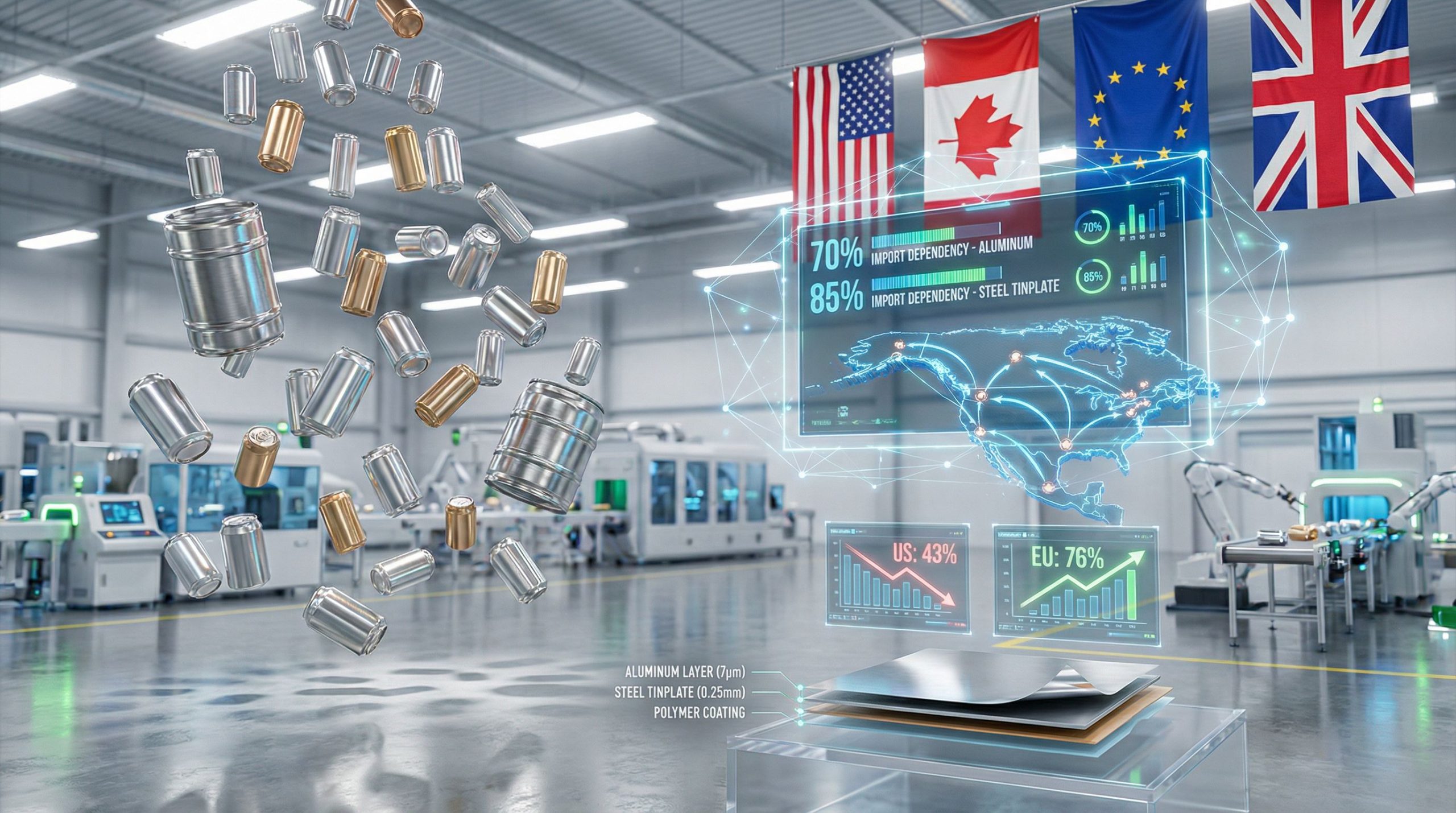
The can manufacturing sector illustrates how trade policies can affect domestic production capacity over time. According to industry data, domestic steel tinplate production has experienced dramatic consolidation, with operational lines decreasing from 12 to just 3 between 2018 and 2026. This reduction represents a fundamental shift in the industry’s production landscape and highlights the vulnerability of domestic supply chains.

The decline in domestic capacity forces manufacturers to rely increasingly on imports from traditional trading partners including Canada, the United Kingdom, and European Union nations. This dependency creates potential supply chain risks during periods of trade tension or international disruptions. Furthermore, the EU expects US to ease impact of metals tariffs in coming negotiations.

Production Metric
2018 Baseline
2026 Current
Change

Steel Tinplate Lines
12
3
-75%

Import Dependency
Moderate
High
Significant increase

Supply Chain Risk
Low
Elevated
Substantial change

Material Import Dependencies

The food packaging industry relies heavily on specialised materials that meet strict food safety standards. Aluminium for beverage cans and steel tinplate for food cans require specific metallurgical properties and certifications that limit the number of qualified suppliers globally.

These materials often come from established trading partners with proven quality systems and regulatory compliance. Disrupting these supply relationships through tariff policies can create immediate challenges for food manufacturers who need consistent material specifications to maintain product safety and quality. Consequently, US manufacturers advocate for metal tariff relief to address rising costs.

Consumer Price Impact Mechanisms

When material costs increase due to tariffs, food manufacturers face difficult decisions about price absorption versus consumer price increases. The food packaging industry operates on relatively thin margins, making it challenging to absorb significant material cost increases without affecting retail prices.

Regional variations in pricing can emerge based on proximity to remaining domestic production facilities versus import-dependent markets. This geographic disparity can create competitive advantages for manufacturers located near domestic supply sources while penalising those in import-dependent regions.

Legislative Approaches to Tariff Reform

STEWARD Act Environmental Data Enhancement

The STEWARD Act represents a comprehensive approach to improving recycling programme data collection and reporting. This legislation would require the Environmental Protection Agency to enhance its data gathering capabilities for recycling and composting programmes nationwide, creating better visibility into material flows and recovery rates.

Improved data collection would enable policy makers to make more informed decisions about material flows and identify opportunities for domestic capacity expansion. The legislation recognises that effective recycling policy requires accurate baseline data and standardised reporting mechanisms.

CIRCLE Act Infrastructure Investment Incentives

The CIRCLE Act proposes tax credit mechanisms to stimulate private investment in recycling infrastructure. By providing financial incentives for qualifying projects, this legislation aims to expand domestic processing capacity and reduce reliance on virgin material imports.

Tax credit programmes can accelerate infrastructure development by improving project economics for private investors. The challenge lies in structuring credits that generate meaningful capacity increases while ensuring public benefit from the tax expenditure. Moreover, these initiatives align with recycling transition strategies being implemented across various industries.

Industry-Specific Relief Proposals

Targeted relief for specific industries requires careful consideration of supply chain characteristics and national security implications. Food packaging materials, for example, have different risk profiles compared to general industrial applications.

Relief proposals must balance immediate industry needs with longer-term domestic capacity development goals. Temporary measures may provide necessary transition time for domestic capacity expansion while ensuring continued manufacturing competitiveness.

Global Recycling Performance Comparisons

Regional Recycling Rate Analysis

The United States significantly lags behind European nations in metal can recycling performance, with aluminium beverage cans achieving only 43% recycling rates compared to 76% in the European Union. Steel can recycling shows similar disparities, with US rates of 44% trailing European performance substantially.

Region
Aluminium Cans
Steel Cans
Policy Framework

United States
43%
44%
Voluntary programmes

European Union
76%
Not specified*
Extended producer responsibility

*Note: The 76% figure represents overall performance for EU, UK, Switzerland, Norway, and Iceland without material-specific breakdowns.

Infrastructure Investment Requirements

Achieving European-level recycling performance would require substantial infrastructure modernisation across collection, sorting, and processing systems. The investment needed extends beyond facility upgrades to include workforce development and consumer education programmes.

Collection system improvements represent a critical bottleneck in US recycling performance. Many regions lack the infrastructure density needed to capture materials efficiently, particularly in rural and suburban areas where transportation costs become prohibitive.

Processing facility modernisation involves both technology upgrades and capacity expansion. Advanced sorting systems and contamination reduction technologies could significantly improve material recovery rates and quality.

Extended Producer Responsibility vs. Voluntary Programmes

European recycling success stems largely from extended producer responsibility frameworks that create financial incentives for manufacturers to design recyclable products and support collection infrastructure. These systems internalise environmental costs into product pricing and create sustainable funding mechanisms for recycling programmes.

Voluntary programmes, while offering implementation flexibility, often struggle to achieve comprehensive coverage and consistent performance. Market-based incentives may not align with optimal environmental outcomes without regulatory frameworks to ensure participation.

Economic Impact Assessment of Current Tariff Policies

Manufacturing Sector Analysis

The Can Manufacturers Institute represents companies generating over $13 billion in annual economic activity, highlighting the significant economic scale affected by metal tariff policies. This economic impact extends beyond direct manufacturing to include suppliers, logistics providers, and supporting service industries.

Regional concentration in manufacturing corridors means that tariff impacts are geographically clustered, potentially affecting entire regional economies. Areas dependent on metal manufacturing face multiplied effects when primary industries experience cost pressures or capacity reductions. The broader implications of Trump’s tariff policies continue to influence these regional dynamics.

Employment and Workforce Considerations

Manufacturing employment in metal-intensive industries faces pressure from both automation trends and trade policy impacts. While tariffs may protect some domestic jobs in primary metal production, downstream manufacturing employment may decline due to higher input costs and reduced competitiveness.

Workforce development programmes must account for changing skill requirements as domestic production methods evolve. Investment in training and education becomes critical for maintaining competitive manufacturing capabilities.

Long-term Competitiveness Factors

Sustaining competitive manufacturing requires balancing short-term protection with long-term innovation and efficiency improvements. Metal tariff relief policies must consider how temporary measures can support transition to more sustainable competitive positions.

Technology transfer opportunities from international partnerships may be affected by trade tensions, potentially limiting access to advanced manufacturing techniques and process improvements. For instance, US–China trade impacts continue to shape global manufacturing relationships.

Section 232 Exclusion Procedures

Companies seeking relief from steel and aluminium tariffs must navigate complex exclusion request procedures with uncertain outcomes. The documentation requirements involve detailed supply chain analysis, domestic availability assessments, and economic impact projections.

Processing timelines can extend over several months, creating planning challenges for manufacturers with time-sensitive production schedules. The uncertainty around approval decisions complicates inventory management and long-term sourcing strategies.

Alternative Sourcing Documentation

Successful exclusion requests often require comprehensive demonstration that domestic alternatives are inadequate for specific applications. This documentation process involves technical specifications, quality certifications, and capacity availability assessments.

Manufacturers must maintain detailed records of sourcing attempts and supplier capabilities to support exclusion requests. This administrative burden requires dedicated resources and expertise in regulatory compliance.

Policy Development Trajectories

The evolution of metal tariff policies will likely reflect broader trade relationship developments with key allies and competitors. Changes in international agreements and bilateral relationships could significantly affect current tariff structures.

Administrative transitions may bring different approaches to balancing protection and competitiveness objectives. Industry stakeholders must prepare for potential policy shifts while advocating for stable, predictable regulatory environments.

Circular Economy Integration Opportunities

Developing domestic recycling capacity represents a potential pathway for reducing import dependencies while supporting environmental objectives. Investment in circular economy infrastructure could address both trade and sustainability policy goals simultaneously.

Metal recycling technologies continue advancing, potentially making domestic secondary production more competitive with imports. These technological improvements could support both environmental and trade policy objectives.

International Partnership Strategies

Maintaining productive trade relationships with traditional allies requires careful balance between protection and cooperation. Metal tariff relief policies should consider how trade measures affect broader strategic partnerships and security cooperation.

Multilateral approaches to trade challenges may offer more sustainable solutions than unilateral measures, particularly for industries dependent on complex international supply chains.

Enjoyed this article?

We publish high-impact stories like this a few times a week. No spam.

Strategic Recommendations for Policy Framework Development

Targeted Relief Implementation

Effective metal tariff relief requires nuanced approaches that consider specific industry characteristics and supply chain requirements. Food packaging industries, for example, have different risk profiles and consumer impact considerations compared to general industrial applications.

Policy mechanisms should provide clear criteria and predictable processes for relief requests. Transparency in decision-making helps manufacturers make informed planning decisions and reduces regulatory uncertainty.

Infrastructure Investment Coordination

Recycling infrastructure development requires coordinated investment across public and private sectors. Tax incentive programmes must align with regulatory frameworks and local development priorities to maximise effectiveness.

Regional coordination becomes important for achieving efficient collection and processing networks. Interstate cooperation may be necessary for developing economically viable recycling systems in smaller markets.

International Partnership Preservation

Trade policies should consider long-term strategic relationships with key allies and trading partners. Metal tariff relief mechanisms can demonstrate commitment to collaborative approaches while addressing domestic industry concerns.

Bilateral and multilateral engagement on trade issues helps maintain productive relationships that support broader security and economic cooperation objectives.

The complexity of metal tariff relief policies requires careful balance between competing objectives including domestic industry protection, consumer affordability, environmental sustainability, and international partnership maintenance. Success depends on developing nuanced approaches that recognise specific industry needs while supporting broader economic and strategic goals.

This analysis is based on publicly available information and industry statements. Trade policy developments continue evolving, and readers should consult current regulatory guidance for specific compliance requirements. Investment and business decisions should consider multiple factors beyond trade policy considerations.

Discovery Alert’s proprietary Discovery IQ model delivers real-time alerts on significant ASX mineral discoveries, instantly empowering subscribers to identify actionable opportunities in critical metals markets ahead of broader market awareness. Begin your 14-day free trial today to position yourself strategically as global supply chain dynamics create new investment landscapes in the mining sector.

Free Training

Source link

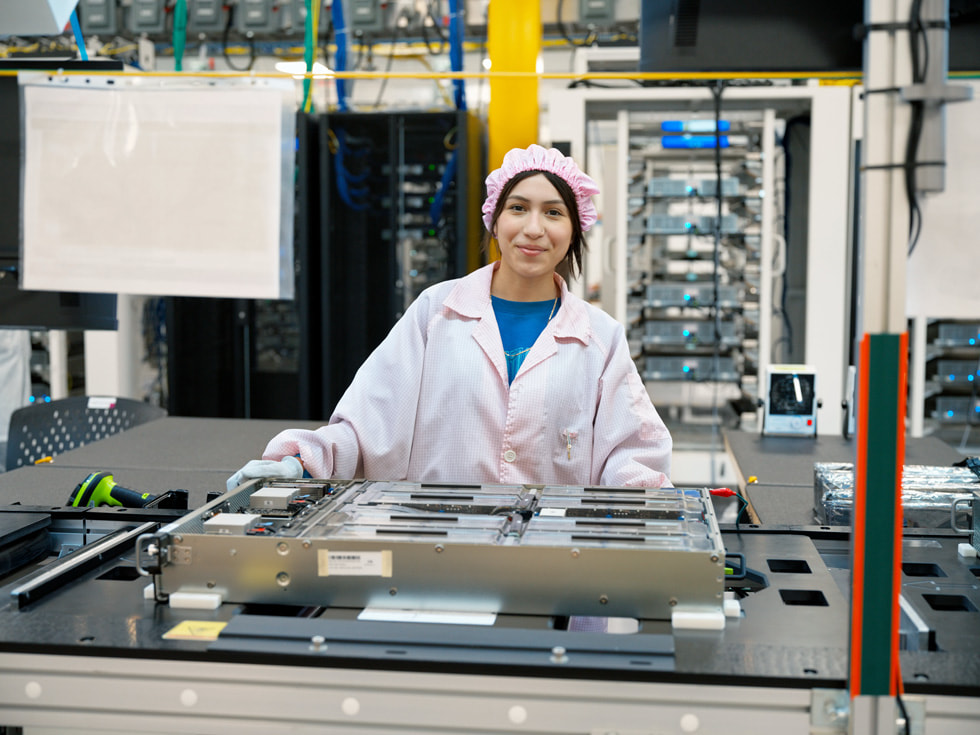
Apple’s Houston Expansion Puts U.S. Manufacturing And AI At Center Stage


  • Apple announced plans to expand its U.S. manufacturing footprint with a new campus in Houston focused on Mac mini production and AI server hardware, targeting a start date later in 2026.
  • The company outlined large investments in American manufacturing facilities, workforce training, and domestic sourcing of chips and components.
  • These moves are aimed at diversifying Apple’s supply chain in response to global geopolitical risks and concentrating more high value hardware production in the U.S.

For investors watching NasdaqGS:AAPL, this move ties directly into how the company builds and supports its core hardware and AI infrastructure. Apple’s shares recently closed at $272.95, with returns of 3.2% over the past week, 6.4% over the past month, and 13.4% over the past year. Over a longer stretch, the stock has delivered 83.3% over three years and 130.8% over five years.

This new Houston build out and broader U.S. supply chain push indicate that Apple is committing more capital and attention to where and how its devices and AI systems are produced. For investors, the key questions are how these manufacturing and training investments affect Apple’s cost structure, product reliability, and its role in U.S. chip and AI hardware ecosystems over time.

Stay updated on the most important news stories for Apple by adding it to your watchlist or portfolio. Alternatively, explore our Community to discover new perspectives on Apple.

NasdaqGS:AAPL Earnings & Revenue Growth as at Feb 2026NasdaqGS:AAPL Earnings & Revenue Growth as at Feb 2026

📰 Beyond the headline: 0 risks and 2 things going right for Apple that every investor should see.

For Apple, the Houston expansion is as much about control and resilience as it is about capacity. Shifting Mac mini and AI-server assembly into the U.S., while tying that into a $600b domestic supply-chain commitment, gives Apple more direct oversight of high value hardware tied to Apple Intelligence and its broader services ecosystem. It also tangibly responds to the geopolitical concerns around Taiwan and China that investors have been hearing about since at least 2023, without Apple needing to match the very heavy AI data-center spending seen at Microsoft, Alphabet, or Amazon. At the same time, more U.S. manufacturing can mean higher labor and compliance costs, so the key question is whether Apple’s scale and process discipline can offset that through efficiency and pricing.

How This Fits Into The Apple Narrative

  • The U.S. manufacturing push supports the narrative’s focus on supply-chain optimization, which aims to reduce tariff and geopolitical risk and support margin stability over time.
  • Bringing AI servers and Mac mini production onshore adds execution risk around cost control and yields, which could challenge assumptions that hardware and AI features will easily translate into higher margins.
  • The dedicated Advanced Manufacturing Center and wider supplier investments deepen Apple’s U.S. industrial footprint, an element not fully captured in the narrative’s emphasis on services and on-device AI as drivers of the story.

Knowing what a company is worth starts with understanding its story.
Check out one of the top narratives in the Simply Wall St Community for Apple to help decide what it’s worth to you.

The Risks and Rewards Investors Should Consider

  • ⚠️ Higher-cost U.S. production and complex AI-server builds could pressure hardware margins if Apple cannot offset expenses through pricing, mix, or efficiency gains.
  • ⚠️ Even with diversification, Apple remains exposed to China and Taiwan, so investors still face geopolitical and regulatory risk alongside the large U.S. commitments.
  • 🎁 A broader U.S. chip and manufacturing base, including suppliers like TSMC and Texas Instruments, may help Apple reduce single-region dependence and improve component security.
  • 🎁 Housing AI-server production closer to its data centers could support more reliable Apple Intelligence services, strengthening differentiation versus peers such as Samsung and Google hardware.

What To Watch Going Forward

From here, you will want to watch how quickly the Houston site ramps Mac mini and AI-server output, and whether Apple comments on any margin impact in future earnings calls. Progress on sourcing chips from U.S. facilities, along with utilization of the Advanced Manufacturing Center, will help show whether this shift is improving resilience rather than simply adding cost. It is also worth tracking how Apple positions these U.S. investments alongside its AI partnerships and on-device features as competition from Microsoft, Alphabet, and Samsung continues to evolve.

To ensure you’re always in the loop on how the latest news impacts the investment narrative for Apple, head to the
community page for Apple to never miss an update on the top community narratives.

This article by Simply Wall St is general in nature. We provide commentary based on historical data
and analyst forecasts only using an unbiased methodology and our articles are not intended to be financial advice.
It does not constitute a recommendation to buy or sell any stock, and does not take account of your objectives, or your
financial situation. We aim to bring you long-term focused analysis driven by fundamental data.
Note that our analysis may not factor in the latest price-sensitive company announcements or qualitative material.
Simply Wall St has no position in any stocks mentioned.

New: Manage All Your Stock Portfolios in One Place

We’ve created the ultimate portfolio companion for stock investors, and it’s free.

• Connect an unlimited number of Portfolios and see your total in one currency
• Be alerted to new Warning Signs or Risks via email or mobile
• Track the Fair Value of your stocks

Try a Demo Portfolio for Free

Have feedback on this article? Concerned about the content? Get in touch with us directly. Alternatively, email editorial-team@simplywallst.com

Free Training

Source link

North America Manufacturing News Digest – the industry stories you should be aware of


Welcome to our weekly roundup of North America manufacturing news, designed to inform you of all the industry stories you should know about.

Apple to bring Mac mini production to Houston in major US manufacturing expansion

Apple has announced a significant expansion of its Houston manufacturing operations, confirming that production of the Mac mini will move to the United States for the first time as part of a broader investment in advanced manufacturing and AI infrastructure. Read more via The Manufacturer

AbbVie to create 300 new jobs with $380m Illinois manufacturing investment

AbbVie has announced a $380m investment to build two new active pharmaceutical ingredient (API) manufacturing facilities at its North Chicago campus, expanding U.S. production capacity for next-generation medicines and creating around 300 new jobs. Read more via The Manufacturer

Alfa Laval to double capacity at Richmond, VA facility by 2028

In response to accelerating demand driven by the rapid expansion of data centers across North America, Alfa Laval announced a major expansion of its Richmond, Virginia manufacturing facility. Read more via The Manufacturer

NAM report warns against policy changes that could disrupt U.S. food manufacturing

The National Association of Manufacturers (NAM) has released a new report highlighting the economic and social importance of the U.S. food and beverage supply chain, while cautioning policymakers against reforms that could undermine what it describes as a science-based system delivering safe, affordable and accessible food. Read more via The Manufacturer

EU Motors opens U.S. manufacturing facility in Florida

EU Motors Sp. z o.o., one of the largest producers of electric drone motors outside of China, today announced the opening of its new production facility, EU Motors USA, in Hallandale Beach, Florida. Read more via The Manufacturer

Free Training

Source link