Novartis charts next US investment with new radiopharma plant


As Novartis turns the calendar on a new year, the Swiss drugmaker is elaborating further on plans for the $23 billion U.S. investment it unveiled last April.

Next on the docket will be a new, 35,000-square-foot radioligand therapy (RLT) facility in Winter Park, Florida, Novartis reported Friday. 

Joining established plants in Novartis’ American RLT network in Indiana, New Jersey and California, the new facility will boost the company’s radiopharmaceutical manufacturing to “optimize the delivery” of the cutting-edge cancer treatments to patients across the southeastern United States, Novartis said in a Jan. 9 press release. The upcoming site is expected to come online by 2029, the company added. 

While radiopharmaceuticals, which target cancer cells with a radioactive drug, have become an increasingly popular oncology development target, few have crossed the regulatory finish line so far. Novartis, however, boasts two approved RLTs in Lutathera and Pluvicto, which have been cleared by the FDA to treat neuroendocrine tumors and prostate cancer, respectively.

“Building this new facility in Florida marks an important step in fulfilling the promise of RLT for patients,” Novartis CEO Vas Narasimhan said in a statement Friday. “Radioligand therapy has fundamentally changed how we approach certain cancers, and our growing U.S. manufacturing network ensures we can continue to deliver these critical medicines with speed and reliability to patients who need them.”

As for why the company selected Florida for its new site, RLT manufacturing requires “specialized talent,” and the state has that in droves thanks to steady investments in higher education for life sciences and technology, Novartis explained in its release. 

The Florida RLT facility marks the latest stop on Novartis’ $23 billion U.S. investment drive. The company revealed the investment plan early last year as drugmakers sought to counter the Trump administration’s pharmaceutical tariff threats by building or expanding production facilities on U.S. soil.

Novartis specifically pledged to build and expand 10 U.S. sites through 2030, including four new manufacturing plants and fresh radioligand facilities in Florida and Texas. Novartis’ plans for its fifth U.S. RLT plant have yet to be revealed. At the same time, the company also said it would chart expansions at the RLT facilities in Indiana, New Jersey and California.

The Carlsbad, California, site officially came online last November, at the time marking the company’s third production hub for radiopharmaceuticals in the U.S. The 10,000-square-foot facility has been designed to enable Novartis to “seamlessly meet future demand for RLT,” the company said at the time of the ribbon cutting.

RLTs, also known as radiopharmaceuticals, are a form of precision medicine that wed a tumor-targeting molecule—known as a ligand—with a therapeutic radioisotope. The class is designed to deliver radiation to tumors while limiting damage to surrounding cells, Novartis has explained.

However, the radioactive isotopes used to create the drugs have posed production and supply challenges for the industry.

Given the close relationship between the production of the product and the end-therapy itself, many radiopharmaceutical developers have embraced manufacturing early on in their work.

Recognizing the supply hurdles, Novartis in Sept. 2024 announced that it was building a new plant on its Indiana RLT campus to produce radioactive isotopes. The reveal came in tandem with news that Novartis would establish its RLT manufacturing site in California.

“We are investing in our supply chain capabilities today to ensure that we are prepared to consistently deliver these complex treatments to the growing number of eligible patients in the long term,” Victor Bultó, Novartis’ U.S. president, said in a statement at the time.

In addition to its U.S. sites, Novartis also operates RLT facilities in Ivrea, Italy, and Zaragoza, Spain.

Elsewhere, Novartis revealed another major piece of its $23 billion outlay in November when it sketched out plans for a “flagship” production hub in North Carolina, where it intends to create some 700 new jobs.

Free Training

Source link

US factory headcount falling despite Trump’s promised manufacturing boom


  • US manufacturing jobs continue to decline
  • Unemployment rate falls slightly, but job creation estimates revised lower
  • Black unemployment rate rises, manufacturing sector loses 70,000 jobs since April

WASHINGTON, Jan 9 (Reuters) – U.S. manufacturing jobs in December continued an eight-month skid that began last spring after President Donald Trump rolled out aggressive import taxes that he pledged would lead to a resurgence of blue-collar jobs by reshuffling world trade to favor U.S. workers.

The reshuffling has certainly occurred, with the U.S. collecting around $30 billion a month in tariff revenue, spread among U.S. consumers, importers, and overseas exporting firms, and as firms first frontloaded goods abroad to stock their shelves with tariff-skirting inventory, then slowed their purchases and brought down U.S. import levels.

Sign up here.

But the blue-collar jobs boom hasn’t materialized, adding to the soured sentiment about Trump’s economic policies among households concerned about still-rising prices and uncertainty about the labor market.Data released on Friday showed the unemployment rate fell slightly to 4.4% in December from 4.5% in November, though estimates of job creation in prior months were revised lower, presenting U.S. Federal Reserve officials with a mixed message of a jobless rate that remains low by historic standards, but hiring trends that seem weak and job growth that seems narrow.

The latest data “is very much in line with the businesses I am talking to, which is that the low-hire environment continues. Some of it is uncertainty. A lot of it is productivity,” Richmond Fed President Tom Barkin said in comments to journalists. “It is hard to find businesses outside of the AI ecosystem or healthcare that are talking about hiring.”

Just ask J.B. Brown, CEO of BCI Solutions Inc., a small metal foundry in Bremen, Indiana, that sells to a range of agriculture and heavy equipment makers.

“Every time I hear that manufacturing is booming, I scream at the TV,” Brown told Reuters. His workforce is down to 130 from 240 people over the past 27 months. That’s the fewest the family-owned business has had since at least 1993, when he joined the company.

Brown said he eliminated a shift in September 2023 and has let attrition steadily reduce numbers since then. He said he could cut another 5% of his workers, if necessary, but he’s trying to avoid that to keep ready for the eventual upturn in orders. His capacity now stands at 52%, another low point. “I’ve never been below 70 to 65%,” he said. “This is our first time experiencing that.”

MANUFACTURING EMPLOYMENT LOWER THAN IN TRUMP’S FIRST TERM

The pace of job creation in the first year of Trump’s second term has fallen more than two-thirds from what it was in the final year under President Joe Biden, to an estimated 49,000 per month in 2025 versus 168,000 per month the prior year.

The unemployment rate has increased only modestly because the number of people looking for jobs has remained flat under Trump, with tougher immigration and deportation rules and enforcement curbing what had been steady labor force growth under Biden’s looser immigration policies.

“The healthcare sector is the only sector that is adding jobs right now, and it always does. It’s completely insensitive to the economic cycle,” Luke Tilley, chief economist at Wilmington Trust, said at a Maryland Bankers Association event on Friday.

Some parts of the economy have felt the pressure more than others. The Black unemployment rate has risen from 6.2% as of January, when Trump resumed office, to 7.5% the past two months. The white unemployment rate by contrast has been between 3.5% and 3.8% since April of 2024, and was below that for more than two years prior.

Shows hiring breadth in factory employmentShows hiring breadth in factory employment

Hiring in manufacturing, meanwhile, has been in the doldrums. The sector lost another 8,000 jobs in December, the Bureau of Labor Statistics estimated, and factory employment has dropped more than 70,000 since April to 12.69 million as of last month – the lowest reading since March of 2022. Construction jobs by contrast, while dropping in December, have continued the slow but steady growth seen throughout the post-pandemic era, goaded along recently by a boom in data-center investment.

The much smaller mining and logging industry has also been losing jobs, down to 608,000 as of December versus 626,000 in April.

That was the month Trump rolled out the “Liberation Day” tariffs that, while quickly scaled back after a brutal market reaction, set the stage for an upheaval in world trade and investment patterns that is still unresolved.

The U.S. Supreme Court is expected to rule soon on a case that challenged the legality of many of the tariffs imposed under national security laws but touted by Trump as a source of revenue and meant to reclaim U.S. manufacturing supremacy.

The path of employment since the new strategy was put in place, however, shows if anything how difficult it is to reshape labor market dynamics in a $30 trillion economy whose population is aging and in need of aging-related services, where growth is dependent on consumer spending that tends to be concentrated on services like education, healthcare, leisure, and restaurants, and whose workers command a wage premium that causes firms and managers to invest in productivity so they can make goods with fewer man-hours.

Manufacturing employment in the U.S. is now lower than it was for much of Trump’s initial term, which ran from 2017 until his loss to Biden in the 2020 election.

Shows US manufacturing employmentShows US manufacturing employment

Overall, hiring has been narrowly focused, with a measure of hiring breadth showing more industries shedding employment than adding.

The economy is generating jobs based on what people want to buy and what firms can profitably sell, and so hiring patterns haven’t shifted all that much.

“Nothing in the…data points towards significant, near-term change to this now familiar pattern,” Laura Ullrich, director of economic research in North America at the Indeed Hiring Lab, wrote after the release of the December employment data. “That said, a low-hire/low-fire environment can’t last forever in a growing economy. While a long-stagnant labor market might not be as directly alarming as an obviously broken one, it can still feel quite broken for many job seekers.”

Reporting by Howard Schneider; Addtional reporting by Tim Aeppel; Editing by Andrea Ricci

Our Standards: The Thomson Reuters Trust Principles., opens new tab

Purchase Licensing RightsHoward Schneider

Covers the U.S. Federal Reserve, monetary policy and the economy, a graduate of the University of Maryland and Johns Hopkins University with previous experience as a foreign correspondent, economics reporter and on the local staff of the Washington Post.

Free Training

Source link

US Factory Jobs Keep Falling Despite Trump’s Manufacturing Revival Push


Manufacturing sector

US manufacturing employment has continued to decline despite former President Donald Trump’s repeated claims of an industrial revival driven by tariffs and reshoring policies | Image:
Pexels

US manufacturing employment fell again in December, extending a steady decline that has now lasted most of 2025, underscoring the gap between political promises of an industrial resurgence and labour market realities.

According to government data, factory payrolls have dropped by more than 70,000 jobs since April, pushing total manufacturing employment to around 12.7 million, the lowest level in over three years. The sector has now recorded job losses in eight of the past nine months.

Tariffs Fail to Deliver Hiring Boost

President Donald Trump has repeatedly argued that tariffs and protectionist trade policies would revive domestic manufacturing and bring factory jobs back to the US. Tariff collections have surged, generating tens of billions of dollars in revenue annually, but manufacturers say higher input costs and supply-chain uncertainty have offset any benefit from reduced import competition.

Many firms have opted to invest in automation or overseas capacity rather than expand domestic headcount, limiting the employment impact of reshoring initiatives.

Also read: ₹1.7 Lakh Crore Raised Through IPOs in FY26: SEBI

Broader Jobs Growth Masks Factory Weakness

While overall US employment growth has remained positive, driven largely by healthcare and services, manufacturing has emerged as a weak link. Economists note that factory hiring tends to slow earlier in economic cycles as companies respond quickly to changes in demand and costs.

The unemployment rate edged lower in December, but analysts say this largely reflects slowing labour force participation rather than strong job creation in goods-producing sectors.

Structural Challenges Weigh on Outlook

Industry executives cite multiple headwinds facing US manufacturing, including higher borrowing costs, rising wages, energy price volatility, and slowing global demand. Even companies expanding production capacity are increasingly relying on technology rather than labour-intensive processes.

As a result, economists warn that a sustained rebound in factory employment is unlikely without broader investment incentives, stable trade policy, and stronger demand growth.

Despite aggressive rhetoric and rising tariff revenues, the long-promised revival in US factory jobs has yet to materialise. For now, manufacturing remains a drag on the labour market, highlighting the limits of trade policy as a tool for job creation.

-With inputs from Reuters

Also read: SC Rulings Loom as Trump’s Tariff Authority Faces Fresh Legal Scrutiny

Free Training

Source link

US manufacturing sector loses jobs despite Trump’s promises of a manufacturing boom


According to December results, the US manufacturing sector showed an eight-month decline in the number of jobs. This happened against the backdrop of President Donald Trump’s introduction of strict import tariffs, which were intended to revive American industry, but instead led to a reduction in hiring and an increase in business costs. This is reported by Reuters, writes UNN.

Details

According to data from the US Department of Labor published on Friday, the manufacturing industry lost another 8,000 jobs in December 2025. In total, the sector shed 75,000 employees last year. Trump noted that tariff revenues – about $30 billion monthly – indicate the success of the policy, but businesses are reacting differently: companies initially massively purchased goods abroad before the tariffs were introduced, and then sharply slowed down purchases and investments.

Currency exchange rate: dollar set a historical maximum, euro crossed the 50 UAH mark09.01.26, 08:00 • 3168 views

Richmond Fed President Tom Barkin confirmed to reporters that the labor market situation remains difficult.

It’s hard to find companies outside the AI or healthcare ecosystem that are talking about hiring

– he noted, explaining this by high uncertainty and increasing productivity, which replaces human labor.

Manufacturing on the verge of survival

Real business indicators demonstrate the depth of the crisis. For example, at the BCI Solutions Inc. steel plant in Indiana, the staff was reduced from 240 to 130 people – the lowest level since 1993. The company’s CEO, J.B. Brown, stated that capacity utilization fell to a record low of 52%.

Although the unemployment rate in December slightly decreased to 4.4% (from 4.5% in November), this is explained more by people leaving the workforce and strict immigration policies than by the creation of new jobs. The pace of employment growth in 2025 fell to 49,000 vacancies per month, which is three times less than the previous year’s figures (168,000 per month during Biden’s time). Economists state that the only cycle-resistant sector remains healthcare. 

Ukraine granted lithium mining rights to Trump’s friend – NYT09.01.26, 16:44 • 23020 views

Free Training

Source link

EB-2 NIW and Semiconductor Manufacturing Priority


For professionals pursuing the EB-2 National Interest Waiver (NIW), semiconductor manufacturing now sits squarely within one of the clearest national priority areas recognized by the U.S. government.

For decades, advanced technology was discussed primarily in economic terms. Innovation drove growth. Growth created jobs. That framework worked when technology remained largely commercial. 

Semiconductors no longer fit that model. 

Today, semiconductor chips underpin systems central to U.S. national security and economic stability, including artificial intelligence (AI), defense technologies, cybersecurity, telecommunications, healthcare, and transportation. When a single technology supports so many critical functions, it becomes a strategic asset rather than an industry trend. For EB-2 NIW petitioners, this distinction matters, because USCIS evaluates national importance through the lens of federal priorities that extend beyond private-sector demand. 

At the same time, advanced semiconductor manufacturing remains heavily concentrated outside the United States, particularly in East Asia. Recent shortages exposed how vulnerable global supply chains can be and highlighted the risks of relying on foreign production for technology the U.S. cannot afford to lose control over. 

As a result, semiconductor manufacturing has moved to the center of national policy. 

The U.S. Push to Rebuild Domestic Chip Manufacturing 

The federal government now treats semiconductor production as critical infrastructure. America’s AI Action Plan from July 2025 is direct on this point: “Now America must bring semiconductor manufacturing back to U.S. soil.” For professionals already working in semiconductor-related fields, this policy articulation helps clarify how their work aligns with national objectives the government has formally identified. 

This push is tied to the broader infrastructure required to sustain AI leadership: “AI will require new infrastructure, factories to produce chips, data centers to run those chips, and new sources of energy to power it all.” 

AI requires massive computing power, which depends on advanced semiconductors. When production occurs abroad, the United States has less control over availability, security standards, and long-term scalability. From a national strategy perspective, that dependence creates real risk. Professionals contributing to domestic production, process improvement, or supply-chain resilience are therefore operating within an area the government already views as strategically sensitive. 

In response, federal policy has focused on accelerating domestic manufacturing by reducing barriers that slow development. This includes streamlining the permitting of fabrication facilities, modernizing regulatory processes, and coordinating land use, energy infrastructure, and security requirements. 

The goal is not incremental growth. It is rebuilding a domestic manufacturing ecosystem capable of supporting advanced technologies at scale. 

Why This Policy Shift Matters for Immigration 

Rebuilding semiconductor manufacturing is not only an infrastructure challenge. It is a workforce challenge. 

Advanced fabrication plants, data centers, and supporting systems require highly specialized expertise to design, operate, and optimize. These skills take years to develop and exist within a limited global talent pool. Domestic training pipelines alone are unlikely to meet near-term demand. 

For that reason, immigration policy has become a functional part of the semiconductor strategy rather than a separate consideration. Professionals with relevant semiconductor expertise are increasingly well positioned to frame their work within existing national priorities when pursuing self-sponsored immigration options, rather than relying solely on employer-driven pathways. 

How EB-2 NIW Fits Today’s Semiconductor Priorities 

The EB-2 NIW aligns closely with how the United States is currently prioritizing semiconductor manufacturing. 

It allows qualified professionals to pursue permanent residence without a job offer when their work advances U.S. interests at a broader level. Rather than focusing on a single employer’s needs, USCIS looks at whether the individual’s contributions support national priorities the government has already identified. This framework allows semiconductor professionals to rely on documented federal policy goals, rather than speculative future needs, when presenting their case. 

Semiconductor manufacturing meets the national importance standard with unusual clarity. As America’s AI Action Plan states: “A revitalized U.S. chip industry will generate thousands of high-paying jobs… and protect our supply chains from disruption by foreign rivals.” 

Federal policy has tied domestic chip production to national security, economic resilience, and technological leadership. For that reason, EB-2 NIW petitions connected to critical and emerging technologies, including semiconductors, can be particularly strong when they are well framed and well supported. 

Other immigration options may also apply, including the EB-1A and the O-1. These categories can be a strong fit for professionals who can document extraordinary ability and top-of-field recognition, but they typically require a higher evidentiary showing. For many semiconductor professionals doing important work without that level of public distinction, the EB-2 NIW is often the more practical pathway because it focuses on national importance and the ability to advance the proposed endeavor. 

EB-2 NIW Is Not Limited to High-Profile Professionals 

A common misconception is that EB-2 NIW approval requires patents, public recognition, or executive-level titles. While this can be helpful evidence, they are not required. 

USCIS evaluates whether a professional is well positioned to advance a nationally important endeavor considering several factors. Semiconductor manufacturing is a complex ecosystem, and meaningful contributions occur across many roles. 

Professionals working in semiconductor manufacturing and process engineering, chip design and microelectronics, materials science and nanotechnology, automation and robotics, AI applied to manufacturing, yield optimization, energy efficiency, and semiconductor supply chains may all be well positioned for EB-2 NIW approval. 

Each case is evaluated individually. What matters is how a professional’s specific background supports domestic semiconductor production and related national priorities. 

What Strengthens a Semiconductor-Focused EB-2 NIW Petition

A strong EB-2 NIW petition does more than identify an important field. It explains how the individual’s work advances that field in a concrete way. In semiconductor cases, this often includes a record of related professional experience, research or technical projects, manufacturing or process improvements, internal innovations, or recognition by employers, industry partners, or professional organizations. Funding or research experience can also strengthen the record, though it is not required. 

Equally important is a clear proposed endeavor. USCIS looks for a specific, forward-looking explanation of what the professional plans to do in the United States and how that work supports national priorities tied to semiconductor manufacturing. General statements about working “in semiconductors” are rarely sufficient. Specificity strengthens credibility. 

When a clear record of success is paired with a well-defined plan, the national interest argument becomes easier to articulate and evaluate. 

A National Priority That Strengthens the EB-2 NIW Framework

The effort to restore semiconductor manufacturing in the United States reflects a long-term national strategy. Domestic chip production now sits at the intersection of national security, economic resilience, and technological leadership. 

As the federal government works to rebuild manufacturing capacity and secure critical supply chains, demand for highly skilled professionals will continue to grow. For individuals already contributing to semiconductor manufacturing and related technologies, this policy environment provides a clear framework for positioning their work within the EB-2 NIW analysis. 

When a professional’s work supports objectives the United States has already defined as critical, the path to demonstrating national interest is clearer and more firmly grounded in national policy. 

Understanding how your background fits into this landscape is the first step.

Free Training

Source link

Johnson & Johnson Reaches Agreement with U.S. Government to Improve Access to Medicines and Lower Costs for Millions of Americans; Delivers on U.S. Manufacturing and Innovation Investments


Voluntary agreement will allow millions of Americans to purchase medicines at significantly discounted rates


Agreement provides Johnson & Johnson pharmaceutical products an exemption from U.S. tariffs

Company announces two new additional manufacturing facilities to be built in North Carolina and Pennsylvania; continues to deliver on $55 billion U.S. investment

NEW BRUNSWICK, N.J.–(BUSINESS WIRE)–Johnson & Johnson (NYSE: JNJ) (the “Company”), healthcare’s leading, most comprehensive innovation powerhouse, today announced a voluntary agreement with the Trump Administration to improve access to medicines and lower costs for millions of American patients. The joint agreement meets the requests laid out by President Trump to the industry and provides the Company’s pharmaceutical products an exemption from tariffs1.

“Today’s agreement shows that when the public and private sectors work together towards shared goals, we can deliver real results for patients and the U.S. economy,” said Joaquin Duato, Chairman and Chief Executive Officer, Johnson & Johnson. “I’m proud that Johnson & Johnson is answering President Trump’s call to lower drug prices for everyday Americans while maintaining our role in improving and saving lives and ensuring that the United States continues to lead the world in healthcare innovation.”

Improving Access and Lowering Costs for U.S. Patients

Johnson & Johnson is working with the Trump Administration to improve access to medicines and lower costs for millions of American patients. The Company is:

  • Participating in TrumpRx.gov, a direct to patient platform, which will allow millions of American patients to purchase medicines from Johnson & Johnson at significantly discounted rates.
  • Enabling American patients to access medicines at comparable prices to other developed countries.
  • Providing Medicaid program access at comparable prices to other developed countries.
  • Continuing to support the Administration’s efforts to ensure better recognition of the value of health care across developed markets globally.

Delivering On Our $55B U.S. Investment

Johnson & Johnson also continues to deliver on our previously announced $55 billion investment to support U.S. manufacturing, research and development, and technology investments by early 2029. In just the last 10 months, the Company has initiated billions of dollars in investment in U.S. manufacturing, which will support the Company’s goal of manufacturing the vast majority of its advanced medicines in the U.S. to meet the needs of U.S. patients.

Today, as part of the $55 billion investment, the Company is announcing two new U.S. manufacturing facilities, including a next generation cell therapy manufacturing site in Pennsylvania and a state-of-the-art drug product manufacturing facility in North Carolina.

Additionally, construction is progressing on our $2 billion state-of-the-art biologics manufacturing facility in Wilson, North Carolina, which the Company broke ground on last year. That project will create approximately 5,000 skilled manufacturing and construction jobs in the state. Johnson & Johnson is already ramping up the hiring of advanced manufacturing employees to work at the facility.

In September, the Company also secured a new 160,000+ square foot dedicated biopharmaceutical manufacturing site in Holly Springs, North Carolina. The $2 billion commitment over the next 10 years will create approximately 120 new jobs in North Carolina.

Johnson & Johnson expects to announce additional U.S. investments later this year.

About Johnson & Johnson:

At Johnson & Johnson, we believe health is everything. Our strength in healthcare innovation empowers us to build a world where complex diseases are prevented, treated, and cured, where treatments are smarter and less invasive, and solutions are personal. Through our expertise in Innovative Medicine and MedTech, we are uniquely positioned to innovate across the full spectrum of healthcare solutions today to deliver the breakthroughs of tomorrow and profoundly impact health for humanity. Learn more at www.jnj.com.

Cautions Concerning Forward-Looking Statements

This press release contains “forward-looking statements” as defined in the Private Securities Litigation Reform Act of 1995. The reader is cautioned not to rely on these forward-looking statements. These statements are based on current expectations of future events. If underlying assumptions prove inaccurate or known or unknown risks or uncertainties materialize, actual results could vary materially from the expectations and projections of Johnson & Johnson. Risks and uncertainties include, but are not limited to: challenges and uncertainties inherent in product research and development, including the uncertainty of clinical success and of obtaining regulatory approvals; uncertainty of commercial success; manufacturing difficulties and delays; competition, including technological advances, new products and patents attained by competitors; challenges to patents; product efficacy or safety concerns resulting in product recalls or regulatory actions; changes in behavior and spending patterns of purchasers of health care products and services; changes to applicable laws and regulations, including global health care reforms; and trends toward health care cost containment. A further list and descriptions of these risks, uncertainties and other factors can be found in Johnson & Johnson’s most recent Annual Report on Form 10-K, including in the sections captioned “Cautionary Note Regarding Forward-Looking Statements” and “Item 1A. Risk Factors,” and in Johnson & Johnson’s subsequent Quarterly Reports on Form 10-Q and other filings with the Securities and Exchange Commission. Copies of these filings are available online at www.sec.gov, www.jnj.com, www.investor.jnj.com or on request from Johnson & Johnson. Johnson & Johnson does not undertake to update any forward-looking statement as a result of new information or future events or developments.

1 Specific terms of the agreement remain confidential.

Contacts

Media contact:
media-relations@its.jnj.com

Investor contact:

investor-relations@its.jnj.com

Free Training

Source link

Trump meets Intel CEO, hails US-Made Sub-2 Nanometer Chip, links manufacturing push to tariff policy


ANI |
Updated:
Jan 09, 2026 08:39 IST

Washington DC [US], January 9 (ANI): US President Donald Trump has hailed chipmaker Intel for launching an advanced semiconductor product manufactured entirely in the United States, calling it a major achievement for American industry and a validation of his administration’s aggressive trade and manufacturing policies.
In a social media post, President Trump said he had a “great meeting” with Intel CEO Lip-Bu Tan, praising the company’s technological progress and its commitment to domestic manufacturing.
Trump stated that Intel has launched the first sub-2 nanometer CPU processor that has been designed, built, and packaged in the USA.
“I just finished a great meeting with the very successful Intel CEO, Lip-Bu Tan. Intel just launched the first SUB 2 NANOMETER CPU PROCESSOR designed, built, and packaged right here in the U.S.A.,” Trump wrote in the post.
The US President also highlighted the financial gains made by the US government through its ownership position in Intel. According to Trump, the United States government is a shareholder in the company and has already earned tens of billions of dollars for the American people in just four months through this stake.
“The United States Government is proud to be a Shareholder of Intel, and has already made, through its U.S.A. ownership position, Tens of Billions of Dollars for the American People – IN JUST FOUR MONTHS. We made a GREAT Deal, and so did Intel,” Trump said.
Trump further asserted that his administration is determined to bring leading-edge chip manufacturing back to America, adding that the progress made by Intel demonstrates that this objective is being achieved.
“Our Country is determined to bring leading edge Chip Manufacturing back to America, and that is exactly what is happening!!!” the President added.
Echoing Trump‘s comments, Intel CEO Lip-Bu Tan also shared a social media post expressing appreciation for the support received from the US leadership.
“Honored and delighted to have the full support and encouragement of @POTUS @realDonaldTrump and @CommerceGovSecretary @howardlutnick as we bring leading edge chip manufacturing back to America,” Tan said in his post.

He added that Intel is now shipping its latest Core Ultra Series 3 CPU processors, which are designed, manufactured, and packaged in the USA using the most advanced semiconductor technology.
“@intel is now shipping the latest Core Ultra Series 3 CPU processors – designed, manufactured and packaged with the most advanced semiconductor technology, right here in the USA,” the Intel CEO stated.
President Trump has repeatedly linked such developments to his administration’s trade policies. Since beginning his second term as President, Trump has pursued aggressive trade measures, including the imposition of tariffs, with the stated objective of boosting domestic manufacturing in the United States.
Trump has imposed tariffs on countries that were major exporters to the US, including India and China.
On India, Trump has already imposed 50 per cent tariffs on goods entering the United States since August 2025.
In another social media post, Trump cited recent economic data to argue that tariffs have strengthened the US economy and improved national security.
He claimed that the United States has recorded its lowest trade deficit since 2009 and that the figure is continuing to decline.
“Numbers released today show that the United States of America has the lowest Trade Deficit since 2009, and going even lower,” Trump said.
He further stated that the nation’s gross domestic product is predicted to come in at over 5 per cent, even after what he described as a 1.5 per cent loss due to a Democrat “Shutdown.”
Trump attributed these outcomes directly to his tariff policies, saying they have “rescued” the US economy and national security. He also urged the Supreme Court to take note of what he described as historic achievements before issuing what he called its most important decision ever.
“These incredible numbers, and the unprecedented SUCCESS of our Country, are a direct result of TARIFFS, which have rescued our Economy and National Security. I hope the Supreme Court is aware of these Historic, Country saving achievements prior to the issuance of their most important (ever!) Decision. Thank you for your attention to this matter! PRESIDENT DONALD J. TRUMP.” (ANI)

Free Training

Source link

CFDA & Ralph Lauren launch grants to boost US fashion manufacturing


The Council of Fashion Designers of America (CFDA) announced two new initiatives designed to strengthen American fashion manufacturing, drive innovation, support workforce development, and promote economic growth in key apparel-producing regions across the country.

The CFDA x NY Forward Grant Fund, developed with funding from both the New York State Department of State and Ralph Lauren Corporation (Ralph Lauren), will provide partially matching grants to designers and manufacturers based in New York City’s Garment District. The U.S. Fashion Manufacturing Fund, created with Ralph Lauren as founding partner, will support apparel manufacturers nationwide. Both programs aim to help companies to modernize equipment, expand services, and train workers – building the capacity and resilience of American fashion manufacturing.

CFDA has launched two new grant programmes with Ralph Lauren to strengthen American fashion manufacturing.
The CFDA x NY Forward Grant Fund will support New York City’s Garment District, while the US Fashion Manufacturing Fund will aid manufacturers nationwide, focusing on modernisation, workforce training, innovation and long-term industry resilience.

These programs build on the success of the CFDA’s Fashion Manufacturing Initiative (FMI), launched in 2013 in affiliation with the New York City Economic Development Corporation (NYCEDC), Andrew Rosen, and with the long-term support of Ralph Lauren, among others. To date, Ralph Lauren has contributed $2 million as FMI’s Premier Underwriter, enabling grants to 54 factories and positively impacting more than 2,000 jobs.

“Strengthening American manufacturing to ensure designers have local partners has long been at the core of CFDA’s mission,” said Steven Kolb, CEO and President of the CFDA. “We are proud to extend our decade-plus work with Ralph Lauren Corporation and expand to a national level while also continuing our local NYC investments alongside our first-ever partnership with the New York State Department of State.”

Together, these new grant programs mark a landmark commitment: sustaining New York’s Garment District while bolstering U.S. manufacturing nationwide — ensuring that American fashion continues to lead globally through innovation, craftsmanship and community.

“Our expanded partnership with the CFDA reflects Ralph Lauren’s enduring commitment to advancing innovation and supporting American fashion,” said Katie Ioanilli, Chief Global Impact & Communications Officer, Ralph Lauren Corporation. “This is not only an investment in our industry — it’s an investment in a vital part of American culture that we share with the world.”

Note: The headline, insights, and image of this press release may have been refined by the Fibre2Fashion staff; the rest of the content remains unchanged.

Fibre2Fashion News Desk (RM)

Free Training

Source link

Ralph Lauren Invests in Domestic Fashion as U.S. Manufacturing Job Market Shrinks


Ralph Lauren and the Council of Fashion Designers of America is widening its financial commitment to domestic apparel production as new economic data underscore just how fragile American fashion manufacturing has become.

This week, the CFDA announced two new grant programs aimed at stabilizing and modernizing U.S.-based fashion manufacturing, extending its support well beyond New York City for the first time. The move comes as fresh analysis from Deloitte shows that apparel and textile manufacturing remain among the fastest-declining segments of the U.S. industrial economy, even as policymakers push to reshore production.

The first initiative, the CFDA x NY Forward Grant Fund, is a city-focused effort developed with funding from the New York State Department of State and Ralph Lauren Corp. It will provide partially matching grants to designers and manufacturers operating in New York City’s Garment District, an area that has steadily lost factories and skilled labor over the past two decades.

The second program, the U.S. Fashion Manufacturing Fund, represents a broader national expansion. Also created with Ralph Lauren as a founding partner, the new fund will operate from 2027 through 2029 and support manufacturers across key apparel-producing regions including California, New Jersey, North Carolina, South Carolina, Texas, and Florida. The program is structured to cover 80 percent of eligible investments, with recipients contributing the remaining 20 percent, and is designed to help manufacturers upgrade machinery, adopt advanced software, and invest in workforce training.

Rather than attempting to recreate the labor-intensive apparel sector that once defined American manufacturing, the CFDA is directing capital toward higher-value, technology-enabled production that can survive within a dramatically changed global economy.

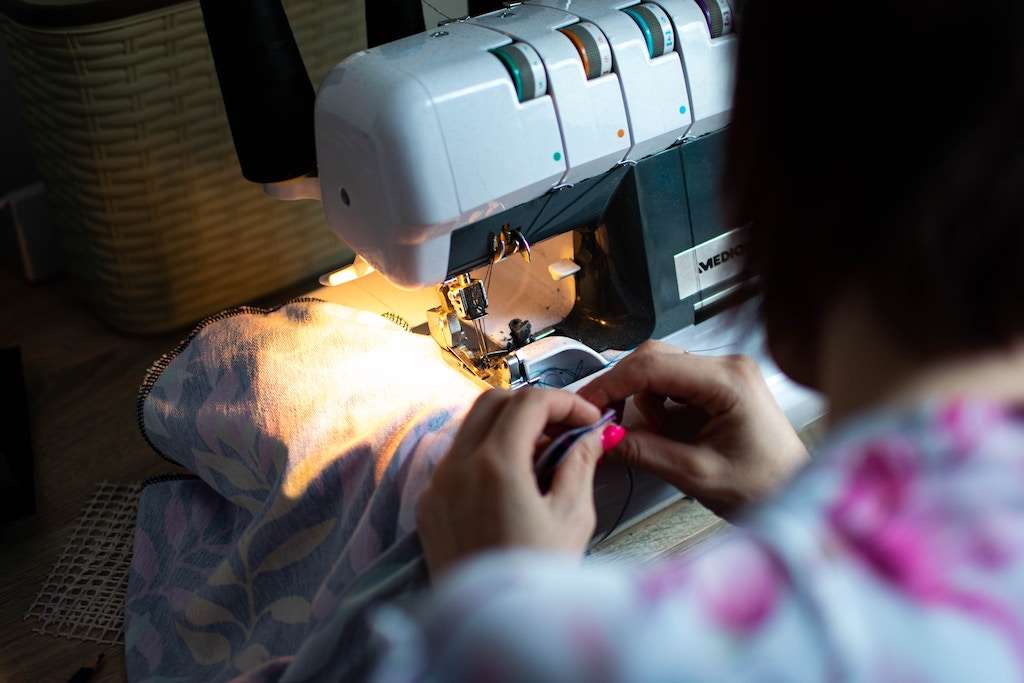
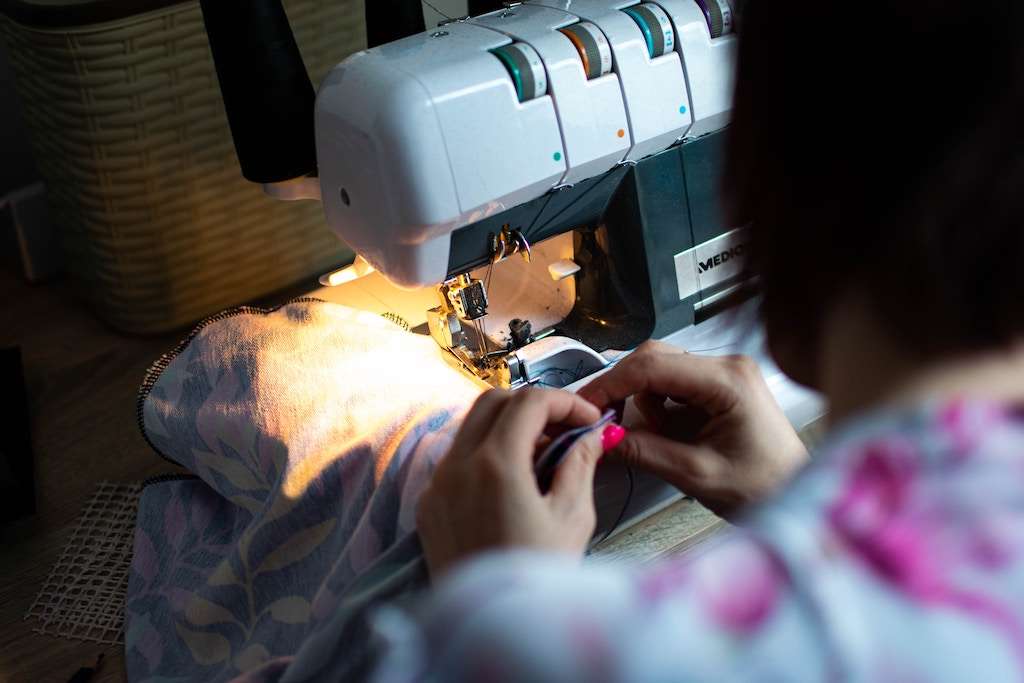
Hands at a sewing machine.Tomáš Petz

“Strengthening American manufacturing to ensure designers have local partners has long been at the core of CFDA’s mission,” Steven Kolb, chief executive officer and president of the CFDA, said in a statement. “We are proud to extend our decade-plus work with Ralph Lauren Corp. and expand to a national level while also continuing our local NYC investments alongside our first-ever partnership with the New York State Department of State.”

Ralph Lauren Corp. has been a central financial backer of the CFDA’s manufacturing efforts since 2013, when the organization launched its Fashion Manufacturing Initiative in partnership with the New York City Economic Development Corp. and industry executive Andrew Rosen. To date, Ralph Lauren has contributed $2 million as the initiative’s premier underwriter, enabling grants to 54 factories and supporting more than 2,000 jobs.

“Our expanded partnership with the CFDA reflects Ralph Lauren’s enduring commitment to advancing innovation and supporting American fashion,” said Katie Ioanilli, chief global impact and communications officer at Ralph Lauren Corp. “This is not only an investment in our industry — it’s an investment in a vital part of American culture that we share with the world.”

The renewed focus on modernization and training arrives as long-term economic trends continue to weigh heavily on apparel production. According to Deloitte’s Economics Insider series, real gross value added in U.S. manufacturing has grown at an average annual rate of 1.5 percent since 2000, compared with 2.1 percent growth across the broader economy. Manufacturing’s share of U.S. economic output stood at 9.4 percent in the second quarter of 2025, down from 15.1 percent 25 years earlier.

Within that contraction, apparel and textiles have been hit particularly hard. Deloitte data show that output in textile mills and textile product manufacturing has declined by an average of 2.9 percent per year since 2000, while apparel, leather, and allied products have fallen by an average of 2.2 percent annually. Employment losses have been even steeper, with apparel payrolls shrinking at an average rate of 6.8 percent per year over the same period.

By contrast, capital-intensive manufacturing sectors such as computer and electronic products have posted strong output growth, reinforcing a reality that CFDA leaders appear to be acknowledging: future domestic fashion manufacturing will depend less on scale and more on specialization, automation, and advanced skills.

The structure of the new grant programs mirrors that shift. Both funds are explicitly designed to help companies modernize equipment, expand technical services, and train workers in advanced production methods rather than increase headcount alone. The CFDA x NY Forward Grant Fund will distribute two rounds of funding in 2026 and 2027, with one manufacturer in each round also receiving the Ralph Lauren Manufacturing Award, which covers the full grant amount in recognition of innovation.

Woman in long coat.Ralph Lauren

New York State remains a focal point. In 2024, the state’s fashion industry was responsible for approximately $25 billion in wages, with New York City accounting for roughly $20 billion annually. Statewide, fashion employs about 315,000 people, including 204,000 jobs based in the city.

Ralph Lauren has also continued to anchor portions of its own production domestically, particularly through its role as Official Outfitter of Team USA. The company manufactures parade ceremony uniforms in the United States, including the opening and closing ceremony looks for the 2026 Milano Cortina Winter Olympic Games, work that has supported multiple American factories.

When asked about the potential for expanding U.S. production further, the company said, “We continue to explore and build additional opportunities to manufacture our products in the U.S. We value the wide range of production solutions that U.S. manufacturers can offer, from heritage craftsmanship to high-tech manufacturing like 3D printing. However, increasing domestic manufacturing is a complex process that requires ongoing collaboration across our sector, from how we collectively source raw materials to increasing existing domestic factory capacity to talent availability.”

The company added, “Working with factories across the country, we produce hundreds of thousands of products across all of our brands in the U.S.”

Deloitte’s analysis suggests that this kind of selective, high-value domestic production is likely to define the sector’s future. While tariffs and trade policy have renewed political interest in reshoring, the firm notes that manufacturing growth now hinges more on skilled labor, automation, and productivity than on sheer employment. As of September 2025, U.S. manufacturing payrolls totaled 12.7 million workers, down from 17.2 million in 2000, even as productivity has risen sharply.

Related on Ethos:

Free Training

Source link

AHF Products to highlight U.S. Manufacturing at TISE 2026


Las Vegas—AHF Products will return to TISE 2026 with a redesigned booth that highlights its U.S. manufacturing platform, flooring brands and product innovation aimed at supporting retailers and distributors.

The exhibit will feature brand-specific zones for Bruce, Hartco, Robbins, Crossville and Armstrong Flooring, with each space tailored to its core audience and product focus.

Bruce will spotlight hands-on demonstrations and interactive displays for installers and younger professionals. Hartco will feature a gallery-style presentation aimed at distributors. Robbins will emphasize craftsmanship and lifestyle storytelling through retail displays. Crossville will present an upscale, bar-inspired setting with premium finishes. Armstrong Flooring will offer a store-within-a-store concept designed to encourage engagement and social sharing.

The booth layout will guide visitors through hardwood, tile, resilient sheet, LVT and rigid core categories. AHF Products said the space supports hands-on exploration and discussion through real product installations, a central bar and meeting area and a private conference room.

“Surfaces gives us the opportunity to connect directly with our customers and show how we are investing in the future of flooring,” said Brent Emore, CEO of AHF Products. “From domestic manufacturing and faster lead times to innovation across multiple categories, our focus remains on supporting growth for our retail and distribution partners.”

U.S. manufacturing focus

AHF Products will emphasize its U.S. manufacturing footprint, which includes two wood plants, four resilient facilities, two porcelain plants and two sawmills across the United States. The company also operates a wholly owned engineered wood plant in Cambodia.

A key highlight is AHF’s rigid core manufacturing facility in Cartersville, Ga., which brings SPC production under company control.

“Our Cartersville facility allows us to deliver rigid core flooring in as little as 40 to 45 days,” said Jennifer Zimmerman, chief commercial officer. “That speed reduces inventory risk while helping customers avoid port delays, tariffs and freight volatility. We will display 60 new SKUs from this plant at Surfaces.”

The facility can produce more than 200 million square feet of HDPC capacity annually. It will support Armstrong Flooring–branded and private-label programs.

The rigid core products feature AHF’s HDPC technology, offering waterproof performance, enhanced dent and impact resistance, dimensional stability, embossed-in-register visuals and flexible installation options.

Product highlights

AHF Products will also showcase select wood and tile introductions aligned with current design and installation trends.

Bruce Natural Choice 5/16-inch solid hardwood offers a low-profile, glue-down option designed for remodels and concrete subfloors. The product is made in the USA.

“Natural Choice makes solid hardwood more accessible,” said Milton Goodwin, vice president of product management, wood. “It delivers authentic visuals with a faster and more flexible installation method.”

Robbins Coastside engineered hardwood will feature wide-plank European white oak visuals inspired by the California coast. The product offers installation flexibility and refinishable performance.

Crossville will highlight U.S.-made porcelain tile collections, including Cleve, a quartzite-inspired tile designed for residential and commercial use. The collection features layered veining, high variation and Crossville’s FeatherSoft finish.

Portland Cliff porcelain tile will also be featured. Inspired by historic Portland stone, the product offers Visual Touch Technology, neutral color options and carbon-neutral production with recycled content.

AHF Products said its Surfaces presence reinforces its commitment to domestic production, private-label capabilities and long-term partnership support.

Free Training

Source link