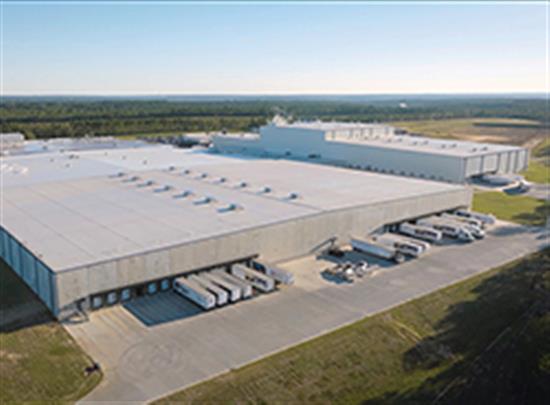
Siemens Energy to add 120 jobs in Fort Payne as part of $1 billion U.S. manufacturing investment


Siemens Energy plans to add 120 advanced manufacturing jobs at its Fort Payne facility as part of a more than $1 billion U.S. investment initiative, according to a joint announcement from the DeKalb County Economic Development Authority and the City of Fort Payne.

The expansion will increase production capacity at the longtime Northeast Alabama plant and is expected to strengthen the region’s role in energy-sector manufacturing.

The Fort Payne facility, which opened in 1988, currently employs about 250 workers. Officials said the added positions will support expanded production of copper and insulated electrical components used in power-generation equipment. The growth is expected to position Siemens Energy among DeKalb County’s five largest manufacturing employers based on current employment levels.

Siemens Energy President of North America Matt Neal said the company’s technology already plays a major role in U.S. power generation and demand is rising.

“Twenty-five percent of the power generated in the United States relies on Siemens Energy technology and that process starts here in Alabama. We need more electricity to fuel our daily lives and our growing economy and that has increased demand for our equipment. Throughout the country we are expanding manufacturing and hiring more workers and doing so in places like Fort Payne where we already have a great workforce, a robust pipeline of talent, and strong partnerships with the community,” Neal said.

Alabama Commerce Secretary Ellen McNair said the expansion reflects confidence in the state’s workforce and business climate.

“Siemens Energy’s expansion in Fort Payne is a tremendous vote of confidence in the highly skilled local workforce and underscores the strong community partnerships with business in our state,” McNair said. “We are excited to watch this new phase of growth unfold and stand ready to help the company achieve its future strategic goals and innovations.”

Brett Johnson, Executive Director of the DeKalb County Economic Development Authority, said the project strengthens the county’s industrial base.

“Existing industries like Siemens Energy are the backbone of DeKalb County’s growing economy,” Johnson said. “As a major employer, Siemens Energy’s continued reinvestment creates long-term stability, higher-wage jobs, and sustained economic growth for our communities. The work being done at the Siemens Energy manufacturing plant in Fort Payne is literally helping generate reliable power around the globe, and that is the kind of work we can all be proud to say is made right here in DeKalb County, Alabama.”

Fort Payne Mayor Brian Baine said the additional jobs will have a regional ripple effect.

“These are the kinds of high-quality, advanced manufacturing jobs that strengthen families and elevate our workforce,” Baine said. “This manufacturing investment will transform the trajectories of 120 families across our region and create a wider ripple effect throughout our local economy. Investments like these create new opportunities for small businesses, workforce development, and our entire community. We welcome this investment and stand ready to support Siemens Energy throughout the process.”

Bryan Wilkin, Siemens Energy’s Director of Operations in Fort Payne, said the company plans to grow both its workforce and its community involvement.

“Siemens Energy is buzzing with excitement as we announce significant growth and investment in our Fort Payne factory. This expansion not only marks a milestone in our company’s journey but also brings a wave of new job opportunities to the area. We are thrilled to share that we will be hiring a substantial number of new employees, which will undoubtedly have a positive impact on our local economy and provide stability for many families. Our current employees can also rest assured that their positions remain stable and secure as we recognize and appreciate their continued hard work and dedication. In addition to these exciting developments, we are proud of our ongoing involvement in community initiatives. Our factory remains dedicated to supporting local events, charities, and projects that benefit the well-being of our neighbors. As we move forward with these plans, we invite the community to join us in celebrating this new chapter together,” Wilkin said.

Siemens Energy became an independent energy technology company after being spun off from Siemens AG in 2020 and operates more than two dozen facilities across the United States, including multiple manufacturing sites.

With the planned hiring and production increase, local leaders say the Fort Payne expansion adds to growing momentum for advanced manufacturing across Northeast Alabama.

Sherri Blevins is a reporter for 256 Today.

Free Training

Source link

Bowling manufacturer plans $9M expansion, 90 new jobs in Muskegon


Updated Feb. 6, 2026, 1:08 p.m. ET

A Michigan bowling equipment manufacturer is expanding its presence in the Muskegon area, investing nearly $9 million to renovate a facility, a move it says is expected to create 90 new jobs.

Motiv Bowling said in a news release on Feb. 4 that it plans to acquire a 96,000-square-foot facility in Roosevelt Park, which is just a few miles outside Muskegon. The facility will be renovated and used for bowling ball manufacturing and as an exporting logistics hub.

Free Training

Source link

Manufacturing Construction Spending Declines Under Trump


Spending to build, expand and rehabilitate manufacturing sites in the U.S. has declined since President Donald Trump took office, according to U.S. Census Bureau data. Yet, Trump has repeatedly boasted that “factory construction” is up 41%.

A general view of the Samsung Austin Semiconductor plant on April 16, 2024, in Taylor, Texas, which received CHIPS Act funds. Photo by Brandon Bell/Getty Images.

Trump cited the 41% statistic in a White House press conference on Jan. 20 – calling it a “record” increase and suggesting that other presidents cannot compare to this “record.” 

“Investment in American factories is up 41%. That’s a record. Nobody goes 41% up. You go 2% up, 1% up. You go down by 3%. If Kamala [Harris] got elected, the 41% up would be 41% down,” Trump said at the press conference, referring to the former vice president and Democratic presidential nominee who lost to Trump in the 2024 election.

A day later, in a Jan. 21 speech at the World Economic Forum Annual Meeting in Davos, Switzerland, Trump repeated the 41% figure. 

“Factory construction is up by 41%, and that number is really going to skyrocket right now, because that’s during a process that they’re putting in to get their approvals and we’ve given very, very quick, fast approvals,” Trump said. 

This claim is part of a theme the president has emphasized of a “manufacturing boom” or “booming” economy due to his trade policies.

At our request, the White House sent us a link to the Census Bureau’s manufacturing construction spending data via the Federal Reserve Bank of St. Louis’ online database known as FRED. We provide more about the White House response later, but let’s focus first on what the data show.

Under President Joe Biden — who served from Jan. 20, 2021, to Jan. 20, 2025 — there was a significant increase in manufacturing construction spending in all four years, according to the Census Bureau’s annual average estimates. After declining 6.9% in 2020 – the last year of Trump’s first term – manufacturing construction spending started to rise in 2021, the data show. 

(Technical note: The Census Bureau provides average quarterly and annual estimates and monthly reports for construction spending, including manufacturing construction spending, based on its monthly Value of Construction Put in Place survey. We use all three in this story.) 

Initially, the increases during the Biden years were in response to the COVID-19 pandemic, Anirban Basu, chief economist for the Associated Builders and Contractors, an industry trade association, told us in an email. 

“Supply chain disruptions at the start of the COVID-19 pandemic convinced many producers to reshore capacity, while a sudden and sharp increase in construction materials prices—which rose more than 40% during the early years of the pandemic—also boosted nominal construction spending,” Basu said. 

Manufacturing construction spending accelerated after Biden signed legislation in August 2022 designed to encourage private investment in U.S. manufacturing for semiconductors and clean energy. The bipartisan CHIPS Act, for example, included $39 billion to help fund semiconductor manufacturing facilities in the U.S., as explained in an April 2023 report by the Congressional Research Service.

During Biden’s four years, the annual average rate of manufacturing construction spending jumped more than 200%, from $75.5 billion to $235.6 billion, according to Census Bureau estimates. Spending surged 62% in a single year – 2023, a year after Biden signed the CHIPS Act. 

But manufacturing construction spending peaked in the third quarter of 2024 and has been trending down slightly ever since. Census Bureau quarterly data show that under Trump, measuring from the last quarter in 2024 through the third quarter in 2025, spending declined 6.7%. 

That decline is expected to continue in 2026 and 2027, according to the most recent survey of construction economists that is conducted twice a year by the American Institute of Architects.

“Manufacturing construction spending has seen phenomenal growth in recent years, increasing by over 50% in 2022, another 62% in 2023, and then another 16% in 2024,” the AIA consensus construction forecast published Jan. 15 said. “However, growth paused last year as spending in this category fell about 5% and is projected to decline another 4% this year and 1% in 2027.”

Despite the slight declines, the AIA construction forecast noted that the semiconductor fabrication plants continue to fuel manufacturing construction spending and will do so in the long term.

“The longer-term prospects look much more promising, as construction starts for manufacturing projects have shot up again,” the AIA forecast said. “Since many of these starts are for megaprojects, such as large semiconductor fabrication plants that entail a complex construction process, it may take a while before the activity shows up in the construction spending data.”

In January, Basu analyzed the Census Bureau’s most recent monthly report for nonresidential construction spending, which showed manufacturing construction spending as of October had declined for nine straight months

“With CHIPS Act-enabled megaprojects winding down and the stiff headwind of trade policy, manufacturing construction spending has fallen by nearly 10% over the past 12 months, accounting for more than the entire decline in private nonresidential spending,” Basu said in an ABC press release issued Jan. 21. (By “trade policy,” Basu is referring to the economic impact of Trump’s tariffs on construction materials.)

On a monthly basis, the Census Bureau shows a 7.3% decline in manufacturing construction spending last year under Trump from January through October, the most recent data available.

Beginning on Jan. 23, we asked the White House on multiple occasions to provide support for the 41% figure used in Trump’s Jan. 20 and 21 remarks. After not receiving a response, we sent another email on Feb. 2 after the president wrote an opinion piece for the Wall Street Journal on Jan. 30 that said, “Factory construction is up by 42% since 2022.” We asked how it arrived at a 42% increase “since 2022.” That evening, the White House sent us a link to the Census Bureau’s manufacturing construction spending data, saying it compared “averages of Jan – August 2025 vs 2021-2024 average.”

That’s true — as far as it goes. On an annualized basis, monthly manufacturing construction spending averaged $226.1 billion for January through August — which is 40% higher than the annual average of $161.1 billion in Biden’s four years. But Trump wrote that the 42% increase was “since 2022,” not 2021. (We’ve asked the White House for a clarification.)

More importantly, the White House methodology fails to take into account the 212% increase in factory construction spending over Biden’s four years, which peaked in 2024 at an annual average of $235.6 billion, and how the Biden-era CHIPS Act continues to fuel manufacturing construction spending.

As we noted earlier, Basu attributed the recent decline to Trump’s tariffs and the slowing — not the halting — of construction projects spurred by the CHIPS Act. Asked to elaborate on his analysis, Basu told us that the manufacturing construction spending in 2025 is “largely due” to the CHIPS Act.

“While spending in the segment remains elevated from 2022 levels, that’s partially due to a precipitous increase in materials prices that occurred in 2022 and 2023 — these data are in nominal terms — and largely due to the surge in megaproject activity induced by the CHIPS Act,” Basu said.

He added that Trump’s tariffs have helped drive up the costs of fabricated metal — which has increased manufacturing construction costs.

“[I]t should be noted that spending in the fabricated metal manufacturing subsegment is up 19% over the past year,” Basu said. “Some of the increase can be contributed to tariffs and the resulting increase in demand for domestic production.”

We should note that even with the recent surge in manufacturing construction spending, there has been a decline in the number of manufacturing jobs. As we reported last month, the economy lost 63,000 manufacturing jobs in Trump’s first 11 months. That followed a loss of 98,000 in the preceding 11 months, according to the Bureau of Labor Statistics.

Shortly before Biden left office, Manufacturing Today, a trade magazine, wrote in December 2024 that manufacturing jobs were slow to materialize despite Biden’s incentives to spur manufacturing construction. But the magazine predicted the jobs “will materialize in the future.”

“Unlike traditional industrial projects, today’s semiconductor and clean energy facilities require longer timelines,” the article said. “Factories of this scale can take two to three years to complete, with even longer delays for more complex facilities, such as semiconductor plants. This extended timeline means the full benefits will not be realized for several more years.”

Basu agreed that CHIPS-related spending will result in an overall increase in U.S. manufacturing jobs – but cautioned that the impact of Trump’s tariffs could offset those gains. 

“The massive facilities incentivized by the CHIPS Act will employ thousands of people,” Basu told us. “That said, all else is not equal, and recent trade policy and the effects on manufacturing input prices have put downward pressure on the industry’s employment.” (Input prices are costs of materials and other resources manufacturers need to produce goods, with some of those materials being imported.)

Others are bullish that Trump’s trade policies will encourage more manufacturers to expand in the U.S. 

In April, when Trump announced higher tariffs on nearly all foreign imports, Morgan Stanley analyst Chris Snyder called tariffs “a positive catalyst” for relocating manufacturing to the U.S. More recently, Snyder said in a podcast last month that the tariffs have changed the “supply chain cost calculation” and will result in new U.S. factories. 

“What we’re seeing is the cost of imports have gone higher with tariffs, and now it’s more economically advisable for these companies to make the product in the United States,” Snyder said. “And if that’s the case, that means that when they need a new factory, it’s going to come to the United States. They might not need a factory now, but when they do, the U.S. is at least incrementally better positioned to get that factory.”

In a January news article, the Wall Street Journal wrote that Trump’s tariffs “haven’t worked, so far.” The article said tariffs have increased manufacturers’ costs for foreign parts, adding that the “White House’s stop-and-start” tariff policy announcements have “also led to what many executives view as a lost year for investment.”

In a December interview with the Wall Street Journal, Trump cited — as he often does — the value of investments that he says his administration has secured to date. (As we’ve written, he has exaggerated pledges to invest made by various companies and countries that may or may not materialize, experts say.) But he couldn’t say if the investments would show results in time for the midterm elections, when the Republican Party is in jeopardy of losing its slim majority in the House. “I can’t tell you. I don’t know when all of this money is going to kick in,” the president told the Journal, adding that it may happen in the second quarter of this year.

What will happen in the coming months and years remains to be seen. But what we can say is that factory construction so far has declined under Trump and his claim that it has increased 41% depends on a spending surge that occurred under Biden. 

Editor’s note: FactCheck.org does not accept advertising. We rely on grants and individual donations from people like you. Please consider a donation. Credit card donations may be made through our “Donate” page. If you prefer to give by check, send to: FactCheck.org, Annenberg Public Policy Center, P.O. Box 58100, Philadelphia, PA 19102. 

Free Training

Source link

The US is a Small Country


In my recent post on US manufacturing jobs and tariffs, I mentioned a Wall Street Journal article that pointed toward American tariffs having little impact on Chinese exports; the exports are simply being shifted to other countries.  In the earlier post, I discussed what that fact meant for US manufacturing jobs.  Here, I discuss what that shift means for who bears the burden of the tax.

Economists argue that the burden of a tariff falls primarily on the importing country.  In fact, the model we teach our Intro students shows that the burden falls exclusively on the importing nation.  In op-eds, that same model is what we generally present.  However, as readers of this blog know, it’s not completely correct to state that a tariff will always fall entirely upon the importing country.  Our Intro students also learn that who bears the burden of a tax depends on the relative elasticities of supply and demand.  Whoever is least sensitive to a change in price will bear a greater burden of the tax.  Consequently, whoever is the most sensitive to a change in price will bear the lower burden.  In the simple model of international trade, we economists typically show a perfectly elastic supply of the imported good.  In other words, foreign producers are highly sensitive to a change in price; foreign producers have many other consumers beyond the importing country and will simply shift their business elsewhere.  Consequently, the importing nation must face the entire burden of the tax.  This is called the small-country tariff model; the importing country is simply too small to influence the world price of the tariffed good.

But what if that condition does not hold?  What if the importing country is sufficiently large that it can influence the world price of the imported good?  This is called the large-country model.  When a nation is such a large importer of a particular good that their behavior can influence the world price, the global supply curve is relatively inelastic (upward sloping).  When the nation imports a lot, the world price rises and global producers produce more.  Likewise, when the importing nation purchases less, the global price falls and world producers supply less of the good.

The large-country model has an interesting implication.  With a sufficiently small tariff, the large country can actually improve its terms of trade and, consequently, the trading partner’s terms of trade will fall.  The terms of trade for a country is:

Terms of Trade = Export Price Index/Import Price Index

In other words, the terms of trade is how much it costs (exports) for a country to consume (import) foreign goods.  Imposing a tariff reduces the quantity demanded of the imported good. Under the large country model, the importing nation is sufficiently large that if the quantity demanded of the good falls, the world price falls, and the exporting nation must absorb some of the tariff, otherwise the transaction ceases to be profitable.  Domestic imports fall but the domestic price of the good does not rise by the full amount of the tariff. 

In sum: if a country is sufficiently large, the relative elasticities are known, and the exporting nations’ behavior does not change other than to reduce prices on the tariffed goods (i.e., no retaliation and no reduction of their own imports or investment into the domestic country), a sufficiently small tariff can improve the economic welfare of the importing country.  Yes, there is a loss from a reduction in imports (recall that imports are the benefit of international trade), but there is a gain due to the lower price of imports.  If the gain from the lower price outweighs the loss from the reduction of imports, then the country will marginally increase their welfare.  (This tradeoff is why the tariff must be sufficiently small; one wouldn’t want to reduce imports too much!).  The tariff that achieves this result is called an optimal tariff; it is a tariff that optimizes total economic welfare in a country.  

Any International Trade textbook will discuss these models.  I recommend International Economics by Robert Carbaugh.  The book is written on the assumption that the reader has no more than a principles of economics understanding.

Some argue that the US is sufficiently large that the tariffs imposed will increase welfare in the US.  We saw almost immediately that the argument for an optimal tariff was violated; shortly after tariffs were imposed in 2025, other countries retaliated with their own tariffs. Various studies indicate Americans are bearing almost all of the tariff.  

A recent WSJ piece points to another issue: at least as far as China is concerned, the US is not a sufficiently large country.  According to data from the US Census Bureau, US imports from China are down some 45.6% from last year, but China’s exports are up.  Rather than reducing prices, China simply found other buyers for their goods.  Consequently, these data imply that US consumers and individuals are likely bearing most, if not all, of the tariff on Chinese goods.  The tariffs reduced imports, increased prices for Americans, but the global price did not change. China simply found other buyers.  The supply curve was, for all intents and purposes, perfectly elastic.

The usefulness of a model derives from its ability to make sense of the real world and give us the ability to make predictions.  The “realism” or complexity of a model is not necessarily a feature.  In many ways, the large-country model is more realistic than the small-country model.  It’s quite unlikely that any country, let alone the United States, is so small that they cannot influence world prices at all.  Ultimately, all trade is done by individuals and not nations, so it’s reasonable to assume there will be some influence on a case-by-case basis.  However, the large-country model is not particularly helpful in explaining real-world outcomes.  The small-country model, despite its lack of realism, provides far clearer analysis, at least as a first approximation of effects.  

Free Training

Source link

State looks to expand manufacturing training at community colleges | News


CHICAGO — As the U.S. sheds manufacturing jobs, Illinois is accepting applications for $24 million in grant funding to establish training facilities at community colleges aimed at bolstering the state’s manufacturing labor pool.

The funding is for six “manufacturing training academies” at downstate community colleges that will add to two existing academies that opened in 2024.

kAm%96 ?6H 8C2?ED H:== 36 2H2C565 E9C@F89 2 3:55:?8 AC@46DD] %96 s6A2CE>6?E @7 r@>>6C46 2?5 t4@?@>:4 ~AA@CEF?:EJ 2??@F?465 E92E E96 =2E6DE 2AA=:42E:@? H:?5@H @A6?65 62C=:6C E9:D >@?E9] r@>>F?:EJ 4@==686D @FED:56 @7 r@@< 2?5 E96 4@==2C 4@F?E:6D 42? 2AA=J 7@C 8C2?ED C2?8:?8 7C@> Sb >:==:@? E@ Se >:==:@?]k^Am

kAmxE 4@>6D 2D E96 :?5FDECJ 7246D 92CD9 9625H:?5D 7C@> 2 H:56 C2?86 @7 724E@CD[ :?4=F5:?8 E9@D6 @FED:56 @7 $AC:?87:6=5’D 4@?EC@=]k^Am

kAm%96 EC2:?:?8 24256>J AC@8C2> 😀 2? @77D9@@E @7 E96 3:A2CE:D2? 3F586E 2?5 AF3=:4 :?7C2DECF4EFC6 7C2>6H@C< E92E 3642>6 =2H 5FC:?8 !C:EK<6C’D 7:CDE J62C 😕 @77:46 😕 a_`h] %96 x==:?@:D |2?F724EFC6CD’ pDD@4:2E:@?[ 2 AC@\3FD:?6DD EC256 4@?D@CE:F>[ H2D :?DECF>6?E2= 😕 :ED =2F?49]k^Am

kAm“%@52JVD >2?F724EFC:?8 😀 72C 5:776C6?E E92? :E =@@<65 `_[ a_[ b_ J62CD 28@[” D2:5 |2C< s6?K=6C[ E96 AC6D:56?E 2?5 rt~ @7 x|p] “Wu@CX E96 DE2E6D E92E 2C6 8@:?8 E@ H:? @? 64@?@>:4 56G6=@A>6?E[ 2 =2C86 A2CE @7 E92E 😀 >2<:?8 DFC6 H6 92G6 2 D<:==65 H@C<7@C46]”k^Am

k9bm$E2E6 7F?5:?8k^9bm

kAm%96 7:CDE EH@ EC2:?:?8 24256>:6D H6C6 3F:=E 2E w62CE=2?5 r@>>F?:EJ r@==686 @FED:56 q=@@>:?8E@? 2?5 $@FE9H6DE6C? x==:?@:D r@==686 😕 q6==6G:==6] %96 4@==686D ?@H @776C AC@8C2>D 2?5 46CE:7:42E6D 😕 2 H:56 C2?86 @7 >2?F724EFC:?8 AC@46DD6D 2?5 E649?@=@8:6D[ :?4=F5:?8 C@3@E:4D[ H6=5:?8[ 25G2?465 2FE@>2E:@? 2?5 C6?6H23=6 6?6C8J E649?@=@8J]k^Am

kAm%96 DE2E6 2=D@ >256 2H2C5D E@ #:49=2?5 r@>>F?:EJ r@==686 😕 s642EFC 2?5 z2?<2<66 r@>>F?:EJ r@==686]k^Am

kAm“~FC D<:==65 H@C<7@C46 😀 A2CE @7 H92E >2<6D x==:?@:D 2 >2?F724EFC:?8 A@H6C9@FD6[” v@G] yq !C:EK<6C D2:5 😕 2 DE2E6>6?E] “%9:D 4C:E:42= 8C2?E 7F?5:?8 H:== 6>A@H6C >@C6 x==:?@:D2?D E@ AFCDF6 9:89\56>2?5[ H6==\A2J:?8 ;@3D 😕 @FC 8C@H:?8 >2?F724EFC:?8 D64E@C]”k^Am

kAm%96 DE2E6 2=D@ 2H2C565 >@C6 E92? S`f >:==:@? E9:D >@?E9 E@ 7F?5 AC6\2AAC6?E:46D9:A AC@8C2>D 😕 E96 DE2E6’D 3F:=5:?8 2?5 4@?DECF4E:@? EC256D] (9:=6 AC6\2AAC6?E:46D9:A EC2:?:?8 😀 5:DE:?4E 7C@> E96 >2?F724EFC:?8 24256>:6D[ !C:EK<6C AC@>@E65 3@E9 AC@8C2>D 2D >62?D E@ 7F??6= 42?5:52E6D :?E@ :?\56>2?5 ;@3D H:E9 9:89 32CC:6CD E@ 6?ECJ]k^Am

kAm!C6\2AAC6?E:46D9:A AC@8C2>D 2C6 56D:8?65 E@ AC6A2C6 42?5:52E6D E@ 6?E6C C68:DE6C65 2AAC6?E:46D9:A AC@8C2>D[ 2D46?D:@? E@ H9:49 😀 9:89=J 4@>A6E:E:G6 😕 E96 F?:@?:K65 3F:=5:?8 EC256D[ D2:5 y2J #@H6==[ 6I64FE:G6 5:C64E@C 2E w:C6 be_[ 2? 2H2C566 @7 E96 ?6H 8C2?E 7F?5D]k^Am

kAm~E96C !C:EK<6C 25>:?:DEC2E:@? A@=:4:6D 92G6 2=D@ D@F89E E@ 3@=DE6C >2?F724EFC:?8 😕 x==:?@:D] %96 a_a` #6:>28:?:?8 t?6C8J 2?5 ’69:4=6D 😕 x==:?@:D p4E FD6D E2I :?46?E:G6D E@ 2EEC24E BF2=:7:65 C6?6H23=6 6?6C8J\C6=2E65 >2?F724EFC:?8 4@>A2?:6D E@ >2<6 42A:E2= :?G6DE>6?ED 😕 E96 DE2E6]k^Am

kAm%96 25>:?:DEC2E:@?’D 2??@F?46>6?E @7 E96 EC2:?:?8 24256>J 6IA2?D:@? 4:E65 2 “8C@H:?8 =:DE” @7 >2?F724EFC6CD E92E 2C6 6IA2?5:?8 @A6C2E:@?D 😕 x==:?@:D[ D@>6 @7 H9:49[ =:<6 r2496 t?6C8J 2?5 }2?@ }F4=62C[ 2C6 #t’ x==:?@:D AC@8C2> A2CE:4:A2?ED]k^Am

k9bm$H:>>:?8 FADEC62>k^9bm

kAm%96 >2?F724EFC:?8 D64E@C 2D 2 H9@=6 4@?E:?F6D E@ D9C:?< 24C@DD E96 &]$] p=E@86E96C[ E96 &]$] =@DE eb[___ >2?F724EFC:?8 ;@3D 😕 a_ad[ 244@C5:?8 E@ 52E2 7C@> E96 qFC62F @7 {23@C $E2E:DE:4D] ~G6C E92E D2>6 A6C:@5[ x==:?@:D =@DE f[`__ >2?F724EFC:?8 ;@3D[ 2 A246 a]d E:>6D E96 ?2E:@?2= C2E6] uC2?< |2?K@[ 2? 64@?@>:DE 2E E96 x==:?@:D t4@?@>:4 !@=:4J x?DE:EFE6[ 2EEC:3FE65 E9:D[ 😕 A2CE[ E@ :?4C62D:?8 :?AFE 4@DED 7C@> E2C:77D 2?5 7656C2= 4FED E@ :?7C2DECF4EFC6 7F?5:?8]k^Am

kAm%96 x==:?@:D t4@?@>:4 !@=:4J x?DE:EFE6 😀 4=@D6=J E:65 E@ D6G6C2= @7 E96 DE2E6’D =23@C @C82?:K2E:@?D]k^Am

kAm|2?F724EFC:?8 2D 2 D92C6 @7 &]$] vs! 92D 366? @? E96 564=:?6 7@C 564256D[ 2D 92G6 E96 ?F>36C @7 >2?F724EFC:?8 ;@3D 😕 x==:?@:D] pG6C286 9@FC=J 62C?:?8D 7@C >2?F724EFC:?8 H@C<6CD 92G6 ?@E <6AE A246 H:E9 E9@D6 😕 AC@76DD:@?2= 2?5 3FD:?6DD D6CG:46D[ 244@C5:?8 E@ q{$ 52E2[ 2?5 E96 82A 4@?E:?F6D E@ H:56?]k^Am

kAm|2?F724EFC:?8 EC2:?:?8 AC@8C2>D 92G6 AC@G6? E@ 56G6=@A D<:==65 =23@C A@@=D 😕 E96 H2J E96 A@=:4J 2:>D E@[ |2?K@ D2:5] qFE 96 2=D@ 2C8F65 “3J 72C” E96 ?F>36C @?6 H2J E@ 255C6DD 2?J =23@C D9@CE286 😀 E@ C2:D6 A2J 2?5 36?67:ED E@ >2<6 E96 D64E@C >@C6 2EEC24E:G6 E@ ?6H 42?5:52E6D H9@ H@F=5 @E96CH:D6 ?@E H@C< 😕 :E]k^Am

kAm“&?:@?D 92G6 366? 9@==@H65 @FE[” |2?K@ D2:5] “pD 2 C6DF=E[ ;@3 BF2=:EJ 2E E96D6 A=2?ED 92D 366? 9@==@H65 @FE[ 2?5 E92EVD @?6 @7 E96 C62D@?D H9J A6@A=6 5@?VE H2?E E@ H@C< 😕 >2?F724EFC:?8]”k^Am

kAmx==:?@:D F?:@?D 92G6 DE625:=J 564=:?65 @G6C E96 =2DE b_ J62CD[ 2?5 >2?F724EFC:?8 F?:@?D 92G6 366? 6DA64:2==J 564:>2E65] ~?46 2 =6256C @7 E96 F?:@? >@G6>6?E[ E96 x==:?@:D >2?F724EFC:?8 D64E@C 😕 a_ac H2D @?=J fT F?:@?:K65[ `T 9:896C E92? E96 ?2E:@?2= 2G6C286[ 244@C5:?8 E@ |2?K@’D E9:?< E2?<]k^Am

kAmx? ?6H D@FC46D @7 H@C< =:<6 C6?6H23=6 6?6C8J 2?5 25G2?465 >2?F724EFC:?8[ H96C6 E96 EC2:?:?8 24256>J AC@8C2> 😀 7@4FD65[ F?:@? 56?D:EJ 😀 A2CE:4F=2C=J =@H 244@C5:?8 E@ !C@76DD@C #@36CE qCF?@[ 5:C64E@C @7 =23@C 65F42E:@? 2E E96 &?:G6CD:EJ @7 x==:?@:D &C32?2\r92>A2:8?] w6 2=D@ D:ED @? E96 t4@?@>:4 !@=:4J x?DE:EFE6’D 3@2C5]k^Am

kAmw6 25565 E92E =23@C AC@G:D:@?D 😕 x==:?@:D’ a_a` r=:>2E6 2?5 tBF:E23=6 y@3D p4E 92G6 >256 AC@8C6DD E@ 255C6DD E92E 492==6?86]k^Am

kAm“%96 DEC@?86DE :?DE:EFE:@? 7@C 86?6C2E:?8 9:896C ;@3 BF2=:EJ 😀 E@ H@C< F?56C 2 4@==64E:G6 32C82:?:?8 28C66>6?E[” qCF?@ D2:5]k^Am

kAm|2?J @7 E96 x|p’D 277:=:2E65 6>A=@J6CD 2C6 F?:@?:K65[ 3FE 2E E96 D2>6 E:>6[ E96:C A@=:E:42= 677@CED 2C6 D@>6E:>6D @AA@D65 E@ DEC6?8E96?:?8 @C82?:K65 =23@C[ qCF?@ D2:5] (9:=6 ?@E 2=H2JD 😕 28C66>6?E @? DE2E6H:56 :DDF6D[ =23@C @C82?:K2E:@?D 2?5 E96 x|p 3@E9 DFAA@CE E96 EC2:?:?8 24256>J >@56=]k^Am

kAm“%96 x|p 92D 2 =@?8 9:DE@CJ @7 H@C<:?8 4@==23@C2E:G6=J H:E9 F?:@?D 24C@DD x==:?@:D @? 2 ?F>36C @7 G:E2= :DDF6D[” s6?K=6C D2:5 😕 C6DA@?D6]k^Am

kAm!2E s6G2?6J @7 E96 x==:?@:D pu{\rx~ D2:5 E96 DE2E6’D F?:@?D 2?5 E96 x|p’D :?E6C6DED 2C6 D@>6E:>6D 😕 4@?7=:4E[ 3FE E96J C68F=2C=J H@C< E@86E96C AC@5F4E:G6=J] q@E9 E96 F?:@?D 2?5 E96 >2?F724EFC6CD 36?67:E 7C@> 2 D<:==65 H@C<7@C46[ 96 D2:5[ 3FE ;@3D >FDE 36 F?:@?:K65 E@ 36 2 A2E9H2J E@ E96 >:55=6 4=2DD]k^Am

k9bmr@FCD6 4FCC:4F=F>k^9bm

kAm{23@C 3@@DE6CD D2:5 E96J H6C6 5:D2AA@:?E65 E92E ?@E9:?8 😕 E96 =2H @C 8C2?E 28C66>6?ED C6BF:C6D E96 4@>>F?:EJ 4@==686D C646:G:?8 8C2?E 7F?5D E@ E6249 23@FE F?:@?:K2E:@?]k^Am

kAmw62CE=2?5 r@>>F?:EJ r@==686[ H9:49 H2D 2H2C565 ?62C=J Sf]d >:==:@? 😕 a_a`[ D2:5 E96 @?=J 4@FCD6H@C< C6=2E65 E@ =23@C @C82?:K:?8 @C H@C<6CD’ C:89ED 😕 :ED DE2E6\324<65 >2?F724EFC:?8 AC@8C2>D 😀 2 `_\9@FC ~$wp 4@?DECF4E:@? D276EJ 4@FCD6]k^Am

kAm!2F= r2C=D@?[ 562? @7 3FD:?6DD[ E649?@=@8J 2?5 9F>2? D6CG:46D 2E z2?<2<66 r@>>F?:EJ r@==686[ H9:49 C646:G65 S`a >:==:@? 😕 a_ac[ 244@C5:?8 E@ E96 s6A2CE>6?E @7 r@>>6C46 2?5 t4@?@>:4 ~AA@CEF?:EJ 8C2?E EC24<6C[ D2:5 E96:C 4FCC:4F=F> 5@6D ?@E 4@G6C H@C<6CD’ C:89ED @C =23@C @C82?:K:?8]k^Am

kAm“(6 5@ ?@E 2G@:5 E96D6 E@A:4D :7 3C@F89E FA 😕 4=2DDC@@> D6EE:?8D[” r2C=D@? D2:5] “%96J 2C6 ;FDE ?@E EJA:42= @7 @FC DE2<69@=56CD’ ?665D @C DEF56?ED’ :?E6C6DED 2D E96J 2C6 368:??:?8 E96:C =:76=@?8 =62C?:?8 2?5 49@@D:?8 H92E6G6C 7:6=5 @7 6?562G@C]”k^Am

kAm~77:4:2=D 2E $@FE9H6DE6C? x==:?@:D r@==686 2?5 #:49=2?5 r@>>F?:EJ r@==686 5:5 ?@E C6DA@?5 E@ >F=E:A=6 C6BF6DED 7@C 4@>>6?E 23@FE E96:C 8C2?E\7F?565 H@C<7@C46 56G6=@A>6?E 4FCC:4F=2]k^Am

kAmk6>m#6646 s@H6C 😀 2 8C25F2E6 DEF56?E 😕 ;@FC?2=:D> H:E9 }@CE9H6DE6C? &?:G6CD:EJ’D |65:== $49@@= @7 y@FC?2=:D>[ |65:2 2?5 x?E68C2E65 |2C<6E:?8 r@>>F?:42E:@?D[ 2?5 😀 2 76==@H 😕 :ED |65:== x==:?@:D }6HD qFC62F H@C<:?8 😕 A2CE?6CD9:A H:E9 r2A:E@= }6HD x==:?@:D]k^6>mk^Am

kAmk6>mr2A:E@= }6HD x==:?@:D 😀 2 ?@?AC@7:E[ ?@?A2CE:D2? ?6HD D6CG:46 E92E 5:DEC:3FE6D DE2E6 8@G6C?>6?E 4@G6C286 E@ 9F?5C65D @7 ?6HD @FE=6ED DE2E6H:56] xE 😀 7F?565 AC:>2C:=J 3J E96 x==:?@:D !C6DD u@F?52E:@? 2?5 E96 #@36CE #] |4r@C>:4< u@F?52E:@?]k^6>mk^Am

Free Training

Source link

Assessing Deere’s (DE) Valuation After US$20b US Manufacturing Expansion Plan


Expansion in Indiana and North Carolina puts Deere (DE) in focus

Deere (DE) is drawing fresh attention after outlining a $20b plan to expand U.S. manufacturing. The initiative includes a new parts distribution center in Hebron, Indiana, and an excavator factory in Kernersville, North Carolina.

See our latest analysis for Deere.

The expansion plan lands at a time when momentum in Deere’s shares has been picking up, with a 1 month share price return of 21.7% and a year to date share price return of 21.5%. Over longer periods, total shareholder returns of 23.0% over one year and 93.1% over five years indicate that recent gains build on an already strong track record, as investors digest both the new U.S. manufacturing investment and recent boardroom and governance developments ahead of the upcoming earnings call.

If you are weighing Deere’s latest moves against what else is happening in industrials, it could be worth scanning aerospace and defense stocks for other capital goods names that are drawing attention.

With Deere shares up around 22% over the past month and trading near US$567, the stock sits close to some analyst targets yet shows an estimated 12% intrinsic discount. This raises the question: is there still upside here, or is future growth already priced in?

Most Popular Narrative: 7.7% Overvalued

At $567.26, Deere sits above a widely followed fair value estimate of about $526.91, which is built around precision agriculture, margins, and a maturing cycle.

Rapid adoption of Deere’s precision agriculture and automation solutions (e.g., JDLink Boost, Precision Essentials bundles, See & Spray tech, and new automation features) is driving higher-value product sales and increased software engagement globally, positioning Deere to benefit from shifts toward high-efficiency, technology-enabled farming. This is expected to support both future revenue and net margins through higher-margin recurring software and data services.

Read the complete narrative.

Curious what kind of earnings power this assumes? The narrative leans heavily on margin expansion, recurring software revenue and a richer profit multiple. The exact numbers might surprise you.

Result: Fair Value of $526.91 (OVERVALUED)

Have a read of the narrative in full and understand what’s behind the forecasts.

However, there are clear pressure points, including higher tariff and input costs, as well as a softer North American large ag market, that could cap margins and challenge the upbeat Precision Ag story.

Find out about the key risks to this Deere narrative.

Another View: Cash Flows Point To Undervaluation

The narrative fair value of about $526.91 suggests Deere is 7.7% overvalued at $567.26, but our DCF model points in the opposite direction. On that view, the shares trade around 12% below an estimated future cash flow value of $644.77. Which picture do you think better reflects the risks and rewards?

Look into how the SWS DCF model arrives at its fair value.

DE Discounted Cash Flow as at Feb 2026DE Discounted Cash Flow as at Feb 2026

Simply Wall St performs a discounted cash flow (DCF) on every stock in the world every day (check out Deere for example). We show the entire calculation in full. You can track the result in your watchlist or portfolio and be alerted when this changes, or use our stock screener to discover 867 undervalued stocks based on their cash flows. If you save a screener we even alert you when new companies match – so you never miss a potential opportunity.

Build Your Own Deere Narrative

If you look at this and think the story should read differently, you can test the assumptions yourself in minutes with Do it your way.

A great starting point for your Deere research is our analysis highlighting 2 key rewards and 1 important warning sign that could impact your investment decision.

Looking for more investment ideas?

If Deere has sharpened your interest, do not stop here. Use the Simply Wall St screener to spot other stocks that might fit your style and goals.

This article by Simply Wall St is general in nature. We provide commentary based on historical data
and analyst forecasts only using an unbiased methodology and our articles are not intended to be financial advice.
It does not constitute a recommendation to buy or sell any stock, and does not take account of your objectives, or your
financial situation. We aim to bring you long-term focused analysis driven by fundamental data.
Note that our analysis may not factor in the latest price-sensitive company announcements or qualitative material.
Simply Wall St has no position in any stocks mentioned.

New: Manage All Your Stock Portfolios in One Place

We’ve created the ultimate portfolio companion for stock investors, and it’s free.

• Connect an unlimited number of Portfolios and see your total in one currency
• Be alerted to new Warning Signs or Risks via email or mobile
• Track the Fair Value of your stocks

Try a Demo Portfolio for Free

Have feedback on this article? Concerned about the content? Get in touch with us directly. Alternatively, email editorial-team@simplywallst.com

Free Training

Source link

Vestas CEO: Our tariff mitigation is sensible given our (not out) big U.S. manufacturing footprint


Real-time Estimate


Cboe Europe


04:02:19 2026-02-05 am EST

5-day change

1st Jan Change

183.45 DKK

-5.02%

Intraday chart for Vestas Wind Systems A/S

-1.04%

+7.24%

Published on 02/05/2026
at 03:17 am EST

Reuters

Reuters logo
© Reuters –
2026

DurationAuto.2 months3 months6 months9 months1 year2 years5 years10 yearsMax.

PeriodDayWeek

Chart Vestas Wind Systems A/S
VWS: Dynamic Chart
Logo Vestas Wind Systems A/S
Vestas Wind Systems A/S is the world’s leading manufacturer of wind turbines. Net sales by activity break down as follows:

– sale of wind turbines and wind energy production systems (78.6%): 2,837 turbines and systems (with a total capacity of 12,900 MW) delivered in 2024. The group also sells replacement parts;

– services (21.4%): notably maintenance services and warranty extension agreements.

Net sales are distributed geographically as follows: Denmark (2%), Germany (13.4%), Europe/Middle East/Africa (31.2%), the United States (20%), Brazil (10.1%), Americas (8.7%) and Asia/Pacific (14.6%).

More about the company

Trader

Trader

This super rating is the result of a weighted average of the rankings based on the following ratings: Global Valuation (Composite), EPS Revisions (4 months), and Visibility (Composite). We recommend that you carefully review the associated descriptions.

Investor

Investor

This super composite rating is the result of a weighted average of the rankings based on the following ratings: Fundamentals (Composite), Global Valuation (Composite), EPS Revisions (1 year), and Visibility (Composite). We recommend that you carefully review the associated descriptions.

Global

Global

This composite rating is the result of an average of the rankings based on the following ratings: Fundamentals (Composite), Valuation (Composite), Financial Estimates Revisions (Composite), Consensus (Composite), and Visibility (Composite). The company must be covered by at least 4 of these 5 ratings for the calculation to be performed. We recommend that you carefully review the associated descriptions.

Quality

Quality

This composite rating is the result of an average of the rankings based on the following ratings: Capital Efficiency (Composite), Quality of Financial Reporting (Composite), and Financial Health (Composite). The company must be covered by at least 2 of these 3 ratings for the calculation to be performed. We recommend that you carefully review the associated descriptions.

More RatingsSellConsensusBuy

Average target price

23.26EUR

Spread / Average Target

-10.14%

Consensus

Quarterly revenue – Rate of surprise

Download from Apple Store

OUR EXPERTS ARE HERE FOR YOU

Monday – Friday 9am-12pm / 2pm-6pm GMT + 1

MarketScreener, Stock Market Live
Legal information
|
Cookie settings
|
MarketScreener Blog
|
About us
|
Copyright © 2026 Surperformance SAS. All rights reserved.

Stock quotes are provided by Factset, Morningstar and S&P Capital IQ

Select your edition

All financial news and data tailored to specific country editions

Free Training

Source link

Siemens Energy to invest $421 million in NC 


This week Siemens Energy announced that it would be investing $421 million to expand its’ operations in North Carolina. The expansions will occur at multiple locations, involve the manufacturing of energy infrastructure equipment, and are expected to create 500 new jobs statewide.

“The equipment we produce in North Carolina is helping meet our nation’s unprecedented growth in energy,” Matt Neal, Siemens Energy’s President of North America said. “We are building on a strong, decades-long foundation in the state, supported by a dedicated workforce that consistently rises to meet new challenges and a pipeline of young and eager talent ready to build the machines that will power the United States into the next century.” 

The $421 million North Carolina investment is part of a larger, nationwide strategy by Siemens Energy to bolster domestic manufacturing of energy infrastructure equipment and strengthen the US power grid. The company has committed roughly $1 billion to expand its manufacturing footprint across the country, including in states such as Mississippi, Alabama, New York, Texas, and Florida, to meet growing grid demands and supply chain needs.

“This tremendous investment in a critical part of our power grid supply chain underscores President Trump’s success in expanding supply chain access and bringing major manufacturing back to America,” said US Interior Secretary Doug Burgum in a press release. “We appreciate great partners like Siemens Energy, who proactively partner with the Trump administration for the benefit of the American people, prioritizing critical components to make the United States Energy dominant!”

Expanding on the $150 million investment announced in 2024, this investment will stretch the power transformer manufacturing facility in Charlotte and increase service capacity to keep up with demand. Siemens Energy currently produced large gas turbines in Berlin, Germany, and part of the expansion plan would bring production to Charlotte, after a six-year pause.   

Gas turbine parts are to be produced in Winston-Salem and expanding grid technology project execution, research, and development will occur in Raleigh.  

Like much of the United States, North Carolina—with Charlotte at the helm, is seeing an uptick in proposed AI driven data centers. Facilities house machinery used to process large amounts of data and information, requiring massive storehouses of energy.  

“Siemens Energy has been making things in the United States for more than a century and we are experiencing a once-in-a-generation growth opportunity due to the resurgence of US manufacturing and the growth of artificial intelligence,” Christian Bruch, CEO and President of Siemens Energy, said in a press release. “The current policy environment has contributed to this momentum. The Trump Administration has made energy security, a reliable and resilient grid, and growing US manufacturing jobs a priority. This has supercharged the energy demand which is supporting new investments across the energy sector. We are excited to help write this next chapter of American energy expansion.” 

While this latest Siemens Energy investment in North Carolina’s economy is not backed by a Job Development Investment Grant (JDIG), previous investments have been JDIG-funded. This includes the Charlotte investment announced in February 2024.  

“State incentive records show Siemens Energy has received four JDIGs from North Carolina — approved in 2009, 2010, 2010, and 2024 — with both 2010 agreements later terminated, placing the company squarely within the program’s broader pattern of underperformance,” Joseph Harris, fiscal policy analyst for the John Locke Foundation, told the Carolina Journal. “According to state data, nearly half of all JDIG agreements approved from fiscal years 2003 to 2025, or 222 out of 449 deals, have been terminated or withdrawn before meeting their job-creation targets.” 

In 2024, The North Carolina Economic Investment Committee (NCEIC) approved a $6,979,500 reimbursement to Siemens Energy over the spam of 12 years with the hope of creating more jobs in the state. An additional $2,326,500 was allocated to the state’s Industrial Development Fund – Utility Account, bringing the total cost of the grant to $9.3 million.  

Even without JDIG support for the expansion announced this week, Siemens Energy has stated that the project will create a substantial number of jobs. Job creation benchmarks are a key requirement of the JDIG program, and some past recipients have failed to meet those benchmarks, resulting in terminated agreements.

JDIG grants are performance-based, discretionary incentives tied to a company’s ability to meet investment and employment commitments intended to support economic development. When projects do not meet those requirements, expected economic benefits—such as job creation and capital investment—may not materialize in the affected communities.

“Siemens Energy is a valued member of North Carolina’s advanced manufacturing community, and we welcome this meaningful expansion of the company’s operations in our state,” said Gov. Josh Stein. “From our state’s world-class transportation infrastructure to our skilled workforce, North Carolina offers manufacturers the best place to do business in the United States.”

Gas turbine manufacturing began in Charlotte in 2011 and then terminated in 2020 due to low demand. Starting back this year, Siemens Energy expects the first gas turbines to be shipped from Charlotte in the next 2-3 years.  

Siemens Energy is also investing in the Winston Technology Center in Rural Hall, North Carolina. The company currently manufactures and services parts for power generation equipment.   

Globally, Siemens Energy employees over 103,000 people in more than 90 countries. In the fiscal year 2025, they generated over $46 billion in revenue.  

Free Training

Source link

Has Trump’s tariff policy backfired, leading to a contraction in U.S. manufacturing?


The manufacturing boom promised by Trump has failed to materialize. Months after the implementation of his hallmark tariff policies, manufacturing jobs continue to decline, and industry activity has remained in prolonged contraction.

Trump once promised a ‘golden age’ for American manufacturing, but this prosperity is now receding. After years of economic intervention under both the Trump and Biden administrations, the number of manufacturing jobs in the United States has dropped to its lowest point since the end of the pandemic.

Federal data shows that in the eight months following Trump’s announcement of the ‘Liberation Day’ tariff, manufacturing jobs declined month by month, continuing a contraction trend that has seen over 200,000 jobs disappear since 2023. The index of factory activity tracked by the Institute for Supply Management remained in contraction territory for 26 consecutive months through December of last year, although a surprise rebound in new orders and production indexes in January caught analysts off guard. Manufacturing construction spending, which had surged under Biden-era funding for chips and renewable energy, fell month by month during Trump’s first nine months in office, according to estimates from the U.S. Census Bureau.

This gradual slowdown is, to some extent, a continuation of decades-long trends that shifted factory jobs overseas and accelerated the decline of Midwestern cities. In an industry where capital planning and construction cycles often span several years, reversing these trends will not happen overnight.

In November last year, the Federal Reserve significantly revised downward its estimates of total U.S. output since the pandemic when it conducted its annual revision of industrial production indicators.

“We never fully recovered from the pandemic,” said Josh Lehner, a U.S. economist at SGH Macro Advisors. Although automakers and chip manufacturers cut tens of thousands of jobs over the past year, the steady pace of layoffs across the industry suggests that job losses have been gradual.

Lehner and other economists also pointed out signs that output has stabilized and even grown slightly, though increased efficiency may limit the number of new jobs created. A White House spokesperson highlighted a modest rise in manufacturing productivity in recent quarters and noted that wage growth for workers exceeded inflation over the past year.

U.S. manufacturing jobs

U.S. manufacturing job additions

In the long run, tariffs may achieve their intended effect of enhancing the competitiveness of some manufacturers relative to overseas producers. Economists believe that lowering interest rates and deregulation could also provide support. However, in the short term, tariffs have raised costs for many companies importing raw materials and components, forcing businesses reliant on foreign parts to raise product prices or hurriedly seek alternative supplies.

The intermittent policymaking from the White House—Trump threatened new tariffs on Europe, Canada, and South Korea in recent weeks—has also led many business executives to view the past year as a ‘lost year for investment.’ The possibility that the Supreme Court might overturn some import taxes has added further uncertainty.

Meanwhile, despite the tariffs, some countries continue to expand their exports, driving down prices in the global market and making it difficult for U.S. manufacturers to compete.

“In our product portfolio, there are hardly any products that have benefited from tariffs,” said the CEO of Insteel Industries, headquartered in North Carolina.$Insteel Industries (IIIN.US)$H.O. Woltz III. With foreign steel tariffs doubling to 50% this year, Insteel has found it increasingly difficult to obtain steel from its U.S. suppliers for producing concrete infrastructure reinforcements, such as those required for the upcoming Gordie Howe Bridge connecting Detroit and Canada.$TRADELINK (00536.HK)$On the contrary, when domestic supply in the U.S. is insufficient, Insteel sometimes has no choice but to turn to importing tariffed steel from places like Algeria and India.

“Our growth today could be undermined by a lack of available (domestic) raw materials,” Woltz said.

In the trucking industry, a multi-year slump following the pandemic hit metal component manufacturers such as NN. The company, headquartered in Charlotte, North Carolina, and operating 23 plants across six countries, has cut its U.S. workforce in recent years to compete with low-cost factories overseas while addressing slowing demand for electric vehicles. CEO Harold Bevis believes tariffs will ultimately benefit NN by curbing competition from rivals in precision components like steering systems and audiovisual controls. However, import duties have driven up costs for steel and aluminum, while surging market prices for gold and silver—used in some of NN’s products—have added further pressure.

This squeezes the company’s ability to invest in new potentially profitable areas such as data centers and electrical equipment. “So you get hit,” Bevis said. NN is attempting to offset the costs by raising prices in subsequent orders. Bevis noted that NN’s business has accelerated amid Ford and General Motors’ push for localized sourcing, following multibillion-dollar asset write-downs on their EV businesses. However, when evaluating locations for expanding production for the auto sector, Bevis cautioned that places like Michigan and Massachusetts remain less attractive compared to Mexico, where many products can still enter the U.S. duty-free under trade agreements.

Trump has also taken other measures to try to revitalize manufacturing. He pressured trading partners like Japan and South Korea into agreements promising to invest tens of billions of dollars in the U.S.$Apple (AAPL.US)$$Taiwan Semiconductor (TSM.US)$and$AstraZeneca (AZN.US)$Companies have announced large-scale projects that could create thousands of manufacturing jobs. Government officials stated that the long-term vision is achieving industrial self-sufficiency. However, these investments often span several years, leaving the short-term outlook for manufacturing uncertain. “I don’t know when all this money will start to pay off,” Trump told The Wall Street Journal in December last year.

Analysts pointed out that new investments might focus on areas that fascinate Wall Street, such as robotic tools and artificial intelligence components, meaning the likelihood of a surge in permanent factory jobs is low. After years of inflation and high borrowing costs, some sectors of the economy remain lagging, impacting certain types of manufacturing.$Qualcomm (QCOM.US)$After experiencing years of inflation and high borrowing costs, certain segments of the economy continue to lag behind, affecting specific types of manufacturing.

“If people aren’t buying homes, they won’t buy furniture,” said Meganne Wecker, CEO of Skyline Furniture Manufacturing, a family-owned business founded in 1946 located outside Chicago. Skyline ventured early into e-commerce and began sourcing metal materials domestically in 2018. However, tariffs have impacted hardwood imports from Vietnam and textiles from India and China, leading to price increases.

Wecker is more concerned about the impact of tariffs not directly on Skyline but on suppliers and retailers. “The entire industry feels somewhat fragile,” she said of the furniture sector, adding that tariff uncertainties have dampened prospects for new domestic capacity investment. “I don’t know anyone who feels confident enough to make an investment that might only last a few years.”

Some investors believe that interest rate cuts and stimulative fiscal policies should help accelerate economic growth this year. “The biggest overall factor determining how well manufacturing performs is how well our economy performs. There’s no escaping that,” said Scott Paul, president of the Alliance for American Manufacturing, which supports tariffs on steel and many products. “It’s too early to tell what the new normal will be because we’ve just come out of that roller-coaster period.”

Editor/Doris

Free Training

Source link

Copper Mountain Technologies Advances Global Production Strategy with Expanded Manufacturing Operations in Cyprus


INDIANAPOLIS, Feb. 03, 2026 (GLOBE NEWSWIRE) — Copper Mountain Technologies (CMT) enters 2026 after a year of significant advances in manufacturing capability, security compliance, and product development. Throughout 2025, the company invested in strengthening its infrastructure and delivering VNA solutions to better support RF engineers and test and measurement professionals worldwide.

To support rising global demand, CMT expanded its production capabilities through strategic investment in operations and resources. In addition to its established manufacturing site in the United States, the company has extended its footprint in the European Union.

While the Cyprus office was originally established in 2022, this February, the company has moved into a new, larger manufacturing facility. The new facility brings design engineering, production, software development, and service under one roof — enhancing agility, scalability, customer support, reliable supply and faster delivery worldwide.

Together with US manufacturing operations, this European Union expansion strengthens CMT’s ability to meet increasing demand across Europe and the EMEA region.

About Copper Mountain Technologies

Copper Mountain Technologies develops innovative RF test and measurement solutions for engineers around the world. Headquartered in Indianapolis, Indiana (USA), CMT maintains manufacturing, R&D, applications engineering and service operations in both the United States and Paphos, Cyprus (EU), with additional regional offices in Singapore, London, and Miami. They offer a broad range of USB vector network analyzers, calibration kits, and accessories for 50 Ohm and 75 Ohm impedances to 330 GHz. Their VNAs use software for Windows® and Linux® operating systems on an external computer, PC, or tablet. Every CMT VNA includes robust application and automation support, backed by years of RF engineering expertise dedicated to customer success.

A photo accompanying this announcement is available at https://www.globenewswire.com/NewsRoom/AttachmentNg/ea94e617-829d-47a7-ab62-3a20b453193f

Primary Logo

Free Training

Source link