
US Manufacturing PMI Slips To 53.2 In August, Missing Expectations
US Manufacturing PMI Slips to 53.2 in August, Missing Expectations

US Manufacturing PMI Slips to 53.2 in August, Missing Expectations
Genesis, Hyundai Motor Group’s luxury brand, is putting its US manufacturing footprint temporarily on hold to make room for its parent company, Business Insider confirmed on Thursday.
Ted Mengiste, chief operating officer of Genesis Motor North America, said in an interview that Hyundai is moving production of the GV70 SUV — the brand’s best-selling model in the US — out of its Montgomery, Alabama, plant and back to Ulsan, South Korea.
The move would effectively consolidate Genesis vehicle production in Korea, where Hyundai has its largest manufacturing facility. The Ulsan complex already produces much of the Genesis lineup.
Mengiste attributed the decision to Hyundai’s growth in the US. Hyundai reported a record 450,568 vehicles sold in the US in the first half of 2026, up 3% from a year earlier, after setting a full-year sales record in 2025.
“Hyundai’s growing very rapidly in the United States, and our plant in Alabama produced Hyundais and Genesis,” he said. “But capacity became so tight for Hyundai that we took our GV70 production back to Ulsan to allow for incremental production capacity for Hyundai.”
The Seoul Economic Daily first reported the move in July, citing industry sources.
The Hyundai Motor Manufacturing Alabama facility first opened in 2005 and has an annual production capacity of nearly 400,000 vehicles.
Luke Sharrett/Bloomberg via Getty Images
The move comes months after Genesis said expanding US production would be part of its next phase of North American growth. In April, the company announced plans for 22 new or “significantly enhanced” models through 2030 and tied the strategy to Hyundai’s multi-billion-dollar investment in the US.
Genesis said that its “growing US production footprint” and increased parts localization would help support sustained growth.
“These new models, advanced powertrains, and expanded production initiatives build on Hyundai Motor Group’s previously announced $26 billion investment in the United States,” the company said in a statement at the time.
Hyundai Motor Group has had a decadeslong investment in the American South and operates three vehicle assembly plants in Alabama and Georgia, with a total annual production capacity of roughly 1 million cars. The company plans to increase the figure to 1.2 million as it expands its new Georgia Metaplant.
Genesis represented a small slice of Hyundai’s Alabama output. The Business Alabama Magazine reported in March that the plant produced under 23,000 GV70 vehicles. The plant has a total capacity to build 400,000 vehicles annually.
Still, the GV70 is a crucial part of Genesis’ US business. The company sold 33,876 GV70s in 2025, helping Genesis set a sales record of more than 82,000 vehicles — a 10% year-over-year increase.
Hyundai Motor Company CEO José Muñoz said at a media roundtable on Thursday that the company’s basic manufacturing principle is to “produce where you sell.” However, he added that lower-volume vehicles can’t always justify multiple production locations.
Genesis’ new flagship model, the all-electric GV90 SUV, which was unveiled on Wednesday, will be produced in Korea. Munoz said the model won’t be produced in America “in the short term,” in part because the expected volume makes centralized production more practical.
Genesis expects the GV90 to reach US dealers in the first quarter of 2027.
Mengiste said during the interview that moving GV70 production back to Korea did not mark the end of Genesis’ US manufacturing footprint.
“We had to leave some room, but we’re coming back. And we’ve made that declaration,” he said.

LMA Consulting Group celebrates 21 years

Photo of Lisa Anderson
Emerging manufacturing model focuses on scaling production by multiples rather than percentages to meet rapidly changing demand
Hyperscale manufacturing changes the question from ‘How do we make this operation a little more efficient’ to ‘How do we design the entire system so we can multiply output when the market requires it’”
— Lisa Anderson, President LMA Consulting Group
CLAREMONT, CA, UNITED STATES, August 20, 2026 /EINPresswire.com/ — Lisa Anderson, MBA, CSCP, CLTD, a leading expert in manufacturing strategy and supply chain transformation and president of LMA Consulting Group, Inc., is highlighting hyperscale manufacturing as an emerging operating model that could play an increasingly important role as U.S. manufacturers respond to rapidly changing demand, geopolitical risk and the need to expand domestic production capabilities.
Hyperscale manufacturing applies the speed, scalability and modularity associated with technology companies to physical production. Rather than increasing output incrementally, manufacturers design products, production systems and supply chains to scale rapidly by multiples.
“In many of the industries that will be critical to future growth, increasing production by 10 or 20 percent simply isn’t enough,” said Anderson. “We have situations where production may need to increase 10x, 20x or more while products and technologies are changing at the same time. Traditional manufacturing models were not designed for that combination of speed, scale and change.”
The challenge is becoming increasingly apparent in industries including defense, shipbuilding, electronics, semiconductors, artificial intelligence-related products and advanced industrial products.
“Hyperscale manufacturing changes the question from, ‘How do we make this operation a little more efficient?’ to ‘How do we design the entire system so we can multiply output when the market requires it?'” Anderson explained.
Designing Manufacturing for Scale
According to Anderson, hyperscale manufacturing requires companies to rethink how products, plants, technology and supply chains are designed.
Modular product design, standardized components and interchangeable platforms can reduce complexity while allowing manufacturers to incorporate changes and scale production more quickly. Software-defined production, including digital work instructions, real-time production monitoring,
Manufacturing Execution Systems (MES), Advanced Planning and Scheduling (APS) and artificial intelligence provide the visibility and speed required to adjust as conditions change.
Facilities must also incorporate scalability from the beginning through replicable production lines, flexible layouts and the ability to rapidly add capacity. High throughput, shorter cycle times and greater vertical integration can further support rapid expansion, while supply chains must be designed with multiple sources, standardized components and sufficient capacity to scale.
“Instead of building around a fixed volume and figuring out how to expand later, hyperscale manufacturers build scalability into the architecture,” Anderson said.
Seeing the Need Through SIOP
Anderson has seen the need for hyperscale capabilities firsthand while working with a company preparing for significant growth in drone production.
Through the SIOP (Sales, Inventory & Operations Planning) process, long-range revenue forecasts by country and product category made it apparent that the company could not wait until individual orders were completely defined before forecasting critical materials and planning future capacity.
“The challenge with drones and other rapidly evolving technologies is that you have to scale quickly without locking yourself into yesterday’s product,” Anderson said. “Manufacturers need an operating model that allows both the product and production system to evolve rapidly.”
Hyperscale concepts are already evident in automotive, batteries, electronics and semiconductor manufacturing, where high-volume production, automation, standardized platforms, integrated supply chains and rapid capacity expansion have become increasingly important.
What Hyperscale Means for Manufacturers
Anderson expects hyperscale concepts to extend beyond industries requiring exponential production growth. Pharmaceuticals, medical equipment, industrial products and other manufacturers can apply elements of the model to become more scalable and responsive.
“Not every manufacturer needs to become a hyperscaler,” Anderson said. “But every manufacturer should be asking: How quickly can we add capacity? How modular are our products and processes? Can our suppliers scale with us? Do our systems provide the real-time information required to make decisions? Can we change direction without bringing production to a halt?”
Artificial intelligence and advanced technologies will become increasingly important in answering those questions. AI-enabled planning, advanced analytics, real-time visibility and integrated manufacturing systems can help companies identify changing conditions earlier, evaluate alternatives and adjust production and supply plans faster.
However, Anderson emphasizes that technology must be supported by the right strategy, processes, infrastructure and talent.
“Hyperscale manufacturing isn’t simply about producing more,” she concluded. “It is about creating the capability to scale and change simultaneously. Forward-thinking manufacturers will start determining now which hyperscale concepts can help them build the products, capacity, technology, talent and supply chains they will need for the next era of manufacturing.”
To learn more about manufacturing strategy, SIOP and Supply Chain Planning, artificial intelligence and advanced supply chain technologies, visit LMA-ConsultingGroup.com.
About LMA Consulting Group
LMA Consulting Group works with manufacturers, distributors and supply chain-related organizations to achieve predictable growth, profitable performance and scalable supply chain success. Lisa Anderson is recognized as a top supply chain and ERP expert and is regularly featured in major media, including Bloomberg, IndustryWeek, The Wall Street Journal and Inc. Magazine. She is a noted authority on the SIOP (Sales, Inventory & Operations Planning) process and author of SIOP: Creating Predictable Revenue and EBITDA Growth. For more, visit LMA-ConsultingGroup.com.
Kathleen McEntee
Kathleen McEntee and Associates, Ltd
+1 312-501-1950
kmcentee@kmcenteeassoc.com
Visit us on social media:
LinkedIn
Instagram
Facebook
YouTube
X
Other
Supply Chain Bytes with Lisa Anderson: Terafab & Hyperscale Manufacturing
Legal Disclaimer:
EIN Presswire provides this news content “as is” without warranty of any kind. We do not accept any responsibility or liability
for the accuracy, content, images, videos, licenses, completeness, legality, or reliability of the information contained in this
article. If you have any complaints or copyright issues related to this article, kindly contact the author above.

You just read:
News Provided By
August 20, 2026, 17:00 GMT
EIN Presswire’s priority is author transparency. We do our best to weed out false and misleading content. The content above is
the sole responsibility of the author who makes it available. If you have any complaints, kindly contact the author above.
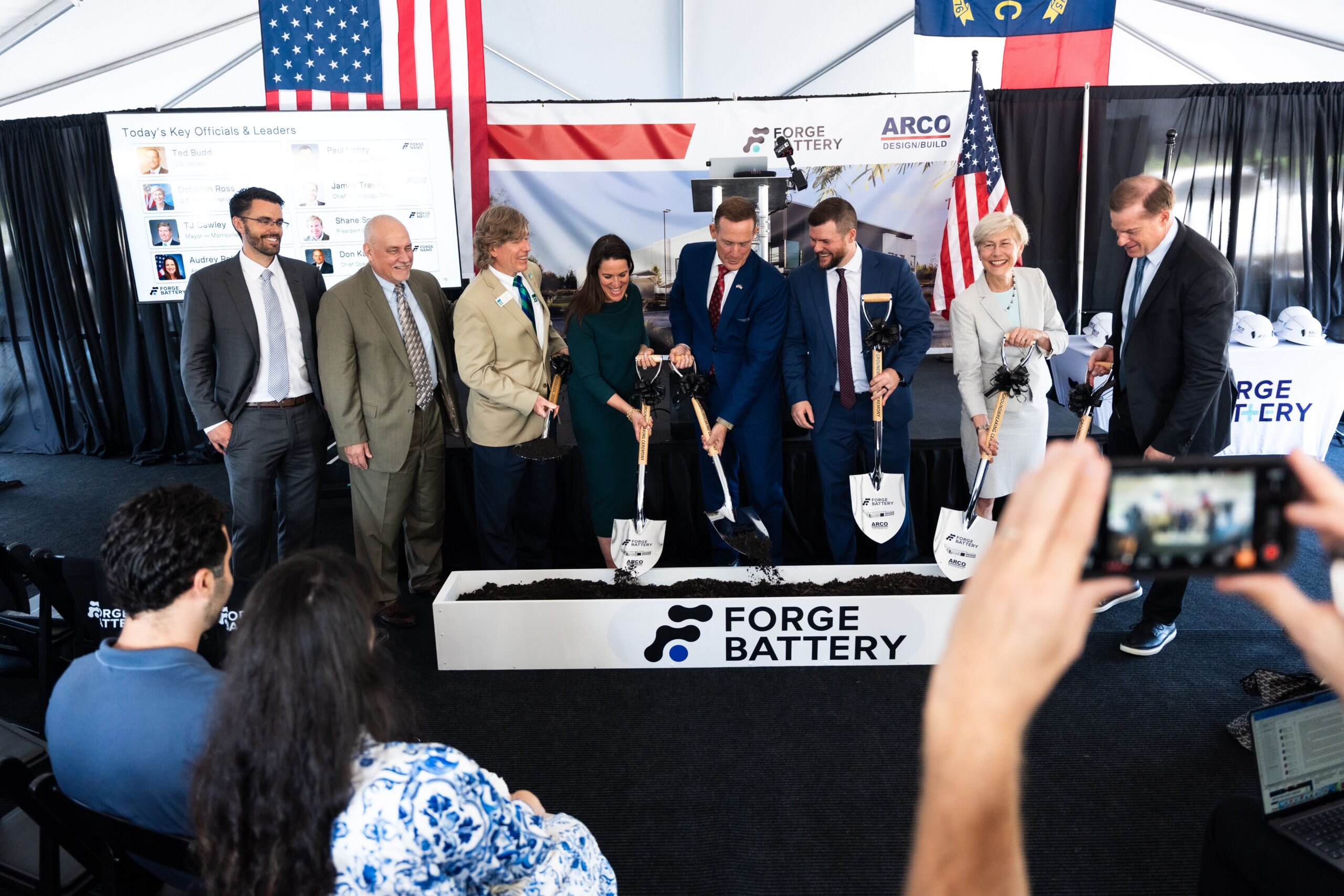
DENVER and MORRISVILLE, N.C., Aug. 19, 2026 (GLOBE NEWSWIRE) — Forge Nano, Inc., a leading U.S.-based semiconductor equipment and advanced materials company pioneering Atomic Layer Deposition (“ALD”) technology for artificial intelligence (“AI”)-era chip manufacturing and defense battery applications, which has signed an agreement to merge with Archimedes Tech SPAC Partners II Co. (“Archimedes II”) (NASDAQ: ATII), today celebrated the groundbreaking of a major expansion of its lithium-ion battery manufacturing facility in Morrisville, North Carolina.
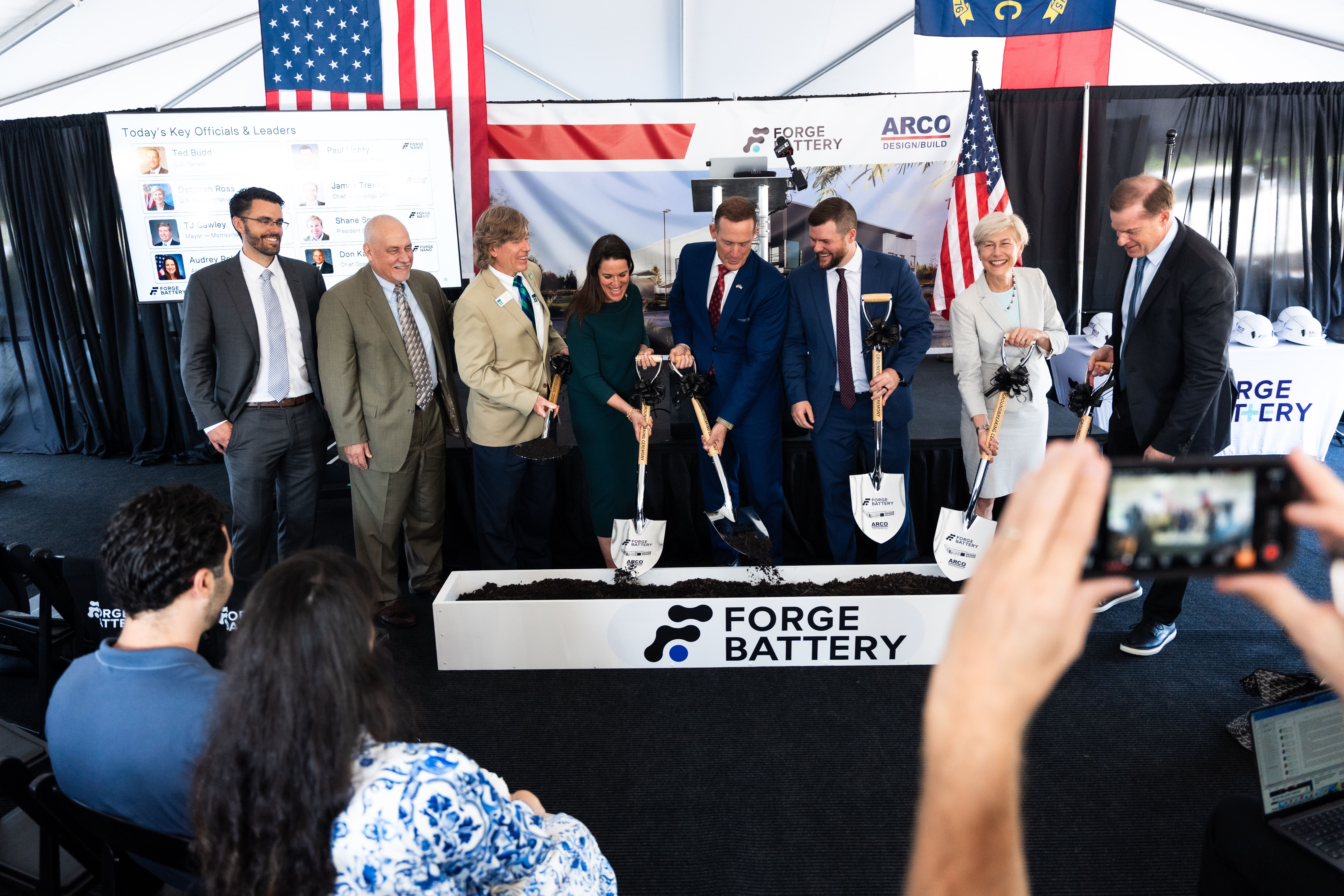
Forge Nano executive leadership team breaks ground on its Morrisville, NC lithium-ion battery manufacturing facility alongside North Carolina Senator Ted Budd, U.S. Representative Deborah Ross, Mayor of Morrisville TJ Cawley and the Assistant Secretary of the Department of Energy Audrey Robertson.
U.S. Senator Ted Budd, U.S. Representative Deborah Ross, Morrisville Mayor TJ Cawley and Assistant Secretary of the Department of Energy Audrey Robertson joined Forge Nano CEO Paul Lichty, employees, strategic partners and community leaders at the facility to mark the milestone and highlight the importance of expanding domestic battery manufacturing capacity for defense, aerospace and other critical U.S. markets.
The expansion will transform Forge Nano’s existing 100,000-square-foot Morrisville operation into a manufacturing campus approaching 315,000 square feet, create more than 250 jobs in North Carolina and establish approximately 3 gigawatt-hours (“GWh”) of annual battery cell manufacturing capacity at full production.
The facility is designed to address one of the most significant vulnerabilities facing the U.S. battery industry: the nation’s dependence on foreign-controlled supply chains for batteries used in applications critical to national security. Forge Nano’s Gigafactory is intended to establish a secure, U.S.-based manufacturing hub capable of supplying advanced lithium-ion batteries at scale.
“Today’s groundbreaking marks an important step toward building a battery supply chain in America,” said Paul Lichty, CEO of Forge Nano. “We’re combining Forge Nano’s technology with world-class manufacturing expertise, federal support and North Carolina’s growing advanced manufacturing ecosystem to bring critical battery production to the United States. America’s Battery Gigafactory will give defense, aerospace and commercial customers access to advanced battery cells manufactured here at home, at the scale needed to compete globally.”
The project is financed by up to $100 million in non-dilutive funding from the U.S. Department of Energy and reflects a collaborative effort among Forge Nano, federal and state partners and strategic industry collaborators to strengthen America’s domestic battery supply chain.
“Maintaining America’s technological edge requires strategic investment in our national security and commercial interests. Forge Nano’s new Morrisville facility will strengthen U.S. battery manufacturing capabilities—advancing American leadership in critical technologies, expanding domestic production, and helping us compete with China. North Carolina’s strong workforce and business climate make it an ideal place to grow this cutting-edge industry. This partnership will strengthen our domestic manufacturing base, create new opportunities for American workers, and keep North Carolina at the forefront of innovation,” said Senator Budd.
“North Carolina’s Research Triangle has long been a center for innovation, and investments like Forge Nano’s are helping translate that progress into advanced manufacturing and good-paying jobs here at home,” said Congresswoman Deborah Ross. “Expanding domestic battery production will drive economic growth, create jobs, support our clean energy transition, and strengthen America’s technology supply chain. I was proud to play a small role in bringing this expansion to life by passing the Bipartisan Infrastructure Law. I look forward to seeing how Morrisville and the Triangle continue leading the next generation of American manufacturing.”
“These batteries will not only serve commercial markets, but also the defense and aerospace applications on which our military depends,” said Assistant Secretary of Energy Audrey Robertson. “That is exactly the kind of manufacturing capacity our country needs. We need to build critical technologies in America. We need to support our armed forces with secure supply chains. And American companies should be able to compete and win in the industries that will define the decades ahead.”
Building Domestic Battery Capacity at Scale
Expansion construction is expected to begin imminently, with manufacturing equipment scheduled to be delivered over the next 2 years. Production at the facility is expected to begin in 2028.
At full production, 3 GWh represents approximately 150 million battery cells per year. Depending on customer demand and product mix, that capacity could support approximately 10–20 million drone batteries, 34,000 electric military vehicles, 6 million BB-2590 radio batteries, 900 6T (Type 2) batteries, or approximately 275 energy storage system containers annually.
The timing of the expansion is expected to align with new National Defense Authorization Act (“NDAA”) battery sourcing requirements taking effect in 2028, further increasing the need for secure domestic sources of advanced battery cells for defense applications.
Samsung SDI Partnership Supports U.S. Reshoring
A central component of Forge Nano’s U.S. battery manufacturing strategy is its strategic partnership with Samsung SDI, one of the world’s leading battery manufacturers.
Samsung SDI is supporting Forge Nano in establishing and beginning operations at the Morrisville facility, providing operational and manufacturing expertise for high-throughput battery production. Once the Gigafactory is operational, Forge Nano expects to manufacture Samsung SDI battery cells alongside Forge Nano’s existing cell products in North Carolina.
Samsung SDI has also entered into a conditional procurement agreement to purchase cells manufactured at the Gigafactory beginning in 2028, while Forge Nano is a contract manufacturer and an authorized distributor of Samsung SDI battery cells in the U.S. market.
The companies are also working to advance the incorporation of Forge Nano’s proprietary Atomic Armor® technology into future Samsung SDI battery products.
Samsung SDI further strengthened the partnership in July through a $20 million strategic investment in Forge Nano, including $10 million in Forge Nano’s Series D financing and $10 million in the company’s PIPE financing associated with its planned public listing.
Investing in North Carolina’s Advanced Manufacturing Workforce
Forge Nano selected North Carolina for the expansion based on the state’s growing advanced manufacturing ecosystem, its pipeline of skilled workers from universities, community colleges and technical programs, competitive state and local incentives and its strong support for companies investing in advanced U.S. manufacturing.
The Morrisville location also positions Forge Nano within the Research Triangle’s deep technical and engineering talent base and provides a strong logistical position for transporting battery cells to defense, aerospace, industrial and other customers.
As the Gigafactory ramps toward full production, Forge Nano expects the facility to create more than 250 jobs across advanced manufacturing, engineering, operations and technical roles.
The project represents a significant investment in both domestic battery manufacturing capacity and the workforce needed to sustain that capacity over the long term.
ABOUT FORGE NANO
Forge Nano is a leading U.S. based semiconductor equipment and advanced materials company pioneering Atomic Layer Deposition (“ALD”) technology for AI-era chip manufacturing and defense battery applications via its platform technology, Atomic Armor. Atomic Armor is a scalable, adaptable nano-scale coating system that strengthens America’s most critical systems – at the atomic level. The superior surface coatings produced by Forge Nano’s Atomic Armor process allow partners to unlock peak performance. Learn more at https://www.forgenano.com.
Contacts:
Media Contact
Will McKenna
Brand Communications Director, Forge Nano
wmckenna@forgenano.com
Investor Relations Contact
Bryan Baritot
Alliance Advisors IR
ForgeNanoIR@allianceadvisors.com
A photo accompanying this announcement is available at https://www.globenewswire.com/NewsRoom/AttachmentNg/42a740fd-7057-45f8-a33e-e3320da62ea0

For years, pharmaceutical companies could treat U.S. reimbursement, European market access, trade policy and manufacturing strategy as related but mostly separate issues. That separation is becoming harder to defend.
The Administration has linked U.S. drug prices to prices paid abroad, pursued voluntary most favored nation agreements, proposed international benchmarks in Medicare, and tied pharmaceutical tariff treatment to both pricing and domestic manufacturing commitments. The important change is not simply that the United States wants lower drug prices.
Foreign reimbursement systems and manufacturing choices are now being pulled into U.S. trade policy. The Supreme Court held in February 2026 that IEEPA does not authorize the President to impose tariffs.
The Administration responded by preserving and expanding other statutory tools. Section 232 is being used against patented pharmaceutical imports and Section 301 is being used to examine foreign pharmaceutical pricing practices.
FDA is also using the Commissioner’s National Priority Voucher (CNPV) program to connect regulatory timing with priorities that include domestic manufacturing and supply chain resilience.
The United Kingdom shows the negotiated path. Germany shows the enforcement path.1-6,13
Management should ask more than “What does this reimbursement rule require?” The better question is “How does this pricing, launch, manufacturing or market access decision change our exposure under U.S. payment policy and trade law?”
The old line between reimbursement policy and corporate strategy is fading. The change is easy to describe. A pricing concession in one country can affect an international benchmark.
A launch delay can change which country becomes a reference point. A manufacturing location can change tariff exposure or government leverage.
A market access decision that once looked local can now affect U.S. revenue assumptions. Consider a simple example in which a manufacturer launches a drug in Europe at a lower negotiated price.
That price could later become relevant to a U.S. international benchmark. The same company may manufacture the drug outside the United States, creating a separate tariff question.
Two decisions made by different teams can now affect the economics of the same product. This does not mean every European price automatically becomes a U.S. price or every foreign reimbursement decision becomes a trade violation. The rules differ by program, product and country.
Some U.S. models remain proposed, and the Germany investigation has not produced a final finding. The direction is nevertheless clear: U.S. policymakers are using international price comparisons, company agreements, and trade authorities to influence pharmaceutical economics at home and abroad.
Therefore, management cannot leave drug pricing only to market access, trade only to customs counsel, manufacturing only to operations, or government affairs only to monitoring. Senior leaders need one view of how a decision in one part of the company can move value or risk somewhere else.
The strategic advantage is understanding what a price or manufacturing decision in one market can do to the rest of the company.
The Supreme Court narrowed one tariff pathway. The Administration then turned more heavily to laws that specifically authorize trade action. [Primary source anchors: Supreme Court,1 White House,2 USTR.3]
On February 20, 2026, the Supreme Court held in Learning Resources, Inc. v. Trump, together with Trump v. V.O.S. Selections, Inc., that IEEPA does not authorize the President to impose tariffs. The Court’s ruling matters because it rejected the use of a broad emergency economic statute as tariff authority.
It did not hold that the President lacks all tariff authority. Congress has separately delegated trade powers through other statutes.1
The Administration made its response explicit. On the day of the decision, the White House ended the IEEPA tariff actions at issue while stating that duties imposed under Section 232 of the Trade Expansion Act and Section 301 of the Trade Act were not affected.
USTR separately announced that it would initiate several accelerated Section 301 investigations and specifically identified pharmaceutical pricing practices as a target area.2,3
Section 122 served as a temporary bridge through a 150-day import surcharge tied to balance of payments concerns, but pharmaceuticals and pharmaceutical ingredients were exempt. The more durable pharmaceutical story is the Administration’s move toward Sections 232 and 301.2
Section 232 focuses on the product: where it comes from and whether imports threaten national security. On April 2, 2026, the President used it to impose a 100% baseline tariff on covered patented pharmaceuticals and associated ingredients, with different rates for trade deal countries and preferential treatment for companies with approved U.S. manufacturing plans or MFN pricing agreements.
The proclamation links tariff treatment, MFN pricing and domestic manufacturing. Section 301 focuses on the foreign government: whether its acts, policies or practices may be unreasonable, discriminatory or burdensome to U.S. commerce.
On June 18, USTR used that authority to open the Germany pharmaceutical pricing investigation.4,5 The legal novelty is not that Sections 232 and 301 are new statutes.
Both have long histories and established procedures. What has not yet been squarely tested by the Supreme Court is this coordinated post Learning Resources use of statute specific trade authorities to recreate leverage that had previously been asserted through IEEPA, especially when pharmaceutical pricing, reimbursement, market access, and onshoring are treated as parts of one trade strategy.
That does not mean the architecture is unlawful. It means companies should treat litigation risk and statutory fit as part of the strategic analysis rather than assume the new scheme has already received judicial approval.
The post IEEPA strategy is not simply “more tariffs.” Section 232 pressures products, manufacturing, and supply chains through a national security theory. Section 301 pressures foreign government practices through an unfair trade theory. Used together, they create leverage on both the company and the country. The statutes are established. Their coordinated pharmaceutical use in this form is still developing.
Trade policy is not the only way the federal government is influencing pharmaceutical manufacturing decisions. FDA is also using regulatory incentives that may change how management evaluates the economics of producing medicines in the United States.13
The CNPV program is designed to accelerate review of selected drugs and biologics that advance defined U.S. health priorities. Those priorities include domestic manufacturing and supply chain resilience, affordability, unmet medical need and important medical innovation.
FDA describes a target review timeline of one to two months for selected applications, compared with six months or more under other priority review programs.13 For management teams, the important point is the value of time.
A U.S. manufacturing decision has traditionally been evaluated against construction costs, labor, taxes, supply chain reliability, and access to the U.S. market. Regulatory timing can now become another part of that calculation.
A company considering U.S. manufacturing should therefore ask whether the location of manufacturing could affect more than tariff exposure and supply chain risk. If a product can qualify for CNPV review, faster regulatory timing may also affect launch planning, revenue timing and the value of the asset. FDA lists multiple approvals under the program in 2026.13
A company should not move manufacturing simply to pursue a voucher. CNPV eligibility depends on the product and the program criteria, and manufacturing investments remain long term decisions. The program does give CEOs and boards another variable to consider when comparing U.S. manufacturing with alternatives elsewhere.
For companies already evaluating U.S. manufacturing capacity, regulatory timing belongs in the same discussion as construction costs, labor, taxes, tariff treatment and supply chain resilience. CNPV does not change the need for a sound manufacturing business case. It gives management another factor to consider when comparing U.S. manufacturing with alternatives elsewhere.13
There is not a single MFN program, as the Administration is using several different approaches that connect prices paid abroad with U.S. pricing policy. The current MFN approach began with Executive Orders in April and May 2025 directing federal agencies to lower prescription drug prices and pursue prices for Americans that more closely reflect prices available in comparable developed countries.10
Since then, the White House says it has announced 17 MFN agreements with major pharmaceutical manufacturers. Those agreements, TrumpRx and related pricing initiatives show that the Administration is using several tools at once: negotiation, public pressure, federal payment policy, market access programs and trade leverage.7,11
GLOBE is a proposed mandatory CMS Innovation Center model for certain Medicare Part B drugs. As proposed, manufacturers would owe rebates when U.S. prices exceed an international benchmark.
CMS currently anticipates an October 1, 2026, start, subject to a final rule.8 One point is especially important. GLOBE would not simply stack a lower international price on top of an IRA negotiated price.
The proposal would exclude a Part B drug while an IRA Maximum Fair Price, or MFP, is in effect. The challenge is therefore managing different pricing systems at different points in a product’s life, not choosing the lower of two federal prices.8
GUARD is a proposed mandatory CMS Innovation Center model for certain Medicare Part D drugs. If finalized, CMS anticipates a January 1, 2027, start. Like GLOBE, GUARD would use rebates tied to prices paid in economically comparable countries.9
GUARD would also exclude a drug while an MFP is in effect. International pricing can still affect U.S. economics before or after that period, so management needs to know which program applies when and how an earlier pricing decision may affect the product later.9
GENEROUS works differently—it is a voluntary Medicaid model launched in January 2026. Participating manufacturers provide supplemental rebates intended to align Medicaid net prices with what selected other countries pay, while participating states use standardized coverage rules.12
For executives, the acronym is not the important part. The larger point is that international price comparisons are becoming more common inside U.S. healthcare policy while trade policy is simultaneously being used to pressure foreign pricing and manufacturing behavior. Payment and trade are now moving on parallel tracks.
Do not treat GLOBE, GUARD, and GENEROUS as one unified “MFN rule.” They work differently, apply to different populations and are at different stages. The C-suite needs a product-by-product map, not one slogan.
The UK shows how reimbursement policy and tariff policy can be negotiated together [Primary source anchor: UK Government].6
The U.S. and UK pharmaceutical arrangement is one of the clearest examples of reimbursement, MFN policy and trade law being negotiated together. Under the arrangement published April 2, 2026, the UK committed to increase the net NHS price paid for prospective new medicines by 25% beginning in April 2026, increase spending on new medicines over time, modify NICE access economics and cap specified VPAG repayment rates.6
In return, the United States committed to protect qualifying UK pharmaceutical products from Section 232 tariffs through January 19, 2029, provided specified company MFN and tariff agreement conditions are met, and to refrain from additional Section 301 pharmaceutical tariffs during the stated period. The arrangement also expressly references GENEROUS and anticipated GLOBE and GUARD protections intended to reduce launch disincentives in a lower priced market.6
The significance is straightforward. The arrangement does not treat drug prices, patient access, supply chain resilience, MFN, Section 232 and Section 301 as separate policy files. It puts them in the same bargain. That is the architecture this analysis is describing.
The UK arrangement is the negotiated version of the new framework: price and access commitments on one side, tariff and launch protections on the other. For global manufacturers, market access and trade strategy need to be managed together.
Germany shows how the same policy shift can reach a foreign reimbursement system. [Primary source anchor: USTR].5
On June 18, 2026, USTR opened a Section 301 investigation into Germany’s alleged “persistent underpayment” for innovative pharmaceutical products. In simple terms, USTR is asking whether German pricing and reimbursement practices are unreasonable or discriminatory and burden or restrict U.S. commerce.
Those are allegations being investigated, not final legal findings.5 The investigation is still underway.
Written comments were due August 10, 2026, and USTR has scheduled a public hearing for September 22, 2026. The process can end without tariffs, through findings and responsive action, or through a negotiated resolution.5
The larger point goes beyond Germany. Section 232 can pressure where and how pharmaceutical companies manufacture. S
ection 301 can pressure how foreign governments pay for medicines. Germany therefore supplies the second half of the coordinated strategy that the April Section 232 proclamation began to make concrete.4,5
Do not assume the Germany investigation means tariffs are inevitable. Section 301 is a process. Management should assume, however, that foreign pharmaceutical pricing policy can now lead to U.S. trade scrutiny, political pressure, and, potentially, responsive action.
The objective is to turn policy complexity into decision discipline.
The goal is simple: give management one way to see how pricing, trade, manufacturing and market access decisions connect. Management does not need to predict every final rule.
It needs a repeatable way to test major decisions against a changing set of legal and commercial risks. We recommend building one cross border pricing and trade exposure map around the company’s major products and pipeline assets.
This same framework should be used in acquisitions, licensing deals and major capital projects. A product’s pricing history, European launch sequence, manufacturing footprint and government commitments can affect future value even when they do not stand out in a traditional healthcare regulatory review. Investors and boards should ask whether those factors add value, limit flexibility or create a risk that has not been modeled.
The current environment favors preparation over prediction. Build one enterprise exposure map. Do not maintain separate U.S., UK, and EU trade analyses that never connect. Put the major products, markets, prices, rebates, launch dates and manufacturing locations on one decision map.
Revisit launch sequencing assumptions. Identify lower priced markets that could affect an international benchmark or a government negotiating position. Consider whether timing, sequencing, or a different contract structure changes the economics.
Stress test the UK and Germany scenarios. Ask what the company would do if a key market were offered a UK style accommodation, faced a Germany style Section 301 investigation, or saw its pharmaceutical exports subjected to Section 232 leverage.
Review the manufacturing footprint through a trade and regulatory lens. For each critical patented product and ingredient, identify country of origin, applicable Section 232 treatment, domestic manufacturing commitments, trade deal status, alternative sourcing and the financial cost of a tariff or policy change.
For products tied to current or planned U.S. manufacturing, assess whether CNPV eligibility or regulatory timing should be part of the investment analysis.13
Set a senior escalation rule. Major pricing, launch and manufacturing decisions should trigger a cross functional review before the company gives up flexibility that may be valuable in another market. Monitor the rules that can change the map.
GLOBE and GUARD remain proposed, the Germany Section 301 process is ongoing, and the pharmaceutical Section 232 regime contains country and company specific conditions. Management should plan around the current landscape while keeping enough flexibility to update assumptions as rules, agreements, enforcement actions, and litigation evolve.
Can management explain, on one page, how a major pricing decision in Europe could change U.S. reimbursement, trade, manufacturing and valuation exposure? If not, the company probably does not yet have one enterprise view of the risk.
Drug pricing has entered a new phase. Foreign pharmaceutical prices are now part of more than a domestic affordability debate.
International prices appear in federal payment models and manufacturer agreements, while pharmaceutical pricing, manufacturing and market access have become subjects of bilateral trade negotiation and statutory trade enforcement.
The Supreme Court’s Learning Resources decision removed IEEPA as the tariff authority the Administration had been using. The policy response was not retreat.
The White House expressly preserved Sections 232 and 301, USTR announced new Section 301 investigations that included pharmaceutical pricing, the President imposed a pharmaceutical Section 232 regime in April, and USTR opened the Germany pharmaceutical pricing investigation in June.1-5
For CEOs, CFOs, general counsel and commercial leaders, the most important development may be the structure that emerges from those actions. Section 232 can link tariff treatment to manufacturing, domestic investment and MFN commitments.
Section 301 can convert a foreign reimbursement policy into a U.S. trade dispute. CNPV adds regulatory timing to the manufacturing decision by making domestic manufacturing and supply chain resilience relevant to accelerated review eligibility for selected products.
Together, these tools can affect company decisions, government policy and the economics of where a product is developed, manufactured and launched.13
The statutes themselves are not new, and this paper does not assume that a court would uphold or invalidate every future application. The unresolved issue is how far this coordinated use of Sections 232 and 301 can go when tested against the language, procedures and limits of Sections 232 and 301.
Companies should not wait for that litigation to be resolved before understanding their exposure. The better approach is to see the connections before the commercial decision is made. That is where policy foresight becomes business strategy.
About the Author
Ron Lanton, Senior Partner & Global Strategist at Lanton, Lanton & Sosa Law PLLC.
References
The following primary government sources support the principal legal and policy developments discussed in this paper. They are included so readers can independently verify the underlying events. All were current as of August 14, 2026.
Highlights
Boresight Ltd (ASX:BST) shares closed at AUD 0.340 on 19 August 2026, declining AUD 0.009 or 2.857% compared with the previous close of AUD 0.350. The stock traded between AUD 0.340 and AUD 0.370, with a Volume of 104,610 shares.
The company recorded a Market Capitalisation of AUD 73.15 million, with 209,022,782 ordinary fully paid shares on issue.
The share price movement occurred during the early months following the company’s ASX listing in June 2026. Trading activity remains influenced by limited public trading history and ongoing market assessment of the company’s defence technology operations.
Business Overview and Defence Technology Operations
Boresight designs and manufactures unmanned aerial systems used for defence and security applications. The company develops aerial target drones used for counter-unmanned aerial systems training, testing and defence exercises, along with intelligence, surveillance and reconnaissance (ISR) drone platforms.
The company’s products include target drone systems and camera-equipped drone solutions designed for government, military and industry customers.
Boresight listed on the ASX in June 2026 following an initial public offering that raised approximately AUD 8.0 million.
Manufacturing Expansion and US Strategy
A key development following the listing was Boresight’s expansion of its United States manufacturing capability.
In July 2026, the company announced a Lease for a new manufacturing facility in Huntsville, Alabama. The facility covers approximately 812 square metres and is intended to increase production capacity for the company’s drone products.
The facility is expected to support production of Boresight’s BQ-400 target drone and future products while expanding the company’s ability to service defence customers in the United States.
The company has also continued product development, including updates to its drone range and additional capabilities for defence applications.
Financial Performance and Revenue Growth
Boresight reported unaudited FY26 revenue of AUD 6.7 million, representing growth from AUD 4.36 million in FY25. The company recorded quarterly revenue of AUD 2.44 million during the June 2026 quarter.
The company remains in a growth phase and has not yet reached profitability. Based on available market data, Boresight reported negative trailing earnings per share, with no applicable price-to-earnings ratio.
The company’s financial performance will depend on securing additional defence contracts, scaling manufacturing operations and managing operating costs.
Defence Programs and Customer Development
Boresight has been developing relationships with defence customers through target drone and ISR drone programs.
The company has supplied aerial target drones for defence Training activities and has continued developing products aimed at counter-drone testing and evaluation requirements.
Boresight’s Business model includes recurring demand potential because target drones are designed for training environments where systems may be expended and replaced. However, contract timing and government procurement cycles remain important factors affecting revenue visibility.
Key Areas to Monitor
Future updates will focus on production scale-up, US manufacturing progress, customer contracts and quarterly Cash Flow performance.
The company’s first full-year reporting period as a listed entity will provide additional information on revenue performance, operating costs and cash usage.
Investors will also monitor whether the company can expand its customer base across defence markets while maintaining sufficient funding for manufacturing growth.
Risks and Challenges
Boresight faces risks related to defence procurement cycles, customer concentration, manufacturing expansion, competition and funding requirements. Government contracts can involve long decision periods and uncertain timing. Establishing overseas manufacturing capability may require additional investment, while the company remains loss-making and may require further capital in the future.
The company also operates in a competitive defence technology market where larger international suppliers may have greater resources.
Outlook
Boresight continues to focus on expanding drone manufacturing capacity, developing defence technology products and building customer relationships across international markets. The company’s outlook depends on converting defence demand into contracts, increasing production capability and managing cash requirements during its growth phase.
Progress at the United States manufacturing facility, additional product releases and customer adoption will be key factors influencing future performance.
Conclusion
Boresight’s share price movement on 19 August 2026 occurred as the recently listed defence technology company continued developing its manufacturing footprint and product pipeline. The company has established revenue generation and is expanding into larger markets through increased production capability. However, Boresight remains in an early growth stage, with future performance dependent on contract wins, manufacturing execution and financial management.
FutureTEX’s goal is to work with American manufacturing to capitalize on digital infrastructure and other emerging technologies, making the domestic supply network more robust for the defense industrial base. North Carolina State University is spearheading the initiative in partnership with UMass Lowell, Drexel University, Gaston College, Georgia Tech and ISAIC.
UMass Lowell has joined FutureTEX, a 10-year US Department of War initiative to modernise textile manufacturing for defence and domestic applications.
The award includes $36 million in year one and a ceiling of $480 million over a decade.
Partners will target advanced technologies, supply-network resilience, facilities and workforce development.
FutureTEX will empower American textile manufacturing by adopting advanced technologies and techniques to enable manufacturing of new materials and improve capability industry-wide. The initiative is actively recruiting industry partners to be part of the project, and has already received more than 100 letters of support from industry organizations.
“Textile manufacturing is deeply woven into the history of Lowell and UMass Lowell, and today we are building on that legacy by helping shape the future of advanced manufacturing,” said UMass Lowell Chancellor Julie Chen. “FutureTEX adds an exciting new dimension to our strengths in advanced manufacturing and defense, building on the connections among researchers, students and industry partners that we are expanding through the Lowell Innovation Network Corridor.”
NC State is working with Gaston College to establish a nonprofit organization that will assume administrative oversight of FutureTEX. This new institute will be housed at Gaston College’s Kimbrell Campus in Belmont, N.C., with hubs in Lowell, Mass., Raleigh, N.C., Philadelphia, Pa., and Atlanta, Ga.
“FutureTEX is focused on creating a cutting-edge national ecosystem for defense textiles that simply doesn’t exist today,” says David Hinks, chief strategic partnerships officer of FutureTEX and the Prakash Chand Kochhar Dean of NC State’s Wilson College of Textiles. “This will involve commercializing applied research to help American textile manufacturing meet the needs of both the warfighter and the domestic textile industry.”
As a core FutureTEX partner and the initiative’s Massachusetts regional hub, UMass Lowell will connect the consortium with the region’s advanced materials, manufacturing and defense expertise and its extensive industry and government partnerships. The university will manage and expand access to its Fabric Discovery Center, bring faculty and subject-matter experts to FutureTEX projects, help identify and solve manufacturing challenges with industry and government partners, and contribute to workforce-development initiatives, including opportunities for veterans through its existing Veterans Reskilled in Innovative Solutions for Employment (Vets RISE) program.
Through the UMass Lowell Fabric Discovery Center, the university offers capabilities spanning the full materials-to-product pathway, from polymer development and fiber spinning to fabric formation, functional coatings, printed electronics and advanced manufacturing, helping move new textile technologies from research toward production and commercialization.
“FutureTEX gives us an extraordinary opportunity to build on the UMass Lowell Fabric Discovery Center and strengthen the advanced-textiles innovation ecosystem in Massachusetts and across New England,” said UMass Lowell Vice Chancellor for Research, Innovation and Economic Development Anne Maglia. “The future of textiles extends far beyond traditional fabrics and apparel to new materials and manufacturing technologies for aerospace composites, protective systems for our service members, wearable and flexible electronics, medical applications and more. By connecting our researchers, students and facilities with manufacturers and innovators nationwide, FutureTEX will help move ideas into products, strengthen the domestic supply chain and prepare the skilled workforce this industry needs.”
Fibre2Fashion News Desk
Cupertino, California-based Apple Inc. unveiled its Advanced Manufacturing Center in the Houston area last week, marking the completion of the second of three facilities the tech giant plans to launch in the city by the end of this year.
The 20,000-square-foot training center will welcome small- and medium-sized businesses for free training and educational sessions to “help accelerate smart manufacturing across America,” according to a release from Apple. Apple opened a similar Apple Manufacturing Academy in Detroit last year.
The AMC is part of Apple’s 500,000-square-foot site in northwest Harris County. It also features a massive manufacturing site for Apple’s advanced AI servers and Mac mini. The facility was originally slated to open in 2026, but Apple began producing its advanced AI servers ahead of schedule in 2025.
The company said it plans to begin manufacturing its Mac mini at the site this year. The move will bring production of the compact desktop computer to the U.S. for the first time.
“In less than nine months, we have invested hundreds of millions of dollars into this Houston facility. We stood up a factory, started production, and shipped the first advanced AI servers off the line. Today, we’re thrilled to open our new Advanced Manufacturing Center, a place where businesses, workers, and students can learn the same innovative processes that we use to make Apple’s most groundbreaking products. And we’re pleased to begin Mac mini production later this year,” Tim Cook, Apple’s CEO, said in the news release. “We believe in American workers and American ingenuity, and we are moving at an incredible pace because we want to build more than great products. We want to build the future of American manufacturing.”
Apple’s Houston expansion is part of a $600 billion commitment the company made to the U.S. in 2025.
The company originally announced plans in February 2025 to open a 250,000-square-foot Houston factory, but doubled the facility’s planned size about a year later. Apple has reported that the factory will employ thousands of workers.
“Houston is grateful to Apple for this significant investment in our city. The Advanced Manufacturing Center will create local jobs and will continue improving the quality of life of Houston residents,” Houston Mayor John Whitmire added in the release. “The AMC also recognizes our city as a growing technology hub and solidifies Houston’s leadership in the manufacturing sector of the United States.”
The opening comes on the heels of New Jersey-based pharmaceutical giant Bristol Myers Squibb Co. officially naming Houston home of its new $2.3 billion, state-of-the-art manufacturing site. Read more here.
Grupo Omnilife invested US$64 million in its first manufacturing plant in the United States. The move affects the direct-selling and dietary supplement industry and signals a broader shift among Mexico-based multinationals toward dual-market manufacturing strategies. It also reflects growing demand from the US Hispanic population, a segment projected to be the fastest-growing demographic in the country over the next decade
Grupo Omnilife, the Guadalajara-based direct-selling company known for its nutritional supplements, has inaugurated its first manufacturing plant in the United States. Amaury Vergara, President and General Director, Omnilife, opened the Omnilife Innovation Park in Allen, Texas, which is backed by a US$64 million investment. The facility is expected to produce 1.2 million units annually in its first phase before scaling to 5 million units within three years.
The plant marks the company’s third manufacturing site worldwide, joining existing facilities in Guadalajara and Cali, Colombia. “Texas is strategically key: being a border state that is also centrally located within the United States allows us efficient logistics toward both coasts. In addition, it is home to the region with the largest presence of our independent entrepreneurs,” says Vergara, who leads a multinational with operations in 21 countries. Vergara adds that the site was secured when land values in Allen were still low, ahead of the city’s recent growth surge.
Vergara says the new plant will relieve pressure on the Guadalajara facility, which now operates at 98% of capacity. He expects the Texas site to free up to 18 percentage points of capacity in Guadalajara over the next five years, bringing utilization there down to 80%.
The decision to manufacture in the US follows growing exposure to trade policy risk for Mexican exporters. Mexico’s Ministry of Economy has formally requested a freeze on new US tariffs for the duration of the ongoing joint review of the USMCA, while also pushing Washington to reduce existing duties on automotive and steel products, Minister Marcelo Ebrard said in mid-August. The review, which began July 1, has also raised the possibility of new duties tied to a pending Section 301 investigation into structural manufacturing overcapacity, a probe that could add fresh tariff exposure for sectors including medical devices as early as August.
“Manufacturing in the United States shields us from risks tied to potential increases in import taxes or tariffs on Mexican products, making us highly competitive in the Anglo-Saxon market,” Vergara says. He notes that a possible tariff of up to 25% on supplement imports into the US is not an immediate concern for the company but reinforces the rationale for local production.
Local manufacturing also carries a new dimension. “Manufacturing in the United States opens the door for us to establish partnerships with universities and leading supplement and vitamin research centers worldwide, which require that products be locally manufactured to provide scientific backing,” Vergara says.
The Omnilife Innovation Park sits on a lot of nearly 570,000ft2, with a built area of close to 144,000ft2 across two buildings. Building A will house production, while Building B will initially serve storage and logistics functions, with the design allowing for future expansion of production lines. Vergara said the company aims to reach between 1 million and 2 million units next year, scaling to 5 million units annually within three years.
The US expansion also targets demographic opportunity. “Our main niche is the Hispanic population, the demographic segment with the greatest projected growth in the United States over the next 10 years,” Vergara says. Mexico generates 50% of Omnilife’s revenue, with the remaining 50% coming from the other 21 countries where the company operates.
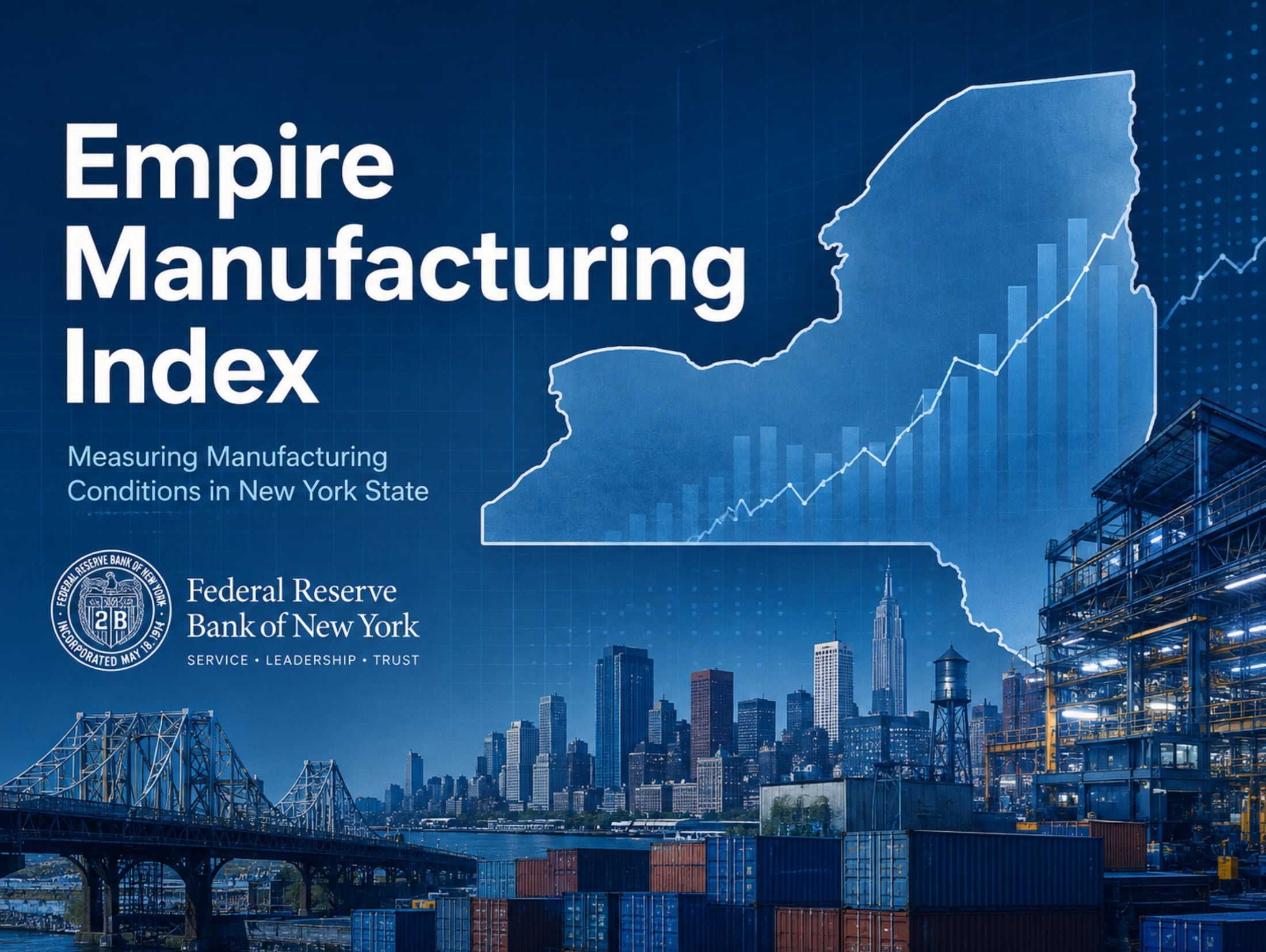
The US Empire Manufacturing surver results shows:
Details:
Looking 6 months forward the survey showed:
From NY Fed economic research advisor Richard Deitz:
“New York State manufacturing activity increased at its
fastest pace in over four years in August. Employment continued
to pick up modestly. However, delivery times were substantially
longer and supply availability continued to worsen.”
Bottom line: New York manufacturing showed strong growth and healthy demand in August, but rising backlogs, longer delivery times, and worsening supply availability point to increasing supply-chain pressures. That was reflective in the Prices Paid index moving higher, although prices received did fall.