AbbVie Invests $1.4 Billion into New Manufacturing Campus in North Carolina


AbbVie announced a $1.4 billion investment to build a 185-acre pharmaceutical manufacturing campus in Durham, North Carolina.

Emerging Pharma Leaders nominations are now open!

Do you know someone who can make tough decisions that continue to face manufacturers? Are they destined to change the future of pharma?

Nominate a colleague with impressive leadership and career intentions – even yourself! – for the Pharmaceutical Executive 2026 Emerging Pharma Leaders Awards.

The decision marks the company’s largest capital investment to date and its first major presence in the state.

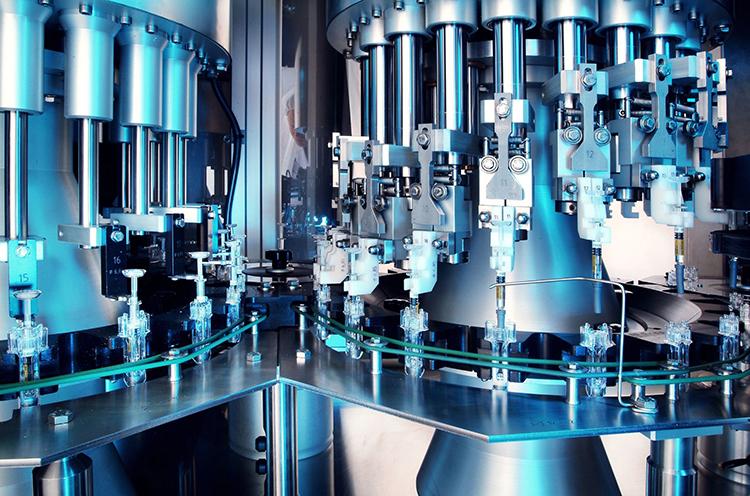
The campus, located near Research Triangle Park, is set to integrate advanced manufacturing and laboratory technologies with artificial intelligence to support production of AbbVie’s immunology, neuroscience, and oncology medicines.1 The first phase of construction is expected to include small volume parenteral drug product manufacturing facilities for sterile injectables including vials, prefilled cartridges, and prefilled syringes, alongside next-generation laboratories, a warehouse, administrative offices, and employee wellness facilities.1

Upon complete, the Durham campus will serve as AbbVie’s U.S. center of excellence for SVP manufacturing, supplying patients both domestically and internationally.1

Construction begins this year, with completion expected by the end of 2028.

AbbVie is expecting to hire 734 people over the next four years, including engineers, scientists, manufacturing operators, and laboratory technicians, along with the development phase expecting to generate more than 2,000 construction jobs. Durham was selected due to the strength of its regional workforce and its capacity to support future expansion.

“Our investment in North Carolina represents a significant milestone for AbbVie as our largest capital investment to date and an important expansion of our manufacturing footprint into a new region of the United States,” said Robert A. Michael, chairman and chief executive officer of AbbVie. “By establishing this campus, we are strengthening our ability to support future medical breakthroughs while also creating new jobs and a long-term partnership with Durham and the State of North Carolina.”

North Carolina Governor Josh Stein welcomed the investment, saying, “When you combine our world-renowned research and innovation with a strong, thriving life sciences hub, North Carolina quickly becomes the premier location for biopharmaceutical companies to do business.”

The Durham campus is part of AbbVie’s previously announced $100 billion commitment to U.S. research, development, and capital investments over the next decade.2 The company says it has now committed more than $2.2 billion in U.S. manufacturing investment over the past 12 months, including a $745 million license agreement with Haisco, and creating more than 1,300 jobs across North Carolina, Illinois, Arizona, and Massachusetts. AbbVie currently employs approximately 29,000 people in the U.S., including more than 6,000 at its domestic manufacturing campuses.

“AbbVie’s mission is to make a remarkable impact for the patients we serve around the world through our innovative medicines,” said Robert A. Michael, chairman and chief executive officer, AbbVie. “With approximately 29,000 U.S.-based employees and products treating 16 million Americans annually, we understand the complexity and access challenges in our healthcare system.”

The investment follows a broader trend of major pharmaceutical companies expanding U.S. manufacturing capacity, driven by a combination of supply chain resilience concerns, domestic policy incentives, and growing demand for complex biologics and injectable therapies across chronic disease indications.

  1. AbbVie Selects North Carolina for New $1.4 Billion Manufacturing Campus AbbVie April 22, 2026 https://www.prnewswire.com/news-releases/abbvie-selects-north-carolina-for-new-1-4-billion-manufacturing-campus-302750567.html
  2. AbbVie and Trump Administration Reach Agreement to Improve Access and Affordability for Americans AbbVie January 12, 2026 https://news.abbvie.com/2026-01-12-AbbVie-and-Trump-Administration-Reach-Agreement-to-Improve-Access-and-Affordability-for-Americans

Free Training

Source link

Anheuser-Busch Doubles Its Investment in US Manufacturing


Beer giant Anheuser-Busch announced on Wednesday its $600 million investment in U.S. manufacturing over two years, building on a previously announced $300 million commitment in 2025.

The beer giant announced its commitment to expanding brewery capacity, worker training, and veteran hiring, according to the company.

“By strengthening our manufacturing operations, we are creating sustainable careers–not just jobs–and investing in the people who are vital to our success,” Brendan Whitworth, CEO, Anheuser-Busch, said in a statement.

The company said it has committed to an investment in the future of its workforce by opening 15 new technical skills training centers at its facilities across the U.S. and collaborating with technical trade schools.

Through this expansion, Anheuser-Busch also plans to upskill more than 90 percent of its manufacturing workforce over the next five years, a move that builds on the more than 2,700 employees who have already received training since the opening of its Technical Excellence Center in St. Louis in 2022.

“Anheuser-Busch’s expanded investment is a commitment to the American worker and the future of our nation’s strength in manufacturing,” Jay Timmons, President and CEO, National Association of Manufacturers, said in a statement.

The beer maker also said it plans to continue helping former and current service members pursue manufacturing careers in the private sector.

The company in August 2025 committed $15 million to its flagship St. Louis brewery, which was part of the original $300 million plan, funding supply-chain infrastructure to move ingredients to the brewery and distribute beer to customers.

The company, which manufactures Michelob ULTRA, Busch Light, Budweiser and Bud Light, said it makes 99 percent of the beer it sells in the domestically in the United States.

In March, 15,000 new jobs were added in the manufacturing sector in the United States, recovering from worker losses earlier this year, according to the U.S. Bureau of Labor Statistics.

The company’s expanded commitment aligns with President Donald Trump’s push for domestic manufacturing.

According to the White House, the manufacturing sector has surged since President Donald Trump took office. Major corporations have committed billions of dollars in new investments to onshore production and create thousands of high-quality American jobs.

Automaker Stellantis announced a $13 billion investment in the United States, marking the largest single investment in the company’s history, while Whirlpool Corporation has committed a $300 million investment in its U.S. laundry manufacturing facilities. Meanwhile, the GE Aerospace Foundation announced a $30 million workforce skills training program to prepare the next generation of its U.S.-based workforce.

According to the Trump administration, the historic level of investment secured has reinforced the United States as the global leader of innovation and growth.

Free Training

Source link

WesPro JCB Celebrates Grand Opening of Its Second Atlanta Area Facility : CEG


Cutting the ribbon on the new store (L-R) are Gareth Lumsdaine, vice president of distribution development, JCB North America; Graeme Macdonald, CEO, JCB; Wesley Scott, owner, WesPro JCB; and Richard Fox-Marrs, president and CEO, JCB North America.

JCB photo

Cutting the ribbon on the new store (L-R) are Gareth Lumsdaine, vice president of distribution development, JCB North America; Graeme Macdonald, CEO, JCB; Wesley Scott, owner, WesPro JCB; and Richard Fox-Marrs, president and CEO, JCB North America.

WesPro JCB celebrated the grand opening of its new Norcross, Ga., facility, its second in the Atlanta area, marking a significant milestone in its continued growth and expansion across the Southeast.

The event welcomed customers, local officials and industry partners to officially open the 14,000-sq.-ft. site, designed to enhance sales experience, parts availability, service capabilities and overall support for construction and agricultural customers across metro Atlanta.

The $14 million facility, located at 5493 Goshen Springs Rd., represents the latest investment in JCB‘s expanding American network, strengthening support for customers and dealers in key United States markets.

“Our investment in facilities like WesPro JCB and our $1 billion Texas facility reflects our commitment to manufacturing in the United States and supporting American industry,” said Graeme Macdonald, CEO of JCB. “We are investing at scale to build a stronger American business that delivers equipment, supports our dealers and serves customers across construction and agriculture.”

Expanding Capabilities to Support Customers

The Norcross facility, situated on a 3-acre site along Interstate 85, is designed to improve uptime and service responsiveness for customers across the region. Strategically located along one of metro Atlanta’s busiest transportation corridors, it enhances accessibility and enables quicker response to customer needs.

The site includes a 2,000-sq.-ft. parts warehouse, 10 service bays and the capability to repair the largest JCB excavators and machinery, supporting faster diagnostics, more efficient repairs and reduced downtime.

“Our commitment to manufacturing in America for American customers goes hand in hand with investing in the facilities and dealer network that support our equipment throughout its lifecycle,” said Richard Fox-Marrs, president and CEO of JCB North America. “Facilities like WesPro’s Norcross location ensure we are delivering the service, parts availability and expertise our customers rely on long after the initial purchase.”

Expanding Presence in Key Markets

The Norcross facility is part of JCB’s expanding presence across the United States, alongside continued investment in manufacturing and dealer development in key markets. In addition to its new factory in San Antonio, Texas, JCB has established a growing dealer and warehousing presence in north Texas, southern California and Chicago, with plans for future expansion in major metropolitan areas.

“JCB has deep roots in Georgia, and WesPro is proud to be the newest branch of that continued growth,” said Wesley Scott, owner of WesPro JCB. “This investment strengthens our ability to support our customers with the sales, service and expertise they depend on every day.”

For more information, visit wesprojcb.com.

Free Training

Source link

AMF Bruns Opens New Ohio Headquarters, Expands U.S. Manufacturing Footprint


More than double the size. State-of-the-art manufacturing and office space. Enhanced customer support and an eye on future growth.  

Last May, AMF Bruns of America broke ground on brand-new office and manufacturing space in Stow, Ohio, as the company grows in both staff and customer and product demand. Now, less than one year later, the building is complete, and METRO was on the scene to check out their new digs during their April 14, 2026, ribbon-cutting and open house.

A Story of Growth and Opportunity Leads to Expansion

Relocating from a former facility in Hudson, the new AMF Bruns building boasts 41,000 square feet, offering the company expanded production capacity and room to grow.

Speaking of growth, several of AMF Bruns’ owners and executives from Germany flew in to celebrate the new U.S. hub. Their shared passion for the North American market and pride in their presence in Ohio was impossible to ignore. Each leader made a point to show their gratitude for the on-site team, partners, and supporters. They recognized the collaborative work of the AMF staff, the dedication of customers, and the community’s support, especially thanking the city of Stow for the warm welcome.

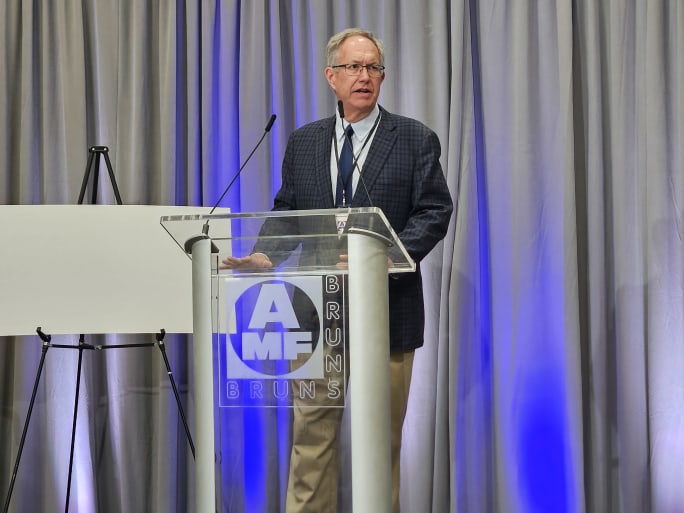
took the 90-some open house attendees on a tour through the new facility, pointing out the rows of raw materials that easily fit inside and several stations and machines that turn those materials into finished products ready for vehicle use, AMF Bruns’ CEO, took a moment to reflect on what led to this exciting new step. “It seems only yesterday, in 2013, when we took our first steps and established physical operations in Ohio,” he said. “Since that time, we’ve grown the company from three 40-foot containers, a one-man show, and three employees starting in Hudson, and now here in this new facility with 33 employees today. It’s a beautiful new facility, and we hope to grow another 20% next year.”

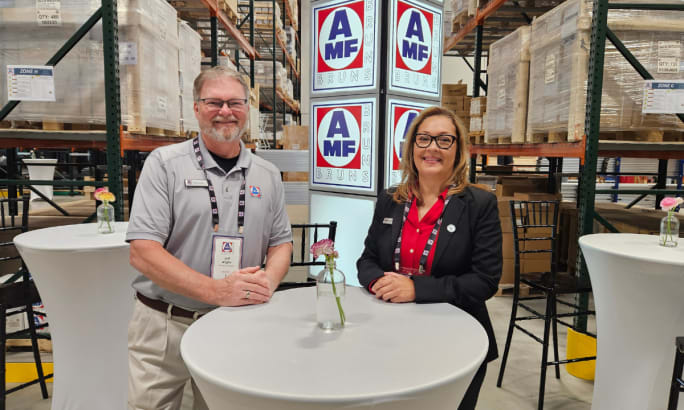
AMF Bruns national account managers Maritza Valentin and Jeff Allgire stand in the new building’s manufacturing space.

AMF Bruns national account managers Maritza Valentin and Jeff Allgire stand in the new building’s manufacturing space.

Of course, familiar faces were there as well, including national account managers Maritza Valentin and Jeff Algire.

Joe Esteireiro, operations manager, and other key staff took the 90-some open house attendees on a tour through the new facility, pointing out the rows of raw materials that easily fit inside and several stations and machines that turn those materials into finished products ready for vehicle use.

How Does AMF Bruns Support Its Communities as a Global Company?

“AMF Bruns always wanted to be a global player,” said Gerit Bruns, one of the company’s owners. “Years ago, we could work out of Germany and export products to foreign countries. I must admit, the world has changed. The economy is still global, but it needs far more diversification for each market. It is necessary to be local in the global market.”

To demonstrate the company’s support of local communities, they presented a $10,000 check to the Stow-Monroe Falls Community Foundation. “This donation is not just a gesture; it’s a promise that we’re not only here to do business, but to be a responsible partner and a positive force in the region,” Jan Woltermann, board of trustees member, said.

Stow's mayor, John Pribonic, was happy to welcome AMF Bruns to town.

Stow’s mayor, John Pribonic, was happy to welcome AMF Bruns to town.

Stow Mayor John Pribonic shared that through the donation, the foundation plans to establish the AMF Bruns Mobility and Accessibility Fund. Grants from this fund will help both private and public accessibility needs and projects in the community.  

What Else Sets AMF Bruns Apart in the Mobility and Securement Space?

AMF Bruns’ products are Buy America compliant; all its restraints are manufactured in the U.S., and its flooring materials are sourced internationally and assembled in Ohio.

Additionally, AMF prides itself on being ISO 9001 registered and certified, meaning its products have been extensively tested and documented and have passed an external audit for safety and quality.

Looking Back: AMF Bruns Enters Paratransit Vehicle Modification Market

Free Training

Source link

Victorian Manufacturers Target U.S. via Moog Roadshow


Victoria’s advanced manufacturing and defence exporters are making their mark in the United States this week, with Global Victoria’s team on the ground connecting Victorian businesses with one of the world’s most significant advanced manufacturing and defence supply chains.

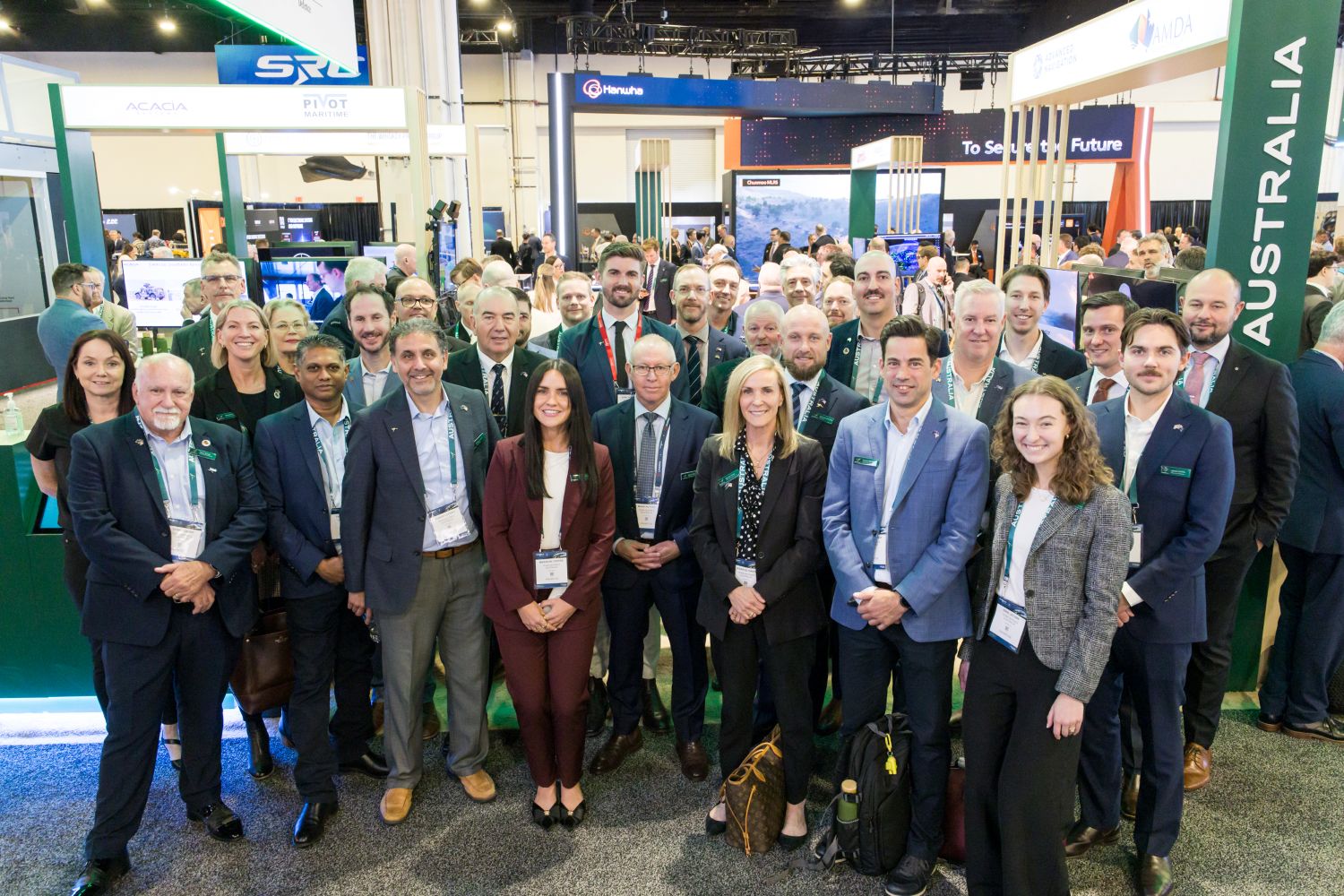
A group shot of the Victorian companies exhibiting at Sea Air Space 2026

At the centre of the action is Sea Air Space 2026, the premier US maritime exposition hosted by the Navy League of the United States, where close to 100 Australian companies are exhibiting at the Team Defence Australia (TDA) Pavilion. More than 30% of those companies are Victorian or have substantial advanced manufacturing capacity in Victoria.

Connecting Victorian exporters to opportunity

Global Victoria has also partnered with Moog Australia, a wholly owned subsidiary of Moog Inc., to deliver a dedicated advanced manufacturing and defence roadshow for Victorian exporters.

Seven Victorian companies are travelling to Washington DC, Buffalo and Akron this week for a program of one-on-one business matching meetings with key decision-makers from Moog Inc. The goal is to position Victorian firms as suppliers into Moog’s international advanced manufacturing and defence programs and build commercial relationships that can lead to long-term export growth.

The Moog team will also host a networking event in Buffalo and provide one-on-one presentation coaching to help the Victorian companies sharpen how they pitch their capability to US primes and buyers.

About Moog

Moog Australia, established in 1979 and headquartered in Heatherton, Victoria, is a specialist advanced manufacturing and defence supplier with deep roots in the local market. Its parent company, Moog Inc., is a global prime delivering mission-critical motion control systems across land, air and naval platforms for military forces around the world.

For Victorian companies, access to Moog Inc.’s supply chain can open the door to procurement programs that span multiple platforms, countries and years of production.

Building Victorian capability

A photo of Mark Bayliss - Advanced Manufacturing and Defence Manager, Victorian Government USA office

Sitting at the heart of Global Victoria’s advanced manufacturing and defence export work is Mark Bayliss, Director of Defence and Aerospace Trade and Investment in the Victorian Government’s Trade and Investment (VGTI) office in the United States.

With 25 years of service in the Australian Army, including in Special Operations Command, Mark Bayliss brings rare frontline insight to Global Victoria’s advanced manufacturing and defence export work in the United States. That experience helps him connect Victorian companies with the right decision-makers and position their capability in a way that resonates with US primes and military buyers.

Victoria’s pathway into global supply chains

With the Commonwealth Government investing $765 billion in defence over the next decade, Victoria has a major opportunity to secure exports, high-value jobs and capital investment.

The Victorian Government’s Economic Growth Statement reinforces that ambition by backing advanced manufacturing and defence capability, strengthening supply chains and supporting business growth.

Global Victoria is helping companies take advantage of those opportunities through one-on-one trade facilitation, international introductions and support to access programs such as Team Defence Australia.

Trade expositions like Sea Air Space deliver face-to-face access to military decision-makers, global primes, and technology leaders who are actively looking for solutions. Backing that with a structured roadshow and supply chain introductions helps Victorian companies shift from awareness to viable commercial outcomes.

Get involved

If your business has advanced manufacturing and defence capability and you want to explore export opportunities in the US, reach out to the Global Victoria team.

/Public Release. This material from the originating organization/author(s) might be of the point-in-time nature, and edited for clarity, style and length. Mirage.News does not take institutional positions or sides, and all views, positions, and conclusions expressed herein are solely those of the author(s).View in full here.

Free Training

Source link

The art of reshoring: A better trade balance


reshoringReshoring decisions respond better to cost competitiveness and predictability than to trade barriers and uncertainty.

The driving force of offshoring has been and is that United States manufacturing costs are 10%–50% higher than in almost all competitor countries.

Competing industrial economies like China undervalue their currencies, making their exports less expensive globally, while our overvalued dollar makes U.S. products more expensive and less competitive. As a result, we import many more goods than we export, leading to the large trade deficits of the last several decades ($1.26 trillion goods deficit for 2025). To address this, a targeted revaluation of the U.S. dollar (e.g., by 20%) would improve cost competitiveness and drive both reshoring and more exports. Let’s dig in:

Tariffs and currency strength

Weak demand and tariff impacts are weighing heavily on companies, with recent U.S. military actions increasing uncertainty and complexity. Tariffs provoke retaliation from trading partners, further reducing exports and introduce policy uncertainty that discourages long-term U.S. investment. Consequently, investors move capital into assets perceived as “safe havens,” like the U.S. dollar. This flight to safety strengthens the U.S. dollar, making U.S. goods and services even less competitive.

U.S. jobs steady or surging

U.S. 2025 reshoring job announcements are holding steady but could climb substantially if tariff policies become more measured, stable and long term. As global supply chains grapple with tariff uncertainty, there are many announcements of projects that are “in the works,” and other “solid” announcements from recent years that may be canceled. Ongoing tariff uncertainty and mixed messaging have slowed many reshoring and foreign direct investment (FDI) announcements and delayed action.

A 2025 Reshoring Initiative Report Preview projected that approximately 240,000 reshoring jobs were announced in 2025, down by about 7% from 2024. This is still a solid outcome given the policy uncertainty, the inevitable lag between policy changes and project announcements.

More announcements on deck

Many more reshoring and FDI announcements are on deck as companies await clarity on tariff policy. Current Reshoring Initiative data does not include many of the reshoring and FDI projects cited by President Trump as $21 trillion and restated by Bloomberg as $7 trillion. These projects largely reflect companies in a “pending” posture—developing plans for U.S. reshoring or FDI that they intend to activate if/when tariff structures become firm and predictable.

Tariff complexity

U.S. manufacturing activity slipped to a 14-month low in December with falling new orders and high-input costs continuing a trend of uncertainty and weakness. Yale Budget Lab estimated the administration’s trade policy has raised the average tariff on imports to 17% up from 3% YOY.

Manufacturers are reducing orders for inputs and raw materials due to the uncertainty. Many manufacturers have indicated that the constantly shifting tariffs are making it impossible to strategize and proceed with large investment decisions. Companies need stability for multi-year planning for building new facilities and establishing supply chains.

A better proposal

The strong U.S. dollar poses significant challenges to domestic manufacturing and reshoring efforts. The USD is overvalued 20% vs. developed countries and 100% vs. China and other EM countries. Reshoring decisions respond better to cost competitiveness and predictability than to trade barriers and uncertainty. An approach that avoids an excessively strong USD will support domestic reshoring and supply chain resilience better than a tariff-based approach.

A firm, long-term tariff is much better than no action at all to address our cost competitiveness problem. However, a 20% lower USD, reversing some or all of the USD’s overvaluation against developed countries plus a 25% tariff on China, is preferred, since it reduces imports and increases exports. Tariff uncertainty does the opposite.

I offer a better proposition: A lower USD as opposed to tariffs to improve U.S. manufacturing competitiveness and incentivize reshoring. A policy that encourages a lower U.S. dollar offers, vs. tariffs, a more effective, efficient and sustainable strategy to reshoring.

MAC and a competitive U.S. dollar

Dr. John Hansen, a former economic adviser at the World Bank, developed the MAC financial mechanism to restore a competitive dollar. A more competitively valued dollar will restore global competitiveness to American factories, reduce our growing dependence on imported goods, generate billions of dollars and accelerate economic growth by eliminating the negative effects of the current trade deficit that reduces our GDP growth rate.

The Market Access Charge

The Market Access Charge, or MAC, is a small variable tax on all foreign capital inflows into U.S. financial markets. It is a financial mechanism designed to address the U.S. trade deficit and currency valuation issues.

This tax, perhaps 1% 1x on each transaction, is designed to correct trade imbalances and accomplish four key goals: increase exports; reduce imports; encourage FDI in U.S. factories instead of in U.S. financial assets; and generate revenue for infrastructure and workforce training. The Reshoring Initiative supports MAC as a solution.

The U.S. 250th anniversary

The U.S. will celebrate its 250th anniversary in 2026. As we contemplate the Declaration of Independence, we are reminded of the nation’s foundational ideals rooted in freedom, self-reliance, equality and human potential. Those ideals are essential to a healthy domestic manufacturing industry and manufacturing is essential to our American identity and economic and national security. We believe a more competitive dollar, targeted industrial policies and skilled workforce development is a comprehensive solution to support and expand America’s domestic manufacturing industry.

Harry Moser is founder and president of Reshoring Initiative.

Free Training

Source link

Does U.S. manufacturing edge now drive sustained outperforman


As solar demand surges in the U.S., First Solar’s domestic production positions it ahead of import-reliant rivals. This could matter for your portfolio amid policy shifts and energy transitions. ISIN: US3364331070

First Solar Inc. stands out in the solar industry with its focus on thin-film photovoltaic modules manufactured entirely in the United States. You benefit from this as an investor because it shields the company from international trade tensions and aligns directly with domestic energy policies pushing for American-made clean tech. The stock’s performance ties closely to global renewable adoption, but its U.S.-centric model gives it a unique stability in volatile markets.

Updated: 21.04.2026

By Elena Vargas, Senior Energy Markets Editor – Exploring how U.S. policy shapes solar stock opportunities for investors.

Core Business Model and Technology Edge

First Solar specializes in cadmium telluride (CdTe) thin-film solar panels, which differ from the crystalline silicon modules dominating the market. This technology allows for lower production costs and higher efficiency in hot climates, key advantages as solar expands into diverse regions. You see value here because the company’s proprietary process reduces material use and energy in manufacturing, supporting higher margins over time.

The business model emphasizes vertical integration, controlling everything from module production to utility-scale project development. This setup minimizes supply chain risks, especially critical in an industry prone to raw material shortages. For U.S. investors, this means First Solar captures more value domestically without relying on overseas components.

Recent expansions in Ohio and Alabama factories underscore commitment to scaling U.S. capacity. These facilities position the company to meet rising demand from data centers and electrification trends. As a result, you get exposure to growth without the geopolitical baggage of imported panels.

Official source

All current information about First Solar Inc. from the company’s official website.

Visit official website

Key Markets and Growth Drivers

The U.S. solar market leads First Solar’s opportunities, fueled by Inflation Reduction Act incentives for domestic content. You watch this closely because subsidies favor U.S.-made modules, boosting project economics for utilities and developers. Internationally, markets like India and Australia provide diversification, but North America remains the core.

Utility-scale solar dominates the company’s backlog, with multi-gigawatt contracts signaling long-term revenue visibility. Emerging demand from commercial and residential segments adds upside, though execution matters. For investors in the United States, this translates to steady cash flows amid the push for net-zero goals.

Industry tailwinds include falling battery storage costs and grid modernization needs. First Solar pairs well with these, as its modules integrate into hybrid projects. You position yourself for compound growth as renewables hit 50% of U.S. power by decade’s end.

Market mood and reactions

Competitive Position in Solar Landscape

First Solar differentiates through American manufacturing, avoiding tariffs on Chinese imports that plague silicon competitors. This gives it a cost edge in U.S. projects, where domestic content rules apply. You appreciate this resilience as trade policies evolve under various administrations.

Compared to peers like Enphase or Sunrun, First Solar focuses on large-scale modules rather than inverters or rooftops. This specialization yields economies of scale, with factory utilization driving profitability. Globally, its thin-film tech competes on performance in high-temperature areas, opening niche leadership.

Sustainable practices enhance its position, with recycling programs reducing end-of-life waste. Investors value this ESG alignment, especially as funds screen for green credentials. Overall, the company’s moat strengthens with every new U.S. factory online.

Investor Relevance for U.S. and Global English-Speaking Markets

For you as a U.S. investor, First Solar offers pure-play exposure to the world’s largest solar growth story without currency or political risks from Asia. Tax credits and grants flow directly to domestic producers, padding earnings. Across English-speaking markets like the UK, Australia, and Canada, similar renewable mandates create parallel demand.

Your portfolio diversifies through this stock, balancing tech-heavy indexes with energy transition bets. Dividend potential emerges as free cash flow grows, appealing to income seekers. Policy continuity under pro-clean energy governments amplifies upside for North American holders.

English-speaking markets worldwide share regulatory pushes for emissions cuts, favoring established players like First Solar. You track bipartisan U.S. support for solar, which insulates the stock from election cycles. This makes it a core holding for long-term decarbonization themes.

Analyst Views and Coverage

Reputable analysts generally view First Solar positively, citing its manufacturing leadership and policy tailwinds as key strengths. Firms highlight the robust order backlog and margin expansion potential from U.S. operations. Coverage emphasizes execution on capacity ramps as a watch item for sustained performance.

Consensus leans toward buy ratings from major banks, reflecting confidence in solar demand outpacing supply constraints. Price targets suggest upside from current levels, driven by earnings growth forecasts. You consider these alongside your risk tolerance, as sector volatility persists.

Recent notes praise the company’s balance sheet strength, enabling aggressive expansion without dilution. Analysts note competitive advantages in thin-film efficiency for utility projects. Overall assessments position First Solar as a top pick in renewables for U.S.-focused portfolios.

Analyst views and research

Review the stock and make your decision. Here you can access verified analyses, coverage pages, or research references related to the stock.

Risks and Open Questions

Read more

More developments, headlines, and context on the stock can be explored quickly through the linked overview pages.

Policy changes pose the biggest risk, as subsidy reliance could shift with elections or budget cuts. You monitor Washington closely, since IRA extensions remain uncertain. Supply chain issues for tellurium, though mitigated by contracts, warrant attention.

Competition intensifies from low-cost Asian producers if tariffs ease. Technological leaps in perovskites or silicon could challenge thin-film dominance. For your portfolio, diversify to hedge sector downturns tied to interest rates.

Execution risks include factory delays or project cancellations in the backlog. Environmental concerns over cadmium require vigilant compliance. Watch quarterly updates for margin trends and backlog conversion rates.

What to Watch Next for Investors

Upcoming earnings will reveal capacity utilization and guidance updates, critical for stock direction. You focus on U.S. project awards, signaling policy momentum. International expansions provide diversification clues.

Regulatory filings on new factories offer growth visibility. Peer comparisons highlight relative strength. Macro energy prices influence solar economics, so track natural gas trends.

Long-term, battery integration and grid contracts define upside. Position yourself by reviewing positions quarterly against these milestones. This disciplined approach maximizes your returns in renewables.

Disclaimer: Not investment advice. Stocks are volatile financial instruments.


en | US3364331070 | FIRST SOLAR INC. | boerse | 69224500 | bgmi

Free Training

Source link

The U.S. Is Manufacturing a Ton of Grid Batteries


This story was originally published by Canary Media.

Big batteries have begun reshaping the U.S. grid. Now, the country has made surprising strides in making those energy storage systems itself, rather than depending on imports from China.

That’s why batteries will account for some 28 percent of new U.S. power plant capacity built this year. For the first time, the country will be able to produce enough grid batteries to meet that surging demand on its own, according to new data from the U.S. Energy Storage Coalition, an industry group.

Battery storage units at Desert Sunlight Solar Farm in California.Battery storage units at Desert Sunlight Solar Farm in California.Battery storage units at Desert Sunlight Solar Farm in California. Credit: The Desert Photo / Shutterstock

The onshoring began in earnest when President Joe Biden signed the Inflation Reduction Act in 2022, creating incentives both for domestic battery producers and for storage developers who use made-in-America products.

Already, the U.S. has enough capacity to meet demand for finished grid battery enclosures. That involves connecting battery cells to power electronics, controls and safety equipment in weatherproof steel containers that are ready to install. By the end of this year, the U.S. will also achieve self-sufficiency in a higher-value part of the supply chain: the battery cells themselves. It’s a major industrial coup that is bringing thousands of high-tech manufacturing jobs to communities across the country.

“For the first time, the United States now has the capacity to supply 100 percent of domestic energy storage project demand with American-built systems,” said Noah Roberts, executive director of the U.S. Energy Storage Coalition, on a press call in March. ​“That is a fundamental shift from where we were just a year and a half ago, when the majority of battery storage systems were imported.”

This success outstrips the country’s considerable progress in solar panel manufacturing, too. The U.S. is self-sufficient in assembling solar modules, but that finished product still often depends on high-value components imported from far away — namely, solar cells. U.S. solar cell production remains a tiny fraction of its solar panel capacity.

Weighed down by negative news?

Our smart, bright, weekly newsletter is the uplift you’ve been looking for.

By the end of 2025, U.S. factories had mustered the capacity to produce about 70 gigawatt-hours of finished grid storage systems each year, according to the coalition’s survey. Roberts expects that number to rise to 145 gigawatt-hours by year’s end. U.S. storage developers are likely to install about 60 gigawatt-hours annually this year and next, he noted, so the country will actually have a sizable surplus in manufacturing capacity.

As for the underlying cells, it’s a similar story with a slight delay. By the end of 2025, 20 gigawatt-hours of dedicated storage cell lines had opened, and the industry is on pace to hit 96 gigawatt-hours by the end of this year.

Now, the question the industry faces is not whether it can keep up with domestic demand — but whether it can export enough batteries to maintain that mismatch between manufacturing potential and domestic installations.

A gigawatt-scale growth spurt

The development of U.S. grid-battery manufacturing has happened at a dizzying pace. Roberts called it ​“one of the fastest industrial scale-ups in recent American history.”

At the close of 2024, the U.S. had ​“effectively zero” factory capacity for battery cells designed for grid usage, which have different specifications than those in electric vehicles and which typically use the lithium iron phosphate chemistry.

LG Energy Solution Vertech, the grid-storage subsidiary of the Korean industrial giant, started turning things around last summer when it completed a dedicated cell production line for grid storage in Holland, Michigan. The company originally envisioned four gigawatt-hours of production, but quickly expanded that to 16.5 gigawatt-hours, said Chief Product Officer Tristan Doherty. Now LG plans to hit 50 gigawatt-hours of cell production capacity across North America this year.

“If you had told me that 10 years ago, that this is where we would be, I never would have believed it,” Doherty said.

The upstream supply chain, it must be said, still needs work. U.S. factories can only build the lithium-ion battery cells by importing the high-value battery materials, and China runs the show in that arena.

It’s also worth noting that this scale-up was accelerated by an unintentional nudge from the Trump administration, a sort of collateral benefit.

The outlook for EV sales in America suffered as a result, and that prompted some manufacturers to repurpose their EV-battery facilities for the red-hot grid storage market. In just the last year, car companies like Ford and General Motors have retreated from their earlier EV ambitions and pivoted their battery lines to storage.

Just last week, LG said it and partner GM would retool an EV battery plant in Spring Hill, Tennessee, to make grid batteries instead; this will bring 700 people back to work after earlier layoffs. LG is also converting a plant in Lansing, Michigan, to make grid batteries instead of EV batteries, and will sell them to Tesla as part of a $4.3 billion supply deal.

It’s a stark reversal. In earlier years, grid battery developers had accepted surplus EV batteries as a sort of hand-me-down from the more mature supply chain; now, struggling EV battery producers are turning to grid storage in their moment of need.

Other companies have made their own direct investments in grid storage in recent years, including Tesla, Samsung SDI, Fluence and SK On.

Even as the White House fights clean energy broadly, it’s showing interest in strengthening battery supply chains to reduce the upstream dependence on China. Just this month, the Department of Energy rolled out $500 million in funding for processing or recycling battery materials domestically.

The localization of grid storage supplies does more than stroke the national ego. As data center customers ravenously seek immense power supply as quickly as possible, domestic supply chains shorten the time it takes to add storage to the grid, argued Pete Williams, chief supply chain and product officer for Fluence, a major grid storage vendor.

“To deliver this ​‘speed to power’ you need a resilient and a responsive supply chain, and that’s been certainly a challenge in the international markets,” he said. ​“With U.S. manufacturing, we can improve delivery certainty. We can also shorten project timelines for our customers.”

In the past, analysts framed industrial reshoring as a way to protect against the vagaries of geopolitical adversaries. These days, with the White House itself regularly upending global trade through tariff declarations and military interventions in crucial waterways, a local supply chain protects against U.S.-led disruptions as well.

Free Training

Source link

United States Contract Development and Manufacturing (CDMO)


Contract Development and Manufacturing (CDMO) Market Size 2026

Contract Development and Manufacturing (CDMO) Market Size 2026

DataM Intelligence has released a new research report titled “Contract Development and Manufacturing (CDMO) Market Size 2026” The report delivers in-depth insights into key market dynamics, including regional growth trends, market segmentation, CAGR projections, and the revenue performance of leading industry players. It also highlights major growth drivers shaping the market landscape. Designed to provide a clear and comprehensive perspective, the report offers a detailed view of the current market size in terms of both value and volume, along with emerging opportunities and the overall development outlook of the global Contract Development and Manufacturing (CDMO) market.

Connect with Contract Development and Manufacturing (CDMO) Market Decision Makers Today:- https://www.datamintelligence.com/download-sample/contract-development-and-manufacturing-market?sh

United States: Recent Industry Developments
✅ January 2026: Charles River Laboratories expanded its biologics development capabilities through strategic acquisitions, strengthening its integrated CDMO and testing services for advanced therapies.

✅ December 2025: Samsung Biologics increased its U.S. footprint by acquiring a Maryland-based manufacturing facility from GSK, enhancing large-scale biologics production capacity in North America.

✅ December 2025: Thermo Fisher Scientific expanded its U.S. manufacturing network via strategic site acquisitions to strengthen sterile fill-finish and biologics production for global pharma clients.

Download Free Sample Report (Get Higher Priority for Corporate Email ID):- https://datamintelligence.com/download-sample/contract-development-and-manufacturing-market?sh

List of Top Key Players 2026:

Catalent Inc, Recipharm AB, Jubilant Pharmova Limited, Thermo Fisher Scientific Inc., Boehringer Ingelheim International GmbH, IQVIA, Syneos Health, Parexel International (MA) Corporation, Curia Global, Inc., NextPharma Technologies

Growth Forecast Projected (2026):

The Global Contract Development and Manufacturing (CDMO) Market is anticipated to rise at a considerable rate during the forecast period, between 2026 and 2033. In 2025, the market is growing at a steady rate, and with the rising adoption of strategies by key players, the market is expected to rise over the projected horizon.

Key industry Developments 2025-2026:

✅ April 2026: CDMO providers expanded advanced biologics and cell & gene therapy manufacturing capabilities to support rising demand for complex and personalized medicines across global pharma pipelines.

✅ March 2026: Strategic investments increased in high-potency active pharmaceutical ingredient (HPAPI) production facilities, strengthening capacity for oncology and specialty drug manufacturing.

✅ February 2026: Leading CDMOs integrated AI-driven process optimization and digital twins to improve production efficiency, quality control, and regulatory compliance.

✅ January 2026: Expansion of end-to-end service models accelerated, with CDMOs offering integrated drug development, clinical supply, and commercial-scale manufacturing solutions.

✅ December 2025: Partnerships between pharma companies and CDMOs increased to secure long-term manufacturing capacity amid rising demand for biologics and biosimilars.

✅ November 2025: CDMO firms enhanced global footprint through new facility expansions in Asia-Pacific and North America to reduce supply chain risks and improve regional responsiveness.

✅ October 2025: Growing outsourcing trends in pharmaceutical R&D drove increased reliance on CDMOs for formulation development, clinical trial materials, and regulatory support services.

How Our Market Research Process Works 2026-2033:

The global Contract Development and Manufacturing (CDMO) Market research report is developed using a comprehensive combination of primary and secondary data sources. The study evaluates a wide range of industry-influencing factors, including government regulations, evolving market dynamics, competitive intensity, and historical performance trends. It also analyzes technological advancements, emerging innovations, and developments across related industries. In addition, the report assesses market volatility, growth opportunities, potential barriers, and key challenges that could impact the future expansion of the Contract Development and Manufacturing (CDMO) ecosystem.

Latest Mergers & Acquisitions 2025-2026:

Novo Holdings acquisition of Catalent (supporting obesity/GLP-1 manufacturing capacity expansion) – finalized strategic CDMO consolidation move

Thermo Fisher Scientific continued expansion of CDMO/clinical manufacturing platform via multiple acquisitions including Clario deal (up to $9.4B) strengthening end-to-end drug development services

Lonza CDMO restructuring and portfolio optimization following separation of Capsule & Health Ingredients business, signaling focused CDMO pure-play strategy shift
Increasing PE-backed CDMO exits and mid-large scale asset sales driven by improved credit markets and onshoring demand fueling 2026 M&A rebound trend

Growing consolidation in biologics and advanced therapy manufacturing capacity (cell & gene therapy CDMO platforms targeted for acquisition and expansion by large pharma service providers)

Unlock Full 360° Strategic Report: https://www.datamintelligence.com/buy-now-page?report=contract-development-and-manufacturing-market?sh

Japan: Recent Industry Developments
✅ February 2026: Japanese policymakers and industry stakeholders intensified support for domestic CDMO expansion, emphasizing biopharma self-reliance and increased biologics manufacturing capacity.

✅ January 2026: Fujifilm Biotechnologies accelerated its global CDMO expansion strategy, with new large-scale biologics manufacturing investments reinforcing its Japan-linked KojoX production network.

✅ December 2025: Mitsubishi Chemical Group advanced continuous manufacturing capabilities for biologics and cell-based therapies, supporting Japan’s shift toward high-value CDMO outsourcing models.

Major Focused Key Segmentations 2026:

By Service Type: Active Pharmaceutical Ingredient (API) Manufacturing, Finished Dosage Formulation (FDF) Development and Manufacturing, Secondary Packaging

By Research Phase: Pre-Clinical, Phase I, Phase II, Phase III, Phase IV

By End User: Pharmaceutical Companies, Contract Research Organizations (CROs), Generic Pharmaceutical Companies

Regional Growth Analysis for Market (2026):

⇥ North America: Holds the leading position in the CDMO market, driven by strong pharmaceutical outsourcing, advanced biologics manufacturing, and high R&D investment.

⇥ Asia-Pacific (including Japan): Dominates global growth with expanding pharmaceutical production capacity, cost-efficient manufacturing, and rising demand from China, India, and Japan.

⇥ Europe: A major hub for CDMO services supported by strong regulatory frameworks, biopharmaceutical innovation, and established manufacturing networks.

⇥ Middle East & Africa: An emerging CDMO region witnessing gradual expansion through healthcare infrastructure development and increasing pharma investments.

We Provide Benefits of the Report:

Chapter 1: Lays the foundation by defining the scope of the report, highlighting core market segments across regions, product types, and applications. It delivers a clear snapshot of current market size, growth potential, and how the industry is expected to evolve in both the near and long term.

Chapter 2: Spotlights the most impactful market insights, unveiling the transformative trends and forces shaping the future of the industry.

Chapter 3: Provides a deep dive into the competitive landscape of , covering revenue shares, strategic initiatives, and notable mergers & acquisitions that are reshaping the market.

Chapter 4: Presents detailed company profiles of leading players featuring financial performance, product portfolios, profit margins, and key milestones that set them apart in the industry.

Chapters 5 & 6: Break down revenue analysis at both regional and country levels, offering precise data on market size, growth drivers, and expansion opportunities across global markets.

Chapter 7: Analyzes the market by product type, spotlighting segment-specific opportunities and helping stakeholders identify untapped, high-growth areas.

Chapter 8 :Explores the market through application-based segmentation, assessing demand across industries and pinpointing downstream sectors with the strongest potential for growth.

Chapter 9: Maps the industry’s supply chain in detail, tracing upstream and downstream activities to provide clarity on value creation across the ecosystem.

Chapter 10: Wraps up with a concise summary of the report’s key insights distilling the most critical findings and strategic takeaways for decision-makers and stakeholders.

Shape Your Strategy with Market Customization Data: https://datamintelligence.com/customize/contract-development-and-manufacturing-market?sh

FAQ

Q1: What is the current size of the Contract Development and Manufacturing (CDMO) Market?

A: The Contract Development and Manufacturing (CDMO) Market was valued at US$ 150.19 billion in 2024 and is forecasted to hit US$ 280.07 billion by 2033

Q2: How rapidly will the Market expanding?

A: The Contract Development and Manufacturing (CDMO) market is projected to grow at a CAGR of 7.4% between 2025 and 2033.

Get Unlimited Market Reports & Strategic Insights: https://www.datamintelligence.com/reports-subscription?sh

Contact Us –

Company Name: DataM Intelligence
Contact Person: Sai Kiran
Email: Sai.k@datamintelligence.com
Phone: +1 877 441 4866
Website: https://www.datamintelligence.com

About Us –

DataM Intelligence is a Market Research and Consulting firm that provides end-to-end business solutions to organizations from Research to Consulting. We, at DataM Intelligence, leverage our top trademark trends, insights and developments to emancipate swift and astute solutions to clients like you. We encompass a multitude of syndicate reports and customized reports with a robust methodology.

Our research database features countless statistics and in-depth analyses across a wide range of 6300+ reports in 40+ domains creating business solutions for more than 200+ companies across 50+ countries; catering to the key business research needs that influence the growth trajectory of our vast clientele.

This release was published on openPR.

Free Training

Source link

GKN Aerospace and U.S. Air Force partner to advance titanium additive manufacturing


GKN Aerospace and the U.S. Air Force Research Laboratory have launched a joint $8.4 million initiative to advance additive manufacturing for aerospace structures. The TITAN-AM program aims to industrialize titanium production methods for next-generation aerostructures.


The Titanium Industrialization and Technology Advancement for Near-net Additive Manufacturing program focuses on developing Laser Metal Deposition with Wire technology. The effort is intended to enable large-scale production of titanium components for defense and commercial aerospace applications.

The program will address key areas required for aerospace adoption, including process industrialization, material performance validation and advanced simulation capabilities. It also includes development of non-destructive inspection techniques and demonstration of the technology on selected structural components.

The work will be carried out at GKN Aerospace’s Global Technology Centre in Fort Worth, Texas. The facility serves as a hub for advanced manufacturing and collaboration with U.S. defense and aerospace partners.


David Bond, Chief Technology Officer for Airframes at GKN Aerospace, said: “TITAN-AM represents a significant step forward in additive manufacturing for aerospace structures.” He added: “By combining our deep manufacturing expertise with AFRL’s vision, we aim to accelerate the readiness of LMD-w technology and demonstrate its value on operational titanium structural components.”

GKN Aerospace said the initiative builds on more than 20 years of experience in additive manufacturing technologies. The company is already producing large-scale additively manufactured structures used in operational aircraft.

These include components such as the fan case mount ring for Pratt & Whitney GTF engines, produced in Sweden and the United States. The parts are currently in service on aircraft including the Airbus A220 and Embraer E195-E2.

The company said the program supports its broader strategy to develop lighter, stronger and more sustainable aerospace structures. The use of additive manufacturing is expected to reduce material waste, shorten production timelines and expand design flexibility for complex components.


Free Training

Source link