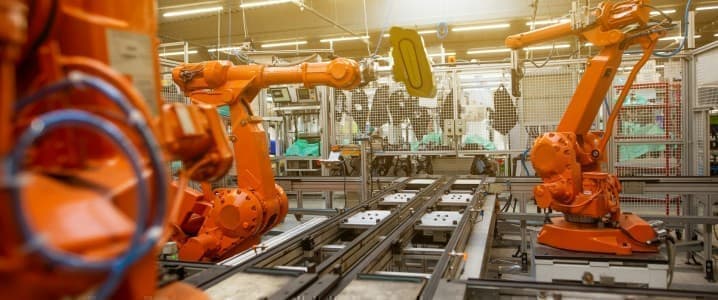
US factory output hits one-year high as manufacturing sector recovers


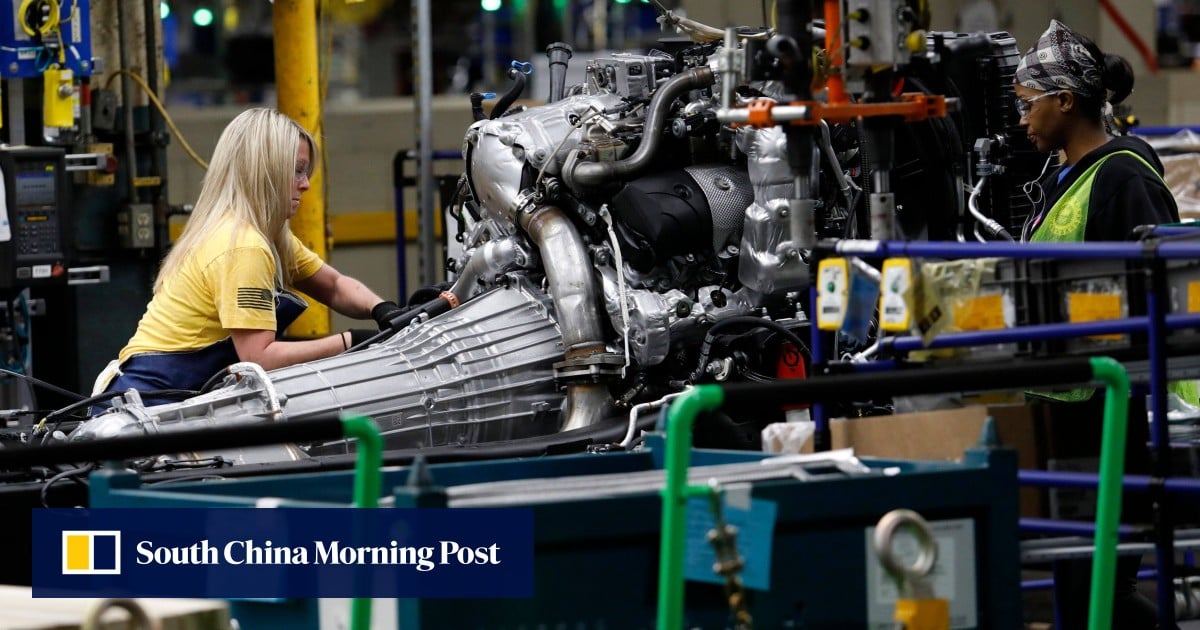
US factory production increased by the most in nearly a year in January, offering hope for a manufacturing sector that has been squeezed by import tariffs and high interest rates.

Manufacturing output rose 0.6 per cent last month, the largest gain since February 2025, after being unchanged in December, the Federal Reserve said on Wednesday.

Economists had earlier forecast production for the sector, which accounts for 10.1 per cent of the economy, would rise 0.4 per cent. Output in December was previously reported to have risen 0.2 per cent.

Production at factories advanced by 2.4 per cent on a year-over-year basis in January.

Manufacturing has been hobbled by President Donald Trump’s sweeping tariffs, which business leaders say have raised costs for factories and consumers.

Trump has defended his punitive import duties as necessary to restore a long-declining domestic industrial base. The manufacturing sector lost more than 80,000 jobs last year.

Free Training

Source link

Japan’s $36 Billion U.S. Investments: A New Era in Energy and Manufacturing


In a major economic development, President Donald Trump’s administration has unveiled three significant projects totaling $36 billion, all financed by Japan. These ventures mark the first wave of investments under Japan’s $550 billion commitment to the United States as part of a trade agreement that reduced tariffs on Japanese imports to 15%.

Among the projects is a $2.1 billion deepwater crude oil export facility in Texas, expected to generate up to $30 billion annually in exports. An $800 million industrial diamonds plant is set for Georgia, aimed at meeting the entire U.S. demand for synthetic diamond grit used in advanced manufacturing. The centerpiece, however, is a $33 billion natural gas-fired power plant in Ohio, slated to become the world’s largest of its kind by capacity.

The announcement follows recent discussions between U.S. Secretary of Commerce Howard Lutnick and Japan’s economic minister, Ryosei Akazawa. While the projects promise significant benefits, key issues, including financial specifics and tariff implications, remain under negotiation as both nations navigate this landmark collaboration.

(With inputs from agencies.)

Free Training

Source link

The US is manufacturing a humanitarian crisis in Cuba


The Trump administration is deliberately plunging Cuba into a national and humanitarian crisis, and the US-imposed blockade of oil imports is wreaking havoc on daily life for Cubans. In this urgent episode of The Marc Steiner Show, Marc speaks with Cuban journalist and documentary filmmaker Liz Oliva Fernández about the unfolding nightmare in Cuba and what the international community can do to stop it.

Transcript

The following is a rushed transcript and may contain errors. A proofread version will be made available as soon as possible.

Marc Steiner:

Welcome to the Marc Steiner Show here on The Real News. I’m Marc Steiner. It’s great to have you all with this. One of my great passions in life is Cuba and I’ve been to Cuba numerous times and now it’s at the center of Trump attacking Cuba again and trying to isolate it and want to try to overthrow the Cuban government. All that’s taking place as we speak and we are lucky to have today our guest, Liz Oliva Fernández, who is a Cuban journalist and documentary filmmaker. She joined us from a vanity today. Her film won the Gracie Award for Alliance Women, the media award directed Uphill on the Hill heartland of the Hudson, and through her work at Billy the Beast, she reports on all the issues going on in Cuba, what it’s facing and more. And we’ll be linking to all of that because you don’t want to miss our documentary work, which is amazing. And Liz, welcome. Good to have you with us.

Liz Oliva Fernández:

Thank you. Thank you very much. It’s a pleasure for me being here with you today.

Marc Steiner:

So Cuba and the United States have had a long, intertwined, tangled and sometimes violent history together from the very beginning, late 19th century. So I want to just begin by asking you to describe for us what it’s like being in Cuba now given the sanctions, given the threats by Trump to overthrow the government and trying to isolate Cuba from the rest of the world once again. So give us a sense of what it feels like it is like to be there at this moment.

Liz Oliva Fernández:

Well, it’s really difficult, but first I would like to start saying people in Cuba doesn’t have any resentment with the people in the United States. We have a lot of history in common. I think Cuban people love everyone who are coming from outside and trying to share with them whatever we have at that moment. And I think that is not different with the people from the United States. If you’re coming to Cuba, if you’re visiting Cuba, you know that people welcome you and welcome you as citizens with more of the warm that we can be. But Cuba has been having a difficult relation with the government of the United States. That’s different, not because we have, and we can’t call this a confrontation because we are not a threat to the United States of America. We don’t represent a threat to no one in the United States, not for the government, not for the people.

And also Cuba is a really small island in the Caribbean. There is no way that we actually can do some damage or in some way re return the damage of the US government with his policy has him on Cuba. So right now, this is the last wave of the Donald Trump administration. And I say last wave of sanctions and pressure because in the first theme, Donald Trump already start to increase the sanctions in Cuba to design the sanctions in Cuba, on Cuba in a way that actually came her the most to the Cuban people. And right now the situation is critical because the oil bulk is critical because we haven’t received any oil shipment since December. I think that the given president mentioned in the last comparisons, again with the mainstream media outlets. So every country around the world needs oil to run. So right now we have long blackouts. I think it is less long than the last week because right now they just showed up the public transportation completely. So people have to use it moving around like walking, trying to get a private taxi. We call it alro, the kind of collective taxes that are around the city. But the prices are not ide. So there are people who actually can’t pay for that prices because the shortage of UL of course, that the price is going to be higher. Now a lot of the people who are non-essential state workers are now at home, most of them working half hours or working in a different way. But many of them doesn’t have figured out the payment has going to be the schools. There is a lot of school that university for example, send the kids to their homes and now the class is going to be online. That for me, I’m not understanding really well how it’s going to work because when we have black housing in Cuba, we also have problem with the connection.

You better going to have connection and you’re not able to make calls or sending texts. It’s really complicated. So I don’t know how all the students are going to have actually online classes if they’re in the blackout. And the internet is really difficult too. So I don’t know what kind of designs they’re going to apply there. But for sure it is full of obstacles. Also hospitals, they’re working, but with the essential service, it’s a kind of pandemic economic crisis. Mix it in one bowl. There is a lot of uncertainty, anxiety with people because it’s not like the most of us are just living day by day because we are not sure what is going to be tomorrow. For now, the streets are calm, people looks like calm,

Trying to get through the day. One thing that people have to understand is the blackouts are not new for sure are not new for Cubans are not new. In the last couple of weeks we have been facing a black house in the last year, most frequently that it was before. Because before all of this start, like this new wave I was sharing, there was a lot of things that was happening. There was a lot of the pressure that the United States was trying to push with Cuba. They were trying to cut all the ways that Cuba has received incomes in order to stop Cuba, to have money, to do things, to buy things, oil, food, medicines. And we have been really focused in the last year to cover and to report on the impact of the sanctions, the healthcare system because has been really impacted. And we have to remember that the 60% of the medications that we used to have in Cuba are, we’re producing inside of Cuba for Cuban people. And right now you barely can’t find acetaminophen for pain. That’s unthinkable for a country like Cuba that is capable to design and to create their own vaccines against COVID-19. That you don’t have a painkillers for their own people.

Marc Steiner:

No, because people don’t realize that Cuba has one of the most vaunted and thorough health systems in the entire world.

Liz Oliva Fernández:

The way that is structured and the way that is public, but also universal. You can have a doctor just walking distance from your home and a clinic is unthinkable for many people around the world. But that’s something that Kiva accomplished. And we used to be the country with more doctors per capita. That was Cuba.

Marc Steiner:

That

Liz Oliva Fernández:

Was Cuba. So right now we have personnel who take care of us. They don’t have the medicines, they don’t have the things that they need to actually take care well, of the people.

Marc Steiner:

So okay, may ask you this, as you were speaking, I was thinking that Donald Trump and the right wing in America will be in power for at least the next two to four years at the very least, which impacts our country negatively. But it’s really impacting Cuba deeply. So I’m curious, how do you think Cuba survives this? I mean, if Donald Trump had his way, if the right wing had their way, they’d be invading Cuba now to overthrow the government, take over the island and bring all the exploitation back to Cuba, that’s what they would do. So I’m curious, what’s your analysis than thought about what happens now?

Liz Oliva Fernández:

Well, that’s my worst scenario case.

And the first thought that is coming to our minds is if that happens, Cuba will never be free again. Because I think like United States going to make sure that if they lose in Cuba once they’re going to lose it twice. I think that they’re going to extend the collective punishment forever. But I actually want, I need to believe that Cuba is going to survive to this. We are survivors like the whole Cuban population. But the situation is really critical. There’s a lot of things that is happening at the same time and there is a lot of psychological effects of the living under US sanctions for more than 60 years. But on the other hand, I have to say that I was really inspiring in the last couple of weeks when the government organizes demonstration and you have this homage to the 32 Cubans who die in Venezuela. I was really touched because for the first time in many years in Cuba, I see people that really move for something that was happened inside of Cuba. Because with all this crisis, people just get political and they don’t want to know nothing about politics or getting involved

Or showing whatever they have. They just was more will to express their dis with the country around the situation. And that’s clear, that’s one of the goal of the sanctions, like trying to overthrow the government, but not from the outside. You’re not trying to overthrow the government trying to ate people in a way that they want to overthrow their own government. That’s the end game. But for the first time in many years, I really see people to feeling what they were saying they were actually supporting to the Cuban government. And I didn’t expect that. And I was really shocked because I know that people are tired. I know that people need someone to blame and that’s going to be the Cuban government because who else? Sanctions are too big to confused. They don’t understand exactly how the sanctions affect their life, where have to do a government that is 90 miles away from my country, from my daily day basis.

People don’t understand that. And they are the most of the time too busy trying to survive the day by day. But now the sanctions have been increased. That’s true. But they have been increasing from the last couple of years, 10 years. So for the first time, the things that actually is changing is the way that they speak, the way that they’re trying to explain to people about why this is necessary. So they are talking about freedom at the end, but they’re talking about sacrifice. They’re talking about, well, if your mother is hunger or if your kid doesn’t have any medications, it’s necessary. This is the price that we need to pay more to get freedom to Cuba. And people in Cuba is like, are you saying that from the United States? Are you asking us to put our bodies to try to go through this? Are you crazy? And something that have Cuba also is understanding about history. And history has been shown that every country that the United States has visited or has trying to free, in some ways they left the country worse when they found out.

Marc Steiner:

Right.

Liz Oliva Fernández:

The speech about freedom is something that people in Latin America are too familiar too. And we can talk about dictatorships when United States has been packed, every dictatorship in Latin America in the last century. So what we are talking about here for the first time, mark, this is something that is more clear than ever that the impact that the sanctions has. There’s not they saying anymore, no, this sanctions is not impacting the people. It’s just impacting the government. No, because now we are talking about a new wave of sanctions and you say, well, you have to suffer this in order to get a better tomorrow. And that’s, I think makes people in Cuba actually open their eyes really openly, widely in the same way this has been alive my entire thing.

Marc Steiner:

So you have experienced the United States a lot in your life and work. You’ve been here a lot back and forth. You have a serious analysis about where this government’s going. And so I’m curious where you think this takes Cuba and the United States. I mean, I’ve been following Cuba for a long time, over 60 years. That makes me old, but that’s okay. Over 60 years I’ve been following Cuba and been part of it. But this to me seems to be with this right wing in racist government, in power in the United States and Cuba is a threat for those people. So I wonder how you think that plays out? I mean, how long can Cuba withstand the pressure and the isolation? Because this isolation to me is different and more intense than anything Cuba has experienced before since the revolution.

Liz Oliva Fernández:

Yeah, for sure it

Marc Steiner:

Is. So how do you think this plays out? How does Cuba survive this?

Liz Oliva Fernández:

Well, I don’t know. I feel like we can, the key word here is isolation. In my opinion, Cuba can’t survive alone. So we need the people who actually cares about what is going on in Cuba with then in solidarity with Cuba, not just speeches and saying things. I’m talking about actions because what the United States is doing is illegal. It’s illegal. Under the international law. We know that Donald Trump and the Trump administration doesn’t care about international law. But if you say Europe, Western, whatever country that you are coming from that actually said that they care about the international law. If they are being in complicity with the United States, allowing this United States get away with its actions, that means that you’re in complicity with this violation of the international law. Because we are talking about sanctions, but this are not sanctions because sanctions are legal. In the international law, we are talking about unilateral, coercive measures applies by the United States against Cuba. And that’s illegal. So for me, it’s like what the war will to do in order to protect international law, international order, and today speak about Cuba. But we don’t know who’s going to be next. First one it was well, Greenland, Venezuela, Cuba.

And then it’s like this guy thinks that they’re actually unstoppable. They don’t respect nothing. So it’s not just Cuba who has been at risk right now. It’s the whole continent and it’s also the whole world. If we don’t make them respect the law, I’m trying to say, okay, you don’t rule wrong the war, you can be a really big umpire, but you don’t wrong the war. You don’t run our life. So if we don’t know how to put them and stop, that’s going to be a disaster. Not just for Cuba, but for the rest of the world.

Marc Steiner:

Because, I’m sorry. So what do you think that people can do in terms of what solidarity looks like today and what can people do beyond just concern? I mean, this is, as I said earlier, many people know the Cuba, US relations have been entangled for 150 years. It’s been wrapped around each other. So what can people do beyond their concern and what does solidarity look like to you?

Liz Oliva Fernández:

Well, in my head, it’s like you help as much as you can. There is a lot of organizations and initiatives inside of Cuba that are trying to care by the communities. And that’s the kind of stories that I want to tell. And also important as a journalist, we have too many bad news about what is going on in Cuba. I think that this also is generating and speculation and also a kind of crisis like, oh my God, this is falling apart.

The situation is critical, but we need to stop together and say, okay, what we are going to do? What is kind of the solutions? And maybe as a journalist trying to report on that, because there is a lot of people in Cuba that are taking care of the communities. Maybe this is something from the United States can learn a little bit about. There are people who are trying to find solutions, trying to get renewable energies to God, but using it as a community, trying to grow their own food inside of their own communities in the backyards, trying organizing women, other people, because we are also talking about 25% of the population is elder than 60

Marc Steiner:

In Cuba?

Liz Oliva Fernández:

In Cuba, yeah, in Cuba. So the situation is getting complicated. So for me, the people that can talk don’t talk about Cuba, but talk about, okay, the situation is critical. What we can do in order to help them to try to bring, because of course you can bring oil to Cuba, but maybe you can find a way to initiative in Cuba or something that needs access to solar panels. Maybe this is something that you can do and maybe you can bring food to people or maybe you can bring your experience in other countries that has experienced the same to Cban and share that knowledge with them. The possibilities is whatever is in your mind that you actually can help. And I’m talking about practical things. The news is good. I’m really happy that Cuba’s on the news in the United States right now, that there is a lot of people that are putting on attention in Cuba, but also the amount of bad news also creating a kind of exterior. So I think we need to stay straight about situation is critical, but we need to do something or this help to these people survive because they’re not going to survive alone.

Marc Steiner:

So this is difficult, but how do you see the future playing out for Cuba? I mean, one of the things I learned in my times in Cuba is that the Cuban people, A are very resilient. They’re passionate about your country and your future. It’s phenomenal how Cuba has survived since all the attacks since the 1960s on, and this is probably the worst, I think, as I said earlier, that I’ve ever seen that Cuba’s going through. So I want to politically and humanly how you think Cuba survives this. What does Cuba have to do and what do we have to do to be in solidarity with Cuba to help us survive?

Liz Oliva Fernández:

I don’t know. Certainly I don’t have I idea. How’s it going to be the future? And that’s the things that brings me more anxiety and don’t let me sleep well at night. I want to believe that we don’t going to change too much

As cultural talking. I would like to think that we actually is going to stick together because a lot of people talk about Cubans being resilient or creative people. This is not something that we asking for. This is not something that we have to done because we born this way. This is something that we have been forced to be in order to survive. We just are tired of being resilient and creative and beyond. We just want to live a simple life and to have access to basic things. And I think that this is a key because we are not asking nothing on United States more than just, please stay in your place. Don’t do nothing. We don’t need nothing from you. That’s the deal. But I don’t know it is going to affect us. Of course it’s going to change us. Of course we are going to be better after this. I don’t know. We have say in Spanish, I don’t know how to translate that

Speaker 3:

In English. That’s okay.

Liz Oliva Fernández:

But they say, look, not matter, like the things that don’t kill you make you

Marc Steiner:

Stronger.

Liz Oliva Fernández:

Stronger. But I’m worried about the price that we have to pay in order to be stronger in order to survive to this. That means we are not more emotional, more practical people. I don’t know. I don’t know. But I’m afraid. I’m afraid of the future. I’m afraid of the future generations. I’m afraid of these generations. I’m afraid all their generations, the people who actually believe that builds something in Cuba different from the rest of the world, was worth it. And they stay here and they try to fight for it. And I’m afraid that they just lose that. We lose that.

Marc Steiner:

And if you lose that, the world loses that.

Liz Oliva Fernández:

Yeah,

Marc Steiner:

I just want to say this, that our airwaves, my show, my program here is open to you anytime.

Liz Oliva Fernández:

Oh, thank you.

Marc Steiner:

I think that your voice is important and I think that we have to stand in solidarity with Cuba and the Cuban people and we have to show that to America and the world. And we are here for you as much as we can be. Whatever we can do. Whatever I can do.

Liz Oliva Fernández:

Thank you. We really appreciate it because we actually need it.

Marc Steiner:

Yes, you do. Cuba does. And so we’re there and I’m, we’re going to link to all of your incredible documentary film work because you’re an amazing filmmaker and people need to see it and see Cuba through his eyes. Liz, Olivia Fernandez, who has been our guest, and I deeply appreciate the work you do deeply appreciate you taking your time with us today. And I’ll stand shoulder to shoulder with you wherever it goes.

Liz Oliva Fernández:

Thank you.

Marc Steiner:

Thanks to David Hebden for running the program. Our audio editor, Stephen Frank for working his magic producer, Rosette Ali for making it all work behind the scenes. And everyone here at The Real News for making this show possible. Please let me know what you thought about, what you heard today, what you’d like us to cover. Just write to me at mss@therealnews.com and I’ll get right back to you. So for the crew here at The Real News, I’m Marc Steiner. Stay involved. Keep listening, and take care.

Free Training

Source link

US Manufacturing Is Back in Expansion. Here’s What the US Stock Market Is Pricing Next


With ISM Manufacturing PMI back above 50 and New Orders jumping sharply, investors are watching what this could mean for earnings and cyclical leadership in the US stock market.
Here’s how to read the manufacturing data without overreacting to a single headline.

For years, US stocks have been shorthand for mega-cap tech, AI winners, and the Nasdaq story. Manufacturing, by comparison, rarely gets headline space unless it’s flashing recession warnings. But that’s exactly why it can matter when the data turns: manufacturing is often where the cycle becomes measurable before it becomes obvious.

In early February 2026, the ISM Manufacturing PMI for January came in at 52.6, returning to expansion territory after a long stretch below 50. More importantly, the New Orders component jumped to 57.1, turning firmly expansionary and signalling that demand is improving at the front end of the pipeline.

This doesn’t automatically mean a manufacturing boom. But it does create a cleaner question for markets to price: is the US moving from “stability” to “acceleration” in the parts of the economy that tend to show up quickly in profits?

Why manufacturing matters to the US stock market

The US economy is services-heavy, but corporate earnings are still highly sensitive to industrial activity. When orders improve, production stabilises, and inventories normalise, the impact can show up in operating leverage, margins, and guidance.

That’s why investors often treat manufacturing indicators less like an “economic scorecard” and more like an “earnings early warning system.” Markets don’t trade the headline narrative. They trade what becomes measurable in business results over the next few quarters.

The investable signal is New Orders, not the headline PMI

A PMI number above 50 is a useful milestone. But New Orders is typically the more forward-looking indicator because it shows whether demand is building, not just whether activity has stopped falling.

In January 2026, New Orders moved decisively higher, while Production also improved. That combination is what makes the manufacturing rebound relevant for US market watchers: it hints at a potential shift from “cost control” to “top-line support,” which is where earnings upgrades usually begin.

A positive spin, without pretending risks don’t exist

A constructive manufacturing setup doesn’t require mass hiring or euphoric sentiment. In fact, some of the most market-friendly environments are those in which demand improves while companies keep headcount tight and protect margins.

That nuance matters right now because employment within manufacturing is still soft. Firms can be cautious on hiring and still deliver better profitability if output holds up and pricing power doesn’t collapse. For US stocks, that can translate into a simple market logic: improving activity plus disciplined cost structures can be good for earnings, even if job growth lags.

At the same time, this is not a “set-and-forget” signal. One strong print can be distorted by reorder cycles, inventory moves, or businesses bringing forward purchases. The confirmation comes from follow-through over the next few releases.

What to watch next in the US market news, if you want the real manufacturing signal

If you’re tracking US stock market trends through a manufacturing lens, focus on indicators that connect to earnings, not just headlines.

  1. Follow-through in New Orders and Backlogs
    If New Orders stay expansionary and Backlog readings improve, the rebound becomes more than a bounce. That’s when markets start treating it as a cycle shift rather than a data quirk.
  2. Prices and margins
    If input costs keep rising faster than companies can pass them on, manufacturing strength can become margin pressure instead of margin expansion. Investors will watch whether price trends stabilise.
  3. Management language during earnings season
    The biggest market moves happen when companies shift from “uncertainty” to measurable visibility: stronger demand cues, improved utilisation, easing bottlenecks, and clearer capex plans.
  4. Which parts of the US stock market lead
    Manufacturing strength tends to show up more clearly in cyclical areas, industrials, materials, transport-linked businesses, and parts of the small-cap universe that are more economically sensitive. It doesn’t mean tech can’t lead, but it often broadens leadership beyond the same familiar names.

Why Indian investors should care about US manufacturing

For Indian investors, the value of tracking manufacturing is not to replace the AI narrative, but to add a second lens on US markets.

When US manufacturing improves, the effects can ripple through global supply chains, capital spending, logistics, and energy demand. That can create opportunities outside headline tech, especially for investors looking to diversify across sectors and build a portfolio that isn’t fully dependent on India’s domestic cycle.

And because US assets are dollar-linked, currency moves can also affect INR outcomes over time. So even “boring” data like manufacturing can matter more than it looks, because it can influence earnings tone, risk appetite, and sector leadership in the US stock market.

The bottom line

The headline “manufacturing is back” is not the trade. The trade is whether better orders and output translate into stronger earnings visibility over the next one to two quarters.

If the improvement holds, manufacturing becomes a quieter support for the next leg of the US market in 2026, potentially widening leadership beyond mega-cap tech. If it fades quickly, it was a bounce, not a cycle shift. Either way, the smarter approach is to follow what becomes measurable in margins and guidance, not what sounds loud in headlines.

FAQs

1) What does a Manufacturing PMI above 50 mean for US stocks?
It signals expansion in manufacturing activity, which markets track because it can improve earnings visibility for cyclical companies and support broader risk sentiment.

2) Why do investors focus on ISM New Orders?
New Orders is more forward-looking than the headline PMI. It’s an early read on demand momentum that can show up in production and earnings in the coming quarters.

3) Does one strong PMI print mean a manufacturing boom is coming?
Not necessarily. One month can reflect reorder cycles or inventory effects. Investors look for confirmation across multiple months and related components, such as backlogs and production.

4) Which US stocks tend to benefit most when manufacturing improves?
Cyclical areas often respond more clearly, such as industrials, materials, and economically sensitive parts of the market, because they are directly tied to orders, output, and capex cycles.

5) How should Indian investors use US manufacturing signals?
As a tactical lens, not a standalone timing tool. It can help track where earnings momentum may broaden beyond tech and support diversified exposure to US stocks.

If you want to track these shifts through the lens of live U.S. stock market moves and themes that matter to Indian investors, Appreciate can help you follow U.S. stocks, map the big narratives to company performance, and stay on top of what’s driving the U.S. market today.

Visit the new Mint x Appreciate US Markets page — where financial knowledge meets real opportunity.
To know more about investing in US stocks, ETFs, and Mutual Funds, click here.

Note to the reader: This article has been produced on behalf of the brand by HT Brand Studio and does not have journalistic/editorial involvement of Mint.

Free Training

Source link

SICCET USA Chooses Grove City for First U.S. Manufacturing Facility


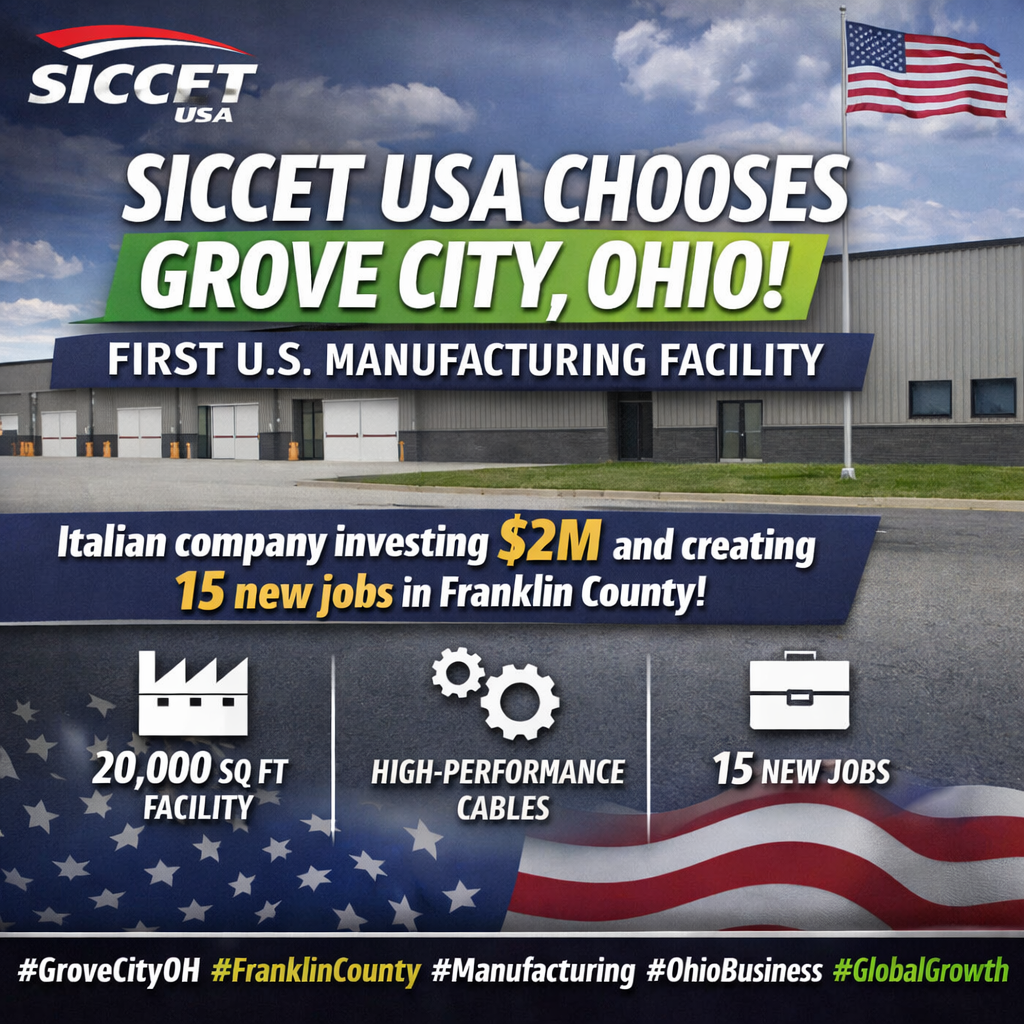
GROVE CITY, Ohio — SICCET USA has announced plans to open its first U.S. manufacturing facility in Grove City, marking a significant investment by the Italy-based company into the American market.

The new 20,000-square-foot operation represents a $2 million investment and is expected to create 15 new jobs in Franklin County. The facility will manufacture high-performance cables used to monitor and control temperature in demanding environments, including aircraft engines, power plants and industrial food equipment.

SICCET USA is the American subsidiary of SICCET SRL, a longtime European supplier of temperature sensor cable solutions. The company specializes in thermocouple and RTD cable manufacturing — critical components in ensuring performance, precision and safety in modern industrial systems.

Company leadership said the decision to locate in Grove City was driven by the Columbus Region’s central location, robust logistics network and access to a skilled workforce.

Quick Action by Circleville Firefighters Prevents House Fire from SpreadingTrendingQuick Action by Circleville Firefighters Prevents House Fire from Spreading

“SICCET USA is proud to begin our U.S. manufacturing journey in Grove City,” said Ivan Dall’Armellina, president of SICCET USA and co-owner of SICCET SRL. “This location offers strong infrastructure, a collaborative business environment and proximity to key markets that are vital for our long-term growth.”

Grove City Mayor Richard “Ike” Stage welcomed the announcement, noting that the community continues to attract advanced manufacturing firms seeking long-term growth opportunities.

Regional economic development leaders say the investment reflects a broader trend of international companies choosing central Ohio as a gateway into the North American market.

Deborah Scherer, senior vice president of global trade and investment at the Columbus Partnership, said SICCET’s move underscores growing global confidence in the region’s industrial base and logistics strengths.

JobsOhio President and CEO J.P. Nauseef added that Ohio’s workforce, infrastructure and global reach continue to attract world-class manufacturers looking to expand operations in the United States. JobsOhio partnered in supporting the project.

The Grove City facility positions SICCET to better serve its expanding North American customer base as demand grows for specialized, high-performance industrial components amid a resurgence in U.S. manufacturing.

Free Training

Source link

US manufacturing pipeline grows, firms plan $1B in new factories


A wave of new manufacturing projects announced in recent weeks underscores continued capital investment across the U.S., with companies in heavy equipment, advanced electronics, automation and industrial components committing around $1 billion combined in new facilities and expansions.

From North Carolina to Texas to Idaho and Wisconsin, manufacturers are breaking ground on large-scale plants expected to create thousands of jobs while reshoring or expanding domestic production capacity.

Deere & Co. announced plans to open two new facilities: a distribution center near Hebron, Indiana, and a $70 million excavator factory in Kernersville, North Carolina.

According to the company’s news release, the Indiana distribution center is expected to create about 150 jobs and strengthen parts logistics nationwide. The North Carolina plant will employ more than 150 people and will assume production of next-generation excavators previously manufactured in Japan, marking a shift of that production to the U.S.

The excavator factory is part of Deere’s broader commitment to invest $20 billion in U.S. manufacturing over the next decade, the company said.

Radar platform company Echodyne is investing $40 million in a new 86,350-square-foot manufacturing facility in Kirkland, Washington.

The new plant is designed to produce and ship more than 30,000 radars annually across product lines. The company said it expects to employ more than 200 workers when the facility reaches full capacity, with production scheduled to begin in summer 2026.

The expansion comes amid growing global demand for counter-drone, border security and defense-related radar technologies.

In Sugar Land, Texas, Applied Optoelectronics Inc. (AOI) broke ground on a 210,000-square-foot manufacturing facility that will support production of optical networking products for AI data centers and broadband networks.

AOI said it plans to increase its total investment in the project and headquarters campus from $150 million to potentially $300 million by the end of next year. The company has committed to creating 500 local jobs tied to automated production lines.

Executives positioned the expansion as part of Texas’ broader push to become a leader in artificial intelligence infrastructure manufacturing.

Sanko Texas Corp., a subsidiary of a Japanese plastics manufacturer, plans to build a nearly $40 million plant on a 43.7-acre site in San Antonio.

The facility — which will serve as Sanko’s first U.S. manufacturing plant and its U.S. headquarters — is expected to create up to 300 jobs once fully ramped, beginning with about 100 hires in early 2028, according to the San Antonio Express News.

Sanko produces plastic injection-molded pallets and containers commonly used in automotive assembly lines and industrial supply chains.

Preciball USA announced a $17.6 million investment to build a new factory in Sylvania, Screven County, Georgia, according to a news release.

The plant will manufacture precision balls used in bearings, pumps and valves, and is expected to create 65 jobs. The project expands the company’s footprint in Georgia, complementing its existing headquarters operations in Pooler.

Industrial automation giant Rockwell Automation selected New Berlin, Wisconsin, as the site of a new manufacturing campus described as a “factory of the future.”

The planned greenfield facility is expected to exceed 1 million square feet of factory and warehouse space and is part of a broader five-year, $2 billion domestic manufacturing investment strategy, according to Milwaukee Journal Sentinel.

While job figures have not yet been disclosed, company leadership characterized the project as potentially becoming Rockwell’s largest manufacturing campus globally.

Schweitzer Engineering Laboratories (SEL) has begun site preparation for a new 250,000-square-foot electronic device manufacturing facility in Moscow, Idaho.

The $50 million investment will expand production of devices used to monitor and protect electric power systems worldwide. Once fully operational, the plant is expected to employ approximately 1,000 people, with phased hiring beginning in 2027.

Fresh meal and technology provider Tovala recently announced a new 140,340 square-foot food processing facility in Winfield, Illinois to meet growing demand.

Chicago-based Brennan Investment Group will develop the state-of-the-art facility as a build-to-suit project, with construction scheduled to begin in March 2026 and completion expected in the second quarter of 2027. The project marks Brennan’s fourth build-to-suit development in the food service sector.

The post US manufacturing pipeline grows, firms plan $1B in new factories appeared first on FreightWaves.

Free Training

Source link

Ford (F) Explores U.S. Manufacturing Ties with Chinese Automaker


Key Takeaways:

  • Ford (F, Financial) is exploring strategic partnerships with Chinese automotive firms to enhance its market presence in the U.S.
  • Ford’s financial health shows mixed signals with strong revenue but challenges in profitability and debt management.
  • Valuation metrics suggest Ford is trading near historical highs, with a focus on improving operational efficiency.

Ford (F) is in discussions with senior U.S. government officials regarding a strategy for Chinese automotive companies to produce vehicles in the United States through partnerships with American firms. These conversations, involving CEO Jim Farley, propose a basic framework where Chinese manufacturers could engage in joint ventures with U.S. automotive companies, provided the American partner maintains majority control. This initiative aims to foster collaboration between Chinese and domestic automakers, enhancing their presence in the U.S. market.

Ford Motor Co. manufactures automobiles under its Ford and Lincoln brands. In March 2022, the company announced that it will run its combustion engine business, Ford Blue, and its BEV business, Ford Model e, as separate businesses but still all under Ford Motor. The company has nearly 13% market share in the United States, about 10% share in the UK, and under 2% share in China including unconsolidated affiliates. Sales in the US made up about 68% of 2024 total company revenue. Ford has about 171,000 employees, including about 56,500 UAW employees, and is based in Dearborn, Michigan.

With a market capitalization of $56.33 billion, Ford operates within the Consumer Cyclical sector, specifically in the Vehicles & Parts industry. The company’s strategic positioning is crucial as it navigates the competitive automotive landscape.

Financial Health Analysis

Ford’s financial performance presents a complex picture:

  • Revenue Growth: Ford reported a revenue growth of 10.8% over the past three years, indicating a positive trajectory in sales.
  • Profitability: The company faces challenges with a negative EPS of -2.07 and an operating margin of 1.91%, reflecting operational inefficiencies.
  • Balance Sheet Strength: Ford’s debt-to-equity ratio stands at 3.47, highlighting significant leverage, while the current ratio of 1.12 suggests adequate short-term liquidity.
  • Warning Signs: The Altman Z-Score of 1.05 places Ford in the distress zone, indicating potential financial instability.

Valuation & Market Sentiment

Ford’s valuation metrics provide insights into its market positioning:

  • Valuation Ratios: The P/B ratio of 1.19 and P/S ratio of 0.3 are near historical highs, suggesting the stock may be overvalued.
  • Analyst Targets: The target price is set at $13.73, with a moderate recommendation score of 3.
  • Technical Indicators: The RSI of 56.97 indicates a neutral market sentiment, while moving averages suggest a stable trading pattern.
  • Ownership: Institutional ownership is at 62.35%, reflecting strong interest from large investors.

Risk Assessment

Ford’s risk profile is shaped by several factors:

  • Financial Health Grades: The Beneish M-Score of -2.71 suggests Ford is unlikely to be a financial manipulator.
  • Sector-Specific Risks: As a cyclical company, Ford is exposed to economic fluctuations that can impact demand for vehicles.
  • Volatility and Beta: With a beta of 1.38, Ford’s stock is more volatile than the market, indicating higher risk.
  • Upcoming Catalysts: Strategic partnerships and potential joint ventures with Chinese firms could serve as significant growth drivers.

In conclusion, while Ford is actively pursuing strategic initiatives to enhance its market presence, the company’s financial health and valuation metrics suggest a cautious approach. Investors should consider the inherent risks and opportunities as Ford navigates the evolving automotive landscape.

This stock alert was generated using automated technology and GuruFocus financial data to provide readers with timely and accurate market reporting. This content was reviewed by GuruFocus editorial team prior to publication. Please send any questions or comments about this story to [email protected].

Free Training

Source link

The Trump Administration Failed the U.S. Auto Industry, and the Canada-China Deal Proves It


On January 16, 2026, Canadian Prime Minister Mark Carney announced a landmark trade deal with China that will open its market to Chinese electric vehicles (EVs) in exchange for lower tariffs on Canadian-produced canola oil. It’s a major change that could lead to the Canadian market welcoming Chinese-made passenger vehicles at a significantly higher scale and throws into stark relief the consequences of the Trump administration’s reckless trade policy and its large-scale disinvestment in EVs.

The Trump administration’s wrecking-ball approach to traditional forms of international cooperation; its willingness to attack long-time partners and allies with ever more outrageous tariff threats; and its destruction of the U.S. EV supply chain has forced Canada to change its strategy for modernizing and growing its domestic auto industry. Canada has historically been the largest importer of U.S. passenger vehicles. Now, as a direct result of the Trump administration’s actions, Canada’s pivot toward Mexico, China, and elsewhere stands to further isolate the U.S. market as the rest of the world moves decidedly toward a cleaner future. Indeed, if U.S. automakers were already behind Chinese and other international EV producers in terms of technology, production, and price, then the Trump administration’s antics on the world stage will only widen the gap and jeopardize a lucrative export market, to the detriment of American workers and consumers alike.

Stay informed

on Energy and Environment

What’s in the deal?

Canada and China recently agreed to lower tariffs on Canadian canola oil—from 84 percent to approximately 15 percent by March 1, 2026—in exchange for Canada lowering the tariff rate on Chinese EVs from 100 percent to 6.1 percent on the first 49,000 vehicles, eventually growing to 70,000 over five years. Perhaps more importantly, China will invest in EV production capacity in Canada. While this is more of an understanding than an official agreement at this point, it may turn out to be the most significant component of the deal. Legacy North American automakers lag behind their Chinese counterparts in the maturity of their EV production processes. Landing direct investment in domestic production capacity will allow Canadian participants in the supply chain a significant opportunity to learn from Chinese EV and battery makers and produce affordable cars for Canadian citizens. The new Chinese electric vehicles, whether imported or produced in Canada, are likely to be less expensive than other vehicles produced in North America, which will force North American automakers to innovate and learn in order to remain competitive—preferably not to the detriment of autoworker jobs.

Which parts of the manufacturing process ultimately end up onshored in Canada will matter significantly. China has surged ahead of the rest of the world the further upstream one goes in the supply chain. Localizing battery active material production—cathodes and anodes—would bring more economic value and direct jobs than just final battery pack assembly.

It remains to be seen whether this deal will deliver positive benefits to Canada—although ensuring that any factory that supplies EVs either made in Canada or exported into Canada meets the highest standards for workers’ rights and sustainability would be a good start. But what is clear is that this deal would not have occurred without the Trump administration’s ongoing hostility toward EVs and the U.S.-Canada relationship more broadly.

Why make the deal?

The deal is, no doubt, a calculated risk by the Canadian government, based on two key factors. First, the Trump administration has undermined innovation in the domestic auto industry, gutting investments in EVs and causing domestic automakers to cancel billions of dollars of investment in advanced manufacturing. Second, it has deeply exacerbated trade and diplomatic tensions between Washington and Ottawa. As a result, Canada finds itself with a need to reduce its dependency on and integration with the United States to reclaim control over its economy and industrial future. It is a message that Mark Carney, Canada’s prime minister, delivered to his country via video message a few days after signing the agreement with China.

On the future of the auto sector in the United States, it is hard to question the Canadian government’s assessment. One of the first actions taken by the Trump administration, starting with a day-one executive order, was to launch an all-out attack on American EV manufacturing, directing the government to “eliminate the ‘electric vehicle (EV) mandate’,” despite no such mandate existing. Less than a month later, the administration unilaterally and unlawfully froze billions of dollars of funding for everything from EV charger installation to critical mineral processing for batteries, including funds for which the government had already signed contracts with American companies. Finally, in July, the president signed the One Big Beautiful Bill Act and delivered the coup de grâce for the future auto industry, repealing tax credits for EVs made in North America and hamstringing government support for American battery manufacturing. High-quality EVs have an average cost of $25,000 in China, but instead of helping American automakers offer a similarly affordable vehicle, the administration has held them back. NPR captured it succinctly in December:

California’s ability to require the sale of EVs: gone. Federal rules about emissions and fuel economy — being rewritten. Federal penalties for car companies that sell too many gas guzzlers: zeroed out. The $7,500 federal tax credit? Kaput.

These actions have already caused damage. Ford took a $19.5 billion write-down scaling back its plans for EV production, while GM took a $6 billion hit. As of the end of the third quarter of 2025, EV supply chain investment was down 30 percent from that point a year earlier. These cancellations won’t just hurt the United States and American workers but also Canada. The auto industry is not an American industry; it’s a North American industry, with the region that includes Michigan, Ohio, Indiana, and Ontario often referred to as the “Great Lakes supercluster.” As described in a recent report to Congress, “Across the region, hundreds of suppliers provide thousands of parts for vehicles, some of which cross the border seven or eight times as they are assembled into larger products.” The industry is deeply intertwined, so major changes in the United States will significantly affect both Canada and Mexico. Without a strong automotive industry—along with all the supplier industries that serve the auto industry—Canada’s industrial future would be far weaker and far less resilient to the vagaries of policy choices in the United States and elsewhere.

Without a strong automotive industry, Canada’s industrial future would be far weaker and far less resilient to the vagaries of policy choices in the United States and elsewhere.

Canada and the United States have had a remarkably close relationship, consistently sharing economic and foreign policy goals over generations. In 2023, more than $2.5 billion in goods and services crossed the U.S.-Canada border each day. In all likelihood, Ottawa would like to maintain this close relationship and economic integration as much as possible, but as Carney noted in his recent speech to the World Economic Forum in Davos, Switzerland, Canada must react to the world as it is—not the world it wishes existed. And the current world is defined by the brazen tariff threats and toxic nationalism of the Trump administration.

In just its first year in office, the Trump administration has ushered in a trade war unprecedented in its size and scale, imposing new tariffs on nearly every nation and on roughly half the goods entering the United States. In addition to tariffs, the Trump administration has done its best to antagonize Canada, from referring to Canada as the “51st state” and Prime Minister Carney as “Governor Carney” to reportedly meeting with Albertan separatists. As a result, Canada has come to view the United States not as a partner or ally but as a belligerent nation that no longer shares its interests and values—at least not as long as the Trump administration is in the White House.

What about U.S. manufacturing?

Allowing Chinese EVs into the Canadian market, albeit in limited numbers at first, will place massive pressure on American automakers to catch up technologically—which would be the best-case outcome. There are some positive signs that this is happening, such as GM’s investment in new battery technologies. However, if U.S. automakers choose instead to cede the market entirely, then that loss will be felt directly in the U.S. labor market. As the United States has deprioritized affordable EVs—and affordable vehicles in general—China has kept up its massive push to build and adopt EVs. More than half of new cars sold in China are now EVs, accounting for roughly 70 percent of global EV production. This global EV adoption is helping change the trajectory of global oil demand to peak in five years. And it’s not just China, with countries like India electrifying even faster.

There is no turning away from an electrified future for passenger vehicles unless the goal is to condemn people to a future of more expensive cars and fewer jobs.

This means that Canada is a canary in the coal mine for U.S. automakers. If they cannot build and sell EVs to compete with those manufactured by their competitors in a market physically next door—and one that was previously accustomed to buying U.S.-made vehicles—then there is little hope of them competing in a broader world that is rapidly electrifying. One in 4 vehicles sold in 2025 was electric; making a cost-competitive EV is not optional for automakers who want to retain significant market share. Should American automakers fail to do so, autoworkers and U.S. industry more broadly would likely be the first to suffer the consequences.

On the campaign trail, President Trump wildly claimed that “all the electric cars are going to be made in China.” This isn’t likely to become true with other parts of the world such as Europe shifting toward EV production, but what may be true is that significant numbers won’t be made in the United States, which will be a problem when the rest of the world ultimately decides EVs are the way to go. Investors want to invest in industries of the future, and workers need training in those industries now. But instead of recognizing this future—one that Canada clearly does—President Trump appears focused on keeping American auto manufacturing stuck in the past. If he is successful, those investors won’t invest in the U.S. auto industry, and there will be fewer workers in it as a result.

Conclusion

In only a year, the Trump administration’s reckless policies forced a dilemma upon Canada: Continue to be tied to a historic trading partner whose current leadership has decided to hold its own—and, by extension, Canada’s—industry back from producing innovative EVs, or make a deal with China, a competitor leading in the EV industry.

Canada has made a choice to welcome Chinese EVs today, and that should be a wake-up call: There is no turning away from an electrified future for passenger vehicles unless the goal is to condemn people to a future of more expensive cars and fewer jobs. The rest of the world is moving on to cheaper, cleaner vehicles. If the United States wants to produce the vehicles the world wants, as it should, then the country must return to investing in electric vehicle production and an associated supply chain. Nearly 1 million direct jobs are at stake. The Trump administration, and U.S. automakers, should stop seeing the world they wish to see and start seeing the world as it is. Otherwise, U.S. autoworkers and consumers are going to pay the price. A continuation of the Trump administration’s toxicity on the world stage and its backward auto and energy policy would only mean more deals like the one Canada and China agreed to a few weeks ago.

The authors would like to thank Kalina Gibson, Allison McManus, Steve Bonitatibus, and Mona Alsaidi for their feedback, guidance, and support on this column.

Free Training

Source link

The U.S. needs leading-edge chips. Can Intel deliver? Will it even try?


Semiconductor manufacturers are spending tens of billions of dollars to build advanced factories in Arizona and Texas. They’re being cheered on by the federal government, which has chipped in billions of taxpayer dollars to ensure the U.S. doesn’t become completely reliant on technology from overseas.

But these new factories, which the industry calls foundries, rely entirely on manufacturing technology developed in Asia.

A geopolitical or natural disaster could leave those new factories stranded, with all that new American manufacturing muscle cut off from the brains in Asia that make them go. There would be no one in the U.S. to develop new manufacturing technologies.

“You’d be stuck in time,” according to veteran chip industry researcher Patrick Moorhead. Cut off from engineers in Taiwan, he said, “the foundry would not advance on anything.”

The U.S. has a solution. Maybe.

It’s Intel, which was the world’s largest and most advanced chipmaker until a series of factory and leadership missteps derailed its business a decade ago. Intel still has thousands of scientists working in its Hillsboro research factories, where the company develops the recipes to manufacture new generations of computer chips.

Those Oregon engineers have made great strides over the past five years in recovering what Intel lost in the 2010s. The company is the only one based in the U.S. doing this kind of leading-edge work and its brand-new technology, which it calls 18A, offers major advances in chip architecture, performance and efficiency.

Still, it may not be enough.

Taiwan Semiconductor Manufacturing Co. continues to lead the industry, making chips for Apple, Nvidia and many other huge technology companies. Intel has been working for five years to win a share of their business but has yet to announce any large customers for its factories. Intel even outsources some of its own leading-edge designs to rival TSMC.

Intel still makes most of its own chips. But the company has cut 6,000 Oregon jobs over the past two years, and many of its top researchers have left. Intel startled the tech industry last summer when it warned that it would abandon its next generation of production technology, called 14A, unless it wins some big outside customers.

That would leave the U.S. without any chipmaker developing advanced technology domestically. The nation’s defense and tech sectors would be reliant on innovations from overseas.

The stakes are just as high for Oregon. Intel is the state’s largest corporate employer and Oregon’s economy is hugely reliant on the billions the company spends building, equipping and maintaining leading-edge factories.

Intel CEO Lip-Bu Tan delivers a speech  in front of a backdrop that reads "Build the Best Products"Intel CEO Lip-Bu Tan says customers are telling him they’re pleased with Intel’s direction: “I’m hearing a clear, consistent message. They see the progress we are making. They want Intel at the table as they navigate their own transformations.”AP Photo/Chiang Ying-ying

Intel repeated its warnings about abandoning 14A in regulatory filings and conversations with analysts as recently as last month. But its executives insist that 14A, being developed by Oregon engineers, is on track and that Intel is charging ahead on future generations of technology that will put the company — and the country — back on the leading edge.

“There should be no ambiguity that we are all-in on 14A,” said Chris Auth, an Intel vice president in Hillsboro who leads manufacturing development. He said that’s the central mission of Intel’s operations in Oregon, and that focus and commitment haven’t changed.

“There’s thousands of people here,” Auth said, “and they are innovating and developing 14A and beyond, just like they were before.”

Historic cuts hit innovation, manufacturing

Intel’s technology may again be near the leading edge, but its business model is a dinosaur. The company is the last major player that both designs and manufactures its computer chips.

All the other big players have chosen to specialize in one or the other. Nvidia, for example, dominates the market for artificial intelligence by designing a class of chip called a GPU — a booming sector Intel missed out on. But Nvidia doesn’t make any of those GPUs itself. It sends its designs off to TSMC.

For decades, Intel maintained that integrating design and manufacturing gave it an advantage. It could work more quickly to adapt its factories for new designs, and vice versa, so advances in one part of its business benefitted the other. Intel made all its own chips and none for anyone else.

Integration is no longer an accelerant for Intel. It’s become an albatross.

A leading-edge factory costs $10 billion to build, plus several billion more every year just to keep up with advances in manufacturing technology. Intel says it can’t afford to keep spending that way if its only customer is Intel itself — especially because the market for its own chips, which primarily power personal computers and servers, is also in decline.

That presents a conundrum, for Intel and for the United States, because the country wants advanced manufacturing and domestic companies that can keep those factories on the leading edge.

“It’s very important for national security to have both,” Moorhead said.

Chris AuthIntel Vice President Chris Auth has worked at the chipmaker for nearly three decades. He leads manufacturing development and customer engineering at Intel’s factories in Hillsboro, and says the company’s commitment to Oregon is solid: “This is still the main R&D site for Intel and there’s no indication that that’s going to change in the future.”Sean Meagher/The Oregonian

For now, Intel is trying to hold on financially until it has proven itself technologically and won some outside customers who can help subsidize continued investment in its manufacturing process.

It’s a tough needle to thread. Desperate to save money, Intel has cut 30,000 jobs globally over the past 18 months. That included the 6,000 lost jobs in Oregon. While Washington County remains the company’s largest site anywhere, layoffs and buyouts have reduced its local workforce to its lowest point in 14 years.

CEO Lip-Bu Tan says the cuts reduced layers of bureaucracy that were impeding innovation. But buyouts, layoffs and retirements have cost Intel some of its best-known researchers. And a round of November layoffs eliminated 600 frontline factory technicians, engineers and scientists in Hillsboro.

Many more are leaving on their own. The company has cut stock benefits and sabbatical time and says nearly 8% of its employees quit last year. That’s the biggest voluntary exodus in nearly two decades — what Intel calls “undesired turnover” — and a steep increase from 2024.

After a surge in spending at the beginning of the decade, Intel slashed its research budget by 16% last year. That’s an enormous cut unmatched any time this century.

Intel has shelved plans for a fourth phase of its D1X research factory in Hillsboro, a multibillion-dollar project that would have provided a massive boost to the state’s economy and Intel’s innovation capacity. At one time, Intel had planned to start construction in 2025.

If those cuts diminished Intel technologically, its financial picture has improved — and only partly because it is spending less. The Trump administration negotiated an $8.9 billion investment in Intel last summer, followed by billions from Nvidia and the Japanese technology investment firm SoftBank.

That money is more than just a financial lifeline. The ties to the government and wealthy backers buy Intel clout in the industry and could open doors to potential customers.

And in the long run, Apple, Nvidia and other big tech companies don’t want to be wholly dependent on TSMC as their only source of leading-edge chips. They would presumably enjoy having Intel as a second option.

But since none of them have signed up to use Intel’s factories, they’re evidently not convinced that it can deliver. At least not yet.

‘They’re not even willing to catch up’

Neither is Christof Teuscher, an engineering professor at Portland State University. He’s spent nearly two decades teaching Ph.D. students who went on to careers at Intel. Now, he says, Intel isn’t hiring anyone and students don’t want to go.

“The excitement is not at Intel anymore,” Teuscher said. “It’s just not there.”

While the Trump administration has invested billions in Intel, and awarded billions to other chipmakers to build factories, Teuscher said the administration’s immigration policies are deterring promising students and researchers.

“That was almost entirely an international pipeline,” he said. “You can be sure they’re going to do their own stuff somewhere else, and not in the U.S.”

Among the students who are here, Teuscher said they are more interested in young Oregon chip companies like Ampere and AheadComputing or in Nvidia, which employs more than 300 at an engineering office in Washington County. He questions Intel’s commitment to its own future.

“Intel had the talent,” Teuscher said, “but they lost that game and it seems like they’re not even willing to catch up.”

Intel’s own messaging is confusing and contradictory on that point. Tan, the CEO, declared at the beginning of this year that “We are going big time into 14A,” the new manufacturing node due sometime in 2028.

But less than two weeks later, Chief Financial Officer David Zinsner reiterated that Intel will restrain research and manufacturing spending on the new technology “until we have customers secured.” The company said it expects potential clients will begin making decisions about using Intel’s 14A technology late this year or early in 2027.

“Once visibility improves there,” Zinsner said, “we’ll start to unlock the spend on 14A.”

Baking the cake

For now, Wall Street appears to be willing to give Intel time to make up its mind. The company’s share price has doubled in the last six months. There is a growing consensus among analysts that Intel is close to a deal to manufacture Apple’s chips for the iPad and some Mac computers.

Many, though, continue to doubt Intel’s technological prowess.

Bank of America’s Vivek Arya told clients last month that he believes that Intel’s brand-new generation of chips, the ones called 18A, are ramping up slowly because so many have defects that require the company to discard them. That’s typical with new generations of chip technology, but Arya said Intel is moving too slowly to improve yields, making its manufacturing process too expensive and unpredictable.

“We appreciate the scarcity value of leading-edge manufacturing,” he said. But if Intel cannot deliver high yields on its 18A technology, Arya said that’s an ill omen for the next generation of 14A chips. That leaves him skeptical Intel can thrive as a contract manufacturer — a market where Intel “has no scale or history of execution.”

It’s true that Intel has no track record as a contract manufacturer, but its history as an innovator stretches back generations. Moore’s Law, the industry maxim that the ability to miniaturize and pack denser circuitry on computer chips would produce exponential growth in computing power while simultaneously driving down the cost to manufacture them, was coined by and named for Intel’s co-founder.

Jamel Tayeb spent 25 years at Intel as an engineer and chip architect before retiring and becoming a professor in Portland State’s engineering department last fall. Intel is again listening to its technologists, Tayeb said, and that’s why he believes it can overcome its technological struggles.

“Do I believe that Intel can do it?” he asked. “I would say that yes, I really deeply feel that they can pull it off.”

To succeed as a leading-edge manufacturer, Intel must demonstrate that it is both capable of making advanced chips and committed to continue doing so.

Even Intel employees expressed confusion last summer when the company appeared to be hedging on its commitment to leading-edge manufacturing. But Auth, the manufacturing vice president in Hillsboro, insists the company never slowed the pace of research.

“The commitment to 14A is unwavering,” Auth said. “We have key milestones that Lip-Bu wants us to hit, and we’ve been hitting those milestones.”

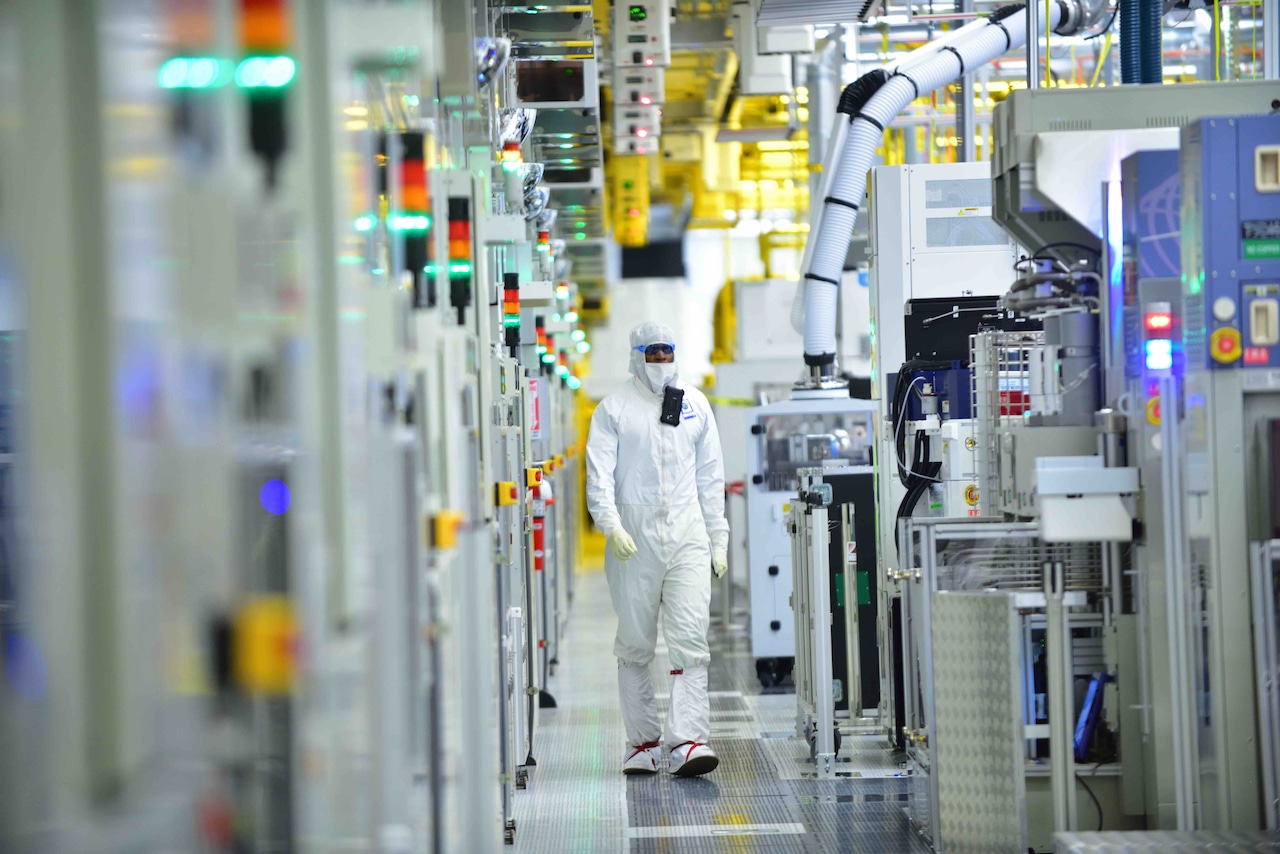
He likens Intel scientists to bakers. The engineers, technicians and researchers working in cleanroom bunny suits are making cakes that need millions of ingredients and thousands of steps.

“Those are the type of things that we do to, at the end of the day, make the best cake we can,” he said, “which is what our customers see.”

Intel has addressed its technological struggles, according to Auth, by focusing on a single cake rather than dabbling in many different ideas. He said Intel has a hard-earned understanding of how to focus on a single concept — manufacturing chips that clients want — and he said the company is convinced it can deliver.

External customers care most of all that chip designs arrive on a predictable schedule, Auth said, and he said a commitment to meeting those expectations is fueling a technological renaissance inside Intel.

“It’s paramount,” Auth said. “And so that has been something that we’ve really embraced.”

Free Training

Source link

Trump’s Attack on Green Energy Hits Manufacturing Sector Hard


United States President Donald Trump has repeatedly pledged to ramp up the country’s manufacturing capacity and create more American jobs across a wide range of industries. While Trump has supported the expansion of certain industries, he has hindered the operation of others. In recent months, Trump has attacked green energy, using executive orders and new policies to restrict renewable energy development and cleantech manufacturing. This has resulted in sectoral stagnation, as investors grow more uncertain about the future of the industry.

In 2024, during the presidential campaign, Trump stated that the new American industrialism “will create millions and millions of jobs, massively raise wages for American workers, and make the United States into a manufacturing powerhouse like it used to be many years ago.”

Upon entering office in January last year, Trump pledged to expand fossil fuel production and boost U.S. manufacturing. “The inflation crisis was caused by massive overspending and escalating energy prices, and that is why today I will also declare a national energy emergency. We will drill, baby, drill,” stated Trump.

Set OilPrice.com as a preferred source in Google here.

“America will be a manufacturing nation once again, and we have something that no other manufacturing nation will ever have – the largest amount of oil and gas of any country on Earth – and we are going to use it,” the president added. He later described “tariffs” as his favourite word, and said the introduction of tariffs on foreign imports was key to bringing manufacturing back to the U.S.

These pledges have not been achieved. Employment in the manufacturing sector remained relatively flat during the first few months of Trump’s presidency, before falling for eight months straight. In addition, wage growth for non-managerial factory workers slowed in 2025. While Trump supporters say it will take time to see the positive impact of his trade policies, critics suggest that investment in factory construction has also fallen in recent months, which makes mid-term growth unlikely.

While manufacturing in general has suffered in recent months, green manufacturing has fared even worse. Under former President Biden, the U.S. witnessed significant growth in cleantech manufacturing. Years of increased investment in battery, electric vehicle (EV), solar panel, and other cleantech manufacturing, supported by funding from the Inflation Reduction Act (IRA), led to rapid industry expansion in this sector.

The IRA drove an estimated $100 billion in cleantech manufacturing commitments through incentives for consumers and manufacturers. This led to the creation of thousands of jobs in the sector and a strong cleantech project pipeline, which encouraged investors to support long-term sectoral growth. This was reflected in the expansion of cleantech manufacturing in states across the political spectrum, including traditional oil and gas-producing regions. 

However, since becoming president, Trump has sought to stall IRA progress and shift the focus to fossil fuel expansion. He has done this by halting wind energy developments, encouraging consumers to continue investing in gas-guzzling cars instead of EVs, and introducing numerous, far-reaching executive orders targeting renewable energy. In 2025, Trump placed stipulations on incentives for manufacturing facilities and cut several of the tax credits that helped grow demand for U.S.-produced cleantech.

Companies spent a total of around $41.9 billion on cleantech manufacturing factories in 2025, marking a significant reduction from the $50.3 billion investment made in 2024, according to data from the Clean Investment Monitor. Further, fewer businesses are making plans to invest in cleantech, due to the growing investor uncertainty of the last year. Although companies in the U.S. announced $24.1 billion in new cleantech manufacturing projects, $22.7 billion worth of cleantech projects were cancelled.

For example, in 2025, the Singapore-based solar panel producer Bila Solar halted plans to double capacity at its Indianapolis facility. Canada’s Heliene announced it was assessing plans for its Minnesota solar cell plant. Norway’s solar wafer producer, NorSun, also halted development to assess whether to move forward with a planned facility in Tulsa, Oklahoma. And two offshore wind farms in the northeast of the country faced the risk of not being completed due to opposition from the Trump administration.

The factory cancellations have resulted in the loss of thousands of jobs. At least 10,000 green energy manufacturing jobs were lost last year, out of a total of 72,000 manufacturing jobs lost in 2025, according to U.S. government figures. The job cuts were industry-wide, from EV production to solar panel manufacturing, and everything in between.

This may be just the beginning of the downfall of U.S. green energy manufacturing, as the Trump administration continues to revise, restructure, and cancel billions of Biden-era funding commitments for U.S. renewable energy and cleantech projects, in favour of expanding fossil fuels. In January, the U.S. Department of Energy announced that the Office of Energy Dominance Financing is restructuring, revising, or eliminating over $83 billion in what it termed “Green New Scam” loans and conditional commitments from the Biden-era loan portfolio.  

By Felicity Bradstock for Oilprice.com

More Top Reads From Oilprice.com

Free Training

Source link