US fixation on the hard-hat economy and making manufacturing great again makes little sense | US economy


The exhortations to protect America’s industrial muscle have resonated in the US at least since maverick presidential candidate Ross Perot brought up the supposed “giant sucking sound” of jobs pulled to Mexico by the Nafta trade agreement back in 1993.

They flourished under Donald Trump’s first presidency and his promise to restore jobs lost to trade agreements. Joe Biden, too, put “rebuilding the backbone of America: manufacturing, unions and the middle class” at the center of his agenda. And in 2024, Trump reheated his old promise that “jobs and factories will come roaring back into our country”.

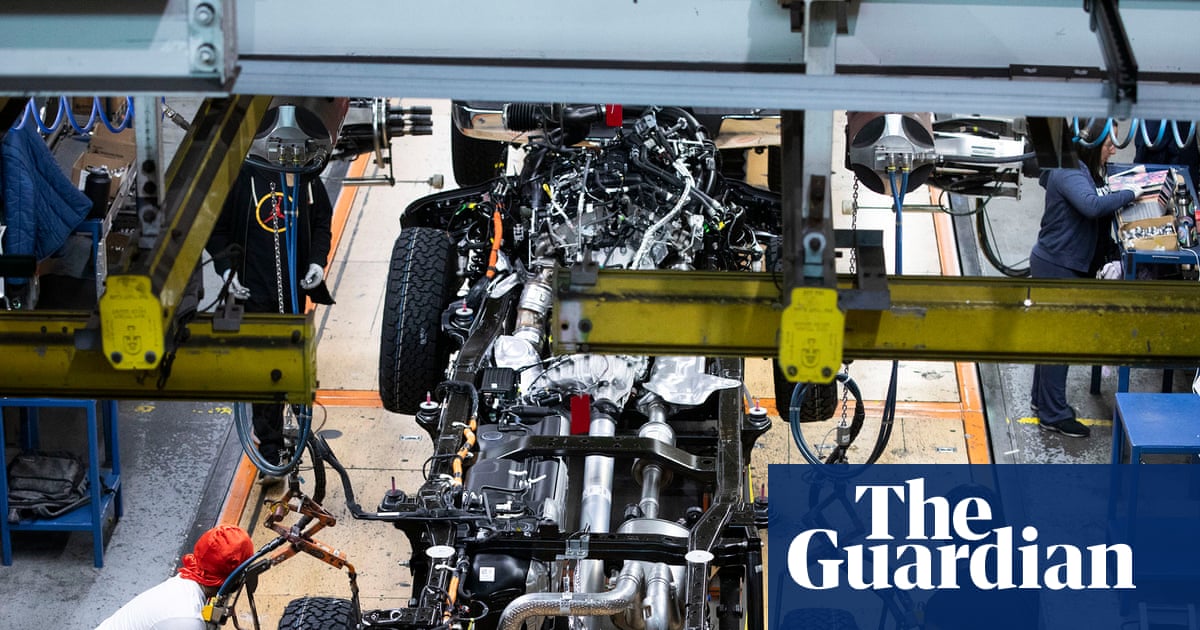
There is an undeniable appeal to the hard hat and the grease-stained overalls; to the sweat on the brow of hard men in vintage posters; to the virtue of a hard day’s labor on the production line. But the American political class would do well to overcome its nostalgia for the past and forget about promises to make manufacturing great again.

The promises make little sense.

They haven’t really worked politically. One study concluded that job losses in big manufacturing counties did not push voters toward Trump in 2016, on average. (While they led to increased support for the Republican in predominantly white areas, they were associated with diminished support in diverse counties.) And despite Biden’s strenuous efforts, in 2024 even rust belt counties that benefited richly from his incentives to support manufacturing voted for Trump.

If the politics don’t work, the efforts to “restore” manufacturing – which accounts for less than 8% of the jobs in the country – make even less sense in economic terms. It’s about as sensible as a commitment to restore agriculture – which employs less than 2% of Americans – to the place it occupied at the center of the US economy in the 19th century.

A line chart showing that manufacturing makes up less than 8% of US jobs

Placing tariffs on imports, Trump’s preferred policy tool, is a particularly inept approach. Over half of American imports are in fact, capital equipment and intermediate goods that American manufacturers put into finished products, often for export. About 91% of respondents to a survey by the National Association of Manufacturers said they use imported components. By raising the price of such inputs, tariffs make domestic firms less competitive. Steel, for instance, is more expensive in the United States than practically anywhere else, which makes life difficult for every manufacturer that uses the stuff.

While the Biden administration’s strategy was not quite as stupid, it was nonetheless ineffectual. Indeed, despite all the help from the White House, manufacturing output has not recovered its level from before the Covid pandemic. It remains at roughly where it was 20 years ago. And manufacturing jobs show no sign of a revival.

A line chart showing that manufacturing output has not recovered to its pre-Covid level

One problem is that Biden’s multibillion spending on industrial policy – through the Inflation Reduction Act, the Chips and Science Act, and the Infrastructure Investment and Jobs Act – made manufacturing more expensive, by bidding up the costs of capital goods and other inputs, like materials and wages of factory workers, as well as pushing up interest rates and the dollar. Moreover, Biden stiffened some trade barriers inherited from the first Trump administration, for instance tightening “Buy America” government procurement rules.

While factory construction did boom, investment in industrial equipment did not. Moreover, real spending on other bits of infrastructure – like bridges and highways – contracted despite a massive infusion of federal dollars, according to an analysis by Jason Furman from Harvard’s Kennedy School. And the building of manufacturing plants has fizzled under Trump.

The decline in manufacturing, however, is less a story about policy blunders than one about the long progress of the US economy, which has to a large extent graduated out of producing stuff like phones and cars and into the delivery of services, like finance and healthcare – a process similar to that followed by other countries that moved up the ladder of success.

One study found that the number of manufacturing firms in the US declined by 21% in the two decades from 2002 to 2022, even as the overall number of companies in the country grew by 10%. The only industrial sector that saw substantial growth in the number of firms and jobs was that of beverages and tobacco products – largely a consequence of the fad for trendy drinks like canned kombucha and fancy sparkling water.

A chart showing that manufacturing productivity has stalled

For many years, the story US manufacturing was one of fast productivity growth, which propelled production increases despite stable or falling employment. But the growth of manufacturing productivity stalled about 15 years or so ago, even as productivity across the economy continued to improve.

There is a valid case for a nation like the United States to nurture some manufacturing industries – especially those that will prove important for national security, like advanced semiconductors, or advanced energy technologies needed to reduce carbon emissions.

But the many campaigns Washington has embarked on over the years to restore manufacturing to some image of past glory are largely driven by misplaced nostalgia. It is true that manufacturing workers earn more, on average, than those employed in the service economy. But that is an argument for policies to raise wages for low-wage service sector workers. The dream of greasy overalls and hard hats does not justify protectionist policies that harm American consumers or other wasteful incentives that are failing both to generate jobs or to produce anything of value.

Free Training

Source link

U.S. Senator Elizabeth Warren | Video | Videos


At a hearing of the Senate Finance Committee, U.S. Senator Elizabeth Warren (D-Mass.) called on the Trump Administration to use the upcoming joint review of the U.S.-Mexico-Canada Agreement (USMCA) to strengthen the agreement’s protections for American workers and consumers—rather than as an opportunity to secure giveaways for corporations and billionaires. President Trump has said that his across-the-board tariffs would create “millions and millions of new manufacturing jobs” and restore U.S. manufacturing to its former glory. Instead, the United States has lost over 70,000 manufacturing jobs over the last year.

Free Training

Source link

China mulls US manufacturing fund ahead of Xi-Trump summit, business leader says


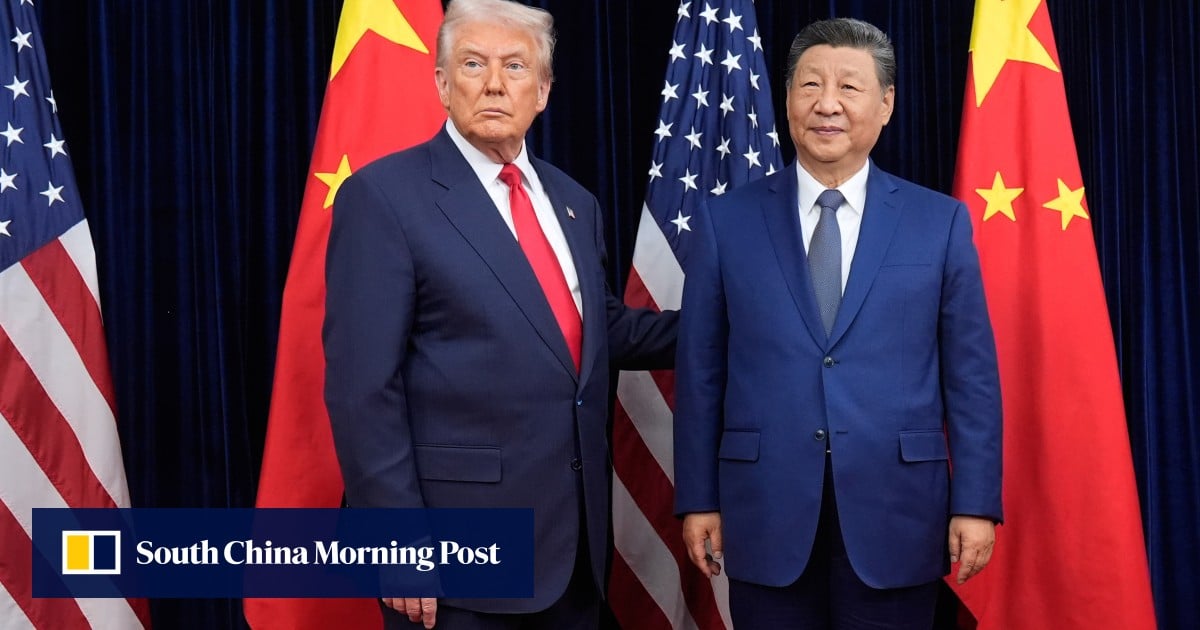
China and the US are likely to secure several “very positive” outcomes but not a “grand bargain” at their presidential summit in April, according to the board chief of a major American business lobby.

James Zimmerman, chairman of the American Chamber of Commerce in China, said on Friday that “the optics [of] announcing deals” such as aircraft and soybean sales might be US President Donald Trump’s main objective for his meeting with Chinese counterpart Xi Jinping in Beijing this spring.

Speaking at an event at the Lowy Institute think tank in Sydney, the Beijing-based lawyer said another issue “still out there” was for China to invest in manufacturing in the United States. He added that China had shown receptiveness to such proposals but would require “protection” in return.

“Apparently there is a discussion about the possibility of Beijing setting up a fund to encourage Chinese investors to make manufacturing investment in the US, and similar to that encouraged of Japan, Taiwan and South Korea,” Zimmerman said.

“You won’t see a grand bargain worked out at the April meeting, but you may see certain deliverables that are very positive,” he said during the talk, adding that the pressure of the US midterm elections in November could contribute to Trump’s eagerness for those outcomes.

His comments came a day after China confirmed that discussions were under way about Trump’s visit.

Free Training

Source link

ZS2 Expands U.S. Manufacturing Through Supreme Insulated Panel Systems Integration


Strategic manufacturing expansion will strengthen material availability for high-performance construction projects across the U.S.

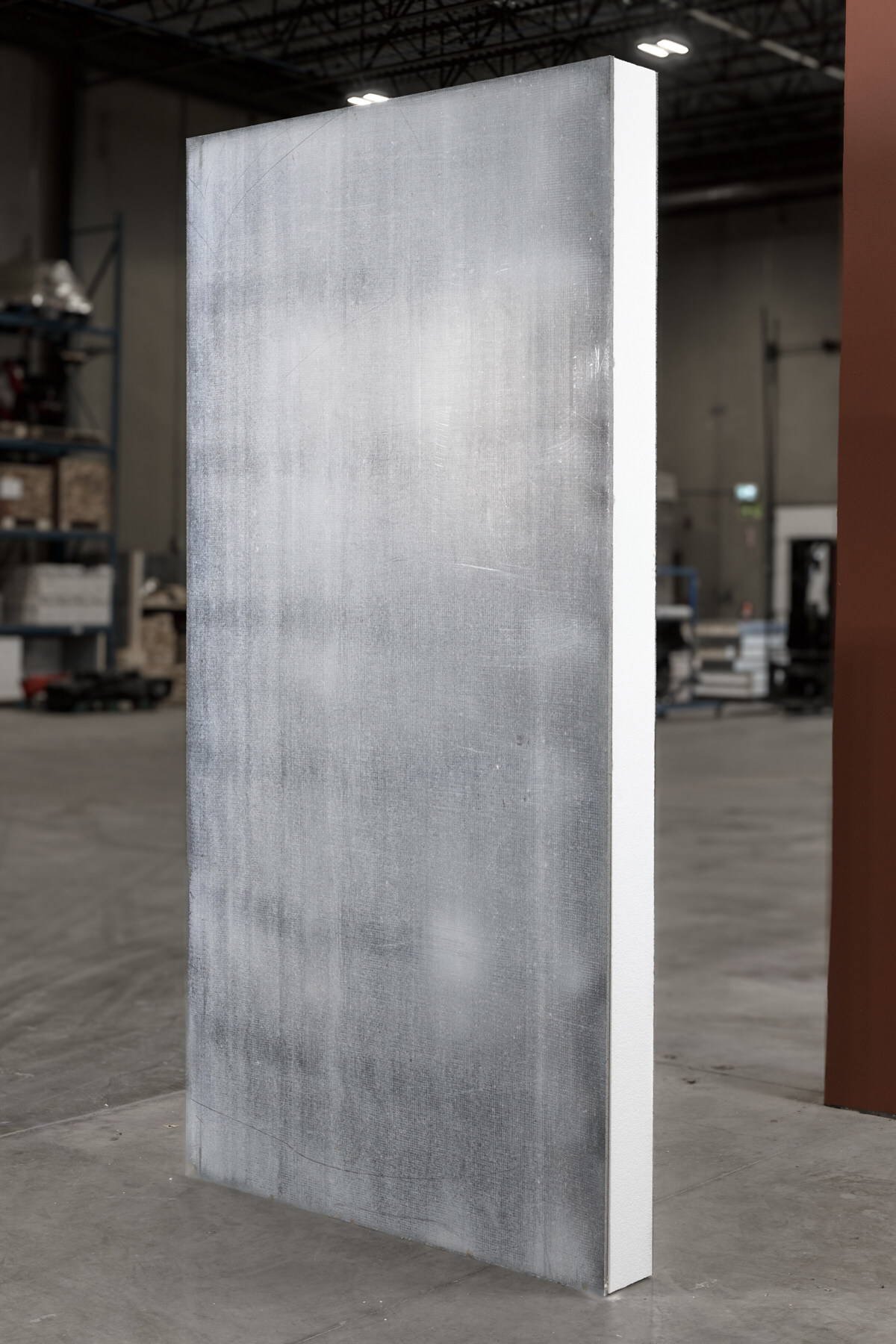
ZS2 TechPanel® integrates magnesium cement sheathing and insulation into a high-performance panelized system manufactured for climate resilience. Increased U.S. production capacity supports growing demand across North American construction markets. (CNW Group/ZS2 Technologies Ltd.)

CALGARY — ZS2 is expanding its North American manufacturing footprint into the United States through the integration of manufacturing assets from Supreme Insulated Panel Systems LLC, based in Mobile, Alabama. This expansion increases available production capacity for magnesium cement panelized building systems to support growing demand across U.S. and Caribbean construction markets.

Per a Feb. 12 press release, as demand continues to reportedly grow for materials that improve fire performance, durability, and long-term building resilience, expanding manufacturing capacity to meet increasing demand in key Southern and Eastern United States markets helps accelerate adoption of these systems while strengthening domestic access to advanced construction materials.

“Demand for higher-performance building materials is accelerating across North America as the industry responds to climate risk, insurance pressure, and evolving building performance expectations,” said Scott Jenkins, CEO, ZS2 Technologies. “Expanding manufacturing capacity into the United States strengthens the industry’s ability to access advanced building systems at scale and supports long-term material innovation across the built environment.”

Per the press release, Supreme Insulated Panel Systems has served residential and commercial construction markets with energy-efficient insulated panel systems. Their manufacturing background is being combined with ZS2’s magnesium cement technology to try and support broader adoption of higher-performance building envelope systems across U.S. construction markets.

Production capabilities at the Mobile facility are being phased in alongside standard third-party certification and facility qualification processes, with additional listed production capabilities expected to come online as certification pathways are completed later this year.

Free Training

Source link

Why Modernizing Existing Manufacturing Has Become a Strategic Advantage for U.S. Industry in 2026


Can the United States remain competitive in the era of advanced manufacturing without relying exclusively on building new factories and completely replacing existing equipment? This question is increasingly raised not only in academic discussions but also at the level of individual production facilities. It has become clear that the core challenge lies not so much in a lack of capital or technology, but in the ability to adapt and modernize existing production systems without halting operations.

According to data from the U.S. Census Bureau and the Bureau of Economic Analysis, the U.S. trade deficit in goods and services exceeded $918 billion in 2024, increasing by approximately 17 percent compared to 2023. At the same time, the deficit in the Advanced Technology Products category remained consistently high throughout 2023-2025, pointing to structural limitations in adapting existing industrial capacity to the requirements of modern manufacturing.

In practice, this issue is particularly acute at facilities that rely on non-standard or highly customized equipment. Such production lines cannot simply be shut down for months to allow for a complete replacement of machinery or control systems. Any prolonged downtime results in contract failures, direct financial losses, and disruptions to supply chains. Under these conditions, modernization ceases to be a one-time investment and instead becomes a continuous engineering process that requires rapid diagnostics, phased solutions, and a deep understanding of production logic.

After industrialization, the same challenge inevitably emerges: equipment can be purchased, but it is far more difficult to find specialists capable of maintaining it, quickly identifying failures, and simultaneously adapting production systems to new market demands. “Once any production system is launched, specialists are needed who can go beyond routine maintenance and evaluate equipment performance at the level of the entire technological chain, identifying critical points and implementing solutions to modernize both equipment and production processes,” notes applied mechanics engineer Mykola Nazarenko.

Today, such highly qualified engineers form a hidden competitive advantage for American industry. The decisive factor is the ability of engineering teams to carry out modernization within active production environments while minimizing downtime and capital expenditures.

Nazarenko’s approach differs fundamentally from the traditional model of a maintenance engineer. He works as a systems diagnostic engineer, structuring his process around a comprehensive analysis of the production cycle and equipment interdependencies. This makes it possible to identify accumulated engineering compromises and bottlenecks and only then proceed with the phased modernization of control systems, automation, and equipment interaction. This approach improves reliability and productivity without the need for capital-intensive full machine replacement.

Nazarenko’s professional experience was shaped in environments where the cost of error was measured not in theory, but in direct financial losses. From 2020 to 2022, he was responsible for the uninterrupted operation of complex production lines at the woodworking enterprise LLC FPK Korobel. The production environment did not allow for extended downtime: stopping a line meant immediate financial losses. It was there that he implemented a phased equipment modernization practice that stabilized production and extended machine service life through process and control system optimization rather than mechanical component replacement.

After relocating to the United States in 2022, this experience proved directly applicable. At Toufayan Bakery, a large-scale food manufacturing operation with a continuous production cycle, Nazarenko advanced from equipment operator to production supervisor within one year. His role included not only shift management but also support for CNC equipment and automated lines operating under high load. During this period, the frequency of emergency stoppages was reduced, line stability improved, and production scheduling became more predictable, directly enhancing the company’s operational efficiency.

A sound engineering approach often becomes the key driver of modernization. “My experience shows that the longer a person works within a single system, the fewer opportunities for adaptation and improvement they tend to see. Over time, a habituation effect emerges, and production begins to be maintained by inertia,” Nazarenko observes. His approach is based on identifying such “blind spots” and systematically re-evaluating processes that have long been considered unchangeable.

In 2025, Nazarenko continued his professional career in the United States after receiving a confirmed job offer from Fair Wind East Inc., a company specializing in the manufacture and repair of marine canvas structures and upholstery for boats and yachts. Most products are made to the individual dimensions of a specific vessel, and the quality and stability of production equipment directly determine schedule adherence and contract fulfillment. His responsibilities include rapid diagnostics, optimization, and phased modernization of production equipment and workflows with minimal downtime.

In the broader context of U.S. industry during 2023-2025, it has become evident that the limitations of advanced manufacturing are not solely financial but also structural and engineering-related. The persistent deficit in industrial and high-technology products underscores the need to adapt existing capacity to evolving market requirements.

Mykola Nazarenko represents a type of engineering expertise that enables the United States to remain competitive not by rebuilding everything from scratch, but by gaining an advantage through the intelligent modernization of existing production systems. Such specialists strengthen the resilience of American industry where real competitiveness is determined – on the shop floor, at the level of equipment and processes that directly shape the future of U.S. manufacturing.

Free Training

Source link

U.S. lawmakers move to reverse Canadian tariffs amid manufacturing concerns


The United States House of Representatives has voted to overturn tariffs on Canadian imports, delivering a rare bipartisan rebuke of the administration’s trade policy and offering a measure of relief to North American manufacturers and cross-border supply chains.

Lawmakers backed a resolution disapproving of the “national emergency” used to justify tariffs that President Donald Trump imposed last year on Canadian goods, which critics say have raised costs for U.S. consumers and businesses. The chamber approved the measure 219–211, with six Republicans joining nearly all Democrats in support.

Although the resolution is largely symbolic, due to the fact it would likely face a presidential veto and require a two-thirds majority to override, the vote highlights growing unease in Congress about the economic effects of unilateral trade actions on manufacturing sectors and allied relationships.

Industry and political pressure

Manufacturers that depend on integrated North American supply chains argued the tariffs have disrupted production and raised input costs, complicating planning and competitiveness. Some lawmakers echoed these concerns, saying Congress should reclaim authority over trade policy and protect jobs and economic stability at home.

Proponents of the rollback emphasized that Canada is a close ally and critical trading partner, particularly in automotive parts, machinery and raw materials — sectors heavily intertwined with U.S. manufacturing. Critics of the tariffs point to data showing that much of the tariff burden falls on U.S. consumers and importers rather than on foreign exporters.

The resolution now moves to the U.S. Senate, where a similar bipartisan vote has already occurred, though passage and enactment remain uncertain. Business leaders and lawmakers say long-term stability will depend on broader cooperation on trade and updated policies that reflect the realities of continental manufacturing integration.

Free Training

Source link

Manufacturing jobs in the United States declined in 2025


I would say the Trump tariffs are not helping. I mean, mostly because there’s no larger coherent plan attached to them. Like they’re very chaotic in terms of like what country faces what raid and maybe that changes and it differs across industry. And even the rationale, like sometimes the tariffs are invoked as we’re trying to bring back manufacturing jobs. Sometimes they’re somehow related to things like fentanyl, and what they’re doing in the meantime is they’re making imports or inputs into *** lot of manufacturing goods. And so when they get more expensive, all of *** sudden the output of manufacturing. Firms gets very expensive and not competitive in global markets and other countries retaliate and we’ve seen *** really big reduction in manufacturing exports as *** share of the total economy so I think all in all um there’s just no plan here and the tariffs have definitely done more damage than help.

Get the Facts: Are Trump’s tariffs bringing back manufacturing jobs? Here’s the data

KOCO logo

Updated: 4:40 PM CST Feb 11, 2026

Editorial Standards ⓘ

When President Donald Trump announced “reciprocal” tariffs last April, he promised it would help revitalize America’s manufacturing industry. Since that announcement, employment in the manufacturing industry has been in decline, according to an analysis by the Get the Facts Data Team using data from the Bureau of Labor Statistics.The loss of manufacturing jobs coincides with the softening in the labor market, said Josh Bivens, chief economist at the Economic Policy Institute, a Washington, D.C.-based nonpartisan think tank. There were about 12.2 million manufacturing employees in the sector when former President Joe Biden began his term. By the end of December 2024, near the end of his administration, the U.S. had about 12.7 million manufacturing employees.A year later, that number dropped by 108,000, according to the latest BLS jobs report. The industry has seen job losses each month since January 2025, but added 5,000 last month. Manufacturing is a major sector of the U.S. economy and supports other industries. But over the past 25 years, it’s been battered by globalization and policy mistakes that have put pressure on the industry, said Bivens. During the 2008 financial crisis, the manufacturing sector had steep job losses. Job growth began stabilizing in the late 2010s and held steady through the end of 2019 under President Trump’s first term. However, employment declined again following COVID-19. Since 2000, the sector has lost approximately five million jobs.Another challenge the industry is facing right now: Trump’s tariffs. According to Bivens, tariffs are currently doing more damage than helping the sector. Tariffs make imports expensive, which also makes manufacturing outputs expensive, making it harder for firms to compete in global markets. Countries can also retaliate and add their own tariffs on their goods.But Bivens points out tariffs can be beneficial in some cases; however, what he’s seeing from this administration doesn’t show evidence of a larger plan, and tariff decisions tend to be erratic. Some U.S. states, particularly in the Midwest, have a higher share of manufacturing jobs and rely on the sector. But more than half of U.S. states had a decline in manufacturing employment over the past year. Alaska had the steepest percentage drop at 6%, a loss of 800 employees. Montana and Oregon followed, with declines of roughly 5% and 3%.California, Texas and Ohio have the highest total number of manufacturing employees, but only Ohio reported job growth, gaining 8,500 employees over the year. California lost 32,600 employees, a 2.3% loss. “Manufacturing is still a place where you have a lot of workers without a college degree,” said Bivens. “When they lose a manufacturing job, they’re a little less likely to find a job with equivalent pay and equivalent benefits.” PHNjcmlwdCB0eXBlPSJ0ZXh0L2phdmFzY3JpcHQiPiFmdW5jdGlvbigpeyJ1c2Ugc3RyaWN0Ijt3aW5kb3cuYWRkRXZlbnRMaXN0ZW5lcigibWVzc2FnZSIsKGZ1bmN0aW9uKGUpe2lmKHZvaWQgMCE9PWUuZGF0YVsiZGF0YXdyYXBwZXItaGVpZ2h0Il0pe3ZhciB0PWRvY3VtZW50LnF1ZXJ5U2VsZWN0b3JBbGwoImlmcmFtZSIpO2Zvcih2YXIgYSBpbiBlLmRhdGFbImRhdGF3cmFwcGVyLWhlaWdodCJdKWZvcih2YXIgcj0wO3I8dC5sZW5ndGg7cisrKXtpZih0W3JdLmNvbnRlbnRXaW5kb3c9PT1lLnNvdXJjZSl0W3JdLnN0eWxlLmhlaWdodD1lLmRhdGFbImRhdGF3cmFwcGVyLWhlaWdodCJdW2FdKyJweCJ9fX0pKX0oKTs8L3NjcmlwdD4=

When President Donald Trump announced “reciprocal” tariffs last April, he promised it would help revitalize America’s manufacturing industry.

Since that announcement, employment in the manufacturing industry has been in decline, according to an analysis by the Get the Facts Data Team using data from the Bureau of Labor Statistics.

The loss of manufacturing jobs coincides with the softening in the labor market, said Josh Bivens, chief economist at the Economic Policy Institute, a Washington, D.C.-based nonpartisan think tank.

There were about 12.2 million manufacturing employees in the sector when former President Joe Biden began his term. By the end of December 2024, near the end of his administration, the U.S. had about 12.7 million manufacturing employees.

A year later, that number dropped by 108,000, according to the latest BLS jobs report. The industry has seen job losses each month since January 2025, but added 5,000 last month.

Manufacturing is a major sector of the U.S. economy and supports other industries. But over the past 25 years, it’s been battered by globalization and policy mistakes that have put pressure on the industry, said Bivens.

During the 2008 financial crisis, the manufacturing sector had steep job losses. Job growth began stabilizing in the late 2010s and held steady through the end of 2019 under President Trump’s first term. However, employment declined again following COVID-19. Since 2000, the sector has lost approximately five million jobs.

Another challenge the industry is facing right now: Trump’s tariffs. According to Bivens, tariffs are currently doing more damage than helping the sector. Tariffs make imports expensive, which also makes manufacturing outputs expensive, making it harder for firms to compete in global markets. Countries can also retaliate and add their own tariffs on their goods.

But Bivens points out tariffs can be beneficial in some cases; however, what he’s seeing from this administration doesn’t show evidence of a larger plan, and tariff decisions tend to be erratic.

Some U.S. states, particularly in the Midwest, have a higher share of manufacturing jobs and rely on the sector.

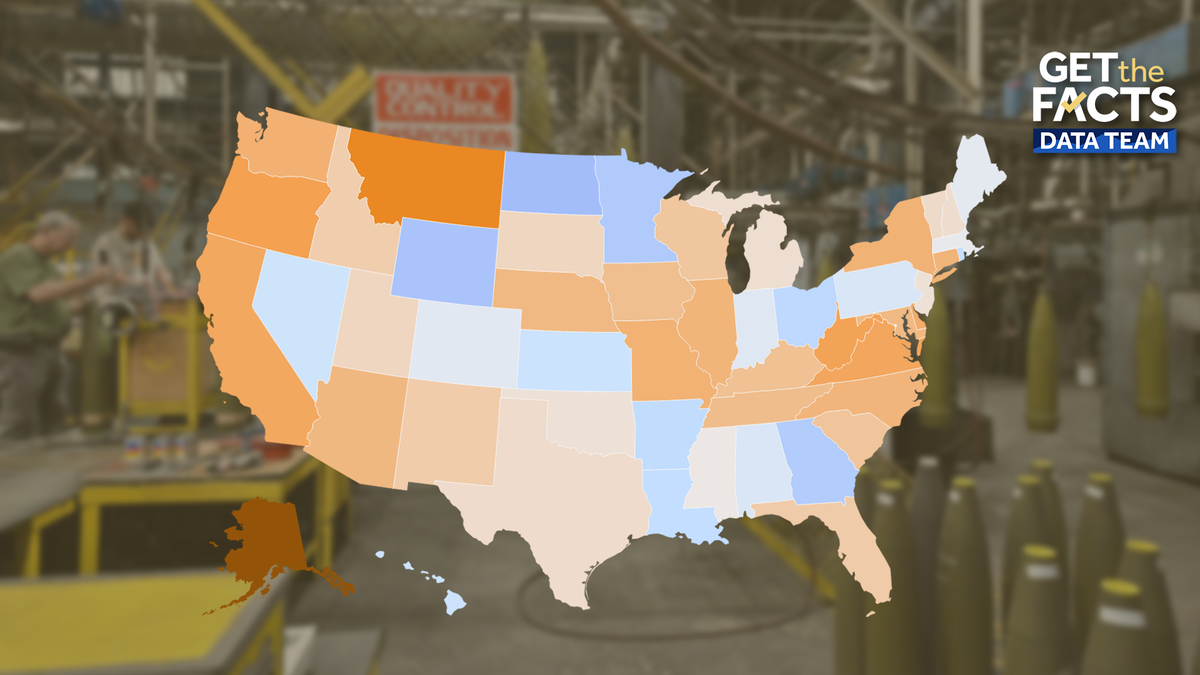
But more than half of U.S. states had a decline in manufacturing employment over the past year. Alaska had the steepest percentage drop at 6%, a loss of 800 employees. Montana and Oregon followed, with declines of roughly 5% and 3%.

California, Texas and Ohio have the highest total number of manufacturing employees, but only Ohio reported job growth, gaining 8,500 employees over the year. California lost 32,600 employees, a 2.3% loss.

“Manufacturing is still a place where you have a lot of workers without a college degree,” said Bivens. “When they lose a manufacturing job, they’re a little less likely to find a job with equivalent pay and equivalent benefits.”

Free Training

Source link

Manufacturing Construction Spending Declines Despite Trump’s “41% Up” Claim


Spending to build and expand U.S. manufacturing facilities has fallen since President Donald Trump returned to office, according to U.S. Census Bureau figures — a trend that conflicts with the president’s repeated assertion that factory construction is soaring.

Trump has frequently cited a “41% increase” in factory investment, portraying it as proof that his trade and economic policies are fueling a manufacturing boom.

“Investment in American factories is up 41%. That’s a record. Nobody goes 41% up. You go 2% up, 1% up. You go down by 3%. If Kamala [Harris] got elected, the 41% up would be 41% down,” Trump said at a White House press conference on Jan. 20.

Courtesy: Photo by Schiba on Unsplash

He repeated the claim the next day at the World Economic Forum in Davos:

“Factory construction is up by 41%, and that number is really going to skyrocket right now, because that’s during a process that they’re putting in to get their approvals and we’ve given very, very quick, fast approvals.”

FactCheck.org reviewed the underlying data and found a different picture: manufacturing construction spending peaked in 2024 during the Biden administration and has edged downward since.

What the Census Data Actually Show

Under President Joe Biden, manufacturing construction experienced an unprecedented surge. Annual average spending rose more than 200%, climbing from $75.5 billion in 2021 to $235.6 billion in 2024, driven largely by the bipartisan CHIPS and Science Act and post-pandemic reshoring.

Economist Anirban Basu of the Associated Builders and Contractors explained the early momentum:

“Supply chain disruptions at the start of the COVID-19 pandemic convinced many producers to reshore capacity, while a sudden and sharp increase in construction materials prices—which rose more than 40% during the early years of the pandemic—also boosted nominal construction spending.”

However, quarterly Census data indicate that from late 2024 through the third quarter of 2025 — Trump’s first months back in office — spending declined 6.7%. Monthly figures show a 7.3% drop from January to October 2025.

The American Institute of Architects expects further cooling:

“Manufacturing construction spending has seen phenomenal growth… However, growth paused last year as spending in this category fell about 5% and is projected to decline another 4% this year and 1% in 2027.”

Where the “41%” Figure Came From

After multiple inquiries, the White House told FactCheck.org it compared January–August 2025 spending with the average of 2021–2024, producing roughly a 40% increase. But the methodology ignores that the entire surge occurred under Biden and that spending has since softened.

Basu attributed the recent slowdown partly to Trump’s tariff policies:

“With CHIPS Act-enabled megaprojects winding down and the stiff headwind of trade policy, manufacturing construction spending has fallen by nearly 10% over the past 12 months.”

He added that 2025 activity remains elevated “largely due to the surge in megaproject activity induced by the CHIPS Act.”

Tariffs have also pushed up costs:

“[I]t should be noted that spending in the fabricated metal manufacturing subsegment is up 19% over the past year. Some of the increase can be contributed to tariffs and the resulting increase in demand for domestic production.”

Jobs Haven’t Followed the Spending

Despite billions poured into new facilities, manufacturing employment has continued to slip. The Bureau of Labor Statistics shows the economy lost 63,000 manufacturing jobs in Trump’s first 11 months, following a loss of 98,000 in the prior 11 months.

Industry observers say job growth may come later. A December 2024 article in Manufacturing Today noted:

“Unlike traditional industrial projects, today’s semiconductor and clean energy facilities require longer timelines. Factories of this scale can take two to three years to complete… This extended timeline means the full benefits will not be realized for several more years.”

Courtesy: Photo by Pixabay on Pexels

Basu agreed but warned tariffs could blunt those gains:

“The massive facilities incentivized by the CHIPS Act will employ thousands of people. That said… recent trade policy and the effects on manufacturing input prices have put downward pressure on the industry’s employment.”

Mixed Views on Tariffs

Some analysts remain optimistic. Morgan Stanley’s Chris Snyder called tariffs “a positive catalyst” for relocating production:

“What we’re seeing is the cost of imports have gone higher with tariffs, and now it’s more economically advisable for these companies to make the product in the United States.”

Others disagree. The Wall Street Journal reported that tariffs “haven’t worked, so far,” increasing costs and creating uncertainty that executives view as “a lost year for investment.”

Bottom Line

While factory construction remains historically high, the recent trajectory under Trump is downward, not upward. The oft-repeated 41% claim relies on a comparison that credits Biden-era spending to the current administration.

As FactCheck.org concluded, “factory construction so far has declined under Trump and his claim that it has increased 41% depends on a spending surge that occurred under Biden.”

Originally reported by Eugene Kiely in Fact Check.

Free Training

Source link

Japanese manufacturer selects San Antonio for first U.S. facility, headquarters


Sanko Texas Corporation will break ground on its first U.S. plant in San Antonio, highlighting the city’s economic growth and strengthening U.S.-Japan trade ties.

SAN ANTONIO — Sanko Texas Corporation, a Japanese manufacturer, will break ground Wednesday on its first U.S. manufacturing facility, marking the company’s initial expansion into the United States and the establishment of its U.S. headquarters in San Antonio.

The groundbreaking ceremony is scheduled for 11:15 a.m. Wednesday, Feb. 11, 2026, at the Sanko Texas Corporation site at 16586 Watson Road in southern Bexar County.

Local and regional officials said the investment reflects San Antonio’s strengths in workforce talent, infrastructure and business climate, which have helped attract global manufacturers. By choosing San Antonio, Sanko joins a rapidly growing advanced manufacturing sector in Texas that plays a significant role in regional economic growth.

The project also highlights economic ties between the region and Japan, while reflecting coordinated efforts by local and regional partners to attract international investment.

Expected to attend the ceremony are Bexar County Judge Peter Sakai; San Antonio Mayor Gina Ortiz Jones; Bexar County Commissioner Rebecca Clay-Flores of Precinct 1; San Antonio City Councilwoman Phyllis Viagran of District 3; members of Sanko leadership and local business leaders.

Free Training

Source link

Manufacturing plant headed to Upper Macungie – Lehigh Valley Press


Eli Lilly and Company and the Lehigh Valley are joining together to build a new state-of-the-art manufacturing facility that will be designed for the research and production of injectable weight loss medications.

On Jan. 30 at Curiosity Hall in the Da Vinci Science Center, Allentown, an assortment of community members, business and political stakeholders joined Eli Lilly and Company Chair and Chief Executive Officer Dave Ricks and Pennsylvania Gov. Josh Shapiro to announce a major collaboration.

Ricks said it is expanding manufacturing sites in the United States and considered 800 applicants for this project before choosing the Lehigh Valley. He credits the tenacity of Shapiro as this project will come to fruition at a site in Upper Macungie.

“Our mission starts with patients and delivering the medicines they need. To meet increasing demand, we’re expanding our U.S. manufacturing network, with Lehigh Valley adding capacity for next‑generation weight-loss medicines. We’re creating high‑quality jobs and collaborating across the region – with suppliers, educators and workforce development partners – to make critical medicines in the U.S.,” Ricks said. “That’s our commitment – to patients, to our new Pennsylvania home and to our country.”

The property in Upper Macungie Township, owned by the Jaindl Corporation (under contract to buy), will be the “single largest investment in economic development since the days of Bethlehem Steel,” said Lehigh Valley Economic Development Corporation president and CEO Don Cunningham. Manufacturing in Pennsylvania is 4 percent higher than the national average and is the largest industry within the state. Lilly proposes to invest $3.5 billion in this specific project. This will boost the Lehigh Valley economy on many levels.

For every dollar Lilly invests, it estimates up to $4 in additional local economic activity.

Ricks said Lilly is committed to the community and an interactive workforce development by including existing businesses and educational opportunities in its program. Lilly will connect with local nonprofits and encourage volunteerism.

Lehigh County Executive Josh Siegel pointed out, “Things are still made in the valley and we should be proud of that. This is more than creating jobs and buildings; it is creating futures and careers for our residents and their families.”

This project will employ 850 engineers, scientists, operations personnel and lab technicians.

Lehigh Valley Building and Construction Trades Council President Paul Anthony pointed out the many benefits of the shared commitment to building a safe, quality facility by skilled union tradesmen. “Government, businesses and labor, working together has made this project happen,” Anthony said.

This project will offer employment in the building trades, as well as apprenticeships leading to skilled union jobs. Construction is expected to begin this year and expects to create 2,000 construction jobs. The site will be operational in 2031.

Shapiro also pointed out the permitting reforms, the Pennsylvania Economic Development for a Growing Economy (PA EDGE), a collection of tax credit programs designed to attract new investments from businesses in critical manufacturing sectors, as well as The Pennsylvania Strategic Investments to Enhance Sites Program (PA SITES), established to provide grant and loan funding to eligible applicants, helped this project.

PA SITES invested an initial $500,000.

The PA SITES program encourages businesses to build or relocate within Pennsylvania. The funding for the program includes two components that support the development of competitive sites within the commonwealth, and expansion of existing sites. Funding is made available through planning grants, construction grants and loans

Ricks said this project is where “Curiosity meets Capability.” He reminded the audience of Lilly’s long history with pharmaceuticals starting post-Civil war. The emphasis was on defining ingredients and making safe, quality, accessible and affordable drugs for all Americans.”

The Lilly name will be seen throughout the valley.

“If it bares the red Lilly, you know it’s right,” Ricks said.

Gov. Josh Shapiro and Eli Lilly and Company CEO Dave Ricks place the Lilly pin/marker on the map of the Lehigh Valley, denoting where Lilly will make their mark.

PRESS PHOTOS BY JENN RAGOEli Lilly and Company and the Lehigh Valley are joining together to build a new state-of-the-art manufacturing facility where 850 new pharmaceutical jobs and 2,000 union construction jobs will be available in the Lehigh Valley with the proposed manufacturing plant in Upper Macungie Township.

Lehigh Valley Economic Development Corporation President and CEO Don Cunningham points out this was a bipartisan effort. Cunningham was instrumental in unifying all parties involved in this project.

“We still make things happen here [in the valley. This project shows government delivering,” Lehigh County Executive Josh Siegel tells the crowd.

Eli Lilly and Company Chair and Chief Executive Officer Dave Ricks tells the audience “800 municipalities and sites were considered for this project.” Upper Macungie Township was chosen for Lilly’s injectable manufacturing plant.

Free Training

Source link