Morph Systems, a defense industry and U.S. manufacturing data integration platform developer, announ..


Defense & U.S. Manufacturing Data Platform
Palantir Foundry Technology Utilization

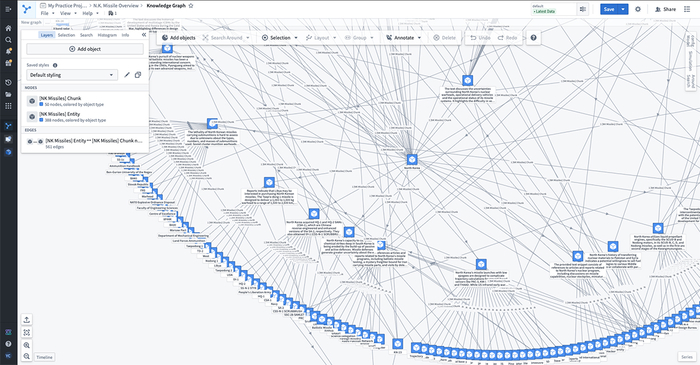
A case of Morph Systems' ontology construction that can identify relationships between unstructured data [Morph Systems] 사진 확대 A case of Morph Systems’ ontology construction that can identify relationships between unstructured data [Morph Systems]

Morph Systems, a defense industry and U.S. manufacturing data integration platform developer, announced on the 20th that it has attracted pre-seed investment from Mashup Ventures and 500 Global.

Morph Systems is an enterprise AI company that designs supply chain data and workflow for defense and U.S. manufacturing companies that are pushing for utilization advancement after the introduction of Palantir. Establish an ontology model that systematically defines data relationships according to the customer’s work context, and design data flows so that ERP (company resource management), logistics, settlement, and operation data can lead to actual decision-making and execution.

In addition, for organizations in the early stages of Palantir introduction, data and work structure design is also being carried out considering future expansion. Customers can have a data processing structure and a high-performance computing environment that can operate stably even if the supply chain expands. The technological excellence of these morph systems is advantageous not only at the manufacturing site, but also in the military and defense industry environment that requires large-scale material movement and strict traceability.

CEO Park Min-gyu, a graduate of Seoul National University’s Department of Aerospace Engineering, has published a number of international academic papers in the field of reinforcement learning, served as an AI researcher at the Korea Military Academy, and conducted defense and public AI projects. While working on a Palantir Foundry-based consulting project, he discovered the demand for data integration in the manufacturing and defense industries and decided to start a business. Co-founder Koo Ha-rim is a graduate of the Department of Mechanical Engineering at the National University of Singapore and has two startup experiences and is in charge of data integration and AI system implementation directly in the field.

Morph Systems expects 40% of its sales to come from U.S. customers since its first year, and to expand to more than 80% this year. Recently, in recognition of the excellence of data integration technology that can handle large-scale supply chains stably, it was selected for the TIPS program organized by the Ministry of SMEs and Startups and secured up to 500 million won in R&D funds. The selection of this tip was made on the recommendation of Mashup Ventures.

“After attracting this investment, we plan to implement a large-scale ontology-based computational and decision-making operation system centered on the U.S. market,” said Park Min-gyu, CEO of Morph Systems. “The ultimate goal is to expand to Neo-Cloud infrastructure and software layers optimized for specific industries and workloads based on our experience in operating field-oriented AI systems.”

Lee Seung-guk, a Mashup Ventures partner who led the investment, said, “The demand for data integration and decision-making automation is increasing rapidly in the process of re-industrialization and supply chain reorganization in the United States. Morph Systems is a team that solves core problems in the manufacturing and defense industry based on Palantir Foundry-based data integration technology and field-oriented experience, and it is expected to grow quickly in the U.S. market.”

Free Training

Source link

FBR secures conditional order for Mantis welding robot to support US manufacturing


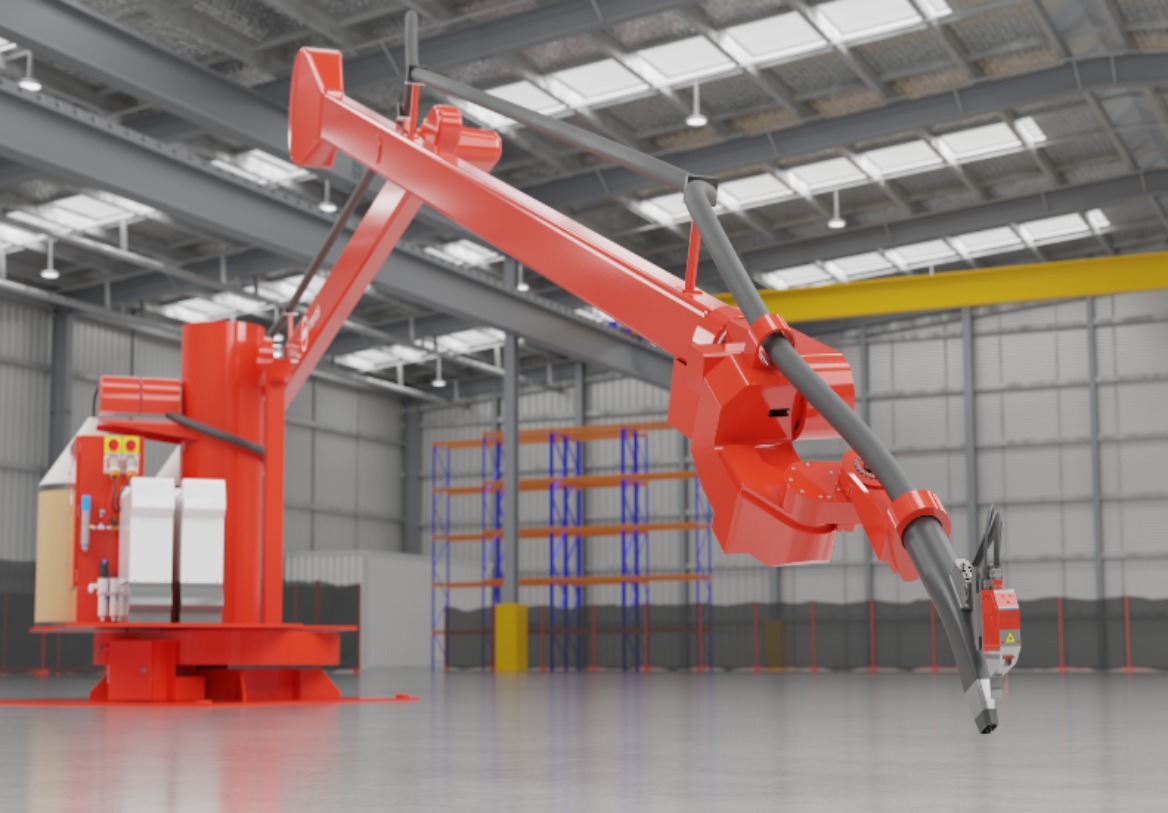
FBR’s Mantis™. Image credit: FBR

Robotic technology company FBR Limited has received a binding conditional purchase order valued at AUD 990,000 for its Mantis welding robot, in a deal aimed at supporting manufacturing operations in the United States.

In a news release, the company said the order has been placed by State Machinery & Equipment Sales, a Louisiana-based dealer for heavy equipment brands, which intends to use the Mantis robot in the manufacture of barges at its facility on the Mississippi River. 

FBR stated delivery is anticipated in the second half of calendar year 2026.

According to FBR, the purchase order is conditional on the successful completion of a Factory Acceptance Test to be conducted at the company’s Western Australian facility. 

The test will involve Mantis welding a sub-assembly of a hopper barge, with welding speed and quality independently assessed through non-destructive testing in line with AWS D1.1 standards.

Once the Factory Acceptance Test is completed to specification, AUD 450,000 of the contract value will become payable, with a further AUD 450,000 due on delivery and the remaining AUD 90,000 payable three months after delivery. 

The contract also includes installation and training services to be provided by FBR in Louisiana.

FBR chief executive officer Mark Pivac said the order reflects early interest in the technology despite it still being in the prototyping phase. “We are very pleased to have secured a binding conditional purchase order for Mantis while we’re still in the prototyping phase, which is indicative of the strong demand we’ve had for the product already,” he said. 

He added that the company looks forward to demonstrating the system’s welding performance during the acceptance testing process.

State Machinery president Ed Renton said the company sees the technology as an opportunity to enhance its manufacturing capability. “As the foremost dealer of heavy equipment in Louisiana, State Machinery has a lot of experience in manufacturing and construction equipment, and we are very excited to get our hands on the first Mantis® in the world,” he said.

“We are pleased to be working with the team to bring their robotic welding technology to the United States to boost our manufacturing capability.”

The content of this article is based on information supplied by FBR Limited. For more information, please refer to the official company announcement and communications from FBR. Please consult a licensed and/or registered professional in this area before making any decisions based on the content of this article.

Free Training

Source link

NOVEON MAGNETICS COMPLETES $215 MILLION SERIES C TO EXPAND U.S. RARE EARTH MAGNET MANUFACTURING CAPACITY


Financing Round Led by One Investment Management Supports Expansion of Domestic Rare Earth Magnet Production and Facilitates Secondary Share Sale

SAN MARCOS, Texas, Jan. 19, 2026 /PRNewswire/ — Noveon Magnetics, Inc. (Noveon), a leading U.S. manufacturer of sintered rare earth permanent magnets, today announced the close of a $215 million Series C financing led by a $200 million investment from One Investment Management (OneIM). The capital will fuel significant growth of Noveon’s domestic rare earth magnet manufacturing capacity as demand accelerates across key sectors — including automotive, defense, AI, energy, and advanced manufacturing — and as the need to reshore critical U.S. supply chains becomes increasingly important. In addition, today’s Series C financing facilitates secondary sales by certain existing shareholders.

As part of the transaction, OneIM will appoint two new Series C board members.

“This financing marks a pivotal step in scaling Noveon’s production capabilities to meet rapidly growing customer demand,” said Scott Dunn, CEO of Noveon. “With the support of OneIM, we are accelerating deliveries of high-performance rare earth magnets produced entirely in the United States — scaling capacity, capability, and strengthening supply chain resiliency for our customers.”

Noveon was the first company to reshore full-scale production of sintered rare earth magnets to the United States. This investment positions Noveon to accelerate its growth trajectory by expanding capacity beyond 2,000 tons per year, enabling the company to support existing commercial partners and capture growing demand from critical industries requiring high-performance, high-quality magnetic materials.

Rare earth permanent magnets are essential to automotive systems, defense platforms, AI and data storage technologies, robotics, and advanced manufacturing applications. Noveon’s American manufacturing platform directly addresses long-standing supply chain vulnerabilities, delivering reliable, high-performance magnet solutions.

“Noveon is uniquely positioned to lead the reshoring of the rare earth magnet industry at a time when supply chain security and domestic manufacturing capacity are national priorities,” said Rajeev Misra, CEO and Co-Founder of OneIM. “The company has assembled exceptional talent and built the technical skills, operational expertise, and execution discipline required to scale U.S. rare earth magnet manufacturing. We are proud to support Noveon’s next phase of growth and I look forward to supporting the company as it builds capacity that can truly meet the moment.”

Over the last 12 months, Noveon has achieved several significant milestones, including entering into multi-year supply agreements with General Motors and ABB, forming strategic partnerships with Lynas and Solvay to help create a more resilient supply chain, and entering into a closed-loop magnet recycling initiative with LG Electronics and Kangwon Energy. These milestones have strengthened Noveon’s position as a leader in sintered NdFeB magnets and have laid the groundwork for offering a fully domestic, vertically integrated solution for rare earth magnets.

“I am incredibly proud of what our team has accomplished over the past year,” added Scott Dunn. “We look forward to building upon our strong momentum with support from our new and existing partners to deliver on our mission to reshore critical magnet production to the United States.”

Goldman Sachs & Co. LLC served as exclusive financial advisor to Noveon. 

About Noveon
Noveon is the only operational manufacturer of sintered NdFeB rare earth magnets in the United States and the first to reshore them in over 20 years. Through its proprietary EcoFlux™ technology, Noveon delivers a fully domestic, closed-loop magnet manufacturing capability that maximizes resource efficiency, allows for the beneficial use of recycled materials, and produces superior high-performance finished magnets that meet the full range of commercial and industrial demand. Noveon’s products provide a secure and resilient supply chain solution for critical applications including electric vehicles, wind turbines, robotics, motors, pumps, data storage, consumer electronics, and defense systems. Learn more at https://noveon.co/.

About OneIM
OneIM is a global alternative investment manager that invests across the capital structure, in a range of asset classes, industries and geographies. The firm applies a flexible investment approach and focuses on creating long-term value by working with exceptional partners and management teams. OneIM is sector agnostic and focuses on situations where it can leverage its cross-asset class expertise and capital base to achieve differentiated risk-adjusted returns. The firm was founded in 2022 and currently manages approximately $10 billion in assets. The team operates from offices in Abu Dhabi, London, Tokyo and New York.

Free Training

Source link

Taiwan to invest $250B in US semiconductor manufacturing under new deal


Stock image. Image credit: IM Imagery/stock.adobe.com

The American Institute in Taiwan and the Taipei Economic and Cultural Representative Office have signed a trade agreement that will build new semiconductor factories in the United States.

The deal involves Taiwanese tech companies investing at least USD 250 billion (AUD 374 billion) in production facilities in the United States in exchange for a restructured U.S. tariff framework on Taiwanese industrial and pharmaceutical goods.

Under this agreement, tariff rates for Taiwanese goods are now capped at a maximum of 15% – down from 20%. These apply to Taiwanese exports, such as auto parts, timber, lumber and wood derivative products. A 0% “reciprocal tariff” will be applied to generic pharmaceuticals and their ingredients, aircraft components and some natural sources.

“The United States and Taiwan will establish world-class industrial parks in the United States to strengthen America’s industrial infrastructure and position the United States as the global centre for next-generation technology, advanced manufacturing, and innovation,” the U.S. Department of Commerce said in a statement last week.

Beyond tariff adjustments, the deal includes measures to increase market access and investment between the two regions.

Taiwan will facilitate expanded U.S. investment within its own domestic industries, specifically focusing on defence technology, telecommunications, biotechnology, semiconductors, and artificial intelligence. This is intended to deepen technological collaboration and strengthen the U.S. position in these critical emerging sectors.

The trade deal also includes specific “reward” mechanisms for Taiwanese semiconductor companies that localise production in the United States. Companies building new U.S. capacity can import up to 2.5 times their planned capacity duty-free. Once a Taiwanese company finishes building its new factory in the United States, the U.S. government will allow that company to bring in extra chips from its overseas plants without charging them the standard “security” tax, according to the Commerce Department’s statement. 

Free Training

Source link

US manufacturing output unexpectedly increases in December


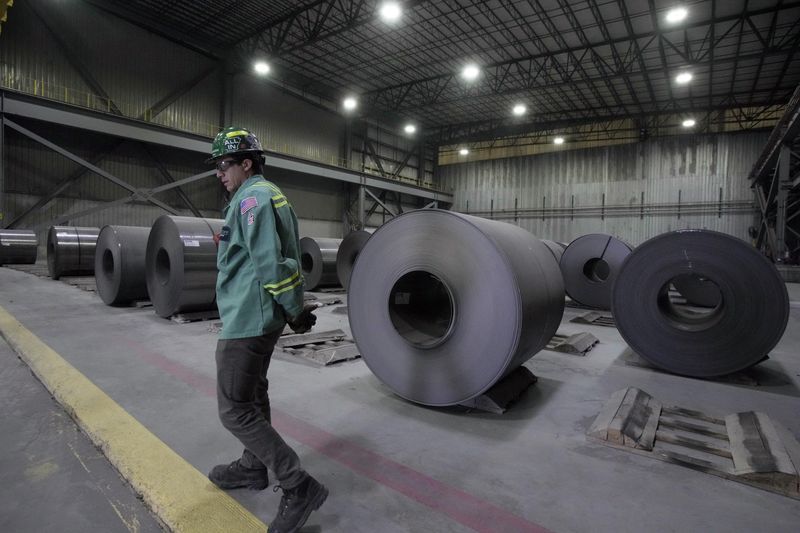
WASHINGTON, Jan 16 (Reuters) – U.S. factory production unexpectedly increased in December amid a surge in primary metals output that offset a decline at ​motor vehicle assembly plants, but activity contracted in the fourth quarter against ‌the backdrop of challenges from import tariffs.

Manufacturing output rose 0.2% last month after an upwardly revised 0.3% ‌gain in November, the Federal Reserve said on Friday. Economists polled by Reuters had forecast production for the sector, which accounts for 10.1% of the economy, falling 0.2% after a previously reported unchanged reading in November.

Production at factories increased 2.0% on a year-over-year ⁠basis in December. But it ‌dropped at a 0.7% annualized rate in the fourth quarter after growing at a 2.8% pace in the third quarter. Manufacturing ‍has been hurt by President Donald Trump’s sweeping import duties, which he has ironically defended as needed to restore a long-declining domestic industrial base.

Though the levies have shored up industries like ​primary metals that faced stiff foreign competition, and an artificial intelligence investment ‌boom has supported certain segments, the rest of manufacturing has struggled, with the sector shedding 68,000 jobs in 2025.

Economists have long argued a manufacturing renaissance was impossible because of structural issues, including worker shortages. They expected some improvement this year as Trump’s tax cuts take effect.

Primary metals production jumped 2.4%. There were also sizeable increases ⁠in the output of electrical equipment, appliances and ​components as well as aerospace and miscellaneous transportation. ​But motor vehicle production dropped 1.1%, declining for a fourth straight month. Motor vehicle output fell

2.8% on a year-on-year basis in December.

Mining output ‍fell 0.7% after ⁠rebounding 1.7% in the prior month. Frigid temperatures boosted demand for heating, lifting utilities production 2.6%. Utilities output dropped 0.3% in November. Overall industrial production ⁠increased 0.4% after a similar gain in November. Industrial output rose 2.0% on a year-over-year basis in ‌December. It grew at a 0.7% rate in the fourth quarter.

(Reporting ‌by Lucia Mutikani; Editing by Andrea Ricci)

Free Training

Source link

Commerce, Taiwan Deal Pledges $500B to Expand US Chip Manufacturing – MeriTalk


Taiwan will commit at least $500 billion in combined direct investment and credit guarantees to expand semiconductor and advanced technology manufacturing in the United States under a new trade agreement signed Thursday. 

The U.S. Department of Commerce said that the deal aims to “drive a massive reshoring of America’s semiconductor sector” that will “strengthen U.S. economic resilience, create high-paying jobs, and bolster national security.” 

The deal would also lower tariffs on imports from Taiwan to no higher than 15% – down from the current 20% rate of “reciprocal tariffs” for most Taiwanese imports. 

“Semiconductors are vital for America’s industrial, technological, and military strength. Yet, for far too long, the Washington establishment allowed this strategic sector to move offshore, leaving the United States dependent on foreign manufacturers and brittle global supply chains,” the Commerce Department said. “The Trump Administration is committed to reversing that trend.” 

Taiwanese investment will come in two tracks: a $250 billion direct investment in building and expanding U.S. advanced semiconductors, energy, and artificial intelligence production and innovation capacity; and at least $250 billion in credit guarantees to drive investment by Taiwanese companies to support the creation and expansion of the full U.S. chips supply chain and ecosystem.  

The United States and Taiwan will also establish U.S.-based industrial parks.  

While no details were provided on what Taiwan semiconductor and technology companies will be involved, the country manufactures most of the world’s advanced chips. One company, the Taiwan Semiconductor Manufacturing Company (TSMC), is the largest semiconductor manufacturer in the world. 

TSMC, which has operations worldwide, received $6.6 billion in direct funding under the CHIPS and Science Act from the Biden administration in late 2024.  

Under the agreement signed Thursday, future U.S. semiconductor tariffs will give Taiwanese chipmakers a break if they build in the United States, allowing duty-free imports tied to new U.S. capacity. Companies could import equipment and materials up to 2.5 times their planned output tariff-free during construction, and receive a reduced rate on imports above that limit. 

In addition, Taiwanese companies that have completed U.S. chip production projects will be able to import 1.5 times their new U.S. production capacity ?without tariffs.  

Commerce’s deal follows a White House memo allowing certain advanced semiconductor exports to China and other nations, provided that the United States gets a 25% cut of those profits. 

Free Training

Source link

Micron breaks ground on massive chipmaking plant that could transform Central NY


Clay, N.Y. — At the edge of a 1,400-acre tract of swamp, forest and former farmland just north of Syracuse, Micron Technology and public officials across the political spectrum broke ground this morning on what’s being called the largest private development in New York state history.

For Micron, riding a wave of record profits and bolstered by $25 billion in taxpayer subsidies, it marked the first ceremonial step to building its largest memory chip plant.

The groundbreaking comes more than three years after Micron announced it had chosen Central New York for its biggest expansion ever in the United States. Nearly all of the company’s chips are made in Asia.

Upstate New York’s legendary winters didn’t disappoint: Wind chills dipped to about 10 degrees Friday morning and the ground was covered with at least half a foot of fresh lake effect snow blown in from Lake Ontario, where Micron will draw its water.

“That is a perfect day,” Micron CEO Sanjay Mehrotra said of the fresh snow and sun that broke through before the ceremony began. He thanked the Democratic and Republican officials in the audience who both recruited Micron to Upstate New York and helped pass the federal legislation that paved the way for onshoring more computer chipmaking in the nation.

“It shows that when it comes to restoring American manufacturing,” he said, “we are clearly one team.”

Micron Technology groundbreakingMicron Technology breaks ground on a $100 billion computer chipmaking complex in Clay, New York, on Jan. 16, 2026. Pictured from left are: Sen. Kirsten Gillibrand, Sen. Charles Schumer, Gov. Kathy Hochul, Micron CEO Sanjay Mehrotra and U.S. Commerce Secretary Howard Lutnick.N. Scott Trimble | strimble@syracuse.com

Micron says it plans to build four chipmaking factories in Clay by 2041 to churn out billions of tiny computer chips used in cars, cell phones, appliances and, increasingly, data centers and artificial intelligence.

“The site will soon hum with activity,” Mehrotra said. “It will become a thriving technology hub, generating tens of thousands of jobs here, transforming the region.”

Shortly before noon, Mehrotra joined with Gov. Kathy Hochul, Sens. Charles Schumer and Kirsten Gillibrand, U.S. Commerce Secretary Howard Lutnick and County Executive Ryan McMahon for the ceremonial dirt-tossing with silver shovels.

They did it four times for the cameras, then an excavator behind them dumped a load of dirt into a dump truck with a Micron icon on its side. It was 12 degrees. Schumer wore a Buffalo Bills hat and an orange Syracuse tie.

Before the outdoor festivities, Lutnick, whose department will oversee the disbursal of about $20 billion in taxpayer subsidies to Micron over the next decade or so, took the stage and injected politics into a heated tent set up on the former farmland in northern Onondaga County.

“It is great to be in Central New York,” Lutnick said, “which, of course, you all know, is the heart of Trump country.” The applause afterward was tepid.

“It’s a historic day today,” Lutnick continued. “Because this fab, mega fab, is going to be the largest investment in the history, the largest single investment in the history of the great state of New York. So imagine that being right here, rebuilding and growing in the heart of Syracuse. That’s fantastic.”

Micron Technology groundbreakingU.S. Commerce Secretary Howard Lutnick at the Micron groundbreaking on Jan. 16, 2026.N. Scott Trimble | strimble@syracuse.com

Schumer, a Democrat and the Senate’s former majority leader, thanked McMahon, a Republican, for his partnership in working to get Micron to move to the Syracuse area.

“I want to give him some thanks, because he really helped prepare this site,” said Schumer, who ushered through the CHIPS and Science Act in 2022 that gave Micron the impetus to build factories in the United States.

“We will look back generations,” Schumer added. “This was a turning point for Central New York, for Upstate New York, and for the United States of America, because, because what’s happening here is going to give the United States the lead in semiconductor manufacturing for generations.”

Hochul, who went to Syracuse University in the 1970s, noted how at that time manufacturing was fleeing cities in Upstate New York. As she took the microphone, she quipped that this was really Hochul country. The applause was louder than for the secretary’s jab.

Micron’s arrival and its promise of a resurgence of manufacturing in Central New York, Hochul continued, is a dream come true.

“I could not be prouder,” Hochul said. “This is the day we rise up New York.”

The $52 billion, bipartisan CHIPS Act was designed to bring back to the U.S. the manufacture of computer chips essential to modern life and national security. Micron was one of the big winners, securing a grant of more than $6 billion to build factories in New York and at its headquarters in Idaho.

Construction of the first of two fabs in Boise is well underway, with production expected to start next year. Micron announced this year in a new deal with the Trump administration that it would build a second factory in Boise that would open before any of the New York factories.

Late last year, Micron announced that the Clay fabrication plants, or fabs, would be delayed by two to three years. The first is now set to start production in 2030; the second, in 2033.

The moment is about more than today, McMahon said. It’s about helping Micron continue to grow as a memory chip leader, he said. And it’s about making sure Central New Yorkers share in the expected largess.

“This is truly about the American worker and opportunity,” McMahon said. “But the reality is, this is about the national security of this country first and foremost. And by this investment here today, America will lead the world in AI dominance, and that means the world will literally be a safer and better place.”

Micron Technology groundbreakingMicron leaders, local and state officials and community leaders gather at Syracuse University to celebrate the groundbreaking of the chipmaker’s complex in Clay. Gov. Kathy Hochul, Sen. Charles Schumer and Onondaga County Executive listen during SU Chancellor Kent Syverud’s remarks. Jan. 16, 2026N. Scott Trimble | strimble@syracuse.com

Micron says it will spend more than $51 billion to build two fabrication plants, or fabs, by 2033. Taxpayer subsidies from federal, state and local governments would cover about half of those costs.

The company says it could spend another $50 billion to build a third and fourth fab by 2041, although there is no public money allotted for those.

Micron’s project here underwent a two-year, 20,000-page environmental review that was wrapped up in November. Since then, Micron has obtained the wide variety of necessary construction approvals from the federal, state and local governments.

If Micron keeps its promises, the impact on Central New York would be enormous. Micron says it would employ 9,000 people – nearly as many as Upstate Medical University, now the region’s biggest employer.

Up to 40,000 spinoff jobs could be created, from those in semiconductor supply chains to hotels to schools. Construction would require more than 4,000 workers during peak construction periods.

The groundbreaking comes as Micron, founded in the basement of a dentist’s office in Boise in 1978, is soaring on the demand for artificial intelligence chips. Micron has recently posted record sales and profits, and even bailed out of the consumer market to preserve its production for bigger profits in AI. Investors have noticed: Micron’s stock price has tripled in the past year.

Site preparation in Clay is expected to start within days. The first task for Micron’s initial contractor, Gilbane Co., is to start clearing 445 acres of forest. Gilbane will have to hurry: All tree-cutting must halt between March 31 and Nov. 1 because two species of endangered bats use the site to raise their young during the warmer months.

This year, Micron will need to haul in about 2 million yards of gravel-like fill to level and stabilize the site, which contains about 200 acres of wetlands. That will be done mostly by truck, with more than 500 trucks going in and out of the site every day on two-lane roads.

1/14

Free Training

Source link

US warns South Korea and Taiwan of 100% tariffs if they refuse to invest in American manufacturing


Howard Lutnick. Photo: Bloomberg

U.S. Secretary of Commerce Howard Lutnick issued an ultimatum to leading global semiconductor manufacturers. During an event in New York State on Friday, January 16, 2026, he made it clear that access to the American market for Taiwanese and South Korean companies would depend on their willingness to build factories within the United States. This was reported by Bloomberg, writes UNN.

Details

The Trump administration plans to use tax pressure as the main incentive for relocating high-tech facilities. Lutnick emphasized that companies that ignore calls for investment will face a doubling of the cost of their products at the border.

Everyone who wants to create memory has two options: they can pay a 100% tariff or build in America. If they don’t build in America, the tariff will likely be 100%.

– stated Howard Lutnick.

Who is the pressure aimed at?

The warning primarily concerns the market leaders in memory chips and components for artificial intelligence:

  • Samsung Electronics and SK Hynix (South Korea);
  • TSMC and other leading Taiwanese firms.

This statement was made against the backdrop of the groundbreaking ceremony for a giant factory of the American company Micron Technology, which is already investing billions of dollars in the development of domestic production in New York.

New White House strategy

Although President Donald Trump has so far refrained from immediately imposing tariffs on semiconductors, the Department of Commerce is already conducting aggressive negotiations with partners. The administration’s goal is to radically reduce U.S. dependence on imports of critical technologies and restore the dominance of American industry. 

Free Training

Source link

Taiwan to invest $250 billion in US semiconductor manufacturing


The Trump administration signed a deal worth $250 billion with Taiwan, in a move designed to help the United States boost domestic semiconductor manufacturing. This deal was announced by the U.S. Department of Commerce on Thursday.

Under this deal, Taiwanese semiconductor and tech companies have agreed to make direct investments into the U.S. semiconductor industry. According to a press release, these investments will span across semiconductors, energy, and AI “production and innovation”. Currently, Taiwan produces more than half of the world’s semiconductors.

Taiwan will also supply an additional $250 billion in credit guarantees for additional investments from these semiconductors and tech enterprises, according to the commerce department. The timeline for the investments is unclear.

READ: Biden administration to intensify restrictions on China’s access to AI chips (January 14, 2025)

In return for the investment, the U.S. will invest in Taiwan’s semiconductor, defense, AI, telecommunications, and biotech industries. The amount for this investment was not specified.

This news comes the day after the Trump administration published a proclamation reiterating the country’s goal to bring more semiconductor manufacturing back to the United States.

“This dependence on foreign supply chains is a significant economic and national security risk,” the proclamation stated. “Given the foundational role that semiconductors play in the modern economy and national defense, a disruption of import-reliant supply chains could strain the United States’ industrial and military capabilities.”

The proclamation also announced 25% of tariffs on some advanced AI chips. It also stated that once trade talks with other countries–like this deal with Taiwan–are complete, there would be additional semiconductor tariffs.

In 2025, Trump has made semiconductor manufacturing a central focus of his economic agenda, aiming to reduce U.S. reliance on foreign chip production and bring manufacturing back to American soil.

His administration has proposed aggressive trade measures, including a potential 100% tariff on imported semiconductors. However, companies that commit to building manufacturing capacity in the U.S. could be exempt according to previous reports.

In March last year, Taiwan Semiconductor Manufacturing (TSMC) announced plans to invest $100 billion into bolstering chip manufacturing in the U.S.

READ: The perils of Trump’s proposed tariff trade war (February 6, 2025

Semiconductors are the foundational components of modern technology. They power computing systems in products ranging from smartphones and automobiles to telecommunications equipment and military weapons.

According to a press release from the U.S. Department of Commerce, the U.S. share of global wafer fabrication declined sharply from 37 percent in 1990 to less than 10 percent in 2024. Today, most semiconductors are fabricated in East Asia due to foreign industrial policies.

Free Training

Source link

US manufacturing output unexpectedly increases in December


WASHINGTON, Jan 16 (Reuters) – U.S. factory production unexpectedly increased in December amid a surge in primary metals output that offset a decline at ​motor vehicle assembly plants, but activity contracted in the fourth quarter against ‌the backdrop of challenges from import tariffs.

Manufacturing output rose 0.2% last month after an upwardly revised 0.3% ‌gain in November, the Federal Reserve said on Friday. Economists polled by Reuters had forecast production for the sector, which accounts for 10.1% of the economy, falling 0.2% after a previously reported unchanged reading in November.

Production at factories increased 2.0% on a year-over-year ⁠basis in December. But it ‌dropped at a 0.7% annualized rate in the fourth quarter after growing at a 2.8% pace in the third quarter. Manufacturing ‍has been hurt by President Donald Trump’s sweeping import duties, which he has ironically defended as needed to restore a long-declining domestic industrial base.

Though the levies have shored up industries like ​primary metals that faced stiff foreign competition, and an artificial intelligence investment ‌boom has supported certain segments, the rest of manufacturing has struggled, with the sector shedding 68,000 jobs in 2025.

Economists have long argued a manufacturing renaissance was impossible because of structural issues, including worker shortages. They expected some improvement this year as Trump’s tax cuts take effect.

Primary metals production jumped 2.4%. There were also sizeable increases ⁠in the output of electrical equipment, appliances and ​components as well as aerospace and miscellaneous transportation. ​But motor vehicle production dropped 1.1%, declining for a fourth straight month. Motor vehicle output fell

2.8% on a year-on-year basis in December.

Mining output ‍fell 0.7% after ⁠rebounding 1.7% in the prior month. Frigid temperatures boosted demand for heating, lifting utilities production 2.6%. Utilities output dropped 0.3% in November. Overall industrial production ⁠increased 0.4% after a similar gain in November. Industrial output rose 2.0% on a year-over-year basis in ‌December. It grew at a 0.7% rate in the fourth quarter.

(Reporting ‌by Lucia Mutikani; Editing by Andrea Ricci)

Free Training

Source link