US solar manufacturing momentum affected by shifting tax credits


The U.S. solar manufacturing and supply chain and the industry at large saw major gains in 2025, but they face an uncertain market heading into 2026.

According to the Solar Energy Industries Association, the U.S. can now produce “every major component of the solar supply chain” with growth across multiple categories. This included a 300% increase in solar cells and a 37% increase in solar module production, bumping capacity beyond 60 gigawatts, between the end of 2024 and late 2025.

Despite those gains, some experts say the industry is still far from supplying what the domestic market requires. And the crosswinds of sunsetting tax credits, increased eligibility thresholds and tariffs create a difficult environment for business decisions.

“You’ve seen pretty distinct growth and investment, particularly on the module side. You’ve seen more of it on the cell manufacturing side in the last five years, thanks to tax credits. But we still have a long way to go as an industry in terms of reshoring the rest of that sector,” said Scott Moskowitz, vice president of market strategy and public affairs at manufacturer Qcells.   

President Donald Trump’s One Big Beautiful Bill Act is among the top uncertainties that could slow momentum. 

OBBBA accelerates the phase-out of the Investment Tax Credit for solar projects started after 2027 and increases content requirements for the Domestic Content Bonus. While the bill maintains the Section 45X Advanced Manufacturing Production Credit for solar manufacturers, it also sets new exclusions to businesses with connections to Foreign Entities of Concern.

On the other hand, Trump’s widely publicized tariffs introduce a level of market protection that may shield companies from international competition.

Experts say these conflicting political decisions are causing collateral damage to the solar industry.

“Unfortunately [OBBBA] got caught up in an ideological back and forth. People started to pick on technologies that they felt had been favored — the solar, the wind,” said Mike Carr, executive director of the Solar Energy Manufacturers for America Coalition.

The road to reshoring

Until recently, support for U.S. solar manufacturing has been largely bipartisan, supported by trade policy and tax credits. “We are on our fourth straight presidential administration of relatively, I wouldn’t call it consistent, but generally support of using trade policy as a tool to support manufacturers,” said Moskowitz.

Trump’s first administration offered the first of such beneficial conditions via the Section 201 safeguard, imposed in 2018. This allowed the U.S. to enact temporary tariffs on a wide range of products when imports surged.

In response, Qcells made its first investment in the U.S. with the opening of a $200 million solar panel manufacturing facility in Dalton, Georgia. The facility was the largest of its kind in the Western Hemisphere at the time. 

“It was really the kind of market protection that they felt like they had been lacking for a long time,” said Carr. “And it was enough to kind of begin to really think about what a reshoring effort could look like.”  

Under President Joe Biden, the Inflation Reduction Act established the Section 45X tax credit and expanded and extended the ITC, offering 30% credit for solar projects through 2032.

Martin Pochtaruk, CEO of solar panel manufacturer Heliene, said the credits and resultant market growth directly helped his company secure a $150 million investment for its new Rogers, Minnesota manufacturing line in 2024. 

However, the accelerated phase-out of the ITC and modification of 45X under OBBBA threatens the momentum of such crucial efforts to grow production capabilities. 

“We took a pretty substantial hit to manufacturing when they prematurely phased out the ITC for solar, and importantly, from our perspective, the domestic content incentive that went with it,” said Carr. “It reintroduced uncertainty into a fairly certain equation.” 

A three-legged stool approach

In the wake of the COVID-19 pandemic, manufacturers are more eager than ever to localize their production networks. 

“We learned a lot as an economy during the pandemic, when supply chains were tested,” said Moskowitz. “We learned that no industry, and particularly a critical industry like energy, wants to be dependent on imported products if they don’t have to be.”

Business leaders say reversing certain tax credits while advancing tariffs has created a precarious situation.

“Tariffs are not a particularly nimble approach. It takes time for them to be effective. There’s a lot of lobbying against them,” said Carr. “And they’re often time-limited, even in their implementation. Even the [Section] 201 tariffs that started in 2018 were due to expire by 2021, right? That’s not the kind of time frame that allows for scale investments.” 

Those provisions, which enabled Qcell’s $200 million investment, were ultimately extended for four years, but the shifting policy landscape remains challenging.

ording to Carr, reshoring U.S. solar manufacturing demands a three-legged stool approach: tariffs for market protection, supply-side policies to enable multibillion-dollar investments and a domestic content incentive.

Chopping off one leg — by accelerating the sunset of a domestic content incentive that stimulated demand for American-made parts — forces the industry to rely on shifting tariffs and supply-side policy. 

Limits of the current domestic supply chain

Still, there’s no denying that domestic solar manufacturing is on the rise. Corning’s newest hub in Michigan, which aspires to “grab up to 15% of the U.S. market for wafers” — in addition to Nextpower’s Tennessee expansion — proves that both upstream and downstream production is in demand.

But while each individual part of the solar manufacturing sector exists in the U.S., there is not enough to meet all of the current domestic demand, said Moskowitz. 

Pochtaruk echoed the idea, saying the U.S. may have successfully reshored the entire solar supply chain, but “it’s far from supplying what the market requires.”

“Corning’s amazing factory is 1769269922 in place, but it’s just starting up,” said Pochtaruk. He added that the market will still require imports to supplement production.

Corning has not confirmed the plant’s size, though some analysts approximate a 2.5GW capacity. 

Experts agree that policy stability would help with growth, especially when it comes to justifying major investments that might take up to 10 years to amortize, said Pochtaruk.

Referring to Corning’s Michigan factory, he said, “What was the investment? $900 million? You invest that for a long, long time. It’s not just one four-year cycle.” Corning ultimately increased its investment to $1.5 billion, further extending the amortization timeline. 

“This market takes a long time to develop, and it takes a while to build a new factory and for the sales channels to develop,” said Carr. “The biggest thing that has been tough for this industry is the on-again, off-again nature of policy support around it.”

With demand for power skyrocketing and solar widely considered the cheapest form of energy, Carr said the question isn’t whether solar-powered electricity will be in demand or desired, but how much the U.S. will contribute to its production.

“It’s going to continue to be used in our economy. It is, to a certain extent, an inevitability. What’s not inevitable is that we make it,” said Carr. “Do you want to allow reshoring? Or are you comfortable with these kinds of products being made by a sometimes hostile power, or at the very least a trade competitor? We’ve heard from policymakers on both sides of the aisle a resounding ‘no.’”

Free Training

Source link

Press Release Distribution Services – WebWire


Saturday, January 24, 2026

Americas Cardroom’s Venom Continues With Record-Breaking Crypto Poker Momentum

January 23, 2026

Americas Cardroom, a global leader in online poker and cryptocurrency gaming, today announced an update on its flagship Dual Venom series, highlighted by the $8 million guaranteed Mystery Bounty No-Limit Hold’em event.

Joseph L. Sinkfield Expands His Biblical Guide’s Reach with Latest Spanish Edition Release

January 23, 2026

The acclaimed Christian guide “The Voice of the Sword” by Joseph L. Sinkfield has officially broadened its horizons with the release of a new Spanish edition titled “La Voz de la Espada ,” now accessible to readers in pursuit of profound spiritual insights and a more lucid approach to understanding biblical enigmas.

New digital solution at BASF Coatings to calculate the CO2 footprint of its product portfolio

January 23, 2026

• Transparent emission data across a portfolio of more than 120,000 products • BASF Coatings can measure product carbon footprints based on facts and identify levers for reduction for the customer • Customers can also obtain insights into impact categories beyond CO2 BASF Coatings has launched a new digital solution to …

CPKC investing US$800 million in American manufacturing with Tier 4 locomotives

January 23, 2026

Canadian Pacific Kansas City (TSX: CP) (NYSE: CP) (CPKC) this year is continuing the renewal of its locomotive fleet with the world’s two leading locomotive manufactures as part of an ongoing multi-year US$800 million investment in American industry.

Kevin Weaver Elevated To President, Atlantic Music Group

January 23, 2026

Atlantic Music Group (AMG) today announced that longtime Atlantic leader Kevin Weaver has been named to the newly created role of President, Atlantic Music Group.

U.S. Postal Service Board of Governors To Meet on Feb. 5

January 23, 2026

The U.S. Postal Service Board of Governors will meet Thursday, Feb. 5, in an open session at Postal Service headquarters, 475 L’Enfant Plaza SW, in Washington, DC.

Bunge Completes Divestiture Commitment in Western Canada

January 23, 2026

Effective today, Bunge successfully divested its grain elevator at Valparaiso, SK, to Cargill. This transaction is part of the divestiture commitment Bunge made to the Government of Canada, to receive regulatory approval for the company’s merger with Viterra.

Ekain Albite, Rod Llaverías, Inês Nunes, Gala Hernández, Kavich Neang and Valeria Hofmann will be working on their projects in the twelfth edition of Ikusmira Berriak

January 23, 2026

The suffocating heat, perhaps as an unmistakeable sign of the climate catastrophe, women’s bodies, exploring family structures, the industrial past and the digital universe are all present among the twelve proposals selected for the twelfth Ikusmira Berriak, approached in a rich variety of forms, reinterpreting genres like gothic horror, the road movie, psychological drama …

TIFF Congratulates 2026 Oscar Nominees

January 23, 2026

A total of 50 nominations from TIFF’s Official Selection TIFF People’s Choice Award winner Hamnet receives eight nominations 18 Films in TIFF’s Official Selection nominated TIFF Lightbox is the place to see Oscar-nominated films including Hamnet, Sirat, The Voice of Hind Rajab, Arco, One Battle After Another, and more! The Toronto International Film Festival® …

A better way to measure care quality

January 23, 2026

Kaiser Permanente’s commitment to our members’ health is more than a promise — it’s a measurable reality. New research shows Kaiser Permanente members were 35% less likely to die early than others in the communities in which we operate when looking at all causes of death combined.

Free Training

Source link

U.S. missile manufacturing fails to match wartime tempo


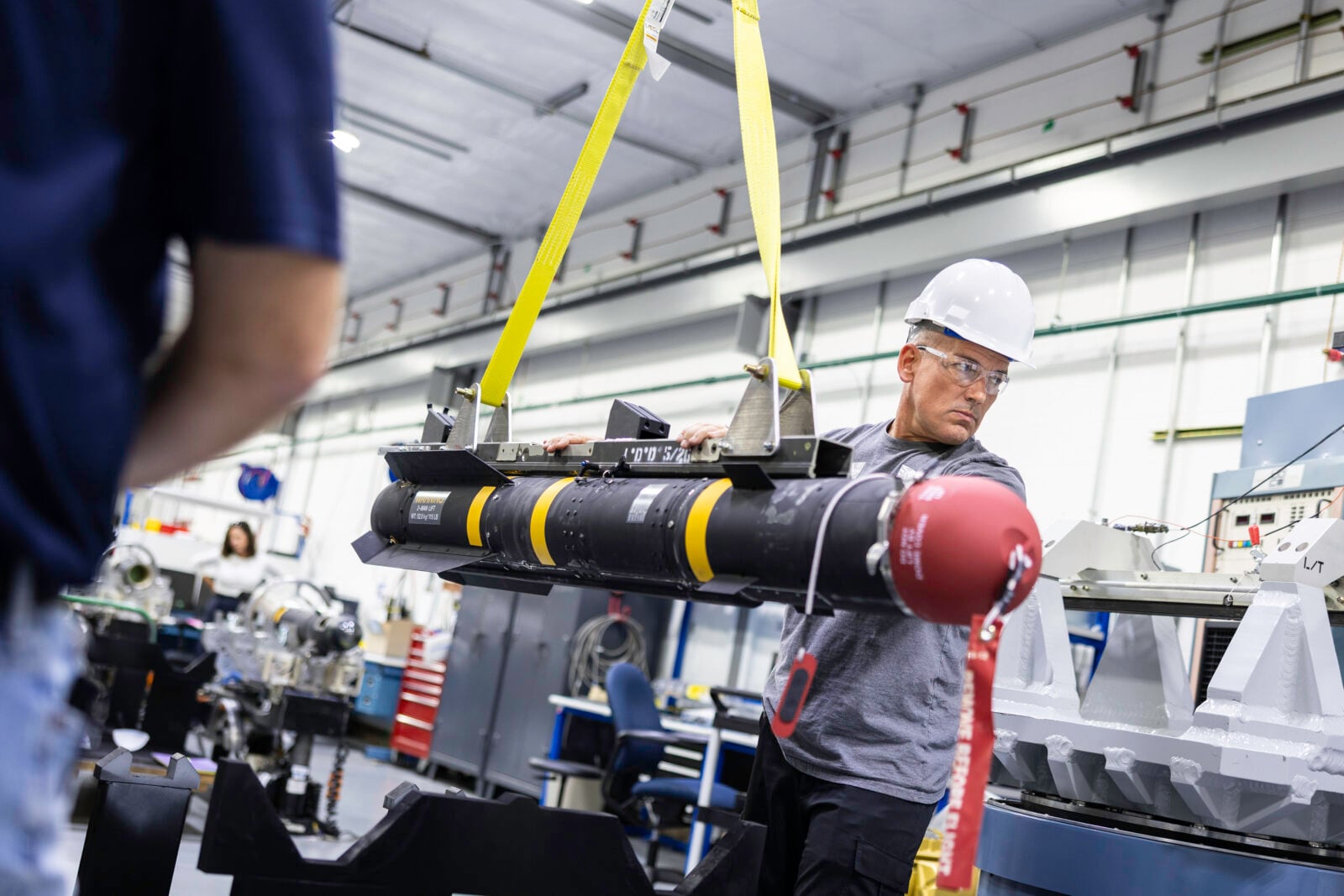
United States missile manufacturing is failing to keep pace with the tempo of modern warfare, raising concerns about how quickly the military can replace precision weapons in a high-intensity conflict. To examine where the bottlenecks lie and how they affect readiness, Defence Blog sought comment from John Borrego, Senior Vice President of Aerospace and Defense at Machina Labs, who has held senior technical and leadership roles at Northrop Grumman, SpaceX, Rocketdyne, and Los Alamos National Laboratory.

In responses provided to Defence Blog, Borrego said manufacturing speed should be measured not by machine output alone, but by how quickly the United States can turn a validated military requirement into fielded weapons at scale.

“In modern missile and advanced weapons production, manufacturing speed means the ability to translate design intent into flight-ready components, iterate quickly, and surge output without months or years of retooling,” Borrego said. “Manufacturing speed isn’t just about how fast machines operate, it’s about how quickly we can turn a validated military need into field-ready firepower.”

– ADVERTISEMENT – CONTINUE READING BELOW –

Borrego defined the concept as “time-to-fielded-firepower,” describing it as the full timeline from identifying a requirement or replacing combat losses to delivering qualified, accepted weapons in volume. According to him, this timeline is increasingly out of sync with the pace of modern conflict.

“This matters for readiness because today’s threat environment evolves on operational, not industrial, timelines,” Borrego said. “Adversaries iterate weapons, tactics, and countermeasures faster than legacy defense manufacturing can traditionally respond. If production takes years to adapt, even technically superior systems arrive too late to matter.”

Borrego said manufacturing speed depends on four interconnected timelines that determine whether factories can respond to wartime demand.

The first is “design to producible,” which measures how quickly a concept becomes a buildable and testable design using model-based systems and controlled interfaces. The second is “qualify to ship,” covering how fast materials, processes, suppliers, and first articles can be certified without restarting qualification for every batch. The third is “cycle to throughput,” which reflects how efficiently a factory converts raw inputs into quality-assured hardware. The final clock is “ramp to surge,” or how rapidly output can double or triple without compromising safety, quality, or cost.

According to Borrego, most U.S. defense factories struggle to keep these clocks aligned, especially when demand rises suddenly.

Borrego said the most serious bottlenecks are structural, with tooling at the top of the list. Traditional tooling, he noted, can take years to design and qualify, making rapid scale-up or design changes difficult.

“Most legacy manufacturing processes were built for stable, predictable production,” he said. “When requirements shift, the entire system slows down. By removing tooling from the critical path and digitizing production, surge capacity can scale through machines and software, not timelines.”

He also identified persistent constraints in energetics, including propellants, explosives, cast-cure capacity, and strict handling requirements. Seeker and guidance electronics remain limited by microelectronics, radiation-hardened components, specialized sensors, and secure supply chains. Motors, casings, and specialty materials are constrained by long-lead forgings, castings, composites, and integrated structures.

Single-source sub-tier suppliers present another risk, Borrego said, because many have fragile capacity and no business case for maintaining surge readiness.

Testing infrastructure also delays output, particularly in thermal vacuum testing, vibration testing, ordnance trials, non-destructive testing, metrology, and calibration. Workforce shortages add to the problem, with a limited number of cleared and experienced manufacturing engineers, inspectors, NDT technicians, and energetic handlers, and critical knowledge often concentrated in only a few individuals.

Borrego said an agile, multi-process manufacturing model could change how the U.S. responds to rapid demand spikes or prolonged high-intensity conflict by allowing factories to shift production without waiting for new tooling or facility redesigns.

“In a real surge or drawn-out fight, the challenge isn’t knowing what to build,” he said. “Most factories are locked into doing one thing, one way, and changing that can take months or even years. An agile, multi-process manufacturing model removes that constraint.”

Under this approach, production would rely on modular cells capable of machining, forming, additive manufacturing where appropriate, hybrid layup, assembly, and inspection, all connected by a digital thread. Reconfigurable tooling, reusable fixtures, programmable robotic paths, and parameterized workholding would reduce changeover times and dependence on long-lead hard tools.

Borrego said qualification would also need to be standardized across sites using pre-qualified materials, standardized inspection plans, digital acceptance records, in-line monitoring, and model-based design definitions. This would allow distributed production instead of reliance on a single factory.

Borrego’s warning echoes findings from U.S. government assessments. A 2023 wargame conducted for the House Select Committee on Strategic Competition concluded that, in a conflict with China, the United States would expend its stock of advanced missiles and bombs in less than a month and run out of some critical weapons in a matter of days.

According to Borrego, agile manufacturing is the only way to close that gap without relying on stockpiles that cannot be replenished in time.

“In a prolonged or high-intensity conflict, the central question becomes: can the U.S. sustain both precision and volume?” he said. “Agile, multi-process manufacturing makes this achievable, by building manufacturing depth, not just relying on unreplenishable stockpile depth.”

Free Training

Source link

Tariff threats prompted pharma production boom last year: report


While the threat of U.S. import tariffs prompted a surge in drug production last year, that output is slated to slow across multiple geographies in 2026. And, even as the biopharma industry enters the new year with greater certainty around the U.S.’ trade policy, the risk of another “tariff flare-up” looms large.

That’s the macro situation according to financial services firm Atradius, which noted in a new industry trend report (PDF) that global pharmaceutical production leapt 9.1% in 2025, mainly on the back of “front-loading activity in anticipation of US tariffs.” 

In 2026, however, output growth is expected to slow to 1.6% as a move toward “retrenchment” results in a slowdown of production growth in the first half of the year, the report predicts.

Nevertheless, a rebound could be not too far behind, with Atradius reckoning that global drug production will eke out 3.7% growth in 2027. That general trend holds true when looking at Atradius’ predictions for the growth of pharmaceutical sales and investments around the world in 2027, too.

As for 2025, the financial services company logged 9.7% growth in global pharmaceutical sales and 5.2% growth in overall industry investment. Atradius expects momentum in those areas will slow to 1.6% and 2.7% in 2026, respectively. 

The Trump administration’s persistent threat of pharmaceutical import tariffs was the driving force behind last year’s manufacturing surge, the experts say.

Still, the overall impact of U.S. trade duties has been “limited,” according to Atradius, which pointed to the exemptions Big Pharma companies have won through White House drug pricing deals as well as country- and region-specific agreements capping U.S. import tariff rates. Furthermore, generic drugs have largely been excluded from President Donald Trump’s trade negotiations, sparing the medicines that make up the bulk of the American public’s prescriptions from supply and price disruptions.

The industry isn’t out of the woods yet, with the report cautioning that “the downside risk of another tariff flare-up remains.”

Earlier this week, following an intensification of Trump’s rhetoric around a potential U.S. acquisition of Greenland, concerns were raised that the threat of new 10% taxes on select European countries that showed military support for the autonomous Danish territory might scupper the U.S.-EU trade deal reached last summer. Under that accord, which still needs to be ratified by European lawmakers, most European exports, including pharmaceuticals, will have tariffs capped at 15%.

Trump ultimately backed down on the threat after reaching the “framework of a future deal” on his Greenland ambitions during the World Economic Forum in Davos, Switzerland, this week. Still, the uncertainty his comments cast on previously secured agreements lends credence to Atradius’ “tariff flare-up” warning.

Overall, Atradius suggested industrial policy will play an increasingly large role across the pharmaceutical industry in the coming years, buoyed by government efforts around the globe to reduce reliance on imports and incentivize strategic stockpiling and domestic manufacturing.

“Supply networks of pharmaceuticals and medical devices will become more fragmented due to geopolitical tensions,” the firm predicted.
 

Mapping 2025’s production output
 

In the U.S., pharmaceutical manufacturing output is expected to “decelerate” to 0.9% this year—a marked departure from the 5.2% increase charted in 2025, according to Atradius’ report. The outlook forecasts a 2.5% rebound in U.S. pharmaceutical output growth in 2027.

The report again pointed to industry-won tariff exemptions as a relief for drugmakers in the near term, while caveating that “uncertainty remains, as Washington has repeatedly announced its intention to target medicine imports.”

Aside from the most-favored-nation drug pricing deals that have won many large pharma companies exemptions from tariffs, efforts by the FDA to ease the build-out of new production facilities in the U.S. could also bolster the country’s pharmaceutical output, Atradius said.

At the same time, “high production costs could still make it more cost-effective for pharmaceuticals to be manufactured elsewhere,” the report reads.

Perhaps most striking in Atradius’ report was the 21.6% growth in pharmaceutical output that the U.K. and the EU charted in 2025, again attributed to “front-loading triggered by massive U.S. tariff threats.” In Ireland—a country with a wealth of large pharma manufacturing outposts—production output surged a whopping 41.3% in 2025, according to Atradius. The country is predicted to experience a sharp turn in the other direction this year, with Atradius forecasting a 6.4% output decline.

This year, the U.K. and the EU’s combined output is tipped to “contract temporarily” by 3.7%, by Atradius’ reckoning.

While the EU has presently secured a 15% tariff rate cap, the U.K. has dodged U.S. import duties altogether in part by agreeing to raise the net prices its National Health Service pays for innovative medicines by 25%.

While those agreements blunt the impact of tariffs in Europe, Atradius acknowledged that shifting manufacturing to the U.S.—a key part of Trump’s trade agenda—is both expensive and complex, posing challenges for smaller companies with fewer resources.

Unlike Europe and the U.S., China’s pharmaceutical output is expected to continue growing in 2026. Atradius estimates that the country’s drug production will increase 6.6% this year versus 3.6% growth in 2025. 

China’s exposure to U.S. tariffs is “limited,” and, while the country accounts for some 40% of the world’s active pharmaceutical ingredient output, those drug building blocks aren’t targeted by U.S. tariffs, Atradius noted. 

Free Training

Source link

US Administration Plans Cuts to Key Industrial Grants Impacting Rust Belt Manufacturing | Ukraine news


The central thrust of the United States’ economic policy under the “America First” banner is to revitalize domestic manufacturing. However, the Trump administration plans to cut one of the key programs that funds the largest industries, including a city at the heart of the Rust Belt – the hometown of Vice President JD Vance.

A $500 million grant from the Biden administration was designated for the Cleveland-Cliffs steel company in Middletown, Ohio, to modernize aging blast furnaces; another $75 million was allocated for a similar project in Pennsylvania.

New furnaces powered by hydrogen, natural gas, and electricity – rather than coal – were meant to extend the plant’s life and secure the company’s future.

But these grants, which were to create more than 100 permanent jobs and 1,200 construction jobs just in Middletown, according to internal administration documents obtained by CNN, are slated to be canceled.

Representatives from the Department of Government Efficiency participated in deciding which programs to keep and which to cut, according to two people familiar with the situation.

“An unelected billionaire who made his fortune on government contracts should not be able to unilaterally stop these programs.”

– Marcy Kaptur

Energy Department spokesperson Ben Ditterich stated that “no final decisions have yet been made” regarding funding, and that “several plans are being considered.”

The Energy Department froze billions of dollars in grant programs during the Biden administration for months, reviewing them and determining which to cut. The $6.3 billion program that financed equipment modernization for Cleveland-Cliffs and other large companies could be cut by nearly half according to internal CNN documents.

Experts warn that such cuts could have a chilling effect on American industry amid a tariff war led by Trump that is undermining markets and supply chains.

“The entire point of OCED and the $6.3 billion grant programs is to invest in companies and industries that have not received funding for decades – steel and cement.”

– a former DOE employee

Samira Fazili, Deputy Director of the National Economic Council under the Biden administration, notes that reductions could deal a serious blow to the United States’ core industries, especially given the economic uncertainty caused by tariffs.

She emphasizes that instead of cutting public investments, strategic investments should be undertaken to preserve manufacturing and strengthen the country’s competitiveness.

Ultimately, experts call for a measured approach: carefully chosen government investments can preserve jobs and the United States’ industrial capacity, particularly in regions tied to essential industries.

Free Training

Source link

Meyer Burger equipment purchase enables Solestial US manufacturing shift


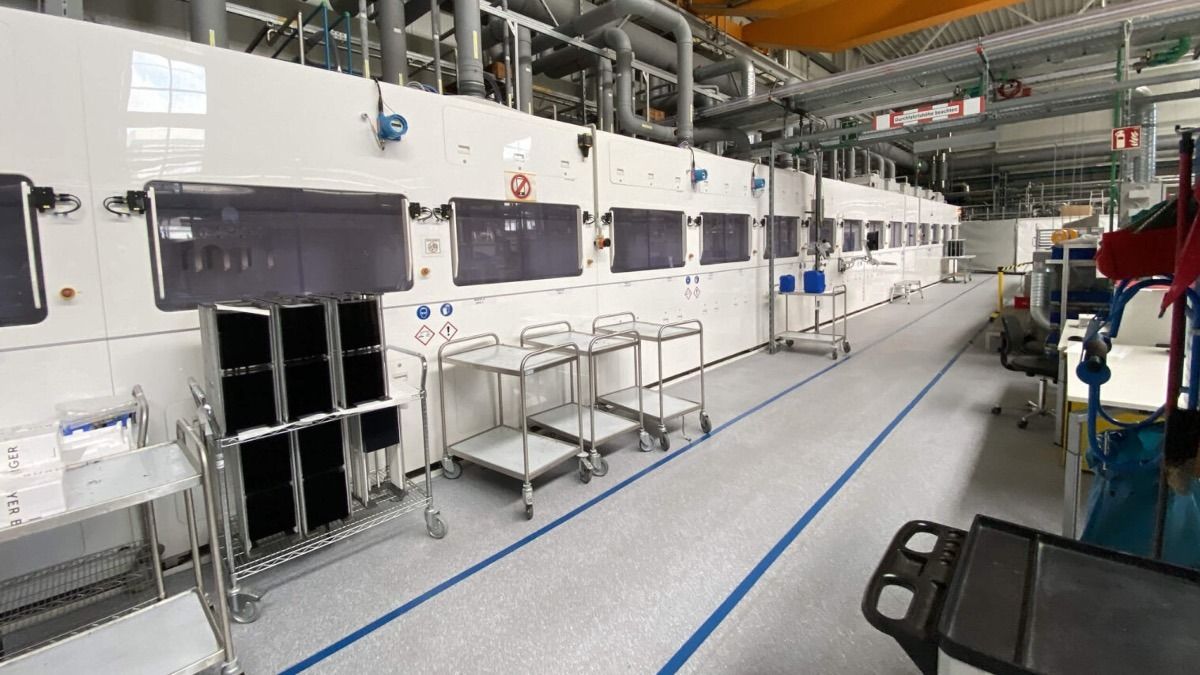
Solestial, a US-based space solar manufacturer, has acquired solar manufacturing equipment from Meyer Burger to strengthen domestic manufacturing operations in the US. The acquisition enables Solestial to process its silicon solar technology from wafer to cell in house. Equipment was acquired from Meyer Burger’s Hohenstein-Ernstthal facility in Germany, where Solestial’s wafers had previously been processed. Solestial has stated that it plans to shift limited solar cell manufacturing activities from Germany to the US. The Solestial has confirmed that its 30,000 square foot US facility is operational and commissioned for production. The move follows the disruption of a prior manufacturing partnership after Meyer Burger’s German subsidiaries filed for insolvency in May 2025. Recently, Solestial has partnered with NASA Glenn Research Center to advance ultrathin silicon solar array performance through technical testing.

Free Training

Source link

CPKC investing US$800 million in American manufacturing with Tier 4 locomotives


CALGARY, AB, Jan. 21, 2026 /CNW/ – Canadian Pacific Kansas City (TSX: CP) (NYSE: CP) (CPKC) this year is continuing the renewal of its locomotive fleet with the world’s two leading locomotive manufactures as part of an ongoing multi-year US$800 million investment in American industry.

Tier 4 locomotive (CNW Group/CPKC) Tier 4 locomotive (CNW Group/CPKC)

Having completed the purchase of 100 Wabtec Tier 4 locomotives built in Texas in 2025, today CPKC said it will add 30 additional Tier 4 locomotives from Progress Rail in 2026 to be built in Indiana. This year, CPKC also expects delivery of 70 more Texas-built Tier 4 units from Wabtec.

“Our purchase of additional new Tier 4 locomotives, proudly made in the USA, continues CPKC’s commitment to renew our locomotive fleet through a more than US$800 million investment in American manufacturing capacity,” said Mark Redd, CPKC Executive Vice President and Chief Operating Officer. “We are investing in our road locomotive fleet for growth and to maintain our industry-leading service for our customers and the North American economy, powered by a fleet with improved reliability and fuel efficiency.”

In January, CPKC expects to receive the first two of 70 Wabtec Evolution Series ET44AC Tier 4 locomotives being built this year for CPKC at the company’s manufacturing facility in Dallas, Texas.

In the second half of 2026, CPKC expects to take delivery of 30 new EMD® SD70ACe-T4 Tier 4 freight locomotives to be manufactured at Progress Rail’s facility in Muncie, Indiana. These locomotives are part of an order for 65 new Tier 4 locomotives to be built by Progress Rail.

These locomotive investments continue CPKC’s locomotive renewal program and are part of CPKC’s previously announced multi-year capital plan.

About CPKC

With its global headquarters in Calgary, Alta., Canada, CPKC is the first and only single-line transnational railway linking Canada, the United States and México, with unrivaled access to major ports from Vancouver to Atlantic Canada to the Gulf Coast to Lázaro Cárdenas, México. Stretching approximately 20,000 route miles and employing 20,000 railroaders, CPKC provides North American customers unparalleled rail service and network reach to key markets across the continent. CPKC is growing with its customers, offering a suite of freight transportation services, logistics solutions and supply chain expertise. Visit cpkcr.com to learn more about the rail advantages of CPKC. CP-IR

CPKC Logo (CNW Group/CPKC) CPKC Logo (CNW Group/CPKC) Cision Cision

View original content to download multimedia:https://www.prnewswire.com/news-releases/cpkc-investing-us800-million-in-american-manufacturing-with-tier-4-locomotives-302667204.html

Free Training

Source link

EOS invests $3m in United States manufacturing and logistics expansion


EOS has invested 3 million USD into the expansion of its US manufacturing and logistics capacity.

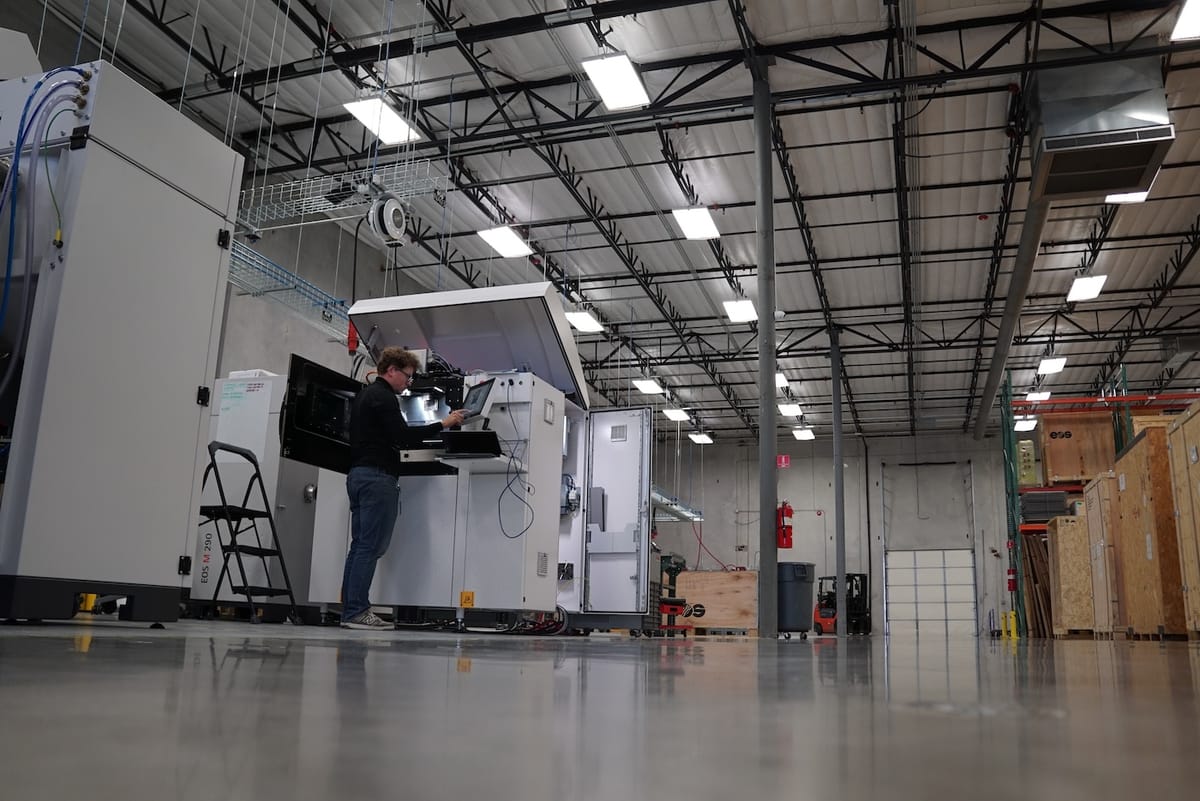
The company has consolidated its North American warehouse and logistics capability at its Pflugerville, Texas, campus into a new 40,000 square foot facility in Belton, Texas, which has enabled the manufacturing space in Pflugerville to be increased.

EOS says the reconfiguration of existing facilities and the opening of the new warehouse demonstrate its commitment to strengthening its U.S. manufacturing capacity. The assembly of its EOS M 290-1, EOS M 290-2, and EOS M 400-4 systems will receive a boost, while EOS has also created more space for a dedicated powder handling area and an in-house machine shop. It is expected that EOS will now be better equipped to meet increasing customer demand and reduce delivery times. The company has also created ten new jobs at the Pflugerville production site, including operations, quality assurance, engineering, and machine commissioning functions.

“Our Texas expansion enables us to scale North American metal AM assembly with both precision and consistency,” said Kent Firestone, SVP of Operations, EOS North America. “From optimising our production areas to onboarding new team members, every step has been carefully designed to accelerate turnaround times while maintaining the quality and reliability our customers expect from EOS.”   

“This expansion demonstrates our continued commitment to support the resurgence of American manufacturing,” added Glynn Fletcher, president of EOS North America. “This manufacturing facility is not just an investment in our own infrastructure; it is also about standing shoulder-to-shoulder with the U.S. manufacturing community to provide products and services for a superior customer experience. It demonstrates our dedication to the growing U.S. markets where our technology is in greatest demand. We fully understand the criticality that AM plays in the future of domestic manufacturing, and this expansion ensures EOS will continue to play a leading role for years to come.” 

Free Training

Source link

Vaccines Show the Way Forward for U.S. Manufacturing


By Phyllis Arthur

The push to bring manufacturing back to America sits at the top of President Donald Trump’s agenda. He has vowed to revitalize U.S. industry.

It’s the right goal, but the government must realize it already has a proven model to follow: vaccines. These lifesaving medical tools represent our clearest example of advanced manufacturing, on American soil, done right.

In the early 2000s, as pandemic risks like H1N1 and SARS became apparent, U.S. policymakers pressed for an “always-on” vaccine capability – infrastructure ready to scale at a moment’s notice. That has paid off decisively. We’ve since seen more than 20 years of vaccine manufacturer investment in our workforce, regulatory science and a stable market.

And yet, the Department of Health and Human Services is now moving in the opposite direction. Instead of holding vaccine manufacturing up as the blueprint for industrial renewal, HHS’ recent decisions to curtail mRNA vaccine development and cancel funding have shaken confidence in the industry – and risk undermining the president’s agenda.

Without even being asked, vaccine makers are delivering on the administration’s goals of ensuring that the U.S. leads the world in manufacturing. Moderna manufactures vaccines at its in-house production facility in Norwood, Massachusetts. CSL Seqirus operates a large manufacturing site in Holly Springs, North Carolina – one of the largest producers of cell-based flu vaccines and a cornerstone of national pandemic preparedness.

Meanwhile, Merck cut the ribbon on a $1 billion, state-of-the-art plant in Durham, North Carolina – designed to accelerate U.S. vaccine manufacturing. Sanofi has pledged $20 billion in U.S. investments through 2030, which includes bolstering research and domestic production, on top of their existing expansive manufacturing facility in Swiftwater, Pennsylvania. And in late 2024, GSK announced an $800 million investment in its vaccines manufacturing facility in Marietta, Pennsylvania.

These investments aren’t just numbers on a balance sheet – they translate directly into stronger safeguards for Americans’ well-being.

Vaccines don’t just save lives – they strengthen the economy. Every dollar invested in adult vaccination programs can generate as much as $19 in returns.

And the stakes are strategic: A robust domestic vaccine industry ensures a steady supply of lifesaving medicines in times of crisis. By keeping production rooted in the United States, we can better withstand future pandemics, prevent global supply chain disruptions and reduce our dependence on foreign governments. In today’s world, where health threats and geopolitics are increasingly intertwined, vaccines are a strategic necessity.

Put plainly: Vaccine manufacturing is the model of what a revitalized U.S. industrial base should look like. Yet recent actions are eroding confidence in this proven foundation. HHS recently canceled more than 20 federally funded research projects – pulling $500 million out of work that was underway to shore up defenses against respiratory viruses like COVID-19 and the flu. Withdrawing support for this cutting-edge medical technology will choke off future breakthroughs and undercut America’s public health readiness.

HHS also dismissed every member of the government’s long-standing vaccine advisory panel, replacing them midstream with handpicked candidates – some with open histories of vaccine skepticism. And the agency has muddled federal guidance, with officials insisting certain vaccines will be widely available this winter – yet approval is restricted to only certain groups, leaving states scrambling and families confused.

This is the opposite of what American manufacturing needs right now.

Getting back on track will require restoring the canceled vaccine projects, ensuring a science-based advisory process and establishing consistent national guidance that provides companies with the certainty they need to continue investing in U.S. capacity.

Phyllis Arthur is the executive vice president & head of healthcare policy and programs at the Biotechnology Innovation Organization (BIO). This article originally appeared in the U.S. News & World Report.

Free Training

Source link

Genentech More than Doubles Investment in Holly Springs, North Carolina Manufacturing Facility


  • Genentech will more than double the initial investment in a state-of-the-art biomanufacturing facility in Holly Springs to approximately $2 billion, bolstering Roche and Genentech’s $50 billion investment in U.S. manufacturing and R&D
  • The expansion will increase production volume and scale manufacturing capacity within the facility, where construction began in August 2025
  • The Holly Springs investment is expected to support more than 2,000 jobs, including 500+ high-wage manufacturing and 1,500+ construction jobs

SOUTH SAN FRANCISCO, Calif.–(BUSINESS WIRE)–Genentech, a member of the Roche Group (SIX: RO, ROG; OTCQX: RHHBY), today announced an expansion of its initial investment in a new Holly Springs, North Carolina manufacturing facility. The increased investment will more than double the total commitment for the company’s first-ever East Coast manufacturing facility to approximately $2 billion. The expansion builds on the company’s May 2025 investment announcement, as well as the project’s August 2025 groundbreaking, and reflects Genentech’s continued confidence in the region’s community, workforce, and long-term growth potential.


The expanded investment allows Genentech to build out additional production capacity and significantly increase the facility’s output. Set to be operational by 2029, the state-of-the-art facility will produce next-generation treatments for metabolic conditions, such as obesity. By leveraging advanced biomanufacturing, automation, and digital tools, the investment will boost efficiency and sustainability while significantly expanding Genentech’s U.S.-based supply chain.

The expanded investment is expected to add an additional 100 new jobs to the North Carolina economy, with the project supporting more than 500 high-wage manufacturing jobs and 1,500 construction jobs, reinforcing Genentech’s role as a significant economic driver.

The company decided to increase its investment in Holly Springs, a growing hub for biopharmaceutical innovation, because of its highly skilled local workforce, strong academic institutions, and proximity to other leading life science companies in the Raleigh-Durham area.

This expansion supports Roche and Genentech’s broader $50 billion commitment to U.S. manufacturing, and reflects Genentech’s shared goal with the U.S. administration to strengthen domestic production and innovation. Roche and Genentech’s current U.S. footprint includes 13 manufacturing and 15 R&D sites across the company’s Pharmaceutical and Diagnostics Divisions and 25,000 employees in 24 sites across eight U.S. states.

Genentech CEO Ashley Magargee:

“We are excited to further expand our investment in our state-of-the-art manufacturing facility in Holly Springs, North Carolina. This expansion reflects our long-term commitment to the United States and communities like Holly Springs that offer the kind of world-class biotech talent, top research institutions, and strong infrastructure that make innovation possible. This additional investment will create more high-quality jobs, strengthen local partnerships, and ensure a resilient supply of medicines for years to come, allowing us to bring life-changing medicines to patients faster and more reliably.”

“This investment also aligns with our plan to expand pharmaceutical manufacturing in the U.S., and we appreciate the support of federal, state and local leaders to make this a reality. We are especially grateful for the partnership and support of North Carolina Governor Josh Stein and Holly Springs Mayor Mike Kondratick, alongside the Holly Springs Town Council, whose collaboration has been essential to advancing this project.”

Josh Stein, Governor of North Carolina:

“Genentech’s increased investment in Holly Springs creates durable jobs and strengthens our life sciences sector,” said North Carolina Governor Josh Stein. “This expansion reinforces North Carolina’s role in supporting innovation, workforce development, and long-term economic opportunity.”

Lee Lilley, North Carolina Secretary of Commerce:

“North Carolina is the best state for business and a global life sciences trailblazer,” said North Carolina Commerce Secretary Lee Lilley. “Genentech’s expansion underscores the strength of the partnerships, both statewide and locally, and our nationally recognized workforce and research institutions that propel our thriving biotechnology hub forward.”

Mike Kondratick, Mayor of Holly Springs:

“Genentech’s continued investment is one of the most significant initiatives we have advanced since I took office, and it speaks to Holly Springs’ strength as a place where leading companies choose to grow. This expansion underscores Genentech’s long-term commitment here and the importance of close collaboration with our Town, from local services and infrastructure planning to partnering on workforce and education initiatives. I look forward to continuing our partnership with Genentech to strengthen our thriving community’s future.”

About Genentech

Founded 50 years ago, Genentech is a leading biotechnology company that discovers, develops, manufactures and commercializes medicines to treat patients with serious and life-threatening medical conditions. The company, a member of the Roche Group, has headquarters in South San Francisco, California. For additional information about the company, please visit http://www.gene.com.

Contacts

Genentech US Media Relations

Dean Mastrojohn
Phone: +1 650 467 6800

e-mail: [email protected]

Madaline Donnelly
Phone: +1 650 467 6800

e-mail: [email protected]

Free Training

Source link