Advanced Navigation expands manufacturing to US


Advanced Navigation will expand its Australian manufacturing capability into the US, establishing a Positioning, Navigation and Timing (PNT) Centre of Excellence in Huntsville, Alabama.

The expansion builds on Advanced Navigation’s existing manufacturing and R&D capability in Australia, which will remain the company’s core manufacturing base and technology hub, to build and deliver complex navigation technology.

This new PNT Centre of Excellence will allow specific components, systems and builds to be produced on US soil where required for security, classified programs or customer requirements.

“Advanced Navigation was built in Australia, and remains at the heart of our technology, engineering and manufacturing capability,” CEO and co-founder of Advanced Navigation, Chris Shaw, said.

“Expanding into the United States allows us to take that capability directly into one of the world’s largest defence markets. It gives us additional capacity to support U.S. programs while continuing to invest in the advanced manufacturing and R&D capability we have built here in Australia.”

Together, the Australian and US operations will increase Advanced Navigation’s global manufacturing capacity and strengthen allied access to assured PNT technology as demand grows across defence and autonomous systems.


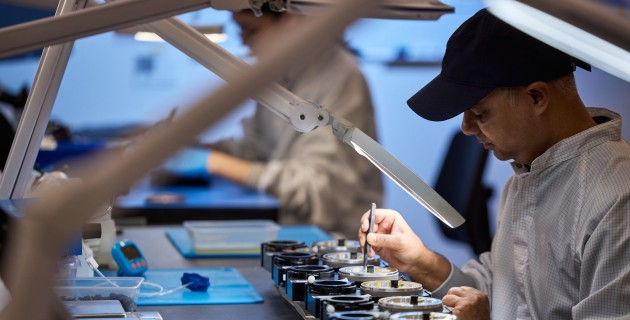
Building fibre-optic gyroscope (FOG) sensors precise enough to detect the Earth’s rotation requires engineering at a level similar to semiconductor fabrication, where even microscopic variations can affect performance. That makes the manufacturing technique itself part of the underlying intellectual property.

According to Advanced Navigation, it is one of a few companies globally with the capability to produce strategic-grade FOGs and laser velocity sensors at scale. These technologies provide the precision required for defence platforms to understand where they are and how they are moving when GPS is spoofed, jammed or unavailable – across any harsh environment.

“With technology this precise, you can’t separate engineering from manufacturing,” Vice President of US Operations at Advanced Navigation America, Chuck Matheny, said.

“Production, calibration and validation all have to work together. The capability developed in Australia gives us a strong foundation to build from as we establish dedicated manufacturing in Huntsville and respond to the specific requirements of U.S. defence programs.”

The Huntsville PNT Centre of Excellence will focus on advanced manufacturing, adding dedicated US production capacity alongside the company’s Australian operations.

It will support the production of technologies spanning fibre optics, MEMS and photonics, while enabling Advanced Navigation to undertake US-based production where required for sensitive and classified defence programs.

Huntsville was selected for its specialist workforce and defence base required to manufacture complex technologies. Surrounded by Redstone Arsenal, the Missile Defense Agency, NASA’s Marshall Space Flight Center and the headquarters of US Space Command, Huntsville has one of the highest concentrations of engineers and STEM workers per capita in the US.

“Our investment in Huntsville is an extension of what we have built in Australia, not a replacement for it,” Shaw said.

“This is about an Aussie deep-tech company taking its technology and manufacturing capability into one of the world’s largest defence markets, while continuing to invest, innovate and manufacture here at home.”

The expansion comes as Australia and its AUKUS partners deepen integration across their defence industrial bases and seek more resilient supply chains for critical technologies.

The Huntsville facility establishes a major US manufacturing node alongside Advanced Navigation’s Australian and United Kingdom operation arms, expanding across all three AUKUS nations.

This strengthens supply-chain redundancy, increases global production capacity and enables faster response to US defence requirements.

Advanced Navigation works directly with the Australian Department of Defence’s Global Supply Chain (GSC) Program to integrate its technologies into international defence networks. With more than 100,000 systems deployed globally, its customers include Anduril, Hanwha, Kongsberg, Rheinmetall, BAE Systems, Leonardo and Lockheed Martin.


Free Training

Source link

Alvotech Wins FDA Approval to Expand U.S. Manufacturing Capacity for SIMLANDI at Reykjavik Facility


Approval enables AVT02 drug substance for U.S. commercial supply to be manufactured in either of Alvotech’s two Reykjavik drug substance suites

Further confirms resolution of FDA inspection-related matters at the Reykjavik site

REYKJAVIK, Iceland (October 5, 2026)

– Alvotech (NASDAQ: ALVO; ALVO-SDB), a global biotechnology company specializing in the development and manufacture of biosimilar medicines for patients worldwide, today announced that the U.S. Food and Drug Administration (FDA) has approved a supplement to the Biologics License Application (BLA) for AVT02 (adalimumab-ryvk), marketed in the U.S. as SIMLANDI®, enabling drug substance for the product to be manufactured in a second production suite at the company’s Reykjavik facility. This approval further confirms resolution of inspection-related matters at the Reykjavik site.

“This approval is important both operationally and as a further regulatory milestone for our Reykjavik facility,” said Lisa Graver, Chief Executive Officer of Alvotech. “The addition of DSM2 effectively doubles the drug substance manufacturing capacity available to support U.S. supply and provides greater flexibility for commercial supply of AVT02 to the U.S. market. It also reflects the significant progress our teams have made in strengthening quality systems and manufacturing operations at the site.”

The second suite, DSM2, supports the complete drug substance manufacturing process, including cell culture and purification, and doubles Alvotech’s manufacturing capacity available to support U.S. supply. DSM2 is already approved for the manufacture of commercial drug substance for European markets, including for AVT02, AVT03, and AVT05. Following the FDA approval, Alvotech can now manufacture AVT02 drug substance for U.S. commercial supply in either DSM1 or DSM2, providing additional capacity and greater flexibility across its manufacturing operations.

The approval follows the FDA’s July 2026 closure of its most recent inspection of the Reykjavik facility with a Voluntary Action Indicated (VAI) classification. Alvotech therefore expects the FDA to be able to take action on other pending applications associated with the facility according to their respective goal dates. These include BLAs for AVT05, Alvotech’s proposed biosimilar to Simponi® and Simponi Aria® (golimumab), AVT06, Alvotech’s proposed biosimilar to Eylea® (aflibercept), AVT03, Alvotech’s proposed biosimilar to Prolia® and Xgeva® (denosumab) and AVT16/AVT80, Alvotech’s proposed biosimilars to Entyvio® (vedolizumab). Each application remains subject to the FDA’s individual review and regulatory decision.

About AVT02 / SIMLANDI® (adalimumab-ryvk)

AVT02 is a monoclonal antibody approved as a biosimilar to Humira® (adalimumab) in more than 50 countries globally, including the United States, Europe, Canada and Australia. It is currently marketed in the U.S. as SIMLANDI® and under private label, in Europe as HUKYNDRA®, in Canada as SIMLANDI® and in Australia as ADALACIP®. Teva Pharmaceuticals is Alvotech’s strategic partner for the exclusive commercialization of SIMLANDI® in the United States, while Alvotech is responsible for development and manufacturing.

For further information, contact:

Media

Benedikt Stefansson

Sarah MacLeod


[email protected]

Investors

Dr. Balaji V Prasad

Benedikt Stefansson

Mikaela Vilchez


[email protected]

About Alvotech

Alvotech is a biotechnology company, founded by Robert Wessman, focused solely on the development and manufacture of biosimilar medicines for patients worldwide. Alvotech seeks to be a global leader in the biosimilar space by delivering high-quality, cost-effective products and services, enabled by a fully integrated approach and broad in-house capabilities. Five biosimilars are already approved and marketed in multiple global markets, including biosimilars to Humira® (adalimumab), Stelara® (ustekinumab), Simponi® (golimumab), Eylea® (aflibercept) and Prolia®/Xgeva® (denosumab). The current development pipeline includes disclosed biosimilar candidates aimed at treating autoimmune disorders, eye disorders, and cancer. Alvotech has formed a network of strategic commercial partnerships to provide global reach and leverage local expertise in markets that include the United States, Europe, Japan, China, and other Asian countries and large parts of South America, Africa and the Middle East. For more information, please visit https://www.alvotech.com. None of the information on the Alvotech website shall be deemed part of this press release.

For more information, please visit our

website

or follow us on social media on

LinkedIn

,

Facebook

,

Instagram

, and

YouTube

.

Use of trademarks

Third party trademarks are the property of their respective owners.

Forward Looking Statements

Certain statements in this communication may be considered “forward-looking statements” within the meaning of the Private Securities Litigation Reform Act of 1995, as amended. Forward-looking statements include, for example, Alvotech’s expectations regarding competitive advantages, business prospects and opportunities including pipeline product development, future plans and intentions, regulatory submissions, review and interactions, the potential approval and commercial launch of its product candidates, the timing of regulatory approval, market launches and financial projections. Such forward-looking statements are subject to risks, uncertainties, and other factors which could cause actual results to differ materially from those expressed or implied by such forward-looking statements. These forward-looking statements are based upon estimates and assumptions that, while considered reasonable by Alvotech and its management, are inherently uncertain and are inherently subject to risks, variability, and contingencies, many of which are beyond Alvotech’s control. Factors that may cause actual results to differ materially from current expectations include, but are not limited to factors set forth in the sections entitled “Risk Factors” and “Cautionary Note Regarding Forward-Looking Statements” in documents that Alvotech may from time-to-time file or furnish with the SEC. There may be additional risks that Alvotech does not presently know or that Alvotech currently believes are immaterial that could also cause actual results to differ from those contained in the forward-looking statements. These forward-looking statements are provided for illustrative purposes only and are not intended to serve as, and must not be relied on by an investor as, a guarantee, assurance, prediction or definitive statement of a fact or probability. Alvotech does not undertake any duty to update these forward-looking statements or to inform the recipient of any matters of which any of them becomes aware of which may affect any matter referred to in this communication. Alvotech disclaims any and all liability for any loss or damage (whether foreseeable or not) suffered or incurred by any person or entity as a result of anything contained or omitted from this communication and such liability is expressly disclaimed.

Free Training

Source link

Tariffs on Canadian goods could reshape races in five battleground states


Trump’s escalating trade war with Canada could raise costs for businesses and consumers in key battleground states before voters head to the polls.

President Donald Trump’s escalating trade war with Canada is raising fresh concerns in battleground states ahead of the November midterms.

The U.S. and Canada have imposed tariffs on billions of dollars’ worth of goods, while Washington has also banned nearly $1 billion in Canadian imports, including alcohol, dairy products and motorcycles.

The latest measures took effect Sept. 29 as negotiations remain unresolved.

Trump says the tariffs will bring manufacturing back to the United States and protect American industries. But businesses could cut production, consumers could face higher prices and manufacturers could delay investments.

A FRESH MIDTERM HEADACHE FOR THE GOP JUST HIT A NATIONAL RECORD

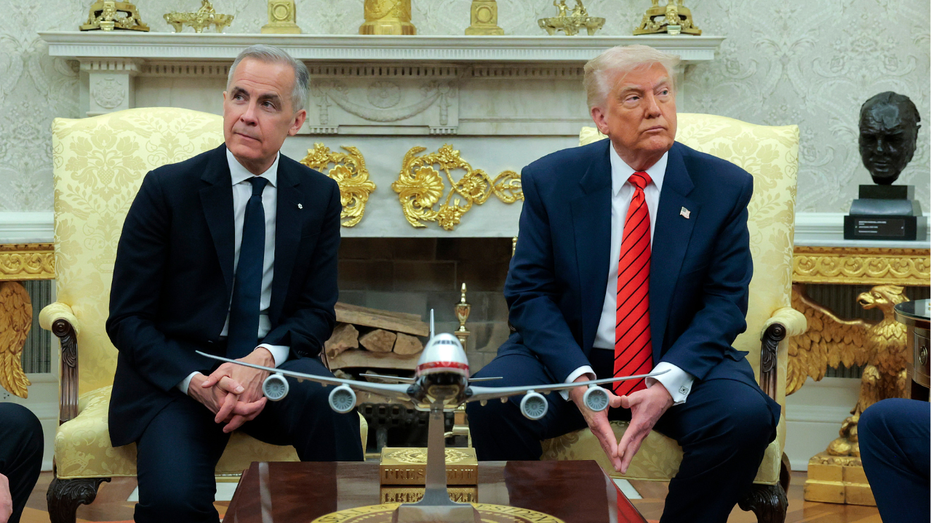
President Donald Trump meets with Canadian Prime Minister Mark Carney in the Oval Office.

The trade fight has escalated under Trump and Canadian Prime Minister Mark Carney, with negotiations breaking down and both countries imposing new measures targeting each other’s goods. (Getty Images)

“The cost of living, cost of goods, cost of doing business is such an important factor for Americans who are going to be casting a ballot,” David Clement, policy director of the Consumer Choice Center, told Fox News Digital.

Clement identified Ohio, Illinois, Michigan, Pennsylvania and Wisconsin as among the states most exposed to Canadian retaliation because of their manufacturing, agricultural and cross-border supply chains.

“American manufacturers or American businesses who rely on Canadian inputs are going to start to feel the pain right in the lead up to going to the ballot box,” he said.

The trade fight has escalated since Canada’s retaliatory tariffs took effect in September. At a recent G20 trade ministers meeting, U.S. Trade Representative Jamieson Greer acknowledged that key issues remain unresolved.

Ohio

Ohio is among the states most vulnerable to Canadian retaliation, with roughly $2.3 billion in exports exposed, according to Clement.

The state’s machinery, transportation, minerals and metals industries depend heavily on Canadian buyers and cross-border supply chains. Tariffs could make Ohio goods more expensive and reduce demand for products made by the state’s manufacturers.

Michigan

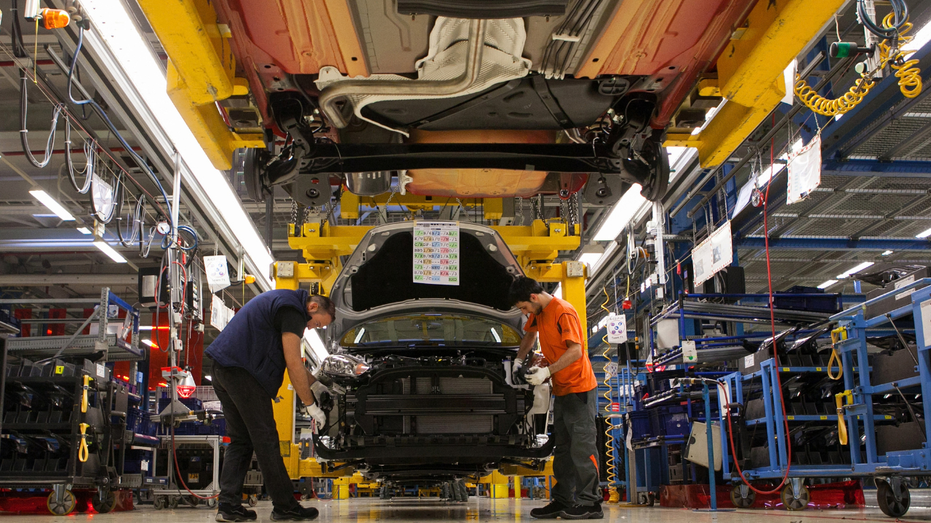
Men are seen working on a car at a Ford factory.

Michigan’s auto industry faces heightened uncertainty as tariffs threaten the deeply integrated supply chain connecting the state with Canada. (Krisztian Bocsi/Bloomberg/Getty Images)

Michigan may face the clearest risk because of its deeply integrated auto industry and close ties to neighboring Ontario.

Auto parts can cross the U.S.-Canada border multiple times before a vehicle is completed, meaning tariffs can increase costs at each stage of production.

A MUST-WIN MIDTERM STATE IS THE REAL LOSER OF TRUMP’S CANADA TRADE WAR

“Most Americans don’t know that a single component on a U.S.-assembled vehicle can cross the border upwards of eight times before it’s actually completed,” Clement said.

The stakes could rise further if the administration moves ahead with a possible 50% tariff on Canadian auto exports beginning Jan. 1 if the countries fail to reach an agreement.

Pennsylvania

Pennsylvania could have just under $1.8 billion in exports exposed, including machinery and equipment, according to Clement.

The state’s manufacturers depend on Canada as a major customer, while many also rely on Canadian inputs. That creates a double burden if tariffs make materials more expensive and finished products harder to sell.

Illinois

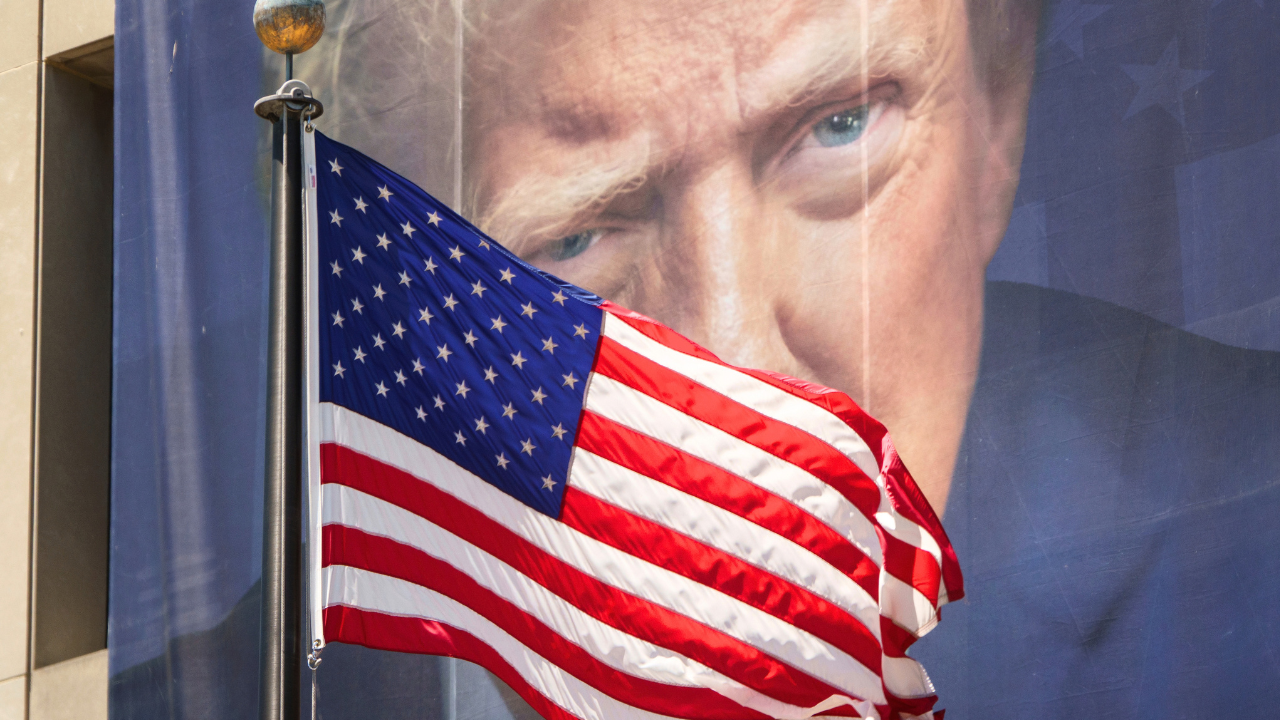
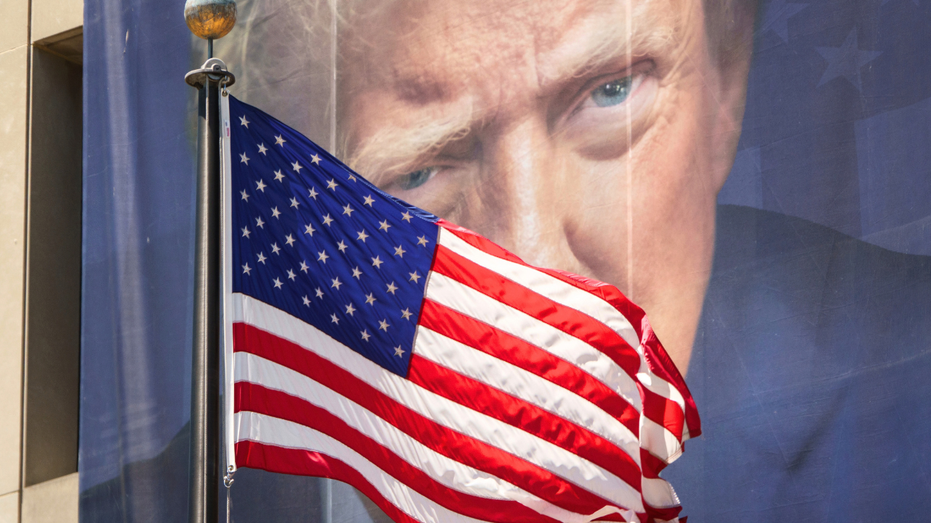
A banner with a portrait of U.S. President Donald Trump is displayed on the front U.S. Department of Labor Frances Perkins Building on May 30, 2026.

President Donald Trump has defended the tariffs as a way to protect American industries and bring manufacturing back to the United States. (Getty Images)

Illinois faces exposure across manufacturing, agriculture and transportation.

Its businesses sell machinery, food products and chemicals to Canada, while companies across the Midwest rely on Canadian materials and components. Tariffs could make those exports less competitive and eventually push higher production costs onto consumers.

Wisconsin

Wisconsin’s economy is closely linked to Canada through agriculture, manufacturing and food production.

The state exports dairy products, machinery and agricultural equipment. Canadian tariffs could make those goods more expensive and give Canadian buyers an incentive to seek alternatives.

Wisconsin farmers and manufacturers are particularly vulnerable because many operate on narrow margins and depend on predictable access to Canadian customers.

CLICK HERE TO GET FOX BUSINESS ON THE GO

Even if Democrats make gains in November, Clement said a change in congressional control would not necessarily end the tariffs because presidents have broad authority over trade policy.

But as the dispute continues, its impact on prices, jobs and businesses could become a decisive issue in the states that determine control of Congress.

Free Training

Source link

Japan’s impact on Mississippi takes center stage with 18,000 jobs


Oct. 3, 2026, 4:59 a.m. CT

  • A roundtable discussion at Millsaps College examined the future of U.S.-Japan relations and its economic impact on Mississippi.
  • Japan is one of Mississippi’s most significant international economic partners, with major investments in the state’s automotive industry.
  • Panelists highlighted that shared values of economic prosperity and security have sustained the strong alliance between the two nations.
  • The automotive sector, heavily supported by Japanese companies, employs over 18,000 Mississippians and generates billions in economic activity.

The relationship between the United States, in particular Mississippi, and Japan remains one of the world’s most important international partnerships.

That was the message as more than 100 business leaders, educators, economic developers, students and community members gathered at Millsaps College on Sept. 29 for a roundtable discussion examining the future of U.S.-Japan relations and the role those ties continue to play in Mississippi’s economy.

The event, “Partners in Progress: The Present & Future of Japan-U.S. Relations,“ was hosted by Millsaps in partnership with the Consulate General of Japan in Nashville and the Japan-America Society of Mississippi. The discussion was held in McMullan Lecture Hall and was followed by a cultural performance.

Panelists included Shinji Watanabe, consul general of Japan in Nashville; Regina Todd, assistant director of the Rankin First Economic Development Authority; Satoshi Matsumoto, senior director at Nissan North America; Tomoki Sato, production project vice president at Toyota Mississippi; Skip Skaggs, president of the Mississippi Automotive Manufacturers Association; and Millsaps College President Frank Neville.

Japan-U.S. partnership remains strong

Watanabe said the relationship between the United States and Japan remains one of the world’s most important international partnerships.

USA TODAY Shopping: Shop sales in tech, home, fashion, beauty & more curated by our editors.

“Our office covers five states, including Mississippi,” Watanabe said. “I had the opportunity to visit Mississippi from time to time, and it’s always a great pleasure to be here.”

Watanabe pointed to recent high-level discussions between Japanese and U.S. leaders as evidence of continued cooperation across economic, security and technology issues.

He said both countries are navigating a period of rapid change driven by artificial intelligence, emerging technologies and evolving global security concerns, making international partnerships increasingly important.

Japan has long been one of Mississippi’s most important international economic partners, with Japanese companies helping anchor the state’s manufacturing base and supporting thousands of jobs.

Major Japanese investments include Nissan North America’s assembly plant in Canton, which employs thousands of workers and produces vehicles for domestic and international markets; Toyota Mississippi’s Blue Springs facility, which manufactures the Corolla; and Yokohama Tire Manufacturing Mississippi in West Point, one of the largest tire plants in the nation. Hitachi Energy’s transformer manufacturing operations in Crystal Springs further underscore Japan’s long-standing investment and growing industrial presence in Mississippi.

Japanese suppliers and manufacturers are also part of Mississippi’s automotive supply chain, making Japan a key driver of the state’s manufacturing economy, export activity and workforce development efforts. Business leaders at the Millsaps forum noted that the relationship extends beyond trade, with decades of investment helping establish Mississippi as a major automotive manufacturing hub in the Southeast.

“The Japan-U.S. relationship is stronger than ever,” Watanabe said.

On the economic front, he noted that Japan has remained one of the largest foreign investors in the United States, with Japanese companies supporting nearly 1 million American jobs and continuing to expand investments in strategic industries.

Watanabe highlighted recent commitments aimed at increasing Japanese investment in sectors such as energy, infrastructure and critical materials.

“We are already seeing positive results from this relationship,” Watanabe said. “The strong Japan-U.S. relationship has stood the test of time.”

Shared values underpin alliance

Neville said the close relationship between the United States and Japan has endured since World War II because both nations share common goals centered on economic prosperity and stability.

“Since the postwar era, the United States and Japan have had a very close and lasting relationship because they share a couple of key values,” Neville said. “One is a desire for prosperity and investment that drives growth in both countries. There’s also a desire for regional and international security that helps protect and promote that prosperity.”

Those shared priorities have helped sustain the alliance through decades of political and economic change, Neville said.

At the same time, Neville argued that the world is entering a new era marked by uncertainty as longstanding geopolitical structures evolve.

“I think what we’re seeing right now in the world is the natural ending of the old order, and there’s a lot of uncertainty around what comes next,” Neville said.

Neville described the post-World War II international system as one in which the United States provided stability through security partnerships, freedom of navigation and a rules-based economic framework that encouraged trade and investment.

“The global order that has provided the context for that relationship is changing,” Neville said. “We have a very strong foundation for the relationship, but we’re now entering somewhat uncharted waters because the global order that has sustained it is evolving.”

Automotive industry’s impact highlighted

The discussion also focused on the significant role Japanese investment has played in Mississippi’s automotive sector.

Skaggs said the industry employs more than 18,000 Mississippians and generates an estimated $21 billion in annual economic activity.

“When you look at the automotive industry in Mississippi, you’re looking at more than 18,000 Mississippians working in the industry,” Skaggs said. “It’s about a $21 billion-a-year industry.”

Skaggs said automotive manufacturing produces one of the strongest economic multiplier effects of any industry in the state.

“For every automotive job, you’re creating multiple additional jobs,” Skaggs said. “That’s one of the highest multiplier factors for job creation.”

Skaggs said continued investments in workforce development and new technologies will be critical to maintaining Mississippi’s competitiveness in the global market.

“The important part is this industry continues investing in workforce growth and technology that allows us to do more and remain competitive,” Skaggs said.

Economic ties remain important for Mississippi

Throughout the discussion, panelists emphasized the importance of Japanese investment to Mississippi’s economy, particularly through the state’s automotive manufacturing sector and related supply chains.

Speakers discussed how changes in global trade, advanced manufacturing and emerging technologies are reshaping economic development strategies while creating new opportunities for collaboration between Mississippi and Japan.

Organizers said the forum was designed to strengthen cultural and economic ties while underscoring Japan’s continued importance as one of Mississippi’s key international business partners.

More than 100 business leaders, educators, students and community members gathered at Millsaps College on Sept. 29 for a roundtable discussion examining the future of U.S.-Japan relations and the role those ties continue to play in Mississippi's economy.

Ross Reily is a writer for the Clarion Ledger, part of the USA TODAY Network. He can be reached at rreily@gannett.com or 601-573-2952. You can follow him on the X platform, formerly known as Twitter @GreenOkra1.

Free Training

Source link

Inflation’s Next Wave? A Critical U.S. Manufacturing Gauge Just Surged 10% Higher


Factory purchasing managers just sent a signal that the last stretch of falling inflation may be coming to an end, and the reason behind it traces straight back to what consumers are doing with their wallets.

This post may contain links from our sponsors and affiliates, and Flywheel Publishing may receive compensation for actions taken through them.

Factory purchasing managers paid sharply more for materials in September. The Institute for Supply Management (ISM) reported that its Manufacturing Prices Paid Index rose from 71.1 to 77.9, a one-month gain of about 9.6% and the highest reading since May. A reading above 50 signals rising prices; near 78 indicates broad, accelerating increases.

It was also the index’s largest monthly increase since February. Since the start of the year, the index has gained 19.4 points, its third-biggest nine-month increase since 2021. That year is the right comparison. In 2021, factory input costs rose this quickly and reached store shelves within months.

Why Demand Is Driving Prices Higher Now

What stands out in September is the reason for the increase. Factories are busy. The ISM’s headline Purchasing Managers’ Index (PMI) came in at 54.5, its ninth consecutive month of expansion and its longest streak since 2022. New orders rose to 55.3. The backlog of unfilled orders jumped 4.6 points to 56.4, its second-highest level since May 2022.

Mark Vitner, chief economist at Piedmont Crescent Capital, named his review “The Order Book Reopened as Prices Snapped Back.” When orders arrive faster than plants can fill them, suppliers gain pricing power and manufacturers have less room to absorb increases.

Consumers are creating that demand. Retail sales hit a record $737.8 billion in August. That was 1.1% more than in July and 5.4% more than a year earlier. When shoppers keep spending at that pace, companies can pass along higher costs. Imports are rising quickly as well. In July, the trade deficit widened by $17.4 billion to $88.6 billion, which is outside its typical range of -$60B to -$80B.

What Higher Factory Costs Mean for Your Household Budget

Inflation was already running above target before this new pressure showed up. The Consumer Price Index (CPI) rose 3.4% from a year earlier in August, including a 0.4% increase in that month alone. Core Personal Consumption Expenditures (PCE) inflation, the Federal Reserve’s preferred measure, was 3.0%, compared with the central bank’s 2% target.

Higher producer costs typically reach consumers within months, first in goods made from metals, plastics, chemicals and packaging: appliances, auto parts, home improvement supplies and packaged food. Households should expect goods prices to rise through the holiday season and into early 2027.

The Fed is looking at the same data. Reuters reported that August inflation rose below expectations, giving the Fed breathing space. Bloomberg reported that Scott Bessent urged the Fed to keep an “open mind” on the inflation outlook. The September factory survey suggests that breathing space may not last. The CPI figures that pleased policymakers measure prices that were set before this jump in input costs.

Three Signals to Watch Before Year-End

Three readings will show whether September was a one-time jump or the start of a lasting rise in prices. The first is the ISM’s October report, due in early November. A second straight prices reading in the high 70s would confirm the pressure is staying. The second is the backlog index. If factories add capacity and work through their orders, their pricing power fades.

If backlogs keep growing, it strengthens. The third is goods prices in the next two CPI reports. If goods inflation speeds up while core PCE stays at 3.0%, the Fed loses the room August gave it. Borrowers hoping for lower rates would then face a longer wait.

Contact [email protected] for any questions or corrections.

Free Training

Source link

6K Additive Secures $27.4 Million EXIM Loan For U.S. Manufacturing Expansion


6K Additive has executed a final $27.4 million secured loan agreement with the Export-Import Bank of the United States to expand domestic manufacturing capacity for critical materials used in aerospace, defense, space, energy and advanced industrial applications.

The six-year facility is available for drawdown through June 30, 2028.

The financing includes an initial 12-month interest-only period followed by amortizing principal payments during the remaining five years.

The loan will carry a fixed Commercial Interest Reference Rate determined five business days before the first disbursement. The published rate cited in the announcement was 5.38%.

Up to $25.2 million of the facility will finance eligible project costs, while up to $2.2 million will finance an 8.9% EXIM exposure fee on disbursements.

6K estimated an all-in annual borrowing cost of approximately 6.86% based on then-current published rates. The facility also includes a 0.5% annual commitment fee on undrawn and uncanceled commitments during the drawdown period.

Proceeds are immediately available to reimburse 6K for equipment and infrastructure purchases related to expansion of its Burgettstown, Pennsylvania, manufacturing facility.

The expansion includes four new buildings and additional manufacturing equipment intended to increase production of nickel, titanium, tungsten, C-103 and other advanced metal powders.

The loan was approved through EXIM’s Make More in America Initiative in coordination with the U.S. Department of War’s Defense Production Act Title III initiative.

6K said the financing was initially approved by EXIM’s board in December 2025, subject to completion of final loan documentation.

KEY QUOTES:

“Finalizing this agreement with EXIM marks an important milestone for 6K Additive and reinforces the strategic importance of expanding domestic production of the critical materials essential to America’s defense and advanced manufacturing industries. This investment directly supports the Make More in America Initiative and provides 6K Additive with the funding required to execute our planned capacity expansion while preserving our existing capital to support continued growth. We greatly appreciate EXIM Chairman John Jovanovic’s leadership and support in bringing this agreement to completion.”

Frank Roberts, CEO of 6K Additive

Thank you for visiting Pulse 2.0. We work hard every day to bring leaders and decision makers like you the latest intelligence on business, finance, capital markets, deal flow, law, tech, and AI. Click here to subscribe to the Pulse 2.0 Newsletter.

Free Training

Source link

Bayer plans $2.2 billion U.S. manufacturing expansion


NEW ALBANY, Ohio — Bayer plans to invest $2.2 billion in a new pharmaceutical manufacturing site in New Albany, a project expected to create about 600 jobs and expand the company’s U.S. production capacity.

The new facility will be located in the New Albany International Business Park and is designed to manufacture medicines for patients in the United States and other markets. Bayer said the investment builds on more than $7 billion it has spent on U.S. pharmaceutical research and development and manufacturing over the past five years.

“Bayer has long seen the United States as a key manufacturing base and innovation hub. This landmark investment underscores our commitment,” said Bill Anderson, CEO of Bayer. “The new site will be home to manufacturing expertise and a skilled workforce that will strengthen our ability to deliver innovative, high-quality medicines to patients both in the United States and abroad.”

The flexible, modular campus will combine drug substance and drug product manufacturing and use digital and automation technologies. Production will initially support Bayer’s portfolio in oncology, cardiovascular and renal care.

The first module, focused on drug substance manufacturing, is expected to begin operations in 2031. A second module for drug product manufacturing is planned to follow in 2034.

“The United States is a key market for Bayer’s Pharmaceuticals division. This expansion is another important step to grow our pharmaceuticals business and to meet the demand of our customers and patients in the U.S., our fastest-growing pharmaceuticals market, and beyond,” said Sebastian Guth, global chief operating officer of Bayer Pharmaceuticals and president of Bayer U.S.

In addition to approximately 600 permanent jobs, Bayer expects the project to support roughly 1,500 construction jobs.

“The facility will be a strong strategic addition to our global Product Supply network. As we continue to invest in our existing manufacturing sites around the globe, our planned presence in Ohio will further enhance our ability to serve our markets with greater resilience and reliability,” said Holger Weintritt, head of Product Supply at Bayer’s Pharmaceuticals division.

The Ohio operation will complement Bayer’s U.S. pharmaceuticals headquarters in Whippany, N.J., and its existing locations in Pennsylvania, California, Massachusetts and North Carolina. Bayer also plans for the site to be part of a U.S.-based collaboration network connecting academic research with pharmaceutical manufacturing expertise.

Subscribe to Our Newsletter

Get the weekly Mass Market Retailers newsletter delivered straight to your inbox.

Submit Your Press Release

Have news to share? Send us your press releases and announcements.

Send Press Release

Free Training

Source link

US to unveil measures against excess manufacturing in ‘weeks’: Nikkei report


SINGAPORE – US President Donald Trump’s administration will act soon, most probably with a harsh trade tariff, against trading partners allegedly producing more goods than they can consume domestically.

US Trade Representative (USTR) Jamieson Greer told Japanese news outlet Nikkei Asia: “If you’re a country that doesn’t take action to stop the effects of excess capacity… whether it’s in your country or coming from a third country, I’m not going to sit there and take it.”

“The United States is going to act,” he said in an interview on the sidelines of the G-20 (Group of Twenty) meeting in the US city of Milwaukee.

Greer said the US will announce countermeasures within “weeks” against overproduction that displaces existing US domestic production or prevents investment and expansion in the US manufacturing sector.

The USTR launched an investigation in March against 16 economies, including Singapore, under Section 301 of the Trade Act focused on alleged excess manufacturing capacity.

Other economies subject to the inquiry include some of the US’ largest trading partners: China, the European Union, Mexico, India, Japan, South Korea and Taiwan.

Switzerland, Norway, Indonesia, Thailand, Malaysia, Cambodia, Vietnam and Bangladesh are also part of the investigation.

A new tariff will add to the 12.5% levy Singapore became subject to in July following a USTR scrutiny into 60 US trading partners regarding their alleged failure to enforce prohibitions on imports made with forced labour.

Separately, US sectoral tariffs – with rates ranging from 25% to 50% – on steel, aluminium, copper and automotive parts also apply to some Singapore exports. The Republic may also face a possible US tariff on its semiconductor exports.

In the interview with Nikkei, Greer cited intense competition, or involution, in China’s electric vehicle market as an example of excess production that squeezes profit margins.

You can see “the Chinese on their own independently acknowledging to some degree that excess capacity exists”, Greer said. “They call the effects of it involution, but it’s rooted in excess capacity.”

Greer also referred to the G-20 meeting in Milwaukee, where trade officials from member countries announced an agreement to tackle the global steel glut, which many believe stems from state subsidies that encourage excess production of the refined metal.

In an earlier meeting of G-20 finance ministers and central bank governors in North Carolina’s Asheville in late August, 19 of the 20 members agreed to take action against non-market economic policies, excessive trade surpluses, and an over-reliance on cheap exports.

Greer said that at international forums like the G-20, China is “generally defensive about this because they know that they are part of the broader distortion”.

He also called out the policies of China’s neighbours including Japan and Vietnam, which have seen their exports to the US rise in recent years as shipments from China declined.

Vietnam has “no consumption”, Greer told Nikkei. Workers there “can’t buy the things they’re making, so they have to send them to us”.

“They need to increase their domestic demand” through measures including protection of worker rights and higher wages, he said.

Greer also suggested that Japan has its own overcapacity problem.

“They have zombie firms that should have been bankrupt long ago, but they just… keep them surviving, whether it’s Japan or other countries,” he said.

In its engagements with Trump administration officials, Singapore has denied that it enjoys a trade surplus with the US or that its exports to the world’s largest economy stem from any form of excess capacity.

In fact, the US has maintained a substantial trade surplus with Singapore for more than two decades. In 2025, that surplus exceeded US$33 billion (S$42 billion), according to the Ministry of Trade and Industry.

Singapore, despite its small size, is the third-largest Asian investor in the US, behind Japan and South Korea. Bilateral trade and Singapore’s investments in the US support around 350,000 American jobs.

About 6,600 American companies are based in Singapore, while more than 250 Singapore companies operate across 45 US states, in sectors ranging from logistics and agribusiness to aerospace and shipbuilding.

Free Training

Source link

GMP Labeling Celebrates 40 Years of US Manufacturing for Regulated Industries


GRANITE BAY, Calif., Oct. 1, 2026 /PRNewswire/ — As pharmaceutical and biotechnology sectors navigate evolving global supply chain risks, GMP Labeling Inc. is utilizing Manufacturing Day 2026 to highlight its nearly 40-year history as a domestic manufacturer of critical compliance identification. The company specializes in the foundational traceability components required for stringent regulatory environments. View the company’s core capabilities and full catalog.

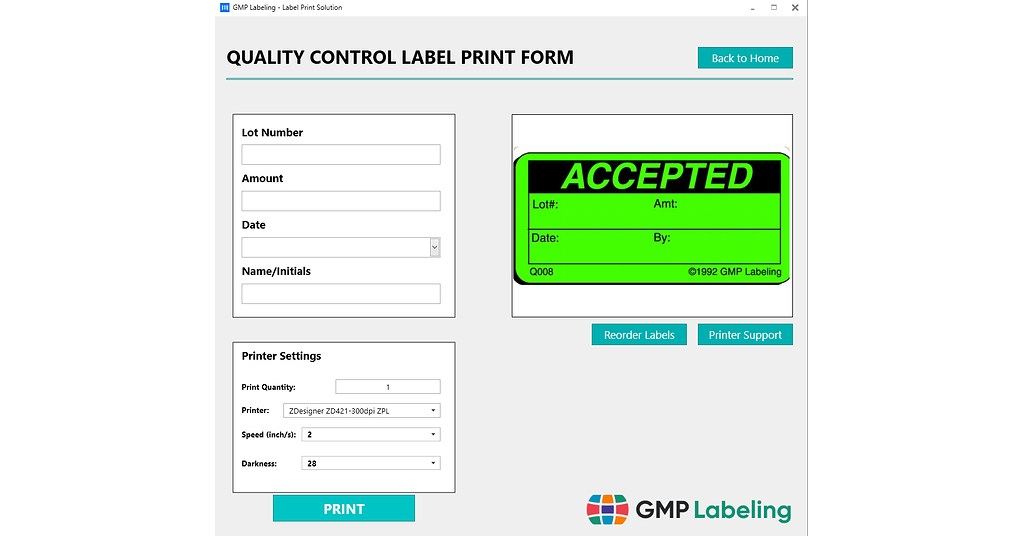
Screenshot of GMP Labeling Quality Control Label template in Loftware Cloud Essentials.

Screenshot of GMP Labeling Quality Control Label template in Loftware Cloud Essentials.

While often viewed as minor components, labels for quality control, sample identification, and equipment status represent a potential vulnerability in highly regulated production lines. Material inconsistencies or shipping delays can interrupt manufacturing workflows, complicate federal audits, and compromise the integrity of quality records.

“In the highly regulated environments of biotechnology and medical manufacturing, a label is far more than a simple supply item,” said Robin Kalsbeek, General Manager of GMP Labeling. “It is a critical element of traceability and compliance.”

Strategic advantages for life sciences

For pharmaceutical and medical device manufacturers, the company’s domestic production model supports specific operational requirements:

  • Supply Chain Reliability: Stock quality control labels remain available for rapid dispatch to prevent production bottlenecks.
  • Material Continuity: Revision-controlled development and lot segregation practices ensure material consistency, mitigating risk for long-term projects.
  • Regulatory Qualification: The ISO 9001-certified quality management system is open for customer review, facilitating the documentation required for rigorous supplier evaluation programs.
  • Environmental Performance: Specialized engineering enables label durability in demanding conditions, including cryogenic storage, autoclave cycles, and xylene exposure.

GMP Labeling has maintained its manufacturing footprint in the United States since its founding in 1987. The organization provides a stable alternative to international suppliers susceptible to logistics volatility.

This domestic focus ensures that biotech and medical device firms can maintain continuous compliance with safety standards through dedicated account management and technical expertise. The company’s catalog further extends to facility signs, barcode printers, and custom identification solutions designed for cleanroom-compatible applications.

GMP Labeling is a trusted provider of compliance-focused label solutions for medical device, pharmaceutical, biotechnology, and other regulated manufacturing environments. GMP Labeling partners with leading technology and material suppliers to deliver durable, traceable, and customizable labeling systems that support quality, safety, and regulatory requirements. The company’s solutions include quality control labels, custom labels, asset tags, calibration and safety labels, thermal printers, ribbons, and software integration services.

SOURCE GMP Labeling Inc.

Free Training

Source link

US manufacturing index expands for ninth straight month, but price pressures surge in September


ANI |
Updated:
Oct 01, 2026 20:17 IST

Washington [US], October 1 (ANI): US manufacturing activity remained in expansion territory for the ninth consecutive month in September, even as a sharp rise in prices pointed to growing cost pressures for manufacturers, according to the latest PMI data report from the Institute for Supply Management (ISM).
The ISM Manufacturing Purchasing Managers’ Index (PMI) is a monthly indicator that tracks activity in the US manufacturing sector. A reading above 50 per cent indicates that the sector is generally expanding, while a reading below 50 per cent indicates contraction.
The data highlighted that the Manufacturing PMI stood at 54.5 per cent in September, down slightly from 54.6 per cent in August. The overall US economy continued to expand for the 23rd consecutive month, according to ISM.
ISM said manufacturers’ comments reflected concerns over pricing volatility, tariffs and the Iran war. Pricing volatility was mentioned in 46 per cent of negative comments, while tariffs were cited in 34 per cent and the Iran war in 30 per cent.
Of the six largest manufacturing industries, five expanded in September — Computer & Electronic Products, Food, Beverage & Tobacco Products, Transportation Equipment, Machinery and Chemical Products.
The data showed that demand conditions improved during the month. The New Orders Index rose to 55.3 per cent from 53.7 per cent in August, marking its ninth consecutive month of expansion. The Backlog of Orders Index also increased to 56.4 per cent from 51.8 per cent.

However, the increase in prices was a key feature of the September data. The Prices Index jumped 6.8 percentage points to 77.9 per cent, from 71.1 per cent in August. ISM said the index returned to its level at the start of the Iran War.
“The Manufacturing PMI registered 54.5 per cent in September, 0.1 percentage point below the August figure of 54.6 per cent,” said Susan Spence, Chair of the ISM Manufacturing Business Survey Committee.
Production continued to expand but at a slower pace. The Production Index stood at 56.7 per cent, down from 58.3 per cent in August. Despite the slowdown, production has now expanded for the 11th consecutive month.
Employment also improved during September. The Employment Index rose to 52.7 per cent from 51.2 per cent in August, indicating continued expansion in manufacturing employment.
The data also showed pressure on inventories. The Inventories Index fell to 48.6 per cent from 50.6 per cent, moving back into contraction. 
Export orders continued to grow, although at a slower pace. The New Export Orders Index stood at 50.9 per cent, down from 53.2 per cent in August. The Imports Index also declined to 51 per cent from 52.5 per cent.
Overall, the September data showed that US manufacturing continued to expand, supported by stronger new orders and employment, while rising prices emerged as a key pressure point for the sector. (ANI)

Free Training

Source link