Australian Dollar slips after upbeat US ISM Manufacturing data


AUD/USD extends its pullback toward the 0.6990 area during Monday’s American session after stronger-than-expected United States (US) manufacturing data reinforced the US Dollar (USD). The pair had rallied above 0.7050 at the start of trading this week but failed to sustain gains as investors reassessed the Federal Reserve (Fed) outlook following resilient economic activity.

The ISM Manufacturing Purchasing Managers Index (PMI) rose to 55.6 in July, beating market expectations of 54.0 and improving from 53.3 in June. Meanwhile, the New Orders Index increased to 56.7 from 56.0, pointing to solid demand across the manufacturing sector. The Prices Paid Index eased to 71.1 from 73.0, although it remained well above the 50 threshold, suggesting inflationary pressure continues to persist despite some moderation.

The stronger ISM figures prompted a rebound in US Treasury yields and supported the Greenback, weighing on risk-sensitive currencies such as the Australian Dollar (AUD). However, the softer reading in the Prices Paid component could temper expectations of an even more aggressive Fed stance if inflation continues to cool gradually.

Attention now turns to the Asia-Pacific session, where Australia will release the final S&P Global Services and Composite PMIs for July. Markets expect the Services index to be confirmed at 53.0 and the Composite gauge at 52.6, both unchanged from their prior readings and consistent with a modest but steady expansion in private-sector activity. An upside surprise on either measure could hand the Aussie renewed support by reinforcing confidence in domestic business conditions, while a downward revision would suggest momentum in the services sector is fading.

Traders will also keep a close eye on China’s RatingDog Services PMI, the privately compiled survey covering Australia’s largest trading partner. The index is forecast at 53.7 in July, easing from 54.1 in June but still holding comfortably above the 50 mark that separates expansion from contraction.

Chart Analysis AUD/USD

Short-term technical analysis:

On the 4-hour chart, AUD/USD trades at 0.6993, hovering just under the 20-period Simple Moving Average (SMA) at 0.6997 while holding above the 100-period SMA at 0.6984, which suggests a broadly neutral near-term tone with a slight downside risk. The horizontal support at 0.6985 aligns with the longer-term SMA, forming a nearby demand area, while the Relative Strength Index (RSI) around 47 hints at consolidative momentum rather than a clear trending phase.

On the topside, initial resistance emerges at the 20-period SMA near 0.6997, followed by the horizontal barriers at 0.6999, 0.7009 and the former opening level at 0.7018, which together define a gradual supply zone overhead. On the downside, immediate support is seen at 0.6985, with the 100-period SMA at 0.6984 reinforcing this floor; a sustained break beneath this cluster would open the door to a deeper pullback within the current range.

(The technical analysis of this story was written with the help of an AI tool. Know more.)

Free Training

Source link

Octapharma To Build $1.5 Billion Critical Care Manufacturing Facility In South Carolina


Octapharma plans to invest $1.5 billion in its first U.S.-based manufacturing and production facility, creating approximately 1,500 full-time jobs in Rock Hill, South Carolina.

The 50-acre campus will be developed at Palmetto Research Park and is expected to become one of the largest private biomedical investments in South Carolina’s history.

The facility will produce plasma-derived therapies from Octapharma’s portfolio, establishing domestic manufacturing capabilities for medicines currently supported by the company’s international production network.

Octapharma also plans to manufacture bleeding management and trauma care products used for national security and emergency preparedness purposes.

The project is intended to reduce dependence on overseas pharmaceutical supply chains while bringing production closer to the plasma donated in the United States and the American patients who rely on the company’s treatments.

Octapharma selected Rock Hill following a planning and zoning process conducted with Rock Hill and York County officials and in coordination with local, state and federal leaders.

The company cited South Carolina’s advanced manufacturing infrastructure, logistics network, access to deep-water ports and growing biomedical workforce as factors supporting the location decision.

Octapharma expects demand for its existing therapies and future products to increase, requiring the company to expand its manufacturing capacity.

Construction and groundbreaking details will be announced at a later date.

Headquartered in Lachen, Switzerland, Octapharma develops and manufactures human protein therapies derived from human plasma and cell lines. The company has more than 11,000 employees and serves patients in 117 countries across immunotherapy, hematology and critical care.

Octapharma currently operates five European manufacturing facilities, seven research and development sites and more than 200 plasma donation centers across the United States and Europe.

KEY QUOTES:

“We expect significant future growth, driven by our existing life-saving therapies and a strong pipeline of new products. Our manufacturing capacity must evolve to support this ambition, and our U.S. manufacturing facility will be an important milestone. From a U.S. national security perspective, having the ability to produce and supply our therapies domestically is invaluable.”

Wolfgang Marguerre, CEO and Chairman of Octapharma

“We have built a significant presence in the U.S. over the last 20 years through our commercial capabilities, alongside our extensive network of plasma donation centers. As the demand in the U.S. for our portfolio of products continues to grow, the new U.S. manufacturing site will bring production of our FDA-approved therapies closer to both the plasma donated in the U.S. and to the patients who rely on them.”

Tobias Marguerre, Deputy Chairman of Octapharma

“Octapharma appreciates the good-faith work of every elected official and staff member in York County and Rock Hill who helped bring this to fruition. We also want to thank Governor McMaster and South Carolina’s federal and state delegation for their support in welcoming Octapharma to the Palmetto State.”

“South Carolina’s talented workforce, strong life sciences ecosystem and pro-business environment made it clear this was the right home for our first U.S. manufacturing facility.”

Flemming Nielsen, President of Octapharma USA

Thank you for visiting Pulse 2.0. We work hard every day to bring leaders and decision makers like you the latest intelligence on business, finance, capital markets, deal flow, law, tech, and AI. Click here to subscribe to the Pulse 2.0 Newsletter.

Free Training

Source link

How Can US Factories Get Cleaner Heat? These Ideas May Help. – Mother Jones


An American flag hangs over a brightly lit manufacturing facility.

Michael Hickey via Getty for GE Appliances, a Haier company

Get your news from a source that’s not owned and controlled by oligarchs. Sign up for the free Mother Jones Daily.

This story was originally published by Canary Media and is reproduced here as part of the Climate Desk collaboration.

American households are all too familiar with the pain of high electric bills, which are climbing nationwide. The same problem is quietly hindering the country’s factories from cleaning up their operations, too.

Hundreds of thousands of US manufacturing facilities burn fossil fuels to produce the heat they need to make packaged foods, bottled drinks, construction materials, and likely everything in your bathroom cabinet. It’s why the industrial sector accounts for nearly one-third of the country’s carbon dioxide emissions from energy use.

Cleaner technologies like industrial heat pumps, electric boilers, and heat-storing batteries are already commercially available. Yet even companies that are committed to decarbonizing can find it hard to justify making the switch. The underlying problem is that in virtually every state, electricity costs more than natural gas for industrial users.

“We have to have solutions that are at the very least competitive with the existing cost of fuel,” said Neil Brown, a chemical engineer at Tennessee-based Eastman Chemical, which has over a dozen manufacturing sites in the US and more abroad. ​“In some places where Eastman operates, in parts of the Southeast and Texas, it is very difficult to compete with the low cost of natural gas.”

Brown was speaking on a webinar last month held by the Renewable Thermal Collaborative and Industrial Heat Pump Alliance. The groups looked at electrifying low- to medium-temperature processes, and estimated it would add roughly 250 terawatt-hours to the industrial sector’s annual electricity demand by 2035—or nearly 25 percent more power than manufacturers currently use.

On the plus side, deploying clean industrial technologies could generate around $471 billion in total economic output over the next decade, even when accounting for the lost jobs and diminished business activities of gas utilities and equipment makers, according to the groups’ June report.

“In states where you have very good solar quality and natural gas prices are high, … it makes economic sense for the industry to do this.”

But reaping those benefits will first require finding ways to drive down the cost of electricity for manufacturers. A growing number of climate and energy experts are studying that challenge and proposing solutions for policymakers and utilities to consider.

One of those strategies could be to build renewable energy projects directly beside factories.

Researchers at the University of California, Berkeley, recently modeled what would happen if factories themselves installed off-grid solar or wind projects on-site and used the clean electricity to power thermal storage systems and heat pumps. The team looked at nearly 3,600 locations across the country, evaluating land availability, solar-power potential, and local natural gas prices for each site.

Renewable-powered heat systems could economically supply up to one-third of the studied industrial heat demand by 2035, they said in an analysis announced last week.

The researchers found that such an approach would make it more cost-effective to run heat pumps than gas boilers for industrial processes below 200 degrees C (392 degrees F)—a broad category that includes beer making, paper production, and textile manufacturing. Meanwhile, thermal batteries would offer ​“competitive or lower costs” for scorching-hot operations like glass melting and steel manufacturing.

“In states where you have very good solar quality and natural gas prices are high, like in California, it makes economic sense for the industry to do this, because they will save some money on their heating costs,” said Amol Phadke, a co-author of the report and an adjunct associate professor at UC Berkeley’s Goldman School of Public Policy.

However, even states without California’s abundant sunshine can still produce low-cost solar power, thanks to declining solar-panel prices. The vast majority of sites in the study have sufficient buildable land to install solar projects.

Phadke added that building off-grid systems would give factories faster access to renewables, since grid-tied wind and solar farms have to wait in long interconnection queues, which can delay projects for years. Ditching the utility would also let manufacturers avoid paying steep grid-delivery charges and other expenses—and sidestep competition with data center operators for power from an increasingly strained grid.

The new site-level data ​“is really helpful for project developers and technology developers to know how to prioritize their efforts, in terms of where to go and pitch industries on,” said José Domínguez, the study’s lead author and a research affiliate at the Goldman School.

The fact remains, though, that many factories will continue to rely on the electric grid in the near term. To get these facilities to consider transitioning to cleaner heat, the cost of electricity needs to come down.

The concept of electricity rate reform is gaining traction among decarbonization advocates, state policymakers, and manufacturers like Eastman as a tool for narrowing the gap between electricity and natural gas prices.

“Reforming electric rates is a good way to improve the economics of electrification while taking advantage of our clean electricity generation.”

In California, Senate Bill 943 would authorize the state’s Public Utilities Commission to fix utility rates and fees to make it more affordable for large industrial and commercial customers to switch from fossil fuels to electric heat. The bill passed the Senate in May and is now headed to the state Assembly’s Appropriations Committee.

In the Upper Midwest, the utility Otter Tail Power recently developed a novel electricity tariff that is designed to boost the bottom line of thermal energy systems and to ensure they benefit everyone on the grid. The first project to take advantage of this new rate is Antora Energy​’s 5-gigawatt-hour battery in South Dakota, which turns cheap wind energy into clean industrial steam for Poet​’s nearby ethanol-production plant.

“Reforming electric rates is a good way to improve the economics of electrification while taking advantage of our clean electricity generation,” said Lauren Kubiak, a senior scientist for the Natural Resources Defense Council who works on California climate and energy policy.

Kubiak led a new study analyzing how this strategy could improve the costs of operating industrial heat pumps in two major manufacturing states: California and Michigan. While heat pumps are significantly more energy-efficient than gas-fueled boilers, they’re typically not cost-effective to operate in either state, given current electricity prices.

The study examined what would happen if companies paid only ​“marginal” electricity costs, which reflect the actual cost of generating and transporting an additional unit of electricity. Today, ratepayers also pay ​“non-marginal” costs that help cover things like grid maintenance and infrastructure upgrades, net-metering programs for rooftop solar, and, in California, wildfire-prevention efforts.

“In California, [marginal-cost] rates enabled heat pumps to become pretty cost-competitive with gas boilers,” Kubiak said. That’s particularly true for major subsectors that require low-temperature heating.

For Michigan manufacturers, the impact is more muted, since the state’s electricity rates are lower than California’s and don’t include as many non-marginal costs. However, charging factories marginal rates would still reduce the size of the electricity-gas cost gap, enough that layering on other industrial policies—such as a tax credit that rewards low-carbon heat production—could bridge that divide almost entirely.

In the report, Kubiak and her co-authors suggest that utilities could offer marginal cost rates only to new heat pumps that displace fossil fuel–generated heat. These rates could also be set to encourage manufacturers to use electricity during times when solar projects are producing excess electricity, or when overall grid demand is low. That should help avoid saddling other ratepayers with the non-marginal costs that these new heat pumps won’t be paying.

“Electric rate reform is a tool in our toolbox that hasn’t been used to its fullest extent just yet,” Kubiak said.

Free Training

Source link

Crossville Named McDonald’s Supplier of the Year | News


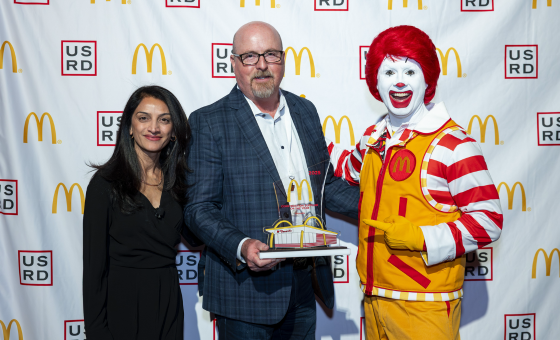
[Mountville, Pa.] Crossville has been named McDonald’s U.S. Construction Supplier of the Year for 2026. The award was presented at the McDonald’s USRD External Partner Summit in Las Vegas, where McDonald’s celebrated the partners who delivered exceptional results across its development supply chain.

Supplier of the Year recognizes partners who deliver exceptional quality, reliability and collaboration. Crossville has consistently supported key development initiatives with strong technical expertise and dependable United States manufacturing that helps meet the needs of our restaurants across the country.

Image“We are honored to receive this recognition from McDonald’s,” said Scott Crandall vice president national accounts, AHF Products. “Crossville has supported McDonald’s restaurant design vision for many years with durable American made porcelain tile and a commitment to consistent quality. This award reflects the dedication of our teams and the strength of a partnership that continues to grow.”

“We have been proud to support McDonald’s for more than 25 years,” said Heidi Vassalotti, director of strategic accounts, AHF Products. “Our focus has always been to provide reliable supply, consistent quality, and tile solutions that help McDonald’s build durable and efficient restaurants across the United States. It is a privilege to work alongside their design and construction teams and contribute to a system built on collaboration and long-term success.”

Crossville’s U.S. manufacturing operations in Tennessee are designed for the needs of national quick service restaurant (QSR) programs. Durable, high performance porcelain tiles are engineered for heavy traffic, fast paced construction schedules and long-term commercial performance. With domestic production and a dependable supply chain, Crossville provides consistency and responsiveness that are more important than ever for large scale restaurant development.

https://www.floorcoveringweekly.com/Uploads/Public/Images/12320/2026/07 July/News/ahfmcd.png
Tabassum Zalotrawala, senior vice president and chief development officer, McDonald’s USA, Scott Crandall VP National Accounts-AHF Products, and Ronald McDonald.

Free Training

Source link

NJBIA’s Siekerka Presents National Manufacturing Leadership Award


NJBIA President & CEO Michele Siekerka, who also chairs the Conference of State Manufacturers Associations, presented the Arizona Chamber of Commerce & Industry with COSMA’s 2026 Leadership Award at the conference’s annual meeting this week.

The award recognizes an association for its outstanding advocacy, organizational excellence, innovation, industry promotion, and growth over the previous year.

The Arizona chamber received the award for successfully working with the U.S. Environmental Protection Agency to secure regulatory relief for the Phoenix-Mesa area, where manufacturers faced stricter air quality requirements because of pollution drifting in from outside the region.

“The Arizona Chamber of Commerce & Industry has blazed a trail for all manufacturers by helping the EPA align federal policy with scientific reality and pragmatic solutions,” Siekerka said. “Thanks to their leadership, manufacturers in other states have a replicable playbook for collaborative and effective advocacy.”

COSMA’s members serve as official state partners of the National Association of Manufacturers (NAM), focusing on manufacturing priorities at the state level, while elevating federal policy from the ground up in all 50 states and Puerto Rico.

NAM President & CEO Jay Timmon said Arizona Chamber of Commerce & Industry President and CEO Danny Seiden “exemplifies the best of manufacturing association leadership in the United States.”

“By leading with integrity, focusing on bipartisan solutions and delivering an impact across our sector and the communities we serve, Danny has earned wide respect not only from the business community but lawmakers of both parties and at all levels,” Timmons said.

A selection committee comprised of previous honorees reviews submissions from within COSMA’s membership and selected the winner for work in advocacy, organizational excellence, innovation, industry promotion and growth over the previous year. The award was presented Tuesday at the conference’s 2026 meeting in Colorado Springs.

“We’re grateful to COSMA and the NAM for this recognition,” Seiden said. “It means even more coming from organizations that understand the work it takes to support a strong manufacturing sector.”

Free Training

Source link

Octapharma To Build $1.5 Billion State-Of-The-Art Critical Care Manufacturing Facility In Rock Hill, SC


Octapharma, the largest privately owned and independent plasma fractionator in the world, has formally announced plans to establish its first-ever United States-based manufacturing and production site at the Palmetto Research Park in Rock Hill, South Carolina. The $1.5 billion project is expected to bring 1,500 full-time jobs to South Carolina, making it one of the largest private biomedical investments in the state’s history.

Once operations commence, the facility will produce critical, life-saving medicines from Octapharma’s portfolio of plasma-derived therapies, strengthening the domestic biomedical supply chain while complementing the company’s global manufacturing capabilities. The Rock Hill site will also produce bleeding management and trauma care products for national security and emergency preparedness needs. The announcement follows a thorough planning and zoning process coordinated with officials from Rock Hill and York County, alongside local, state, and federal leaders.

Rock Hill was selected for its proven infrastructure for advanced manufacturing, access to deep-water ports, and proximity to major logistics networks. South Carolina’s pipeline of biomedical and life sciences talent, supported by technical colleges and universities, is expected to provide the workforce needed to support the facility. Octapharma has built a significant US presence over the past 20 years through its commercial capabilities and extensive network of plasma donation centers, and the new site is intended to bring production of its FDA-approved therapies closer to both the plasma donated in the US and the patients who rely on them.

Octapharma is headquartered in Lachen, Switzerland, with more than 11,000 employees serving patients in 117 countries across Immunotherapy, Hematology, and Critical Care. The company operates 190 plasma donation centers across the United States and seven R&D sites and five manufacturing facilities in Europe. More details regarding a groundbreaking ceremony and construction timeline will be released at a later date.

KEY QUOTES:

“We expect significant future growth, driven by our existing life-saving therapies and a strong pipeline of new products. Our manufacturing capacity must evolve to support this ambition, and our US manufacturing facility will be an important milestone. From a US national security perspective, having the ability to produce and supply our therapies domestically is invaluable.”

Wolfgang Marguerre, CEO and Chairman, Octapharma

“We have built a significant presence in the US over the last 20 years through our commercial capabilities, alongside our extensive network of plasma donation centres. As the demand in the US for our portfolio of products continues to grow, the new US manufacturing site will bring production of our FDA-approved therapies closer to both the plasma donated in the US, and to the patients who rely on them.”

Tobias Marguerre, Deputy Chairman, Octapharma

“Octapharma appreciates the good-faith work of every elected official and staff member in York County and Rock Hill who helped bring this to fruition. South Carolina’s talented workforce, strong life sciences ecosystem, and pro-business environment made it clear this was the right home for our first US manufacturing facility.”

Flemming Nielsen, President, Octapharma USA

Thank you for visiting Pulse 2.0. We work hard every day to bring leaders and decision makers like you the latest intelligence on business, finance, capital markets, deal flow, law, tech, and AI. Click here to subscribe to the Pulse 2.0 Newsletter.

Free Training

Source link

Factorial And Sk On Explore Collaboration On Solid-State Battery Manufacturing


U.S.-based battery developer Factorial Energy and South Korean battery manufacturer SK On plan to collaborate on solid-state battery technology. The goal is to evaluate whether and how SK On’s existing manufacturing facilities could be used to produce solid-state batteries. The specific terms of the collaboration are expected to be defined in future agreements. The partnership will focus on the technical evaluation of Factorial’s FEST solid-state battery technology.

According to the companies, the collaboration will examine the manufacturing requirements for solid-state batteries and assess whether existing lithium-ion battery production lines are suitable for the technology. Factorial aims to pursue a capital-light approach by leveraging existing manufacturing infrastructure rather than building new production facilities.

SK On has an annual global production capacity of more than 200 GWh, including approximately 100 GWh in the United States. Its U.S. manufacturing footprint includes facilities in Commerce, Georgia, as well as operations in Tennessee.

The collaboration will initially focus on technical feasibility and manufacturing requirements. Whether it will lead to commercial-scale production remains uncertain. According to Factorial, this is the company’s first manufacturing-focused partnership with a global battery producer. The companies also plan to explore potential applications for solid-state batteries in mobility and other high-performance markets.

Source:https://factorialenergy.com/press-releases/factorial-and-sk-on-sign-mou-to-explore-solid-state-battery-manufacturing/

Free Training

Source link

First Solar (FSLR) Details Its US Manufacturing Push In New Responsibility Report


  • First Solar released its 2026 Corporate Responsibility Report, outlining progress on domestic manufacturing expansion and R&D investment.
  • The report highlights First Solar’s end to end control of its US based production and supply chain transparency.
  • It also details sizable US capital spending and job creation as the company responds to heavily subsidized overseas competitors.

First Solar, traded as NasdaqGS:FSLR, is using this new report to explain how its US focused manufacturing footprint fits into the broader solar industry. The stock closed at $206.01, with a return of 17.9% over the past year and 124.9% over the past five years. Those figures help frame how investors might weigh this disclosure alongside past performance.

The company’s emphasis on vertically integrated, US based production and ongoing R&D spend gives investors a clearer view of how it is trying to build resilience around technology and supply chain control. This update also arrives at a time when US solar policy and support for domestic manufacturing remain important variables for the sector. Investors can use this report to refine their view of First Solar’s long term positioning in a contested global market.

Stay updated on the most important news stories for First Solar by adding it to your watchlist or portfolio. Alternatively, explore our Community to discover new perspectives on First Solar.

NasdaqGS:FSLR Earnings & Revenue Growth as at Jul 2026NasdaqGS:FSLR Earnings & Revenue Growth as at Jul 2026

4 things going right for First Solar that this headline doesn’t cover.

For First Solar, this 2026 Corporate Responsibility Report reads like a business update as much as a sustainability document. The company is linking its domestic manufacturing build out, end to end control of production, and US focused capital spending to how it thinks it can compete against heavily subsidized exporters such as LONGi, JinkoSolar, and other Asian manufacturers. Investors also have fresh hard numbers to anchor that story. For the second quarter of 2026, First Solar reported US$1,056.19m of sales and US$422.57m of net income, with earnings per share above the prior year. For the first half, sales were US$2,100.43m and net income was US$769.19m. Management also reaffirmed 2026 guidance and expects third quarter 2026 module sales of 3.9 GW to 4.5 GW, with the bulk from US facilities. Put together, the report suggests that the push into US manufacturing, backed by sizable capital spending and R&D, is not just a policy story. It is already tied into current profitability and volume expectations that investors can monitor from quarter to quarter.

How This Fits Into The First Solar Narrative

  • The report underlines a key narrative catalyst, namely that US centered manufacturing and policy support can support demand and pricing for First Solar’s modules by reducing exposure to foreign supply chains affected by tariffs.
  • It also highlights a risk already flagged in the narrative, specifically that heavy reliance on US incentives and trade rules leaves First Solar exposed if policies, tariffs, or domestic content rules change over time.
  • The scale of capital spending, job creation, and detailed supply chain transparency outlined in the report may not be fully captured in previous narrative assumptions about execution capacity and operating complexity.

Knowing what a company is worth starts with understanding its story.
Check out one of the top narratives in the Simply Wall St Community for First Solar to help decide what it’s worth to you.

The Risks and Rewards Investors Should Consider

  • ⚠️ Concentration on US policy support, including tariffs and tax credits, creates the risk that changes in legislation or enforcement could affect First Solar’s margins and demand for its domestically produced modules.
  • ⚠️ Competing against low cost Chinese and other Asian manufacturers, whose capacity has been flagged as large enough to supply global demand for years, may keep pricing pressure high even with a differentiated US footprint.
  • 🎁 The latest report, together with the second quarter and first half 2026 results, shows that First Solar is currently generating solid profitability while expanding domestic capacity and investing in R&D.
  • 🎁 Analysts have highlighted 4 key rewards, including past earnings growth and expectations for future earnings growth, which some investors may see as supporting the case for continued interest in the stock.

What To Watch Going Forward

After this report, focus on how First Solar converts its projected US manufacturing output into sustained module sales within the guided 3.9 GW to 4.5 GW range and beyond. Track whether future quarters keep pairing sizable US capital spending and R&D with healthy net income, as seen in the second quarter and first half of 2026. Policy remains central. Any updates to US tariffs, tax credits or domestic content rules will feed directly into the economics of its end to end US supply chain. Competitive responses from peers such as LONGi and JinkoSolar, including pricing and new technologies, also matter for assessing how differentiated First Solar’s model really is over time.

To ensure you’re always in the loop on how the latest news impacts the investment narrative for First Solar, head to the community page for First Solar to never miss an update on the top community narratives.

This article by Simply Wall St is general in nature. We provide commentary based on historical data
and analyst forecasts only using an unbiased methodology and our articles are not intended to be financial advice.
It does not constitute a recommendation to buy or sell any stock, and does not take account of your objectives, or your
financial situation. We aim to bring you long-term focused analysis driven by fundamental data.
Note that our analysis may not factor in the latest price-sensitive company announcements or qualitative material.
Simply Wall St has no position in any stocks mentioned.

New: AI Stock Screener & Alerts

Our new AI Stock Screener scans the market every day to uncover opportunities.

• Dividend Powerhouses (3%+ Yield)
• Undervalued Small Caps with Insider Buying
• High growth Tech and AI Companies

Or build your own from over 50 metrics.

Explore Now for Free

Have feedback on this article? Concerned about the content? Get in touch with us directly. Alternatively, email editorial-team@simplywallst.com

Free Training

Source link

3 U.S. Manufacturing Stocks Linked To Data Centers And Reshoring


China’s latest manufacturing data has sent a clear signal. The official PMI slipped to 49.2 in July, which points to weaker factory activity, softer exports to the U.S., and pressure on retail sales and jobs. At the same time, Chinese policymakers are talking up extra fiscal support and pro growth measures. For U.S. investors, this mix of softer demand abroad and potential policy support at home and overseas can change how industrial and manufacturing stocks are priced. This article looks at 3 U.S. industrial and manufacturing stocks from our screener that are closely tied to this news backdrop.

Comfort Systems USA (FIX)

Overview: Comfort Systems USA is a Houston based contractor that designs, installs, and services heating, cooling, electrical, plumbing, and fire protection systems for commercial, industrial, and institutional buildings across the U.S., with a growing focus on complex projects such as data centers and healthcare facilities.

Operations: Comfort Systems USA generates about US$8.0b from Mechanical Services and US$3.2b from Electrical Services, with all reported revenue of roughly US$11.2b coming from the United States.

Market Cap: US$53.4b

Comfort Systems USA provides direct exposure to the build out of AI ready data centers and other high specification facilities. A reported record US$14.1b backlog supports revenue visibility into 2027, alongside strong recent earnings momentum. The push for onshoring, resilient U.S. infrastructure, and modular construction aligns with its capabilities in complex mechanical and electrical work, while growing recurring service revenue can help smooth cycles. At the same time, heavy reliance on large technology projects, tight skilled labor markets, and higher leverage introduce execution risk if demand slows or costs rise. The combination of rapid growth, high returns on equity, and these pressure points makes FIX a stock worth watching closely as conditions in manufacturing and construction continue to evolve.

Comfort Systems USA’s surge into AI ready data centers and complex projects has many investors focused on growth, rather than the full risk reward picture. Get the 4 key rewards and 1 important warning sign

NYSE:FIX Earnings & Revenue Growth as at Jul 2026NYSE:FIX Earnings & Revenue Growth as at Jul 2026

Dana (DAN)

Overview: Dana Incorporated is a Maumee, Ohio based supplier of powertrain, driveline, and energy management components for light and commercial vehicles, including axles, driveshafts, transmissions, electric drive systems, and thermal and sealing products used across internal combustion, hybrid, and electric platforms worldwide.

Operations: Dana generates about US$5.4b from its Light Vehicle segment and US$2.4b from Commercial Vehicle products, partly offset by roughly US$0.2b of inter segment eliminations.

Market Cap: US$2.9b

Dana provides exposure to U.S. and global manufacturing as automakers refresh trucks and off highway fleets for electrification and tighter efficiency standards. At the same time, China’s weaker export momentum increases the appeal of diversified North American suppliers. Analysts report expectations for strong earnings and revenue growth and see the stock trading well below their fair value estimates and price targets. However, the company is still reporting losses and carries funding and execution risks as it integrates the Eaton Mobility deal and pursues cost savings. For investors who can handle volatility, the mix of forecast profit improvement, electrification programs, and discounted valuation could make Dana a stock that merits closer consideration in the context of today’s supply chain realignment.

Dana’s electrification story and reported valuation gap are only part of what investors are talking about. See how the analyst forecasts for Dana stack up against funding needs and what the market might be missing.

NYSE:DAN Earnings & Revenue Growth as at Jul 2026NYSE:DAN Earnings & Revenue Growth as at Jul 2026

Gentherm (THRM)

Overview: Gentherm develops thermal management and comfort systems such as heated and climate controlled car seats, steering wheels, and patient temperature management devices used in hospitals. Its products are used in high volume vehicle platforms and medical settings, aiming to make passengers and patients more comfortable while improving efficiency for manufacturers and healthcare providers.

Operations: Gentherm generates about US$1.53b from its Automotive segment and roughly US$49.4m from its Medical segment.

Market Cap: US$1.32b

Gentherm provides targeted exposure to higher value content in vehicles at a time when automakers are adding features that consumers can feel and are willing to pay for, from massage and climate seats to advanced battery and valve systems. The company’s profile reflects a mix of potential earnings growth drivers, including record automotive awards, expanding medical products, and possible benefits from shifts in global manufacturing and sourcing patterns. At the same time, margins are still thin, returns on equity are low, funding relies on external borrowing, and growth in Asia and newer markets is not yet proven. The balance of these growth opportunities, valuation signals, and execution risks is a key part of the current investment narrative around Gentherm.

Gentherm’s thin margins and low returns might be masking a bigger story around higher value content in cars and hospitals. See how the analyst forecasts for Gentherm could reshape that profile and what one weak spot might still be holding it back.

NasdaqGS:THRM Earnings & Revenue Growth as at Jul 2026NasdaqGS:THRM Earnings & Revenue Growth as at Jul 2026

The three U.S. industrial and manufacturing stocks in this article are only a starting point. Our full screen uncovers 19 more companies that have equally compelling stories running through the U.S. Industrial and Manufacturing Stocks screener U.S. Industrial and Manufacturing Stocks screener. Use Simply Wall St to identify and analyze the specific catalysts and narratives that matter most to you so you can focus on the highest conviction ideas in this theme.

Take Control of Your Investment Journey

If Dana or any of these companies sound like a great opportunity, register for FREE with Simply Wall St and add your companies to a Watchlist to monitor the share price against the fair value the ideal entry point.
Once you’ve made your move, manage your holdings with our Portfolio Command Center that filters out the noise to deliver only the most critical, actionable updates.
Throughout your journey, our Community allows you to filter the best ideas from thousands of investor perspectives.
By uncovering hidden catalysts and risks early, you’ll accelerate your decision-making and stay one step ahead of the market.

Seeking Alternatives Beyond These Stocks

Fresh ideas do not stay quiet for long. By the time momentum is obvious, the ideal entry point can be gone. Scan these under the radar lists now and consider your options carefully.

  • Identify companies with solid balance sheets before the crowd starts focusing on quality. Scan the curated list of solid balance sheet and fundamentals (46 results) and see which stocks still appear under the radar for now.
  • Explore early trends in autonomous systems and factory automation. Track opportunities inside the focused 34 robotics and automation stocks while sentiment is still developing.
  • Evaluate potential AI infrastructure capacity constraints. Review the hand picked 56 AI infrastructure stocks while prices are still adjusting and before momentum becomes more established.

This article by Simply Wall St is general in nature. We provide commentary based on historical data
and analyst forecasts only using an unbiased methodology and our articles are not intended to be financial advice.
It does not constitute a recommendation to buy or sell any stock, and does not take account of your objectives, or your
financial situation. We aim to bring you long-term focused analysis driven by fundamental data.
Note that our analysis may not factor in the latest price-sensitive company announcements or qualitative material.
Simply Wall St has no position in any stocks mentioned.

New: Manage All Your Stock Portfolios in One Place

We’ve created the ultimate portfolio companion for stock investors, and it’s free.

• Connect an unlimited number of Portfolios and see your total in one currency
• Be alerted to new Warning Signs or Risks via email or mobile
• Track the Fair Value of your stocks

Try a Demo Portfolio for Free

Have feedback on this article? Concerned about the content? Get in touch with us directly. Alternatively, email editorial-team@simplywallst.com

Free Training

Source link

Apple commits more than $30 billion to US manufacturing


00:00 Speaker A

Last year, we made a $600 billion commitment to the US over four years, and now, as we said before, we plan to reinvest the tariff refunds we’ve received into the US.

00:09 Speaker A

We’re pleased with the progress we’ve already made advancing the American supply chain.

00:16 Speaker A

Earlier this month, Apple announced a new agreement with Broadcom to design and produce custom silicon components and cutting-edge wireless connectivity technologies.

00:27 Speaker A

The new multi-year agreement with Broadcom, which is part of Apple’s American manufacturing program, is expected to exceed $30 billion.

00:36 Speaker A

This marks our largest ever American manufacturing program commitment. It’s also an important step forward in our work to build an end-to-end silicon supply chain here in the US.

00:46 Speaker A

We’re excited for the upcoming opening of the Apple Advanced manufacturing Center in Houston.

00:52 Speaker A

The center is located in a facility where we currently assemble advanced AI servers.

00:59 Speaker A

Later this year, we’ll make Mac Mini there too.

01:03 Speaker A

The center will teach students, supplier employees, and business of all sizes the same innovative processes we use to make our products.

01:12 Speaker A

The goal is to empower American manufacturers to take their work to the next level and strengthen the entire advanced manufacturing ecosystem.

01:23 Speaker A

We have an exciting fall ahead and an incredible future beyond.

Free Training

Source link