Access Denied


Access Denied

You don’t have permission to access “http://www.abc10.com/article/news/local/davis/america-bikes-act-aims-to-improve-cyclist-safety-expand-bike-access-and-boost-us-manufacturing/103-445d0c26-0e69-4c1a-b30a-ae1b637d9808” on this server.

Reference #18.5bdfda17.1785420502.5010b49b

https://errors.edgesuite.net/18.5bdfda17.1785420502.5010b49b

Free Training

Source link

South Carolina Clears Final Approval for $1.5 Billion Plasma Manufacturing Campus


South Carolina officials have granted the final state and local approvals needed for a major pharmaceutical manufacturing investment in Rock Hill. Octapharma has secured final state and local approvals for a $1.5 billion plasma-derived therapies manufacturing campus in Rock Hill, South Carolina, paving the way for the company’s first U.S. plasma fractionation and manufacturing facility. The project will create more than 1,500 full-time jobs and add new U.S. manufacturing capacity for plasma-derived medicines when commercial operations begin in the mid-2030s.

The project was announced by Octapharma in partnership with the South Carolina Department of Commerce following final approvals from state and local authorities, including York County and the City of Rock Hill.

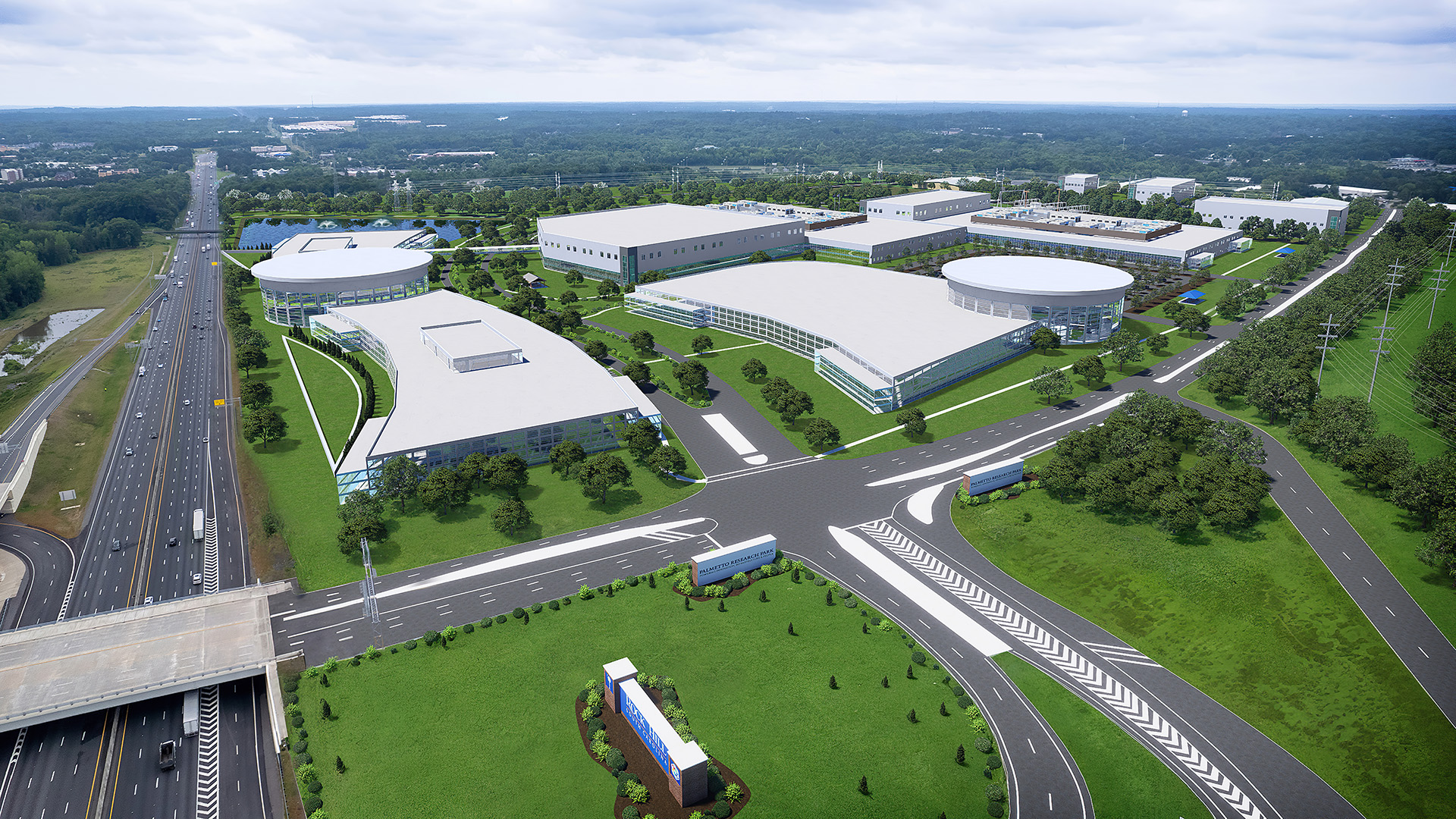
Octapharma will develop the campus at Palmetto Research Park in Rock Hill, York County. The development will include a plasma fractionation and manufacturing facility and an administrative headquarters for Octapharma Plasma, the company’s U.S. plasma donation subsidiary. With final approvals now secured, the company plans to announce a groundbreaking date and a detailed construction schedule at a later time.

Project Will Expand Domestic Plasma Manufacturing

Octapharma aims to strengthen the U.S. supply chain for plasma-derived therapies by locating large-scale manufacturing closer to its domestic plasma collection network and the patients who rely on these medicines. Company officials said the investment will also expand the nation’s capacity to manufacture plasma-derived therapies domestically, supporting long-term supply chain resilience and emergency preparedness. The company chose South Carolina for its proximity to Octapharma’s existing plasma donation network, well-developed transportation infrastructure and skilled biomedical workforce.

Plasma fractionation separates donated human plasma into therapeutic proteins that manufacturers use to produce medicines such as immunoglobulins, albumin and clotting factor therapies. Healthcare providers use these plasma-derived medicines to treat patients with immune deficiencies, bleeding disorders, neurological diseases and other serious medical conditions.

Support for the project

To support the project, South Carolina approved a $65 million Closing Fund grant to York County for site preparation, infrastructure improvements, construction-related work and road upgrades. The state’s Coordinating Council for Economic Development also approved Job Development Credits. Additional local incentive agreements, including any fee-in-lieu-of-tax arrangements or other tax abatements, have not yet been publicly disclosed.

“Our manufacturing capacity must evolve to support this ambition, and our U.S. manufacturing facility will be an important milestone,” Wolfgang Marguerre, chairman and CEO of Octapharma, said in a statement. “From a U.S. national security perspective, having the ability to produce and supply our therapies domestically is invaluable.”

South Carolina Gov. Henry McMaster said the investment reinforces the state’s position as a destination for advanced manufacturing and life sciences investment while creating new employment opportunities for South Carolina residents.

Growing Investment in U.S. Plasma Manufacturing

Pharmaceutical manufacturers continue to invest in U.S. production as they strengthen domestic supply chains for essential medicines. Companies including CSL Behring, Grifols and Takeda have expanded their U.S. plasma collection and manufacturing operations in recent years to meet growing global demand for plasma-derived therapies. The United States supplies most of the world’s source plasma because federal regulations allow compensated plasma donation, giving manufacturers access to a reliable donor base and making domestic production increasingly important to the global plasma industry.

Octapharma has not disclosed which specific plasma-derived products will initially be manufactured at the Rock Hill campus. Its existing portfolio includes immunoglobulins, albumin, clotting factor therapies and fibrin sealants. Before commercial production begins, the facility will be subject to applicable U.S. Food and Drug Administration inspections and biologics manufacturing approvals. The company has also not publicly detailed the phased construction and regulatory milestones behind its projected mid-2030s operational start.

Founded in 1983 and headquartered in Lachen, Switzerland, Octapharma develops plasma-derived and recombinant protein therapies and operates approximately 200 plasma donation centers across the United States through Octapharma Plasma. The Rock Hill campus will represent the company’s first plasma manufacturing operation in the U.S., marking a major expansion of its North American manufacturing footprint.

What’s Next

With approvals now secured, Octapharma can move forward with completing the property acquisition and preparing the site for construction. Additional project milestones, including groundbreaking and construction schedules, are expected to be announced as development progresses.

As pharmaceutical companies expand domestic manufacturing capacity for critical medicines, the Octapharma project joins other major U.S. life sciences investments aimed at strengthening healthcare supply chains. Another notable example is the $4.5B Eli Lilly medicine foundry in Indiana’s LEAP District, where Eli Lilly is developing a next-generation pharmaceutical manufacturing campus designed to accelerate medicine production through advanced manufacturing technologies. Together, the two projects highlight the broader trend of pharmaceutical companies investing billions of dollars in new U.S. manufacturing capacity to improve supply chain resilience and meet growing demand for advanced therapies.

Factsheet: Octapharma First U.S. Plasma Manufacturing Campus

  • Developer: Octapharma AG
  • Investment: $1.5 billion
  • Location: Palmetto Research Park, Rock Hill, York County, South Carolina
  • Facility Type: Plasma fractionation and manufacturing facility with an administrative headquarters
  • Jobs Created: More than 1,500 full-time positions
  • Construction Status: Final state and local approvals secured
  • Groundbreaking: To be announced
  • Projected Operations: Mid-2030s
  • State Incentives: $65 million Closing Fund grant and Job Development Credits
  • Primary Purpose: Expand U.S. manufacturing of plasma-derived therapies and strengthen domestic supply chain resilience
  • Regulatory Status: Subject to applicable FDA inspections and biologics manufacturing approvals before commercial production
  • Company Founded: 1983
  • Headquarters: Lachen, Switzerland
  • U.S. Plasma Collection Network: Approximately 200 plasma donation centers
  • Significance: Octapharma’s first plasma fractionation and manufacturing facility in the United States.

Source: constructionreviewonline.com All rights reserved. Unauthorized reproduction prohibited.

Free Training

Source link

Octapharma to build $1.5 billion state-of-the-art critical care manufacturing facility in Rock Hill, SC


New 50-acre campus will be one of the largest private biomedical investments in state’s history, bringing 1,500 jobs to South Carolina

Manufacturing facility will establish domestic production of Octapharma’s plasma-based therapies and products of national security concern, reducing dependency on overseas supply chains

PARAMUS, N.J., July 29, 2026 /PRNewswire/ — Octapharma, the largest privately owned and independent plasma fractionator in the world, has formally announced plans to establish its first-ever United States-based manufacturing and production site at the Palmetto Research Park in Rock Hill, South Carolina. The $1.5 billion project is expected to bring 1,500 full-time jobs to South Carolina, making this one of the largest private biomedical investments in the state’s history.  

Once operations commence, this facility will produce critical, life-saving medicines from Octapharma’s portfolio of plasma-derived therapies, strengthening the domestic biomedical supply chain while also complementing the company’s global manufacturing capabilities. Octapharma’s Rock Hill site will also produce bleeding management and trauma care products for national security and emergency preparedness needs.

Today’s announcement follows a thorough planning and zoning process coordinated with officials from Rock Hill and York County, and close partnership with local, state and federal leaders. 

“We expect significant future growth, driven by our existing life-saving therapies and a strong pipeline of new products,” said Wolfgang Marguerre, CEO and Chairman, Octapharma. “Our manufacturing capacity must evolve to support this ambition, and our US manufacturing facility will be an important milestone. From a US national security perspective, having the ability to produce and supply our therapies domestically is invaluable.”

“We have built a significant presence in the US over the last 20 years through our commercial capabilities, alongside our extensive network of plasma donation centres,” said Tobias Marguerre, Deputy Chairman, Octapharma. “As the demand in the US for our portfolio of products continues to grow, the new US manufacturing site will bring production of our FDA-approved therapies closer to both the plasma donated in the US, and to the patients who rely on them.”

Octapharma’s Commitment to Rock Hill
South Carolina’s leadership and Octapharma share a commitment to biomedical innovation, domestic supply chain resilience, and long-term economic investment in the surrounding community. 

With its proven infrastructure for advanced manufacturing, access to deep-water ports and proximity to major logistics networks, Rock Hill was selected as an ideal location for Octapharma’s first US facility. Additionally, South Carolina’s strong pipeline of biomedical and life sciences talent, supported by top-tier technical colleges and universities, will provide the workforce needed to support clean, efficient biopharmaceutical manufacturing at scale.

“Octapharma appreciates the good-faith work of every elected official and staff member in York County and Rock Hill who helped bring this to fruition,” said Flemming Nielsen, President, Octapharma USA. “We also want to thank Governor McMaster and South Carolina’s federal and state delegation for their support in welcoming Octapharma to the Palmetto State. South Carolina’s talented workforce, strong life sciences ecosystem, and pro-business environment made it clear this was the right home for our first US manufacturing facility.” 

More details regarding a groundbreaking ceremony and construction timeline will be released at a later date.  

To view the full release from the South Carolina Department of Commerce, please click here.  

About Octapharma
Octapharma is one of the world’s largest human protein manufacturers, developing and producing therapies from human plasma and human cell lines. Headquartered in Lachen, Switzerland, Octapharma has over 11,000 employees and serves patients in 117 countries across Immunotherapy, Hematology, and Critical Care. Octapharma has 190 plasma donation centers across the United States 

With seven R&D sites, five manufacturing facilities in Europe, and more than 200 plasma donation centers in the US and Europe, Octapharma has delivered trusted therapies for over 40 years. The company is committed to improving lives through innovation, quality, and a deep focus on patient care and clinical partnership. To learn more please visit www.octapharma.com. 

Media Contact:
Michael Steier
[email protected]
+1 (551) 410-7797

SOURCE Octapharma

Free Training

Source link

SEIA Unveils Cybersecurity Roadmap to Strengthen US Solar, Energy Storage and Domestic Inverter Manufacturing


The Solar Energy Industries Association (SEIA) has released a new report outlining the solar and energy storage industry’s priorities for strengthening cybersecurity while expanding domestic manufacturing capacity for clean energy technologies across the United States.

Growatt

The report comes as US solar and battery energy storage manufacturing continues to grow, with domestic inverter manufacturing capacity having nearly tripled since the end of 2024.

According to SEIA, the report identifies key cybersecurity considerations for the solar and energy storage sector, recommends measures to improve industry resilience, and provides guidance to help companies adopt cybersecurity best practices and standards as cyber threats targeting the energy sector continue to evolve.

“As solar and storage continue to lead the way in adding new power capacity to the grid, cybersecurity must remain front and center,” said Tim Pawlenty, President and CEO of SEIA.

He added that the report outlines actions the industry is taking to strengthen US energy security, protect critical infrastructure and stay ahead of emerging cyber threats through secure and resilient energy systems and expanded domestic manufacturing.

As part of its strategy to strengthen cybersecurity, SEIA is also prioritising the development of resilient domestic supply chains. The association noted that the opening of a new inverter manufacturing facility in July has positioned the United States alongside the world’s second-largest inverter manufacturing markets.

The report outlines three key priorities for the industry:

-Expanding domestic solar and energy storage manufacturing through resilient supply chains, greater transparency and trusted manufacturing capacity.
-Strengthening baseline cybersecurity by promoting consistent industry practices and national guidance for distributed energy resources.
-Improving threat visibility and coordination through enhanced information sharing and better risk communication across the industry.

SEIA said the recommendations are intended to support a more secure and resilient solar and energy storage industry while reinforcing the role of renewable energy in strengthening the nation’s critical energy infrastructure.

Discover more from SolarQuarter

Subscribe to get the latest posts sent to your email.

Free Training

Source link

Philip Morris Opens $1.2 Billion Manufacturing Campus In Colorado


Philip Morris International’s U.S. businesses have opened a new manufacturing campus in Aurora, Colorado, representing a planned investment of approximately $1.2 billion between 2024 and 2028.

The facility began commercial production in July 2026 and manufactures ZYN nicotine pouches. It joins PMI’s existing U.S. manufacturing operations in Owensboro, Kentucky, and Wilson, North Carolina.

Located on a 148-acre property, the approximately 780,000-square-foot campus is PMI’s first newly constructed manufacturing and production complex in the United States. The company said the project progressed from the start of construction to commercial shipments in approximately 19 months.

PMI initially announced the Aurora development as a $600 million project in 2024. The planned investment has since doubled as the company added production capacity, expanded the site and introduced additional infrastructure and manufacturing capabilities.

Approximately $1 billion of the planned $1.2 billion investment has already been incurred. The remaining capital is expected to support further development through 2028 as PMI responds to demand for ZYN in the United States and prepares the facility to serve international markets.

The campus integrates manufacturing, packaging, warehousing and distribution within one location. This structure is intended to improve operational efficiency and strengthen PMI’s supply chain by reducing reliance on any single production facility.

The Aurora operation is also being positioned as an export hub serving markets across Asia, Latin America and the Caribbean.

PMI expects the campus to directly employ approximately 500 people in production, engineering, quality control, technical and support roles.

Construction was projected to support nearly 5,000 jobs and generate close to $1 billion in economic activity. Once fully operational, the facility is expected to produce approximately $550 million in annual economic impact and support about 1,000 indirect jobs, according to an economic study cited by PMI.

The company has also contributed more than $1.5 million to Colorado organizations since 2024, including groups supporting veterans, utility assistance and workforce education.

The facility’s opening follows the U.S. Food and Drug Administration’s authorization of 20 ZYN products as modified-risk tobacco products in June 2026. The authorization allows PMI to communicate specified reduced-risk information relative to cigarettes under the conditions established by the agency.

KEY QUOTE:

“This facility expands our production capacity, strengthens our supply chain, and enhances our ability to serve growing demand in the United States and around the world.”

Stacey Kennedy, CEO of PMI U.S.

Thank you for visiting Pulse 2.0. We work hard every day to bring leaders and decision makers like you the latest intelligence on business, finance, capital markets, deal flow, law, tech, and AI. Click here to subscribe to the Pulse 2.0 Newsletter.

Free Training

Source link

China Tightens Its Grip on Global Manufacturing as US Share Slides to 17%


China now accounts for roughly 28 per cent of all manufacturing produced worldwide, a share that has more than tripled since 2004. China’s manufacturing value-added reached $4.66 trillion, representing 28 per cent of the global total, more than the next three largest manufacturing economies combined: the United States, Japan and Germany.

Over the same two decades, the United States has slipped from producing about a fifth of global manufacturing output to around 17 per cent. The gap between the two economies has widened sharply, leaving China as the world’s dominant industrial power by a wide margin, even as Washington insists it is closing the distance.

Two Decades of Diverging Fortunes

China’s manufacturing base has expanded at extraordinary speed since the mid-2000s. Its manufacturing value added climbed from around 625 billion US dollars in 2004 to nearly five trillion dollars, a rise of close to 700 per cent.

That growth has coincided with China becoming the world’s principal exporter of everything from consumer electronics to electric vehicles and industrial machinery. Cheap, large-scale production allowed Chinese manufacturers to undercut competitors on price while steadily climbing the value chain into more advanced goods.

The trend has been widely discussed in financial circles. A chart based on World Bank manufacturing data was shared on X by markets commentary account The Kobeissi Letter, highlighting how far China has pulled ahead of the United States, Eurozone and Japan combined. China produced an estimated 4.66 trillion dollars in manufacturing value added in the latest World Bank reading, with the United States ranking second at 2.5 trillion dollars.

BREKAING: China now accounts for ~28% of global manufacturing, more than any other country or economic bloc.

This percentage has more than tripled since 2004.

By comparison, US factories account for ~17% of global manufacturing value added, or 11 percentage points less than… pic.twitter.com/2vwnnFu6Za

— The Kobeissi Letter (@KobeissiLetter) July 27, 2026

How the Eurozone and Japan Lost Ground to China’s Factory Floor

The Eurozone’s collective share of world manufacturing has also declined over the past two decades, settling at around 15 per cent. Japan’s share has fallen further still, to roughly 5 per cent, showing the shift in global industrial output is not confined to the United States alone.

Together, the figures point to a broader rebalancing of global industry rather than a single country’s decline. Western economies have increasingly shifted toward services, finance and technology, while heavy manufacturing has concentrated in China and, to a lesser extent, other parts of Asia.

Trump’s Manufacturing Pledge Faces a Widening Gap

The widening gap comes despite President Donald Trump’s repeated pledges to revive American industry through tariffs. Following his April tariff announcement targeting dozens of countries, Trump said factories and jobs would come roaring back, framing the levies as central to restoring United States manufacturing strength.

The picture on the ground is contested. The White House says factory activity has hit a four-year high, pointing to pledges from firms including AstraZeneca and GlobalFoundries to expand United States production.

Independent trackers tell a different story. Consultancy Kearney’s annual Reshoring Index remained in negative territory in 2025 despite a surge of tariffs aimed at reviving American assembly lines.

The Kearney data stands in contrast to the administration’s projections and the World Bank’s global output figures, underscoring how far United States manufacturing still lags behind China’s industrial base.

Why Tariffs on China Could Still Hit UK High Street Prices

For shoppers, China’s expanding manufacturing base helps explain why goods ranging from electronics to clothing and electric vehicles remain widely available and competitively priced on British and European high streets. Lower production costs in China have kept many everyday items affordable for years.

The flip side is a growing dependence on Chinese supply chains. This can leave consumers exposed to price rises, delivery delays or shortages if trade tensions, tariffs or export restrictions disrupt manufacturing, a risk already visible in recent disputes over semiconductors and rare earth materials.

Any renewed tariff escalation between Washington and Beijing could ripple through to the cost of goods on United Kingdom shelves, given how tightly global supply chains are now tied to Chinese factories.

China’s expanding share of global manufacturing reflects a structural shift in the world economy, not a short-term trend. It carries consequences for industrial jobs, trade policy and the prices consumers ultimately pay for everyday goods across Western economies, including the United Kingdom, even as the Trump administration disputes how far its own reshoring push has closed the gap.

Originally published on IBTimes UK


Free Training

Source link

AI demand, U.S. tariffs reshape South Korean manufacturing


An engineer walks inside a laboratory of Taiwan Semiconductor Research Institute at a Science park in Hsinchu county, Taiwan. Photo by RITCHIE B. TONGO/ EPA

July 27 (Asia Today) — Growing artificial intelligence demand and stronger trade barriers are rapidly reshaping the production and supply chains of South Korea’s major manufacturing industries, the Bank of Korea said Monday.

The central bank said Taiwan has become South Korea’s second-largest semiconductor export destination as the AI supply chain draws Korean memory-chip producers closer to Taiwanese manufacturers.

Meanwhile, South Korean automakers are increasing production in the United States and expanding hybrid vehicle exports as tariffs and U.S. industrial policies make direct exports less competitive.

The findings were included in the Bank of Korea’s Map of Production and Supply Chains for South Korea’s Major Manufacturing Industries. The report used data from 2024 and 2025 to examine 11 industries, including semiconductors, automobiles, steel, shipbuilding and petrochemicals.

South Korean semiconductor exports to Taiwan nearly tripled from $12.78 billion in 2022 to $36.77 billion in 2025.

Taiwan’s share of South Korea’s semiconductor exports increased from 9% to 19.9%, moving it from the fourth-largest export destination to the second largest.

China remained the largest destination, but its share fell from 53.1% in 2022 to 40.3% in 2025.

The central bank attributed the change to a shift in demand from conventional dynamic random-access memory chips to graphics processing units and high-bandwidth memory used in AI systems.

The AI semiconductor supply chain generally involves U.S.-based Nvidia designing graphics processors, Taiwan Semiconductor Manufacturing Co. producing and packaging the chips and Samsung Electronics and SK hynix supplying high-bandwidth memory.

That structure has increased the volume of South Korean semiconductor products shipped to Taiwan.

Semiconductors have also become more important to South Korea’s overall manufacturing sector.

Domestic semiconductor production rose from 74 trillion won in 2014 to 210.8 trillion won in 2024 ($50.4 billion to $143.6 billion). Its share of total manufacturing production doubled from 5% to 10.1% during the same period.

Production remains heavily concentrated in the greater Seoul area, which accounted for 82.3% of the national total. The Chungcheong region accounted for another 14.7%.

Major facilities in the Seoul metropolitan region include Samsung Electronics plants in Hwaseong, Pyeongtaek and Giheung and SK hynix’s plant in Icheon.

China’s growing influence was most apparent in South Korea’s automobile import market.

The share of vehicle imports from China increased from 3.5% in 2022 to 37.2% in 2025. Chinese-made vehicles accounted for about 70% of South Korea’s electric vehicle imports by value in 2025.

The report attributed the increase to China’s price competitiveness and its extensive supply chain covering vehicles, batteries and components.

The United States remained South Korea’s largest automobile export market in 2025. Shipments were valued at $30.15 billion and accounted for 41.9% of total finished-vehicle exports.

However, the United States’ share of South Korea’s electric vehicle exports fell from 33.6% in 2022 to 5.2% in 2025.

The central bank said U.S. subsidies, local production requirements and tariff barriers had weakened the competitiveness of electric vehicles manufactured in South Korea and shipped directly to the United States.

South Korean automakers have responded by expanding U.S. factory operations while increasing exports of hybrid vehicles.

Hybrids’ share of South Korea’s finished-vehicle exports rose from 11.6% in 2022 to 20.4% in 2025.

The shift reflects automakers’ efforts to respond to slowing electric vehicle demand and insufficient charging infrastructure by offering vehicles that combine electric motors with internal combustion engines.

— Reported by Asia Today; translated by UPI

© Asia Today. Unauthorized reproduction or redistribution prohibited.

Original Korean report: https://www.asiatoday.co.kr/kn/view.php?key=20260727010009651

Free Training

Source link

Ukraine moves toward deal for US drone factory


Ukraine and the United States are moving forward with plans to jointly produce Ukrainian-designed drones in the US, President Volodymyr Zelenskyy said, as Washington seeks to draw on technology developed during more than four years of war with Russia.

Speaking in an interview with US political commentator Laura Loomer broadcast on July 24, 2026, Zelenskyy said the proposed partnership would include a factory and drone production lines in the United States.

“We will build a great factory in the United States,” Zelenskyy said. “We want to have lines of production.”

Zelenskyy described the planned cooperation as a “win-win” arrangement that would combine Ukraine’s rapidly evolving drone technology with US manufacturing and defense capabilities.

Ukraine and the United States have reportedly signed a statement of intent establishing a framework for deeper cooperation on unmanned systems. The document is an initial step rather than a final production contract, and the details of a broader agreement remain under negotiation.

A source familiar with the talks told Reuters that officials were still working through the terms ahead of Zelenskyy’s scheduled meeting with US President Donald Trump in Washington on July 28, 2026. The White House confirmed that the leaders were expected to meet.

The negotiations mark a notable change in the defense relationship between the two countries. Ukraine has depended heavily on American weapons and financial assistance since Russia launched its full-scale invasion in February 2022. The proposed drone partnership would see battlefield-developed Ukrainian technology transferred in the opposite direction for production and possible use by the US military.

Ukraine has become one of the world’s largest developers and users of unmanned aircraft, producing millions of drones annually and modifying designs quickly in response to changing Russian defenses and electronic warfare tactics.

Zelenskyy said Ukrainian long-range drones can now fly more than 3,000 kilometers, or approximately 1,864 miles, with further increases in range under development.

The proposed manufacturing agreement is linked to the Pentagon’s effort to acquire large numbers of inexpensive unmanned aircraft more quickly.

Ukraine has agreed to export drones to the United States for evaluation under the Pentagon’s Drone Dominance program, according to Reuters. Six Ukrainian companies have reportedly received permission to export approximately 100 drones each, although the companies and aircraft types involved have not been publicly identified.

The exports would allow the US military to assess systems developed and modified under combat conditions before any larger manufacturing program begins.

The Pentagon launched Drone Dominance to accelerate the acquisition of low-cost unmanned systems and reduce the time required to move new designs from development into operational units. US defense officials have increasingly pointed to Ukraine’s experience as evidence that traditional procurement cycles cannot keep pace with the rapid evolution of drone warfare.

Ukraine has already established or announced joint drone-production arrangements with several allied countries.

Kyiv and Denmark signed a drone agreement in July 2026 that allows Ukrainian defense companies to establish production with access to partner-country markets. Ukraine has also announced joint-production initiatives with Canada, Norway, the Netherlands, Estonia and Germany.

The Ukrainian government has also streamlined the process for transferring drone technology, weapons and technical documentation to countries participating in its international Drone Deal framework. The revised process is intended to reduce approval times to as little as 30 days.

Ukraine’s Ministry of Defense said in June that Ukrainian manufacturers supplied 95% of the drones procured for the country’s armed forces. Nearly 485,000 unmanned systems and related items had been delivered through the government’s DOT-Chain Defence marketplace during the first five months of 2026.

No location, construction timetable, production capacity or participating manufacturers have been announced for the proposed US factory.

It also remains unclear which Ukrainian drone designs would be built in the United States or whether the aircraft would be intended primarily for the US military, Ukraine or export customers.

Free Training

Source link

China’s Rare Earth Strategy Is Forcing a U.S. Manufacturing Revolution


Beijing is now desperately attempting to bring rare earth manufacturing back inside its own borders, exclusively.

New Chinese export restrictions specifically target American plans to begin the country’s first commercial production of rare earth magnet materials by 2027.

To counter that move, REalloys (NASDAQ: ALOY) is rebuilding every major stage of North America’s rare earth industry. Over the past two years, the company has assembled heavy rare earth feedstock, separation, metallization, alloy production, and permanent magnet manufacturing into a single North American mine-to-magnet supply chain designed to operate independently of Chinese material.

And now, the company’s first commercial facilities are expected to come online in the New Year, just as the Pentagon’s ban on Chinese-origin rare earth magnets takes effect, forcing defense manufacturers to secure entirely new sources of supply.

Under the pressure of escalating Chinese export restrictions and the Pentagon’s looming procurement ban, REalloys has become one of the focal points of America’s rare earth rebuild.

The Defense Logistics Agency (DLA) backed the company’s metallization technology, institutional investors committed approximately $100 million to accelerate construction, and the U.S. Army chose REalloys to build the first commercial heavy rare earth processing operation on a U.S. military base.

This is where the front line of the rare earths war shifts from mining to manufacturing.

China’s Step-By-Step Rare Earths War Plan

China’s campaign is advancing one restriction at a time, with each new measure tightening Beijing’s control over the global rare earth industry.

The first step was licensing.

Beijing began requiring exporters to seek approval before shipping key rare earth materials abroad, including the heavy rare earths needed for high-performance magnets. That gave China control over when material leaves the country, who receives it, and how long buyers are forced to wait.

The second step was targeting specific companies.

In June, China added U.S. rare earth firms, including MP Materials and USA Rare Earth, to its export control list, blocking Chinese-origin dual-use materials from reaching them, specifically. That changed the nature of the war entirely. 

Now, Beijing was controlling minerals, with the added restriction of also controlling which American companies could ultimately get their hands on them.

The third step was enforcement.

China created a public reporting system for suspected violations involving strategic mineral exports to close any remaining loopholes. Employees, competitors, freight companies, customs brokers, and financial service providers are all now part of the enforcement network. That means that rerouting material through third countries, disguising controlled products, or helping an end user evade restrictions is legally risky.

The fourth step was fear.

Reported detentions of foreign nationals and domestic enforcement actions against Chinese exporters have made suppliers more cautious. A Chinese company that once shipped rare earth material abroad now has to consider customs scrutiny, criminal liability, end-user documentation, and political risk before accepting an order.

The result is a supply chain that is becoming harder for Western companies to use by design. Even when material is technically available, the licensing, paperwork, delays, restricted-party exposure, and enforcement risk make Chinese-origin supply less reliable with every new rule.

Beijing is using rare earth controls to pull more value back inside China. If foreign manufacturers can’t reliably obtain heavy rare earths such as yttrium, dysprosium or terbium, then Chinese manufacturers end up replacing foreign manufacturers as suppliers of finished products.

The American answer to this, and the REalloys solution, is definitive: Recreate the entire supply chain to bypass China, turning the tables on Beijing’s restrictions, which now may prove too late to do as much damage as Beijing was hoping.

The Great American Industrial Buildout

Government support can launch a critical minerals strategy, but it can’t build an industry by itself overnight.

REalloys (NASDAQ: ALOY) reached that milestone in June, raising approximately $100 million from institutional investors to accelerate its vertically integrated mine-to-magnet platform, including what the company says will become the largest heavy rare earth metallization facility outside China and the Western Hemisphere’s first commercial-scale heavy rare earth metallization platform.

The financing provides working capital which is expected to go towards expanding processing, metallization and downstream manufacturing as the company moves toward commercial production, marking the transition from a government-backed concept to an industrial project financed by private markets.

Upstream, midstream, and downstream, REalloys has integrated everything.

Upstream: Non-China Feedstock Secured

REalloys first secured exclusive commercial agreements with the Saskatchewan Research Council (SRC), giving REalloys long-term access to separated heavy rare earth materials, including dysprosium and terbium oxides.

In a rapid succession of offtake deals, REalloys also signed a 15-year definitive offtake agreement with Critical Metals Corp. covering 15% of Phase 1 production from the Tanbreez Project in Greenland, one of the world’s largest rare earth deposits outside China.

Additional agreements with St George Mining in Brazil, Patriot Exploration & Mining in Montana, Ramaco Resources in Wyoming, Kazakhstan-based partners and others expanded the company’s future feedstock pipeline across multiple allied jurisdictions and geological sources.

Those materials are among the hardest to obtain outside China and are essential for the high-temperature permanent magnets used in fighter aircraft, guided missiles, submarines, radar systems and other defense platforms.

Midstream: Battling China’s Metallization Monopoly

For conversion into alloys, also known as “metallization”, REalloys boldly goes where China has dominated for decades. Feedstock is only the first step. Those rare earth oxides must still be converted into high-purity metals before they can be alloyed and manufactured into permanent magnets.

In March, the U.S. Defense Logistics Agency (DLA) awarded REalloys a contract worth up to $1.7 million to design a modular facility capable of producing up to 300 metric tons per year of samarium and gadolinium metals. The award backed REalloys’ metallization technology, recognizing one of the least-developed capabilities in the American rare earth supply chain.

Only days later, REalloys announced plans to build the largest heavy rare earth metallization facility outside China.

The facility is expected to produce approximately 30 tonnes of dysprosium and 15 tonnes of terbium metal annually, converting heavy rare earth oxides into the high-purity metals required for defense-grade permanent magnets. The equipment will be built and commissioned in Saskatoon in partnership with the SRC before being relocated to REalloys’ operations in Euclid, Ohio, where it will supply the company’s downstream alloy and magnet manufacturing platform.

Downstream: The ~$40B Permanent Magnet Industry

As the U.S. Army was negotiating direct rare earths processing for the first time at an American military base, REalloys was not growing complacent. Instead, it was forging its downstream strategy to bring this national security supply chain full circle.

Earlier this month, REalloys signed a strategic agreement with permanent magnet manufacturer JS Link to develop one of the first fully integrated non-Chinese rare earth magnet platforms. The agreement brings together feedstock, separation, metallization, alloy production, and permanent magnet manufacturing under a single North American industrial strategy.

The enormity of this supply chain is exactly why a former Vice Chief of Staff of the Army, the president of GM Defense, a former Chief of Staff to the Secretary of Defense, a former Canadian ambassador to Washington, and one of Wall Street’s senior investment bankers have all converged around REalloys.

The board is chaired by Stephen duMont, the President of GM Defense and a former senior executive at Raytheon Technologies. His career has centered on supplying advanced military systems to the U.S. Department of Defense, giving him direct experience with the procurement processes and industrial requirements that increasingly shape the rare earth industry.

Joining him on the board is General Jack Keane, the former Vice Chief of Staff of the U.S. Army and one of America’s best-known military strategists. Keane has spent decades advising U.S. defense leaders on national security and military modernization, bringing a strategic perspective closely aligned with the Pentagon’s growing focus on securing domestic supplies of critical materials.

The company also appointed Joe Kasper, former Chief of Staff to the U.S. Secretary of Defense, as Chairman of its Advisory Board. Kasper played a central role in defense policy and acquisition during his time at the Pentagon, where rebuilding secure supply chains for strategic materials became an increasingly important national priority.

On the Canadian side, former Canadian Ambassador to the U.S. David MacNaughton and former Saskatchewan Premier Brad Wall provide deep experience in North American industrial cooperation. And on the financial side, REalloys has brought in Bob Foresman, former Vice Chairman of UBS Investment Bank, whose career has focused on international capital markets and large-scale corporate finance.

What they all see is this: A massive opportunity to flip Chinese assumptions that the West will remain dependent on Beijing for its defense.

REalloys’ strategy also reflects a much broader shift taking place across the North American industrial base. MP Materials (NYSE: MP) is expanding beyond mining into domestic magnet production, while global mining heavyweight Rio Tinto (NYSE: RIO) continues increasing its exposure to critical minerals as demand for rare earths, lithium and other strategic materials accelerates. The industry is increasingly moving away from simply extracting raw materials toward securing entire supply chains, from mining and processing to advanced manufacturing.

That transition matters because some of America’s largest industrial companies depend on secure access to these materials. Honeywell (NASDAQ: HON) uses rare earth-based technologies across its aerospace, automation and defense businesses, while Caterpillar (NYSE: CAT) is incorporating greater electrification, autonomous systems and advanced motors into its mining and construction equipment. As China’s export controls become more restrictive, companies throughout the manufacturing sector are recognizing that supply chain security has become just as strategically important as access to the minerals themselves.

Rather than viewing rare earths as simply another mining story, investors are increasingly seeing them as the foundation of the next generation of American industrial manufacturing. The companies that can secure reliable supplies of critical minerals, processing capacity and permanent magnets will be better positioned to support the growing needs of defense, aerospace, electric vehicles, robotics and AI-driven infrastructure in the years ahead.

With commercial production approaching, private capital complementing government seed funding, and defense procurement rules about to change permanently, this Rare Earths War is moving from policy papers to factory floors. For the first time in a generation, the United States is approaching the point where it can compete for the entire rare earth value chain instead of simply buying pieces of it from abroad.

By. Michael Kern

The AI boom is triggering an unexpected and unprecedented bull run in natural gas and power  stocks. If you aren’t paying attention to the energy demands of data centers, you will miss the biggest energy story of the decade. The smart money is already quietly moving into the few companies prepared to power the trillion-dollar AI machine.

Oilprice Intelligence brings you the inside view on where the next gains will come from, breaking down the market’s biggest growth driver with analysis from veteran oilmen and experts. Click here to get this crucial intel for free

FORWARD LOOKING STATEMENTS
This publication contains forward-looking statements, including statements regarding expected continual growth of the featured companies and/or industry. The Publisher notes that statements contained herein that look forward in time, which include everything other than historical information, involve risks and uncertainties that may affect the companies’ actual results of operations. Factors that could cause actual results to differ include, but are not limited to, changing governmental laws and policies concerning, among other things, recreational and medical cannabis sales, success of the company’s proprietary technology, the size and growth of the market for the company’s products and services, the company’s ability to fund its capital requirements in the near term and long term, pricing pressures, etc. 

IMPORTANT NOTICE AND DISCLAIMER
Neither the author nor the publisher, Oilprice.com, was paid to publish this communication concerning REalloys (NASDAQ: ALOY). The owner of Oilprice.com owns shares and/or stock options of the featured company and therefore has an incentive to see the featured company’s stock perform well. The owner of Oilprice.com may buy or sell shares of the featured company at any time including at or near the time you receive this communication. This share ownership should be viewed as a major conflict with our ability to be unbiased. This is why we stress that you conduct extensive due diligence as well as seek the advice of your financial advisor or a registered broker-dealer before investing in any securities.

This communication is not, and should not be construed to be, an offer to sell or a solicitation of an offer to buy any security. Neither this communication nor the Publisher purport to provide a complete analysis of any company or its financial position. The Publisher is not, and does not purport to be, a broker-dealer or registered investment adviser. This communication is not, and should not be construed to be, personalized investment advice directed to or appropriate for any particular investor. Any investment should be made only after consulting a professional investment advisor and only after reviewing the financial statements and other pertinent corporate information about the company. Further, readers are advised to read and carefully consider the Risk Factors identified and discussed in the advertised company’s SEC, SEDAR and/or other government filings. Investing in securities is speculative and carries a high degree of risk. Past performance does not guarantee future results. This communication is based on information generally available to the public and does not contain any material, non-public information. The information on which it is based is believed to be reliable. Nevertheless, the Publisher cannot guarantee the accuracy or completeness of the information.

INDEMNIFICATION/RELEASE OF LIABILITY
By reading this communication, you acknowledge that you have read and understand this disclaimer, and further that to the greatest extent permitted under law, you release the Publisher, its affiliates, assigns and successors from any and all liability, damages, and injury from this communication. You further warrant that you are solely responsible for any financial outcome that may come from your investment decisions.

TERMS OF USE
By reading this communication you agree that you have reviewed and fully agree to the Terms of Use found here http://oilprice.com/terms-and-conditions If you do not agree to the Terms of Use http://oilprice.com/terms-and-conditions, please contact Oilprice.com to discontinue receiving future communications.

INTELLECTUAL PROPERTY
Oilprice.com is the Publisher’s trademark. All other trademarks used in this communication are the property of their respective trademark holders. The Publisher is not affiliated, connected, or associated with, and is not sponsored, approved, or originated by, the trademark holders unless otherwise stated. No claim is made by the Publisher to any rights in any third-party trademarks.

Free Training

Source link

What it means for India


Industry representatives noted that even if generic drug manufacturing were established domestically in the US, active pharmaceutical ingredients (APIs) would still need to be imported, as America lacks sufficient API manufacturing capacity. For these reasons, a full-scale reshoring of the generic pharmaceutical ecosystem to the US is unlikely to be achieved within two years.

They also flagged challenges related to labour costs, compliance burdens and the lack of a supporting ecosystem. “It’s almost impossible to manufacture in the US, as there are no APIs, raw materials or packaging materials being produced there. Labour costs are almost 10-15 times higher, so it may be good to threaten the world, but practically it is almost impossible,” said Vijay Shah, Managing Director of Stallion Laboratories, an exporter to the US.

How did the market react?

Following Trump’s announcement, Indian pharmaceutical stocks fell sharply in early trade, with the Nifty Pharma index declining nearly 2% as investors weighed the potential impact of tariffs that could eventually rise to 200%.Shares of Sun Pharmaceutical Industries, Cipla, Dr Reddy’s Laboratories, Lupin and Aurobindo Pharma were among the biggest losers in early trade. Aurobindo Pharma fell 3.48% to S1,525.50, while Sun Pharma declined 0.95% on the BSE. Cipla and Lupin both dropped about 2.5%, while Dr Reddy’s Laboratories slipped more than 1%. Shares of Zydus Lifesciences, Alkem Laboratories and Torrent Pharmaceuticals also declined by up to 2%.

What could be the bigger challenge for India?

According to GTRI, India’s pharmaceutical industry should prepare for a bigger strategic risk than US tariffs: dependence on China. About 70% of the chemical-based active pharmaceutical ingredients used by Indian drug makers and nearly 90% of biologic inputs are sourced from China. Yet, until the 1990s, India was a leading producer of APIs.

GTRI warned that if Beijing were to restrict API exports while simultaneously expanding sales of higher-value finished medicines, India’s pharmaceutical industry could face serious supply disruptions. India should therefore make rebuilding its API manufacturing base a national priority by expanding domestic production and reducing reliance on a single supplier.

At the same time, Indian pharmaceutical companies should reduce their dependence on the US market by expanding exports to Europe, Latin America, Africa and Asia.

Is this the first time?

This is not the first time the Trump administration has threatened tariffs on pharmaceutical imports. In April this year, Trump announced plans to impose a 100% ad valorem tariff on imports of patented pharmaceuticals and associated pharmaceutical ingredients, citing national security concerns.

Free Training

Source link