BlueLinx Stock and 2 U.S. Manufacturing Picks for Tariff Driven Price Power


Tariffs are back in the headlines, and for U.S. manufacturing stocks that can mean real shifts in costs, pricing power, and investor expectations. With the Trump administration’s new 10 to 12.5% global tariffs and fresh legal challenges testing how long these rules might last, some domestically focused producers may find themselves better positioned than import heavy rivals. This article looks at 3 U.S. manufacturing stocks from our screener that appear closely exposed to the latest tariff news, explaining how the policy and court risk could influence their margins, cash flows, and appeal for investors trying to position around these trade shocks.

BlueLinx Holdings (BXC)

Overview: BlueLinx Holdings is a U.S. based distributor of residential and commercial building products, supplying everything from engineered wood, siding and millwork to structural lumber and panels to large home centers, pro dealers and local contractors through warehouse, reload and direct sales.

Operations: BlueLinx generates all of its approximately US$3.0b in revenue from wholesale building products in the United States.

Market Cap: US$455m

Investors looking at tariff sensitive manufacturing stocks may find BlueLinx Holdings interesting because its largely domestic footprint can limit exposure to import cost shocks while still benefitting if tariffs lift pricing for imported competitors. The company is pushing harder into higher margin specialty categories and multifamily projects, but recent results show that margins and profitability remain under pressure, with a recent quarterly net loss and a history of losses over several years. The stock trades on a low P/S multiple versus peers, yet depends on a strong earnings improvement story and carries funding risk through external borrowing. The central question is whether the mix shift and tariff backdrop are enough to change the trajectory.

BlueLinx Holdings looks like a tariff era wildcard, with a domestic revenue base, a low P/S multiple and a push into specialty products that many investors may be underestimating, so it is worth reviewing the 3 key rewards and 1 important warning sign

NYSE:BXC P/S Ratio as at Jul 2026NYSE:BXC P/S Ratio as at Jul 2026

Matrix Service (MTRX)

Overview: Matrix Service is an engineering and construction company that builds and maintains critical energy and industrial infrastructure, including storage tanks, LNG and hydrogen facilities, substations and power projects, and specialized industrial plants across the U.S., Canada, and select international markets.

Operations: Matrix Service generates most of its roughly US$847.8m in revenue from Storage and Terminal Solutions (US$420.0m), with additional contributions from Utility and Power Infrastructure (US$282.9m) and Process and Industrial Facilities (US$144.9m), largely in the United States.

Market Cap: US$347.2m

Matrix Service stands out in the current tariff cycle because it supports U.S. based infrastructure projects and has contract structures that management says help shield it from sudden cost swings. A US$7b project pipeline and a recent shift toward higher margin electrical and storage work frame a potential return to more consistent profitability. At the same time, the company is still working through losses, relies on external borrowing, faces execution risks on large multi year projects, and is handling a CFO transition. Together, these factors help explain why the stock trades well below some cash flow and fair value estimates. For investors, the question is whether operational restructuring and the tariff tailwind are enough to offset these financing and execution risks.

Matrix Service’s US$7b project pipeline and shift toward higher margin work could be masking a deeper story about risk and reward, so it is worth reading the 4 key rewards and 1 important warning sign

NasdaqGS:MTRX Revenue & Expenses Breakdown as at Jul 2026NasdaqGS:MTRX Revenue & Expenses Breakdown as at Jul 2026

Generac Holdings (GNRC)

Overview: Generac Holdings is an energy technology company that makes backup generators, home energy storage, and other power equipment for households, businesses, and data centers, along with smart home and energy management products that help customers monitor and control their power use.

Operations: Generac generates most of its roughly US$4.3b in revenue in the United States, with about US$3.6b from the domestic market and around US$803m from international customers.

Market Cap: US$11.9b

Generac Holdings is attracting attention because it sits at the crossroads of U.S. manufacturing and the global push for reliable power, from home standby generators to large data center backup systems, while producing largely in the U.S. in a tariff heavy world. Earnings are forecast to grow, yet the stock trades on a rich P/E and relies fully on external borrowing, so the balance sheet and execution on big data center contracts matter. Recent margin gains and upgraded EBITDA guidance indicate that the business is scaling its higher value segments. However, exposure to residential solar headwinds, outage driven demand swings, and tariff sensitive supply chains means this is not a simple story.

Generac Holdings is leaning into higher value power and data center projects, yet a rich P/E and full reliance on borrowing raise big questions about how the story plays out next. It is worth scanning the analyst forecasts for Generac Holdings

NYSE:GNRC P/E Ratio as at Jul 2026NYSE:GNRC P/E Ratio as at Jul 2026

The three stocks covered here are just a starting point, and the full U.S. Domestic Manufacturing Stocks screener surfaced 41 more companies with equally compelling tariff, supply chain and domestic production stories that could be worth your attention. It makes sense to review the U.S. Domestic Manufacturing Stocks screener. Use Simply Wall St to identify, filter and analyze the exact catalysts and narratives that matter to you so you can focus on U.S. manufacturing opportunities that best fit your own investment approach.

Take Control of Your Investment Journey

If Generac Holdings or any of these companies sound like a great opportunity, register for FREE with Simply Wall St and add your companies to a Watchlist to monitor the share price against the fair value the ideal entry point.
Once you’ve made your move, manage your holdings with our Portfolio Command Center that filters out the noise to deliver only the most critical, actionable updates.
Throughout your journey, our Community allows you to filter the best ideas from thousands of investor perspectives.
By uncovering hidden catalysts and risks early, you’ll accelerate your decision-making and stay one step ahead of the market.

Seeking Alternatives Beyond Tariff Plays

Fresh ideas move first, and by the time the crowd spots the breakout, the best entry points can be gone. Scan these curated lists while it still matters and consider acting while conditions remain favorable.

This article by Simply Wall St is general in nature. We provide commentary based on historical data
and analyst forecasts only using an unbiased methodology and our articles are not intended to be financial advice.
It does not constitute a recommendation to buy or sell any stock, and does not take account of your objectives, or your
financial situation. We aim to bring you long-term focused analysis driven by fundamental data.
Note that our analysis may not factor in the latest price-sensitive company announcements or qualitative material.
Simply Wall St has no position in any stocks mentioned.

New: Manage All Your Stock Portfolios in One Place

We’ve created the ultimate portfolio companion for stock investors, and it’s free.

• Connect an unlimited number of Portfolios and see your total in one currency
• Be alerted to new Warning Signs or Risks via email or mobile
• Track the Fair Value of your stocks

Try a Demo Portfolio for Free

Have feedback on this article? Concerned about the content? Get in touch with us directly. Alternatively, email editorial-team@simplywallst.com

Free Training

Source link

3 US Manufacturing Stocks Better Placed For New Tariffs


Tariffs have moved from political headline to portfolio issue, with new US import duties of 10% to 12.5% affecting nearly all goods from about 60 trading partners and drawing immediate legal and international pushback. For US domestic manufacturing stocks, this mix of higher import costs, possible retaliation, and supply chain strain can create both fresh openings and new risks. This article looks at how that backdrop connects to companies in the US Domestic Manufacturing Stocks screener and highlights 3 stocks that appear positively exposed to these tariff moves.

Astec Industries (ASTE)

Overview: Astec Industries designs and builds heavy equipment and systems used mainly for road building, aggregates, and related construction work, supplying everything from asphalt and concrete plants to crushers, screens, conveyors, and wood processing machines to contractors, materials producers, quarries, and public agencies worldwide.

Operations: Astec generates most of its revenue from Infrastructure Solutions at US$893.8m and Materials Solutions at US$623m, with the United States contributing about US$1.2b of sales.

Market Cap: US$1.29b

Astec Industries stands out in the new tariff regime because it manufactures its road building and materials equipment in the US, while many rivals import finished units that are now subject to 10% to 12.5% duties. Management has already modeled tariff impacts on costs, tightened supplier scrutiny, and used pricing and dual sourcing to help offset input pressures. This matters for a business where margins are still relatively low and earnings were affected by a US$30.2m one off loss. At the same time, analysts see potential for earnings growth supported by US infrastructure spending and higher margin parts and acquisitions such as TerraSource. That combination of possible tariff tailwinds, operational execution, and valuation debate is a key consideration for investors assessing Astec.

Astec Industries looks like a classic tariff era beneficiary, with US production, margin work and acquisitions pulling in the same direction. However, the real story sits in the 4 key rewards and 2 important warning signs

NasdaqGS:ASTE Earnings & Revenue History as at Jul 2026NasdaqGS:ASTE Earnings & Revenue History as at Jul 2026

Insteel Industries (IIIN)

Overview: Insteel Industries manufactures steel wire reinforcing products used to strengthen concrete in bridges, parking decks, industrial buildings, data centers, drainage systems and residential slabs, with a portfolio centered on prestressed concrete strand and engineered welded wire reinforcement sold to concrete product makers, rebar fabricators, distributors and contractors.

Operations: Insteel generates about US$707.7m of revenue from concrete reinforcing products, with roughly US$705.4m coming from the United States and around US$2.2m from foreign markets.

Market Cap: US$626m

Insteel Industries sits at the intersection of US infrastructure spending and tariff policy, which makes it particularly relevant after the latest broad import duties. The company is closely tied to domestic construction demand, with 9M 2026 sales of US$530.24m and earnings that remain positive even as net income and EPS have recently fallen. At the same time, heavy dependence on imported wire rod and exposure to Section 232 tariffs mean input costs, lead times and margins can move quickly, especially if enforcement tightens or domestic supply remains constrained. In addition, index deletions may have reduced visibility, and the combination of a P/E below the US building industry and an active buyback program suggests there is more going on beneath the surface than headline earnings alone indicate.

Insteel Industries looks like a story where falling EPS, a lower P/E than US building peers and an active buyback may be masking something investors have not fully pieced together yet, and the analysis report for Insteel Industries hints at what could be missing.

NYSE:IIIN P/E Ratio as at Jul 2026NYSE:IIIN P/E Ratio as at Jul 2026

EnerSys (ENS)

Overview: EnerSys supplies stored energy systems for industrial customers, powering telecom networks, data centers, electric forklifts, trucks and defense equipment through lead acid and lithium based batteries, chargers and related services sold worldwide.

Operations: EnerSys generates about US$1.7b from Energy Systems, US$1.4b from Motive Power and US$665.1m from Specialty products, with total revenue of roughly US$3.8b and most sales tied to these core operating segments.

Market Cap: US$7.29b

EnerSys gives you exposure to several themes in one stock, including AI driven data center demand, electrification of forklifts and trucks, and increased focus on secure US based energy supply for defense, supported by a broad product mix and a refined lithium strategy. New US tariffs could pressure customer sentiment in the short term. However, EnerSys has already built a tariff task force, produces largely in region, and has levers in pricing, sourcing and cost cuts, including a planned US$80m of annual savings. Earnings have recently fallen and the balance sheet leans on external borrowing. Some analysts expect faster earnings growth than the wider US market, which may make the combination of valuation, buybacks and tariff exposure worth a closer look.

EnerSys looks like an earnings story that may be decoupling from headline worries about tariffs and borrowing, and the analyst forecasts for EnerSys can help you see what expectations might be missing right now.

NYSE:ENS Earnings & Revenue Growth as at Jul 2026NYSE:ENS Earnings & Revenue Growth as at Jul 2026

The three stocks covered here are only a starting point, and the full US Domestic Manufacturing Stocks screener on Simply Wall St surfaces 42 more companies with equally compelling narratives that you have not seen yet through the US Domestic Manufacturing Stocks screener. Use the Simply Wall St platform to identify and analyze the specific catalysts, risk factors and business narratives that matter most to you so you can focus on the highest conviction US manufacturing opportunities.

Take Control of Your Investment Journey

If Insteel Industries or any of these companies sound like a great opportunity, register for FREE with Simply Wall St and add your companies to a Watchlist to monitor the share price against the fair value the ideal entry point.
Once you’ve made your move, manage your holdings with our Portfolio Command Center that filters out the noise to deliver only the most critical, actionable updates.
Throughout your journey, our Community allows you to filter the best ideas from thousands of investor perspectives.
By uncovering hidden catalysts and risks early, you’ll accelerate your decision-making and stay one step ahead of the market.

Seeking Alternatives Before Everyone Else?

Fresh ideas move first, and the best entry points often pass quickly as momentum builds, prices start flying, or interest drops off. Scan under the radar for now and consider acting before conditions change.

  • Spot potential turnarounds early by tracking companies in the 49 high quality undervalued stocks while sentiment is still catching up and pricing in the next phase, and aim to position before the shift is widely recognized.
  • Monitor structural demand shifts by scanning the 35 power grid technology and infrastructure stocks as grids modernize and capital moves toward upgraded infrastructure, before those developments become more broadly reflected in prices.
  • Target stronger balance sheets by filtering the list of solid balance sheet and fundamentals (49 results) so you focus on businesses with more flexibility if conditions change and others are caught off guard, and consider positioning ahead of those adjustments.

This article by Simply Wall St is general in nature. We provide commentary based on historical data
and analyst forecasts only using an unbiased methodology and our articles are not intended to be financial advice.
It does not constitute a recommendation to buy or sell any stock, and does not take account of your objectives, or your
financial situation. We aim to bring you long-term focused analysis driven by fundamental data.
Note that our analysis may not factor in the latest price-sensitive company announcements or qualitative material.
Simply Wall St has no position in any stocks mentioned.

New: AI Stock Screener & Alerts

Our new AI Stock Screener scans the market every day to uncover opportunities.

• Dividend Powerhouses (3%+ Yield)
• Undervalued Small Caps with Insider Buying
• High growth Tech and AI Companies

Or build your own from over 50 metrics.

Explore Now for Free

Have feedback on this article? Concerned about the content? Get in touch with us directly. Alternatively, email editorial-team@simplywallst.com

Free Training

Source link

Ukraine plans to build a drone manufacturing plant in the United States.


Kyiv, Ukraine – Ukrainian President Volodymyr Zelenskyy announced that his country intends to establish a drone manufacturing plant in the United States, a move aimed at strengthening defense cooperation between Kyiv and Washington and increasing production capacity to meet the needs of the Ukrainian armed forces.

Zelenskyy explained that the project is part of a broader strategy to develop Ukraine’s military industries in partnership with its allies, noting that drones have become a crucial element in modern military operations, especially given the ongoing conflict with Russia.

He added that establishing the plant will accelerate the production of advanced military technologies and facilitate the exchange of expertise with American companies, thereby enhancing Ukraine’s ability to address battlefield challenges and develop defensive and offensive systems using drones.

The announcement comes as the United States continues to provide military and logistical support to Ukraine, amid efforts to strengthen defense industry cooperation between the two countries, ensuring a sustained supply of necessary military equipment in the coming phase.

Observers believe the project reflects the growing strategic partnership between Kyiv and Washington and underscores the increasing importance of drones in modern conflicts, particularly as the Russian-Ukrainian war continues and enters a phase heavily reliant on advanced military technology.

Free Training

Source link

Latvia plans full-cycle artillery rocket manufacturing plant with up to 90 million euro US investment


Latvia has taken a significant step towards expanding its defence industry after Economics Minister Viktors Valainis signed a memorandum of understanding on the 23rd of July with a Latvian company established by US-based Native Trading to develop a full-cycle artillery rocket manufacturing facility in the country.

The investor was attracted through a joint effort by the Ministry of Economics and the Investment and Development Agency of Latvia (LIAA). According to the ministry, the memorandum is intended to facilitate cooperation, assess the conditions necessary for implementing the investment project, and promote Latvia’s sustainable economic growth, innovation, and high-value manufacturing.

The proposed facility would include the entire production cycle for artillery rockets, covering solid propellant manufacturing, explosive warhead filling, final assembly, and qualification testing. Total investment in the project is estimated at €70–90 million.

“National security depends not only on the capabilities of the armed forces but also on the country’s industrial capacity,” Valainis said.

“By developing full-cycle artillery rocket production in Latvia,

we are simultaneously strengthening national security, expanding high-value manufacturing, and creating new jobs.

Investments of this kind increase Latvia’s resilience, export capacity, and long-term economic growth.”

According to the ministry, the project will establish modern, high-value production facilities designed both to strengthen Latvia’s defence capabilities and to supply international markets.

Native Trading Chief Executive Officer Nathan Beauchamp said the company sees the project as a long-term partnership between the United States and Latvia.

“Latvia has demonstrated a clear commitment to fostering innovation, economic growth, and industrial development. Our goal is to build a long-term partnership that creates highly skilled jobs, attracts significant foreign investment, and strengthens the region’s industrial capacity.

“This project is about much more than building a manufacturing plant.

It is about creating lasting cooperation between the United States and Latvia based on trust, transparency, innovation, and a shared commitment to economic development and regional security,” Beauchamp said.

During implementation, LIAA will coordinate cooperation between the investor and relevant state institutions while providing support throughout the development process.

According to the agency, the project has already reached an advanced stage of preparation. Documentation required to establish the Latvian company is being finalised, potential production sites have been identified, and coordination with public authorities is underway. Given the project’s strategic importance, it may also qualify for Latvia’s Green Corridor mechanism, which accelerates strategically important investment projects.

LIAA Deputy Director for Investment Attraction Laura Štrovalde described the initiative as one of the most significant new investment projects in Latvia’s defence industry in recent years.

“The investment attraction efforts carried out by the Ministry of Economics and LIAA were instrumental in securing Latvia as the location for this project. The development has already reached an advanced stage, and LIAA will continue coordinating cooperation between the investor and public institutions to ensure its successful implementation,” she said.

Initial estimates suggest the project will create 150 new jobs.

Within five years of the plant becoming operational, exports are expected to reach at least 600 million euros, while private investment is projected to total at least 70 million euros.

The project is also expected to generate at least 68 million euros in tax revenue for the Latvian state budget during its first five years of operation. Construction and implementation are expected to be completed within 24 months.

The Ministry of Economics said the investment comes at a time of rapidly growing demand for defence manufacturing capacity across Europe and NATO member states, as governments continue increasing spending on defence and security.

Once completed, the facility is expected to strengthen Latvia’s position within international defence supply chains while boosting exports and creating highly skilled employment opportunities.

Read also: Britain to replace tanks with drones in Lithuania

Follow us on Facebook and X!

Free Training

Source link

U.S. Manufacturing Hits $2.91 Trillion All-Time High


Article Summary

U.S. manufacturing reached a record $2.91 trillion in value added in 2024, making it the world’s eighth-largest economy, but the industry faces a critical shortage of skilled workers with nearly 3.8 million positions needing to be filled by 2033.

  • $2.91 trillion in U.S. manufacturing value added in 2024, an all-time nominal record that would rank as the world’s eighth-largest economy if standalone
  • 54 ISM Manufacturing PMI reading in May 2024, the strongest since May 2022, signaling broad expansion across new orders, production, and order backlogs
  • $2.42 trillion in cumulative foreign direct investment in U.S. manufacturing, led by Japan ($819 billion), making manufacturing the largest FDI sector in America
  • 3.8 million workers needed by 2033, with 1.9 million positions at risk of remaining unfilled without action to increase skilled workforce training
  • 409,000 open manufacturing positions as of August 2025, with 65% of manufacturers citing talent attraction and retention as their top business challenge

U.S. manufacturing hit a record $2.91 trillion in 2024, and the momentum has continued: the ISM Manufacturing PMI reached 54 in May, its strongest reading since 2022. 

Factory construction spending more than doubled from 2021-2024. And, foreign companies have committed $2.42 trillion to U.S. manufacturing, more than to any other sector in the United States, according to MISUMI Americas’ The Rise of U.S. Manufacturing report.

“The investment case for American manufacturing has never been stronger — record output, a historic construction cycle, trillions in committed foreign capital. What we see with our customers every day is that the next constraint isn’t capital. It’s having enough people with the right advanced skills to run these new facilities at full capacity. The good news is that American students are already moving toward skilled trades and technical training. H.R. 9097 builds directly on that momentum by sending workers to learn from the countries — Japan, Germany, South Korea — that have spent decades perfecting advanced manufacturing training and bringing that expertise home,” says Dave Evans, president and CEO, MISUMI Americas and CEO, Fictiv.

Key takeaways:

  • $2.91 trillion: U.S. manufacturing value added in 2024, an all-time nominal record. This single sector would rank as the world’s eighth-largest economy if it stood alone, ahead of France and just behind the United Kingdom. The figure reflects current, not inflation-adjusted, dollars, so part of the gain comes from manufacturers producing more goods and part comes from higher prices.
  • 54 PMI: the ISM Manufacturing PMI reading for May 2026, the strongest since May 2022 and a clear signal of expansion. The index spent most of 2025 below the 50-point threshold that separates growth from contraction, making this a meaningful reversal. New orders, production, and order backlogs all expanded that month, the broadest improvement in factory activity in roughly four years.
  • $235.6 billion: peak annual factory construction spending in 2024, nearly triple the roughly $81.9 billion spent in 2021. Semiconductor fabs and EV battery plants, fueled by the CHIPS Act and Inflation Reduction Act, drove the majority of that increase. The pace has since moderated to roughly $196 billion by January, though spending remains more than double pre-boom levels.
  • $2.42 trillion: cumulative foreign direct investment (FDI) in U.S. manufacturing, led by Japan, Canada, and Germany. Manufacturing is now the single largest sector for inbound foreign investment in the country, representing more than 42% of all FDI in the United States. Japan alone accounts for over $819 billion of that total, more than any other country invests in any single U.S. industry.
  • 2 million-plus: reshoring and FDI jobs announced since 2010, including a record 364,000 in a single year, 2022. The vast majority of recent announcements, 88% in 2024, are in high or medium-high technology manufacturing sectors such as semiconductors, electronics, and electric vehicles. Roughly 1.7 million of those announced jobs have already been filled.
  • 3.8 million: additional manufacturing workers the industry will need by 2033, with 1.9 million of those positions at risk of going unfilled without action. Of that 3.8 million, roughly 2.8 million comes from workers retiring and the remainder from new growth, including jobs tied directly to the CHIPS Act, the Inflation Reduction Act, and the Infrastructure Investment and Jobs Act. More than 65% of manufacturers already cite attracting and retaining talent as their single biggest business challenge.
  • 20% growth since Spring 2020: enrollment at high-vocational community colleges, a workforce already responding to the opportunity. Undergraduate certificate programs have grown for four consecutive years, evidence that students are choosing faster, skills-focused pathways into manufacturing careers. Even so, total enrollment at these institutions remains well under one million students nationwide, a fraction of the workforce the industry will need to recruit and train by 2033.
  • What the data also shows is that the workforce has not yet scaled to match it. Nearly 2.8 million of the 3.8 million workers needed through 2033 comes from retiring employees, replacing the current workforce, not just expanding it. There were 409,000 open manufacturing positions as of August 2025, and 65% of manufacturers cite attracting and retaining skilled talent as their top challenge.
  • Enrollment at high-vocational community colleges is up nearly 20% since Spring 2020, and undergraduate certificate programs have grown for four consecutive years. The pipeline is moving in the right direction — it simply needs to move faster and reach deeper into advanced, specialized skills that take years to build domestically but already exist abroad.

Free Training

Source link

US. solar industry advances cybersecurity as domestic manufacturing expands


GALERIA

The Solar Energy Industries Association (SEIA) has released a new report outlining a roadmap to strengthen cybersecurity across the US solar and energy storage industry while supporting the continued expansion of domestic manufacturing. The publication comes as the country’s solar and battery storage manufacturing capacity continues to grow, with US inverter manufacturing having nearly tripled since the end of 2024. Following the opening of a new inverter production facility in July, the United States is now tied as the world’s second-largest manufacturer of inverters.

The report addresses the growing cybersecurity challenges facing the energy sector and highlights the importance of secure technologies backed by resilient domestic supply chains. Developed in collaboration with industry and government stakeholders, it provides recommendations, best practices and resources to help companies improve cybersecurity preparedness across the solar and storage value chain.

According to SEIA, the rapid deployment of solar and battery storage systems makes cybersecurity an increasingly critical component of energy security. The association argues that strengthening domestic manufacturing and supply chain resilience will help protect critical infrastructure while reducing exposure to evolving cyber threats.

“As solar and storage continue to lead the way in adding new power capacity to the grid, cybersecurity must remain front and center,” said Tim Pawlenty, president and CEO of SEIA. “From secure and resilient systems to expanding domestic manufacturing, this report lays out the actions our industry is taking to strengthen U.S. energy security, protect critical infrastructure, and stay ahead of emerging threats.”

Among its recommendations, the report calls for expanding domestic solar and storage manufacturing through more resilient supply chains, greater transparency and trusted production capacity. It also advocates establishing consistent cybersecurity practices across the industry, promoting national guidance for distributed energy resources, and improving information sharing and coordination to strengthen threat detection and risk communication throughout the sector.

Free Training

Source link

BeOne Medicines Plans $300M NJ Expansion, Bringing US Manufacturing Investment Over $1B


Editor’s Take: Whether based in the U.S. or globally, companies continue to seek opportunities to grow their business stateside.

BeOne Medicines is announcing a $300 million expansion of its clinical- and commercial-stage manufacturing and R&D center in Hopewell, NJ. This newest tranche of money takes BeOne’s United States manufacturing investment over $1 billion.

History of BeOne in NJ

The center, at the Princeton West Innovation Campus, opened in July 2024 on an initial investment of $800 million. A new, three-story, 145,000-square-foot building will bring the total campus footprint into the neighborhood of 545,000 square feet.

Over 42 acres, the site boasts more than 1 million square feet of developable real estate earmarked for future growth.

The expansion makes the campus a fully integrated, multi-platform manufacturing site combining existing biologics and new small molecule drug production.

Growing Manufacturing Capabilities

The added drug product manufacturing and packaging operations serve to strengthen BeOne’s production and supply chain capabilities. According to the company, this in turn supports a growing hematology portfolio and pipeline.

BeOne Medicines CEO Aaron Rosenberg weighed the impact of the announcement.

“[This] reflects BeOne’s commitment to strengthening U.S. manufacturing and expanding access to innovative medicines for patients with cancer,” Rosenberg said.

Not only President Donald Trump’s tax policies, Rosenberg said, but also NJ Governor Mikie Sherrill’s support of advanced manufacturing contributed.

In particular, the “Next New Jersey Manufacturing Program,” according to Rosenberg, encourages high-quality job creation.

“Together, these efforts create an environment for long-term growth,” Rosenberg said. “We are proud to continue expanding our global footprint in support of patients.”

The newly announced BeOne facility should be operational in 2029, the company says; subsequently, U.S. headcount will number approximately 240.

Free Training

Source link

Boresight (ASX:BST) Expands US Manufacturing Footprint with New Huntsville Facility


Highlights

  • Boresight has leased a new 812-square-metre manufacturing facility in Huntsville, Alabama.
  • The new site is approximately 15 times larger than the company’s existing US facility.
  • Production of the BQ-400 aerial target drone will transition during August and September 2026.
  • The expansion is intended to support increasing demand from US defence customers.

Boresight Limited (ASX:BST) remained on investors’ radar after its shares traded higher on 23 July 2026. While no confirmed closing price was available, recent market attention has focused on the company’s expansion of its United States manufacturing operations through a substantially larger production facility in Huntsville, Alabama.

The move marks another operational milestone as Boresight continues increasing manufacturing capacity for its aerial target drone business.

Manufacturing Capacity Set to Increase

Boresight has leased an 812-square-metre manufacturing facility in Huntsville, Alabama, which is approximately 15 times larger than its existing US premises.

The company has already taken occupancy under an initial three-year lease, with options to extend.

Production is expected to transition to the new facility during August and September 2026, while the site fit-out is scheduled for completion later in September.

The larger facility is expected to improve production capacity and support growing customer demand in the United States.

Focus Remains on Aerial Target Drones

The Huntsville facility will initially manufacture the company’s BQ-400 aerial target drone, with a stated production objective of more than 5,000 units annually.

Over time, the company expects the facility to support production of additional products, including the BQ-750 Block 2 platform.

Boresight develops low-cost aerial target drones used for military training, allowing defence organisations to simulate airborne threats during exercises.

The company also provides supporting control systems and mission-planning software for coordinated drone operations.

US Expansion Supports Defence Strategy

Huntsville is recognised as a major US defence and aerospace hub.

By expanding its manufacturing presence in Alabama, Boresight expects to improve responsiveness to US customers while reducing delivery times and freight costs.

The company will retain its Australian facility in Fyshwick, which will continue supporting product development, innovation and production for non-US markets.

The US expansion therefore complements, rather than replaces, the company’s Australian operations.

Production Growth Remains the Primary Focus

Boresight continues investing in manufacturing capability as it expands within the defence technology sector.

Future updates are expected to provide additional information on production ramp-up, customer orders and operational performance following the transition to the larger facility.

Although the company’s shares traded higher on 23 July 2026, no verified evidence directly linked the intraday share-price movement to a specific corporate announcement.

What Investors May Watch

Investors may monitor completion of the Huntsville facility transition, production volumes, customer contracts, manufacturing capacity, defence sector demand and future operational updates.

Risks

Boresight operates within the defence technology sector and remains exposed to customer demand, manufacturing execution, government procurement cycles, contract timing, supply chain factors and broader defence spending trends.

Free Training

Source link

NIST Funds 14 MEP Centers to Boost U.S. Manufacturers


NIST Manufacturing Extension Partnership logo

GAITHERSBURG, Md. – The U.S. Department of Commerce’s National Institute of Standards and Technology (NIST) has released a Notice of Funding Opportunity for 14 Manufacturing Extension Partnership (MEP) centers to improve U.S. industrial competitiveness by helping small and medium-sized manufacturers adopt advanced manufacturing technologies. The funding will establish MEP centers in Alabama, Alaska, Arkansas, California, Georgia, Louisiana, Massachusetts, Missouri, Montana, Ohio, Pennsylvania, Puerto Rico, Utah and Vermont.

Small and medium-sized manufacturers make up 98% of the U.S. manufacturing base. NIST MEP facilitates cooperation among private sector industry partners, government agencies, academic institutions, economic development organizations and other manufacturing ecosystem stakeholders for advanced manufacturing technologies demonstration, deployment and adoption.

“This new funding opportunity and competition will help to strengthen manufacturing across the United States and expand the impact of the MEP program,” said Under Secretary of Commerce for Standards and Technology and NIST Director Arvind Raman. “With a renewed focus on advanced technology adoption and strong partnerships, MEP can help supercharge the American manufacturing ecosystem and improve America’s industrial competitiveness via our small and medium-sized manufacturers.”

The new funding creates MEP centers that will strengthen manufacturing ecosystems by encouraging the adoption or scale-up of advanced technologies to improve production capacity and capability, supporting supply chain integration and developing a strong manufacturing workforce.

Advanced manufacturing technologies are those that integrate innovations such as robotics, artificial intelligence (AI), automation, advanced materials, additive manufacturing or biotechnology into a manufacturing environment to optimize production, improve efficiency or create new, highly customized products.

Selected applicants must secure nonfederal matching funds (or cost-share) of at least 50% and will enter into a cooperative agreement with NIST to operate the centers. The new centers will join the MEP National Network™, which comprises MEP centers across the country and includes nearly 1,400 trusted manufacturing advisers and experts at more than 450 MEP service locations, with oversight provided by the MEP program at the federal level.

NIST plans to award up to the following amounts to centers in each location:

  • Alabama: $2,191,702
  • Alaska: $706,300
  • Arkansas: $1,291,618
  • California: $15,641,800
  • Georgia: $3,227,001
  • Louisiana: $1,537,719
  • Massachusetts: $2,959,870
  • Missouri: $2,656,601
  • Montana: $839,900
  • Ohio: $6,076,983
  • Pennsylvania: $6,110,684
  • Puerto Rico: $939,133
  • Utah: $1,492,598
  • Vermont: $812,300

NIST MEP will host an informational webinar on Tuesday, July 28, 2026, at 1 p.m. EDT to provide general information about this opportunity and guidance on preparing applications.

Additional information about this funding opportunity is available on Grants.gov and on the NIST MEP website. Applications must be received no later than 11:59 p.m. Eastern Daylight Time, on Aug. 21, 2026.

/Public Release. This material from the originating organization/author(s) might be of the point-in-time nature, and edited for clarity, style and length. Mirage.News does not take institutional positions or sides, and all views, positions, and conclusions expressed herein are solely those of the author(s).View in full here.

Free Training

Source link

Foodservice Packaging Supplier Detpak Opens U.S. Manufacturing Facility


SPARTANBURG, S.C. — Global packaging supplier Detpak has announced the opening of its new manufacturing facility in Spartanburg, South Carolina, strengthening its ability to support major Quick Service Restaurant (QSR) customers with locally produced, paper-based packaging solutions.

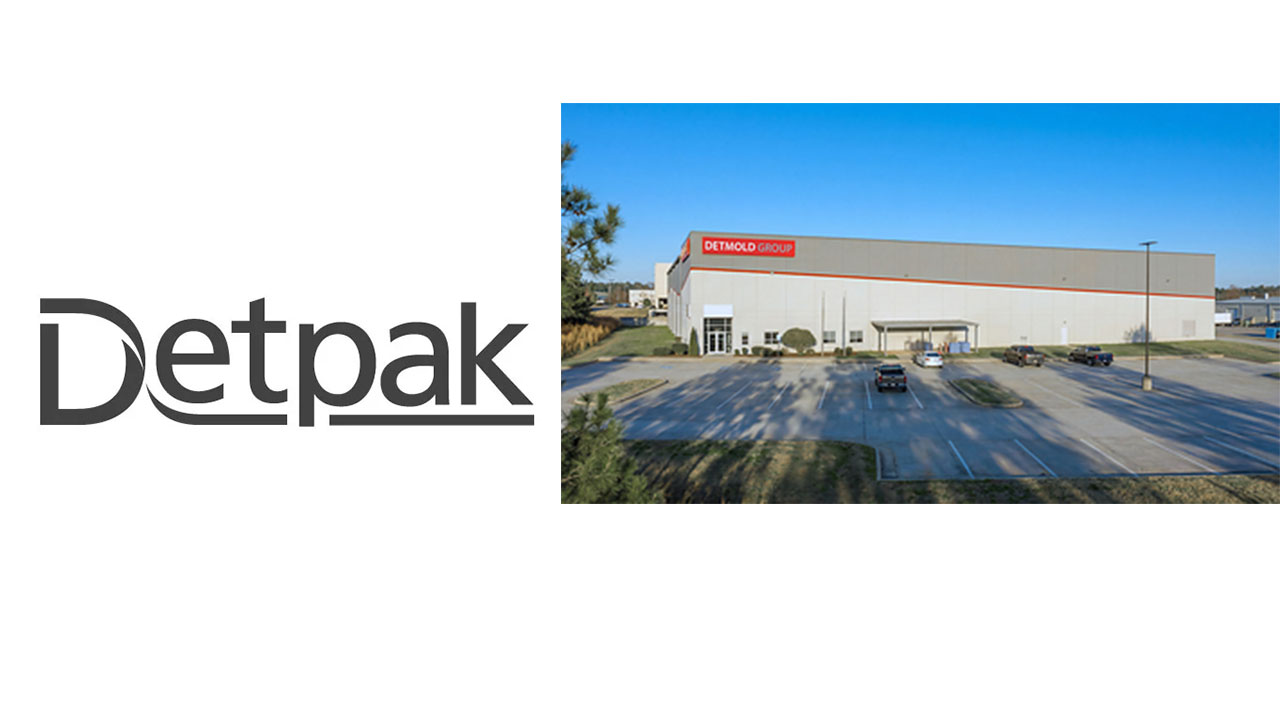
Detpak’s new U.S. manufacturing facility in Spartanburg, South Carolina, strengthens local manufacturing capabilities and expands support for Quick Service Restaurant (QSR), foodservice, Fast-Moving Consumer Goods (FMCG), and retail customers across North America.

Detpak, a Detmold Group company headquartered in Australia, is a trusted packaging partner to some of the world’s largest and most recognizable QSR, foodservice, FMCG and retail brands, with experience supplying global customers such as McDonald’s, KFC, Starbucks, and Wendy’s. The company has supported customers in the United States for more than two decades, operates in 45 countries, and owns manufacturing facilities in eight countries.

The new US manufacturing facility marks a significant step in Detpak’s global expansion and reinforces its long-term commitment to the North American market. By combining its global expertise with local manufacturing capability, Detpak will be better positioned to support US customers with improved supply chain reliability, reduced lead times and greater operational flexibility.

“As we continue to grow our global footprint, opening our own manufacturing facility in the United States is a key milestone for our business,” CEO Sascha Detmold Cox said.

“It allows us to better support our customers with locally manufactured products and reinforces our commitment to the U.S. market where we have been supplying customers from our international plants for over 20 years. We’re focused on building long-term partnerships and delivering the same level of service, innovation and reliability that our customers experience globally.”

“We’re proud to be investing in the Spartanburg community and creating new employment opportunities in South Carolina.” Ms. Detmold Cox said.

Initially employing more than 50 people from the local community, the multi-million-dollar facility, spanning 175,000 square feet, is currently undergoing equipment commissioning, with full production commencing in August.

About Detpak and the Detmold Group

Wholly owned by the Detmold Group, Detpak designs, manufactures and supplies the Quick Service Restaurant (QSR), Fast-Moving Consumer Goods (FMCG), grocery and food services industry with world-class sustainable paper and cardboard packaging solutions. Detpak delivers a level of service and care that exceeds standards, with the understanding and operational integrity of a family-owned business. Many of the paper and board packaging products used in the fast-food industry, including from Starbucks, Uber Eats, Burger King and Krispy Kreme are supplied by Detpak.

With headquarters in Australia, the Detmold Group is a 78-year-old, family-owned and operated business, supplying packaging to the world’s largest and most iconic food and retail brands. Detpak serves a range of markets, including fresh produce, QSR, foodservice, Fast-Moving Consumer Goods (FMCG) and grocery and convenience.

Free Training

Source link