AI boom lifts Mexico tech exports, complicating Trump trade goals


WASHINGTON – The United States’ frenzied rush to build out AI infrastructure has boosted exports of Mexican technology, complicating President Donald Trump’s hand heading into trade negotiations.

Trump, who campaigned on boosting US manufacturing, hopes to narrow the trade deficit with Mexico during talks to update the USMCA free trade agreement, which kick off Tuesday in Mexico City.

But the dizzying rise in computer equipment exports from Mexico — the largest US trading partner — is doing the opposite.

Between January and April, Mexico tripled its sales of computer equipment to the United States compared to the same period last year, with exports topping $50 billion versus just $2.2 billion in imports, according to AFP calculations.

The sector now makes up 30 percent of all Mexican products shipped to the United States, overtaking the automotive industry as the largest component of exports.

“It’s a milestone largely driven by demand for advanced AI electronics,” Diego Flores, head of electronic and digital industries at Mexico’s Economy Ministry, told AFP.

The sector, which includes processing units and data centre hardware, is not officially on the agenda for this round of negotiations.

– Explosive demand –

The most in-demand products are server racks that house AI processing cards — a key component for the data centres multiplying across the United States.

The main export hub is the Pacific state of Jalisco, dubbed the “Mexican Silicon Valley,” where an ecosystem of global industry giants and tech startups have set up shop, Flores said.

Taiwanese giant Foxconn assembles server racks in Jalisco, and serves as a strategic partner to US chip designer Nvidia.

In March, Foxconn announced $137 million in investments across two Mexican subsidiaries after estimating its production could double this year.

“The United States and Mexico will remain our primary production hubs,” Chief Executive Michael Chiang said, announcing the company would invest 30 percent more than in 2025 to expand its AI-related capacity.

Faced with booming demand, Flextronics, another tech manufacturer in Jalisco, even had to repurpose its parking lots to expand manufacturing capacity, Flores said. 

Yet the boom comes amid a volatile political climate.

The Trump administration rejected a 16-year extension of the USMCA, opting instead for annual reviews with Mexico and Canada.

Washington is also continuing to push for more goods to be manufactured domestically, even as US reliance on imports from Mexico, Taiwan, and China to fuel its AI boom grows.

– ‘In the line of fire’ –

Could the thriving sector become Trump’s next tariff target?

“Nobody can say for sure,” Flores admitted. However, he expressed confidence that the sector might escape protectionist policies due to its immense strategic value to the United States.

Washington is also seeking to limit the use of Asian technology within North America, according to William Jackson, a chief emerging markets economist at Capital Economics.

“The Trump administration has to weigh the demand for these technologies and the need to stay at the forefront of AI development,” he told AFP, noting that “tariffs could prove counterproductive to that goal.”

But balancing the preservation of a booming industry with protectionist rhetoric puts the sector “very easily in the line of fire,” he warned.

That risk is heightened by the fact that Mexican manufacturers use components sourced from China and Taiwan, which Trump could view as a “backdoor” or Trojan horse for Asian technology entering the United States.

Free Training

Source link

/C O R R E C T I O N — MISUMI Americas/


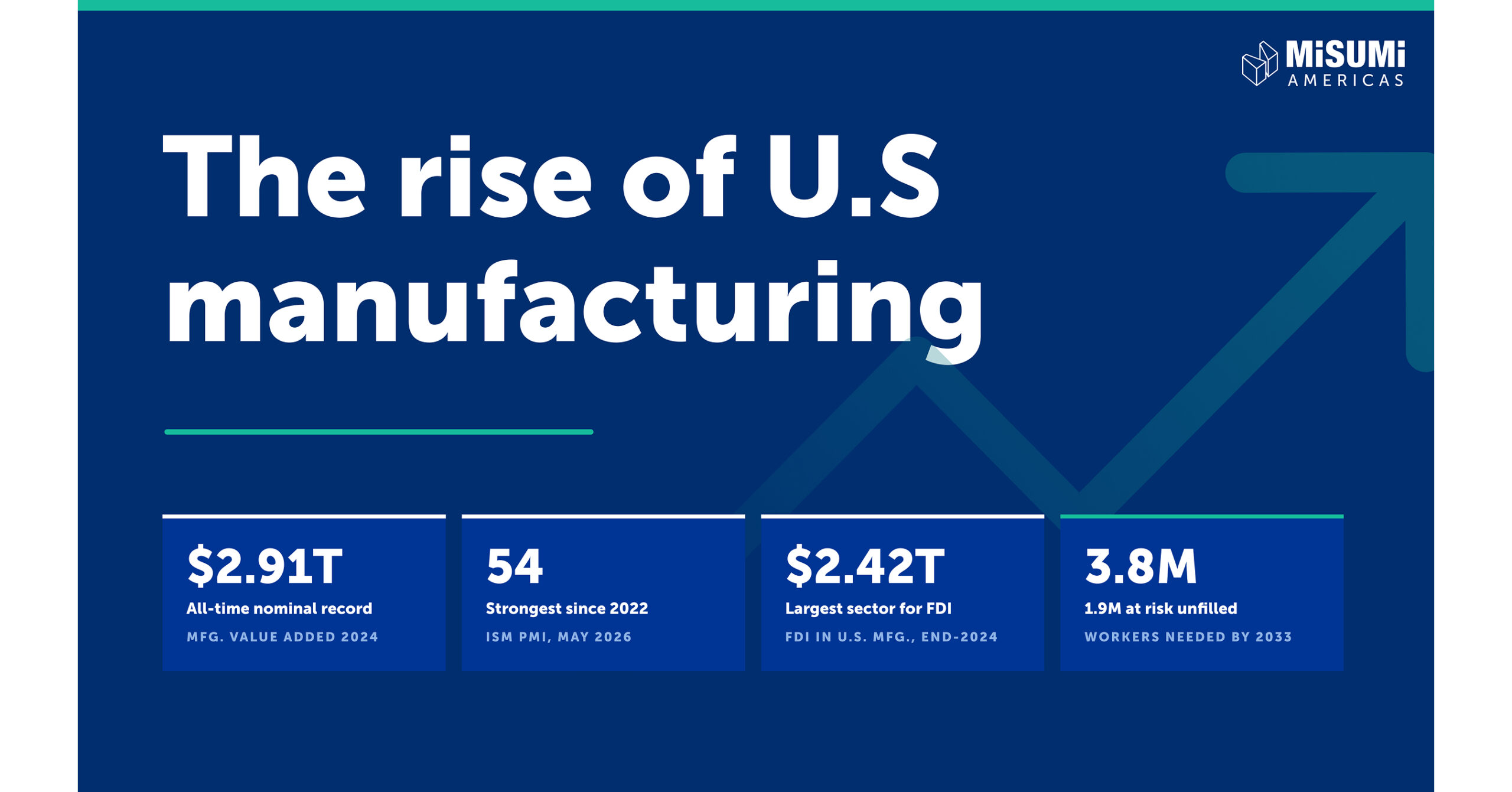
That investment is now bumping into a problem it can’t buy its way out of: a workforce shortage that predates it and will outlast it. The Manufacturing Institute and Deloitte project the industry will need 3.8 million additional workers by 2033, and 1.9 million of those jobs could go unfilled without action. It is, by every available measure, the single largest constraint on how far this growth cycle can go.

MISUMI Americas—the unified U.S. presence of MISUMI and Fictiv—today releases The Rise of U.S. Manufacturing, a data report drawn entirely from BLS, BEA, Census, NIST, ASEE, and Reshoring Initiative sources. Alongside the report, the company is endorsing H.R. 9097, the American Manufacturing Revitalization Exchange Program Act, introduced by Rep. Bill Huizenga (R-MI) and now pending before the House Committee on Foreign Affairs. The bill would send American manufacturing workers to allied nations for hands-on training in advanced production skills, then bring that expertise home.

“Having a strong manufacturing sector is critical to our economy, national security, and ability to compete globally,” said Congressman Huizenga. “By focusing on advanced manufacturing in sectors such as automotive, semiconductors, and aeronautics, this bipartisan legislation will help reshore American manufacturing, equip American workers with in-demand skills, and rebuild our nation’s middle class.”

BY THE NUMBERS

  • $2.91 trillion: U.S. manufacturing value added in 2024, an all-time nominal record (BEA via World Bank). This single sector would rank as the world’s 8th-largest economy if it stood alone, ahead of France and just behind the United Kingdom. The figure reflects current, not inflation-adjusted, dollars, so part of the gain comes from manufacturers producing more goods and part comes from higher prices.
  • 54 PMI: the ISM Manufacturing PMI reading for May 2026, the strongest since May 2022 and a clear signal of expansion. The index had spent most of 2025 below the 50-point threshold that separates growth from contraction, making this a meaningful reversal. New orders, production, and order backlogs all expanded that month, the broadest improvement in factory activity in roughly four years.
  • $235.6 billion: peak annual factory construction spending in 2024, nearly triple the roughly $81.9 billion spent in 2021 (U.S. Census Bureau). Semiconductor fabs and EV battery plants, fueled by the CHIPS Act and Inflation Reduction Act, drove the majority of that increase. The pace has since moderated to roughly $196 billion by January 2026, though spending remains more than double pre-boom levels.
  • $2.42 trillion: cumulative foreign direct investment (FDI) in U.S. manufacturing, led by Japan, Canada, and Germany (BEA). Manufacturing is now the single largest sector for inbound foreign investment in the country, representing more than 42% of all FDI in the United States. Japan alone accounts for over $819 billion of that total, more than any other country invests in any single U.S. industry.
  • 2 million-plus: reshoring and FDI jobs announced since 2010, including a record 364,000 in a single year, 2022 (Reshoring Initiative). The vast majority of recent announcements, 88% in 2024, are in high or medium-high technology manufacturing sectors such as semiconductors, electronics, and electric vehicles. Roughly 1.7 million of those announced jobs have already been filled.
  • 3.8 million: additional manufacturing workers the industry will need by 2033, with 1.9 million of those positions at risk of going unfilled without action (Manufacturing Institute and Deloitte). Of that 3.8 million, roughly 2.8 million comes from workers retiring and the remainder from new growth, including jobs tied directly to the CHIPS Act, the Inflation Reduction Act, and the Infrastructure Investment and Jobs Act. More than 65% of manufacturers already cite attracting and retaining talent as their single biggest business challenge.
  • 20% growth since Spring 2020: enrollment at high-vocational community colleges, a workforce already responding to the opportunity (National Student Clearinghouse Research Center). Undergraduate certificate programs have grown for four consecutive years, evidence that students are choosing faster, skills-focused pathways into manufacturing careers. Even so, total enrollment at these institutions remains well under one million students nationwide, a fraction of the workforce the industry will need to recruit and train by 2033.

WHY THIS MATTERS NOW
Every part of the investment case for U.S. manufacturing is real and verifiable: record output, a historic construction cycle, the largest foreign capital position of any sector in the country. What the data also shows is that the workforce has not yet scaled to match it. 2.8 million of the 3.8 million workers needed through 2033 comes from retiring employees — replacing the current workforce, not just expanding it. There were 409,000 open manufacturing positions as of August 2025, and 65% of manufacturers cite attracting and retaining skilled talent as their top challenge.

The encouraging signal: students are already responding. Enrollment at high-vocational community colleges is up nearly 20% since Spring 2020, and undergraduate certificate programs have grown for four consecutive years. The pipeline is moving in the right direction — it simply needs to move faster and reach deeper into advanced, specialized skills that take years to build domestically but already exist abroad.

That is the specific gap H.R. 9097 is designed to close. Japan, Germany, and South Korea — the three largest sources of cumulative foreign investment in U.S. manufacturing — also hold decades of advanced production expertise: precision engineering, semiconductor fabrication, and systemized manufacturing training models. The bill creates a structured exchange so American workers can train directly in those environments and bring the knowledge home, accelerating a domestic pipeline that is already growing.

H.R. 9097 places workers and students per year in allied nations for 6 to 12 months of hands-on training in sectors including robotics, semiconductors, and automotive, with a full stipend and industry-recognized credentials on completion.

Full bill text: congress.gov/bill/119th-congress/house-bill/9097/all-info 

STATEMENT FROM DAVE EVANS, PRESIDENT AND CEO, MISUMI AMERICAS AND FICTIV
“The investment case for American manufacturing has never been stronger — record output, a historic construction cycle, trillions in committed foreign capital. What we see with our customers every day is that the next constraint isn’t capital. It’s having enough people with the right advanced skills to run these new facilities at full capacity. The good news is that American students are already moving toward skilled trades and technical training. H.R. 9097 builds directly on that momentum by sending workers to learn from the countries — Japan, Germany, South Korea — that have spent decades perfecting advanced manufacturing training, and bringing that expertise home.”
— Dave Evans, President and CEO, MISUMI Americas; CEO, Fictiv

H.R. 9097 is supported by the National Association of Manufacturers, the Manufacturing Institute, United Steelworkers, IEEE-USA, BMW Group, the American Automotive Policy Council, LIFT, the Alliance for International Exchange, Automation Alley, and the Additive Manufacturing Coalition.

SOURCES
Manufacturing value added and PMI: BEA via World Bank; Institute for Supply Management, May 2026  |  Construction spending: U.S. Census Bureau / FRED TLMFGCONS  |  FDI: BEA Direct Investment by Country and Industry 2024  |  Reshoring data: Reshoring Initiative Annual Reports 2022–2025  |  Workforce gap: Manufacturing Institute + Deloitte, Taking Charge 2024  |  Open positions: BLS JOLTS, August 2025  |  Enrollment: National Student Clearinghouse Research Center, CTEE 2023–2026

About MISUMI Americas
MISUMI Americas is a specification-driven sourcing partner for mechanical components and assemblies, helping engineering, supply chain, procurement, and manufacturing teams move from concept to production faster. MISUMI Americas provides a full continuum of mechanical component solutions, including standard components, configurable components, custom-manufactured parts, assemblies, and production services. By combining AI-powered sourcing, digital tools, engineering expertise, and a trusted global supply chain, MISUMI Americas helps customers reduce complexity, improve scalability, and accelerate innovation across product development, factory automation, machine building, and MRO. Learn more at www.misumi.com.

About Fictiv
Fictiv is a global manufacturing and supply chain company that enables organizations to scale globally without the typical barriers of cost, complexity, and risk. By leveraging Fictiv’s four global manufacturing centers in India, Mexico, China, and the U.S., companies can access high-quality production, optimize logistics, and mitigate supply chain risk—ensuring they can move from prototype to production with speed and confidence. To date, Fictiv has delivered more than 40 million prototype and commercial parts and assemblies for early-stage companies and large enterprises alike, helping them innovate faster, free up precious resources, and drive profitable growth. For more information, visit www.fictiv.com. 

Correction: A hyperlink to The Rise of U.S. Manufacturing report has been added to the first paragraph. 

Free Training

Source link

LTR Pharma secures national US manufacturing and fulfilment partner


LTR Pharma has taken a major step toward its planned US commercial launch by executing a definitive agreement with Strive Specialties, converting a previously announced binding term sheet into a long-form commercial arrangement that will govern the manufacture, compounding, fulfilment and nationwide supply of ROXUS in the United States.

ROXUS is a fast-acting intranasal spray for the treatment of erectile dysfunction, enabling onset of action in 10 minutes or less. 

The agreement establishes the operational framework for technology transfer, manufacturing, quality systems, active pharmaceutical ingredient procurement, product change control, inventory management and nationwide prescription fulfilment.

The deal builds on a complementary agreement LTR Pharma signed with telehealth provider Shed, giving the company two core commercial pillars: patient acquisition and prescribing through telehealth, and national manufacturing and fulfilment through Strive Pharmacy.

Strive Pharmacy operates a Section 503A compounding platform across five US states with licensure that supports nationwide compounding, packaging, fulfilment and shipping of prescription treatments. Under the agreement, Strive will be responsible for preparation, fulfilment, shipping and related quality and supply chain operations for ROXUS, providing the infrastructure LTR says is needed to support both telehealth and clinic channels and future commercial growth.

LTR Pharma Executive Chairman, Lee Rodne, said, “Executing the definitive agreement with Strive Pharmacy completes another major piece of our U.S. commercialisation strategy. While Shed provides patient acquisition and telehealth capability, Strive Pharmacy provides the national manufacturing, compounding and fulfilment infrastructure required to supply ROXUS across the United States. With both definitive agreements now in place, our focus shifts from partner selection to implementation and Commercial Launch. We believe this significantly strengthens our U.S. execution pathway and reduces commercial risk.”

Strive Pharmacy President and Co-Founder, Michael Walker, added, “We are delighted to formalise our partnership with LTR Pharma. ROXUS is a highly differentiated product, and we look forward to supporting its U.S. launch through Strive Pharmacy’s national compounding, manufacturing and fulfilment capabilities.”

Free Training

Source link

US Manufacturing Labor Productivity Growth Has Stagnated | Blogs | Jul 20, 2026


Manufacturing labor productivity growth is a key driver of the United States’ long-term economic performance and global competitiveness. Labor productivity measures how much output workers produce per hour. When it rises, firms can produce more goods with the same amount of labor, lowering unit labor costs and improving efficiency. This makes firms more competitive globally, supports higher wages over time, and strengthens the broader economy. Despite these benefits, data from the Bureau of Labor Statistics show that U.S. manufacturing productivity growth has slowed sharply since 2005. Congress should provide a 25 percent tax credit to firms adopting productivity-enhancing technologies, such as artificial intelligence systems and industrial robots. This would bolster overall manufacturing productivity growth and ensure that the United States remains competitive with its global rivals.

Labor productivity growth across industries drives a nation’s efficiency and competitiveness. When productivity growth is strong in all sectors, workers can produce more output per hour, allowing firms to scale production, reduce per-unit costs, and compete more effectively in global markets. Higher productivity also frees up resources for investment in research, capital equipment, and process innovation, reinforcing long-run technological leadership. Conversely, when productivity growth slows, unit labor costs rise relative to those of foreign competitors, weakening export competitiveness and limiting industrial expansion.

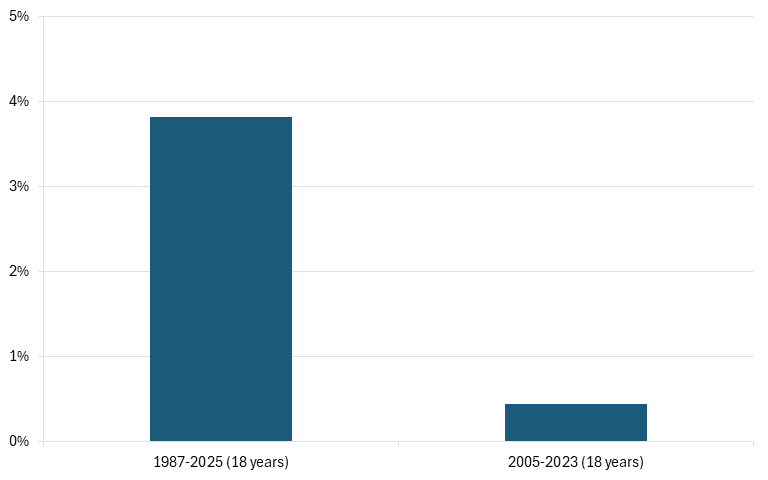
Despite its importance, U.S. manufacturing labor productivity growth has slowed dramatically in recent decades. From 1987 to 2005, manufacturing productivity grew at an average annual rate of 3.8 percent. However, from 2005 to 2023, its average annual growth rate fell to just 0.4 percent. (See figure 1.) This sustained decline points to a structural slowdown rather than merely a cyclical fluctuation, indicating a broad-based weakening in manufacturing productivity performance.

Figure 1:Manufacturing sector’s average annual growth rates

image

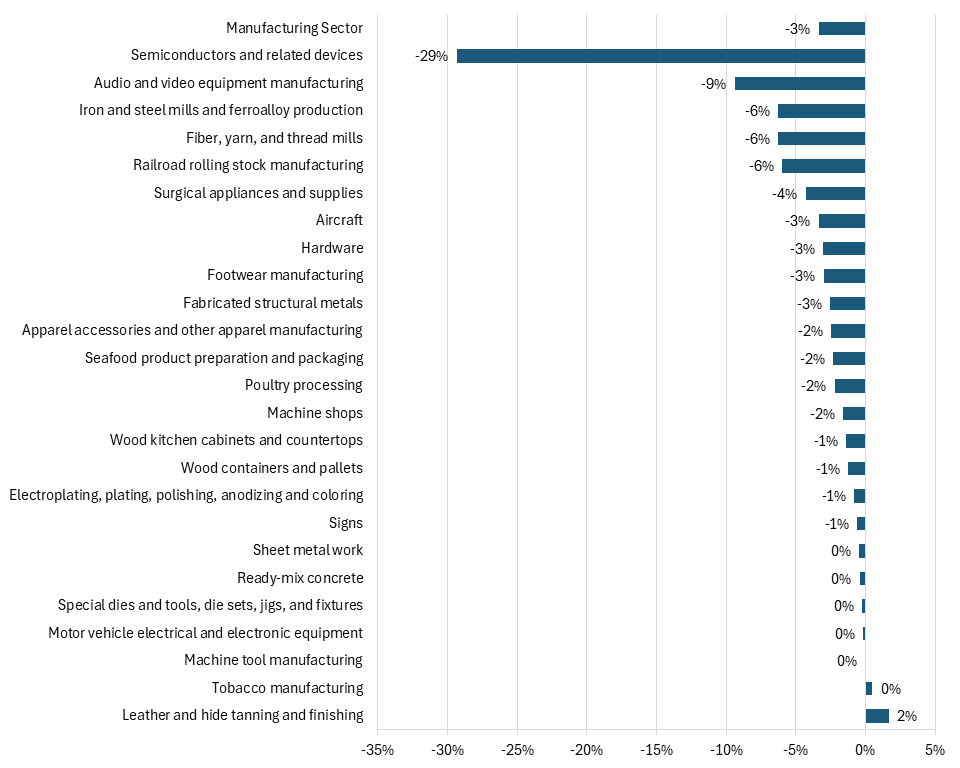
When disaggregated by industry, the data show that the slowdown remains widespread across the manufacturing sector. Of the 27 industries with available data, only 2 experienced higher productivity growth in the post-2005 period than from 1987 to 2005. Notably, both gains occurred in non-advanced industries: leather and hide tanning and finishing, where productivity growth rose by 1.7 percentage points, and tobacco manufacturing, where it increased by 0.5 percentage points.

In contrast, all advanced manufacturing industries for which data are available have experienced declines in productivity growth. For instance, annual productivity growth in computer and electronic product manufacturing fell from 1.9 percent from 1987 to 2005 to −1.2 percent from 2005 to 2023, a decline of roughly 3 percentage points. Aircraft manufacturing experienced a similar decline of about 3 percentage points during the same period. (See figure 2.)

Figure 2: Percentage point change in average annual growth rates from 1987-2005 period to 2005-2023 period, by manufacturing industries

image

This is particularly worrisome because China has significantly increased its production capacity in advanced industries and has already established leadership in many of them. As the latest edition of ITIF’s Hamilton Index highlights, China now dominates global production in advanced industries, accounting for nearly one-quarter of output across all 10 advanced industries combined and leading production in 7 of them. If U.S. productivity growth continues to stagnate in these sectors, the consequences will include not only slower economic growth but also a sustained loss of global market share in industries where leadership is difficult to regain once lost.

To reverse the slowdown in manufacturing productivity growth, Congress should establish a 25 percent tax credit for firms adopting productivity-enhancing technologies, including industrial robots, artificial intelligence systems, and advanced manufacturing software. By reducing the cost of technology adoption, the credit would encourage firms to modernize their production processes, increase output per worker, and strengthen their global competitiveness.

Free Training

Source link

DETPAK OPENS U.S. MANUFACTURING FACILITY IN SPARTANBURG, SOUTH CAROLINA


SPARTANBURG, S.C., July 20, 2026 /PRNewswire/ — Global packaging supplier Detpak today announced the opening of its new manufacturing facility in Spartanburg, South Carolina, strengthening its ability to support major Quick Service Restaurant (QSR) customers with locally produced, paper-based packaging solutions.

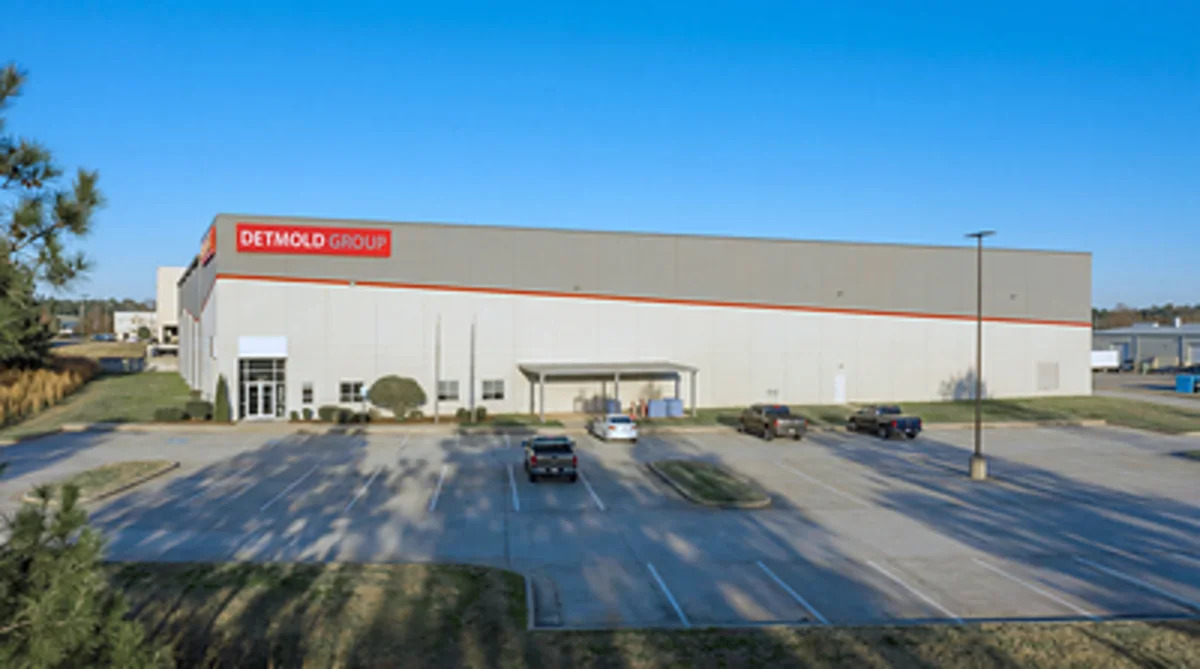
Detpak's new U.S. manufacturing facility in Spartanburg, South Carolina, strengthens local manufacturing capabilities and expands support for Quick Service Restaurant (QSR), foodservice, FMCG, and retail customers across North America. Learn more: https://www.detpak.com Detpak’s new U.S. manufacturing facility in Spartanburg, South Carolina, strengthens local manufacturing capabilities and expands support for Quick Service Restaurant (QSR), foodservice, FMCG, and retail customers across North America. Learn more: https://www.detpak.com

Detpak, a Detmold Group company headquartered in Australia, is a trusted packaging partner to some of the world’s largest and most recognizable QSR, foodservice, FMCG and retail brands, with experience supplying global customers such as McDonald’s, KFC, Starbucks, and Wendy’s. The company has supported customers in the United States for more than two decades, operates in 45 countries, and owns manufacturing facilities in eight countries.

The new US manufacturing facility marks a significant step in Detpak’s global expansion and reinforces its long-term commitment to the North American market. By combining its global expertise with local manufacturing capability, Detpak will be better positioned to support US customers with improved supply chain reliability, reduced lead times and greater operational flexibility.

“As we continue to grow our global footprint, opening our own manufacturing facility in the United States is a key milestone for our business,” CEO Sascha Detmold Cox said.

“It allows us to better support our customers with locally manufactured products and reinforces our commitment to the U.S. market where we have been supplying customers from our international plants for over 20 years. We’re focused on building long-term partnerships and delivering the same level of service, innovation and reliability that our customers experience globally.”

“We’re proud to be investing in the Spartanburg community and creating new employment opportunities in South Carolina.” Ms. Detmold Cox said.

Initially employing more than 50 people from the local community, the multi-million-dollar facility, spanning 175,000 square feet, is currently undergoing equipment commissioning, with full production commencing in August.

About Detpak and the Detmold Group

Wholly owned by the Detmold Group, Detpak designs, manufactures and supplies the Quick Service Restaurant (QSR), Fast-Moving Consumer Goods (FMCG), grocery and food services industry with world-class sustainable paper and cardboard packaging solutions. Detpak delivers a level of service and care that exceeds standards, with the understanding and operational integrity of a family-owned business. Many of the paper and board packaging products used in the fast-food industry, including from Starbucks, Uber Eats, Burger King and Krispy Kreme are supplied by Detpak.

Free Training

Source link

Samsung Biologics to acquire PolyPeptide for $1.8 bil.


The headquarters of Samsung Biologics in Songdo, Incheon / Courtesy of Samsung Biologics

The headquarters of Samsung Biologics in Songdo, Incheon / Courtesy of Samsung Biologics

Samsung Biologics said Monday it will acquire Swiss peptide drug manufacturer PolyPeptide Group through an all-cash public tender offer valued at approximately 1.46 billion Swiss francs ($1.8 billion), marking its largest overseas acquisition as it expands beyond antibody manufacturing into peptide therapeutics.

Samsung Biologics CEO John Rim

Samsung Biologics CEO John Rim

The Korean contract development and manufacturing organization (CDMO) will offer 44.31 Swiss francs per share for all outstanding shares of PolyPeptide, representing a 40 percent premium to the company’s unaffected closing price before acquisition rumors emerged in April.

The transaction, expected to close toward the end of 2026, is subject to shareholder approval, regulatory clearances and other customary conditions. Samsung Biologics must secure at least a two-thirds acceptance rate from shareholders. PolyPeptide’s largest shareholder, which owns about 55.7 percent of the company, has already agreed to tender its stake.

PolyPeptide’s board of directors unanimously recommended that shareholders accept the offer, saying the acquisition provides an attractive outcome for investors while positioning the company for its next stage of growth.

The acquisition significantly broadens Samsung Biologics’ manufacturing portfolio by adding peptide-based active pharmaceutical ingredients, a rapidly expanding market fueled by soaring demand for obesity and diabetes treatments, including GLP-1 therapies.

The company said combining its large-scale biologics manufacturing capabilities with PolyPeptide’s expertise will create an end-to-end multimodality CDMO platform spanning antibodies, antibody-drug conjugates (ADCs) and peptide therapeutics.

Founded more than 70 years ago, PolyPeptide is one of the world’s leading peptide CDMOs. The company has produced more than 1,000 therapeutic peptides and operates research, development and commercial manufacturing facilities in Sweden, Belgium, France, the United States and India, with its headquarters in Switzerland.

Samsung Biologics said the acquisition will also strengthen its global manufacturing footprint and enhance its ability to serve pharmaceutical customers across major markets.

“The acquisition reinforces our long-term growth strategy by broadening our service portfolio into peptides, including GLP-1 therapies, while further expanding our geographic reach across the United States, Europe and India,” Samsung Biologics CEO John Rim said.

He added that PolyPeptide’s technology, experienced workforce and global operations would complement Samsung Biologics’ existing capabilities and strengthen its position as a global multimodality CDMO.

PolyPeptide Chairman Peter Wilden described the deal as a transformational opportunity that would accelerate the Swiss company’s long-term growth while delivering immediate value to shareholders.

Samsung Biologics plans to launch the formal tender offer by the end of August, following procedures required under Swiss takeover law. After completing the acquisition, the company intends to buy out remaining minority shareholders and delist PolyPeptide from the SIX Swiss Exchange, making it a wholly owned subsidiary.

J.P. Morgan is serving as Samsung Biologics’ exclusive financial adviser on the transaction.

Free Training

Source link

3 US Manufacturing Stocks Worth Watching As Brazil Tariffs Shift Demand


Tariffs between the US and Brazil are back in the headlines, and that kind of trade tension can quietly reshuffle the deck for large industrial and manufacturing stocks. Some companies face new questions around costs and supply chains, while others may find breathing room if Brazilian competitors become less price competitive. This article looks at three US industrial stocks from a health focused screener that appear closely exposed to the latest tariff news. You will see how each stock could be positioned to benefit, what risks to keep in mind, and why this theme might matter for your watchlist.

Alamo Group (ALG)

Overview: Alamo Group manufactures equipment that keeps infrastructure and land in working order, from tractor powered mowers and forestry tools to street sweepers, sewer cleaners, snow plows, and waste handling trucks used by governments, contractors, and agricultural customers worldwide.

Operations: Alamo Group generates about US$964.3 million from Industrial Equipment and US$665.6 million from Vegetation Management, with most revenue coming from the United States alongside smaller contributions from Canada, France, the United Kingdom, and other markets.

Market Cap: US$2.0b

Alamo Group provides direct exposure to infrastructure and agriculture equipment at a time when tariffs on Brazilian products may make domestically produced machinery more competitive. The company already has substantial manufacturing in the US and Canada. Analysts highlight healthy earnings growth expectations, high quality earnings and a discount to estimated fair value. Management has recently reduced net debt to a modest level and secured a sizeable long term credit facility. However, recent earnings have declined, margins have come under pressure and the management team is relatively new. Execution and tariff related input cost pressures therefore remain important watchpoints for investors tracking this stock.

Alamo Group looks like an overlooked tariff beneficiary, with US based manufacturing, reduced net debt and fresh financing capacity that could matter far more than the headline margin pressure suggests, start with the DCF valuation analysis for Alamo Group

ALG Discounted Cash Flow as at Jul 2026ALG Discounted Cash Flow as at Jul 2026

Century Aluminum (CENX)

Overview: Century Aluminum produces primary aluminum and alumina, supplying both standard and value added products from smelters in the United States and Iceland. The company is supported by a carbon anode facility in the Netherlands and bauxite mining and alumina refining in Jamaica.

Operations: Century Aluminum generates about US$2.5b in revenue from Primary Aluminum, with around US$1.9b coming from the United States and US$660.4m from Iceland.

Market Cap: US$4.1b

Century Aluminum operates at the center of US aluminum supply at a time when new 25% tariffs on Brazilian products could redirect demand toward domestic producers and support local pricing. The company already emphasizes short, locally sourced supply chains, and management has indicated that recent reciprocal tariffs did not bring material cost pressure. Earnings momentum, high return on equity and meaningful exposure to US and EU markets contribute to its current positioning. Investors still need to weigh exposure to trade policy shifts, power and raw material costs, and the quality of recent non cash earnings. For readers tracking reshoring, clean energy build out and tariff supported metals, Century Aluminum presents multiple factors to consider.

Century Aluminum sits at the crossroads of tariffs, reshoring and clean energy, yet the real story lies in how its US and EU exposure, costs and earnings quality fit together in the analysis report for Century Aluminum

NasdaqGS:CENX Earnings & Revenue Growth as at Jul 2026NasdaqGS:CENX Earnings & Revenue Growth as at Jul 2026

Proto Labs (PRLB)

Overview: Proto Labs is a digital manufacturer that produces custom parts for developers, engineers, and supply chain teams, using services such as molding, CNC machining, 3D printing, and sheet metal fabrication across the United States and Europe.

Operations: Proto Labs generates about US$546.3 million in revenue from Machinery & Industrial Equipment, with roughly US$444.2 million from the United States and US$102.1 million from Europe.

Market Cap: US$1.8b

Proto Labs provides direct exposure to the shift toward faster, more localized manufacturing. This has become more relevant as 25% US tariffs on Brazilian products push companies to source critical components closer to home. The company focuses on high requirement work in aerospace, defense, medical devices, and drones, supported by a global, digital manufacturing footprint and AI driven pricing systems that can adjust to changing trade rules. At the same time, a high P/E, margin pressure from absorbing tariff related cost shocks, reliance on large customers, and an inexperienced management team are important considerations alongside earnings momentum and cash generation. How those trade offs resolve is a key factor for this stock in a tariff heavy environment.

Proto Labs’ push toward faster, localized manufacturing, AI driven pricing and cash generation sits against a high P/E and tariff related cost pressure. See how those trade offs stack up in the analysis report for Proto Labs.

NYSE:PRLB Earnings & Revenue Growth as at Jul 2026NYSE:PRLB Earnings & Revenue Growth as at Jul 2026

The three stocks covered here are only a starting point, since the full US Domestic Industrial and Manufacturing Stocks screen surfaces 46 more companies with equally compelling health scores, scale and tariff related angles that could reshape how you think about this theme, all organized in the US Domestic Industrial and Manufacturing Stocks screener. Use Simply Wall St to identify and analyze the specific catalysts, balance sheet strength and earnings narratives that matter most to you so you can focus on the highest conviction ideas in this group.

Take Control of Your Investment Journey

If Century Aluminum or any of these companies sound like a great opportunity, register for FREE with Simply Wall St and add your companies to a Watchlist to monitor the share price against the fair value the ideal entry point.
Once you’ve made your move, manage your holdings with our Portfolio Command Center that filters out the noise to deliver only the most critical, actionable updates.
Throughout your journey, our Community allows you to filter the best ideas from thousands of investor perspectives.
By uncovering hidden catalysts and risks early, you’ll accelerate your decision-making and stay one step ahead of the market.

Seeking Alternatives Before The Crowd?

Fresh stock ideas do not stay under the radar for long. As momentum builds and prices start flying, late entries can end up chasing. Review these curated lists and consider your options.

  • Spot companies quietly building strong cash flows before momentum develops by reviewing a curated mix of high quality value candidates in the 47 high quality undervalued stocks.
  • Explore infrastructure opportunities connected to AI-related demand by tracking hand picked enablers of data centers and networking in the 54 AI infrastructure stocks.
  • Monitor activity in robotics, automation and factory upgrades by studying carefully selected industrials inside the 33 robotics and automation stocks.

This article by Simply Wall St is general in nature. We provide commentary based on historical data
and analyst forecasts only using an unbiased methodology and our articles are not intended to be financial advice.
It does not constitute a recommendation to buy or sell any stock, and does not take account of your objectives, or your
financial situation. We aim to bring you long-term focused analysis driven by fundamental data.
Note that our analysis may not factor in the latest price-sensitive company announcements or qualitative material.
Simply Wall St has no position in any stocks mentioned.

New: AI Stock Screener & Alerts

Our new AI Stock Screener scans the market every day to uncover opportunities.

• Dividend Powerhouses (3%+ Yield)
• Undervalued Small Caps with Insider Buying
• High growth Tech and AI Companies

Or build your own from over 50 metrics.

Explore Now for Free

Have feedback on this article? Concerned about the content? Get in touch with us directly. Alternatively, email editorial-team@simplywallst.com

Free Training

Source link

How to buy Taiwan Semiconductor Manufacturing Co Ltd (XTSM) in United States


To cash out of Taiwan Semiconductor Manufacturing Co Ltd in United States, the first step is to transfer your tokens to a cryptocurrency exchange that supports withdrawals into fiat currency. Once your Taiwan Semiconductor Manufacturing Co Ltd is deposited into your exchange wallet, you can place a sell order. Depending on the exchange, you may be able to sell Taiwan Semiconductor Manufacturing Co Ltd directly into local currency or first convert it into a widely used cryptocurrency like Bitcoin (BTC) or Tether (USDT) before cashing out.

After completing the sale, your balance will appear in fiat currency within your exchange account. From there, you can withdraw funds through available payment channels such as bank transfers, card withdrawals, or third-party payment providers. The specific options and processing times vary across platforms, so reviewing withdrawal fees, limits, and timelines beforehand is recommended.

Finally, keep in mind that most exchanges require account verification before enabling fiat withdrawals, especially for larger amounts. By ensuring your account details are up to date, you can help avoid delays when transferring funds from your exchange wallet to your personal bank account in United States.

Free Training

Source link

Is Apple bringing chip manufacturing home? – Computerworld


TSMC doubles down

That’s why it is significant that TSMC confirmed plans to extend its own manufacturing in America. It already has a $165 billion US commitment; now, it is investing an additional $100 billion in four more chip plants — including one dedicated to churning out the company’s most advanced 2nm (and smaller) processors. 

“We believe this investment will help to further foster the development of the US semiconductor ecosystem, strengthen the supply chain, and support an increasing number of high-tech, high-paying jobs in the United States,”  CEO C.C. Wei told analysts.

TSMC has also confirmed plans to invest in packaging facilities for processors, which is basically the process where memory, processor, and networking nodes can all be combined and packaged on the chip. That sort of packaging is needed to make the final SoC chip. That means TSMC factories in the US will be able to churn out the advanced processors used in Apple’s current and, presumably, future devices.

Free Training

Source link

U.S. manufacturing stalls, held back by durable goods


July 17, 2026 10:06 AM, EDT

Aircraft manufacturing in Renton, Wash. (M. Scott Brauer/Bloomberg)

Key Takeaways:Toggle View of Key Takeaways

  • U.S. manufacturing production stalled in June, dragged down by a decline in durable goods such as machinery.
  • Durable goods declines, including machinery, wood products, electrical equipment and appliances, helped stall factory output despite gains in utilities and mining.
  • Capacity utilization at factories fell slightly to 75.7% as renewed U.S.-Iran hostilities raised risks for energy costs and demand.

U.S. manufacturing production stalled in June, dragged down by a decline in durable goods such as machinery.

Factory output, which accounts for three-fourths of total industrial production, was unchanged after an upwardly revised 0.1% increase in May, Federal Reserve data out July 17 showed.

The median estimate in a Bloomberg survey of economists called for a 0.1% advance.

Overall industrial production rose 0.1% for a second month. And output at utilities and mining each increased 0.4%, according to the report.

Within durables, other categories that also declined included wood products, electrical equipment and appliances.

Meanwhile, production of computer and electronic products and defense and space equipment, which both saw strong gains in the two previous months, slowed in June.

June #IndustrialProduction: Total +0.1%, Mfg. +0.0%, Utilities +0.4%, Mining +0.4%; #CapacityUtilization 76.1% https://t.co/nYuGKYaV9g #FedData

— Federal Reserve (@federalreserve) July 17, 2026

The report, showing two months of stagnation, contrasts with other recent data signaling some recovery in manufacturing. But an upturn in energy prices amid renewed hostilities between the U.S. and Iran risks driving up costs and sapping demand.

In the Fed report, capacity utilization at factories, a measure of potential output being used, fell slightly to 75.7%. The overall industrial utilization rate was unchanged.

Free Training

Source link