Nucor Corporation focuses on steel production and US manufacturing demand


Nucor Corporation (ISIN US6703461052) is one of the largest steel producers in the United States, operating a network of mini-mill facilities that manufacture a wide range of steel products for industrial customers across the country. The company supplies steel to construction, automotive, machinery, energy, and other manufacturing segments, and its performance is closely linked to broader US industrial activity and demand for steel-intensive projects.

Nucor Corporation is widely recognized as a key player in the US steel industry, reflecting decades of investment in mini-mill technology, recycling capabilities, and downstream value-added product lines. Its operations draw heavily on scrap steel, which is melted and processed into new products, allowing the company to participate directly in the circular economy of materials and to benefit from trends in metal recycling and resource efficiency.

Steel production and mini-mill model

Nucor Corporation’s core business revolves around mini-mill steel production facilities located in multiple US states, each designed to melt scrap steel and convert it into finished products. These mini-mills typically use electric arc furnaces to process scrap, offering flexibility in output and the ability to adjust production levels relatively quickly in response to customer demand and market pricing for steel.

Through this mini-mill model, Nucor Corporation produces a variety of steel forms, including beams, sheet, bar, and other shapes that are foundational materials for construction and manufacturing. The company has built an integrated network of facilities that can supply regional markets efficiently, helping to reduce transportation distances and deliver steel closer to end customers.

Nucor Corporation’s strategy has long emphasized cost efficiency and operational flexibility, allowing the company to manage through cycles of strong and weak steel demand. By focusing on mini-mills rather than traditional blast furnace operations, Nucor Corporation can adjust its production more rapidly and align its output with prevailing market conditions.

US industrial demand and customer base

The fortunes of Nucor Corporation are closely tied to US industrial demand, including construction projects, automotive manufacturing, infrastructure work, and machinery production. When activity in these sectors is robust, demand for steel products tends to be stronger, supporting higher volumes for Nucor Corporation and potentially better utilization of its mini-mill network.

The company serves a diversified customer base, selling steel to service centers, fabricators, manufacturers, and contractors across the United States. This diversification helps spread risk across multiple end markets, so that weakness in one segment can be partially offset by strength in another. For example, a slowdown in residential construction might be counterbalanced by stronger demand from non-residential projects or industrial facilities.

Nucor Corporation also benefits from its role as a supplier to infrastructure-related projects, which often require substantial volumes of steel for bridges, buildings, transportation systems, and energy facilities. As public and private entities invest in new construction and maintenance, Nucor Corporation’s steel products can be integral materials in these projects.

Go deeper

Learn more about Nucor Corporation and its steel business

Nucor Corporation is a major US steel producer using mini-mills and recycled scrap to supply construction and manufacturing customers across the country.

Product portfolio and downstream operations

Nucor Corporation operates a broad product portfolio that includes steel sheet, plate, bar, structural shapes, and various engineered steel products designed for specific applications. These offerings allow the company to supply materials for buildings, bridges, industrial equipment, vehicles, and other end uses that require durable and reliable steel.

In addition to basic steel products, Nucor Corporation has downstream operations that offer value-added processing and fabrication services. These can include cutting, bending, coating, and precision shaping of steel so that customers receive materials closer to their final specification, reducing the need for additional processing at the customer site.

The company has emphasized product quality, safety, and reliability in its operations, working to meet standards required by construction codes, automotive manufacturing requirements, and industrial specifications. Over time, Nucor Corporation has expanded its capabilities to cover more niche and specialized steel products, giving it access to segments with specific technical demands and often higher margins.

Steel recycling and sustainability approach

Nucor Corporation is known for its focus on steel recycling, using large volumes of scrap metal as the primary input to its electric arc furnaces. This approach helps limit the use of raw iron ore and traditional blast furnace operations, and aligns the company with broader environmental objectives relating to recycling and resource efficiency.

Steel recycling allows Nucor Corporation to participate directly in reducing waste and extending the life cycle of metal resources. Scrap is collected from a range of sources, including end-of-life vehicles, demolished structures, manufacturing offcuts, and other industrial processes, and then transformed into new steel products in Nucor Corporation’s mini-mills.

By emphasizing recycling, Nucor Corporation can reduce its reliance on certain raw materials and potentially lower energy consumption relative to some traditional steelmaking routes. The company communicates its sustainability efforts and recycling metrics in its regular reporting, reflecting growing interest from customers and investors in environmental performance and responsible resource use.

Representative product: structural steel beams

One representative product in Nucor Corporation’s portfolio is structural steel beams, which are widely used in commercial and industrial construction. These beams serve as key load-bearing elements in buildings, warehouses, manufacturing plants, and infrastructure projects such as bridges and large-scale facilities.

Structural steel beams produced by Nucor Corporation are designed to meet specific standards for strength, dimensional accuracy, and performance under load. The company supplies these beams in various sizes and profiles, such as wide-flange beams and other shapes, allowing builders and engineers to select the appropriate configuration for their projects.

Because steel beams are fundamental components of modern construction, demand for these products tends to track activity in commercial real estate, industrial development, and infrastructure investment. Nucor Corporation’s ability to manufacture and deliver beams efficiently can support customers working on tight schedules and complex project requirements.

Nucor Corporation stock and investor perspective

Nucor Corporation stock trades on a major US exchange in the form of common shares, reflecting the company’s position as a publicly listed industrial enterprise. The stock is part of the broader universe of US equities and is associated with the materials and industrial sectors, which respond to cycles in economic growth, manufacturing activity, and construction spending.

Investors often consider Nucor Corporation’s exposure to steel prices, demand for finished steel products, and the company’s ability to manage costs and maintain profitability through industry cycles. Over time, Nucor Corporation’s focus on mini-mill operations, recycling, and diversified end markets has contributed to its reputation as an important participant in the US steel sector.

Free Training

Source link

Pirelli Plans Up to $1.2 Billion U.S. Investment, Expanding Focus on Rome Plant


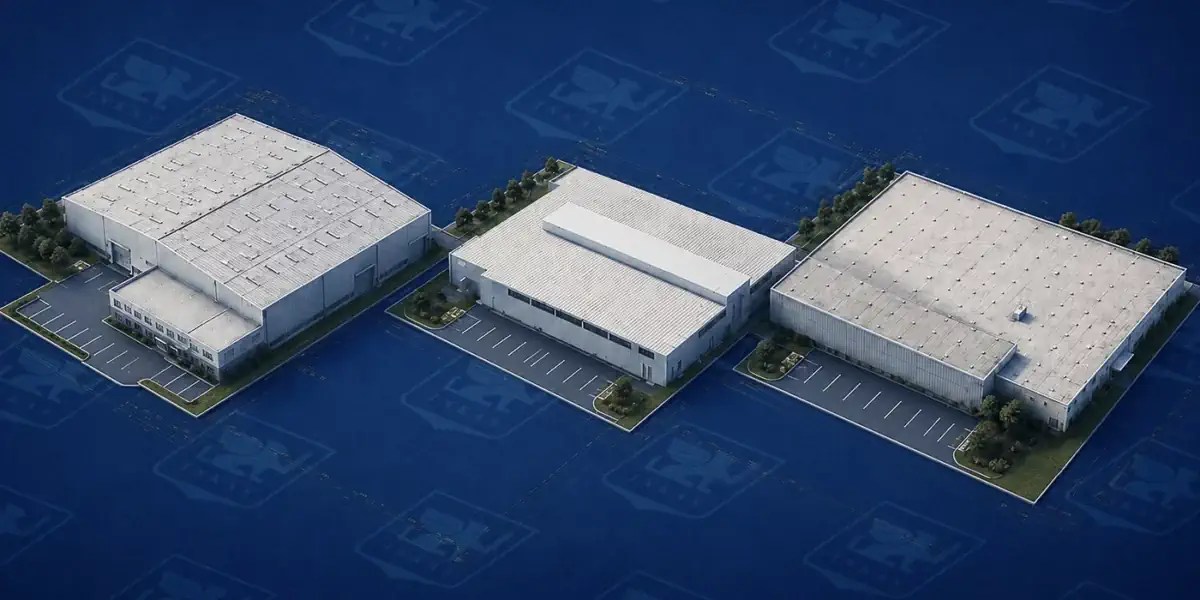
Tire manufacturer Pirelli is planning to invest between $1 billion and $1.2 billion in its U.S. operations over the coming years, a move expected to further strengthen production at its Rome manufacturing facility.

The Italian company announced that its newly appointed board of directors had been informed of the multi-year investment plan, which will be presented for formal approval at an upcoming board meeting.

The investment is aimed at increasing Pirelli’s manufacturing capacity in the United States, including expanding production of its innovative Cyber Tyres.

In May, Pirelli announced that Cyber Tyres would be produced at its Rome, Georgia, plant, positioning the northwest Georgia facility at the forefront of the company’s next generation of tire technology.

Cyber Tyre technology integrates sensors embedded inside the tire with software capable of transmitting real-time data to vehicles. The system can monitor information such as tire pressure, temperature and road conditions, providing drivers and vehicle systems with enhanced safety and performance data.

The planned investment underscores the strategic importance of Pirelli’s U.S. manufacturing operations as demand grows for advanced tire technologies.

The announcement also comes amid significant changes to the company’s corporate governance.

Earlier this year, the Italian government stepped in to limit the influence of Pirelli’s largest shareholder, Chinese state-owned chemical company Sinochem, citing concerns that its ownership structure could affect the tire maker’s business opportunities in the United States.

Following those restrictions, shareholders approved a new board of directors last week that is controlled by Italian investor Camfin, the investment company led by longtime Pirelli executive Marco Tronchetti Provera.

Camfin owns a 26.2% stake in Pirelli, while Sinochem remains the company’s largest shareholder with a 34.1% stake. However, under the new board structure, Sinochem secured just three seats on the 15-member board.

On Tuesday, the board confirmed Andrea Casaluci as Pirelli’s chief executive officer and appointed Tronchetti Provera as executive chairman after he previously served as executive vice chairman.

For Rome, where Pirelli has operated one of its largest North American manufacturing facilities for decades, the investment signals continued confidence in the plant’s future. The company’s decision earlier this year to manufacture Cyber Tyres in Rome places the local facility at the center of Pirelli’s U.S. growth strategy and positions it to play a key role as the automotive industry increasingly adopts connected vehicle technologies.


Free Training

Source link

Bikaji invests $2.9 million to expand US manufacturing footprint – Indian Television Dot Com


MUMBAI: Looks like Bikaji is adding a dash of local flavour to its global recipe. The packaged snacks maker is strengthening its American ambitions with a fresh capital infusion into its US subsidiary, betting on local manufacturing to serve the growing appetite for Indian snacks across North America.

Bikaji Foods International has invested an additional $2.9 million (around Rs 25 crore) in its wholly owned subsidiary, Bikaji Foods International USA Corp, as part of its strategy to deepen its presence in one of its fastest-growing overseas markets.

The company subscribed to 290,000 equity shares, taking the subsidiary’s paid-up capital to $4.05 million. The transaction does not alter Bikaji’s ownership structure, with the Indian parent continuing to hold 100 per cent of the US business.

The fresh capital will be used to establish a manufacturing facility in the United States, enabling Bikaji to produce locally instead of relying solely on exports. The company expects the move to strengthen its supply chain, improve customer access and accelerate business growth while meeting rising demand for Indian packaged snacks in the region.

Established in 2023, Bikaji Foods International USA Corp is engaged in the trading of packaged food products, including bhujia, namkeen, sweets and frozen foods. The subsidiary has recorded steady growth since its launch, with turnover rising from $1.1 million in FY24 to $1.77 million in FY25, before reaching $2.62 million in FY26.

The investment reflects a broader trend among Indian packaged food companies, which are expanding overseas to tap into the growing Indian diaspora as well as increasing mainstream demand for ethnic and ready-to-eat food products.

For Bikaji, which has been steadily scaling its international business alongside domestic growth, the US remains a strategically important market, with local manufacturing expected to provide a stronger platform for its next phase of expansion.

Free Training

Source link

Rolls-Royce starts Raynesway site expansion to double submarine reactor manufacturing capacity for UK and Australian programmes


Rolls-Royce Submarines has officially broken ground and started foundational work on a new manufacturing facility at its Raynesway site in Derby. The work forms part of a wider plan to double the size of the entire site.

The expansion will help meet increased demand from the UK and Australian Royal Navies for current and future submarine programmes. More than 100,000m2 of new manufacturing and office facilities will be built, creating 1,170 skilled roles across disciplines including manufacturing and engineering.

The ceremonial event brought together Minister of State for Defence Lord Coaker, Rolls-Royce Submarines President Abi Clayton and Commodore Alistair Moody, Director for Nuclear Propulsion at the Submarine Delivery Group. They dug the first ground together, reflecting the partnership behind the expansion and the significance of the programme.

During the visit, Lord Coaker also met Rolls-Royce nuclear welding apprentices who recently secured first, second, third and fourth place in the SkillWeld 26 East Midlands heats. Rolls-Royce said it was the first time all top-three places had been won by the same company.

SkillWeld is a national competition designed to showcase and benchmark trainee and apprentice welders. The achievement follows welding apprentice Jack Billingham being selected to represent Great Britain at the WorldSkills event in Japan.


Rolls-Royce announced in June 2023 that it planned to double the size of its Submarines site. The Raynesway facility designs and builds the nuclear reactors that power all Royal Navy submarines and helps maintain the UK’s continuous at sea nuclear deterrent.

Under the AUKUS partnership between Australia, the UK and the United States, Rolls-Royce will also provide reactors for future Australian SSN-AUKUS attack submarines. The expansion is intended to unlock additional manufacturing capacity and support the pace of submarine build programmes.

Abi Clayton, President – Rolls-Royce Submarines, said: “Breaking ground is a significant step forward in the critical growth of our business. This expansion will more than double the size of our manufacturing facility, strengthening our capability and demonstrating our ongoing commitment to the Defence Nuclear Enterprise.”

“Together with our trusted delivery partners, our commitment is to deliver this programme safely, efficiently and to the highest standards. This work will unlock much-needed manufacturing capacity on site, allowing us to enhance our delivery drumbeat to support the boat build programmes.”

Defence Minister Lord Coaker said: “The expansion of the Rolls-Royce site is a clear demonstration of the government’s commitment to the UK’s nuclear deterrent. Witnessing the manufacturing of the fifth SSSN-AUKUS reactor and the hundreds of apprentices in action was inspiring – seeing defence investment creating jobs, driving growth, and keeping the UK safe.”

Commodore Alistair Moody, Director for Nuclear Propulsion at the Submarine Delivery Group, said: “The ongoing expansion work at Raynesway demonstrates the shared commitment of the UK and Australian governments to meet the ambitious pace of our submarine build programmes. Together, we are building the foundations for delivery to defend our nations for decades to come.”


“The significant nuclear enterprise investment confirmed in the DIP reflects the UK’s unwavering commitment to maintaining and renewing our nuclear deterrent, a capability that has protected the UK and our allies for almost 60 years. Delivering this work is a National Endeavour and continues to drive growth, strengthen security and sustain tens-of-thousands of jobs across the UK.”

Rolls-Royce Submarines currently employs more than 5,500 people. It designs, manufactures and provides in-service support to the pressurised water reactors that power every submarine in the Royal Navy’s fleet.

The company is supporting the Astute and Dreadnought boat build programmes through delivery of reactor plant and associated components. This work is delivered by the UK MOD’s Defence Nuclear Enterprise as part of a national endeavour to sustain the nuclear deterrent.

Rolls-Royce also provides frontline support worldwide for reactor plant equipment from its Operations Centre in Derby. It supports submarines at the Barrow-in-Furness shipyard and at the naval bases at Devonport and Faslane, with technical specialists also working in Glasgow, Cardiff and Thurso.

Free Training

Source link

Which U.S. States Depend Most on Manufacturing?


America’s $31 Trillion Economy by State

See visuals like this from many other data creators on our Voronoi app. Download it for free on iOS or Android and discover incredible data-driven charts from a variety of trusted sources.

Key Takeaways

  • California remains America’s largest state economy with $4.3 trillion in GDP, accounting for nearly 14% of national output.
  • Only six states now generate more than $1 trillion in annual economic activity.
  • Together, those six states produce nearly half of the entire U.S. economy.

As the United States approaches its 250th anniversary in 2026, its economy has grown to nearly $31 trillion, making it the world’s largest by a wide margin.

Using the latest estimates from the U.S. Bureau of Economic Analysis (BEA), this visualization ranks every state by nominal GDP in 2025, showing how each contributes to national output.

California: The Economic Engine of America

If California were an independent country, it would have the world’s fourth-largest economy, behind only the U.S., China, and Germany, and ahead of all other nations. It is currently the world’s largest subnational economy.

This data table lists U.S. states by their 2025 nominal GDP.

RankStateNominal GDP in 2025 (billions $)Share of U.S. GDP (%)

1California4,25113.8

2Texas2,9049.4

3New York2,4688.0

4Florida1,8356.0

5Illinois1,2023.9

6Pennsylvania1,0563.4

7Ohio9673.1

8Georgia9253.0

9Washington8952.9

10North Carolina8942.9

11New Jersey8872.9

12Massachusetts8202.7

13Virginia7982.6

14Michigan7302.4

15Arizona5981.9

16Tennessee5901.9

17Colorado5841.9

18Maryland5681.8

19Indiana5451.8

20Minnesota5311.7

21Wisconsin4731.5

22Missouri4681.5

23South Carolina3791.2

24Connecticut3761.2

25Oregon3431.1

26Alabama3411.1

27Louisiana3401.1

28Utah3161.0

29Kentucky3071.0

30Nevada2810.9

31Iowa2770.9

32Oklahoma2740.9

33Kansas2410.8

34Arkansas1980.6

35Nebraska1980.6

36District of Columbia1930.6

37Mississippi1650.5

38New Mexico1530.5

39Idaho1360.4

40New Hampshire1260.4

41Hawaii1250.4

42Delaware1170.4

43West Virginia1090.4

44Maine1030.3

45Rhode Island840.3

46Montana820.3

47North Dakota820.3

48South Dakota810.3

49Alaska750.2

50Wyoming530.2

51Vermont480.2

-🇺🇸 U.S.30,762100.0

California is a powerful, diversified economy in which different sectors dominate different areas. Los Angeles, for example, is a major media hub, while San Francisco and the Bay Area’s Silicon Valley remain a global center for many of the world’s most valuable tech firms.

The Central Valley, meanwhile, serves as one of the most productive agricultural areas in the world, with high output in dairy products, wine, nuts, fruits, and vegetables.

Beyond these well-known sectors, the Golden State is also a major player in energy, particularly solar power, as well as a key logistics hub owing to the massive ports of Long Beach and Los Angeles.

The Trillion-Dollar Club

Beyond California, five other states have a GDP exceeding a trillion dollars as of 2025: Texas ($2.9 trillion), New York ($2.5 trillion), Florida ($1.8 trillion), Illinois ($1.2 trillion), and Pennsylvania ($1.1 trillion).

Some of these state economies, like Illinois and New York, are highly concentrated in one major city, such as Chicago or New York City. Others, like Florida and Texas, are more diffuse. Four Texan cities, for example, number among the country’s 10 most populous as of 2025.

In line with its diversified economy, Texas is a major agricultural, defense, and energy player. The Lone Star State also has more Fortune 500 companies than any other state.

The Diversified U.S. Economy

While technology and entertainment drive California, Texas combines energy, manufacturing, agriculture, and defense.

Elsewhere, states specialize in industries ranging from finance and pharmaceuticals to tourism and farming. This geographic diversity helps make the U.S. economy more resilient, as slowdowns in one industry or region can be offset by strength in others.

The Great Plains, for example, are major producers of agricultural goods like soy and corn, as seen in the Iowan ($277 billion) and Nebraskan ($198 billion) economies. These states are particularly sensitive to droughts or trade disputes with major agricultural markets like China or Mexico.

Meanwhile, other states depend more on tourism, particularly in major cities. Nevada’s $281-billion economy, for example, is heavily concentrated in Las Vegas, making the state vulnerable to drops in tourist numbers.

Learn More on the Voronoi App

Curious how each U.S. state ranks in terms of its business reputation? Check out Ranking the Best State Economies in 2024 on Voronoi, the new app from Visual Capitalist.


Free Training

Source link

Supreme Group establishes first U.S. manufacturing facility to strengthen nonwoven materials business


By K. Gopalakrishnan

$25.8 Million Investment in North Carolina to Drive Innovation, Application Development and Customer Collaboration

Supreme Group, one of India’s leading manufacturers of advanced nonwoven materials and engineered textile solutions, has announced a major strategic investment in the United States through its subsidiary, Supreme Nonwoven Inc. The company will invest approximately US$25.8 million to establish its first manufacturing facility in the U.S., marking a significant milestone in its global expansion journey.

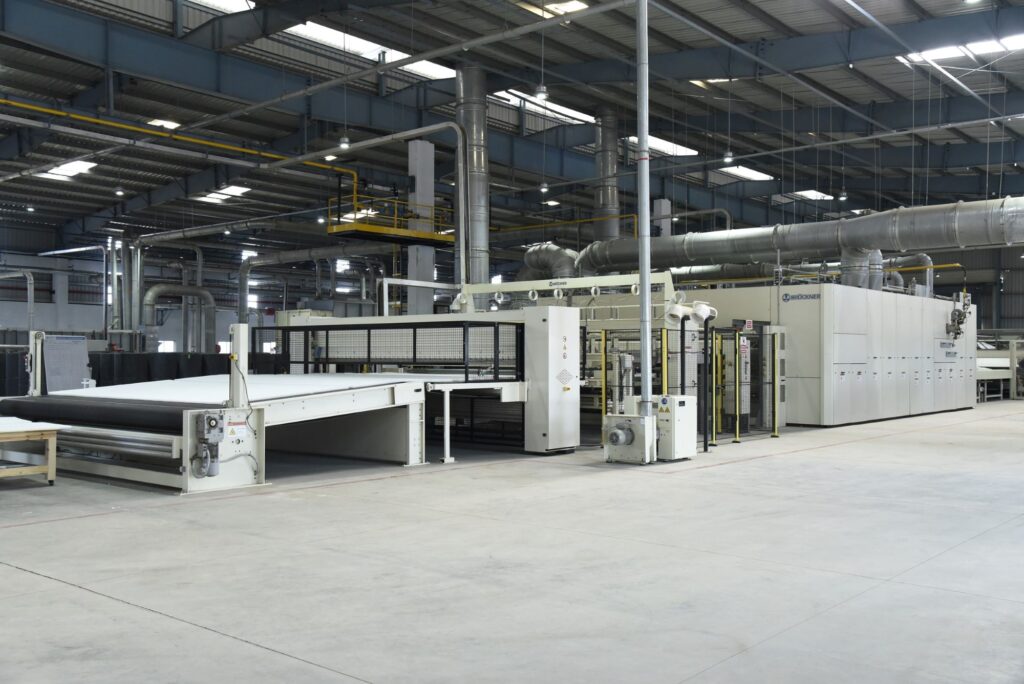
Located in Lexington, North Carolina, the new facility will serve as an integrated hub for application engineering, product development, technical collaboration, and manufacturing, enabling the company to strengthen its presence in North America and work more closely with customers across a wide range of industrial and automotive applications.

Amit Kavrie, Managing Director, Supreme Group
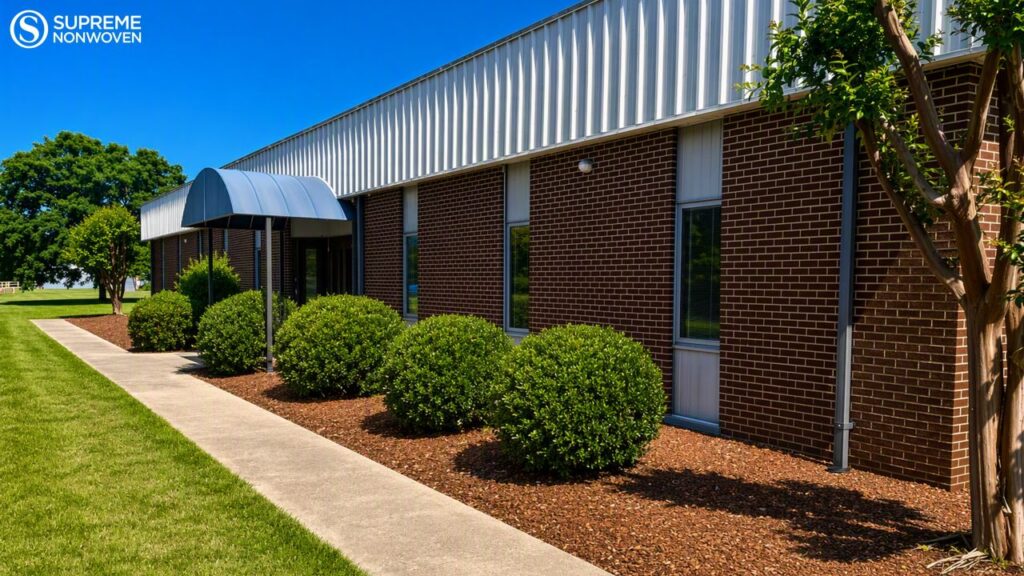
The investment underscores Supreme Group’s long-term commitment to the U.S. market and reflects its strategy of bringing advanced material technologies closer to customers while enhancing responsiveness, innovation, and localized manufacturing capabilities.

Building a Stronger Presence in High-Performance Nonwovens

Over nearly four decades, Supreme Group has established a strong reputation in the development and manufacture of advanced nonwoven materials serving diverse sectors including automotive, apparel, filtration, and industrial applications. The company has built a broad technology platform that enables it to transform specialized materials into value-added solutions tailored to customer requirements.

The new manufacturing facility, spanning more than 200,000 square feet, will significantly enhance the company’s ability to collaborate with customers in North America on customized material solutions. By integrating product development, application engineering, and manufacturing under one roof, Supreme aims to accelerate innovation cycles and improve speed-to-market for new products.

According to the company, the facility will play a critical role in strengthening its ability to develop, test, and refine materials closer to their end-use environments.

“Our decision to establish this facility in North Carolina reflects a long-term commitment to serving the U.S. market with locally manufactured nonwoven materials,” said Amit Kavrie, Managing Director, Supreme Group. “We see this as an important step in bringing our material technologies and development capabilities closer to customers in the region while building a foundation for long-term growth.”

Focus on Application Development and Customer-Centric Innovation

A distinguishing feature of the investment is its emphasis on technical collaboration and application-focused innovation. Rather than serving solely as a production facility, the site is being designed as a center where customers and partners can work closely with Supreme’s technical teams to develop customized material solutions for evolving market requirements.

The company believes that proximity to customers will enable a deeper understanding of application challenges while supporting more efficient product trials, validation processes, and commercialization efforts.

In its announcement, Supreme noted that the facility will focus on enhancing performance, consistency, and application relevance across its product portfolio. The local presence is expected to improve alignment with customer requirements and ensure more consistent execution across projects.

“Over time, it will strengthen our ability to develop and trial materials closer to their end use, with a focus on performance, consistency and application relevance,” the company stated.

The investment also reflects Supreme’s intention to establish a stable and scalable manufacturing platform that can evolve in line with future market demand.

Supporting Automotive and Industrial Growth Opportunities

The new U.S. facility is expected to play a key role in serving high-growth sectors such as automotive and industrial manufacturing, where demand for advanced nonwoven materials continues to increase.

As automotive manufacturers seek lighter, more sustainable, and performance-driven material solutions, nonwovens are becoming increasingly important across interior applications, acoustic systems, filtration, insulation, and engineered components. Similarly, industrial markets continue to require specialized nonwoven solutions that combine durability, functionality, and cost efficiency.

By locating closer to major customer bases, Supreme aims to strengthen technical support, improve responsiveness, and create stronger partnerships with OEMs, Tier suppliers, and industrial manufacturers throughout North America.

“Lexington offers us a strong base from which to support customers with responsiveness, technical collaboration, and reliable execution,” said Manoj Swain, Director of International Operations, Supreme Group. “As we build this operation, our focus will be on creating the right competencies locally while also drawing on the broader capabilities of the Group to serve regional customer requirements over time.”

A Strategic Step in Global Expansion

The establishment of the company’s first U.S. manufacturing presence represents far more than a capacity expansion. It reflects Supreme Group’s broader vision of building a globally integrated nonwovens business supported by localized manufacturing, customer collaboration, and innovation-driven growth.

By combining its extensive materials expertise with a strong local presence, the company is positioning itself to serve the evolving needs of North American customers more effectively while strengthening its role in the global nonwovens industry.

As demand for advanced materials continues to grow across automotive, industrial, filtration, and technical textile applications, Supreme Group’s latest investment marks an important step in expanding its international footprint and reinforcing its commitment to delivering high-performance, customer-focused nonwoven solutions worldwide.

Free Training

Source link

Caterpillar invests $5M in Texas manufacturing workforce


Caterpillar Inc. is investing $5 million to strengthen the talent pipeline for advanced manufacturing jobs in Texas, the company announced Thursday at its Seguin facility.

The move comes amid the Trump administration’s push to boost the U.S. manufacturing industry and is part of a broader $100 million pledge Caterpillar made last year to invest in the U.S. workforce.

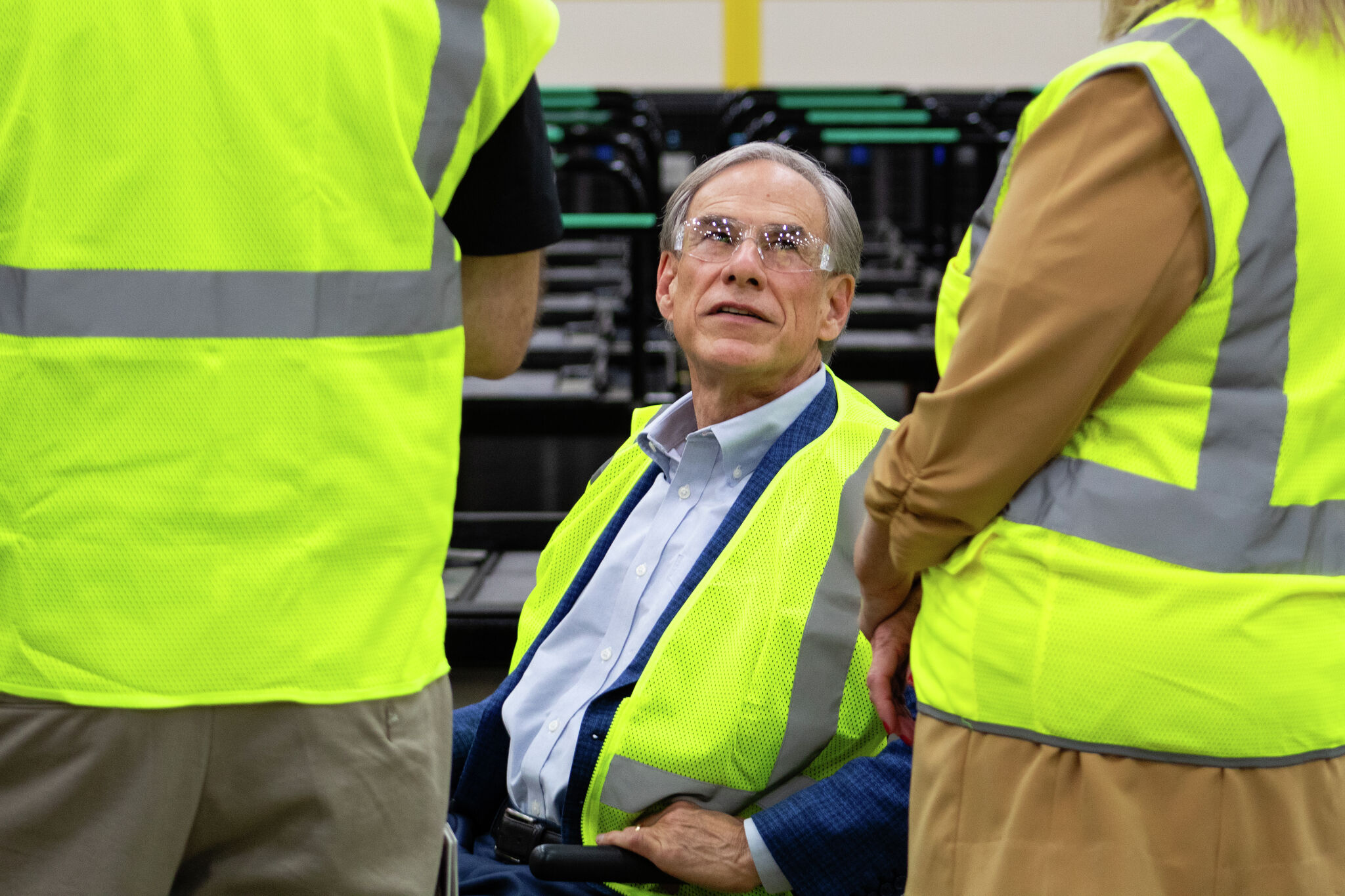
Gov. Greg Abbott on Thursday tours the Caterpillar facility in Seguin.

Gov. Greg Abbott on Thursday tours the Caterpillar facility in Seguin.

Kelsey Brown/San Antonio Express-NewsGov. Greg Abbott speaks Thursday at the Caterpillar facility in Seguin.

Gov. Greg Abbott speaks Thursday at the Caterpillar facility in Seguin.

Kelsey Brown/San Antonio Express-News

The goal is to boost “future-ready, high-quality careers,” said Christy Pambianchi, Caterpillar’s chief human resources officer. “Over the last decade … we’ve tried to really emphasize manufacturing here in the United States,” she said. “We’re kind of rebuilding the educational pipelines and the training pipelines to grow a manufacturing workforce.” 

Article continues below this ad

A key part of Caterpillar’s initiative includes educating people about what advanced manufacturing jobs look like. Manufacturing has changed in the last 30 years, and the job often entails working with automation and innovative technology, she said.

READ MORE: Meta launching construction training program with $115M investment

“Not a lot of people are inside the four walls of a plant, so they don’t always know it’s super modern, really interesting jobs,” she said. “We need more young people to aspire to jobs in manufacturing.” 

Article continues below this ad

While the money will be invested in spurring interest in manufacturing jobs and linking Caterpillar with education systems and training institutions across the state, there are no specific guidelines for how that $5 million will be allocated — but that is intentional. 

Rather than coming in with boxes to check and a clear end point, Pambianchi explained that Caterpillar is looking to partner with local educational and training institutions, economic development organizations and companies to identify the gaps that need to be filled. 

“We’re going to work locally, bottoms up, to say ‘What would have the highest impact here? ’” Pambianchi said. “Of course, we want to benefit from that, but also the whole community is going to benefit.” 

Gov. Greg Abbott, who toured the Seguin facility before the announcement was made, has been leading the state’s efforts to strengthen its workforce pipeline and train workers to use new technology in manufacturing as part of the Texas Task Force on Modernizing Manufacturing.

Article continues below this ad

RELATED: Ready to Work continues to change lives in San Antonio community

“Bottom line, our economy is going incredibly well,” Abbott said. “Caterpillar is a tremendous asset to the Texas economy. A reason why companies like Caterpillar and so many others are moving here is because Texas is well known for having high-skilled job training programs, like what we’re talking about here today, that provide, literally, the best workforce in the United States.”

He also said Caterpillar made the “right decision” to move to Texas. The company announced in 2022 that it was moving its global headquarters from Deerfield, Ill., to Irving.

Seguin Mayor Donna Dodgen said Caterpillar’s investment could provide a path out of poverty for the city’s residents. The city has a poverty rate of 17.1%, higher than the state average of 13.4%, according to census data.

Article continues below this ad

It’s a “big deal” for there to be high-skilled manufacturing positions that offer annual salaries of upward of $100,000, but what’s even more important, she said, is that the investment would create access to education and economic success. 

“Rather than just the true college track — people have choice,” she said. “It’s about choice.”

While there’s an emphasis on recruiting young workers, Mike Reeser, chancellor and CEO of Texas State Technical College, a partner in the investment, said Caterpillar’s investment will provide clear pathways for people at different stages to lock in a secure manufacturing job. 

READ MORE: These San Antonio jobs have the most AI exposure. How does your profession stack up?

Article continues below this ad

For people who are underemployed and looking for expanded job opportunities, he said a credential from a technical college is a great alternative to a master’s degree. 

“You take the communication skills and the critical thinking and the capabilities taught by a bachelor’s degree, and then you add a technical certification on top of it, and you become irresistible to employers,” Reeser said. “You’ve set a career arc that is sure to grow rapidly.” 

Pambianchi said the investment could grow in Texas. The goal is to create a sustainable pipeline of talent to fuel its manufacturing facilities in Texas cities such as San Antonio, Schertz and Seguin. 

“It’s not just a job. It’s a pathway and an entry to a career — a career that could be very robust,” Pambianchi said. “It could take you in a lot of directions.” 

Article continues below this ad

Caterpillar isn’t the only company investing in training programs.

In June, Meta Platforms Inc. launched a $115 million nationwide program to train construction workers, fiber technicians, welders, plumbers, electricians and skilled trades workers. The five-week, fully funded training program aims to address the labor shortage across the state and nation. 

Free Training

Source link

USMCA Review Has Investors Searching For High Quality U.S. Manufacturing Stocks


Trade policy headlines are back on center stage, with the U.S. stepping away from a long term USMCA deal in favor of annual reviews and possible renegotiations. That shift could reshape expectations for companies tied to North American supply chains, especially in U.S. domestic manufacturing. Rather than reacting blindly to every tariff rumor, you can focus on stocks with solid business health that may be better placed to handle this kind of policy churn. This article looks at 3 stocks exposed to the latest USMCA news, all screened for strong fundamentals and recent market strength.

Alamo Group (ALG)

Overview: Alamo Group is a Texas based manufacturer of heavy duty equipment used to cut, clear, sweep, plow, vacuum and maintain roadsides, fields and public infrastructure, selling into government, industrial, agricultural and tree care markets worldwide.

Operations: Alamo Group generates about US$964.3m from Industrial Equipment and US$665.6m from Vegetation Management, with most revenue coming from the United States at roughly US$1.2b and smaller contributions across Canada, the UK, France and other countries.

Market Cap: US$2.0b

Alamo Group stands out in this trade policy shock because it manufactures much of its infrastructure and agricultural equipment in the U.S. and serves a largely domestic customer base, which can reduce exposure to potential new USMCA tariffs even as it keeps some flexibility with facilities in Canada. The business combines exposure to long term infrastructure and mechanized land management demand with high earnings quality, solid cash generation and very low net debt, supported by a sizable new credit facility. At the same time, investors need to weigh slower recent profit growth, margin pressure in parts of Vegetation Management, a relatively new management team and sensitivity to government and municipal spending cycles. All of these factors make the next phase for Alamo Group especially important to watch.

Alamo Group’s combination of high earnings quality, strong cash generation and very low net debt could be the real story in this USMCA reset. The Alamo Group financial health report might reveal why that balance sheet strength cuts both ways.

ALG Discounted Cash Flow as at Jul 2026ALG Discounted Cash Flow as at Jul 2026

Franklin Electric (FELE)

Overview: Franklin Electric is an Indiana based manufacturer of water and fuel pumping systems, supplying motors, pumps, controls, monitoring devices and related equipment used in residential, agricultural, municipal, industrial and energy applications across the U.S. and international markets.

Operations: Franklin Electric generates about US$1.3b from Water Systems, US$709.7m from Distribution and US$304m from Energy Systems, with roughly US$1.7b coming from the United States and Canada and several hundred million spread across Latin America, Europe, the Middle East, Africa and Asia Pacific.

Market Cap: US$4.7b

Franklin Electric gives you a way to gain exposure to U.S. focused water and fuel infrastructure with less direct exposure to cross border frictions, thanks to its in region, for region manufacturing and focus on essential replacement demand. Management reports that this demand has held up even as tariff headlines have picked up. Analysts currently forecast earnings growth, and the P/E is above the machinery industry average, which can indicate that the market already expects a lot from its push into higher margin, energy efficient water technologies. At the same time, a recent one off loss, softer profit margins and insider selling highlight that execution on acquisitions, cost control and pricing will be critical in the current USMCA review regime.

Franklin Electric’s premium P/E and push into higher margin, energy efficient water tech suggest the market may be pricing in more than just steady replacement demand. The analyst forecasts for Franklin Electric could show what that optimism might be missing.

NasdaqGS:FELE P/E Ratio as at Jul 2026NasdaqGS:FELE P/E Ratio as at Jul 2026

Boise Cascade (BCC)

Overview: Boise Cascade is a U.S. based producer of engineered wood products and plywood, paired with a large building materials distribution business that supplies dealers, home centers, wholesalers and industrial customers serving residential construction, remodeling and light commercial projects.

Operations: Boise Cascade generates about US$1.6b from Wood Products and US$5.9b from Building Materials Distribution, with intersegment eliminations of roughly US$1.2b reflecting internal sales between these segments.

Market Cap: US$2.7b

Boise Cascade provides targeted exposure to U.S. construction and remodeling through a mix of engineered wood manufacturing and a nationwide distribution network that management says is mostly based in the U.S. and built to handle tariff friction. The stock trades at a P/E that is slightly below its US Trade Distributors peers. Analysts expect earnings to grow faster than the wider U.S. market, supported by mill upgrades, warehouse expansion and active buybacks that have already retired more than 5% of shares under the latest program. At the same time, profit margins have come under pressure, recent revenue and EPS have declined and housing affordability and policy risk remain front of mind. Boise Cascade can be viewed as a trade policy winner, but one that still requires careful scrutiny.

Boise Cascade’s mix of mill upgrades, warehouse expansion and active buybacks has investors talking, but the real tension is how future earnings stack up against housing and policy risk. The analyst forecasts for Boise Cascade might reveal what the current share price is quietly signaling about the next phase.

NYSE:BCC Earnings & Revenue Growth as at Jul 2026NYSE:BCC Earnings & Revenue Growth as at Jul 2026

The three stocks highlighted here are just a starting point, with the full U.S. Domestic Manufacturing Stocks screener surfacing 20 more U.S. focused manufacturers with equally compelling business stories. Use Simply Wall St to identify, analyze and filter for the specific catalysts and narratives that matter to you so you can focus on the highest conviction ideas in this space.

Take Control of Your Investment Journey

If Boise Cascade or any of these companies sound like a great opportunity, register for FREE with Simply Wall St and add your companies to a Watchlist to monitor the share price against the fair value the ideal entry point.
Once you’ve made your move, manage your holdings with our Portfolio Command Center that filters out the noise to deliver only the most critical, actionable updates.
Throughout your journey, our Community allows you to filter the best ideas from thousands of investor perspectives.
By uncovering hidden catalysts and risks early, you’ll accelerate your decision-making and stay one step ahead of the market.

Seeking Alternatives Before The Crowd Moves?

Fresh stock ideas do not stay under the radar for long, and strong momentum can be caught or lost quickly. Use these curated lists to research opportunities early.

This article by Simply Wall St is general in nature. We provide commentary based on historical data
and analyst forecasts only using an unbiased methodology and our articles are not intended to be financial advice.
It does not constitute a recommendation to buy or sell any stock, and does not take account of your objectives, or your
financial situation. We aim to bring you long-term focused analysis driven by fundamental data.
Note that our analysis may not factor in the latest price-sensitive company announcements or qualitative material.
Simply Wall St has no position in any stocks mentioned.

Valuation is complex, but we’re here to simplify it.

Discover if Boise Cascade might be undervalued or overvalued with our detailed analysis, featuring fair value estimates, potential risks, dividends, insider trades, and its financial condition.

Access Free Analysis

Have feedback on this article? Concerned about the content? Get in touch with us directly. Alternatively, email editorial-team@simplywallst.com

Free Training

Source link

CUSMA Uncertainty Makes These 3 U.S. Manufacturing Stocks Worth A Closer Look


Trade friction between the U.S., Canada and Mexico is back in focus as the future of CUSMA turns uncertain, and that has direct implications for stocks tied to cross border supply chains. While many manufacturers rely heavily on tariff friendly trade, some U.S. domestic producers have business models that may be less exposed to potential changes in the agreement. This article looks at how that news backdrop might matter for your portfolio and highlights 3 U.S. domestic manufacturing stocks from our screener that could be positively exposed to the current CUSMA debate.

Astec Industries (ASTE)

Overview: Astec Industries designs and services heavy equipment used in road building and construction, from asphalt and concrete plants to crushers, screens, and related materials handling systems, selling mainly to contractors, producers, and government agencies. The company’s gear sits at the heart of infrastructure projects, helping customers produce and move the asphalt, concrete, and aggregates that keep roads and large construction sites running.

Operations: Astec generates most of its revenue from Infrastructure Solutions at about US$893.8 million and Materials Solutions at about US$623 million, with activity concentrated in the United States, where it records roughly US$1.18 billion in sales.

Market Cap: US$1.41b

Astec Industries gives you direct exposure to U.S. road and infrastructure spending while being less tied to cross border trade, a point that stands out as CUSMA uncertainty grows. Around 80% of revenue comes from the U.S., and management has been actively reshoring supply chains and using pricing and dual sourcing to offset tariffs, which may help if North American trade friction increases. At the same time, the company is working to improve margins through operational changes and higher margin parts and acquisitions, even though recent one off losses, high debt and a high P/E highlight real risk. For investors weighing whether this setup is worth the trade off, there is more to unpack in Astec’s earnings quality, backlog and funding profile.

Astec’s efforts to reshore supply chains and improve margins could reflect more than the impact of tariffs. They may also be reshaping the risk reward profile. Get the full picture in the 2 key rewards and 2 important warning signs

NasdaqGS:ASTE Earnings & Revenue Growth as at Jul 2026NasdaqGS:ASTE Earnings & Revenue Growth as at Jul 2026

Proto Labs (PRLB)

Overview: Proto Labs is a digital manufacturer that uses molding, CNC machining, 3D printing, and sheet metal fabrication to produce custom parts on demand for engineers, product developers, and supply chain teams in the U.S. and Europe.

Operations: Proto Labs generates about US$546.3 million in revenue from machinery and industrial equipment customers, with roughly US$444.2 million coming from the U.S. and US$102.1 million from Europe.

Market Cap: US$1.94b

Proto Labs stands out in the CUSMA debate because it already runs a largely U.S. centered production network. Management says around 90% of revenue from American customers is fulfilled by factories in the U.S., and sees tariffs and support for American manufacturing as a possible tailwind. At the same time, the stock trades on a high P/E, growth in Europe has been weaker, and the company absorbs some short term tariff costs instead of fully passing them on, which can pressure margins. For investors trying to judge whether digital manufacturing growth, aerospace and medical demand, and strong cash generation offset those risks, there is more beneath the surface in Proto Labs’ earnings profile, trade exposure, and leadership transition story.

Proto Labs’ digital manufacturing story looks powerful, but the real tension is how growth, margins, and tariffs fit together. See how those threads connect in the analysis report for Proto Labs

NYSE:PRLB Earnings & Revenue Growth as at Jul 2026NYSE:PRLB Earnings & Revenue Growth as at Jul 2026

L.B. Foster (FSTR)

Overview: L.B. Foster supplies rail and infrastructure products such as rail track components, friction management and monitoring systems, precast concrete buildings, bridge beams, and protective coatings that support transportation, energy, and public works projects across the U.S. and internationally.

Operations: L.B. Foster generates around US$326.5 million of revenue from its Rail, Technologies, and Services segment and about US$236.9 million from Infrastructure Solutions.

Market Cap: US$472.4m

L.B. Foster sits squarely in the sweet spot of the CUSMA debate, because it serves rail and infrastructure customers that are mostly U.S. based while relying heavily on domestic supply chains, which management says has kept tariff impacts relatively minor. At the same time, the company is leaning into higher margin areas like precast concrete, friction management, and protective coatings. It has returned to profit in recent quarters, even though earnings were under pressure last year and the P/E is high versus some machinery peers. With earnings forecast to grow faster than revenue and new leadership stepping into key operating and finance roles, the real question is whether L.B. Foster can turn that mix shift and cost discipline into durable value as trade policy stays unsettled.

L.B. Foster’s push into higher margin rail and infrastructure work, combined with new leadership and a high P/E, hints at something investors may be missing. See how those pieces fit together in the 1 key reward and 1 important warning sign

NasdaqGS:FSTR Earnings & Revenue Growth as at Jul 2026NasdaqGS:FSTR Earnings & Revenue Growth as at Jul 2026

The three stocks in this article are only a starting point, and the full U.S. Domestic Manufacturing Stocks screener surfaces 39 more U.S. focused manufacturers with similarly interesting stories that you have not seen yet. Use Simply Wall St to identify, compare, and analyze the specific catalysts and narratives that matter to you, so you can focus on the highest conviction ideas in this theme.

Take Control of Your Investment Journey

If Astec Industries or any of these companies sound like a great opportunity, register for FREE with Simply Wall St and add your companies to a Watchlist to monitor the share price against the fair value the ideal entry point.
Once you’ve made your move, manage your holdings with our Portfolio Command Center that filters out the noise to deliver only the most critical, actionable updates.
Throughout your journey, our Community allows you to filter the best ideas from thousands of investor perspectives.
By uncovering hidden catalysts and risks early, you’ll accelerate your decision-making and stay one step ahead of the market.

Seeking Fresh Alternatives Before Others Do

New stock stories can gain momentum quickly, and the strongest setups can move once the crowd catches on. Review these fresh ideas while you still have time to evaluate them thoroughly.

  • Target dependable income streams by reviewing a curated group of potential yield workhorses through the 8 dividend fortresses before payouts change or valuations move away from you.
  • Identify potential compounding opportunities early by checking a hand picked 19 high quality undiscovered gems that many investors have not focused on yet.
  • Evaluate the build out of next generation infrastructure by assessing a focused set of 53 AI infrastructure stocks while these stories may still be less widely followed.

This article by Simply Wall St is general in nature. We provide commentary based on historical data
and analyst forecasts only using an unbiased methodology and our articles are not intended to be financial advice.
It does not constitute a recommendation to buy or sell any stock, and does not take account of your objectives, or your
financial situation. We aim to bring you long-term focused analysis driven by fundamental data.
Note that our analysis may not factor in the latest price-sensitive company announcements or qualitative material.
Simply Wall St has no position in any stocks mentioned.

New: Manage All Your Stock Portfolios in One Place

We’ve created the ultimate portfolio companion for stock investors, and it’s free.

• Connect an unlimited number of Portfolios and see your total in one currency
• Be alerted to new Warning Signs or Risks via email or mobile
• Track the Fair Value of your stocks

Try a Demo Portfolio for Free

Have feedback on this article? Concerned about the content? Get in touch with us directly. Alternatively, email editorial-team@simplywallst.com

Free Training

Source link

INKAS® Announces Major North American Manufacturing Expansion Across Canada and the United States – sUAS News


New facilities in Canada, North Carolina, and Florida are expected to more than double INKAS®’ armored vehicle, defense, and special-purpose production footprint by July 31, 2026

INKAS®, a Canadian armored vehicle manufacturer and systems integrator, announces a major expansion of its North American manufacturing footprint, with three additional production facilities across Canada and the United States expected to be in full operation by July 31, 2026.  

The three newly leased facilities are comprised of a mix of manufacturing and production space, with approximately 42,000 square feet at an additional Toronto facility in Canada, 200,000 square feet at an armored vehicle production facility in Charlotte, North Carolina, and 31,000 square feet for a first-time facility in Florida at Fort Pierce.  

Together, these facilities are expected to more than double INKAS’® production space across North America, strengthening the company’s ability to support growing demand from government, defense, law enforcement, commercial security, and specialized vehicle customers.  

The expanded footprint provides INKAS® with greater production flexibility, additional manufacturing capacity, and a stronger operational platform to support both current and future programs across its armored vehicle, tactical platform, drone / UAV, and special purpose vehicle portfolios. The Charlotte facility is specially equipped for armored vehicle production and has access to an experienced workforce with direct expertise in armored vehicle manufacturing, helping accelerate operational scaling without the need to build those capabilities from the ground up.  

“This expansion marks an important milestone in the continued growth of INKAS® as a North American manufacturer,” said David Khazanski, CEO of INKAS®. “By adding significant production space across Canada and the United States, we are strengthening our ability to support customers with reliable, scalable, and mission-ready security and defense solutions. This investment reflects our confidence in the long-term demand for advanced protected mobility, unmanned systems, and specialized platforms.” 

The new facilities form part of INKAS®’ broader strategy to increase production capacity, improve operational resilience, and support a growing portfolio of armored, tactical, unmanned, and special-purpose solutions. With operations expanding across Toronto, Charlotte, and Fort Pierce, INKAS® is positioned to better serve domestic and international customers while supporting more efficient production, faster program execution, and future growth across key markets.  

“Beyond expanding our production footprint, this investment is about creating skilled jobs, supporting local economies, and building long-term manufacturing capability in North America,” said Margarita Simkin, Chairwoman of INKAS®. “As these facilities come online, they will create opportunities for engineers, technicians, production specialists, and support teams across Canada and the United States. We believe that investing in people and manufacturing infrastructure is essential to building a stronger, more resilient security and defense industry.”

For nearly three decades, INKAS® has specialized in the design, engineering, and manufacturing of armored vehicles and advanced security solutions. The company’s portfolio includes discreet armored SUVs and sedans, tactical vehicles, armored personnel carriers, drones / UAVs, cash-in-transit vehicles, and custom-built special purpose platforms for clients around the world. 

Discover more from sUAS News

Subscribe to get the latest posts sent to your email.

Free Training

Source link