WASHINGTON POLICY FORUM EXAMINES PHYSICAL AI, MANUFACTURING AND COMPETITIVENESS


At LG-Supported Forum, Policymakers and Industry Leaders Explore How Allied
Manufacturing Partnerships Can Translate AI Advances Into Real-World Industrial Deployment

News Summary

  • “Physical AI in America: Robotics, Manufacturing and the Allied Industrial Base,” a Washington, D.C. policy forum convened by LG Group, examined how Physical AI is reshaping U.S. manufacturing, supply chains and industrial competitiveness.
  • Ambassador Yunju Ko, President of LG Group’s Global Strategy Center, underscored the importance of partnerships across allied nations, pointing to LG’s collaboration with NVIDIA as an example of AI advancing into real-world industrial applications.
  • The forum brought together representatives from government, industry, academia and the policy community who emphasized that technology and supply chain cooperation across allied partners will be essential to building a resilient AI-driven industrial ecosystem.

WASHINGTON, Sept. 29, 2026 /PRNewswire/ — Policymakers, technology leaders and manufacturing experts examined how Physical AI is reshaping U.S. manufacturing, supply chains and industrial competitiveness today at “Physical AI in America: Robotics, Manufacturing and the Allied Industrial Base,” a Washington, D.C. policy forum supported by LG Group.

Participants discussed the industrial capacity and policy framework needed to sustain U.S. AI leadership as AI extends beyond software and computing into the physical economy through robotics, autonomous systems and smart factories. Topics included advanced manufacturing, semiconductors, batteries, energy infrastructure, resilient supply chains and cooperation among trusted allies, including the U.S. and South Korea.

Ambassador Yunju Ko, President of the LG Global Strategy Center, opened the event with a fireside chat. A panel discussion followed, featuring Jessica McBroom, Director at Micron; Juan Higueros, Co-Founder and Chief Operating Officer of Bear Robotics; Tim Del Monico, Chief of Staff to U.S. Representative Sam Liccardo; and Martijn Rasser, Vice President for Technology Leadership at the Special Competitive Studies Project.

Turning AI Innovation Into Industrial Competitiveness
In his remarks, Ko emphasized that long-term AI leadership will depend on both industrial application and closer collaboration with strategic partners.

“The future AI race will not be won by any single company or country acting alone,” said Ko. “It will be won through trusted partnerships that connect innovation, manufacturing and investment across allied nations. By strengthening these partnerships, we can build a more resilient industrial base and ensure that the benefits of AI are translated into real-world economic growth.”

To illustrate this approach, Ko cited LG’s collaborations with NVIDIA across mobility, AI infrastructure and Physical AI. The partnership uses NVIDIA Omniverse libraries, Cosmos world models and the open NVIDIA Isaac robotics platform to create robot training data from LG’s extensive manufacturing experience. Using this data and simulating processes at LG Electronics’ Tennessee appliance factory, LG CLOiD robots are being trained how to move, stack and assemble parts for potential use at U.S. manufacturing sites.

Cooperation Takes Center Stage in Physical AI Discussion
Building on the forum’s broader discussion, panelists focused on the policy priorities and industrial capabilities shaping the development of Physical AI.

The discussion examined the U.S. AI ecosystem, including areas of strength and gaps that could affect long-term technological leadership. Panelists also highlighted that stronger technology and supply chain cooperation between the U.S. and South Korea can contribute to a more resilient AI-driven industrial ecosystem, with supportive policy needed to advance it at scale.

Expanding Investment in U.S. Industry and Future Technologies
Over the past decade, LG has invested more than USD 20 billion in the United States across batteries, advanced manufacturing, electronics and mobility technologies. These efforts have contributed to the U.S. industrial base and approximately 20,000 jobs, while creating a foundation for LG’s collaboration with leading U.S. technology companies in AI, robotics and smart manufacturing.

“As a long-term investment partner, LG has consistently contributed to the growth of the U.S. industrial base,” Ko said. “We look forward to working with innovative U.S. companies, to help accelerate the deployment of AI across real-world industrial applications.”

About the LG Global Strategy Center
The LG Global Strategy Center (GSC) serves as LG Group’s headquarters for global strategy and external affairs. The GSC analyzes geopolitical, economic, and industry developments to assess their implications for LG’s businesses, while coordinating global external engagement and strengthening relationships with key government, policy, and business stakeholders worldwide.

About the LG Washington D.C. Office
The LG Washington D.C. Office is LG Group’s representative office for government affairs and public policy engagement in the United States. Working closely with policymakers, industry stakeholders, think tanks, and business organizations, the LG Washington Office provides strategic insights and promotes constructive dialogue on issues affecting innovation, trade, manufacturing, supply chains, and economic competitiveness. Through these efforts, it supports LG’s commitment to responsible business growth and investment in the United States.

Media Contacts:

LG Group Washington Office   
Joohwa Jin
+1 202 922 9054
[email protected]                              

SOURCE LG Group

Free Training

Source link

Attalon Invests Nearly $13 Million to Expand U.S. Sapphire Manufacturing Capacity


Attalon Invests Nearly $13 Million to Expand U.S. Sapphire Manufacturing Capacity

Investment in Murrieta, California, expands domestic production of advanced optical materials supporting growing demand across EO/IR and next-generation defense systems

Attalon, a leading U.S. aerospace and defense technology company, today announced a nearly $13 million investment to expand sapphire manufacturing capacity at its Murrieta, California, operation, strengthening domestic production of a critical optical material used across demanding electro-optical and infrared defense applications.

This press release features multimedia. View the full release here: https://www.businesswire.com/news/home/20260929509193/en/

Sapphire produced at Attalon’s Murrieta, California, facility supports advanced optical systems for mission-critical defense applications. Attalon is investing nearly $13 million to expand domestic manufacturing capacity.

The investment comes as demand for high-performance optical materials continues to increase across advanced sensing, targeting, surveillance, missile and other mission-critical defense systems. By expanding its U.S.-based sapphire manufacturing capabilities, Attalon is increasing the production capacity, manufacturing readiness and technical capabilities required to support customers as these systems move toward greater production volumes.

“Sapphire is an enabling technology behind some of today’s most demanding defense systems, and ensuring we have the domestic capacity to produce it at scale is increasingly important,” said John Bergeron, Chief Executive Officer of Attalon. “This investment is about building that capacity here in the United States and ensuring our customers have a trusted manufacturing partner ready to grow alongside their programs.”

The investment builds on a longstanding effort to establish and sustain a domestic U.S. supply of defense-critical sapphire. More than seven years ago, Congressman Ken Calvert, now Chairman of the House Appropriations Subcommittee on Defense and representative for Murrieta, played an important role in supporting federal investment in the advanced technology and manufacturing capabilities required to establish Murrieta as a domestic source for high-performance sapphire.

That early government investment, coupled with sustained private-sector investment in the facility, helped build the technical expertise and U.S. manufacturing capability required to support demanding defense applications, including the F-35 program. Attalon’s nearly $13 million investment marks the next phase of that effort—expanding capacity, advancing manufacturing capabilities and strengthening a proven domestic supply of sapphire for current and next-generation defense systems.

Sapphire combines exceptional optical performance with the durability required for demanding defense environments. Its material properties make it particularly well suited for advanced EO/IR applications where optical performance, environmental resilience and reliability are essential to mission success.

“Our Murrieta team has built deep expertise in sapphire, from material development through production, and this investment allows us to translate that expertise into greater manufacturing scale,” said Anthony McBride, Vice President and General Manager of Precision Optics at Attalon. “We’re expanding the capabilities and infrastructure needed to increase throughput while maintaining the precision, consistency and reliability our customers depend on.”

The expansion is part of Attalon’s continued investment in the enabling technologies behind next-generation defense systems and its strategy of expanding U.S.-based manufacturing for mission-critical technologies. Across advanced optical materials, precision optics, optical coatings, directed energy and thermal technologies, the company is increasing domestic capacity in areas where manufacturing scale, reliability and supply-chain resilience are increasingly important to national security and the advanced defense platforms that depend on them.

About Attalon

Attalon is a leading U.S. aerospace and defense technology company engineering and manufacturing advanced lasers, precision optics, optical coatings, advanced materials and thermal technologies. With more than 500 employees across the United States, Attalon combines deep technical expertise with scalable domestic manufacturing to deliver mission-critical capabilities that strengthen the U.S. defense industrial base and support the modern warfighter.

Press Contact:

Valerie McKiernan

Vice President, Strategy & Communications

Valerie.McKiernan@atln.com

View source version on businesswire.com: https://www.businesswire.com/news/home/20260929509193/en/

Free Training

Source link

SMITH AND FORD Push East-West Energy, Infrastructure and Manufacturing Ties at Calgary Enserva Event – Canadian Energy News, Top Headlines, Commentaries, Features & Events


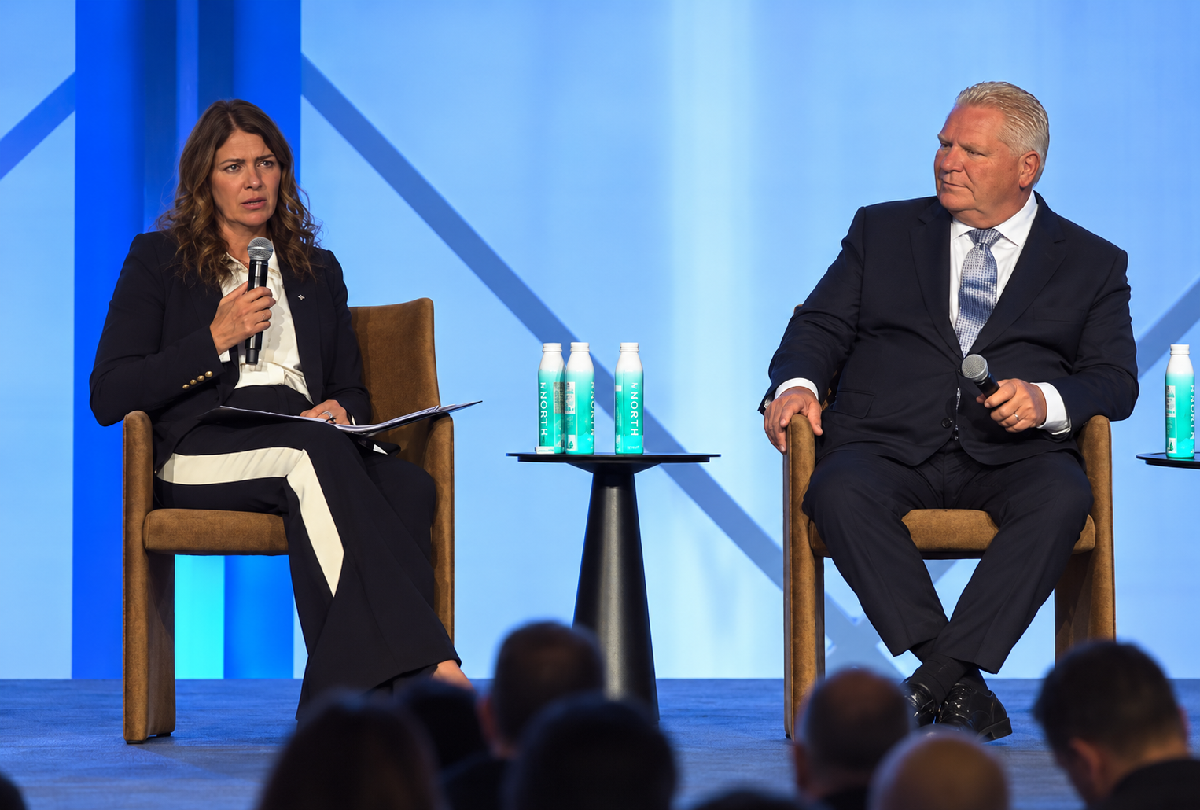
smith ford enserva event 1200x810Premiers Danielle Smith and Doug Ford during a fireside chat hosted by Enserva at the Calgary Telus Convention Centre September 28, 2026 – EnergyNow Media

EnergyNow Media

The two premiers appeared September 28 at the Enserva Speaker Series — Build Canada Stronger: Powering Canada’s Economic Future at the Calgary TELUS Convention Centre. The event brought together energy and business leaders to discuss energy security, infrastructure, trade and Canada’s ability to compete in global markets. It was moderated by Enserva President and CEO Gurpreet Lail. Enserva

The discussion highlighted both areas of agreement and differences between Smith and Ford, particularly on Canada’s evolving relationship with the United States.

Get the Latest Canadian Focused Energy News Delivered to You! It’s FREE: Quick Sign-Up Here

Smith said Alberta’s exposure to U.S. tariffs differs significantly from Ontario’s because most Alberta exports entering the United States are energy products that remain largely tariff-free.

“If you’re looking at a bit of a difference in tone between Premier Ford and I, that’s what it comes down to,” Smith said, pointing to Alberta’s large existing trade relationship with the United States and the role played by cross-border energy companies including Cenovus, TC Energy and Enbridge.

Smith argued that Canada could potentially use energy as the foundation for a broader economic agreement with Washington, suggesting significantly larger volumes of Canadian oil could ultimately move south if a comprehensive Canada-U.S. arrangement were reached.

Ford struck a somewhat different tone but emphasized that he remains strongly supportive of the broader Canada-U.S. relationship.

“I truly love Americans,” Ford said, noting Ontario’s deep economic integration with U.S. manufacturing and trade. He argued for what he called a “Fortress North America” approach in which Canada and the United States strengthen their economic and security relationships while Canada simultaneously expands trade with other countries.

Ford said the current trade friction could ultimately push Canada to become economically stronger.

“He woke us up that we needed to be woken up, and he’s united the country like I’ve never seen before,” Ford said of U.S. President Donald Trump. “We’re going to diversify our trade, but continue building a strong relationship with our closest friends and allies, and that’s the Americans.”

Pipelines Move to Centre Stage

The conversation quickly turned to pipelines and major infrastructure projects — a central theme of the Enserva event, which was promoted around the question of how Canada can build, move and sell more energy to global markets. Enserva

Smith said she has become increasingly confident about the prospects for a proposed new West Coast oil pipeline.

“I’m feeling more and more confident every day that the West Coast oil pipeline is going to potentially even be the first of the projects that go ahead,” she said.

Smith argued that global concerns about supply security have strengthened Canada’s position as a potential long-term supplier to Asian countries seeking greater diversification.

She also pointed to additional export possibilities through the United States and to the proposed Northern Shield corridor, which Alberta and Ontario have been advancing as a potential east-west energy and infrastructure route.

Ford was emphatic that Canada should not be forced to choose between individual pipeline routes.

“We need the West, we need the North, we need the South, and we need to go east,” he said. “Why can’t we do it simultaneously?”

Ford also signalled Ontario’s willingness to participate financially in the Northern Shield concept, saying he evaluates major infrastructure according to its potential return to taxpayers.

“You show me the numbers, and if you can clip those coupons after we get it built every single year, that’s a great investment for our province,” Ford said.

Skilled Labour Could Become the Next Constraint

Both premiers warned that even if governments approve more infrastructure, Canada will need enough skilled workers to actually build it.

Smith pointed to Alberta’s expansion of apprenticeship programs, dual-credit education and partnerships with unions and employers. She said Alberta now has 81,000 apprenticeship positions and argued provinces need greater ability to align immigration with labour-market shortages.

“We need some office jobs, but we sure need a heck of a lot more factory floor jobs and field jobs,” Smith said. Pasted markdown

Ford said Ontario has invested more than $2 billion through its Skills Development Fund and said more than 750,000 people have received training through various programs.

“Number one issue: supply chain and labour. Who is going to fill these jobs?” Ford said, arguing that provinces should have greater influence over immigration programs so workers who have developed needed skills can remain in Canada. Pasted markdown

Alberta Energy Meets Ontario Manufacturing

Perhaps the strongest area of agreement came around creating deeper economic links between Alberta’s energy sector and Ontario’s manufacturing base.

Ford argued governments need to reduce regulatory barriers and create conditions that encourage companies to invest.

“The biggest problem, biggest hurdle is government,” Ford said, pointing to regulation, taxation and permitting as obstacles governments can address. Pasted markdown

Smith then outlined several areas where the provinces could work together directly.

One is natural gas-fired power generation. Alberta wants to substantially expand electricity generation to support industrial growth and data centres, but Smith said global demand for natural gas turbines has created long equipment lead times.

“We’ve got the cheapest natural gas probably anywhere in the world, sitting on an ocean of it,” she said.

Smith suggested Ontario’s manufacturing expertise could help develop a Canadian supply chain for natural gas turbines and related electricity infrastructure.

Another opportunity is steel.

With pipelines, energy projects and other infrastructure requiring enormous volumes of steel pipe and fabricated components, Smith said Alberta should identify the equipment its energy industry will need and work with Ontario manufacturers to produce more of it domestically.

“Let’s figure out how we can identify the steel fabricated items that we need, and let’s work with our friends in Ontario,” Smith said.

She also suggested Canada needs stronger east-west supply chains, rather than relying predominantly on north-south trade with the United States or imported products arriving through West Coast ports. Pasted markdown

The message fit closely with the theme Enserva established for the event. Using Canadian energy, infrastructure and industrial partnerships to improve the country’s economic competitiveness and energy security. Enserva said the discussion was intended to examine how Canada could “look beyond provincial boundaries” to unlock its energy potential.

For Canada’s energy services sector, the discussion underscored a potentially significant shift: major energy development is increasingly being presented not simply as a Western Canadian issue, but as an opportunity to connect Alberta resources, Ontario manufacturing, Canadian workers and new international markets.

And on that central point, Smith and Ford were clearly aligned.

“We’re stronger together,” Ford said.

Free Training

Source link

Lawmakers Examine Challenges Facing U.S. Generic Drug Manufacturing


Why It Matters

U.S. generic drug manufacturers told lawmakers that low prices and foreign competition are making domestic production increasingly difficult to sustain, as Congress considers ways to reduce U.S. dependence on overseas pharmaceutical supply chains.

At a Senate hearing held on September 23, U.S. manufacturers of generic drugs told lawmakers that low prices, competition from abroad, and federal policies have made it increasingly difficult to keep domestic production going, since Congress and the Trump administration are considering measures to reduce the United States’ dependence on medicines made in foreign countries.

Christine Baeder, President of Apotex USA and LATAM, disclosed that her company demolished its North American penicillin plant last year because of unsustainable market conditions. The hearing took place six days before Section 232 tariffs on certain patented pharmaceuticals and associated pharmaceutical ingredients were scheduled to take effect Sept. 29, sharpening the debate around a policy landscape the administration has been reshaping through executive action.

The Big Picture

The hearing, titled “Leveling the Playing Field: Restoring America’s Edge in Generic Drug Manufacturing,” was the latest in a series led by Chairman Rick Scott (R-FL) examining U.S. dependence on foreign pharmaceutical manufacturing.

As of June, the American Society of Health-System Pharmacists had 227 drug shortages that were still active, and IBISWorld stated that the market value of the U.S. generic pharmaceutical manufacturing industry fell at a compound annual growth rate of 7.8 percent from 2021 to 2026.

Bipartisan legislation has already emerged from the committee’s work, including the Consumer Labeling for Enhanced API Reporting and Legitimate Accountability for Base Entity Listings (CLEAR LABELS) Act, introduced by Scott and Ranking Member Kirsten Gillibrand (D-NY), which would require prescription drug labels to disclose the original manufacturers of generic drugs and active pharmaceutical ingredients (APIs). The legislation advanced from the Senate Health, Education, Labor and Pensions Committee on a 21-1 vote in July.

What They’re Saying

The most incisive comment of the hearing was made by Baeder, who said, “The figures don’t add up; generics are operating in an environment driven by competition at the lowest level, where North American manufacturers are unable to compete with overseas manufacturers who have lower costs and rely on government subsidies.”

Kurt Orlofski, who is the CEO of PAI Pharma, turned the issue of transparency into a personal matter by saying, “I took three pills this morning, but I have no idea where they were manufactured. I am part of the industry.”

Mihir Torsekar, a Senior Economist with the Coalition for a Prosperous America, pointed to the drop in domestic production and said the United States now produces 27 percent of the medicine it uses, compared with 72 percent in 2002.

The sharpest exchange of the hearing took place when Scott asked Baeder if the FDA already has the power to reform its inspection practices. Baeder replied, “I don’t think that they consider themselves to have that power. Even if they do or don’t, I am not an expert at the FDA.” Scott then replied, “It just irritates you… because their role is to ensure safety for Americans.”

Witnesses also disagreed among themselves. When Gillibrand asked about hospital procurement incentives, Baeder praised a Centers for Medicare and Medicaid Services (CMS) proposal, but Orlofski immediately undercut it: “It doesn’t go far enough. None of the incentive flows back to the manufacturer.”

Political Stakes

The CLEAR LABELS Act has garnered bipartisan and bicameral support, with a House companion bill.

A version of the Securing America’s Biosecure Supply Chain and Ensuring Domestic Resilience (BIOSECURE) Act was included in the final fiscal year 2026 National Defense Authorization Act (NDAA), signaling that national security concerns surrounding pharmaceutical and biotechnology supply chains have already influenced major legislation.

The Section 232 pharmaceutical tariffs introduced by the Trump administration are adding a new aspect to the discussion. The tariffs set to come into force on Sept. 29 cover patented pharmaceuticals and the ingredients associated with them, while at this time generic pharmaceuticals and their associated ingredients are exempt from the Section 232 tariffs.

The Bottom Line

The hearing highlighted the fact that members of both political parties are concerned about the United States’ reliance on foreign manufacturing of pharmaceuticals as they consider changes to labelling, procurement, and regulation aimed at boosting domestic production. At the same time, the administration is carrying out its own strategy for bringing pharmaceutical manufacturing home by means of Section 232 trade policy, even though generic drugs are currently excluded from those tariffs.

Access the Legis1 platform for comprehensive political news, data, and insights.

Spot something wrong? Report an issue with this article

Free Training

Source link

North America Manufacturing News Digest – the industry stories you should be aware of


Welcome to our weekly roundup of North America manufacturing news, designed to inform you of all the industry stories you should know about.

GE Appliances announces $1bn investment to expand US appliance manufacturing

GE Appliances, a Haier company, is investing $1bn to transform its Appliance Park campus in Louisville, Kentucky, expanding high-output laundry production and bringing dryer manufacturing from Mexico back to the US. Read more via The Manufacturer

Lilly breaks ground on $6.5bn Houston manufacturing site

Eli Lilly has broken ground on a $6.5bn pharmaceutical manufacturing facility in Houston, Texas, as part of the company’s drive to expand domestic production of medicines and active pharmaceutical ingredients (API). Read more via The Manufacturer

Quickparts invests nearly $6m in aerospace and defence manufacturing capacity

Quickparts is investing nearly $6m in its Seattle Aerospace & Defense Center of Excellence as part of a wider expansion of its additive manufacturing capacity across the US and Europe. Read more via The Manufacturer

UK’s Goodfellow set to create 20 new jobs as it invests £1.5m into US advanced manufacturing hub

Goodfellow, one of the UK’s leading advanced materials and metals suppliers, is targeting international expansion after opening a new expanded production facility in the US. Read more via The Manufacturer

Free Training

Source link

Silent Boom: Business, Manufacturing Surge Despite Inflation | News Radio 1200 WOAI


While public perception of the economy continues to wallow in negativity focused mostly on gas prices and stubborn inflation, there is a quiet boom underway that is not getting as much attention. New federal data reveal that U.S. manufacturing activity is surging, with factory output rising last month at the highest level in more than four years, while business service activity rose to its highest mark in nearly five years. At the same time, employmant in manufacturing and business services increased at a four-year high. “What we’re seeing is actually a business boom in the United States,” says John Carney, economics and finance editor of Breitbart. “The economy appears to be growing as fast as five percent annualized in September, and probably for the third quarter we’re going to get a (GDP) number as high as four percent…so this is a rapidly growing economy.”

These positive numbers come on the heels of recent news that the U.S. poverty rate hit a record low last year, while household wages reached a record high. Still, much of the media coverage and public opinion remain negative on the economy, primarily due to inflation and gas prices. And time is rapidly running out for President Trump and Republicans to turn that narrative around. “In my experience, people’s impressions about how the country and the economy are doing really get settled between Memorial Day and July 4th,” says Carney. “After that, it becomes very hard to change people’s minds about what is happening on the ground…so most people’s views on the economy are probably going to be unchanged between now and Election Day.”

Ironically, all of the positive factors in the economy helped convince the Fed to raise its benchmark interest rate this month, which can raise the cost of large purchases like homes and cars and further dampen public perception of the economy. “The problem is that inflation ran so hot under Biden that we’re still struggling with prices that seem too high,” says Carney. “One of the things inflation does is it poisons people’s minds against the economy for years to come, and we’re still dealing with that.”

“But objectively, this is one of the best economies we have seen in a generation.”

Free Training

Source link

Abingdon Health opens US manufacturing hub in Madison


Abingdon Health has expanded its operations with a facility in Madison, Wisconsin, to meet growing demand for rapid diagnostic testing solutions.

The company is a developer and manufacturer of rapid diagnostic tests and med-tech solutions.

Chris Yates, president of Abingdon Health USA and chief commercial officer of Abingdon Health plc, said: “The opening of our Madison manufacturing hub is a significant milestone for Abingdon Health USA that enables us to offer a more comprehensive and integrated ‘end to end’ CDMO (Contract Development and Manufacturing Organization) solution for our US customers, paving the way for continued growth in the biggest med-tech market in the world.

RECOMMENDED READING:

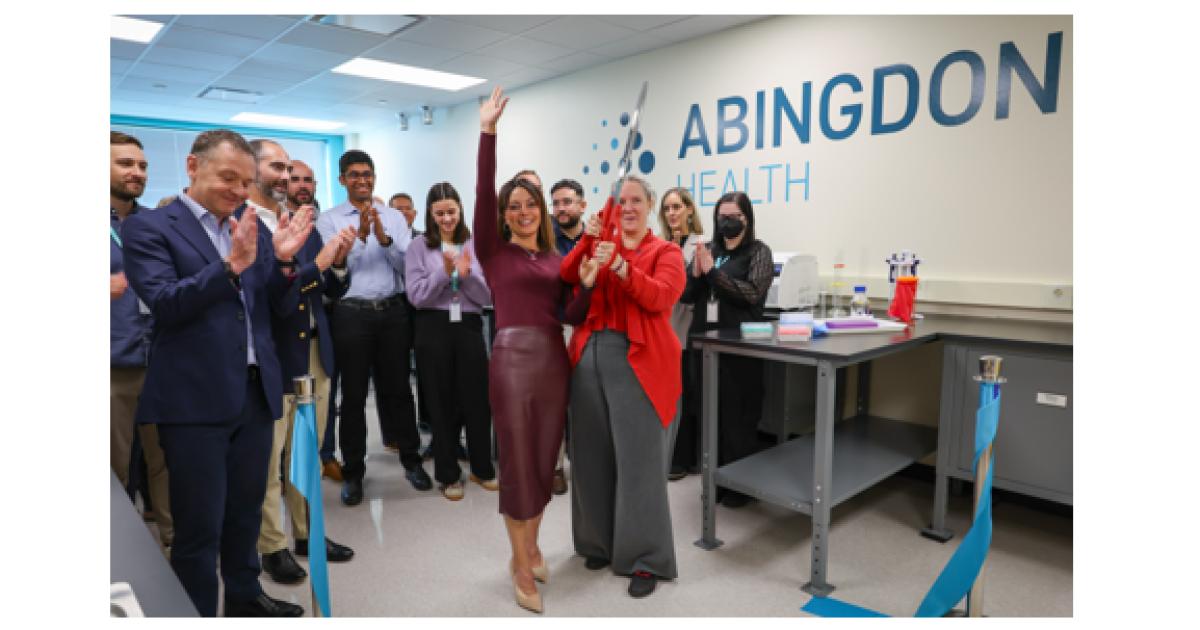
“We were delighted to welcome Representative Mark Pocan, Mayor Satya Rhodes-Conway, WEDC (Wisconsin Economic Development Company) Secretary John Miller and other legislative and industry leaders to the ribbon-cutting ceremony.

Their support throughout our journey is recognition of the importance of high-quality, domestic diagnostics manufacturing for the United States as well our investment in Madison and its community.”

The ribbon-cutting ceremony was attended by Congressman Mark Pocan, Madison Mayor Satya Rhodes-Conway, WEDC Secretary John Miller, representatives from the Wisconsin State Legislature, leaders of Wisconsin’s biohealth industry, and representatives from the Company.

The new facility is part of Abingdon Health’s strategy to expand its presence in the US market and support customers with products that are developed and manufactured domestically.

Abingdon Health Group serves an international customer base as a med-tech contract service provider.

The company was founded in 2008 and is headquartered in York, with additional laboratories in Doncaster and laboratories and commercial offices in Madison.

A spokesperson for Abingdon Health said: “The opening is an important milestone in the company’s continued expansion and investment in its US operations.”

More information can be found at abingdonhealth.com.

Free Training

Source link

Some Canadian manufacturers move to U.S. to survive tariffs


One day last December, Julian Reusing pulled his managers into a virtual meeting to lay bare an uncomfortable truth. 

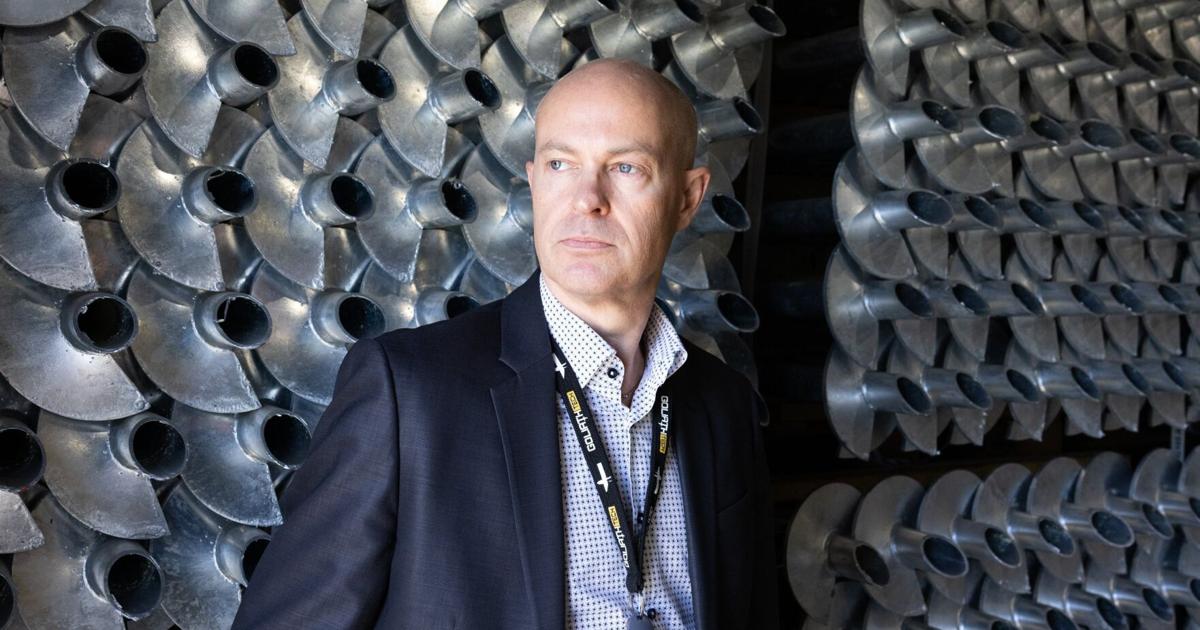
His Quebec company, GoliathTech, a manufacturer of helical screw piles that operates on a franchise model, was getting battered by U.S. tariffs and running out of ways to keep its head above water.

Since the steel tariffs came into effect last March, the company has paid about $3.7 million in tariffs that it has split with its U.S. franchisees.

Reusing, 56, was eager to open a factory south of the border, but he was cash-strapped. Just days earlier, RBC had turned down financing for the company’s European franchise expansion.

Reusing appealed to his own employees for money.

There have been few moments in Canadian history when small and mid-sized manufacturers have faced such pressure. Insurmountable trade barriers with the U.S. have appeared overnight for some companies, suddenly cutting off their largest export market and forcing an urgent need to pivot.

The fight to survive can feel lonely, business owners told the Star. Several said the country’s support falls far short of what they need: the tariff relief programs don’t go far enough and structural threats to Canadian manufacturing competitiveness are making it difficult to replace lost U.S. business.


Julian Reusing.JPG

Over the past two years, GoliathTech’s Julien Reusing approached multiple Canadian government agencies and banks for financing, but was repeatedly turned down. He found his own investors to raise $2.4 million.


Luckily, GoliathTech did not go under that winter. 

Instead, following that pivotal meeting in December, the company raised $900,000 through an equity sale to six of its employees, alongside $1.5 million from a private investor. Reusing opened a small factory in Ohio in March after 10 months of planning in an effort to bypass most U.S. tariffs. He also added 19 European and British franchisees, expanding the firm’s global network to 190 locations as part of a broader restructuring.

“Without a shadow of a doubt, we would be a non-existent company right now if we didn’t make that move,” said Reusing, explaining why he chose to move some production south. “It’s impossible for a company to survive where for every hundred dollars you ship, you have to give fifty dollars to the government.”

Headquartered in Magog, Que., the 13-year-old company is turning a profit for the first time in three years — a turnaround that resulted from Reusing’s own scrambling, with little help from the Canadian government or financial institutions at home.

Many company owners are not nearly as fortunate, and he says Canada needs to do more before more of them are pushed to the brink.

“The government needs to come up with some programs that would teach people how to deal with this, not just offer money,” he said. “I don’t think everybody knows how to deal with a massive revolution.”

Why $7.5 billion in loans isn’t enough

It’s rare to find a clothing company that makes all of its products in Canada — about 95 per cent of the apparel sold here is manufactured outside the country.

When the 50-per-cent U.S. tariffs hit in August, Amit Thakkar feared they could spell the end of his Brampton textile company, Roopa Knitting Mills, which makes fabric for T-shirts, sweatshirts and leggings now caught in the tariff net.

Across the three Canadian clothing businesses he owns, Thakkar employs 120 people, with 50 to 70 per cent of sales destined for the U.S.

His disappointment only grew when Ottawa rolled out a $7.5-billion package to aid tariff-stricken businesses, the majority of which came in the form of loans. 

“If you want to know my honest truth, I think those are all bulls—t,” Thakkar said. “The Canadian government wants to give us loans, but we don’t have customers anymore.”

To Thakkar, the situation is reminiscent of a problem that emerged during the pandemic, when businesses took on emergency debt that some are still struggling to repay years later.

Thakkar says he believes the best way to save his business is for Ottawa to return counter-tariff revenue to companies affected by the trade war, giving them cash to cover tariff costs or lost sales.


GoliathTech 1.JPG

Julien Reusing considers himself lucky to have had the resources and experience to reshape GoliathTech. Many other businesses, he fears, do not have the same room to manoeuvre. 


“If this is like the same in six months,” said Thakkar, “we’re going to be talking about shutting down or moving to the U.S.,” adding that there just isn’t enough buy-in for Canadian-made clothes from the government or domestic consumers.

Before Reusing raised money on his own to restructure his business, he went to the Business Development Bank of Canada (BDC), which launched its Pivot to Grow program last March, offering up to $5 million in loans to help businesses stay afloat and break into new markets.

It seemed like a perfect fit for Reusing’s strategy, but he was denied financing because the business had reported losses in the past two years.

“I’ve spoken with the BDC, Investissement Québec, many different government entities, and we’ve had zero money from the government,” he said. “I lost faith.”

Reusing found investors on his own. 

Dennis Darby, president of Canadian Manufacturers and Exporters, said he is in constant contact with Ottawa to discuss the eligibility and access issues manufacturers are running into. The recent tariff-relief programs are well-intentioned, he said, but their success depends on execution and the speed of approvals.


Tube_laseer_cutter.JPG

A tube laser cutter in action at GoliathTech manufacturing.


“For these smaller manufacturers getting access to that funding, it can’t take six months,” he said.

Companies need more support at home

When Jack Dell’Accio set out to expand Essentia Organic Mattress in 2023, he faced a choice: scale up the company’s factory in Laval, Que., or open a second plant. He chose the latter, investing in a facility in Florida that opened last October.

Mattresses are not subject to the tariffs, and the move was driven purely by logistics costs, particularly the high shipping rates in Canada.

“I have no issues building in Canada all of our raw materials, but it’s our distribution of finished product that has challenges in Canada,” said Dell’Accio, whose company generates about 70 per cent of its sales in the U.S.

The Florida plant has cut Essentia’s shipping costs by about one-third, he said. It also brought an unexpected advantage: with no state personal income tax in Florida, Dell’Accio said Essentia can attract highly skilled engineers with lower salaries than it would need to offer in Quebec.

Alex Greco, senior director of manufacturing and value chains at the Canadian Chamber of Commerce, said tariffs are only one part of the equation when Canadian companies look south, alongside factors such as taxes, regulation, financing and supply chain proximity to customers.


GoliathTech 3.JPG

GoliathTech plate laser operator Stéphane Roy, removes helixes after they’ve been cut.


Canada needs to create a more attractive, business-friendly environment for domestic and foreign investment, so that it can reduce the risk of losing businesses to the U.S., he said.

“We can’t be like psychologists with the president of the United States, but we can control our own competitiveness,” said Greco. 

For Reusing, the solution starts with Canadian financial institutions doing more to back manufacturers.

After the tariffs took effect last March, Reusing approached RBC several times for financing to expand his European franchise network. It was not until December, he said, that his account manager told him the bank was no longer lending against European receivables and inventory.

“It was the ultimate blow because we’ve been with RBC for seven years, very solid, great relationship.”

When asked whether the bank pulled back from corporate financing in Europe, RBC said in a statement that it is unable to comment on individual clients for privacy reasons, but “that financing decisions are made on a client-by-client basis.”

“We see significant opportunity in Europe and are expanding our financing capacity in that market, while also continuing to support clients with cross-border financing needs,” the bank said.


GoliathTech 2.JPG

GoliathTech tube laser technician Josée Roy, who’s worked for nine years at company, arranges tubes. 


Reusing then turned to other Canadian banks, only to be told they would not lend to a company that was “losing money.” He eventually approached a U.S. bank, and the first one he tried agreed to back him.

Last week brought some uplifting news for Canada’s capital markets, as Ottawa unveiled a “productivity mega deduction” as part of its push to attract $1 trillion in new investment over five years.

The measure expands the range of capital assets eligible for businesses to immediately deduct in their first year of use and makes the incentive permanent.

“It’s hard to predict what the future holds for investments in Canada, but this is a policy change that absolutely provides a much stronger incentive for companies to invest in Canada,” said Trevor Tombe, an economics professor at the University of Calgary.

Mutual assured economic destruction

While tariffs have not directly affected Essentia Organic Mattress, they have brought some “social negativity” from Canadian customers when they learn the company operates a factory in the U.S., said Dell’Accio.


GoliathTech 4.JPG

GoliathTech laser cutting supervisor since 2020, Patrick Montmigny, prepares a machine for cutting new plates.


Dell’Accio said opening a plant across the border does not mean scaling back production in Canada, where the company still makes all of its raw materials. If anything, he said, the Florida operation gives Essentia a hedge against any future escalation in trade tensions.

“We’re a Canadian success story that exists in both markets and sometimes it feels that we’re forced to choose sides,” said Dell’Accio. “We can’t. We have a commitment and a customer base in both countries.”

Jim Stanford, economist and director of the Centre for Future Work, said there is no evidence of a migration of jobs to the United States from Canada or elsewhere. But what the data do show, he said, is that tariffs have taken a toll on manufacturing workforces on both sides of the border.

“In terms of Donald Trump’s trade war, this is a case of mutual assured destruction,” he said.

Between January 2025 and August 2026, Canadian manufacturing employment fell by 27,600, from 1.875 million to 1.847 million while the U.S. manufacturing workforce shrank by 35,000. Both countries, however, have seen a modest rebound in those numbers in recent months.

Since the new 50 per cent tariffs took effect, Northern Cables, which has manufactured commercial and industrial power cable with aluminum and copper conductors in Brockville and Prescott, Ont., for 30 years, has had to shut off its cross-border shipping.

Shelley Bacon, the company’s chief executive, said half of the company’s sales go to the U.S. and leadership will have to consider establishing a facility south of the border should the tariffs remain in place to the end of the year.

The Star, simplified

Breaking news, interactive polls, video, and voice notes. Star stories you’ll want to share, delivered where you’re already chatting. Follow the Star on WhatsApp.

Yet that offers no easy workaround, he said. Building an American operation from the ground up represents a massive capital undertaking. 

“If they have trade rules that say you can’t ship product into the country and you have a good customer base and wants to buy from you, you really don’t have a lot of choice here,” he said.

Northern Cables has not laid off any of its 320 workers, instead reassigning them to expand its Canadian product lines and pursue growth domestically. Expanding beyond North America is far from a quick fix. Different standards and measurement systems mean adapting products for Europe could take years, even decades, he added.

But at home, Bacon said some Asian cable makers blocked from the U.S. market by tariffs have been pouring product into Canada at prices so low that his company sometimes cannot even buy the raw materials cheaply enough to match them.

“You can only fight one battle at a time,” Bacon said. “We seem to be fighting two battles at the same time.”

‘If you take your time, you’re going to get eaten up’

It has been 18 months of improvising under pressure for GoliathTech’s Reusing, who kept the company afloat by engineering an entirely new operational playbook to survive the tariff shock.

On top of setting up a U.S. factory, he moved the engineering department to Mexico to cut costs, began manufacturing for two competitors and made 15 trips to Europe to drum up business.

Reusing acknowledged that he was fortunate to have decades of experience to lean on from working in his father’s manufacturing business at 13 to operating a previous franchise business active in 67 countries.

Simply handing out capital won’t solve every problem, Reusing said. What Ottawa really needs to do, he argues, is to launch targeted programs that train business leaders on how to restructure operations and rebuild on the fly.

“You have to do a revolution to your company instantly,” he said. “If you take your time, you’re going to get eaten up.”

Free Training

Source link

Kikkoman Opens Third U.S. Plant In Wisconsin With $560 Million Planned Investment


Kikkoman Foods Inc. (KFI), Kikkoman Corporation’s wholly owned U.S. manufacturing subsidiary headquartered in Walworth, Wisconsin, will operate the new plant. The company scheduled a grand opening ceremony for September 18, 2026, as it prepared to begin commercial shipments from the facility.

Construction of the Jefferson plant began in April 2024, and soy sauce brewing operations commenced in May 2026. The company expects to begin shipping products from the facility in October 2026, adding manufacturing capacity to its established North American production network.

The plant occupies a 100-acre site, equivalent to about 405,000 square meters, and includes about 240,000 square feet of total floor space. The steel-frame facility will produce soy sauce and soy sauce-related seasonings, with capabilities designed to accommodate a range of products tailored to customer needs.

Kikkoman’s planned investment of approximately $560 million, or ¥80 billion, over a 10-year period reflects its commitment to expanding manufacturing capacity in North America, which represents the largest market in the company’s overseas business. The investment figure represents the company’s longer-term spending plan rather than an amount already invested at the time of the opening.

The Jefferson facility becomes Kikkoman’s third production plant in the United States, joining its existing operations in Walworth, Wisconsin, and Folsom, California.

Kikkoman’s Walworth plant began commercial shipments in June 1973, establishing the company’s first U.S. manufacturing operation. The company subsequently expanded its American production network with its Folsom plant, which began shipments in October 1998.

The addition of Jefferson represents Kikkoman’s first new U.S. manufacturing location in nearly three decades. It also becomes the Kikkoman Group’s ninth soy sauce production base outside Japan, further expanding its international manufacturing footprint.

The new facility will help meet rising demand for soy sauce in North America, where the company has reported steadily increasing shipments from its existing Walworth headquarters plant.

By adding production capacity in Wisconsin, Kikkoman intends to strengthen its supply infrastructure while expanding its ability to manufacture different products for customers throughout the region.

The additional plant also provides greater manufacturing capacity within the company’s largest overseas market, complementing its existing operations in Wisconsin and California.

Kikkoman Foods Inc. was established in March 1972 and is wholly owned by Kikkoman Corporation. The subsidiary reported 274 employees as of March 31, 2026, including 218 employees at its Walworth facility and 38 at its Folsom plant.

Ryohei Tsuji, President and Chief Operating Officer of Kikkoman Foods Inc., leads the company’s U.S. operations.

The expansion forms part of Kikkoman’s broader international growth strategy under Global Vision 2030, established in 2018. One of the strategy’s central objectives is to establish Kikkoman Soy Sauce as a truly global seasoning by expanding its availability and adapting its offerings to different markets.

The Jefferson plant will support that objective by increasing the company’s manufacturing capacity in a market that has become central to its international business.

Kikkoman has also emphasized its commitment to maintaining strong relationships with the communities in which it operates. The new facility expands its longstanding manufacturing presence in Wisconsin, where it has maintained U.S. production operations for more than 50 years.

With brewing operations already underway and shipments scheduled to begin in October, the Jefferson plant adds a production base for Kikkoman as it pursues further growth in North America and strengthens its global supply network.

Free Training

Source link

‘Significant milestone’ as York firm launches US manufacturing facility


Published 25th Sep 2026, 11:31 BST

Updated 25th Sep 2026, 11:31 BST

Launched as part of the company’s plans to expand in the region, the new manufacturing hub is located in the company’s site at University Research Park in Madison, Wisconsin.

The firm said the new manufacturing facility represents a “significant step forward” for its US operations, providing it with the “infrastructure and capacity to expand its US footprint and respond to growing demand”.

It comes after Abingdon first established a presence in Wisconsin in April of 2025, opening a research lab and commercial office.

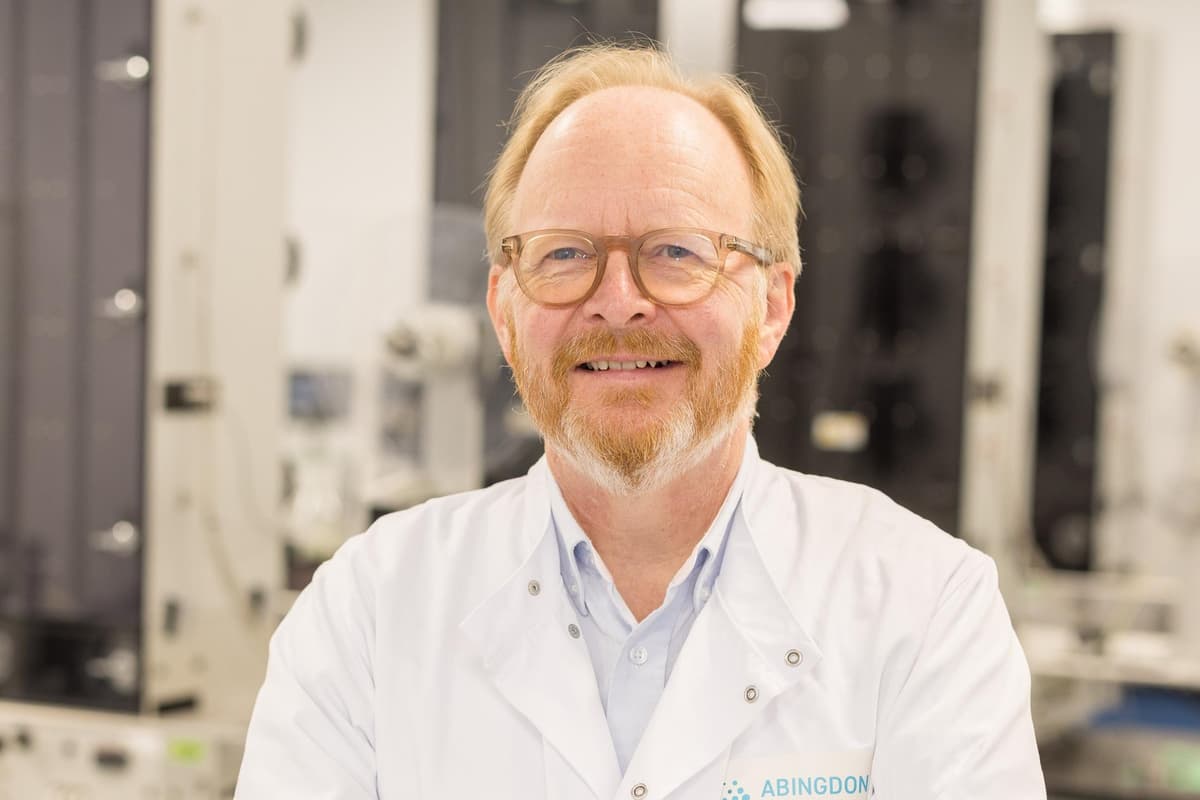
Dr Chris Hand, executive chairman of Abingdon Health.placeholder imageDr Chris Hand, executive chairman of Abingdon Health.

Speaking to The Yorkshire Post in March, Dr Chris Hand, executive chairman of Abingdon Health, said the choice to expand in the region had been driven by a demand from customers for “made in the USA solutions”.

The company raised £3.2m in October of last year to support the expansion.

Speaking on the opening of the new US facility, Chris Yates, president of Abingdon Health USA and chief commercial officer of the firm’s UK entity, said: “The opening of our Madison manufacturing hub is a significant milestone for Abingdon Health USA that enables us to offer a more comprehensive and integrated “end to end” CDMO solution for our US customers, paving the way for continued growth in the biggest med-tech market in the world.”

Abingdon Health develops and manufactures lateral flow tests, used to identify various illnesses and conditions. The company earlier this year launched a “world first” blood test designed to enable paramedics to more quickly identify strokes.

An official ribbon-cutting event for the firm’s new US site was attended by Congressman Mark Pocan, representing Wisconsin’s 2nd Congressional District, as well as Madison Mayor Satya Rhodes-Conway, WEDC Secretary John Miller, and other representatives from the Wisconsin State Legislature.

Mr Yates added: “We were delighted to welcome Representative Mark Pocan, Mayor Satya Rhodes-Conway, WEDC Secretary John Miller and other legislative and industry leaders to the ribbon-cutting ceremony.

“Their support throughout our journey is recognition of the importance of high-quality, domestic diagnostics manufacturing for the United States as well our investment in Madison and its community.”

As part of its expansion, Abingdon also recently listed on the OTCQB Venture Market in the US, trading under the abbreviation ABDXF.

In a trading update issued in July, Abingdon said its revenues had grown by more than 30 per cent – with further increases expected.

Updating investors on the financial year to the end of June 2026, the firm hailed strong growth in the second half of the financial year, with total revenue for the full year expected to reach £11.3m – 31 per cent on the £8.6m recorded 12 months before.

The company said there was a 63 per cent increase in revenue during the second half of the year compared to the first six months.

Free Training

Source link