August Jobs Report: American Manufacturing Gains New


The U.S. economy delivered a welcome surprise in August, adding 162,000 jobs — more than five times the average monthly gain over the previous year. But buried beneath that encouraging headline was another development that could prove even more consequential for America’s long-term economic strength.

Manufacturing added 16,000 jobs last month, continuing what the Bureau of Labor Statistics described as an “upward trend.” Since hitting a recent low in December 2025, the sector has now added 58,000 jobs.

Just as important is where many of those jobs are appearing. Machinery manufacturing added 6,000 positions in August, while fabricated metal products added another 6,000. Employment also increased in computers and electronics, electrical equipment, primary metals, and chemicals.

These are not merely factories producing consumer goods. Machinery, metals, electronics, chemicals, and related industries form critical parts of the industrial base America relies on for infrastructure, advanced technology, energy, and national defense.

That connection has become increasingly important as America confronts the risks of relying on foreign suppliers for essential materials and components. The Department of War’s National Defense Industrial Strategy has specifically called for more resilient supply chains and greater domestic production capacity, while Pentagon initiatives have targeted sectors including microelectronics, castings and forgings, critical chemicals, metals, and other defense-related materials.

The August numbers therefore offer an encouraging early indication that President Donald Trump’s push to strengthen domestic manufacturing may be gaining traction.

Dr. Frank Schneider, a retired Austrian economist who advised former Chancellor Fred Sinowatz, called the recent growth “anything but accidental,” noting that many of the industries adding workers overlap with administration priorities in advanced technology and defense.

“This shift in job quality is often overlooked,” Professor Schneider said. He explained that government jobs primarily represent spending and do not generate profit; instead, they contribute to debt. “Private sector projects create capital wealth, which is a fuel for the economy,” he added.

These gains also fit with other recent indicators. The Federal Reserve Bank of New York’s August survey found that manufacturing activity in New York State expanded strongly, with its general business conditions index reaching 20.6, the highest level in more than four years. New orders and shipments both increased.

Trump’s trade policies are only one part of this story, and a single jobs report cannot prove that tariffs are responsible for a manufacturing rebound. But there is growing evidence from individual companies that the administration’s efforts to protect domestic producers are affecting investment decisions.

Revere Copper Products, America’s oldest copper rolling mill, is one example. After decades of intense foreign competition, the company has been expanding operations and hiring workers. Amy O’Shaughnessy, Revere’s vice president of sales and marketing, has said tariffs helped “reset the playing field” and provided greater certainty for long-term investment.

More recently, O’Shaughnessy said that tariffs, along with booming demand from data centers, have allowed Revere to invest in its factories and workforce in ways it had not been able to do for decades. The company has added roughly 100 workers at its New York and North Carolina facilities since 2023.

Drew Greenblatt, owner of Baltimore-based Marlin Steel Wire Products, has likewise emerged as an outspoken supporter of policies aimed at strengthening American manufacturing.

“I’m thrilled the new policies exist so that we can nurture these American companies,” Greenblatt said.

Marlin Steel, which makes wire baskets and sheet-metal products from American steel, recorded its best year ever in 2025. Greenblatt said earlier this year that the company had responded by purchasing the most expensive piece of machinery in its history and expected further growth in 2026.

None of this means tariffs come without costs. Manufacturers that rely heavily on imported materials can face higher input prices, and the long-term effects vary significantly from one industry to another. But for companies competing directly against heavily subsidized or lower-cost foreign production, tariffs can also provide breathing room to invest, expand capacity, and hire American workers.

That calculation becomes particularly important when the foreign competitor is China.

Retired Italian economist Professor Alfredo Di Gagliardi argued that rebuilding key American industries would be exceedingly difficult without some protection from Chinese competition. Beijing, he noted, has achieved dominant positions in industries ranging from batteries and electric vehicles to solar panels because of its own protectionist policies.

“Is there a price to be paid? Yes,” Di Gagliardi said, “but it is small compared to the inability to produce valuable products.”

The national security implications of relying on foreign adversaries for goods and materials reinforce that argument. The Pentagon has warned that the United States cannot afford excessive dependence on foreign suppliers for critical components and has specifically sought to onshore defense-related production chains. American military strength ultimately depends not only on weapons already in the arsenal, but on the factories, skilled workers, materials, and machinery capable of replacing and expanding them.

Manufacturing also remains important for another reason — it provides a pathway to economic security for millions of workers who do not have four-year college degrees.

Scott Paul, president of the Alliance for American Manufacturing, recently described manufacturing as “a ladder to the middle class,” noting that the sector can still offer strong wages to Americans without university degrees.

“I do think manufacturing is an industry where you can still find good wages in the United States and particularly for the majority of Americans who won’t have a four-year degree,” he said.

August’s numbers do not by themselves amount to a full-scale industrial renaissance. But 58,000 manufacturing jobs added since December, including continued gains in machinery and metals, constitute meaningful progress.

For decades, Americans watched factories close, production move overseas, and the country become increasingly dependent on foreign industrial capacity. If the recent trend continues, the United States can break its reliance on foreign suppliers and re-establish itself as a premier global manufacturing hub.


Free Training

Source link

CesiumAstro Puts Future of U.S. Space and Defense Manufacturing on Display for EXIM Bank Chairman


Jovanovic and Sabripour tour CesiumAstro's future global headquarters and manufacturing complex near Austin, Texas. Jovanovic and Sabripour tour CesiumAstro’s future global headquarters and manufacturing complex near Austin, Texas.

Visit caps $300 million in EXIM financing, the largest loan under the “Make More in America” Initiative

AUSTIN, Texas, September 11, 2026–(BUSINESS WIRE)–This week the Honorable John Jovanovic, the President and Chairman of Export-Import Bank of the United States (EXIM) toured CesiumAstro Inc.‘s future global headquarters and advanced manufacturing complex near Austin. The visit concluded with the signing of a $300 million EXIM credit agreement, including a $20 million revolving credit line from J.P. Morgan. The financing is the largest EXIM has approved under its “Make More in America” Initiative, and makes CesiumAstro the first company to receive a second loan under the program.

“Companies like CesiumAstro prove what it means to make more in America,” said EXIM Chairman John Jovanovic. “With transactions like this one, EXIM is investing in American manufacturing and ensuring that the United States will stay competitive in the industries of the future for generations to come.”

Jovanovic and Sabripour celebrated the milestone with a group of CesiumAstro’s employees, investors, partners, community and education leaders.

“Having Chairman Jovanovic walk our floor today, and see firsthand what our team has built, means as much to us as the financing itself,” said Shey Sabripour, Founder and CEO of CesiumAstro. “It’s a statement that America will continue to invent, manufacture and build the industries that define our future, and that advanced manufacturing, innovation and leadership in space belong in the United States.”

The agreement builds on the company’s $500 million, five-year Texas expansion, expected to create more than 500 jobs and grow the company past 1,000 employees globally. It follows CesiumAstro’s $470 million Series C round and this year’s acquisitions of Vidrovr, Jariet Technologies and 1Aardvark.

About CesiumAstro

A global leader in advanced connectivity solutions for space and defense sectors, CesiumAstro delivers next-generation space systems that connect, detect, and defend across commercial, government, and national security missions. Its full-stack, multi-mission, end-to-end hardware and software solutions encompass satellites, high-performance communications payloads and advanced computing systems. CesiumAstro maintains complete vertical integration with in-house design, manufacturing, and testing capabilities certified to AS9100D/ISO 9001:2015 standards. Headquartered near Austin, Texas, the company operates additional facilities in Colorado, California, the United Kingdom, Germany, and Japan. To learn more, visit CesiumAstro.com.

Free Training

Source link

White House copper tariff decision stalls amid price concerns


The White House has not yet made a decision on refined copper tariffs as officials juggle concerns that higher prices for the red metal could raise manufacturing costs against the potential benefits of encouraging more domestic mining, according to two people familiar with the matter.

The hesitation comes as the administration is increasingly focused on affordability ahead of November’s midterm elections, with President Donald Trump and Republican lawmakers facing pressure to demonstrate that their economic policies are lowering — rather than raising — costs for American consumers and businesses.

Copper prices have surged to record highs amid expectations that Trump would impose tariffs on refined copper products such as cathode, as well as copper concentrate produced at mine sites. Traders and industrial buyers have been rushing to build inventories in the United States to get ahead of any new duties, creating one of the world’s largest stockpiles of the metal.

A White House official said the administration had not made a final decision on the tariffs and confirmed that the Commerce Department provided an update to Trump by a June 30 deadline set by the White House.

“The administration continues to evaluate all options to reshore copper and other critical manufacturing back to the United States,” the official said.

The comments suggest tariffs are not a foregone conclusion, despite the market’s expectation that the United States could extend existing duties to refined copper.

The administration has been considering tariffs on refined copper as part of Trump’s broader push to rebuild U.S. manufacturing and reduce reliance on foreign supplies of critical materials.

Copper is used in construction, transportation, electronics and many other industries. S&P Global expects growth in the AI and defense sectors to boost global copper demand 50% by 2040.

The U.S. imports roughly half of its copper needs each year and only has two operational copper smelters, owned by Freeport-McMoRan and Rio Tinto, respectively.

The proposed tariffs could make imported copper more expensive and improve the economics of U.S. mining, smelting and refining projects. A Rio executive, for example, told Reuters earlier this year “the current set of mechanisms and tariffs around copper” do little to offset the challenging economics of its U.S. smelter.

But broader copper tariffs could also raise costs for manufacturers that rely on the metal, including producers of electrical equipment, automobiles, construction products and other industrial goods.

That tension has complicated the administration’s efforts to use tariffs to encourage domestic production without adding to inflation or undermining Trump’s political message on lowering the cost of living.

The tariff uncertainty is also preventing copper from flowing to markets outside the U.S., further tightening global supply.

“As long as (tariff) policy remains unresolved, that possibility reduces the incentive to return metal to international markets,” said Jacob White, a minerals analyst at Sprott Asset Management, which invests in copper producers.

The expectation for a copper tariff echoes 2025, when the market expected a blanket tariff on all products containing the metal. Trump, however, stopped short in July 2025 of such a sweeping tariff and instead imposed levies on pipes, wiring and other semi-finished products, much to the chagrin of companies that mine copper itself.

Trump tasked Commerce Secretary Howard Lutnick with updating him by June on copper markets and recommending whether to impose a 15% tariff starting on January 1, 2027, that would rise to 30% in 2028. It was not immediately clear what Lutnick recommended to Trump.

U.S. refined copper imports have jumped 16-fold since 2015, even as production slipped 20%, according to U.S. Geological Survey data. The country has nearly 30 years’ worth of supply within its borders.

Trump has pushed in the past year to bolster U.S. copper projects, including the Resolution Copper project in Arizona from BHP and Rio, and the Twin Metals project in Minnesota from Antofagasta.

Trump also has moved to ban the export of electronic waste, which contains copper.

Free Training

Source link

U.S. Manufacturing Investment and Productivity Momentum Set Stage for IMTS 2026


New manufacturing technologies aimed at increasing output and capacity debut as industry, defense, and AI leaders gather in Chicago.

McLean, Va. (September 10, 2026) – The United States continues to see renewed manufacturing investment and output growth, but sustaining reindustrialization depends on accelerating productivity. At IMTS – The International Manufacturing Technology Show, the manufacturers and job shops that build America will find the technologies, ideas, and connections that translate capital investment into greater efficiency, resilience, and long-term competitiveness.

U.S. manufacturing generates trillions of dollars in economic output, and IMTS serves as a marketplace connecting manufacturers with technology providers. According to the U.S. Manufacturing Technology Orders Report, in the first half of 2026, new orders of metalworking machinery reached a record total of $3.44 billion, up 36% year over year and the strongest half since USMTO began tracking orders in 1998. New orders for manufactured durable goods increased $3.6 billion, or 1.1%, to $339.3 billion in July, according to the U.S. Census Bureau, marking the fourth increase in five months. The ISM Manufacturing PMI registered 54.6 in August, the eighth straight month of manufacturing sector expansion, while ISM’s broader economic indicator has now shown growth for 22 consecutive months.

“Economic momentum, demand for a stronger U.S. industrial base, continued reshoring and foreign direct investment, new incentives for capital investment, and the launch of cutting-edge technologies are creating one of the most exciting moments manufacturing has seen in years – and one of the most important reasons to attend IMTS,” says Douglas K. Woods, president of AMT – The Association For Manufacturing Technology, which owns and produces IMTS. “Across aerospace, defense, medical, AI infrastructure, and other high-demand sectors, manufacturers are looking for the technologies, partners, and productivity gains that will help them compete and grow.”

Manufacturing sector labor productivity increased 2.4% in the second quarter of 2026, as output increased 5.4% and hours worked increased 2.9%, according to the U.S. Bureau of Labor Statistics. Durable-goods manufacturers performed even better, increasing productivity 3.6% as output grew 7.3%. Manufacturing unit labor costs decreased 0.3%, with productivity gains offset by higher hourly compensation.

U.S. and foreign companies have announced $11 trillion in U.S. investment commitments, according to investments tracked by the White House, underscoring the scale of opportunity for manufacturers and technology providers gathering at IMTS.

The investment momentum aligns with reshoring trends that continue to reshape U.S. manufacturing.

“Manufacturing is surging,” confirms Harry Moser, founder of the Reshoring Initiative. “Much of that strength is due to reshoring and foreign direct investment staying strong and being projected to reach a near-record 338,000 jobs announced in 2026 alone.”

To celebrate reshoring, Moser will present the 2026 National Metalworking Reshoring Award to two recipients, AccuRounds and Three M Tool & Machine & Ultra-Grip. Moser says balancing the country’s $1.3 trillion goods trade deficit will require a 40% increase in manufacturing and a surge in investment and productivity. The award-winning shops demonstrate how manufacturers can help close that gap.

Learning and Inspiration
Beyond the exhibit floor, IMTS is a major forum for manufacturing education and networking, with more than 50 sessions on the IMTS+ Main Stage. Presentation themes include domestic manufacturing growth, the U.S. defense industrial base, AI, automation, additive technology, digital manufacturing, aerospace growth, women in manufacturing, next-generation education, technology investment, and more. People and organizations represented include:
• Vice Admiral Robert Gaucher, Director, Submarine Programs for the U.S. Department of War, will focus on how the submarine enterprise is using data-driven insights to drive speed and innovation, particularly in advanced and additive manufacturing, and how industry partners can support their critical mission.
• Representatives from the Warfighting Investments, Resourcing, and Execution (WIRE) directorate at the U.S. Department of War will deliver a presentation titled “Build Freedom: Building the Workforce Behind America’s Manufacturing Strength.”
• A conversation on the U.S. Navy’s growing investment in 3D printing and what it means for the future of defense, featuring Captain Jason Deichler, Chief of Staff, Director, Submarine Programs for the U.S. Department of War, and John Barnes of Barnes Global Advisors.
• Oak Ridge National Laboratory and Sandia National Laboratories, which respectively created drones and test flight vehicles that demonstrate surge production capabilities using additive manufacturing, automation, and AI.
• Technology and manufacturing industry leaders from the American Institute of Aeronautics and Astronautics, Autodesk, AWS, Boom Supersonic, Caterpillar, EOS, Google Cloud, Honeywell, Lockheed Martin, Mazak, Microsoft, Red Bull Technology, and Siemens.
• Investment, financial, and market perspectives from Bain & Co., The Barnes Global Advisors, Cantor Fitzgerald, IMEC, Held Holding, NewCap Partners, and others.
• People who make space exploration possible, featuring retired astronaut Wendy Lawrence and Dr. Sharon Cobb, associate program manager, NASA’s Space Launch System Program.

“As a country, we need to make more things here. Reindustrializing America depends on increasing our total productivity factor by adopting new technologies and business approaches,” says John “Jay” Rogers, co-founder and CEO of Haddy. Rogers will deliver an IMTS+ Main Stage speech on his approaches using AI-powered robotic 3D printing of drone boats and aircraft for military applications, furniture, and show sets for Disney World.

Investing in Productivity
For machine shops, equipment represents their largest capital investment, making IMTS an important venue for evaluating technologies that can improve productivity, expand capacity, and support more confident purchasing decisions.

“By investing in the best-of-the-best CNC and fabrication equipment, we’re able to produce better parts faster, with fewer defects and less postprocessing, which ultimately lowers costs and improves reliability for our customers,” says Jim Belosic, founder and CEO of SendCutSend, an on-demand manufacturing company specializing in custom sheet metal and CNC machining. Belosic will participate in IMTS+ Main Stage events.

New CNCs debuting at IMTS emphasize technologies that increase output per employee and machine, including process consolidation, 5-axis and multitasking capability, hybrid manufacturing, and unattended production. Highlights include:
• DN Solutions’ AM2CNC platform with a 5-axis machining center and automatic workpiece changer.
• Hurco’s BM500U for 5-axis or 3+2 machining, as well as a new eight-station pallet changer.
• Makino’s a630iT 5-axis horizontal machining center with Pro7 Control.Okuma’s MULTUS U1000 compact multitasking lathe and 13-pallet tower system.
• Trevisan Machine Tool’s GT350 with milling and U-axis turning spindles.
• United Machining Solutions’ Mikron Mill E 700 U Prime and AgieCharmilles CUT P 600 wire-cutting EDM.

To assess the technology unveiled at IMTS 2026, MakingChips podcast hosts Mike Payne, president and owner of Hill Manufacturing & Fabrication, and Paul Van Metre, co-founder of ProShop ERP, will host afternoon sessions on the IMTS+ Main Stage on Monday, Wednesday, and Friday.

“Walking the IMTS floor shows you the technology. Presentations on the IMTS+ Main Stage, conferences, and networking events provide insight on how to make investment decisions with greater confidence and deliver lasting value,” says Payne.

Van Metre adds, “IMTS brings together the people that have solved these challenges before. We’ll interview these experts so visitors can learn from their experience instead of starting from scratch.”

Manufacturers looking to increase productivity, expand capacity, and capitalize on renewed investment in U.S. manufacturing can connect with technology providers and industry leaders across IMTS exhibits, conferences, stages, and events. Register for IMTS 2026, Sept. 14-19, 2026, at McCormick Place in Chicago, and Achieve the Impossible.

Free Training

Source link

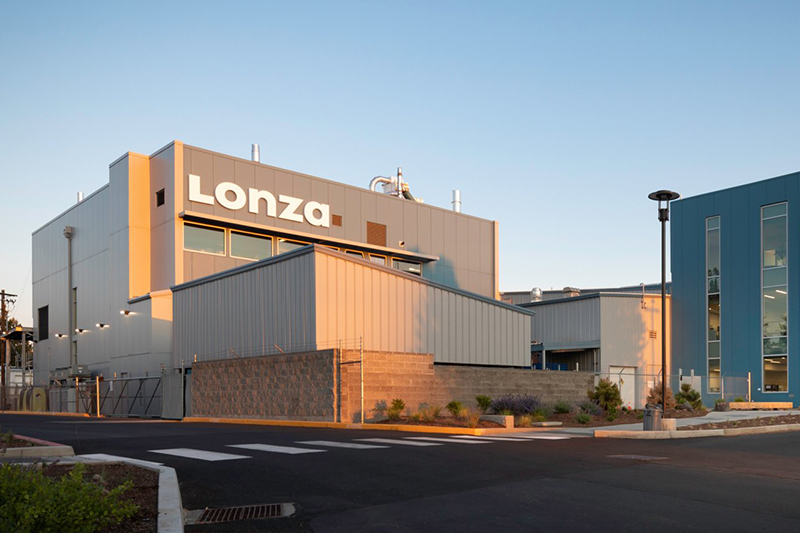
Lonza strengthens US manufacturing with new commercial spray-drying facility


Lonza, the world’s leading contract development and manufacturing organization (CDMO), announced today plans to further strengthen its significant US presence by constructing a large-scale commercial spray-drying facility in Bend, Oregon. The investment will establish Lonza as the leading CDMO provider of commercial-scale spray-drying PSD-4 capacity in the US. Lonza will offer a full range of spray-dried dispersion (SDD) capacity to support customers across both clinical and commercial programs. Through its integrated end-to-end offering, Lonza will support the development and manufacturing of small molecules and other modalities, including biologics and mRNA.

SDD technologies are increasingly relevant in modern drug development, as the industry addresses the growing complexity of molecules and their related bioavailability challenges. The demand for SDD CDMO services has grown alongside the increasing scientific complexity of pharmaceutical pipelines, driven by the increasing prevalence of poorly soluble drug substances. Today, a significant share of molecules in the clinical pipeline requires bioavailability enhancement. The Bend expansion is intended to meet this growing market demand, with a particular focus on US demand, enabling Lonza to provide customers with an additional option to access a complete and integrated end-to-end development and manufacturing solution for SDDs.

Wolfgang Wienand, Chief Executive Officer, Lonza, said: “The investment in the Bend site reflects our conviction that the United States will remain a leading source of pharmaceutical innovation and a key market for Lonza. It also delivers on our One Lonza strategy, powered by the Lonza Engine, to invest where we can create the greatest value for our customers and, ultimately, for patients. By significantly expanding our commercial-scale spray-drying capabilities, we strengthen a technology that can fundamentally improve the delivery and bioavailability of medicines. With this, our world-class particle engineering team in Bend will be even better able to support our customers in turning their breakthrough innovations into viable products and to manufacture the medicines of tomorrow.”

Christian Seufert, Head of Advanced Synthesis, Lonza, added: “The growing number of complex drug molecules is increasing demand for advanced particle engineering technologies. With decades of expertise in spray-drying, our Bend team helps customers address formulation challenges and progress their programs efficiently. This investment expands the capacity and capabilities needed to support customers from development through commercialization.”

The new facility will be equipped with two state-of-the-art PSD-4 spray-drying units, allowing for future capacity expansions as demand continues to grow. Additional upgrades to the Bend site include supporting infrastructure for solvent handling and storage. The project also integrates energy-efficient utility and process systems and enhanced emission control technologies to reduce overall facility energy demand.

The new facility, expected to be completed in 2029, will be delivered through a significant capital investment and will initially create more than 80 new jobs, highlighting Lonza’s commitment to expanding its manufacturing footprint in the US. The expansion enhances proximity to key customers and supports more resilient, regionalized supply chains for critical therapies.

Free Training

Source link

Access Denied


Access Denied

You don’t have permission to access “http://www.marketscreener.com/news/lonza-further-strengthens-us-manufacturing-presence-with-addition-of-a-commercial-spray-drying-fac-ce785bdedb8bf02d” on this server.

Reference #18.c969dc17.1789029555.15555ab9

https://errors.edgesuite.net/18.c969dc17.1789029555.15555ab9

Free Training

Source link

Duffy Scolds Ford Over Deals With China in Urging More American Manufacturing


Transportation Secretary Sean Duffy has warned Ford Motor Company about maintaining “questionable foreign alliances” with Chinese companies amid calls from the Trump administration to reshore its manufacturing operations.

In a recent letter to Ford CEO Jim Farley, Duffy derided the company’s recent deals with China-backed auto manufacturers, and said Ford “fails to act as [a] reliable partner” to the American public.

“The company’s recent strategic decisions paint a troubling picture of a foundational American brand actively intertwining its future with Chinese state-backed enterprises,” Duffy wrote in the letter sent Sept. 3 and released publicly Tuesday.

Ford pushed back sharply in a statement to NOTUS on Tuesday, calling Duffy’s letter an error-filled and “wrongheaded attempt to capture headlines.”

The company said it produces more vehicles in the United States and employs more American workers than any other automaker.

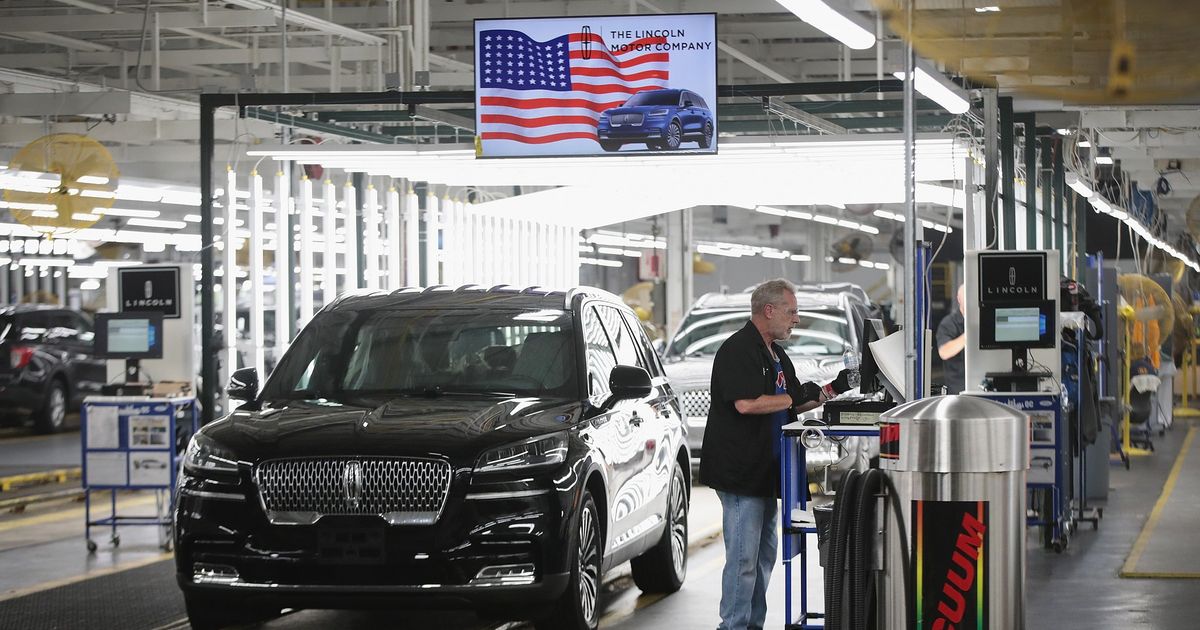
Ford has been under continued pressure from the White House to return to domestic supply chains and manufacturing, and recently announced it would relocate manufacturing operations of its Lincoln models from China to the United States by 2030.

Commerce Secretary Howard Lutnick recently celebrated the announcement as a tariff success, but Duffy asserted the four-year timeline “leaves an unacceptable, multi-year window of reliance on Chinese manufacturing while depriving skilled American workers of vital manufacturing jobs.”

Duffy went on to highlight Ford’s dependence on licensed technology from Chinese battery manufacturer Contemporary Amperex Technology Co., Limited — a company that appears on the Defense Department’s list of banned companies. He also criticized Ford over a new deal with Chinese automotive company Geely Auto to build zero-emission vehicles at a Ford factory in Spain.

Ford defended its arrangement with Chinese battery makers, saying its Michigan battery hub is owned and operated by Ford and can’t be classified as a foreign-owned manufacturing operation. The company said Duffy’s assessment of its operations in Spain are also fraught.

“Ford supports the Trump administration’s vision for advancing American innovation and manufacturing,” Ford’s response states. “Had Secretary Duffy reached out before issuing his letter to the press, we would have been happy to share more details about Ford’s U.S. commitment.”

Free Training

Source link

Bombardier highlights US manufacturing after President Trump threat | Corporate Jet Investor


Bombardier

There could be stormy weather ahead for Bombardier’s relations with the US government.

Bombardier has highlighted its commitment to business jet manufacturing in the US after President Donald Trump threatened to ban the sale of the company’s aircraft unless the firm relocated production to America.

Commenting on his social media platform Truth Social yesterday (September 7th), President Trump wrote: “NO MORE SELLING BOMBARDIER IN THE UNITED STATES!”. He added: “If they want our Market, they must build here and stop treating America like a ‘piggybank’.”

The president also claimed that more than half of Bombardier’s revenue comes from US customers and said Canada of imposing “unfair” restrictions on American customers.

Without naming President Trump, the manufacturer said in a statement: “Bombardier values its great partnership with American companies and its US employees. Our plan is to continue to invest in our people, our customers and the communities in which we operate across the country.”  

‘Clear winner’

The American aerospace industry is “a clear winner on trade and exports”, it said. “Aerospace is routinely one of the top export sectors for the United States and a continual trade surplus winner.” Bombardier contributed strongly to the sector, creating tens of thousands of jobs across the US, according to the manufacturer. 

The company highlighted its US workforce throughout the US, citing facilities in Kansas, Texas, Arizona, Florida, Connecticut, Illinois, Delaware, California, Washington D.C. and New Jersey. The business has an overall direct employment presence in more than 20 states and worked with about 2,800 American companies across 47 states. In total, the spends over $2.5bn with suppliers each year. Bombardier aircraft are built with American-made components such as engines, avionics and many more key systems provided by great American companies, it continued.

Grow its service network

Bombardier also highlighted plans to grow its defence activities as well as its service network and will, later this year, inaugurate a new facility in Fort Wayne, Indiana.  In August last year the manufacturer pledged to expand its service network throughout the US and hailed its new manufacturing facility in Moorpark, California as an “important move”, which showed its “cutting-edge innovation” and commitment to “high-quality jobs”.

President Trump’s post was made amid growing economic tensions between the two countries after he placed a 25% tax on Canadian cars and trucks, as well as taxes on Canadian steel, aluminium and lumber. Last month the president imposed new 50% tariffs goods on goods such as dairy, alcohol, hockey sticks and perfume. Canada has responded with counter tariffs of up to C$28bn ($20.24bn) on American products.

Read the manufacturer’s statement in full here and the president’s social media post here.

Meanwhile, the president’s Truth Social post concluded with the advice: “BUY AMERICAN. FLY ON AMERICAN AIRLINERS. ENJOY AMERICAN LIQUOR AND BEVERAGES. SAIL ON LAKE AMERICA. AMERICA FIRST!”

Free Training

Source link

‘Wings For The World’s Fastest Business Jet Are Made By American Workers’ — TradingView News


Bombardier Inc. (BDRBF) fired back Monday after President Donald Trump threatened to block sales of the Canadian planemaker’s jets in the United States, issuing a statement defending its American manufacturing footprint and thousands of U.S. jobs tied to its business-jet production.

Bombardier Highlights U.S. Economic Impact 

Trump posted on Truth Social that he would end Bombardier sales in the United States, saying the company’s products were not worth it.

“NO MORE SELLING BOMBARDIER IN THE UNITED STATES! Their products aren’t good enough! Over 50% of their revenue comes from the United States — They live off American Buyers, American Companies, American Airports, and American Service — All while Canada blocks our GREAT American Banks, and Companies, throughout the U.S.A. They even blocked Gulfstream Aerospace from doing business in Canada — Completely unjust and unfair!”

The Montreal-based manufacturer pushed back within hours, emphasizing its existing U.S. manufacturing operations. The company said its American operations support tens of thousands of jobs, both directly and through its supplier network. Bombardier class B stock slipped 0.6% last week, logging three straight weeks of losses.

Bombardier employs workers across more than 20 states, including Kansas, Texas, Arizona, Florida, Connecticut, Illinois, Delaware, California, New Jersey and Washington, D.C. Its U.S. operations work with roughly 2,800 domestic suppliers spanning 47 states. The company spends more than $2.5 billion annually with those businesses.

“Bombardier aircraft are built with American-made components such as engines, avionics and many more key systems provided by great American companies. Significantly, the wings for the world’s fastest business jet are made by American workers at Bombardier’s facility in Red Oak, Texas while crucial flight control components are made in Bombardier’s Los Angeles, California area facility.”

Canada Prepares New Tariffs On U.S. Goods 

The disagreement comes as trade tensions between the U.S. and Canada grow. Trump criticized Canada for restricting American banks and companies, while Canada prepares to respond to U.S. tariffs, raising fears of a broader trade war.

According to a Bloomberg report, Canada plans to place 15% to 50% tariffs on hundreds of U.S. products, starting Tuesday, as Prime Minister Mark Carney tries to strengthen Canada’s position in trade talks with the U.S. The tariffs would raise duties on many U.S. steel products to 50% from 25% and add new taxes on items such as motorcycles, cosmetics and cheese.

BDRBF Stock: Retail View

Meanwhile, on Stocktwits, retail sentiment around the stock jumped to ‘bullish’ from ‘bearish’ territory.

“They do build in the US… they are in Texas, California, Kansas, Connecticut, Florida and Indiana. At least 3000 American employees,” said one user in response to Trump’s latest post.

BDRBF stock has gained 34% year-to-date.

Free Training

Source link