If Tariffs Rise, These U.S. Manufacturing Stocks Could Benefit


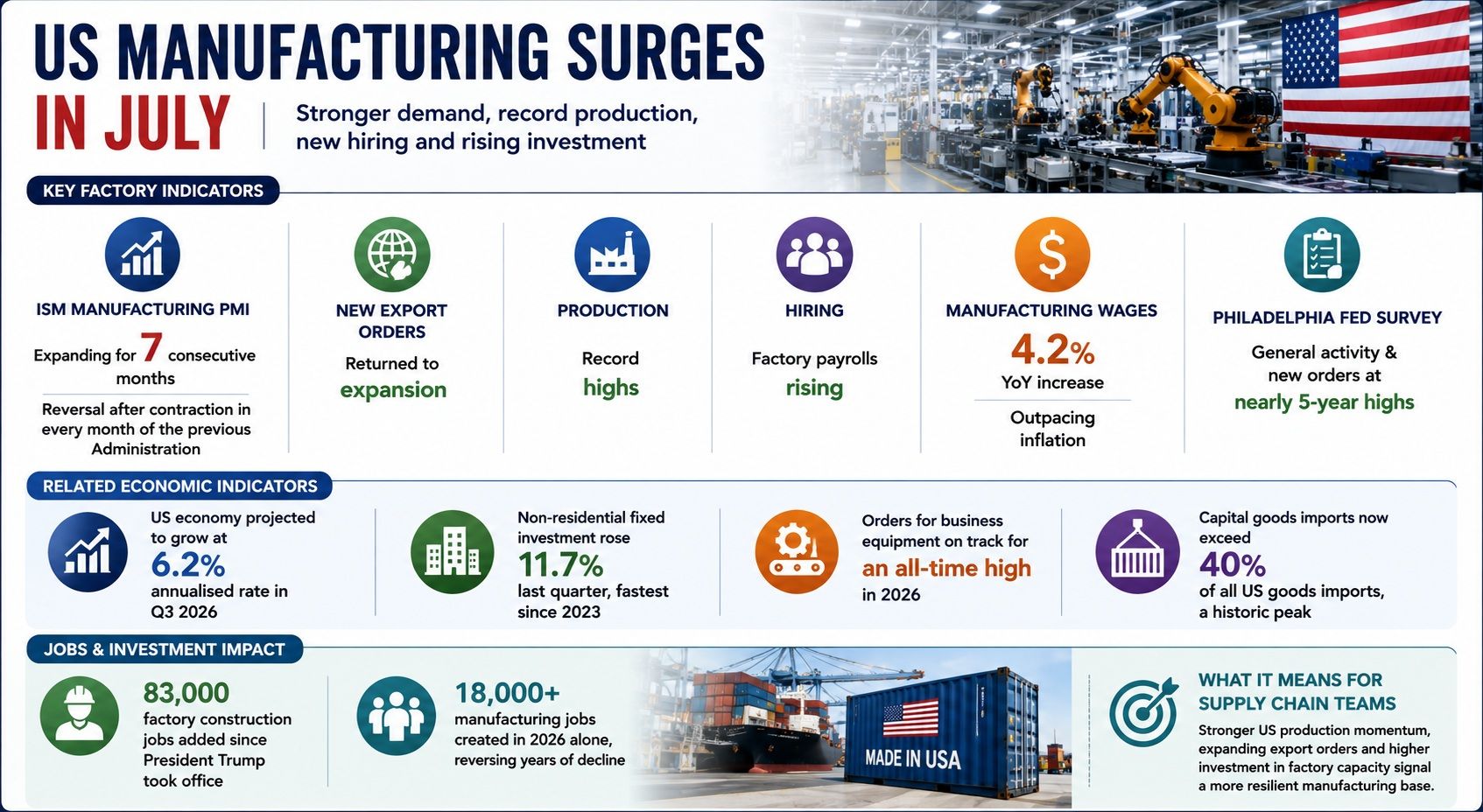
With the U.S. trade agenda back in the spotlight, proposed new tariffs of 10% to 37.5% on imports from dozens of key partners are putting fresh attention on companies that actually make things inside the country. For investors, this kind of policy shift can reshape cost structures, supply chains and pricing power, creating potential winners and laggards. This article looks at 3 U.S. domestic manufacturing stocks that are exposed to these tariff headlines and that may be affected if production tilts further toward local factories. Keep reading to see which 3 stocks make the list and why they matter now.

Wall Street’s queuing for one rocket. While SpaceX counts down to its IPO, other companies tied to the new space race are already in orbit. → 20 Compelling Space Companies watchlist · Global Space Race Investing Ideas screener · Scan the sector by valuation on Rocket Lab’s valuation page.

Packaging Corporation of America (PKG)

Overview: Packaging Corporation of America manufactures containerboard, corrugated boxes and displays used to ship and merchandise consumer and industrial goods, and also produces office, printing and specialty papers across North America.

Operations: The company generates the bulk of its US$9.2b revenue from Packaging at about US$8.5b, with a smaller Paper segment at about US$621m and other corporate items offset by intersegment eliminations.

Market Cap: US$19.9b

Investors looking at U.S. focused manufacturing stocks may want to pay attention to Packaging Corporation of America, which sits at the intersection of strong pricing power in everyday packaging, a recent 20% dividend hike and a business model that leans on largely domestic mills and box plants, potentially limiting tariff exposure as trade costs rise. At the same time, the company is managing high debt levels, a P/E that is above sector averages and earnings that recently declined, all while demand and input costs stay in focus. The key consideration is whether current pricing, cash flow potential and tariff insulation are enough to outweigh those risks and justify a closer look at the company.

Pricing power, a 20% dividend hike and mostly domestic operations make Packaging Corporation of America look more resilient than it first appears, but the full story sits in the 3 key rewards and 2 important warning signs

NYSE:PKG P/E Ratio as at Jun 2026NYSE:PKG P/E Ratio as at Jun 2026

Steel Dynamics (STLD)

Overview: Steel Dynamics is a U.S. based steel producer and metal recycler that makes flat rolled and long steel products, building components and recycled aluminum, serving construction, automotive, manufacturing, transportation, energy and industrial customers.

Operations: Steel Dynamics generates most of its US$19.0b in revenue from Steel Operations at about US$13.9b, alongside Metals Recycling at about US$4.4b, Steel Fabrication at about US$1.4b and Aluminum at about US$0.6b, with smaller other items and eliminations.

Market Cap: US$39.7b

Steel Dynamics sits at the center of several themes for domestic manufacturing investors, combining a largely U.S. production footprint with exposure to tariffs that can make imported steel less competitive and support pricing for local mills. The company pairs steel and aluminum production with integrated recycling, which can help manage raw material costs and appeal to customers focused on lower carbon materials. Recent results show earnings per share and higher shipments. At the same time, the stock trades on a relatively rich P/E, relies on external borrowing and faces cyclicality in construction and manufacturing demand, as well as policy risk if tariff regimes change. The focus for investors is how these positive and negative factors may affect future earnings power and valuation.

Steel Dynamics’ earnings and shipments are moving, but the real story sits in how investors are pricing that relatively rich P/E against future tariff and demand swings that could reshape its analysis report for Steel Dynamics

NasdaqGS:STLD P/E Ratio as at Jun 2026NasdaqGS:STLD P/E Ratio as at Jun 2026

Deere (DE)

Overview: Deere & Company manufactures and finances agricultural, construction and forestry equipment worldwide, supplying everything from row crop tractors and harvesters to lawn care, roadbuilding machinery and related parts and services.

Operations: Deere generates most of its revenue from equipment, with about US$17.1b from Production & Precision Agriculture, US$13.2b from Construction & Forestry, US$11.4b from Small Ag & Turf and US$6.2b from Financial Services, offset by smaller intersegment and other items.

Market Cap: US$158.8b

Deere is drawing attention because it ties together high tech precision agriculture, a growing construction and forestry arm and a financing unit that keeps equipment sales moving. At the same time, tariffs and “buy American” policies put extra focus on companies that build a lot inside the U.S. More than 75% of its domestic sales are assembled locally, tariff refunds are helping offset higher import costs, and demand for construction and roadbuilding equipment linked to data centers and infrastructure is helping to counter a softer large farm cycle. At the same time, debt funded Financial Services, tariff uncertainty and weaker North American ag demand keep risk firmly on the table, which makes Deere a stock where the details really matter.

Deere’s mix of precision ag, construction gear and financing looks like a growth engine hiding in plain sight. The real twist shows up in the analyst forecasts for Deere investors keep overlooking

NYSE:DE Earnings & Revenue History as at Jun 2026NYSE:DE Earnings & Revenue History as at Jun 2026

The 3 stocks in this list are a starting point, but the full U.S. Domestic Manufacturing Stocks screener surfaces 44 more U.S. focused manufacturers with equally compelling stories around tariffs, reshoring and domestic production. Use Simply Wall St to analyze, filter and identify the specific catalysts and narratives that match your highest conviction ideas so you can focus on the opportunities that fit your own approach.

Take Control of Your Investment Journey

If Steel Dynamics or any of these companies sound like a great opportunity, register for FREE with Simply Wall St and add your companies to a Watchlist to monitor the share price against the fair value the ideal entry point.
Once you’ve made your move, manage your holdings with our Portfolio Command Center that filters out the noise to deliver only the most critical, actionable updates.
Throughout your journey, our Community allows you to filter the best ideas from thousands of investor perspectives.
By uncovering hidden catalysts and risks early, you’ll accelerate your decision-making and stay one step ahead of the market.

Seeking Fresh Alternatives Before They Fly?

Markets move fast, and the next breakout ideas rarely stay under the radar for long. Spot fresh momentum and shifting valuations before the crowd catches up, then act now.

  • Consider higher yield potential with rock solid balance sheets by scanning a curated group of 10 dividend fortresses while prices still reflect today’s conditions.
  • Track the picks powering AI’s backbone and uncover under the radar infrastructure suppliers with the targeted 48 AI infrastructure stocks before valuations change.
  • Look for under followed, financially sound opportunities using a curated 22 high quality undiscovered gems that highlights quality businesses investors have not fully evaluated yet.

This article by Simply Wall St is general in nature. We provide commentary based on historical data
and analyst forecasts only using an unbiased methodology and our articles are not intended to be financial advice.
It does not constitute a recommendation to buy or sell any stock, and does not take account of your objectives, or your
financial situation. We aim to bring you long-term focused analysis driven by fundamental data.
Note that our analysis may not factor in the latest price-sensitive company announcements or qualitative material.
Simply Wall St has no position in any stocks mentioned.

New: Manage All Your Stock Portfolios in One Place

We’ve created the ultimate portfolio companion for stock investors, and it’s free.

• Connect an unlimited number of Portfolios and see your total in one currency
• Be alerted to new Warning Signs or Risks via email or mobile
• Track the Fair Value of your stocks

Try a Demo Portfolio for Free

Have feedback on this article? Concerned about the content? Get in touch with us directly. Alternatively, email editorial-team@simplywallst.com

Free Training

Source link

Fuel Cell Manufacturing, Deployment Gain Ground in U.S.


Reports related to this article:

Written by Eric Funderburk for IIR News Intelligence (Sugar Land, Texas)

Summary

Fuel cells, powered by either hydrogen or natural gas, are being increasingly deployed for power generation throughout the U.S., and fuel-cell manufacturers are underway with projects to help meet the increasing demand.

A Growing Technology

The use of fuel cells to provide power generation is gaining ground at sites throughout the U.S., with data centers in particular targeting the technology to decrease reliance on external power. Smaller fuel cells can be used in automotive applications.

Industrial Info Resources data show more than $4.8 billion in active power generation projects using fuel cells, although most of these are planned for the future.

The “fuel cells” umbrella is a bit broad, as the label covers both fuel cells powered directly by hydrogen as well as those that run on a supply of natural gas. The technologies have similarities, as hydrogen is the ultimate source of power for both types of cells.

Both hydrogen and natural gas fuel cells generate electricity through an electrochemical process, rather than combustion. Hydrogen-based fuel cells directly use hydrogen, with water vapor the only byproduct (in addition to heat). Natural gas fuel cells actually convert the natural gas to hydrogen, which is then used to generate electricity and releases both water vapor and carbon dioxide, although significantly less CO2 than combustion processes, as well as virtually eliminating some types of emissions such as nitrogen oxides and sulfur oxides.

Industrial Info’s fuel cell coverage of fuel cell manufacturing and their deployment for power generation includes both natural gas- and hydrogen-based fuel cell technologies.

Power Generation Deployment

Using fuel cells for behind-the-meter power generation is gaining ground in the U.S., and the prime recipients of this technology are data centers.

Many of the fuel cell systems that are intended for data centers are meant to run on natural gas, but one of the nation’s leading fuel cell manufacturers, Bloom Energy, provides technologies that possess substantial fuel flexibility.

It’s these flexible Bloom technologies that American Electric Power Company (AEP) plans to use at a generation facility in Hilliard, Ohio, to help power a nearby Amazon data center. Industrial Info Resources data show most of the buildings at Amazon’s Hilliard data center have been completed, and work on the final 110,000-square-foot building is planned to begin this year. Shortly after that building is finished in mid-2027, AEP is expected to put the finishing touches on a 72.91-megawatt (MW)fuel cell facility that will power a portion of the data center.

At the generation site, AEP will employ various Bloom Energy systems that are primarily meant for natural gas but fully capable of using hydrogen or biogas for a lower emissions footprint. Construction of the power generation plant is expected to begin later this year and last about a year.

Amazon also is considering a 20-MW fuel cell system using Bloom technology at a data center in Santa Clara, California, while elsewhere in Ohio, AEP is in the early planning stages for the use of a 100-MW fuel cell system to help power Cologix’s planned $8 billion hyperscale data center in Johnstown.

Fuel Cell Manufacturing

On the fuel-cell manufacturing side, covered by the Industrial Info Resources Global Market Intelligence (GMI) Industrial Manufacturing Project Database, many, but not all, of the current projects are based on hydrogen-focused technologies, largely the result of a number of them receiving funding from the Biden-era Inflation Reduction Act (IRA), which was primarily aimed to fund clean energy projects.

One of the leading projects to receive IRA funding broke ground earlier this year in Chesterfield County, Virginia, where Topsoe is working with joint venture partners Fluor Incorporated and ABB Incorporated to construct a 280,000-square-foot facility to produce up to 1 gigawatt (GW) per year of solid oxide electrolyzer cells, primarily fueled from green hydrogen. The plant is expected to be completed in 2028.

Most of the other fuel cell-manufacturing construction being tracked by Industrial Info Resources is for renovations and expansions of existing facilities. In the coming weeks, Bloom Energy is expected to break ground on an expansion of its manufacturing plant in Fremont, California, that will include installation of a new assembly line to boost production capacity to 2 GW per year.

Key Takeaways

  • Industrial Info Resources is tracking more than $4.8 billion U.S. power generation projects that will use fuel cells.
  • Industrial Info is tracking construction of a grassroot fuel-cell manufacturing plant in Virginia, while most of the other manufacturing construction is for expansions and renovations of existing fuel cell plants.
  • Data center developers are targeting the technology to provide behind-the-meter power generation.

About Industrial Info Resources
Industrial Info Resources (IIR) is the leading provider of industrial market intelligence. Since 1983, IIR has provided comprehensive research, news and analysis on the industrial process, manufacturing and energy related industries. IIR’s Global Market Intelligence (GMI) helps companies identify and pursue trends across multiple markets with access to real, qualified and validated plant and project opportunities. Across the world, Industrial Info Resources is tracking over 250,000 current and future projects worth $30.2 trillion (USD).

Free Training

Source link

Washington Examiner | Political News and Conservative Analysis About Congress, the President, and the Federal Government


The simple reality is Iran cannot have a nuclear weapon, and foreign countries like China and India must not buy Iranian oil. The most important lesson from the prolonged Strait of Hormuz closure is that an overreliance on foreign countries for critical products supporting U.S. economic and national security harms America.  

Having served in the U.S. Congress for 14 years and as Chairman of the House Energy and Commerce Subcommittee on Energy, Climate and Grid Security, I have a vested interest in the strength of our critical minerals and materials that form the bedrock of our national security. Weak Democratic leadership for years favored “globalist” trade policies that offshored millions of American manufacturing jobs and did not favor energy independence. 

The No. 1 culprit in years past has consistently been China, followed by India and the Socialist Republic of Vietnam. The Chinese Communist Party strategically subsidizes the manufacturing of affiliated Chinese companies, pushing prices down to unsustainable levels for competitors who operate in the free market. Meanwhile, American manufacturers are the first to pay the price when these products are dumped into America. In recent years, India has become the new China, as they flood the U.S. with cheap, inferior materials, often originating from socialist countries. 

Fortunately, Trump is on a mission to hold foreign countries that cheat accountable. Historic antidumping and countervailing cases, such as the petitions brought forward by the cabinet, countertop and steel industries, demonstrated that U.S. manufacturers are eager to continue investing in America and willing to fight for their survival. 

Thomas Tull (Shannon Venditti/Washington Examiner)

While Trump’s strong 50% tariff is working to rebuild certain domestic industries like steel and aluminum, others remain in limbo as import surges continue to decimate manufacturing towns across America’s heartland. For example, while consumer demand for housing products such as quartz countertops has risen by 62% in the past five years, imports have flooded into the country, increasing by 78%, while U.S. manufacturing is down nearly 20% with plants laying off hundreds of workers. As foreign companies subsidized by their own governments get rich, thousands of American families feel the pain. 

Trump recognizes what is happening and is targeting countries complicit in China’s cheating with a broad range of national security tariffs. Once again, major American industries are also stepping up to the plate, with a coalition of quartz countertop manufacturers bringing forward a historic Global Safeguard case to restore free and fair trade. Already, the bipartisan U.S. International Trade Commission has recommended strong relief in recognition of the severe injury inflicted by India, Cambodia, Thailand, Vietnam and foreign countries destroying 100,000 American jobs. 

Multi-billion-dollar “globalist” importers like MSI with major operations in India are clearly suffering from Trump Derangement Syndrome, bankrolling Trump-hating Democrats, and seeking to destroy manufacturing towns all across America. The truth is that Trump will never stop fighting for the millions of forgotten men and women of America who stood with him in 2024. These American manufacturing workers in small towns will stand with Trump again in the midterm elections if he keeps fighting for them and their families from Georgia to Minnesota and across America’s heartland.  

TO END THE IRAN THREAT, AMERICA MUST DISMANTLE THE REGIME’S FOUNDATIONS

As Trump fights to bring back millions of domestic manufacturing jobs, from steel to semiconductors to household items such as quartz countertops and cabinetry, we must not cave to globalist special interests. To protect our economic and national security, we must hold India, China, and all foreign countries that cheat accountable. 

As the Iranian leadership chants “death to America” and seeks support from rogue regimes, now is the time to stand strong and rally around Trump, who is laser-focused on bringing back critical domestic industries and keeping America safe. With the midterm elections approaching, let’s remember that Trump is following the Reagan doctrine of “Peace Through Strength” and know that under his strong leadership, the best is yet to come. 

Congressman Jeff Duncan served as chairman of the House Energy and Commerce subcommittee on energy and grid security. The congressman served seven terms in the U.S. House of Representatives from 2011 to 2025.

Free Training

Source link

Press Release: Thompson Leads Bipartisan Effort to Introduce American Manufacturing Revitalization Exchange Program Act


U.S. Representatives introduced the bipartisan American Manufacturing Revitalization Exchange Program Act to enhance training for manufacturing workers.

Quiver AI Summary

Bipartisan Legislation Introduced: This week, U.S. Representatives Glenn “GT” Thompson and several colleagues unveiled the American Manufacturing Revitalization Exchange Program Act, aimed at training future technicians, machinists, engineers, and production specialists for the U.S. manufacturing workforce.

Legislative Goals: Rep. Thompson emphasized the importance of American manufacturing for economic growth and competitiveness. The plan includes sending eligible manufacturing workers abroad for training, addressing a projected shortage of 3.8 million workers by 2033.

Support and Impact: The bill garners support from various industry groups and aims to strengthen the domestic manufacturing sector through enhanced skill development and workforce reshoring efforts, ensuring that American workers are prepared for modern manufacturing challenges.

Disclaimer: This is an AI-generated summary of a press release. The model used to summarize this release may make mistakes. See the full release here.

Check out the Quiver Quantitative API to build on top of data on congressional stock trading, insider transactions, hedge fund moves, and more.

🏛️ Receive Alerts on Congress


Sign Up

Glenn Thompson Fundraising

Glenn Thompson Fundraising

Glenn Thompson recently disclosed $38.0K of fundraising in a Pre-Primary FEC disclosure filed on May 7th, 2026. This was the 395th most from all Pre-Primary reports we have seen this year. 34.2% came from individual donors.

Thompson disclosed $118.5K of spending. This was the 320th most from all Pre-Primary reports we have seen from politicians so far this year.

Thompson disclosed $732.2K of cash on hand at the end of the filing period. This was the 183rd most from all Pre-Primary reports we have seen this year.

You can see the disclosure here, or track Glenn Thompson’s fundraising on Quiver Quantitative.

Glenn Thompson Net Worth

Quiver Quantitative estimates that Glenn Thompson is worth $320.0K, as of June 5th, 2026. This is the 428th highest net worth in Congress, per our live estimates.

Thompson has approximately $0 invested in publicly traded assets which Quiver is able to track live.

You can track Glenn Thompson’s net worth on Quiver Quantitative’s politician page for Thompson.

Glenn Thompson Bill Proposals

Here are some bills which have recently been proposed by Glenn Thompson:

  • H.R.9164: To amend the Richard B. Russell National School Lunch Act to require the Secretary of Agriculture to make grants to eligible entities to acquire and install milk storage-related equipment for use in elementary schools and secondary schools, and for other purposes.
  • H.R.9080: To establish a contracting preference for public buildings that use innovative wood products in the construction of those buildings, and for other purposes.
  • H.R.8714: Skill Savings Account Act of 2026
  • H.R.7989: ACE Act
  • H.R.7891: Student Aid Fraud Oversight and Accountability Act of 2026
  • H.R.7885: Cybersecurity Skills Integration Act

You can track bills proposed by Glenn Thompson on Quiver Quantitative’s politician page for Thompson.

2026 Pennsylvania’s 15th Congressional District Election

There has been approximately $2,649,495 of spending in Pennsylvania’s 15th congressional district elections over the last two years, per our estimates.

The rating for this race is currently “Solid R”.

You can track this election on our matchup page for the 2026 Pennsylvania’s 15th congressional district election.

Free Training

Source link

APAA Celebrates One Year of President Trump’s 50% Section 232 Aluminum Tariff and Historic Investments in U.S. Manufacturing


  1. Home
  2. News
  3. PR Newswire
  4. APAA Celebrates One Year of President Trump’s 50% Section 232 Aluminum Tariff and Historic Investments in U.S. Manufacturing

APAA Celebrates One Year of President Trump’s 50% Section 232 Aluminum Tariff and Historic Investments in U.S. Manufacturing

APAA Celebrates One Year of President Trump’s 50% Section 232 Aluminum Tariff and Historic Investments in U.S. Manufacturing

PR Newswire

WASHINGTON, June 5, 2026


WASHINGTON, June 5, 2026 /PRNewswire/ — Today, the American Primary Aluminum Association celebrates the one-year anniversary of President Trump’s 50% Section 232 aluminum tariff. This tariff is revolutionizing domestic manufacturing production, strengthening supply chains, creating thousands of new jobs, generating billions of dollars in US investment, and fortifying our national security. President Trump strengthened the Section 232 aluminum tariff to combat unfair trade practices and persistent cheating by foreign governments, delivering unprecedented wins for American workers in the aluminum industry:

  • Emirates Global Aluminum and Century Aluminum plan to build the first new US smelter in nearly 50 years, a more than $4 billion investment that will more than double U.S. production capacity and create over 5,000 jobs in Oklahoma.
  • Century Aluminum restored their Mt. Holly smelter to full production capacity, creating over 100 U.S. aluminum jobs in South Carolina and increasing U.S. aluminum production by over 10%.
  • Novelis is investing $5 billion into a new aluminum rolling mill, creating up to 1,000 jobs in Alabama.
  • Aluminum Dynamics officially launched commercial production at a new, state-of-the-art recycled aluminum flat rolled mill in Mississippi, a $2.5 billion investment that has created over 700 jobs.

“One year ago today, President Trump took decisive action to stand up for American workers by launching a new Golden Age for domestic aluminum manufacturing,” remarked APAA President Mark Duffy. “The results speak for themselves: the aluminum industry is delivering billions of dollars in U.S. investment and creating thousands of American aluminum jobs, and it’s all due to President Trump’s 50% Section 232 tariff, with no exemptions or exclusions.”

About the American Primary Aluminum Association:

The American Primary Aluminum Association advances the interests of America’s primary aluminum industry and its workers through the Aluminum Now campaign. APAA is registered and incorporated in Washington, DC and operates as a non-profit trade association. For more, please visit: www.aluminumnow.org.

View original content to download multimedia:https://www.prnewswire.com/news-releases/apaa-celebrates-one-year-of-president-trumps-50-section-232-aluminum-tariff-and-historic-investments-in-us-manufacturing-302792742.html

SOURCE American Primary Aluminum Association


The articles, information, and content displayed on this webpage may
include materials prepared and provided by third parties. Such
third-party content is offered for informational purposes only and
is not endorsed, reviewed, or verified by Morningstar.

Morningstar makes no representations or warranties regarding the
accuracy, completeness, timeliness, or reliability of any third-party
content displayed on this site. The views and opinions expressed in
third-party content are those of the respective authors and do not
necessarily reflect the views of Morningstar, its affiliates, or employees.

Morningstar is not responsible for any errors, omissions, or delays
in this content, nor for any actions taken in reliance thereon.
Users are advised to exercise their own judgment and seek independent
financial advice before making any decisions based on such content.
The third-party providers of this content are not affiliated with
Morningstar, and their inclusion on this site does not imply any
form of partnership, agency, or endorsement.

Free Training

Source link

PODCAST | Could Trade Deal Uncertainty Slow America’s Manufacturing Comeback?


As manufacturers weigh new investments in U.S. capacity, automation and reshoring, trade certainty is becoming a central factor in where companies source components and place final assembly.

The U.S.-Mexico-Canada Agreement, or USMCA, is heading toward its first formal review on July 1. The outcome could affect supply chains, production planning and long-term investment decisions across North America.

Industry insiders fear that the Trump administration’s concerns that Canada and Mexico are not treating the United States fairly in certain areas could complicate the renewal process.

“We’ve got to stay in this relationship and work on it, not be threatening it with a divorce,” says Patrick Lozada, Senior Director of Global Policy at the National Electrical Manufacturers Association.

While acknowledging there are legitimate issues that need to be addressed during the upcoming USMCA review, he argues that manufacturers still need the long-term certainty and integrated North American supply chains that the agreement provides. 

The agreement lays down rules for how components qualify to move across borders duty-free. Lozada says that structure has helped manufacturers deepen investments across North America.

NEMA is urging the three governments to renew the agreement for another 16 years, while still using existing mechanisms to resolve disputes and update portions of the agreement.


Looking for quick answers on assembly and manufacturing topics?


Try Ask ASM, our new smart AI search tool.


Ask ASM

“A long-term renewal would not mean a static agreement,” Lozada says. “But what it would do is provide a sense of direction and certainty for manufacturers.”

That certainty is especially important for electrical manufacturers because the sector relies on a deeply integrated North American value chain.

“USMCA has allowed us to link design, engineering, manufacturing, assembly, testing, certification and services between all three countries,” Lozada says.

He says that integration has also helped the industry reduce reliance on China.

“Since 2018, China’s market share of electrical industry imports to the United States has decreased by 49%,” Lozada says.

Electrical manufacturing is also becoming increasingly important as AI, data centers, automation and advanced manufacturing expand.

“Electrical components comprise approximately one-third of the total spend to build a typical AI data center,” Lozada says. They also represent about 10% of the total spend for a new U.S. manufacturing facility.

NEMA projects U.S. electricity demand will increase by 55% by 2050, with data centers as a major driver. Lozada says AI data centers alone are expected to increase their share of energy demand by 300% over the next 10 years.

“We’ve got to have a grid that keeps pace with the incredible change in demand,” Lozada says.

Trade uncertainty, however, can complicate those investments. Lozada says changing tariff levels are especially difficult for manufacturers planning long-term production.

“If one day you’re paying 0% under a trade agreement, and then the next day you’re facing a 25% tax, and then the next day you’re facing a 10% tax, that is kryptonite for long-term certainty for manufacturers,” he says.

Lozada says NEMA also sees the USMCA review as an opportunity to resolve standards and regulatory issues, especially in Mexico. He says Mexico has not updated its electrical code since 2012, leaving it three editions behind the U.S. and Canada.

“Nobody supports an old electrical code,” Lozada says. “Nobody should support having standards that are out of date.”

If USMCA remains in limbo after the review, Lozada expects manufacturers and investors may interpret continued negotiations as manageable in the near term, but insufficient for long-term planning.

Certainty, Lozada says, is necessary for manufacturers considering new production capacity, new lines or new facilities.

“Manufacturers want to see certainty around what they’re going to pay,” Lozada says. “What they’re going to pay in terms of tariffs and taxes on their inputs, and then what markets they’re going to be able to access.”

NEMA is also advocating for a tariff incentive framework that would provide tariff relief or rebates for companies investing in U.S. manufacturing.

“If you’re investing in America, you’re bringing manufacturing back home, let’s get a discount off of those tariffs,” Lozada says.

According to Lozada, the framework could help advance U.S. manufacturing investment while managing costs for manufacturers and consumers.

Free Training

Source link

Beyond modules: why US solar’s future depends on upstream manufacturing scale-up


Beyond modules: why US solar’s future depends on upstream manufacturing scale-up – PV Tech

Free Training

Source link

Trump Revamps Metals Tariffs to Give Relief to US Manufacturing and Agriculture


President Donald Trump signed a proclamation on Monday (June 1) lowering duties on agricultural and industrial machinery while expanding the tariff net to cover new industrial components.

The adjustments, which take effect on June 8, reduce tariffs on agricultural equipment and residential HVAC systems to 15 percent from 25 percent.

The order also extends the 15 percent tariff category to mobile industrial equipment, such as bulldozers and forklifts, provided the goods are imported from nations with active US trade agreements.

“Among other things, the Secretary (of Commerce) has informed me that recent circumstances have affected and are affecting domestic industries that use agricultural equipment, industrial equipment and machinery, and other related products,” Trump said in the proclamation.

He added that the temporary changes “appropriately accounts for these products’ roles in productive economic activity in the United States.”

The administration also lowered the threshold for foreign manufacturers to qualify for preferential duty rates. Under the new rules, imported capital equipment can qualify for a 10 percent tariff rate if it contains at least 85 percent US melted and poured or smelted and cast steel or aluminum by weight.

Previously, foreign products faced a 15 percent rate and required a 95 percent domestic metal composition.

While relaxing rules for downstream machinery users, the order expands the scope of the tariff regime. The proclamation adds steel racks and aluminum lithographic plates to the list of derivative products subject to a 25 percent tariff rate.

The changes modify a sequence of aggressive trade penalties implemented since Trump renewed the Section 232 tariffs in April 2025, which included hiking baseline steel and aluminum import tariffs to 50 percent in June 2025.

The conflict in the Middle East has disrupted international steel shipments into the US, driving up domestic material costs. However, manufacturers report that domestic buyers are absorbing the premium to secure guaranteed delivery schedules.

The restrictive trade policies have reshaped North American supply chains since the 50 percent baseline tariffs were enacted one year ago. For instance, Canadian manufacturers, who supply a significant volume of the continent’s agricultural machinery, have faced constrained access to the US market.

Copper joins the threshold

The specific adjustment extends to copper products, as the administration seeks to incentivize the use of US-mined and processed critical minerals.

In a fact sheet released last April, the White House explicitly cited domestic capacity expansions by Highland Copper Company Inc. (TSXV:HI,OTCQB:HDRSF) Ivanhoe Electric (NYSE AMERICAN:IE,TSX:IE), Rio Tinto (ASX:RIO,NYSE:RIO,LSE:RIO), and Wieland as evidence that its tariff regime is successfully redirecting capital into the domestic supply chain.

“This White House statement is an important acknowledgement of Highland’s Copperwood project. It also reflects our visibility to the administration and key US federal agencies,” CEO Barry O’Shea said in a company press release last month.

The administration stated these expansions prove that Section 232 protections ensure domestic producers can compete against lower-priced foreign imports.

It further maintained that the protective measures are successfully redirecting industrial investment, noting that US manufacturing expanded in May 2026 at its fastest pace in four years.

For instance, domestic crude steelmaking capacity is projected to grow by over 4 million tons over the next two years, with new facility investments underway in West Virginia, Arkansas, and South Carolina.

Additionally, Century Aluminum (NASDAQ:CENX) and Emirates Global Aluminum earlier this year announced a joint venture to construct a new aluminum smelter in Oklahoma.

Don’t forget to follow us @INN_Resource for real-time news updates!

Securities Disclosure: I, Giann Liguid, hold no direct investment interest in any company mentioned in this article.


Free Training

Source link

Sharp, stronger improvement in US manufacturing conditions: May PMI


S&P Global purchasing managers’ index (PMI) data for May this year signalled a sharp and stronger improvement in US manufacturing conditions amid the sharpest upturn in production since April 2022.

New orders increased markedly again, but growth in both output and sales was in part driven by stock building as firms sought to protect themselves from supply chain disruption and steeply rising prices, caused primarily by the war in the Middle East, which remained a notable headwind for the sector.

Manufacturing input costs in the country rose at a rate unmatched in nearly four years, whilst supplier delivery times deteriorated to the greatest extent since August 2022, a release from S&P Global said.

S&P Global PMI data for May signalled a sharp and stronger improvement in US manufacturing conditions amid the sharpest upturn in production since April 2022.
New orders rose markedly again, manufacturing input costs rose at a rate unmatched in four years, confidence in the outlook softened since April and exports were a notable source of demand weakness, falling overall for the eleventh month in a row.

Confidence in the outlook also softened since April, though remained sufficiently positive to help explain a further rise in employment.

The seasonally-adjusted PMI for the country recorded 55.1 in May, up from 54.5 in the previous month, signalling a stronger rate of expansion in the manufacturing economy.

The latest index reading was the highest since May 2022 and has now posted above the critical 50 no-change mark for 10 successive months. The upturn in the PMI emanated in part from a stronger rise in production, with growth reaching the highest in just over four years, S&P Global noted.

Output growth was notably faster than new orders and rose sufficiently strongly for firms to add to their stocks of finished goods for the second successive month and at the quickest pace since last November. Overall new orders increased at a sharp pace, but softer than in April and largely driven by client efforts to build stock given expectations of further price rises and supply delays.

Exports were a notable source of demand weakness, falling overall for the eleventh month in a row.

Geopolitical instability and tariffs were reported to have weighed on foreign sales in the latest survey period. Rising raw material prices, particularly for fuel and oil-related products, pushed up input prices during May.

Input cost inflation increased from April to the highest since July 2022. Manufacturers’ own charges rose to the greatest extent since September 2022 as they sought to pass through their own higher expenses to clients wherever possible.

Purchasing activity rose solidly since April and was often linked to higher production requirements and efforts to mitigate against further price increases and supply chain disruption.

Subsequently, input stocks rose for the second successive month, with growth picking up to its highest since May 2025. That was despite difficulties sourcing and receiving inputs amid supply constraints and shipment delays from vendors. Overall, latest data revealed the most severe deterioration in vendor delivery times since August 2022.

May survey data signaled a renewed increase in staffing numbers. Although the rate of job creation was only modest, it was the best for five months.

A positive outlook in part helped encourage additional hiring, with manufacturers generally anticipating an increase in sales and output over the coming 12 months.

Fibre2Fashion News Desk (DS)

Free Training

Source link

Indiana manufacturing push and acquisition drive keep focus on


Eli Lilly & Co. shares on the NYSE traded above USD 1,060 on 06/03/2026 as the United States-based pharma group steps up a multibillion-dollar manufacturing expansion in Indiana and signals a more aggressive acquisition strategy for its drug pipeline.

Eli Lilly & Co. shares remain in focus on the New York Stock Exchange as investors digest the latest signals on the United States company’s capital deployment, combining large-scale manufacturing investments in Indiana with an expanded acquisition strategy to bolster its portfolio of innovative medicines. The stock traded around USD 1,064 on 06/03/2026 on the NYSE under the ticker LLY, according to data cited by GuruFocus as of 06/03/2026, keeping the United States blue chip firmly among the largest healthcare names by market capitalization.

The Indianapolis-based group has been pushing ahead with a sizable expansion of its domestic production base. According to an article published by Manufacturing in Focus on 06/2026, Eli Lilly is topping out its Indiana investment by allocating an additional USD 4.5 billion to its manufacturing footprint in the state, building on earlier commitments to facilities including its LEAP Research and Innovation District near Indianapolis. The report highlights that the expansion is intended to support growing demand for the company’s diabetes and obesity treatments and other biologic therapies, while anchoring high-value pharmaceutical manufacturing in the United States.

Parallel to this capital expenditure program, management has also been signaling a more assertive approach to business development. On 06/03/2026, GuruFocus reported that Eli Lilly’s oncology dealmaker Jacob Van Naarden is leading a significant ramp-up in acquisitions, with more than USD 10 billion of deals already announced in 2026 to acquire or partner with smaller biotech innovators. The article notes that across eight transactions this year, the company has committed over USD 10 billion upfront and potentially up to USD 25 billion when including milestone payments, as it targets cutting-edge assets in oncology and other high-growth therapeutic areas.

The same GuruFocus analysis calculates a proprietary GF Value of USD 1,388.64 per share for Eli Lilly as of 06/03/2026 versus a contemporaneous share price of about USD 1,064.15, implying the stock was trading at roughly a 23.4 percent discount to that intrinsic value estimate. While this is not a market consensus, it illustrates how one valuation framework interprets the company’s growth trajectory, pipeline prospects, and balance sheet strength at the current trading level on the NYSE. For German investors accessing the stock via off-exchange platforms, Eli Lilly is also tradeable on venues such as Tradegate in euros, although liquidity and reference pricing remain centered on the US listing.

Interest from institutional investors continues to underpin trading in the United States. According to a MarketBeat filing summary dated 06/03/2026, Westpac Banking Corp increased its position in Eli Lilly by 39.5 percent in the fourth quarter, purchasing 4,030 additional shares and bringing its total holdings to 14,235 shares. The disclosure underscores how large global asset managers are still adding exposure to the group, with the same MarketBeat overview citing a consensus rating of “Moderate Buy” and an average price target of USD 1,227 among covering analysts as of the latest data. These figures provide a snapshot of how the sell side is framing upside and risk for the stock at current levels.

The combination of escalation in US-based manufacturing investment and heightened acquisition activity is central to how the market evaluates Eli Lilly’s growth case. Investors are paying close attention to whether the expanded Indiana production network will effectively support supply for high-demand medicines, and how quickly newly acquired pipeline assets can be integrated and advanced through clinical trials and regulatory review. With the company’s primary listing and regulatory reporting anchored in the United States, updates via NYSE trading data and SEC filings will remain key reference points for both domestic and international shareholders following the stock.

As of: 06/03/2026

By the editorial team – specialized in equity coverage.

At a glance

  • Name: Eli Lilly & Co.
  • Sector/industry: Pharmaceuticals and biotechnology
  • Headquarters/country: Indianapolis, United States
  • Core markets: United States, Europe, key international pharmaceutical markets
  • Key revenue drivers: Diabetes and obesity therapies, immunology and oncology drugs, other specialty pharmaceuticals
  • Home exchange/listing venue: New York Stock Exchange (LLY)
  • Trading currency: USD

Eli Lilly & Co.: core business model

Eli Lilly focuses on discovering, developing, and commercializing branded prescription medicines, with revenue concentrated in chronic disease areas such as diabetes, obesity, immunology, and oncology that can support long product lifecycles and premium pricing.

Eli Lilly & Co. in peer comparison

In the global large-cap pharmaceutical space, Eli Lilly is often assessed alongside peers such as Novo Nordisk, Pfizer, and Johnson & Johnson, which likewise operate diversified portfolios of patented therapies and vaccines. Novo Nordisk, for example, has also invested heavily in obesity and diabetes medicines and reached a market capitalization above USD 500 billion in early 2026 on the back of demand for GLP-1-based treatments, underlining the scale of the metabolic disease opportunity for sector leaders. Pfizer, by contrast, has been reallocating cash flows from its COVID-19 franchise into pipeline rebuilds and bolt-on acquisitions, while Johnson & Johnson maintains a more diversified business that includes medical devices and consumer health in addition to pharmaceuticals.

Compared with these peers, Eli Lilly’s current strategy of combining substantial US manufacturing commitments in Indiana with an enlarged acquisition budget exceeding USD 10 billion in 2026 places it toward the more aggressive end of the spectrum in terms of reinvesting cash into long-term growth initiatives. Investors monitoring the stock on the NYSE and in European trading are therefore weighing similar questions across the peer group: how quickly new metabolic and oncology products can be scaled, how effectively supply chains can keep pace with demand, and whether the balance between shareholder returns and reinvestment supports sustainable earnings growth.

Sentiment and reactions on Eli Lilly & Co.

The combination of expanded Indiana manufacturing investment and a more active acquisition pipeline has sparked ongoing discussion among market participants on social platforms about how these moves might influence Eli Lilly & Co.’s long-term earnings power and valuation.

YouTubeXTikTokInstagram

Conclusion

Eli Lilly & Co. remains a closely watched United States healthcare stock, with its NYSE-listed shares trading just above USD 1,060 on 06/03/2026 as the group deploys capital into an expanded Indiana manufacturing footprint and a stepped-up acquisition agenda. The latest reports on more than USD 10 billion of 2026 dealmaking and an additional USD 4.5 billion in state-side plant investment highlight the company’s decision to prioritize future capacity and pipeline breadth alongside ongoing shareholder returns.

For investors comparing Eli Lilly & Co. with global pharma peers such as Novo Nordisk, Pfizer, and Johnson & Johnson, the current strategy underscores a distinct emphasis on scaling high-demand metabolic and oncology therapies through both organic infrastructure builds and external innovation sourcing. How effectively these initiatives translate into sustained revenue and earnings growth over the medium term will remain central to how the stock is valued on the New York Stock Exchange and in secondary trading venues worldwide.

Disclaimer: This article does not constitute investment advice. The comprehensive scope of this informative article was made possible through the use of a.i.. Stocks are volatile financial instruments.


en | US5324571083 | ELI LILLY & CO. | boerse | 69478848 | bgmi


Free Training

Source link