
Apple adds new partners to its American Manufacturing Programme


Apple adds new partners to its American Manufacturing Programme

New Delhi, March 26 (SocialNews.XYZ) Apple on Thursday announced new members of its American Manufacturing Programme (AMP), expanding the company’s long-standing commitment to bring even more advanced manufacturing and critical component production to the United States.

Apple is working with Bosch, Cirrus Logic, TDK, and Qnity Electronics to manufacture essential materials and components in the U.S. for Apple products sold around the world, creating jobs and strengthening America’s manufacturing capabilities. Apple is planning to spend $400 million for these new programs through 2030.

“At Apple, we believe in the power of American innovation and manufacturing, and we’re proud to partner with even more companies to produce critical components and cutting-edge materials for our products right here in the U.S.,” said Tim Cook, Apple’s CEO.

“Today, we’re joining with world-class partners like Bosch, Cirrus Logic, TDK, and Qnity Electronics to further expand Apple’s U.S. supply chain through our American Manufacturing Program. This is another powerful example of what is possible when we invest in American ingenuity, and we’re excited to build the future together,” Cook added.

Today’s expansion accelerates the momentum of AMP, a key part of Apple’s $600 billion, four-year commitment to US manufacturing and innovation.

The programme’s initial partners, including Amkor, Applied Materials, Broadcom, Coherent, Corning, GlobalFoundries, GlobalWafers America, MP Materials, Samsung, and Texas Instruments, are already achieving major milestones to expand advanced manufacturing in America and strengthen Apple’s domestic supply chain.

Longtime Apple supplier TDK will manufacture sensors for Apple in the U.S. for the very first time.

The two companies have collaborated for over 30 years on various technologies, including advanced tunnel magnetoresistance (TMR) sensors that support key iPhone features like camera stabilisation.

TDK’s US facility will supply TMR sensors in devices shipped all over the world, and will increase the volume of chips that Apple will source from U.S. silicon supply chains.

Apple, Bosch, and TSMC will work together to produce integrated circuits (ICs) for Bosch’s new sensing hardware at TSMC Washington in Camas, Washington. These ICs are essential for features like Crash Detection, Activity tracking, and elevation in Apple products.

Apple is also working with Cirrus Logic and GlobalFoundries to establish new semiconductor process technologies at GlobalFoundries’ facility in Malta, New York. GlobalFoundries’ newest silicon process will be available in the U.S. for the first time to enable key technologies for Apple products. This collaboration enables Cirrus Logic to develop mixed-signal solutions for a number of Apple applications, including advanced ICs to power Face ID systems.

Qnity Electronics and HD MicroSystems will provide cutting-edge materials and technologies essential for semiconductor manufacturing and advanced electronics. This collaboration will pioneer innovations for high-performance computing and AI, bolstering the domestic production of critical components and strengthening America’s leadership in advanced technology.

Apple’s commitment to supporting American jobs and manufacturing includes the Apple Manufacturing Academy, launched last fall in Detroit to provide small- and medium-sized manufacturers hands-on training in AI, automation, and smart manufacturing. The academy has already supported nearly 150 businesses through dozens of free in-person training sessions and virtual programming.

Source: IANS

Apple adds new partners to its American Manufacturing Programme

About Gopi

Gopi Adusumilli is a Programmer. He is the editor of SocialNews.XYZ and President of AGK Fire Inc.

He enjoys designing websites, developing mobile applications and publishing news articles on current events from various authenticated news sources.

When it comes to writing he likes to write about current world politics and Indian Movies. His future plans include developing SocialNews.XYZ into a News website that has no bias or judgment towards any.

He can be reached at gopi@socialnews.xyz

Like this:

Like Loading…

Free Training

Source link

Clarity advances US manufacturing strategy with major copper 64 supply agreement


Clarity Pharmaceuticals (ASX:CU6) has announced a large-scale manufacturing supply agreement for copper-64 with US-based Theragenics.

The company said the deal signals a clear move from late-stage clinical development toward building the infrastructure required for a potential commercial launch of its lead diagnostic candidate, 64Cu SAR bisPSMA.

At the centre of the agreement is Theragenics’ expansive production facility near Atlanta, Georgia, a strategically located transport hub equipped with 14 cyclotrons.

The site is designed to enable centralised, high-volume production of copper-64, a radioisotope that plays a critical role in next-generation cancer imaging. This capacity is expected to support Clarity’s anticipated commercial rollout, contingent on the successful completion of its Phase 3 trials and regulatory approval in the United States.

Theragenics brings decades of radiometal production expertise to the partnership, alongside the ability to generate substantial daily output. A single cyclotron at the facility can produce enough copper-64 to support approximately 2,000 patient doses per day, highlighting the scalability of the arrangement. Clarity said this agreement complements existing supply deals and strengthens a geographically diverse manufacturing network designed to ensure reliability and redundancy across the US market.

Clarity said the agreement represents a shift toward a more scalable, economically efficient model for radiodiagnostics, one that could expand patient access while improving operational viability for providers.

Free Training

Source link

About Those Manufacturing Employment Numbers…


Last month, the Wall Street Journal published a story straightforwardly titled “U.S. Manufacturing Is in Retreat and Trump’s Tariffs Aren’t Helping.” Exhibit A, meant to indicate as self-evident that tariffs are killing U.S. manufacturing and thus failing in their stated purpose: the fact that American “[m]anufacturers shed workers in each of the eight months after Trump unveiled ‘Liberation Day’ tariffs.”

The piece is a classic of the genre. News outlets, elected officials, think tanks, and other assorted members of the D.C. “policy community” keep asking the same question: What about these manufacturing employment numbers? Don’t they mean tariffs aren’t working?

The numbers are true enough. U.S. manufacturing lost 93,000 jobs between March 2025 and February 2026. It is also true that a decline in manufacturing jobs certainly can indicate something seriously amiss. For example, after the United States normalized trade relations with China in 2000, the American manufacturing sector shed three million jobs in three years.

This did indeed portend a sector in crisis. Manufacturing output, measured appropriately, stagnated, a fact that people living in the affected communities did not miss even if economists did. Eventually, manufacturing productivity flatlined and began a long decline, meaning America got worse at making things efficiently. Fair enough, then, to ask whether manufacturing job loss suggests something wrong with American economic policy now as well.

The problem with the argument the WSJ and others are making, however, is that it misunderstands the logic of reindustrialization. The rebuilding of an atrophied American economy is a slow process that must proceed in stages; tariffs are a vital part of a toolkit intended to prompt that slow, staged process. The real question is whether this logic holds in the face of reality. A reasonable evaluator, rather than a partisan polemicist, would therefore ask several questions.

For example: How was the sector performing before these tariffs? How quickly should we expect manufacturing jobs to increase after one year, if this were working? Are there any signs that indicate something positive happening in manufacturing? The answers (which are, in order: even worse; not at all; yes) suggest that the state of manufacturing employment does not undermine the logic of reindustrialization at all. Working through each question in turn helps clarify why.

First up: past jobs numbers. The argument that declining employment after tariffs demonstrates harm to American industry rests on the implied premise that manufacturing jobs were in a better state before. This was manifestly not the case.

As explained by analyst Alan Tonelson, the Bureau of Labor Statistic (BLS)’s annual benchmark revision, released with its January 2026 jobs report, contains a telling story. American manufacturing lost 81,000 jobs in the first 11 months of Trump’s second term—but lost 179,000 jobs in the preceding 11 months. Breitbart economics editor John Carney, in a direct rebuttal to the WSJ’s February story (helpfully titled “Why the Wall Street Journal Missed the Trump Manufacturing Boom”), explains the point: “Manufacturing employment losses during the Trump tariff period were less than half those recorded during the comparable pre-tariff Biden period. The trajectory improved, not deteriorated.”

This improvement happened despite countervailing pressures from the Trump administration’s severe immigration enforcement efforts, which would reasonably be expected to worsen the manufacturing employment situation. Estimates of how much of the unauthorized labor force works in manufacturing vary; a 2025 analysis from the Center for Migration Studies suggests around 11%. The Dallas Fed reports that unauthorized migration has turned net negative since February 2025, and estimates a “net loss of about 49,000 unauthorized immigrant workers in July [2025] alone,” while the Pew Research Center estimates that 1.2 million immigrants (including both those in the U.S. legally and illegally) had left the workforce by July.

As Carney points out, net negative migration also results in new pressures within the workforce still in the United States, as manufacturing employers compete for workers from a smaller labor pool. Manufacturing job loss has slowed even under these conditions.

American manufacturers also want to hire. Monthly job openings in the manufacturing sector spiked by over 100,000 from a low of 389,000 in April 2025 to a high of 495,000 in January 2026. This does not suggest a sector eager to shed its workers. Quite the opposite: the sector is desperate to grow its workforce. Its difficulty in doing so holds many implications for what policymakers could do better when it comes to workforce development and education, among other things. But skyrocketing demand for manufacturing labor, combined with slowing job loss despite significant enforcement pressure on a meaningful part of the manufacturing workforce, does not suggest a sector in freefall.

Share

Second: How quickly should manufacturing jobs be expected to increase? The answer requires thinking in stages. The first step on the reindustrialization road is to create demand and induce investment; tariffs contribute to this effect by raising the cost of reliance on imports relative to investment in domestic industry. Reindustrialization prompted by tariff pressure therefore necessarily entails short-term pain.

Meeting this increased demand requires increased capacity utilization. In the immediate term, we should expect it to be hard for an atrophied manufacturing labor market to swiftly respond to that need. Manufacturers could be expected instead to increase hours (which they are doing) and boost productivity (which they are also doing).

In the longer term, we should expect growth in employment as new investments pay off and new capacity comes online. A revitalized manufacturing sector should be expected to create jobs—but not in the first year. The example of recent industrial policy (another vital tool of reindustrialization) is instructive. The CHIPS and Science Act was enacted in 2022; asking in early 2023 where all the chip-making jobs were would have been nonsensical. Almost four years later, however, one academic study estimates the policy had “national direct employment effects of approximately 15,000-16,000 jobs in the core semiconductor sector and indirect effects of 15,000-30,000 jobs in related sectors.” No one can build (and then man) a factory overnight.

Third and most important: Are there any signs of a manufacturing sector gradually reorienting itself towards increased production? The answer here is encouraging: yes.

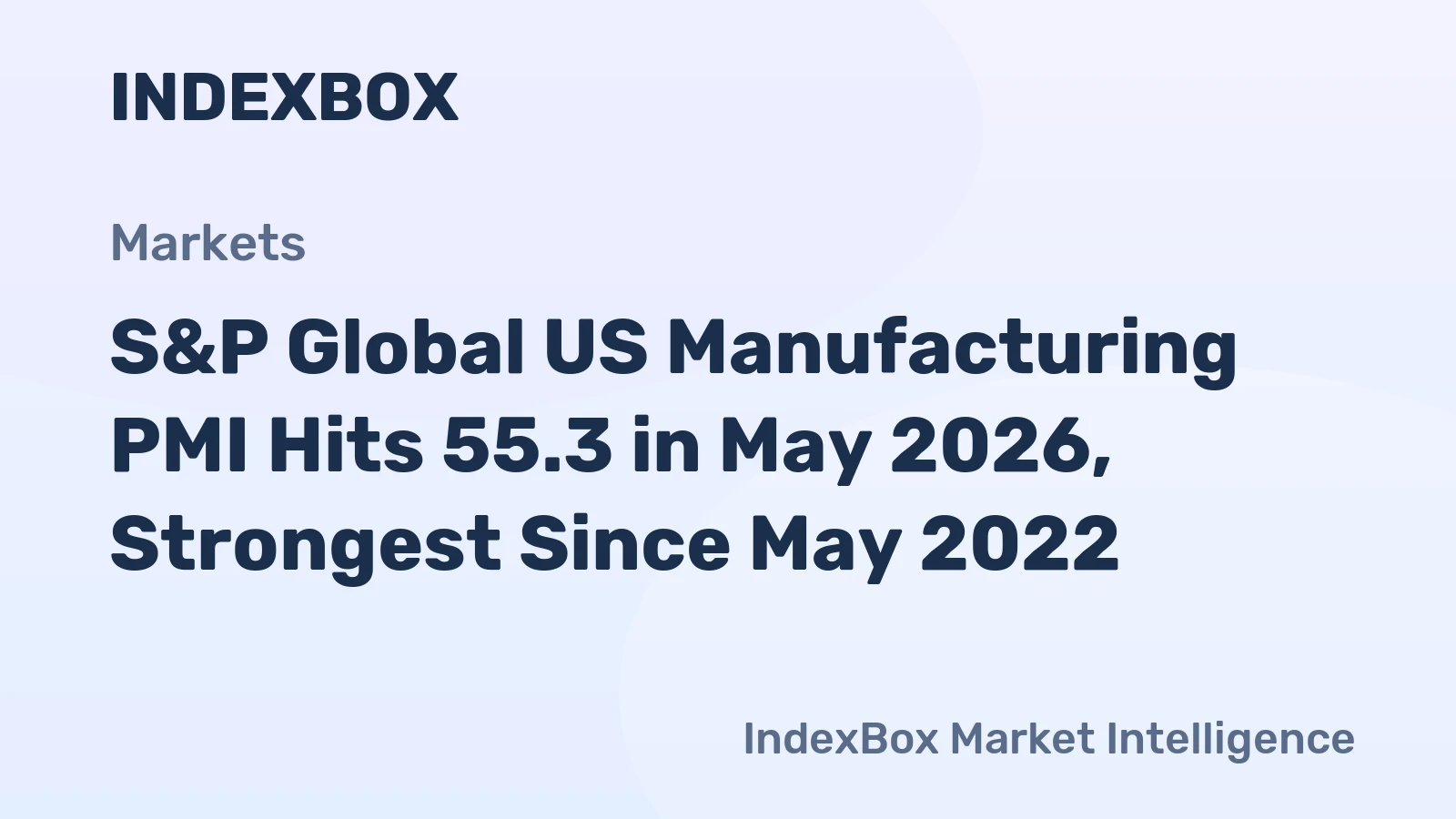
The ISM Manufacturing PMI measures growth or contraction in the sector based on surveys of purchase managers; a PMI above 50 indicates growth. After 12 months of sub-50 readings, the manufacturing index hit 52.6 in January 2026 and 52.4 in February. These are the highest readings since August 2022. They did remain negative through 2025, a point much noted by tariff critics, who now seem strangely silent on the potential import of such a positive turn. S&P Global’s U.S. Manufacturing PMI, for its part, was consistently positive in both 2025 and early 2026 after trending negative in 2024, and seems to have therefore been ignored by the pundits.

Furthermore, the industrial production index is at its highest level since 2019, and has been on an upward trend since November 2024. Manufacturing output has been on an upward trend since 2025 as well, versus a downward trend in the preceding years. The counter-trend spike in demand for manufacturing labor indicates a sector eager to grow. The sector is responding to that pressure with a counter-trend spike in productivity. Manufacturing productivity increased 2 points in 2025—the largest annual increase since 2010, as the BLS helpfully highlights in its March 2026 report. This is healthy; increasing pressure to get better at making things is a key element of a sensible reindustrialization agenda.

None of this compares favorably with the shallow argument that tariffs are destroying American manufacturing. They clearly are not. What seems more likely is that, upon discovering that American manufacturing is not in the unambiguous freefall they predicted, critics have cottoned to a bad argument instead.

There are many quite reasonable criticisms to make about the current trade regime’s relationship to manufacturing. Some we at American Compass have made ourselves. One is that tariffs are insufficient on their own to achieve the desired scale of revitalization, and that when imposed without a comprehensive suite of other policy measures (public-private financing for critical industry and real workforce development solutions, to name just two), they create more pain than needed for less upside than intended. Another is that tariffs implemented in a haphazard, opaque, and unpredictable manner make it harder for manufacturers to invest than necessary, thus offsetting some of the potential gains tariff pressures produce. But these criticisms come from within the frame that tariffs can work, as the data is indicating they can.

Those opposed to tariffs in principle, on the other hand, are stuck grasping at any data that might uphold their narrative that tariffs cause nothing but harm. The real irony, of course, is that when a massive and precipitous decline in American manufacturing jobs really did indicate a crisis in the sector, the free trade absolutists were the first to remind the public that economic transformation takes time, and that painful tradeoffs would be worth it in the long run.

They were wrong; their version of the long run was even worse. Here, however, we seem headed in the right direction. And at the very least, the economists who lectured the American people about the wisdom of achieving general equilibrium over multiple generations through free trade, despite the pain along the way, should refrain from judging an alternative policy a failure because a negative job trend didn’t turn positive overnight.

Leave a comment

Free Training

Source link

Kanthal expands US manufacturing footprint with North Carolina service centre to meet electrification demand


Kanthal has strengthened its position in advanced manufacturing with the inauguration of a new service centre in Concord, North Carolina, aimed at scaling production and deployment of high-temperature electric heating technologies.

The investment reflects growing demand from sectors including electronics, glass and steel, where manufacturers are seeking to electrify heat-intensive processes and reduce reliance on fossil fuels. At the centre of this shift is Kanthal’s Globar® silicon carbide heating element technology, which enables industrial heating applications of up to 2,950°F.

By replacing combustion-based systems, these electric heating elements offer manufacturers a pathway to lower emissions, improved energy efficiency and tighter process control, factors that are becoming increasingly critical as industry faces mounting pressure to decarbonise.

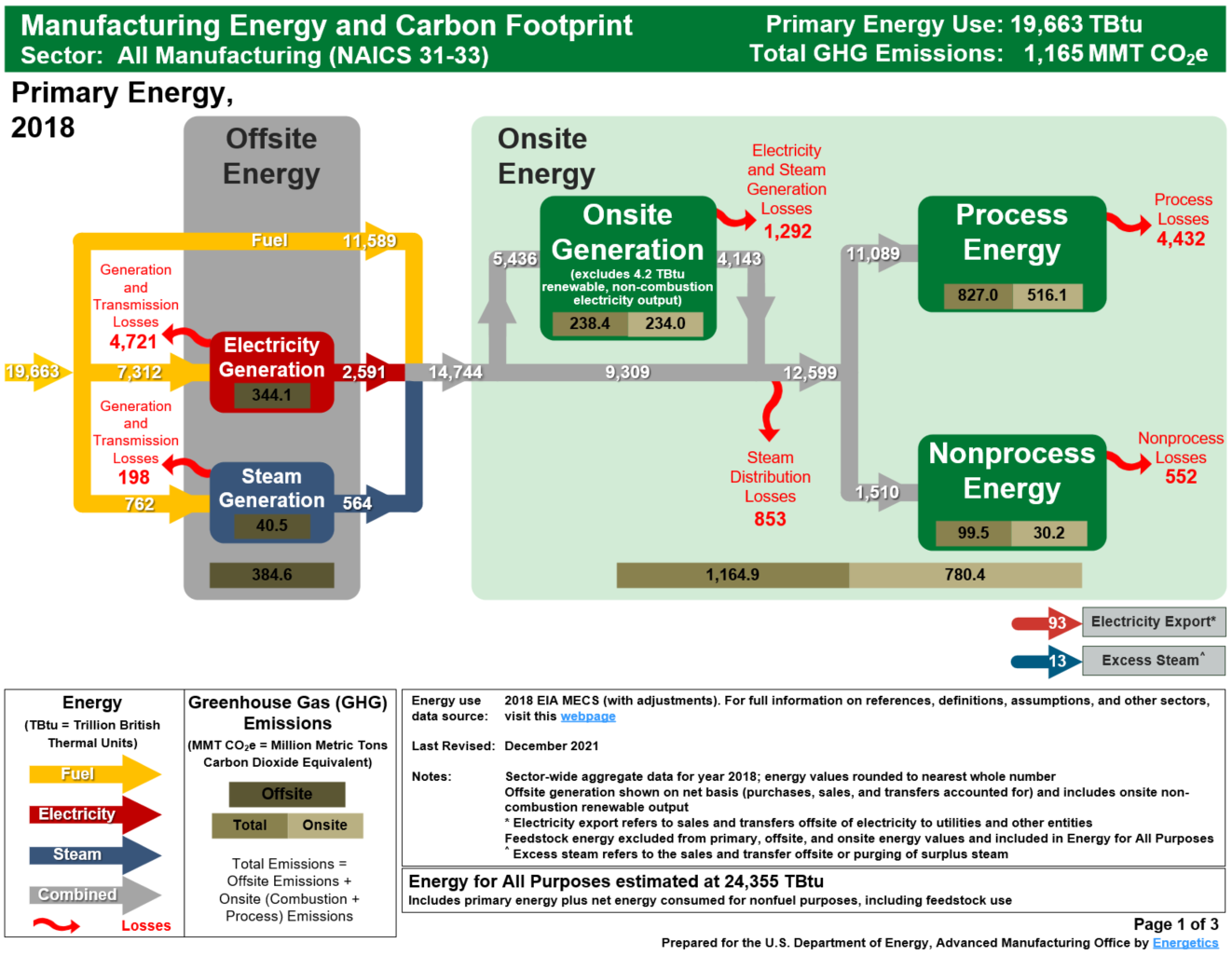
According to the Congressional Budget Office, combustion emissions account for 573 million metric tonnes, or 75% of total emissions in the manufacturing sector. Electrification of industrial heat is therefore seen as a key lever in reducing the sector’s carbon footprint.

The Concord facility will play a dual role in both manufacturing and service delivery. In addition to producing a range of heating solutions—including metallic and Fibrothal® elements—the site now supports local supply of Globar® components, which were previously manufactured and shipped exclusively from Kanthal’s production hub in Perth, Scotland.

Robert Stål, President of Kanthal, said the move builds on the company’s long-standing presence in the U.S. market.

“We have served the U.S. market since the 1930s.  We are already supporting our customers from Concord with a broad portfolio, and adding Globar® to the mix allows us to leverage existing infrastructure. The opening of our Concord service center is the next step in strengthening our local presence in the region which is experiencing a surge in advanced manufacturing.”

– Robert Stål, President of Kanthal.

The new centre is part of a broader $11m investment programme, which also includes a significant expansion of the Perth facility. Upgrades there include an additional 19,000 square feet of manufacturing space, new equipment and an optimised production layout. Together, the two sites are expected to increase overall production capacity by around 40%.

Beyond capacity gains, the Concord site introduces new manufacturing flexibility. Enhanced production technologies enable the facility to tailor heating element configurations to specific furnace designs and customer order cycles, improving responsiveness across quoting, production and delivery.

Simon Lile, President of Kanthal’s Heating Systems business unit, said the upgraded operation is designed to align more closely with U.S. customer requirements, reducing lead times and enabling more agile manufacturing support.

The expansion follows Kanthal’s 2022 consolidation of its U.S. operations into the Concord site, creating a centralised, state-of-the-art manufacturing and distribution hub. With the addition of Globar® production capabilities, the facility now serves as a critical node in the company’s global manufacturing network, supporting both regional demand and the broader shift toward electrified industrial processes.

Free Training

Source link

UCB to Invest $2 Billion in Georgia, Establish First U.S. Manufacturing Facility


Georgia seal

ATLANTA – March 24, 2026 – Governor Brian P. Kemp today announced that global biopharmaceutical giant UCB, Inc. is planning a significant investment of $2 billion in Georgia to establish its first U.S. pharmaceutical biologics manufacturing facility. The investment will generate 330 new jobs over the next several years at the Rowen Foundation’s state-of-the-art, 2,000-acre science and learning campus in Gwinnett County.

“When we met with UCB leadership earlier this year in Belgium, we discussed how the Peach State would be the right partner for their visionary plans in the U.S. that will benefit both patients and hardworking Georgians,” said Governor Brian Kemp. “UCB’s announcement is also a significant milestone for our life sciences industry, representing one of the largest investments in state history and establishing both the Rowen facility and Georgia as a true hub of innovation in this field.”

A global biopharmaceutical company based in Belgium, UCB’s North American headquarters are located in Smyrna and currently support more than 400 jobs. UCB’s expertise spans neurology and immunology.

“This decision reflects our confidence in UCB’s long-term growth and our deep-rooted commitment to the United States,” said Jean-Christophe Tellier, CEO of UCB. “By investing in Georgia, where our U.S. headquarters have been based for more than three decades, we are strengthening our biologics manufacturing capabilities, supporting our innovation pipeline, and creating high-quality jobs in a state that offers outstanding talent, a strong manufacturing tradition, and an ecosystem designed for sustainable, long-term success. This project is expected to generate approximately $5 billion in total economic impact, reflecting the broader value it will create for the region and its communities.”

UCB’s new manufacturing footprint will be located at Rowen, serving as an anchor tenant for this 2,000-acre planned community in metro Atlanta designed to foster collaboration, knowledge sharing, and innovation. The cutting-edge campus will use a digital-first approach by leveraging AI, robotics, and automation while also prioritizing efficiency in the use of any natural resources.  

“We are thrilled that UCB has chosen Gwinnett County to advance its global operations and pioneering innovations,” said Chairwoman Nicole Love Hendrickson, Gwinnett County Board of Commissioners. “An investment of this magnitude was exactly what we envisioned when we committed to establishing Rowen as a hub for collaboration and discovery. As one of the most dynamic and diverse counties in the nation, Gwinnett connects UCB to a highly skilled, globally connected talent pool. UCB’s decision to invest here makes clear what industry leaders increasingly recognize: Gwinnett County is a partner in progress, committed to world-class infrastructure, premier services, and quality of life that support continued growth and success.”

“UCB’s decision to locate their new manufacturing operation in Gwinnett County is a testament to the strength of our entire region to support the growth of the life sciences industry,” said Katie Kirkpatrick, President and CEO of the Metro Atlanta Chamber. “UCB’s innovation, talent, and strategic investment show that metro Atlanta is not just a hub for life sciences today, but a place where the breakthroughs of tomorrow are taking shape.”

Project Director EJane Caraway represented the Georgia Department of Economic Development’s (GDEcD) Global Commerce team on this competitive project in partnership with Partnership Gwinnett, Metro Atlanta Chamber, Georgia Quick Start, and Georgia Power.

“For more than a century, UCB has been a leader in biopharmaceutical innovation,” said GDEcD Commissioner Pat Wilson. “Georgia’s growing life sciences ecosystem and collaborative approach to economic development connect companies with world-class partners in research, education, logistics, and infrastructure. Together with our focus on being the Top State for Talent, it’s why innovators like UCB choose Georgia to advance discoveries from R&D to real-world impact.”

About UCB

UCB, Brussels, Belgium (www.ucb.com) is a global biopharmaceutical company focused on the discovery and development of innovative medicines and solutions to transform the lives of people living with severe diseases of the immune system or of the central nervous system. With approximately 9,000 people in approximately 40 countries, the company generated revenue of €7.7 billion in 2025. UCB is listed on Euronext Brussels (symbol: UCB). Follow us on Twitter: @UCB_news.

Free Training

Source link

USPTO Director Issues Guidance Favoring Small Businesses and U.S. Ties in IPRs and PGRs | Fitch, Even, Tabin & Flannery LLP


On March 11, USPTO Director John Squires issued a memorandum encouraging small businesses that have been sued for infringement and companies with significant manufacturing investments in the United States to identify themselves in all inter partes review (IPR) and post-grant review (PGR) petitions. This move is intended to assist the Patent Trial and Appeal Board (PTAB) in protecting domestic interests.

Since Director Squires assumed sole authority over institution of IPR and PGR proceedings on October 20, 2025, institution rates have declined significantly. In response to concerns that this decline has had a negative effect on American manufacturers and small businesses, the Director’s memorandum encourages petitioners to identify the following, which may be taken into account in determining whether to institute IPR and PGR proceedings:

  • the extent to which products accused of infringement are manufactured in the U.S. or relate to investments in U.S. manufacturing
  • the extent to which competing patent owner products are manufactured in the U.S.
  • whether petitioner is a small business that has been sued for infringement under the patent at issue

This change in procedure took place immediately and is a response to the concerns of American manufacturers and small businesses. While acknowledging that the America Invents Act (AIA) requires the Director to consider the effect of institution standards on the economy and the integrity of the patent system, Director Squires specifically noted that many of the most frequent users of IPR and PGR proceedings are large companies that have taken no significant steps to invest in U.S. manufacturing.

In view of this memorandum, small businesses and companies with significant investments in U.S. manufacturing that have been accused of infringement in parallel U.S. proceedings should emphasize relevant economic factors up-front in any IPR and PGR petitions that they file. This includes, but is not limited to, existence of U.S. manufacturing facilities owned or utilized by the petitioner, investments in U.S. manufacturing, employment or subcontracting to U.S. citizens, the patent owner’s lack of ties to U.S. manufacturing and other U.S. industries, and any facts tending to show that the petitioner is a small business (including but not limited to qualification of small entity status for purposes of USPTO fee payments).  

Free Training

Source link

FANUC America Announces $90 Million Investment to Create Production-Ready Capacity for Robot Manufacturing in the U.S.


ROCHESTER HILLS, Mich., March 24, 2026 /PRNewswire/ — FANUC America, a global leader in robotics and automation systems, today announced plans for a $90 million investment to acquire property and construct a new 840,000 sq. ft. facility in Michigan providing production-ready space for the potential expansion of the company’s existing U.S.-based manufacturing capabilities for robots.

FANUC America, a global leader in robotics and automation systems, has announced plans for a $90 million investment to acquire property and construct a new 840,000 sq. ft. facility in Michigan, providing production-ready space for the potential expansion of the company’s existing U.S.-based manufacturing capabilities for robots.

FANUC America, a global leader in robotics and automation systems, has announced plans for a $90 million investment to acquire property and construct a new 840,000 sq. ft. facility in Michigan, providing production-ready space for the potential expansion of the company’s existing U.S.-based manufacturing capabilities for robots.

Targeted for completion in late 2027, this strategic project is expected to add 225 jobs. This expands FANUC America’s engineering capacity and advanced manufacturing capabilities to support growing demand for automation solutions across North America, including physical AI, virtual commissioning and digital-twin technologies.

“This investment builds on FANUC America’s Michigan manufacturing footprint, which has included producing robots for paint application domestically for more than four decades,” said Mike Cicco, President and CEO, FANUC America. “By expanding its U.S. presence, FANUC America will strengthen domestic manufacturing, improve responsiveness to customer needs, and support industries that rely on automation to stay competitive.”

With this announcement, FANUC America will have invested nearly $300 million in multiple new facilities, increased the company’s footprint to 3 million sq. ft. and created more than 700 jobs in the United States since 2019.

“FANUC America is committed to supporting U.S. reindustrialization by delivering state-of-the-art automation technologies to customers and broadening access to advanced manufacturing workplace training services,” Cicco said. “The newly expanded FANUC Academy—opening in Auburn Hills, MI, later this year—will become the largest robotics and automation skills-development center in the United States, helping address the national manufacturing skills gap, rising demand for automation talent, the shift toward AI-enabled robotics and the country’s overall competitiveness.”

About FANUC America Corporation 
FANUC America Corporation, a subsidiary of FANUC CORPORATION in Japan, provides industry-leading CNC systems, robotics and ROBOMACHINEs. FANUC’s innovative technologies and proven expertise help manufacturers maximize efficiency and maintain a competitive edge.

FANUC America is headquartered at 3900 W. Hamlin Road, Rochester Hills, MI 48309, and has facilities throughout North and South America. For more information, please call: 888-FANUC-US (888-326-8287) or visit our website: www.fanucamerica.com . Also, connect with us on YouTube, X, Facebook, LinkedIn and Instagram.

Media Contact:
[email protected]

SOURCE Fanuc America Corporation


Free Training

Source link

US manufacturing output rises marginally in February


WASHINGTON, March 16 (Reuters) – U.S. factory production ‌increased marginally in ‌February as strength in ​motor vehicle output was offset by weakness in machinery, data ‌showed on ⁠Monday.

Manufacturing output rose 0.2% last month ⁠after an upwardly revised 0.8% gain ​in January, ​the ​Federal Reserve said.

Economists ‌polled by Reuters had forecast production for the sector, which accounts for 10.1% ‌of the economy, ​rising ​0.1% ​after a previously ‌reported 0.6% rise ​in ​January. Production at factories advanced 1.3% ​year-on-year ‌in February.

(Reporting by Lucia ​Mutikani; Editing by ​Andrea Ricci)

Free Training

Source link

Trump’s promised ‘manufacturing boom’ couldn’t save these Whirlpool jobs


New York
 — 

The US has lost thousands of manufacturing jobs over the last year. Beverly Dawson’s family was among them.

Dawson was laid off this month at Whirlpool’s refrigerator factory in Amana, a small town in eastern Iowa. Her son’s offer to work full-time at the plant when he graduates from college in a few semesters was also pulled. Her husband was the only one to survive the latest round of layoffs.

At the Amana plant, the hope of a stable future building appliances in the town that introduced America’s first side-by-side refrigerator is dimming. The factory’s workforce has been cut by more than half over the last few years as Whirlpool expands production in Mexico.

“You have generations working at the Amana plant. People’s parents and grandparents,” Dawson, 48, said. “It’s a central part of the community and was a good, solid place to work.”

Dawson is one of more than 100,000 American manufacturing workers who have lost their jobs since President Donald Trump entered office last year. Trump as a candidate promised a “manufacturing boom” and once in office launched broad global tariffs as the way to revitalize factory production in the United States.

Exterior of the Whirlpool Amana factory. More than 100,000 American manufacturing workers have lost their jobs since President Donald Trump entered office last year.

A 'Save Our Jobs at Whirlpool' rally, on March 6 in Amana. IAM Union said Whirlpool has shifted production to Mexico in recent years.

The Whirlpool factory in Amana. Whirlpool has said Trump's trade policies level the playing field for Whirlpool and other US manufacturers.

Despite the administration’s push, the decades-long decline in manufacturing has marched on. The US economy has shed more than 7.5 million manufacturing jobs since a peak in 1979, driven by global competition, automation and exchange rates.

Whirlpool has invested hundreds of millions of dollars in Mexico to manufacture refrigerators at two factories in recent years, said the International Association of Machinists and Aerospace (IAM), which represents workers at the Amana plant.

IAM opposes Trump’s broad tariffs, fearing they would disrupt US production and cause layoffs.

“Whirlpool advertised quite often that they’re the only American manufacturer of refrigerators and tariffs will only be beneficial,” Dawson said. “I don’t understand how that reconciles with opening up more in Mexico.”

Whirlpool, which also owns the KitchenAid, Maytag and Amana brands, supports Trump’s tariffs.

The Michigan-based company has said the import taxes give it an advantage. That’s because most of the appliances it sells in the United States are produced domestically at 10 US plants, in contrast to its rivals in Asia like LG and Samsung.

The administration’s “trade policies are critical to closing trade loopholes and leveling the playing field for Whirlpool and other US manufacturers,” Whirlpool spokesperson Chad Parks said in a statement to CNN.

Whirlpool said it’s making “difficult but necessary changes” to the plant in Amana “all with the goal of keeping Amana competitive and a viable manufacturing presence in the community for the long term.”

Whirlpool said it’s committed to American manufacturing, pointing to a recent $300 million investment in Ohio to build washing machines.

But the pull to produce in lower-cost countries like China and Mexico remains strong for all US manufacturers. The power of tariffs has not been enough to make US manufacturing competitive with these countries. Trump’s snap decisions on tariff rates have also chilled companies’ long-term investment and hiring plans. (The White House did not respond to CNN’s request for comment.)

A Whirlpool refrigerator on display at Lowe's.

Meanwhile, tariffs have hiked costs. For example, Trump’s 50% tariffs on imported steel and aluminum increased Whirlpool’s costs by $300 million last year. The company also paid more for appliance components that are only made overseas.

“Supply chains are integrated across countries. They can’t be changed overnight,” said Susan Houseman, an economist at the Upjohn Institute for Employment Research. “To think companies can turn on a dime and rearrange supply chains or make massive investments in this country is unrealistic.”

Big-ticket refrigerators and dishwashers are also going untouched at stores as fewer people move or buy new homes. Whirlpool’s sales dropped 6.5% last year and its stock declined around 35%.

Tariffs have “done little to benefit” the home appliance sector, said Jason Miller, a professor of supply chain management at Michigan State University.

Since Trump took office last year, the tariff rate on major home appliances has increased from 5% to 16.4% in December. That rate isn’t high enough for domestic manufactures to benefit, especially when steel and aluminum prices have spiked, Miller said.

“Production didn’t increase in 2025 and payrolls fell,” he said.

But Whirlpool’s pledge to keep jobs in Amana rings hollow to laid off workers like Dawson. When she goes into a nearby Lowe’s, she’s frustrated to see Whirlpool refrigerators made in Mexico and China.

There is a long history of building home appliances in Amana, one of seven villages outside Cedar Rapids that were German communal societies until the Great Depression.

A general store in Amana, Iowa, selling bakery goods and Hotpoint appliances in 1961.

In 1934, Amana entrepreneur George Foerstner began making beer coolers. The business grew into the Amana household appliances’ brand — the first side-by-side fridge in the United States was introduced there in 1949 and the first bottom-freezer fridge came in 1957. Hollywood stars like Gary Cooper and Groucho Marx advertised Amana’s appliances in magazines and on the radio.

Raytheon, the inventor of the microwave oven, bought Amana a decade later as it pushed to bring microwaves to households around the country.

Whirlpool eventually acquired the plant in 2006, which is still an economic engine for the area and processes wastewater for the local community. Roughly 950 people work there.

The factory has had a “wide-reaching benefit for people around Amana,” said Sandy Freytag, who has worked there for more than 30 years. She worries that the layoffs will have a spillover effect on local businesses and the economy.

An Amana chrome Radarange microwave oven sits on a kitchen countertop in the 1970s.

“People don’t trust that the factory will stay open,” she said. “I hope I am very wrong.”

Dawson had hoped to work there for the rest of her career, but the 48-year-old mother of four is now sending out job applications to dozens of employers.

She’s currently competing in a tough labor market with a weaker safety net. Iowa in 2022 cut its unemployment insurance from 26 weeks to 16, and a federal program for workers who lost their jobs due to foreign trade has expired.

Her husband has taken on a second job and is now working seven days a week to help the family make ends meet. If she can’t find a new job soon, she plans to tap into her retirement savings.

“I’ve worked hard. I’ve been loyal. I’ve made things better, and that still isn’t enough for me to be successful,” she said.

Correction: A previous version of this article incorrectly stated the number of factories Whirlpool has in Mexico. Whirlpool has two refrigerator plants in Mexico and recently expanded its investments at them.

Free Training

Source link

Hadrian opens ‘Factory of the Future’ in Alabama


Hadrian has opened a new advanced manufacturing facility in Cherokee, Alabama to support U.S. Navy Columbia- and Virginia-class submarine programs. The site, known as Factory 4, is designed to mass-produce critical components and help accelerate submarine construction.


The 2.2 million square foot facility will operate as a highly automated “factory of the future,” producing parts, assemblies and finished products identified as key drivers of submarine production timelines. Increased output is expected to reduce bottlenecks and enable faster delivery of submarines.

The project is funded through a public-private partnership combining $900 million in U.S. Navy investment with more than $1.5 billion in private capital. The total investment of over $2.4 billion reflects efforts to strengthen the maritime industrial base and expand production capacity.

The facility is also expected to create up to 1,000 high-paying jobs, supporting regional economic growth while addressing workforce shortages in the defence sector. Hadrian said its automated manufacturing platform will enable faster workforce training and improve production efficiency.


The opening comes as the Navy seeks to address long-standing capacity constraints in submarine construction. By shifting component manufacturing to dedicated facilities, shipyards can focus more resources on assembling submarine modules.

“Both chambers of Congress delivered the generational investment required to rebuild our shipbuilding capacity, bring those jobs back to Alabama and put American skilled laborers back at the center of American strength,” said Secretary of the Navy John C. Phelan. “I look forward to building on this progress together in the months ahead, because we are just getting started. This factory is the first of three facilities designed to address the most critical bottlenecks in the maritime industrial base.”

Officials described the approach as part of a broader strategy to increase production rates through distributed manufacturing. “We call this distributed shipbuilding, and it’s a key tenet of our plan to achieve required shipbuilding production rates,” said Jason Potter, performing the duties of Assistant Secretary of the Navy for Research, Development and Acquisition.

“These factories of the future might be several states away from the yards where the ships are ultimately built, but by taking on this work they reduce bottlenecks, having a profound effect on the speed of delivery,” he added.


Hadrian said the facility will reach full production capacity within 18 to 24 months, following qualification processes and initial production phases. By the third year, the site is expected to sustain operations through regular delivery of submarine components.

Company leadership said the project reflects a coordinated effort between government and industry to expand manufacturing capacity. “The Administration has set the strategy, Congress has cleared a path, the Navy has set the requirement, and Secretary Phelan has been unambiguous that private-sector partnership is foundational, not optional, to deter threats to national security. Industry has to answer that call with real execution, and the window to do it is now. We are proud to be part of the coalition building that capacity, and this factory is Hadrian’s commitment to meeting this moment,” said Chris Power, founder and CEO of Hadrian.

Lawmakers attending the opening highlighted the strategic and economic impact of the investment. “This investment marks a major step forward in strengthening our nation’s defense industrial base while bringing high-quality jobs and economic growth to Northwest Alabama,” said Representative Robert Aderholt.

Officials said the facility is part of a wider effort to modernise U.S. manufacturing and strengthen long-term defence readiness. The project is expected to play a key role in increasing submarine production capacity and supporting national security objectives.


Free Training

Source link