
Op-ed: Why Made in America still matters to a global manufacturing market


Excel Dryer Executive Vice President and COO, William Gagnon, argues that the future of US manufacturing will depend not on chasing the lowest costs, but on investing in domestic production, skilled people and long-term resilience. In this exclusive op-ed for The Manufacturer, he explains why “Made in America” still has global significance, and what manufacturers on both sides of the Atlantic can learn from it.

As the United States approaches its 250th anniversary, American manufacturers are facing an important question: what should “Made in America” mean in a global economy?

It is a question with relevance well beyond the US. Manufacturers in North America, the UK and other advanced economies are weighing similar pressures, from overseas production and tariffs to supply chain resilience, labour availability, quality control and long-term competitiveness.

For many companies, offshore production became the default model decades ago. Lower labour costs and expanded supplier networks promised short-term savings. For others, keeping manufacturing close to home remained a deliberate business decision. At Excel Dryer, that decision has been central to who we are. We are a Massachusetts-based manufacturer, and we have continued to manufacture in the US while many competitors moved production overseas. That choice has shaped our products, our workforce, our supplier relationships and our ability to serve customers around the world.

Domestic manufacturing is not the easiest path. It requires investment in equipment, training, skilled labour, supplier partnerships and continuous improvement. It requires patience and a long-term view of the business. The value becomes clear over time through stronger quality control, greater flexibility and closer alignment between engineering, production and customer needs.

For us, the business case starts with quality. When product development, manufacturing and leadership are closely connected, teams can solve problems faster and make improvements with greater precision. Feedback from the production floor reaches engineering quickly. Product testing is more practical. Customer insight can be turned into measurable improvements.

That matters in any sector. It is especially important for products used in high-traffic public spaces where reliability, hygiene, sustainability and cost-effectiveness are priorities. Hand dryers are installed in airports, stadiums, schools, healthcare facilities, restaurants and commercial buildings. They have to perform consistently, reduce maintenance demands and support the operating goals of each facility.

The past several years have also reinforced the importance of resilience. Supply chain disruption exposed the risk of depending too heavily on distant production networks. Delays, shortages and rising transport costs forced many manufacturers to reassess where and how their products are made.

Manufacturing in the US does not remove every challenge, but it gives companies greater visibility and control. It can shorten communication lines, strengthen supplier relationships and reduce exposure to disruption. For customers, that can translate into more reliable delivery, stronger support and confidence in the company behind the product.

The global market still matters. Excel Dryer serves customers in the US and internationally, including in the UK. Our products are installed at major British venues such as Heathrow Airport and Wembley Stadium, where high-traffic washrooms require dependable, efficient and hygienic solutions. Those installations reflect an important point for manufacturers on both sides of the Atlantic: strong domestic production can support global growth.

A product made in America can compete in international markets when it is built around performance, quality and innovation. Domestic manufacturing should not be seen as a retreat from global trade. It can be a foundation for it.

There is also a workforce story that deserves more attention. Manufacturing creates skilled careers and supports local economies. It gives employees a direct role in building products used every day in facilities around the world. When companies invest in domestic production, they invest in technical knowledge, training and the next generation of manufacturing talent.

That will become increasingly important as the US approaches America250. The future of American manufacturing will need to be modern, efficient and globally competitive. It will require automation, sustainability, continuous improvement and a renewed commitment to workforce development. It will also require companies to make deliberate decisions about what they value over the long term.

For Excel Dryer, manufacturing in the US remains a smart business decision. It strengthens quality. It supports innovation. It improves supply chain resilience. It gives our workforce pride in what they build and gives customers confidence in what they choose.

As manufacturers in North America and the UK continue to navigate a changing global economy, the lesson is clear. The lowest short-term cost does not always create the strongest company. Long-term value depends on quality, reliability, skilled people and the ability to adapt.

“Made in America” still matters. At its best, it represents more than where a product is assembled. It represents accountability, investment, innovation and confidence in the future of manufacturing.

About the author
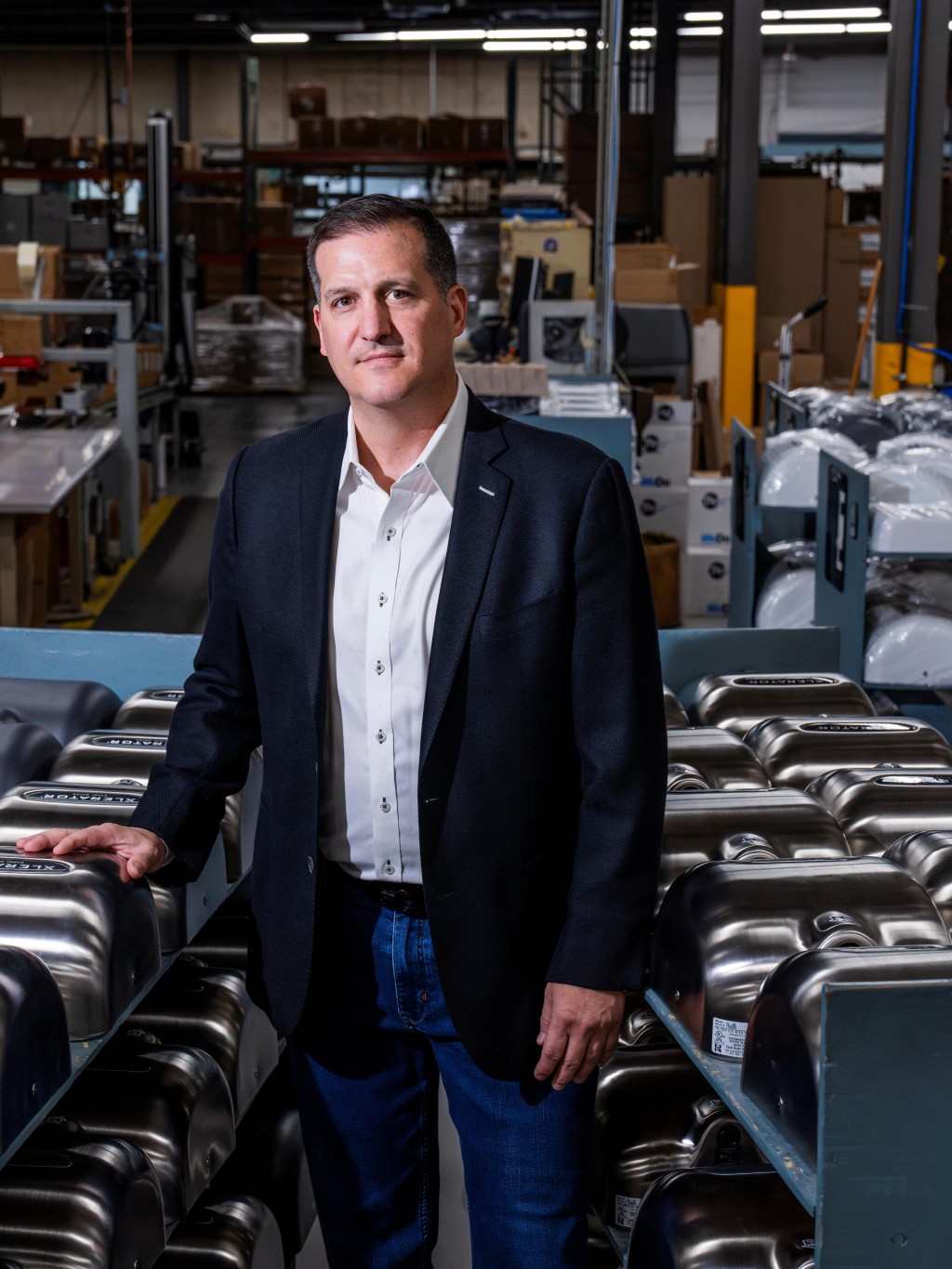
William Gagnon is executive vice president and COO of Excel Dryer, Inc., where he helps lead operations, product innovation, global growth and strategic initiatives for the family-owned manufacturer. With more than 20 years of industry experience, Gagnon has played a key role in advancing the XLERATOR® Hand Dryer and establishing the high-speed, energy-efficient hand dryer category. His leadership supports Excel Dryer’s continued focus on hygienic, sustainable and cost-effective hand drying solutions for facilities worldwide.

 

Free Training

Source link

J&J Invests Over $1 Billion to Boost Vision Care Manufacturing in Florida 


New Brunswick-based Johnson & Johnson recently announced an investment of more than $1 billion in Jacksonville, Florida to strengthen its Vision operations by scaling its U.S. manufacturing, packaging and distribution capabilities. 

The investment includes construction of a new state-of-the-art distribution facility by 2028, alongside advanced manufacturing and packaging technologies to meet growing demand for Johnson & Johnson’s Acuvue brand contact lenses. The company currently manufactures more than 1.7 billion Acuvue contact lenses for U.S. patients. 

“This investment reinforces our long-standing conviction that advanced manufacturing in the United States is essential to delivering innovative, high-quality healthcare solutions to patients at home and around the world,” Johnson & Johnson Chair and CEO Joaquin Duato said June 15. 

Since establishing its Jacksonville presence in 1981, Johnson & Johnson has built a strong foundation for economic growth in the region. The latest $1 billion investment supports 3,500 Jacksonville employees and strengthens Johnson & Johnson’s $6 billion annual economic impact in Florida, the company said. 

The Jacksonville facility is part of Johnson & Johnson’s previously announced $55 billion U.S. investment in manufacturing, research and development, and technology through early 2029. Other new manufacturing facilities include a $2 billion biologics plant in North Carolina, and a $1 billion next-generation cell therapy manufacturing facility in Pennsylvania. 

“I am thrilled to see this major $1 billion investment in our state, funding new state-of-the-art facilities and supporting jobs in the Jacksonville area,” said U.S. Senator Ashley Moody (R-FL). “Companies are moving to Florida in droves, and massive investment such as this highlights Florida as the nation’s top state to grow your family and your business.”  


Free Training

Source link

Bull Moose Tube to Acquire Hanna Steel in Third U.S. Manufacturing Expansion


Bull Moose Tube Company has agreed to acquire Hanna Steel, a producer of structural and mechanical steel tubing with facilities in Alabama and Illinois.

Most industrial buy-and-build strategies come with a clock. This one does not.

More than fifty years ago, Lord Swraj Paul founded a steel tube business in Britain called Natural Gas Tubes. That company eventually became Caparo Group, a global industrial enterprise spanning steel, automotive components, and engineered products. Today, the family he founded is once again expanding through steel tube manufacturing—this time in the United States.

The latest example is Bull Moose’s agreement to acquire Hanna Steel, a producer of structural and mechanical steel tubing. The transaction, expected to close in the third quarter of 2026, extends what has become a steady expansion strategy by the Paul family and its Caparo Group, one that has received little attention despite a growing series of investments in American manufacturing assets.

Founded in 1954, Hanna Steel manufactures structural and mechanical steel tubing used in commercial construction, infrastructure, and industrial applications. The company operates tubing facilities in Alabama and Illinois, a coil-coating operation in Alabama, and its own trucking business. Industry sources estimate annual revenue of approximately $80 million and employment of several hundred workers. Its Tuscaloosa facility alone spans more than 600,000 square feet.

Hanna Steel’s Tuscaloosa, Louisiana facility. Credit: Hanna Steel

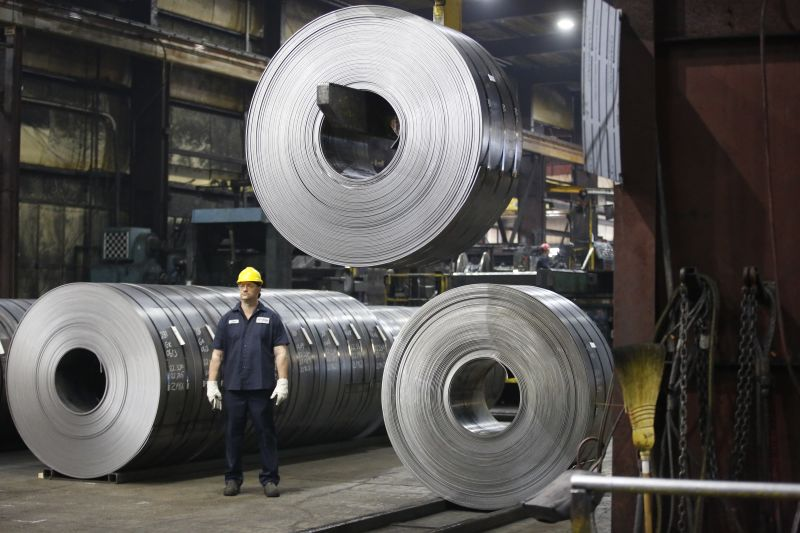
The acquisition of Hanna Steel marks the end of more than 40 years of Hanna family ownership, dating to 1984 when Pete Hanna purchased the company from his father, General Hanna, and expanded it into one of the nation’s largest independent producers of structural and mechanical steel tubing.

“The acquisition of Hanna Steel is a strong strategic fit for Bull Moose as we continue to expand our capabilities and enhance value for our customers,” said John Krupinski, chief executive officer of Bull Moose Tube. “Hanna adds complementary assets, experienced teams, a respected reputation and culture, along with a product portfolio that supports our long-term growth strategy.”

Bull Moose Tube Company was founded in 1962 and is headquartered near St. Louis in Chesterfield, Missouri. Today, the company operates seven manufacturing facilities across the United States and is one of North America’s larger producers of welded steel tubing, hollow structural sections, and mechanical tubing. Under the ownership of the Paul family, Bull Moose has grown into a business with annual production capacity exceeding one million tons.

Bull Moose Tube’s Elkhart, Indiana facility: Credit Bull Moose Tube
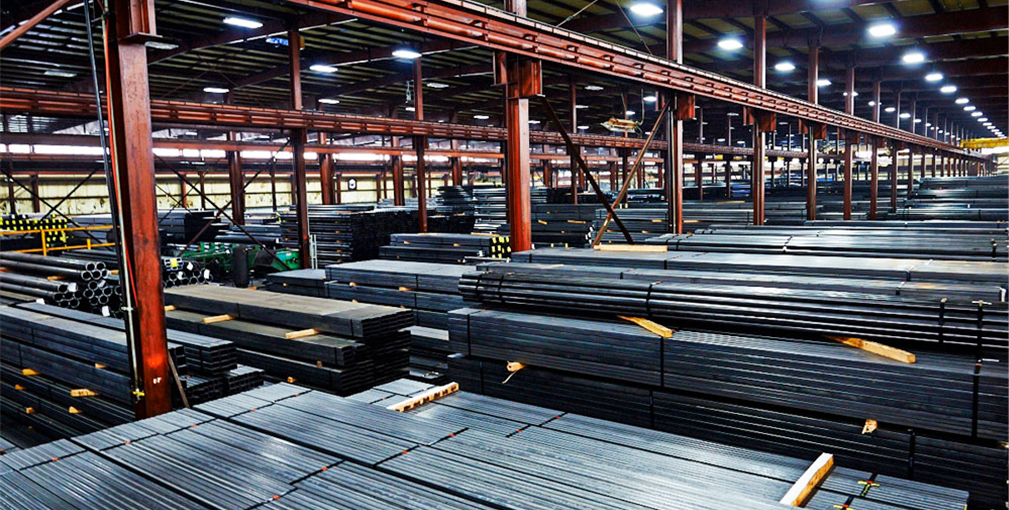
Bull Moose is owned by Caparo Bull Moose, the North American subsidiary of Caparo Group. Following Lord Paul’s death in August 2025, leadership of the family-controlled business passed to his son, Ambar Paul, who serves as chairman of Bull Moose Tube.

“We continue to assess and pursue strategic opportunities that strengthen Bull Moose Tube’s position as a best-in-class steel tube producer,” said Mr. Paul. “As our third major investment in recent years, Hanna Steel builds on a clear pattern of strategic expansion, adding depth to our manufacturing capabilities and reinforcing our commitment to long-term, sustainable growth.”

The Hanna acquisition follows Bull Moose’s September 2025 purchase of Ferrous85 from privately held Ferragon Corporation. The Sinton, Texas-based toll-processing business operates adjacent to Steel Dynamics’ steel campus and includes one of North America’s largest steel coil slitting operations, capable of processing coils weighing up to 105,000 pounds. The acquisition strengthened Bull Moose’s Texas manufacturing platform, which the company began building in 2021 with plans for a new hollow structural section and sprinkler pipe mill in Sinton.

Hanna Steel’s Tuscaloosa, Louisiana facility. Credit: Hanna Steel

The company also closed its Burlington, Ontario, manufacturing facility in 2025, consolidating production into its U.S. operations. Taken together, these investments point toward a strategy focused on increasing domestic manufacturing capacity and deepening exposure to the American industrial economy.

The timing is notable. Domestic steel demand continues to benefit from infrastructure spending, utility grid modernization, energy projects, manufacturing reshoring, and data center construction. Bull Moose participates in many of those end markets through its tubing and structural products businesses.

The broader steel tubing market remains fragmented despite decades of consolidation. Participants range from publicly traded producers to privately held regional manufacturers, creating ongoing opportunities for strategic buyers seeking additional capacity, geographic reach, and product breadth. Against that backdrop, Hanna Steel represents another building block in Bull Moose’s expansion strategy.

For the Paul family, Hanna Steel is the latest step in a strategy that has included new manufacturing capacity in Texas, the acquisition of Ferrous85, and a growing concentration of operations in the United States.

While most industrial buy-and-build programs are associated with private equity sponsors, Bull Moose is pursuing a similar path under family ownership and without the constraints of a traditional fund life.

Free Training

Source link

3 US Reshoring Stocks Backed By Domestic Manufacturing Demand


Supply chain resilience is back in the spotlight as U.S. policymakers push to reduce reliance on foreign suppliers and tighten rules around trade, technology, and sanctions. For investors, that shift could reshape where capital flows, which companies face extra scrutiny, and which ones stand to benefit from efforts to expand domestic capacity. To make sense of these changes, this article looks at three stocks from our U.S. Manufacturing and Industrial Reshoring screener that appear positively exposed to the latest policy signals. This may help you decide whether they deserve a closer look or a spot on your watchlist.

Atkore (ATKR)

Overview: Atkore is a U.S.-based manufacturer of electrical conduit, cable management, pipes, framing systems, perimeter security and related infrastructure products that are used to route and protect power and data across construction, industrial, infrastructure, alternative energy and government projects.

Operations: Atkore generates about US$2.0b from its Electrical segment and US$0.8b from Safety & Infrastructure, with the business heavily concentrated in the United States, which contributes roughly US$2.5b of revenue.

Market Cap: US$2.8b

Atkore sits at the heart of U.S. reshoring and electrification, supplying domestically manufactured electrical raceway and infrastructure products at a time when policymakers are pushing for more onshore capacity and tougher rules on imports. Management has highlighted that tariffs and supply chain shifts could help recapture conduit market share from overseas competitors, and the company is already closely tied to data centers, chip fabs, hospitals and solar projects. At the same time, investors need to weigh ongoing losses, legal settlement costs around PVC conduit, and signs of competitive pressure against a valuation that screens as relatively low on some metrics and a board that is described as experienced. For investors tracking U.S. manufacturing and infrastructure, Atkore is a stock that warrants a deeper look.

Atkore’s reshoring story, low-screening valuation, and exposure to data centers and solar projects could be hiding a bigger twist in the risk reward trade off. Start with the 2 key rewards and 2 important warning signs

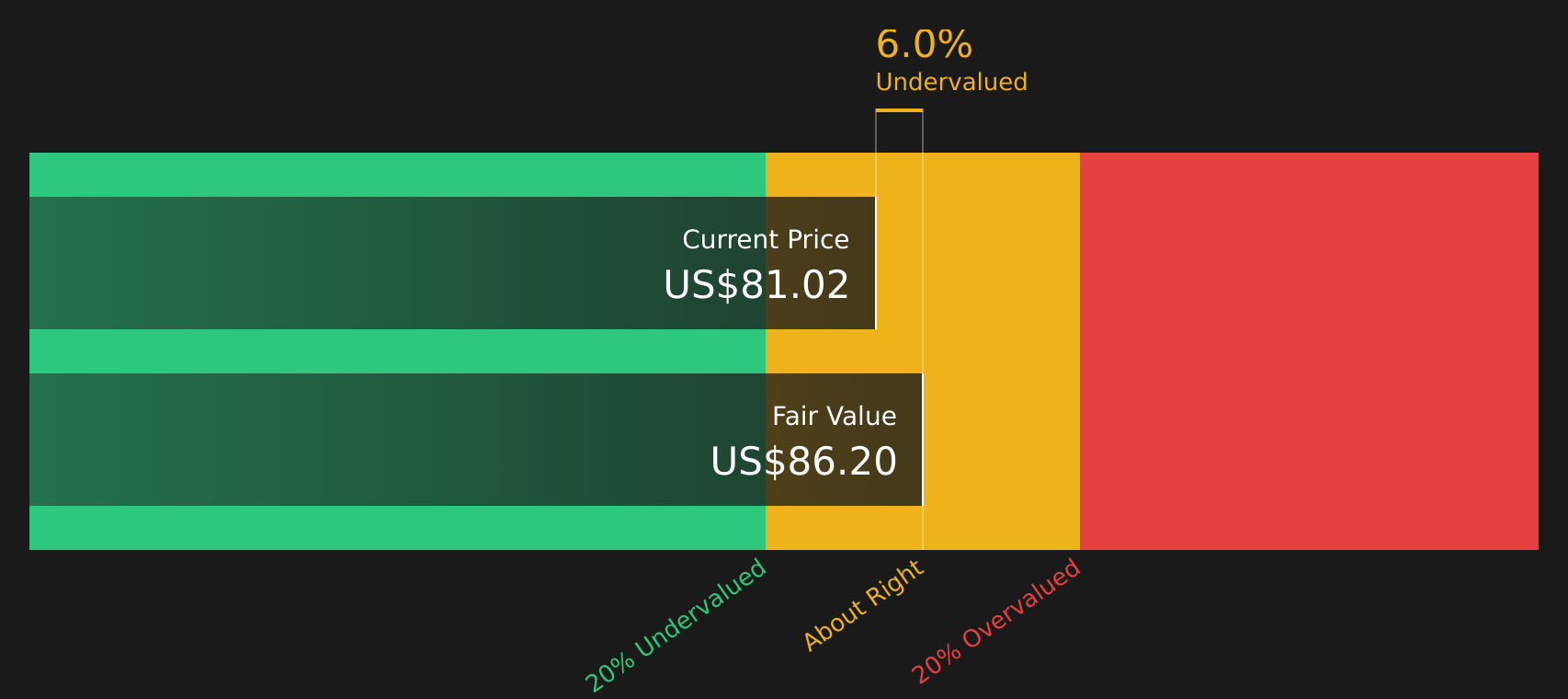
ATKR Discounted Cash Flow as at Jun 2026ATKR Discounted Cash Flow as at Jun 2026

Bowman Consulting Group (BWMN)

Overview: Bowman Consulting Group is a U.S. engineering and technical services company that helps design, plan, and manage critical infrastructure, from roads, ports, power systems, pipelines, and data centers to water, wastewater, and environmental projects, increasingly using digital tools such as GIS, AI-enabled studies, and digital twins.

Operations: Bowman generates about US$503.6m by providing engineering and related professional services to customers, with all reported revenue coming from the United States.

Market Cap: US$528.4m

Bowman Consulting Group gives investors focused exposure to the U.S. “build out” story, with a US$503.6m, fully domestic revenue base tied to transportation, power, data centers, defense, water and wastewater, and mining projects that align with Washington’s push for supply chain resilience and onshoring. Recent contract wins in ports, critical minerals, and utilities add to its backlog. Some analysts highlight the potential for higher-margin, technology-enabled services to become a larger contributor as they scale. At the same time, Bowman has reported losses in some periods and carries financing risk, with interest costs not yet comfortably covered by earnings, so execution on growth and margin expansion remains important. For investors tracking U.S. manufacturing and infrastructure, the key consideration is how to weigh the combination of policy support, contract momentum, and balance sheet risk when assessing the company.

Bowman Consulting Group’s contract momentum and fully domestic revenue base may be obscuring a more pronounced inflection point in its story, and the real tension sits inside the 3 key rewards and 1 important major warning sign

BWMN Discounted Cash Flow as at Jun 2026BWMN Discounted Cash Flow as at Jun 2026

Matrix Service (MTRX)

Overview: Matrix Service is an engineering and construction company that builds and maintains critical energy, power, storage and industrial infrastructure, including LNG and fuel storage tanks, utility substations, gas fired facilities and specialized assets for sectors such as hydrogen, mining and aerospace.

Operations: Matrix Service generates about US$420.0m from Storage and Terminal Solutions, US$282.9m from Utility and Power Infrastructure and US$144.9m from Process and Industrial Facilities, with most of its roughly US$847.5m in revenue coming from the United States.

Market Cap: US$392.5m

Matrix Service is closely aligned with U.S. supply chain resilience and energy security priorities, building LNG and NGL storage, peak shaving facilities and power infrastructure that support AI data centers, utilities and clean energy projects. The company has been moving from losses toward breakeven, with recent quarters showing improved sales and earnings. However, guidance has been trimmed as clients push projects out and permitting and weather delays shift revenue timing. A strong cash position and no debt provide some cushion, but funding risk from external liabilities, insider selling and execution issues on complex tanks remain factors to watch. For investors tracking U.S. industrial reshoring, the key question is whether this early stage turnaround in Matrix Service is being priced as cautiously as its project risks suggest.

Matrix Service’s early stage turnaround, cash on hand and zero debt are only half the story; the real tension sits inside the 3 key rewards and 1 important warning sign

NasdaqGS:MTRX Earnings & Revenue Growth as at Jun 2026NasdaqGS:MTRX Earnings & Revenue Growth as at Jun 2026

The three stocks covered here are only a starting point, and the full U.S. Manufacturing and Industrial Reshoring screener surfaced 18 more companies with equally compelling reshoring and domestic production narratives that could fit a range of investment styles. Use Simply Wall St to identify, filter, and analyze the specific catalysts and storylines that matter to you, so you can focus on the highest conviction opportunities across this theme.

Take Control of Your Investment Journey

If Atkore or any of these companies sound like a great opportunity, register for FREE with Simply Wall St and add your companies to a Watchlist to monitor the share price against the fair value the ideal entry point.
Once you’ve made your move, manage your holdings with our Portfolio Command Center that filters out the noise to deliver only the most critical, actionable updates.
Throughout your journey, our Community allows you to filter the best ideas from thousands of investor perspectives.
By uncovering hidden catalysts and risks early, you’ll accelerate your decision-making and stay one step ahead of the market.

Seeking Fresh Alternatives Before They Fly?

New themes are breaking out, funds are shifting, and under the radar for now stocks will not stay quiet for long. Scan these fresh ideas before the crowd and consider them while they are still early.

This article by Simply Wall St is general in nature. We provide commentary based on historical data
and analyst forecasts only using an unbiased methodology and our articles are not intended to be financial advice.
It does not constitute a recommendation to buy or sell any stock, and does not take account of your objectives, or your
financial situation. We aim to bring you long-term focused analysis driven by fundamental data.
Note that our analysis may not factor in the latest price-sensitive company announcements or qualitative material.
Simply Wall St has no position in any stocks mentioned.

New: Manage All Your Stock Portfolios in One Place

We’ve created the ultimate portfolio companion for stock investors, and it’s free.

• Connect an unlimited number of Portfolios and see your total in one currency
• Be alerted to new Warning Signs or Risks via email or mobile
• Track the Fair Value of your stocks

Try a Demo Portfolio for Free

Have feedback on this article? Concerned about the content? Get in touch with us directly. Alternatively, email editorial-team@simplywallst.com

Free Training

Source link

Argon & Co Appoints Lotfi Maroizy to Expand North American Manufacturing Practice


Argon & Co has appointed manufacturing and operations executive Lotfi Maroizy as a partner in its North American Manufacturing Practice, a move aimed at expanding the consulting firm’s capabilities as manufacturers accelerate investments in digital transformation, supply chain modernization and operational efficiency.

Based in Houston and aligned with the firm’s Atlanta office, Maroizy will lead the growth, strategy and execution of Argon & Co’s expanded manufacturing services across the United States. His appointment comes as industrial companies face mounting pressure to modernize operations, address workforce challenges and improve competitiveness through technology-driven transformation initiatives.

The addition reflects increasing demand among manufacturers for consulting support that combines operational expertise with digital capabilities. Across sectors ranging from consumer goods and chemicals to automotive and food production, companies are seeking ways to improve resilience, automate processes and optimize increasingly complex supply chains.

“We are thrilled to welcome Lotfi to our leadership team as we aggressively scale our North American Manufacturing Practice,” said Simon Clarke, managing partner at Argon & Co.

Maroizy brings more than two decades of experience leading large-scale operational, supply chain and manufacturing transformation programs. Throughout his career, he has worked with organizations undergoing significant change initiatives aimed at improving productivity, reducing costs and enhancing operational performance.

Prior to joining Argon & Co, Maroizy held senior leadership positions at EFESO Consulting, Riveron and Accenture. In those roles, he led consulting teams responsible for implementing complex transformation programs across a range of industries. According to the company, initiatives he helped oversee generated more than $1 billion in cumulative cost savings and revenue improvements.

His industry experience spans several sectors that continue to face rapid technological and competitive shifts, including consumer products, food and beverage, chemicals, pulp and paper, and automotive manufacturing. Those industries are increasingly investing in smart factory technologies, advanced analytics, automation and digital supply chain tools as they respond to changing customer expectations and evolving market conditions.

At Argon & Co, Maroizy will focus on expanding the firm’s go-to-market strategy by integrating traditional operational improvement methodologies with digital manufacturing capabilities. The company views this combination as increasingly important as manufacturers seek practical solutions that deliver measurable business results rather than standalone technology deployments.

“Argon & Co’s hands-on, ‘roll-up-your-sleeves’ culture perfectly aligns with my philosophy on transformation,” Maroizy said. “True operational change isn’t born in a silo; it happens alongside the client on the shop floor.”

He added that the firm’s expanded supply chain, operations and digital capabilities will help manufacturers address legacy operational challenges while adopting automation and modern manufacturing technologies designed to improve profitability and market competitiveness.

The appointment comes at a pivotal time for the North American manufacturing sector. Many companies are balancing investments in automation and artificial intelligence with efforts to strengthen domestic production capabilities, improve supply chain visibility and address ongoing labor shortages. Those trends have created growing demand for advisory firms capable of guiding transformation efforts from strategy development through implementation.

Argon & Co specializes in supply chain strategy, operational transformation and managed services, working with organizations across North America, Europe and Asia-Pacific. The firm’s consulting model emphasizes direct engagement with clients throughout execution rather than focusing solely on strategic planning.

By adding a leader with extensive experience in manufacturing operations and digital transformation, Argon & Co is positioning itself to capture growing demand from industrial organizations seeking to modernize operations and build more resilient, technology-enabled supply chains. The move also reinforces the firm’s commitment to expanding its presence in North America as manufacturers continue investing in operational excellence and digital innovation.

Free Training

Source link

U.S. Manufacturing Hits Four Year High And Proves U.S. Can Become Self-Reliant 


By Manzanita Miller 

Critics were skeptical of President Donald Trump’s implementation of tariffs on a variety of imported products from countries like China, but the results are speaking for themselves. U.S. manufacturing reached its highest growth in four years in May and companies are promising multi-billion-dollar investments to develop critical pharmaceuticals, semiconductors, safe electrical equipment, and many more products in the United States. 

According to the Institute for Supply Management’s Purchasing Managers’ Index (PMI), U.S. manufacturing rose 1.3 percentage points in May, marking the fifth consecutive month of growth and the highest recording of the index since May 2022. This is a significant healthy signal that U.S. companies are beginning to compete once again. 

The report notes that indexes that measure inventories on hand, customer inventories on hand, new orders, and new export orders are all up over the past month. 

The inventories index rose 0.9 percentage points since April while the customers’ inventories index is up 3.6 points since April according to the report. 

The report also notes that “demand orders” are up, with both the new orders index and new export orders index expanding by 2.7 points since April.

Indexes that measure output are also up, with the production index rising for the seventh consecutive month according to the report. 

U.S. manufacturing is rising across a multitude of critical industries including petroleum, computers and electronics, mineral products, electrical equipment, machinery, appliances, transportation equipment, printing, textile mills, and food and beverages. 

The manufacturing boom is a result of President Donald Trump’s two-pronged economic approach to court companies with reduced corporate tax burdens signed into law with the One Big Beautiful Bill Act while making importing goods from foreign countries costly. 

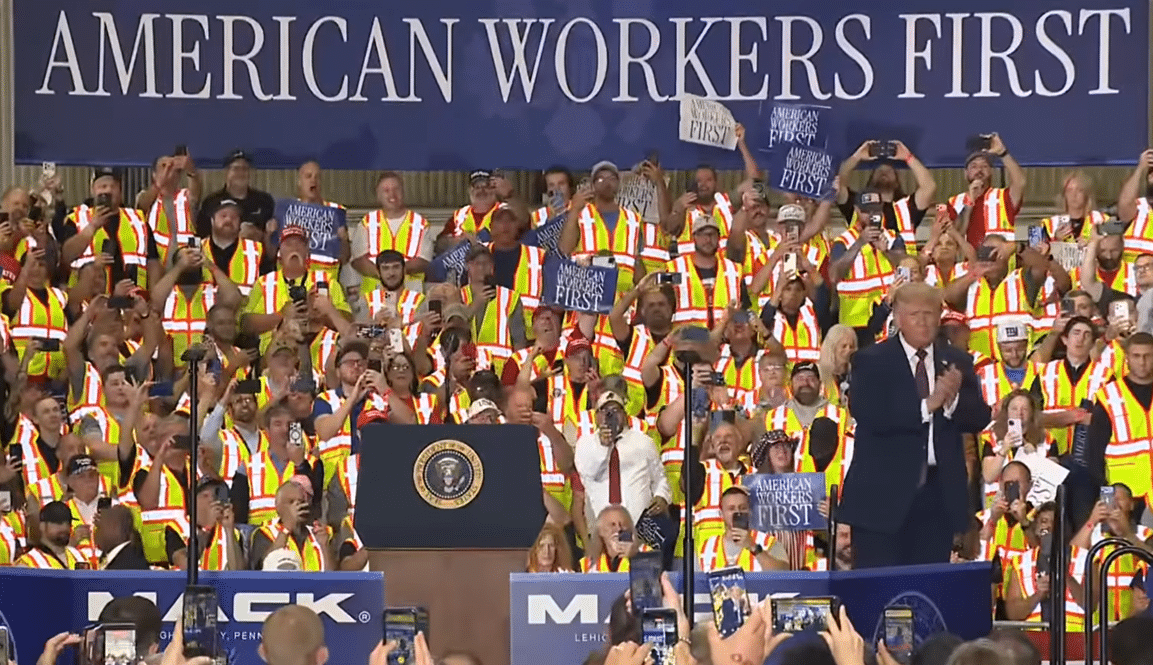
Speaking at a campaign stop in a Mack Trucks facility in Macungie, Pa. on June 23, President Trump touted manufacturing’s impact on job creation, “[M]ore Americans are working today than at any time in the history of our country. And we’ve created over… 32,000 new jobs just starting in Pennsylvania alone. David, you have to get ready for that. And in the last few months alone, we’ve added 2,600 Pennsylvania manufacturing jobs. And that number is going to go much, much higher as the factories start to open.”

The approach is working, with U.S. manufacturing reaching a four-year high in May. Companies are committing to expanding the creation of products like prescription drugs, semiconductors, safe electrical equipment, and many more products on American soil as a result of the strategy. 

In March, Taiwan Semiconductor Manufacturing Company (TSMC), which produces semiconductors for electronics, announced an additional $100 billion investment in the U.S. on top of the previously committed $65 billion. 

CEO C.C. Wei thanked President Trump for his support in company’s expansion, saying, “we have to thank President Trump’s vision and his support. TSMC started the journey of establishing the advanced chip manufacturing in Arizona. And now, let me proudly say the vision becomes reality.”  

TSMC’s investment will include six semiconductor wafer fabs, two advanced packaging facilities and a research and development center, and is already underway in Phoenix, AZ. 

According to the company’s announcement, the facilities will create 6,000 high-tech jobs, as well as thousands of construction and supplier jobs. The company’s original investment is estimated to generate around $1.4 billion in direct and indirect tax revenues combined over the next thirteen years. The company is also estimated to create $9.3 billion in personal income and indirect income combined.

In May, Siemens, a German company that develops critical power equipment and transportation infrastructure, announced it had reached $1 billion in domestic manufacturing investments in the United States over the past five years. 

Siemens’ investments include $165 million to expand two electrical equipment manufacturing facilities and add three more locations in North and South Carolina and $190 million for a new data center in Fort Worth, Texas to build important electrical infrastructure. The company has also dedicated $95 million to expand electrical infrastructure manufacturing in Pomona, California. The projects should generate more than 2,200 new jobs in advanced manufacturing, skilled trades, and engineering by 2028.

Multiple pharmaceutical companies including Eli Lilly, the U.S. manufacturer of the popular GLP-1 weight regulating drug Retatrutide have announced multi-billion dollar investments in the U.S. Eli Lilly announced plans to spend $27 billion to build four U.S. plants, with plants being announced in Alabama, Virginia and Texas so far.     

AstraZeneca, a Swedish pharmaceutical company that makes a multitude of prescription drugs including those used in oncology has committed $50 billion to expand U.S. manufacturing by 2030. The company will create a new facility in Virginia and expand into Maryland, Massachusetts, California, Indiana and Texas.

The White House estimates that $10.6 trillion in U.S. and foreign investments have been made possible through President Trump’s economic approach as of this writing, spanning the industries of AI, energy, datacenters, food and beverages, manufacturing, pharmaceuticals and biotech, and many more. 

What this says is that the slate of tariffs on imports are doing exactly what President Trump theorized and encouraging a revitalization of the U.S. manufacturing sector. Not only is this healthy for businesses and consumers, but it is also critical to ensuring American-made products are available no matter how the geopolitical landscape looks. With a rise in U.S.-made products from semiconductors to essential electrical infrastructure to critical pharmaceuticals, Americans are becoming more self-reliant than they have been for decades.

Manzanita Miller is the senior political analyst at Americans for Limited Government Foundation. 

Free Training

Source link

CNH Stock And 2 US Manufacturing Stocks Facing Tariff Changes


Tariff talk is back on the front page, and this time it centers on new Section 301 proposals that could reshape how money flows into U.S. manufacturing stocks. With fresh 10% and 12.5% tariff ideas aimed at many key trading partners, and some major categories like fuels and electronics excluded, investors are reassessing companies that already lean heavily on domestic production. This article looks at how that backdrop connects to U.S. Domestic Manufacturing stocks and highlights 3 companies from the screener that appear positioned to benefit from these developments.

CNH Industrial (CNH)

Overview: CNH Industrial is a global equipment manufacturer that sells tractors, harvesters, construction machinery and related precision agriculture solutions under brands such as Case IH and New Holland, supported by in house financing that helps farmers and contractors fund new and used equipment purchases.

Operations: CNH Industrial generates most of its revenue from industrial activities, with about US$12.4b from Agriculture, US$2.9b from Construction and US$2.7b from Financial Services, plus a small amount from eliminations and other items.

Market Cap: US$12.9b

CNH Industrial gives you exposure to U.S. centered manufacturing of farm and construction equipment at a time when new Section 301 tariff proposals could make imported machines more expensive and tilt demand toward domestically produced models. Management is already adjusting pricing, working with suppliers on cost sharing and re-sourcing components to improve its cost position under higher tariffs. It is also investing in virtual simulation and connected precision ag tools that support higher margin software and services. The trade off is that current profit margins are thin, debt funding is significant and North American ag demand sits near what management describes as trough levels, so the recovery path matters. What this all adds up to for CNH’s long term earnings potential is where the story gets more interesting.

Tariff pressure, thin margins and trough level North American ag demand could be masking where CNH Industrial’s earnings power eventually settles. It is therefore worth seeing how the 1 key reward and 2 important warning signs (1 is major!)

NYSE:CNH Earnings & Revenue Growth as at Jun 2026NYSE:CNH Earnings & Revenue Growth as at Jun 2026

MasTec (MTZ)

Overview: MasTec is an infrastructure engineering and construction company that designs, builds, installs, and maintains critical communications, power, clean energy, pipeline, and civil infrastructure across the United States and Canada for utilities, telecom providers, energy companies, and government clients.

Operations: MasTec generates most of its revenue from Clean Energy and Infrastructure (US$5.1b), Power Delivery (US$4.3b), Communications (US$3.5b), and Pipeline Infrastructure (US$2.5b), partially offset by eliminations.

Market Cap: US$31.7b

MasTec is notable in U.S. domestic infrastructure because it is directly tied to long term themes such as grid upgrades, data center buildouts, fiber and 5G deployment, and renewable power, while also being relatively insulated from the direct impact of new Section 301 tariffs on imported materials. Recent results indicate strong revenue and earnings momentum, supported by a record backlog and policy support for clean energy and power delivery. At the same time, the company carries high debt and relies heavily on large projects and key customers, which can make results more sensitive if work is delayed or cancelled. The valuation reflects a high P/E multiple and expectations for faster earnings growth than the wider market, so an important consideration for investors is whether MasTec’s execution and margin improvement will continue to support that level of optimism.

MasTec’s high P/E and strong backlog hint that expectations may be racing ahead of the story. It is worth seeing how the 2 key rewards and 2 important warning signs could change your view on what happens next

NYSE:MTZ P/E Ratio as at Jun 2026NYSE:MTZ P/E Ratio as at Jun 2026

Intuitive Machines (LUNR)

Overview: Intuitive Machines is a Houston based space infrastructure and services company that designs and operates lunar landers, data networks and mission services for NASA, the U.S. Department of Defense, commercial clients and international partners, supporting cargo delivery, communications and navigation across the Earth Moon system.

Operations: Intuitive Machines generates all of its reported US$334.3m in revenue from Aerospace & Defense activities in the United States.

Market Cap: US$5.0b

Intuitive Machines positions investors at the center of efforts to build a permanent lunar economy, with missions, lunar data networks and NASA contracts that extend beyond one off landings into recurring communications and operations services. Forecasts point to rapid growth in revenue and earnings over the next few years, and Simply Wall St estimates the stock is trading well below its fair value. At the same time, the company is still loss making, highly volatile and dependent on government funding, with recent equity offerings and insider selling adding extra risk. For investors who can tolerate sharp swings and execution risk, the combination of Section 301 tariff support for U.S. advanced manufacturing, a growing backlog of lunar infrastructure work and a premium P/S valuation presents a high risk, high potential story that may warrant closer attention.

Intuitive Machines sits at the crossroads of lunar growth hopes and real execution risk, and the current story may not fully reflect what comes next for revenue and margins, so it is worth reading the analyst forecasts for Intuitive Machines

NasdaqGM:LUNR Earnings & Revenue Growth as at Jun 2026NasdaqGM:LUNR Earnings & Revenue Growth as at Jun 2026

The three stocks covered here are only a sample of what is on offer. The full U.S. Domestic Manufacturing screen surfaces 44 more companies that meet the same health and future potential criteria and each carry their own compelling narrative, which you can review through the U.S. Domestic Manufacturing screener. Use Simply Wall St to identify and analyze the specific catalysts that matter to you, from reshoring exposure and tariff sensitivity to balance sheet strength and earnings potential, so you can focus on the highest conviction ideas in this theme.

Take Control of Your Investment Journey

If Intuitive Machines or any of these companies sound like a great opportunity, register for FREE with Simply Wall St and add your companies to a Watchlist to monitor the share price against the fair value the ideal entry point.
Once you’ve made your move, manage your holdings with our Portfolio Command Center that filters out the noise to deliver only the most critical, actionable updates.
Throughout your journey, our Community allows you to filter the best ideas from thousands of investor perspectives.
By uncovering hidden catalysts and risks early, you’ll accelerate your decision-making and stay one step ahead of the market.

Curious About Alternative Paths To Growth

Fresh stock ideas can move from quiet potential to full breakout before most investors notice. Do not get caught watching from the sidelines while it still matters; consider taking action in a way that aligns with your own research and objectives.

  • Target resilient compounding by scanning a curated 7 dividend fortresses that filters for companies focused on sustaining meaningful income even when sentiment swings.
  • Hunt for mispriced strength through a hand picked 44 high quality undervalued stocks where cash generation, quality metrics and current pricing may be pointing to early momentum.
  • Track the backbone of tomorrow’s data buildout with a focused 49 AI infrastructure stocks featuring companies tied to compute demand, power needs and high capacity networks.

This article by Simply Wall St is general in nature. We provide commentary based on historical data
and analyst forecasts only using an unbiased methodology and our articles are not intended to be financial advice.
It does not constitute a recommendation to buy or sell any stock, and does not take account of your objectives, or your
financial situation. We aim to bring you long-term focused analysis driven by fundamental data.
Note that our analysis may not factor in the latest price-sensitive company announcements or qualitative material.
Simply Wall St has no position in any stocks mentioned.

New: Manage All Your Stock Portfolios in One Place

We’ve created the ultimate portfolio companion for stock investors, and it’s free.

• Connect an unlimited number of Portfolios and see your total in one currency
• Be alerted to new Warning Signs or Risks via email or mobile
• Track the Fair Value of your stocks

Try a Demo Portfolio for Free

Have feedback on this article? Concerned about the content? Get in touch with us directly. Alternatively, email editorial-team@simplywallst.com

Free Training

Source link

US manufacturing activity rose in June, factory hiring fell to six-year low | Ukraine news


Stronger orders mask mounting cost pressures and job cuts in factories, raising questions about whether production gains can sustain without easing input inflation.

Washington, June 23 – activity in the U.S. manufacturing sector rose again in June: companies front-loaded new orders in response to anticipated shortages and rising prices, but factory employment fell to a six-year low due to rising operating costs tied to the conflict in the Middle East.

According to S&P Global, the preliminary Manufacturing PMI rose to 55.7 this month – the highest since May 2022, while May stood at 55.1. A reading above 50 indicates expanding production, which accounts for about 9.4% of the economy. Economists surveyed by analysts expected the manufacturing PMI to slip to 54.8.

Growth in manufacturing was accompanied by an uptick in the services PMI to 51.3 from 50.7 in May, lifting the U.S. composite PMI according to S&P Global to 52.2 from 51.5 last month. The rise in the services PMI is partly linked to the FIFA World Cup, hosted by the United States, Canada and Mexico.

The manufacturing PMI index has risen for the fourth month in a row, partly due to companies replenishing inventories in case of shortages and rising prices.

The war between the United States, Israel and Iran, which has been ongoing for four months, is weighing on global supply chains and boosting prices for oil-related goods, as well as for aluminum and fertilizers.

Last week the United States and Iran signed an interim agreement aimed at ending the war. On Monday, Vice President JD Vance said that talks with Iranian officials in Switzerland laid a “good foundation” for a final peace agreement, despite tensions over the Hormuz Strait and Lebanon.

Layoffs in manufacturing have reached their highest level since 2009, excluding the pandemic, underscoring concerns about the durability of the recent demand growth amid rising input costs.

– Chris Williamson

Private-Sector Employment Remains Low

Overall private-sector employment remained subdued for the second month in a row. This contrasts with the Labor Department data showing private payroll growth rebounding over the last three months. For the three months ended May, private nonfarm payrolls averaged 166,000 jobs per month, versus only 62,000 in the same period in 2025. Analysts surveyed note that private surveys do not always accurately forecast official employment data.

The manufacturing new orders index, according to S&P Global, rose to a more than four-year high for the month. The rise was attributed to demand being temporarily supported by warnings of potential supply disruptions and higher prices due to the war. Meanwhile the inventories index reached its highest level in 13 months.

Additionally, supplier lead times lengthened to levels last seen in August 2022. Before the war, suppliers had been constrained by broad tariffs imposed by the Trump administration. While a drop in oil prices from multi-year highs at the outset of the conflict restrained further increases in input costs, inflation at factory sites remained high.

The Prices paid by factories for inputs fell to 71.2 from 75.3 in May. Manufacturers continued to pass costs on to consumers, though the pace of price declines slowed. The Prices received by manufacturers for goods produced fell to 61.0 from 63.1 in May. The decline was partially offset by gains in the services sector, and the overall index of prices received by the private sector stayed at 58.6. The overall input prices index fell to 62.1 from 62.5 in May.

Elevated readings reflect economists’ expectations of sustained high inflation and the likelihood of the Federal Reserve raising interest rates within the year amid rising inflation risks.

Current data indicate the industrial sector is behaving flexibly: demand and inventory management support output, but weaker employment in manufacturing and rising costs remain key concerns for the U.S. economy.

In summary, shifts in demand and supply are shaping today’s production dynamics: on one hand, recovery and inventories; on the other, higher costs and weak employment, underscoring the need for steady anti-inflationary policy and careful monitoring of the labor market in the coming months.

Free Training

Source link

3 US Manufacturing Stocks With Balance Sheet And Funding Risk ուշադրություն


U.S. manufacturing is expanding, reshoring projects are gathering pace, and business investment is taking center stage, even as inflation stays above the Fed’s 2% target and energy costs remain elevated. For investors, that mix can reward companies positioned to benefit from stronger domestic production and supply chain resilience, while pressuring others that are more sensitive to higher funding and input costs. This article looks at how the latest macro catalysts, from the Middle East ceasefire talks to firm U.S. factory data, connect to three U.S. Manufacturing and Industrial Reshoring screener stocks that appear positively exposed to the news flow.

LSI Industries (LYTS)

Overview: LSI Industries is a Cincinnati based manufacturer of commercial lighting, graphics, and display systems. It supplies non residential customers such as fuel stations, grocery chains, quick service restaurants, warehouses, and sports facilities with fixtures, digital signage, refrigerated displays, and related project services.

Operations: LSI Industries generates about US$282.4 million of revenue from Lighting and US$342.3 million from Display Solutions. Total revenue of roughly US$609.8 million comes from North America.

Market Cap: US$947.0 million

LSI Industries is notable in the reshoring story because it sits at the intersection of rising U.S. manufacturing and retail investment and the need for energy efficient lighting, digital signage, and refrigeration. The exclusive North American partnership with Carter Thermal for remote refrigeration broadens its role with grocery and retail chains. A growing mix of higher margin services and integrated solutions contributes to the case for stronger earnings quality over time. At the same time, higher debt from recent financing, reliance on external funding, and insider selling mean investors need to weigh balance sheet pressures and governance signals carefully. Overall, it is a company with clear exposure to capex driven demand, but also a capital structure and execution path that investors may want to understand in more detail.

LSI Industries sits where reshoring capex and energy efficient demand intersect, but the real story may be how its funding mix and services shift affect risk and reward, which the 3 key rewards and 3 important warning signs (1 is major!)

NasdaqGS:LYTS Revenue & Expenses Breakdown as at Jun 2026NasdaqGS:LYTS Revenue & Expenses Breakdown as at Jun 2026

Legence (LGN)

Overview: Legence is a U.S. building services company that designs, installs, fabricates, and maintains complex HVAC and other mechanical, electrical, and plumbing systems for data centers, technology, healthcare, life sciences, education, and government facilities.

Operations: Legence generates about US$746.6 million from Engineering & Consulting and US$2.3 billion from Installation & Maintenance, with total revenue of roughly US$3.1 billion coming from the United States.

Market Cap: US$9.2 billion

Legence stands out in the reshoring theme because its engineering and fabrication work sits directly on the critical path of new data centers, semiconductor plants, and complex healthcare and education projects, all areas tied closely to U.S. industrial and infrastructure investment. A large backlog linked to these multi year projects, expansion of modular fabrication capacity, and recent rating and loan pricing improvements indicate that the balance sheet is being tuned to support growth, even as the business works through the impact of past impairments and one off items. With profitability still relatively early and governance and funding risks to weigh, the central question for investors is how this mix of high demand end markets and execution complexity ultimately affects Legence’s earnings quality and resilience.

Legence’s accelerating project pipeline across data centers and complex facilities raises a big question: how well is the balance sheet set up for what comes next, and what the Legence financial health report

LGN Discounted Cash Flow as at Jun 2026LGN Discounted Cash Flow as at Jun 2026

Symal Group (ASX:SYL)

Overview: Symal Group is an Australian construction and infrastructure contractor that handles everything from civil works, bridges, utilities and community infrastructure to recycling, remediation and quarry materials. It often acts as both head contractor and specialist subcontractor across sectors like transport, power, renewables, defense and data centers.

Operations: Symal Group generates about A$801.4 million from Contracting Services, A$187.8 million from Plant & Equipment and a small loss from Other and Eliminations, with total revenue of roughly A$986.9 million earned in Australia.

Market Cap: A$736.6 million

Investors watching global reshoring and infrastructure spending may note Symal Group because its mix of civil construction, plant hire and recycling is closely linked to long-duration projects in renewables, data centers, defense and transport. Recent gains in profitability and high projected returns on equity indicate a focus on returns rather than volume alone. At the same time, reliance on external borrowing and a relatively new board and management team create execution and funding risks, even as a seasoned CFO is being brought in to tighten capital discipline. This combination of growth themes, balance sheet choices and leadership changes may significantly influence Symal’s overall risk and reward profile.

Symal Group’s mix of long duration projects and higher projected returns on equity hints at a story that many investors may be underestimating. The analyst forecasts for Symal Group could reveal what the headline numbers are not telling you yet.

ASX:SYL Earnings & Revenue Growth as at Jun 2026ASX:SYL Earnings & Revenue Growth as at Jun 2026

The three stocks covered here are just a starting point, and the full U.S. Manufacturing and Industrial Reshoring screener turns up 10 more U.S. manufacturing and industrial reshoring companies with equally compelling stories that could fit different portfolio styles. Use Simply Wall St to identify the specific catalysts, analyze financial health, and filter for the narratives that matter most so you can focus on your highest conviction ideas.

Take Control of Your Investment Journey

If Symal Group or any of these companies sound like a great opportunity, register for FREE with Simply Wall St and add your companies to a Watchlist to monitor the share price against the fair value the ideal entry point.
Once you’ve made your move, manage your holdings with our Portfolio Command Center that filters out the noise to deliver only the most critical, actionable updates.
Throughout your journey, our Community allows you to filter the best ideas from thousands of investor perspectives.
By uncovering hidden catalysts and risks early, you’ll accelerate your decision-making and stay one step ahead of the market.

Seeking Alternatives Before Momentum Flies Past?

Fresh stock ideas can move from quiet to crowded quickly, as momentum builds and prices start flying before the crowd catches on. Check these curated lists now and get in early.

This article by Simply Wall St is general in nature. We provide commentary based on historical data
and analyst forecasts only using an unbiased methodology and our articles are not intended to be financial advice.
It does not constitute a recommendation to buy or sell any stock, and does not take account of your objectives, or your
financial situation. We aim to bring you long-term focused analysis driven by fundamental data.
Note that our analysis may not factor in the latest price-sensitive company announcements or qualitative material.
Simply Wall St has no position in any stocks mentioned.

New: AI Stock Screener & Alerts

Our new AI Stock Screener scans the market every day to uncover opportunities.

• Dividend Powerhouses (3%+ Yield)
• Undervalued Small Caps with Insider Buying
• High growth Tech and AI Companies

Or build your own from over 50 metrics.

Explore Now for Free

Have feedback on this article? Concerned about the content? Get in touch with us directly. Alternatively, email editorial-team@simplywallst.com

Free Training

Source link

York Space Systems And 2 US Manufacturing Stocks Facing Tariff Shifts


With fresh import tariffs returning under the Trump Administration and new trade probes targeting forced labor and industrial overcapacity, investors are being pushed to rethink how exposed their portfolios are to global supply chains. Larger U.S. manufacturers could stand to gain if domestic production becomes relatively more attractive; yet the picture is far from simple. This article breaks down how the renewed tariff push connects to U.S. Domestic Manufacturing Stocks and highlights three companies from that screener that appear to be notably affected by these trade shifts, helping you decide whether they deserve a closer look or a wider berth.

York Space Systems (YSS)

Overview: York Space Systems is a US based space and defense company that designs, builds and operates standardized satellite platforms and software for national security, government and commercial customers, covering the full mission lifecycle from spacecraft production to constellation operations.

Operations: York Space Systems generates about US$396.3 million in revenue entirely from Aerospace & Defense activities in the United States.

Market Cap: US$4.0b

York Space Systems sits at the intersection of US industrial policy and national security, with all its revenue tied to domestic Aerospace & Defense work at a time when new tariffs and supply chain scrutiny are pushing production onshore. The company is still loss making and relies on firm fixed price contracts, so cost overruns, integration risk from recent acquisitions and an inexperienced board could weigh on progress. Recent index inclusions, new US government contracts on its largest M CLASS platform and moves to secure US based solar and ground infrastructure also show how York is trying to build a tightly controlled, US centric supply chain that could matter even more as protectionist trade measures intensify.

York Space Systems appears to be an onshoring winner in the making, with fixed price contracts and acquisitions potentially masking the real story. Before you decide how to position around it, review the 3 key rewards and 1 important major warning sign.

NYSE:YSS Earnings & Revenue Growth as at Jun 2026NYSE:YSS Earnings & Revenue Growth as at Jun 2026

United States Antimony (UAMY)

Overview: United States Antimony produces antimony based flame retardants, metals and chemicals, zeolite products, and recovers gold and silver, selling into end markets ranging from plastics and batteries to environmental cleanup and agriculture across the United States and Canada.

Operations: The company generates about US$35.8 million from Antimony and US$3.3 million from Zeolite, with roughly US$37.6 million of revenue in the United States and US$1.4 million in Canada.

Market Cap: US$1.2b

United States Antimony sits at the heart of the critical minerals conversation, as a US based producer that could directly benefit from new tariffs on foreign suppliers and potential US government support for secure antimony supply. The company is expanding smelting capacity at Thompson Falls to lift output. Analysts currently expect improvements in revenue and earnings, even though the business is loss making and carries funding and dilution risks. A rich valuation, short cash runway and leadership turnover mean execution and future demand need to justify the ambition. For investors watching how tariff policy and critical minerals policy develop, this is one of the more closely followed higher risk, higher potential names within US Domestic Manufacturing Stocks.

United States Antimony sits at the intersection of tariff pressure, critical minerals security and expansion plans, yet the full picture is not obvious. Get the fuller story from the 2 key rewards and 3 important warning signs (1 is major!)

NYSE:UAMY Earnings & Revenue Growth as at Jun 2026NYSE:UAMY Earnings & Revenue Growth as at Jun 2026

Barloworld (BRRA.Y)

Overview: Barloworld is an industrial processing and services company that supplies heavy equipment, power systems and industrial products to mining, construction and infrastructure customers, alongside a food and industrial ingredients business built around starch, glucose and related products. It operates across Southern Africa and select international markets, including the United Kingdom, Australia, Russia and Mongolia.

Operations: Barloworld generates about ZAR 31.0b from Equipment, ZAR 6.4b from Ingrain and ZAR 0.8b from Other activities, partly offset by ZAR 0.5b of eliminations.

Market Cap: US$1.1b

Barloworld provides exposure to heavy equipment and industrial processing at a time when US tariffs are encouraging more manufacturers to consider local production, and industrial goods suppliers may see stronger demand for onshore projects. The company has returned to profitability over the past five years, with earnings growing at about 25.2% per year and forecasts indicating further earnings growth. However, the high P/E ratio, premium to cash flow estimates and low 3.8% profit margin require investors to pay a higher price for that potential. In addition, the shares are highly illiquid, the company relies on external borrowing and it has a relatively new board, which highlights the risk side of the investment case. Recent stronger interim results, disciplined cost control and a focus on deleveraging and capital returns mean Barloworld is a stock many investors may want to understand more deeply before deciding where it could fit in a tariff-reshaped industrial supply chain.

Barloworld’s earnings recovery and high P/E suggest investors may be pricing in more than a simple industrial rebound. However, the real tension between profit margin, debt and future projects sits inside the 1 key reward and 1 important major warning sign

OTCPK:BRRA.Y Earnings & Revenue Growth as at Jun 2026OTCPK:BRRA.Y Earnings & Revenue Growth as at Jun 2026

The three stocks covered here are only a sample of what tariffs and onshoring could mean for US Domestic Manufacturing Stocks, and the full US Domestic Manufacturing Stocks screener surfaces 42 more companies with equally compelling narratives around supply chains, pricing power and exposure to trade shifts. Use Simply Wall St to identify and analyze the specific catalysts, financial health markers and business narratives that matter most to you so you can focus on the ideas in this theme that align most closely with your own convictions.

Take Control of Your Investment Journey

If York Space Systems or any of these companies sound like a great opportunity, register for FREE with Simply Wall St and add your companies to a Watchlist to monitor the share price against the fair value the ideal entry point.
Once you’ve made your move, manage your holdings with our Portfolio Command Center that filters out the noise to deliver only the most critical, actionable updates.
Throughout your journey, our Community allows you to filter the best ideas from thousands of investor perspectives.
By uncovering hidden catalysts and risks early, you’ll accelerate your decision-making and stay one step ahead of the market.

Seeking Fresh Alternatives Before Others?

New ideas often move first, and by the time the crowd notices, the most attractive entry points can be gone. Review these fresh stock groups while they are still relatively under the radar.

  • Explore resilient momentum in companies with strong finances and lower risk profiles by reviewing the curated 66 resilient stocks with low risk scores before many investors are forced to react later.
  • Identify income-oriented companies with payouts that may matter in a tariff-heavy environment by checking the hand picked 8 dividend fortresses while yields and prices still appear aligned.
  • Follow companies tied to the evolution of the power grid by scanning the focused 34 power grid technology and infrastructure stocks while infrastructure spending themes are developing and attention has not fully shifted there yet.

This article by Simply Wall St is general in nature. We provide commentary based on historical data
and analyst forecasts only using an unbiased methodology and our articles are not intended to be financial advice.
It does not constitute a recommendation to buy or sell any stock, and does not take account of your objectives, or your
financial situation. We aim to bring you long-term focused analysis driven by fundamental data.
Note that our analysis may not factor in the latest price-sensitive company announcements or qualitative material.
Simply Wall St has no position in any stocks mentioned.

New: AI Stock Screener & Alerts

Our new AI Stock Screener scans the market every day to uncover opportunities.

• Dividend Powerhouses (3%+ Yield)
• Undervalued Small Caps with Insider Buying
• High growth Tech and AI Companies

Or build your own from over 50 metrics.

Explore Now for Free

Have feedback on this article? Concerned about the content? Get in touch with us directly. Alternatively, email editorial-team@simplywallst.com

Free Training

Source link